الوسم: Smart Glasses

  • Meta Smart Glasses With Built-In Display Might Cost As Much As An iPhone

    Meta Smart Glasses With Built-In Display Might Cost As Much As An iPhone

    In recent years, extended reality (XR) devices have surged in popularity, and as their technology advances, prices have increased significantly. For instance, Apple’s Vision Pro is priced at $3,500, while Meta’s Quest Pro is available for $1,500. Smart glasses, particularly those with built-in displays, are also gradually climbing in cost.

    However, Meta appears to be challenging this trend with its upcoming next-generation smart glasses, expected later this year, which may be more affordable than initially projected. Inside sources suggest Meta has managed to reduce the retail price to approximately $800. This adjustment seems to be part of a strategy to lower profit margins temporarily in order to boost consumer demand— a tactic often used when launching new tech products, according to Bloomberg.

    ### How Do Meta’s Smart Glasses Function?

    Currently in development under the code name “Hypernova,” Meta initially aimed to sell these glasses at around $1,000, with some estimates suggesting a price closer to $1,400. The confirmed lower price point, around $800, positions Meta’s device in the same market segment as the iPhone 16, and potentially the upcoming iPhone 17.

    Meta’s approach with these glasses is reminiscent of Google Glass, featuring a monocular display embedded in the lower section of the right lens. Unlike some smart glasses from brands like RayNeo, Viture, and Xreal that sport dual displays, Meta’s “Hypernova” only presents information on the right eye — mostly when the user looks downward, as Bloomberg reports. Powering the device is Qualcomm silicon, and it will come equipped with applications for capturing photos, viewing media, navigating maps, and managing notifications.

    ### What Sets These Glasses Apart?

    Meta is targeting these glasses as a next-generation personal computing device, aiming to serve as an alternative to smartphones, particularly in the U.S. market where iPhones dominate. Smart glasses from other companies, such as Xreal and Viture, usually fall into the $400 to $600 price range, comparable to the new AI glasses like the Even G1 that utilize optical projector technology.

    Additionally, Meta plans to enhance user interaction through a neural wristband, allowing control of the glasses via wrist gestures and hand movements. This concept isn’t entirely new—smartwatches like Samsung’s Galaxy Watch 8 have already integrated gesture-based navigation. The wristband will be bundled with the glasses, improving the ease of control.

    ### Operating System and Connectivity

    The upcoming glasses are expected to run a specialized version of Android, though they might lack a dedicated app store, instead relying on touch and swipe gestures on the side frame for control. This usability feature would be a significant selling point, especially if Meta ensures seamless notification access from paired smartphones.

    However, Meta’s plans seem to diverge from Google’s initiatives. While Google is also developing AR glasses based on the Android XR platform, Meta’s “Hypernova” will likely rely heavily on the Meta View app for phones. The glasses are anticipated to launch within a month, and it will be interesting to see how they incorporate AI features—especially when compared to Google’s Gemini platform designed for wearables.

    Overall, these developments suggest a competitive and rapidly evolving landscape for smart glasses, with Meta positioning itself as a major player by offering advanced features at a more accessible price point.

  • Samsung’s Smart Glasses May Launch Next Year But Rival Beats It

    Samsung’s Smart Glasses May Launch Next Year But Rival Beats It

    Samsung’s highly anticipated smart glasses are expected to hit the market in 2026, according to recent reports. However, a Taiwanese company has already made a move, launching its own smart glasses ahead of Samsung’s anticipated release.

    That company is HTC. Known for years for creating sleek smartphones like the HTC One, One M8, and One M9, HTC shifted gears several years ago to focus on its Vive virtual reality headsets. Now, the company is making waves again with a new line of AI-powered smart glasses.

    With major brands like Meta and Snapchat popularizing the smart glasses trend through products such as Ray-Ban Meta and Snapchat Spectacles, competition in this space is intensifying.

    Samsung Isn’t the Only Player in the Game

    According to a report from South Korean publication SE Daily, Samsung plans to introduce its first pair of smart glasses in late 2026. This suggests we’re still about a year away from seeing Samsung’s eyewear go on sale.

    The upcoming Samsung glasses are said to resemble the design of Ray-Ban Meta models, incorporating features like built-in speakers, a microphone, and a camera.

    It’s worth noting that these glasses are separate from the augmented reality (AR) glasses Samsung is reportedly developing with Google, which are expected to include a display.

    Meanwhile, Google showcased its own Android-based XR glasses at the I/O 2025 conference, with the first model—developed in partnership with Warby Parker—potentially arriving as early as next year. Additionally, a new lineup of smart glasses from an established brand may arrive in 2025.

    Introducing HTC Vive Eagle

    HTC’s latest offering is called the Vive Eagle, branded as ‘AI smart glasses.’ These lightweight wearable devices feature a 12-megapixel ultra-wide camera with an LED indicator, a 235mAh battery, and magnetic fast-charging that keeps the glasses ready for use. Weighing just 49 grams, they also include speakers, but their open-ear design ensures you stay aware of your surroundings without anything covering your ears.

    The glasses come equipped with HTC’s Vive AI voice assistant, supporting major language models such as ChatGPT and Google’s Gemini. This allows users to control camera functions, music, and other features through spoken commands, as well as ask more complex questions.

    Further enhancing their appeal is the ability for real-time translation into 13 languages, including Arabic, Chinese (Traditional), English, French, German, Greek, Italian, Japanese, Portuguese, Spanish, Korean, Thai, and Turkish.

    HTC claims the Vive Eagle glasses can deliver about 4.5 hours of continuous music playback on a single charge and standby mode can last up to 36 hours.

    Availability and Pricing

    Currently, the HTC Vive Eagle is available exclusively in Taiwan, with pre-orders now open. The release date is scheduled for September 1. The glasses are offered in four colors—Berry, Coffee, Grey, and Black—and retail for NT$15,600, roughly equivalent to $500.

    There has been no official announcement regarding international availability, but as the market heats up, more regions may soon see these innovative glasses. It’s worth noting that just a couple of months ago, Oakley entered the smart glasses scene, indicating a growing interest in this technology.

    As the competition accelerates, major brands continue to develop cutting-edge wearable technology that could redefine how we interact with digital content on the go.

  • Meta’s New Oakley Smart Glasses Offer Key Benefits For Users

    Meta’s New Oakley Smart Glasses Offer Key Benefits For Users

    Meta and Oakley have teamed up to introduce the latest iteration of their smart glasses, known as the Oakley Meta HSTN (pronounced HOW-stuhn). These new specs boast substantial upgrades in battery life and camera capabilities compared to earlier Meta models.

    Marketed as ‘Performance AI glasses’, these innovative eyewear pieces are designed with athletes in mind. The glasses come equipped with Meta’s AI voice assistant, which allows users to initiate actions vocally, such as starting a recording with the integrated camera.

    The Oakley Meta HSTN glasses feature a battery that promises up to eight hours of active use and a staggering 19 hours in standby mode. This marks a significant improvement over the four-hour average seen in Ray-Ban Meta glasses. Our testing found that while the Ray-Ban specs could last a day with minimal recording, the Oakley version appears to be on the right track for enhancing usability.

    Similar to high-end wireless earbuds, these glasses come with a charging case that offers an additional 40 hours of battery life on the move. Remarkably, you can charge the glasses from 0% to 50% in just 22 minutes, with an 80% charge taking around 45 minutes.

    On the technical side, the glasses feature a 12MP camera positioned in the upper right corner of the frame, capable of shooting 3K resolution, Ultra HD video. This is a notable upgrade from the 1,440 x 1,920 resolution available in the Ray-Ban Meta smart glasses.

    For added security and accountability, a ‘capture LED’ is located in the opposite corner, lighting up when the camera is engaged in recording or live streaming. This ensures that those nearby are aware that recording is active, and if the light is obstructed, the camera will stop recording until it’s unobstructed.

    In addition, the glasses are equipped with open-ear speakers, facilitating music and podcast listening, as well as making and answering calls while on the go. They are also rated IPX4, meaning they can withstand splashes and sweat.

    Priced at $399, the Oakley Meta HSTN will be available in 15 countries, including the U.S., Canada, and the UK, later this summer. Other regions, such as India, Mexico, and the UAE, will follow later in the year. For those eager to get their hands on a limited-edition piece, the Desert 24k Prizm Polar specs will be available starting July 11 for $499.

  • Meta’s AI Smart Glasses Might Steal Apple’s Spotlight in 2025

    Meta’s AI Smart Glasses Might Steal Apple’s Spotlight in 2025

    Meta has achieved remarkable success with its smart glasses developed in partnership with Ray-Ban. Initially designed for capturing social media moments, these glasses have transitioned into devices featuring advanced AI capabilities.

    Now, Meta is reportedly exploring the development of next-generation smart glasses that will incorporate a display. Interestingly, these could launch during the Fall, aligning with the typical release period for new iPhones and other Apple products. In contrast,Apple’s own smart glasses project is said to be several years behind in development.

    According to a Bloomberg report, “Meta Platforms Inc. is prioritizing a significant product launch in October 2025: high-end smart glasses priced over $1,000, featuring a small display.” While there may be slight delays, employees have been urged to expedite the process, even if it requires weekend work.

    The potential October launch aligns well with Meta’s annual Connect event, scheduled for September 17-18, 2025. This event usually coincides with Apple’s unveiling of its next-generation iPhones; however, this year might also see a surprise around a new headset.

    What’s next for Meta’s smart glasses?

    To date, Meta has not introduced smart glasses equipped with a display unit, a feature that has been offered by companies like Viture, TCL, RayNeo, and Xreal for years. The advantage of a display is that it allows users to interact visually with content, as opposed to relying solely on audio or voice commands.

    Importantly, the upcoming Meta smart glasses will feature a single display instead of separate screens for each eye. As mentioned in the Bloomberg report, this new model will allow users to access simple applications and view photos taken with the device.

    The proposed design includes a monocular screen positioned in the lower right corner of the lens, specifically intended for interactions through the right eye. Wearers will be able to navigate using gestures on the frames, accessing features like map navigation, app notifications, and photos captured by the onboard cameras.

    On the software side, these next-gen smart glasses from Meta are expected to run a heavily customized Android system, powered by a Qualcomm wearable processor.

    Currently under development and codenamed Hypernova, these advanced Meta AI smart glasses may start at around $1,000, with prices potentially rising to $1,400. For context, the typical price for display-enabled XR glasses tends to hover around $500.

    Furthermore, Meta is also developing Orion smart glasses that will incorporate a holographic display system. Although details have been revealed, these are still several years away from market release. In addition, the company continues its efforts on the Aria platform to develop true AR glasses aimed at scientific and industrial uses.

  • Google Takes Another Shot at Smart Glasses Again

    Google Takes Another Shot at Smart Glasses Again


    Google initiated the trend for smart glasses more than ten years ago, but the concept struggled to catch on. Some argue that it was simply ahead of its time, while others were wary of potential privacy issues. However, it appears that a significant resurgence may be on the way.

    As reported by Bloomberg, Google is nearing an agreement to purchase AdHawk Microsystems, a firm specializing in comprehensive eye-tracking technologies that are already available in wearable devices.

    According to sources familiar with the transaction, the technology giant plans to acquire the Canadian startup for $115 million. Interestingly, Meta, which is already heavily invested in the smart glasses market with products like Aria, Orion, and Meta Ray-Ban, had expressed interest in acquiring AdHawk in 2022.

    Why AdHawk is a strong candidate?

    AdHawk has backing from notable investors, including Essilor Luxottica, the parent company of Ray-Ban, which has collaborated with Meta to create AI glasses equipped with cameras. Other investors include HP, Samsung, and Intel.

    More than just financial support, the technology they bring is significant. In 2024, Mindhawk unveiled the MindLink Air smart glasses, featuring advanced eye-tracking technology.

    It’s day two of #ETRA2024 and we’re showcasing our eye tracking technology in action!

    From now until June 7, you can stop by our table for a live demonstration of our all-day, camera-free eye trackers.

    Watch as they follow your gaze across the room and across the page! pic.twitter.com/O1QTYXiXMk

    — AdHawk Microsystems (@AdhawkMicro) June 5, 2024

    “We utilize a beam of light that scans your eye thousands of times per second, capturing reflections to build a detailed model of various aspects of your eyes,” explained AdHawk CEO Neil Sarkar in an interview with CTV News.

    Eye-tracking technology is crucial for extended reality (XR) equipment, especially those featuring immersive augmented reality uses. For instance, Apple has integrated a sophisticated eye-tracking system into its Vision Pro headset, while Meta’s Orion holographic glasses also depend on advanced eye-tracking capabilities.

    Google's ambitions are clear

    A model wearing the Halliday AI Glasses and smart ring.
    Halliday AI smart glasses. Halliday

    Over recent years, Google has provided intriguing insights into how it envisions the integration of AI into everyday life, with one of its more ambitious projects centered around the smart glasses concept.

    Last year, Magic Leap partnered with Google to deploy the latter's Gemini AI, Project Astra, and the Android XR app ecosystem in a set of augmented reality smart glasses.

    Furthermore, Google acquired North Focals back in 2020, signaling that it was not finished exploring the smart glasses market. During the I/O 2024 annual developers' conference, Google showcased its most advanced vision for smart glasses with Project Astra.

    Towards the end of 2024, Google also revealed Android XR, its most comprehensive attempt yet at building a robust XR software ecosystem based on Android. “It demonstrates renewed dedication from the company to establish an operating system capable of powering headsets, glasses, and other forms of wearable tech,” noted Digital Trends’ Jason Howell after experiencing the demo.

    The market is also poised for Google's entry. Companies like Solos, RayNeo, and TCL have launched a variety of smart glasses over the last few years, while new entrants such as Halliday and Even Realities are offering remarkably impressive wearable technology.

    It’s apparent that Google missed its early opportunity, and while its official entry into the smart glasses space remains uncertain and perhaps delayed, the targets outlined in the Bloomberg article indicate that smart glasses are firmly on the company’s product roadmap.

  • Meta Unveils Aria Gen 2 Smart Glasses With Heart Rate Tracking

    Meta Unveils Aria Gen 2 Smart Glasses With Heart Rate Tracking

    Meta has recently unveiled its Aria Gen 2 platform, a major leap forward from the company’s previous innovations, including the highly anticipated Orion smart glasses, which feature advanced holographic display technology. Though the Orion glasses won’t hit the market for a few more years, the Aria Gen 2 is now making waves.

    The Aria Gen 2 resembles the familiar Ray-Ban Meta Stories smart glasses but boasts bulkier arms and several significant improvements. Notably, these smart glasses include a photoplethysmogram (PPG) sensor integrated into the nose pad, allowing for heart rate monitoring. This feature distinguishes them as the first smart glasses to offer such biosensing capabilities, although competitors like Apple’s Beats PowerBeats Pro 2 earbuds also incorporate heart rate sensors.

    Think of them as Ray-Ban Stories with too many onboard sensors.

    In addition to the PPG sensor, Meta has upgraded the Aria Gen 2’s sensor suite, arming the glasses with a standard RGB camera and eye-tracking technology. They also include Simultaneous Localization and Mapping (SLAM) cameras that support six degrees of freedom (DoF) movement, enhancing their ability to perceive and navigate their surroundings.

    The device is equipped with a Global Navigation Satellite System (GNSS), a barometer to measure atmospheric pressure, and a magnetometer. There’s also an innovative microphone array that uses contact-based technology to focus on the speaker’s voice while filtering out surrounding noise.

    To power this extensive array of sensors, Meta has developed a custom processing system designed for efficiency. The Aria Gen 2 smart glasses have an impressive battery life, allowing for six to eight hours of continuous use.

    Unfortunately, these smart glasses will not be available to the general public. Instead, they are being distributed to researchers and Meta employees, specifically within the Reality Labs and FAIR AI divisions. The glasses are expected to be useful across various sectors, including automotive applications and the development of medical technologies aimed at assisting individuals with visual impairments and navigation challenges.

    Moreover, the data collected from the Aria Gen 2 smart glasses will play a crucial role in advancing robotics research. Meta has been investing in robotic technologies for several years and is reportedly looking into projects involving humanoid robots in the near future.

  • Apple’s AR Smart Glasses Might Still Be Under Development

    Apple’s AR Smart Glasses Might Still Be Under Development

    It appears that Apple’s ambitions to develop augmented reality (AR) glasses remain alive, although it may be a while before these products make their debut. According to recent reports from Bloomberg, Apple has paused its AR glasses initiative, reminiscent of its previously stifled car project.

    However, the publication indicates that Apple hasn’t completely abandoned the idea. Mark Gurman stated in his latest installment of the PowerOn newsletter that Apple’s ultimate vision for standalone AR glasses remains unchanged. The company intends to continue developing the essential technologies, such as screens and chipsets, that would support the viability of such a device.

    Closeup view of Meta Orion smart glasses.
    A person wearing the Meta Orion AR smart glasses. Meta

    The news of Apple potentially shelving its smart glasses project seemed unexpected, especially as the demand for this technology is beginning to grow. The smart glasses sector is buzzing with activity, proving to be more dynamic than traditional devices like smartphones and laptops at their core.

    Companies like RayNeo, Xreal, and TCL are developing glasses with integrated display units that provide new opportunities for immersive computing and content consumption. Meanwhile, Razer and Amazon have introduced Bluetooth-connected glasses that do not feature a display. Instead, they allow users to manage calls and listen to music through their phones.

    The Even G1 smart glasses have optional clip-on gradient shades.
    The Even G1 smart glasses have optional clip-on gradient shades. Photo by Tracey Truly / Digital Trends

    Even more innovative concepts are emerging from smaller companies. For instance, the Halliday Glasses depart from traditional display technologies, incorporating an “invisible” optical module. Additionally, the Even Realities G1 glasses merge optical and display lenses seamlessly, offering a remarkably minimalist approach to information display.

    The industry giants are also making strides. Meta recently unveiled its Orion smart glasses, featuring holographic technology that layers both 2D and 3D content over users’ real-world environments. Google’s wearable ambitions have also been evident through glimpses shared over the past couple of years.

    Google's AR smartglasses translation feature demonstrated.
    Google’s AR smart glasses teaser from the Google I/O 2022 event. Google

    Apple’s own foray into smart glasses, which was under the internal codename N107, was reportedly promising. The N107 prototypes were said to contain sophisticated projectors designed to relay information, images, and videos within the wearer’s field of vision, akin to the AR glasses being explored by Meta and others. Additionally, these internal units featured lenses capable of automatically adjusting their tint, enhancing usability.

    Despite the reported pause, Apple plans to persist in refining the core technology necessary for developing its envisioned smart glasses, striving to achieve an appealing blend of comfort, performance, and immersive experience.

  • Apple Stops Development On Rival Smart Glasses to Meta

    Apple Stops Development On Rival Smart Glasses to Meta

    Rumors have circulated for a while about Apple’s exploration of augmented reality glasses, but recent information from Mark Gurman indicates that the project has been terminated. Although Apple has shown considerable interest in the AR/VR market, its initial foray with the Vision Pro failed to make the anticipated impact. The high price point and professional-oriented use cases resulted in lower sales and a significant surplus of inventory.

    The intention was to develop a version that could rival Meta’s Ray-Ban smart glasses, but Gurman reports that the project was scrapped after attempts to redesign the glasses fell short. Initially, these glasses were intended to connect to an iPhone; however, their limited processing capabilities restricted the functionalities, consequently affecting the iPhone’s battery life. Apple later pivoted to connect the glasses with a Mac, but feedback was less than favorable. The development team faced constantly shifting objectives, which contributed to the project’s eventual cancellation.

    Apple iGlasses
    The concept of Apple smart glasses has been in discussion for over a decade. Apple

    This isn’t the first time Apple has discontinued a project. After a decade of consideration, the company scrapped its plans for a self-driving car last year. Additionally, Gurman notes the cancellation of in-house LED displays for the Apple Watch. The abandonment of these initiatives raises concerns about the future of the already underperforming Vision Pro. While Apple reportedly has a next-generation Vision Pro in development to address its predecessor’s shortcomings, some employees express skepticism about the lack of clear focus and direction within the team.

    However, all is not lost for Apple’s aspirations in AR. Several unnamed executives maintain hope for eventually developing a standalone pair of AR glasses. Meta is not expected to launch its AR smart glasses until 2027, so Apple has some time to reassess and strategize. A more affordable option could provide consumers with a valuable alternative to the Vision Pro features.

  • Apple Develops Smart Glasses With VisionOS To Compete With Meta

    Apple Develops Smart Glasses With VisionOS To Compete With Meta

    Apple’s foray into the AR/VR arena with the Vision Pro headset has not sparked the kind of product evolution the tech giant might have anticipated. The device’s bulky design combined with its steep price tag highlighted some significant challenges, but Apple remains determined to pursue its vision.

    In fact, it appears that Apple is looking to broaden its focus in the wearables market, extending beyond the bounds of XR technology. As reported by Bloomberg, the tech company is exploring various concepts for smart glasses, featuring both advanced AR optics and simpler models lacking sophisticated displays.

    According to insights from Mark Gurman’s PowerOn newsletter, “Apple is already working on a version of visionOS—the software powering the Vision Pro—that would be compatible with glasses.”

    Recent reports shed light on an internal initiative dubbed “Atlas,” aimed at gathering employee feedback on the market potential for smart glasses. The goal is to outline desirable features and functionalities for Apple’s upcoming eyewear.

    Google's AR smartglasses translation feature demonstrated.
    Google’s AR smartglasses from Google I/O 2022 Google

    Apple’s entry into the smart glasses market appears to be somewhat delayed, as Meta has already unveiled its Orion AR smart glasses concept, though it might still be years before they hit the market as expenses decrease.

    Additionally, Google has affirmed its commitment to developing smart glasses, with the Android XR framework laying the groundwork for future endeavors. Several other companies, like Halliday and Even Realities, are pursuing a more minimalist approach to smart glasses.

    It seems Apple isn’t solely fixated on XR glasses. The company has been closely observing the success of the Meta Stories smart glasses, created in partnership with Ray-Ban.

    “It’s also looking into a variety of wearable products, including a competitor to Meta’s Ray-Ban spectacles and even AirPods with built-in cameras,” Bloomberg adds.

    The Meta smart glasses, which feature front-facing cameras, were initially launched as accessories for social media sharing and basic functions such as call management and music playback.

    A person wearing Ray-Ban Meta smartglasses.
    Andy Boxall / Digital Trends

    In recent months, they have gradually added new features, including integration with Meta’s AI ecosystem, which enhances user interaction and functions. There are plans for a successor that will introduce a screen for an even more immersive experience in the future.

    Apple is no stranger to the possibilities offered by this technology. The Apple Intelligence framework utilizes OpenAI’s GPT ecosystem and includes features like Visual Intelligence that interpret the surroundings through the lenses of wearables equipped with cameras and sensors.

    However, it remains uncertain how long it will take for Apple to launch a pair of smart glasses—whether they embrace XR capabilities or not. Given the lukewarm reception of the Vision Pro headset, Apple is likely to proceed carefully to ensure its smart glasses stand out in a competitive market.

  • Samsung’s XR Headset And Smart Glasses After Galaxy Unpacked 2025

    Samsung’s XR Headset And Smart Glasses After Galaxy Unpacked 2025

    During the Galaxy Unpacked 2025 event, Samsung unveiled its upcoming XR headset named Project Moohan. Set to compete against Apple's Vision Pro, this new device promises a more affordable price point while maintaining cutting-edge technology. While details were limited, there is significant anticipation surrounding its release later this year.

    Samsung has a rich background in XR technology, and with the support of two major industry partners, Project Moohan is expected to pose a serious challenge to competitors like Apple and Meta, creators of the Quest 3 headset.

    Samsung’s XR journey

    Although it may appear that Samsung is hastily developing a headset to rival Apple's Vision Pro, the company has a history of VR advancement, starting with its GearVR system back in 2015. Fast forward to Galaxy Unpacked 2023, where Samsung first hinted at collaboration with Google and Qualcomm on its XR headset.

    As 2024 approached, Google introduced Android XR, announcing that Samsung's Project Moohan would be the first headset compatible with this new software. Android XR is poised to support smart glasses as well, unlocking a myriad of possibilities for Samsung to incorporate AI and camera technology into future devices.

    Updates on Project Moohan

    The Vision Pro being utilized by someone using controllers.
    Project Moohan is reminiscent of Apple’s Vision Pro (displayed) but may also include controllers. Surreal Touch

    Named after the Korean word for infinity, Moohan embodies the limitless opportunities presented by blending virtual and physical realities. With capabilities for immersive gaming and mixed reality experiences, combined with advanced generative AI possibilities from Google’s Gemini, the potential impact of this headset is considerable.

    Tech journalist Mishaal Rahman recently shared images of Project Moohan on social media, showcasing a design reminiscent of Meta's Quest Pro but with a sleek light gray finish that imparts an elegant touch.

    Here’s a look at Samsung’s Project Moohan XR headset!

    This will run Google’s @Android XR software! pic.twitter.com/v2cFI0DjXg

    — Mishaal Rahman (@MishaalRahman) January 22, 2025

    Samsung’s XR headset aims to compete directly with the Vision Pro by utilizing a sophisticated interface and impressive 4K microOLED displays. It will be equipped with an array of cameras and sensors to track movement, hand gestures, and environmental interaction effectively.

    To meet these demanding specifications for sensor accuracy and high-definition 3D displays, Samsung is relying on Qualcomm’s expertise. The Snapdragon XR2+ Gen 2 promises improved performance in graphics and AI capabilities compared to the Snapdragon processor found in Meta’s Quest 3 devices.

    Samsung’s smart eyewear

    Ray-Ban's Meta Smart Glasses resemble ordinary sunglasses.
    Ray-Ban’s Meta Smart Glasses look like typical sunglasses. Tracey Truly / Digital Trends

    According to a report from The Verge, Samsung's CEO TM Roh has hinted that smart glasses are on the horizon. Although specific details remain scarce, there are two notable directions the company might pursue.

    One possibility involves launching a competitor to Ray-Ban’s Meta Smart Glasses, potentially powered by Qualcomm’s Snapdragon AR1 Gen 1 chip. These smart glasses might leverage Google’s Gemini for multimodal input, employing the same camera for AI functionalities and hands-free photography or video recording.

    A more ambitious direction could see Samsung develop smart glasses featuring a heads-up display, allowing users to check notifications, navigate directions, and receive AI-generated responses. While the market for affordable AR glasses is still developing, it is an exciting prospect that Samsung is entering the field to aid in this progression.

    Although detailed information concerning XR initiatives was limited, the year ahead looks promising for AR and VR enthusiasts. For those interested, don’t forget to catch up on everything announced at Samsung Galaxy Unpacked 2025 and learn how to reserve the cutting-edge Galaxy S25 Ultra.

  • Ray-Ban Meta Smart Glasses Offer Real-Time AI and Translation

    Ray-Ban Meta Smart Glasses Offer Real-Time AI and Translation

    Meta is introducing two highly anticipated features for its popular Ray-Ban Smart Glasses: real-time visual AI and live translation capabilities. Currently, these features are in the testing phase, but eventually, all Ray-Ban Meta Smart Glasses users will have access to an interactive assistant that can see, hear, and translate languages such as Spanish, French, and Italian.

    These enhancements are part of the version 11 update, highlighted during Meta’s Connect 2024 event, which also includes music recognition through Shazam. The integration leverages the glasses’ built-in cameras, speakers, and microphones, eliminating the need to pull out a phone to access these features.

    In my experience with the Ray-Ban Meta Smart Glasses, I was impressed by the high-quality photos they produce. The ability to take pictures and record videos hands-free enhances the overall user experience.

    Initially, users needed to wake up the AI assistant with a specific phrase, which made communication feel cumbersome. Asking about something I observed while wearing the glasses required prefacing my questions with “look and,” which often seemed awkward.

    The new live AI feature introduces an intelligent assistant that is perpetually available, making interactions more efficient and responses faster. This live AI employs video technology to provide a constant visual feed.

    Privacy is not a concern with these live features, as they can be enabled through settings and require activation for continuous listening and observation. Users can also disable these features in the settings or through a voice command.

    The latest updates are initially rolling out to Early Access users for feedback. In the coming weeks or months, depending on user input, Meta will begin releasing these exciting version 11 enhancements to a broader audience of Ray-Ban Meta Smart Glasses owners.

    Priced at $299, the Ray-Ban Meta Smart Glasses offer significant value and continue to improve with each over-the-air update. If you’re curious about what else is available in the market, check out our guide on the best smart glasses. As it stands, the Ray-Ban Smart Glasses remain the first of their kind to gain significant mainstream interest.

  • Smart Glasses Feature Digital Crown Like Apple Watch

    Smart Glasses Feature Digital Crown Like Apple Watch

    In 2024, smart glasses featuring integrated cameras have surged in popularity, with a fresh offering now available on Kickstarter, known as the Looktech AI Glasses. These innovative glasses provide hands-free access to an AI assistant, but what truly sets them apart is a unique feature—a “crown” button designed to manage various functions.

    This type of control is typically found on devices like the Apple Watch and other high-end smartwatches. However, this is the first instance of such a control mechanism being incorporated into smart glasses. Located on the underside of the right arm of the Looktech AI Glasses, the crown can be twisted or pressed to manage music playback through the built-in speakers.

    The company has not yet fully outlined other potential uses for the crown, but it seems to offer an alternative to the swipe controls seen on Ray-Ban Meta smart glasses.

    The digital crown on the Looktech AI Glasses.
    Looktech

    At the tip of the right arm, there’s a 13-megapixel camera capable of capturing photos and recording video in up to 2K resolution. On the opposite side, an indicator light signals when the camera is in use. Users will also find a button on the left arm to activate the AI assistant. Support for major AI platforms such as Google Gemini, ChatGPT, and Claude is included, as well as Looktech’s proprietary assistant called Memo.

    Engaging the AI assistant allows users to perform typical tasks such as taking notes, translating text, scheduling reminders, providing summaries, and recording meetings. The assistant also features visual search capabilities for identifying plants, counting calories, and suggesting meals based on available ingredients. Looktech claims that Memo will grow smarter with usage, learning names and preferences. Additionally, users can take pictures and verbally respond to calls through the assistant.

    A person wearing the Looktech AI Glasses.
    Looktech

    The Looktech AI Glasses are constructed from TR-90 thermoplastic, a common material for eyewear, and weigh just 37 grams without the lenses. Buyers can choose from a variety of lens types, including transition, prescription, and polarized options. The frames connect via Bluetooth 5.4 to a companion app available for iOS and Android devices. They also come with Wi-Fi connectivity, 32GB of storage, and a battery that lasts approximately 14 hours before needing a recharge.

    Funding for the Looktech AI Glasses on Kickstarter starts on December 12, with early bird pricing beginning at $209. However, prices are likely to increase once the early bird period concludes.

    Before deciding to support this venture, it’s crucial to keep in mind the risks associated with crowdfunding, such as potential shipping delays and even cancellations. For those looking to purchase smart glasses sooner, options like the Ray-Ban Meta are readily available, and Solos’s AirGo Vision model will also be launching soon.

  • 1Mm-Thick Speakers May Change Smart Glasses, Watches, Earbuds

    1Mm-Thick Speakers May Change Smart Glasses, Watches, Earbuds

    XMEMS, the trailblazer behind the first speaker developed using microchip manufacturing techniques, is gearing up to unveil its latest innovation in miniature audio devices. The new model, dubbed Sycamore, boasts a thickness of merely 1.13 mm and a weight of just 150 milligrams. Despite its small size, it is designed to deliver full-range sound across short distances, such as between your ears and the arms of your smart glasses, as stated by the company.

    Sycamore represents a significant advancement in the lineage of micro speakers. The initial iteration from XMEMS was ideal for wireless earbuds, excelling at high frequencies but relying on a dynamic driver for low-end sounds. The subsequent model could produce full-range audio but still required an ear canal seal provided by a silicone tip. Now, with Sycamore, XMEMS introduces a micro speaker capable of full-range sound reproduction without the necessity for a completely closed system.

    xMEMS Sycamore microspeaker driver.
    xMEMS

    The audio capabilities of the Sycamore driver outshine those of conventional speaker technologies. According to XMEMS, it features a first-order low-frequency roll-off that matches the mid-bass performance of traditional drivers, while providing up to 11 decibels of headroom for sub-bass extension. Furthermore, Sycamore enhances high-frequency performance by as much as 15 dB above 5KHz compared to its predecessors.

    Essentially, the Sycamore is anticipated to deliver superior low and high-frequency sounds. Its durability is another standout feature, earning an IP58 rating that ensures it is resistant to both water and dust ingress.

    xMEMS Sycamore microspeaker driver.
    xMEMS

    However, the most impressive aspect of Sycamore could be its compact size, which is reportedly one-seventh the size of a conventional dynamic driver and one-third the thickness. This significant reduction could pave the way for sleeker designs in smart glasses, lighter and more resilient smartwatches, and smaller yet higher-quality open-ear earbuds.

    XMEMS anticipates that Sycamore could serve multiple applications beyond traditional uses. Its high-frequency capabilities make it a potential candidate for tweeters in automotive headrests, Bluetooth speakers, and laptops. Moreover, its integration in smartphones as an earpiece speaker could enhance call clarity and provide greater privacy.

    Despite these promising prospects, the release of Sycamore samples for electronics manufacturers is not expected until the first quarter of 2025, with mass production projected to begin in October 2025. As a result, we might see the first products featuring Sycamore technology unveiled during CES 2026.

  • Samsung Is Targeting Smart Glasses To Disrupt The Market

    Samsung Is Targeting Smart Glasses To Disrupt The Market

    Samsung is gearing up to dive into another wearable technology category, just months after its debut smart ring was launched. According to a research firm based in Shenzhen called Wellsen XR, the company plans to unveil smart glasses that could be available by late 2025 or early 2026.

    “Samsung Electronics has confirmed its intention to release AI smart glasses, with an initial production run of 500,000 units set for the third quarter of 2025,” noted the report by Maeil Business Newspaper.

    Interestingly, Samsung appears to be opting for a more conservative approach, focusing on a strategy similar to the highly successful Meta Ray-Ban Stories smart glasses, mirroring the internal hardware configuration as well.

    The upcoming Samsung smart glasses are expected to feature Qualcomm’s AR1 Gen 1 wearable chip and an NXP semiconductor as an auxiliary processing unit. They will be equipped with a 12-megapixel camera utilizing a Sony CMOS sensor to handle multimedia capture.

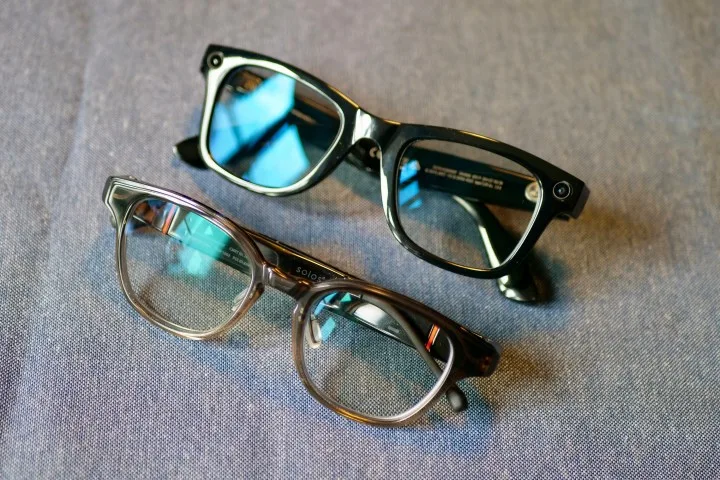
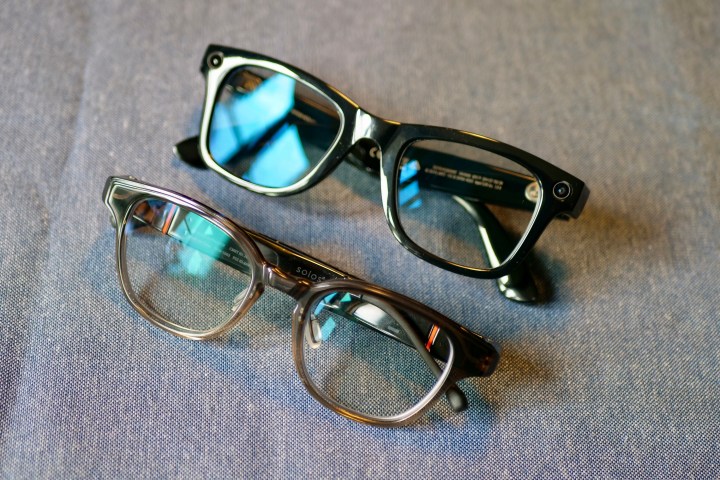
    The front of the Ray-Ban Meta and Solos AirGo 3 smart glasses.
    Ray-Ban Meta (top) and Solos AirGo 3 smart glasses. Andy Boxall / Digital Trends

    These smart glasses are reported to be powered by a 155 mAh battery and will weigh around 50 grams. The front camera is expected to facilitate code scanning, gesture recognition, and regular photo and video taking.

    Despite their similarities to the Meta Ray-Ban smart glasses, the underlying software will be different. Rather than the Meta AI suite currently used in Stories, Samsung will rely on Google’s technology.

    Specifically, Samsung will integrate Google’s Gemini AI into its smart glasses. This partnership aligns with previous collaborations, as Samsung’s Galaxy smartphones were among the first to feature native Gemini capabilities within the Galaxy AI ecosystem.

    This technological edge is significant since Gemini is already well-embedded in many of Google’s applications, particularly the Workspace suite utilized by millions. It currently offers valuable functionalities in essential tools like Gmail and Docs, along with the ability to interact with custom AI agents.

    Additionally, the partnership with Android will streamline the connection between the smart glasses and other devices in the ecosystem. However, Samsung won’t be the only contender in the smart glasses arena, as its Chinese competitor, Xiaomi, is reportedly working on a similar product designed to compete with Meta’s offerings.

  • Apple Smart Glasses Will Auto-Adjust To Your EyeSight Prescription

    Apple Smart Glasses will auto adjust its’ prescription after detecting your EyeSight prescription real time. Meaning? No need for eye checkups anymore!

    (المزيد…)