الوسم: Siri

  • OpenAI Chief Aims for ChatGPT to Replace Siri on iPhone

    OpenAI Chief Aims for ChatGPT to Replace Siri on iPhone

    One of the most unexpected highlights of Apple’s recent fall product launch was the topic of artificial intelligence. The company offered little detail about potential updates to Apple’s AI features or Siri. However, it appears that a significant competitor and collaborator has its eye on transforming the voice assistant experience with a bold new approach.

    What’s the plan?

    Sam Altman, the co-founder and CEO of OpenAI, casually mentioned on Twitter that the latest iPhones seem like a meaningful upgrade he’s been wishing for. In response, another AI industry leader suggested replacing Siri with ChatGPT’s conversational voice feature. Altman showed enthusiasm, calling it a “great idea” and expressing support. Keep in mind, OpenAI is already an exclusive Apple partner, providing AI technology that underpins many core features like writing tools and works in tandem with Siri.

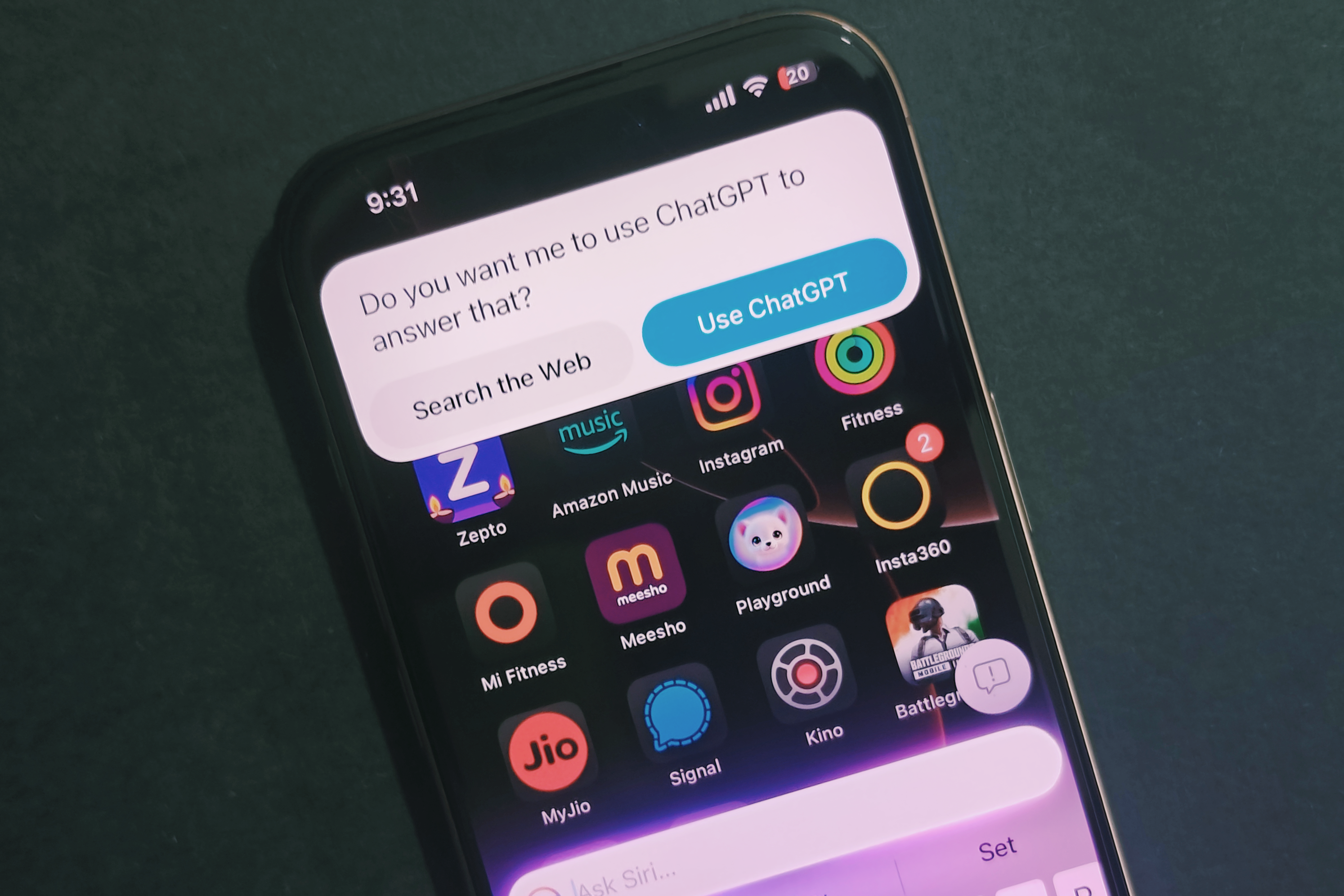
    Furthermore, when Siri encounters questions it can’t answer, the system hands off the query to ChatGPT. These capabilities are activated via a ChatGPT extension system, which users can opt to disable through the Settings app.

    What does the future hold for Siri?

    Apple’s reliance on ChatGPT to patch Siri’s functional gaps might soon evolve into something more ambitious. Reports suggest that Apple plans a significant upgrade next year, featuring an “AI brain transplant” that could lead to a new, smarter Siri powered by large language models like ChatGPT and Google’s Gemini.

    Additionally, if Apple’s in-house AI efforts fall behind, the company is reported to have contracted Anthropic and OpenAI to develop custom versions of Claude and GPT specifically designed to run on Apple’s own cloud infrastructure. This would pave the way for a more integrated and advanced Siri experience.

    Interestingly, negotiations are also underway with Google’s team, with Bloomberg reporting that Apple approached Alphabet Inc. about building a custom AI foundation based on Google’s Gemini technology to enhance Siri’s next iteration.

    There’s clearly a shift coming, with Apple positioning itself to harness the latest in AI research to redefine what a voice assistant can do.

  • Smart Siri With Deep Voice Controls Coming Soon

    Smart Siri With Deep Voice Controls Coming Soon

    At WWDC 2024, Apple introduced a new, advanced Siri experience capable of performing actions across multiple apps and understanding contextual cues, all made possible through a system known as app intents. The company later highlighted these features in an advertisement for the iPhone 16.

    As of 2025, these innovative Siri features have yet to arrive on iPhones. Earlier this year, shareholders filed lawsuits against Apple over misleading advertising that exaggerated Siri’s AI capabilities. The company even had to pull an ad that showcased these Siri enhancements.

    It appears that a Siri upgrade is on the horizon. According to Bloomberg, Apple plans to revamp its digital assistant early next year with a comprehensive overhaul of its app intents system.

    A visual showing Siri being activated on an iPhone illustrates the future possibilities: users might soon command Siri to locate specific photos, edit and share them, comment on social media posts, browse shopping apps and add items to their carts, or log into services—all through voice commands alone.

    The future of Siri is envisioned as both exciting and cautious. Currently, Apple is testing these cross-app voice interactions mainly with its pre-installed applications and a select handful of third-party services like Amazon, Uber, WhatsApp, and YouTube. The company is choosing a careful rollout to prevent past issues.

    In the past, Apple experienced notable setbacks, such as a malfunctioning notification summarization feature introduced with Apple Intelligence last year, which led to errors significant enough for Apple to disable the feature for several months. To avoid similar problems, Apple is adopting a more cautious approach this time.

    Using just their voice, users may soon be able to ask Siri to find, edit, and send photos, comment on posts, scroll through shopping apps to add items, or log into accounts—all without touching their screen. Still, to prevent mishaps, Apple will likely restrict or completely hide voice interactions in sensitive areas like mobile banking and digital wallets.

    This initiative is positioned as a major step forward in Apple’s ecosystem, emphasizing voice-based interactions over traditional touch interfaces. It aligns with concepts seen in Google’s Project Mariner and other AI-driven browsers that aim to streamline user tasks with minimal steps.

    Apple’s efforts with AI have faced criticism and hurdles. CEO Tim Cook admitted that the company has lagged behind competitors but pledged that progress is underway. The upcoming Siri overhaul marks a promising start towards a more capable AI assistant—potentially one that can rival Google’s Gemini or Microsoft’s Copilot in functionality and sophistication.

  • Siri vs Gemini Live: Whatʼs Changing in iOS 26 Assistant Features

    With the release of iOS 26 on the horizon, Apple enthusiasts are buzzing with excitement about the advancements coming to their favorite virtual assistant. Siri has been a staple feature for iOS users, but the introduction of Gemini Live promises to redefine the landscape of digital assistants. Let’s delve into the key changes and features that users can expect in this latest operating system.

    The Evolution of Siri

    Siri has come a long way since its launch, constantly adapting to user needs and technological advancements.

    Key Features of Siri

    • Voice Recognition: Siri uses advanced algorithms to understand natural language, improving its ability to follow complex queries.
    • Personalization: Integrated with Apple services like Calendar and Notes, Siri offers personalized suggestions tailored to user preferences.
    • Smart Home Integration: Siri controls smart home devices, making it easier for users to manage their environments through voice commands.

    Limitations

    While Siri has many strengths, it still faces challenges that Gemini Live aims to address:

    • Contextual Awareness: Siri often struggles with understanding context, leading to less accurate responses.
    • Complex Queries: Multi-part questions can confuse Siri, resulting in incomplete or inaccurate answers.
    • Customization: Limited options for personalizing the experience beyond simple preferences.

    Enter Gemini Live

    Apple’s Gemini Live is set to revolutionize how users interact with their devices. Built on cutting-edge AI technology, it promises to elevate the digital assistant experience.

    Notable Features of Gemini Live

    • Advanced NLP: Utilizing sophisticated natural language processing, Gemini Live offers enhanced understanding of complex sentences and queries.
    • Real-time Feedback: Users can receive instantaneous feedback and follow-up questions, creating a more interactive and engaging dialogue.
    • Task Automation: Gemini Live takes automation to the next level, managing a variety of tasks effortlessly based on user habits and preferences.

    Potential Advantages Over Siri

    Gemini Live comes loaded with features that enhance user experience:

    • Greater Contextual Understanding: The ability to maintain context throughout a conversation makes interactions feel more natural.
    • Enhanced Multitasking: Gemini can handle multiple tasks at once, making it easier to juggle various requests without losing track.
    • Broader Integration: With support for third-party apps and services, Gemini Live aims for a more connected experience across platforms and devices.

    Comparisons in User Experience

    Interaction Style

    • Siri: Responds primarily using pre-determined prompts, which can feel robotic.
    • Gemini Live: Offers a conversational dynamic, adapting responses based on previous interactions and user preferences.

    Customization

    • Siri: Limited room for personalization beyond basic settings.
    • Gemini Live: Designed to learn from user behavior, providing a more tailored experience over time.

    Speed and Efficiency

    • Siri: Speed can be sluggish, especially with complex queries.
    • Gemini Live: Emphasizes swift answers and reduced wait times through optimized algorithms.

    Implications for Users

    The transition from Siri to Gemini Live signifies a shift in how iOS users will engage with their devices.

    Benefits for Daily Use

    • Increased Productivity: Tasks can be completed more efficiently with fewer interruptions.
    • Enhanced Enjoyment: Interactive features make using an iOS device more fun and engaging.
    • Greater Convenience: Seamless integration with various apps simplifies daily routines.

    Challenges Ahead

    As with any significant update, some challenges are anticipated as Gemini Live rolls out:

    • Learning Curve: Users may need time to adapt to the new interaction style and features.
    • App Compatibility: Ensuring third-party applications work seamlessly with Gemini Live may require updates from developers.

    The future for Apple’s virtual assistant looks promising as it aims to compete with other advanced digital assistants on the market. With features designed for increased engagement and efficiency, the move towards Gemini Live represents a significant evolution in how users interact with technology in their everyday lives.

  • Fix Siri Issues in iOS 26: Troubleshoot Personal Request Problems

    As iPhone users, many of us rely on Siri for hands-free assistance, but it’s not uncommon to run into issues, especially with the Personal Requests feature. If you’re experiencing problems, this guide will help you troubleshoot and resolve common Siri issues in iOS 16.

    Understanding Siri Personal Requests

    Siri’s Personal Requests feature allows users to interact with their personal data through voice commands. You can send messages, check your calendar, and manage tasks using just your voice. However, this feature may sometimes fail to work as expected. Here’s how to identify and fix these problems.

    Common Personal Requests Problems

    1. Siri Not Responding to Commands

      • The voice assistant may not recognize or execute commands related to Personal Requests.

    2. Inability to Access Personal Information

      • Issues may arise when Siri is unable to pull data from your calendar, reminders, or messages.

    3. Connection Errors

      • Sometimes, Siri may struggle due to poor internet connectivity.

    Troubleshooting Steps

    1. Check Siri Settings

    Ensure that Personal Requests are enabled:

    • Open the Settings app on your iPhone.
    • Scroll down and tap on Siri & Search.
    • Make sure Listen for ‘Hey Siri’ is turned on.
    • Enable Allow Siri When Locked to access personal data even when your device is locked.

    2. Check Internet Connection

    A stable internet connection is crucial for Siri to function effectively:

    • Wi-Fi: Ensure that your Wi-Fi is connected and stable.
    • Cellular Data: If you’re using mobile data, verify that you have an active connection and that Siri is allowed to use it.

    3. Test Voice Recognition

    Sometimes, Siri may misinterpret commands:

    • Try rephrasing your request clearly.
    • Speak directly into the device’s microphone and avoid background noise.

    Additional Settings to Review

    4. Enable Personal Requests for HomePod

    If you’re trying to use Siri with a HomePod:

    • Open the Home app on your iPhone.
    • Tap on the Home icon and then select Home Settings.
    • Under People, select your name and ensure that Personal Requests is turned on.

    5. Check Voice Feedback Settings

    Sometimes, you might not hear responses from Siri:

    • Go to Settings > Siri & Search > Voice Feedback.
    • Choose options such as Always On to ensure you receive voice feedback when making requests.

    Reset Siri

    If all else fails, you might want to reset Siri:

    • Go to Settings > Siri & Search.
    • Toggle off Listen for ‘Hey Siri’ and Press Side Button for Siri.
    • Restart your device, then re-enable those settings.

    Update Your Device

    Keeping your iPhone updated can resolve various issues:

    • Go to Settings > General > Software Update.
    • If an update is available, download and install it.

    Use Airplane Mode to Reset Connections

    If you suspect connectivity issues:

    • Turn on Airplane Mode from the Control Center.
    • Wait a few seconds, then turn it off to reset the cellular connection.

    Need More Help?

    If you’ve tried all the above steps and still face issues:

    • Contact Apple Support for further assistance. They can help troubleshoot deeper software issues or hardware related to voice input.

    By following these steps, you can effectively troubleshoot most Siri Personal Request problems in iOS 16. Enjoy a seamless experience with your personal digital assistant!

  • Apple May Allow Users To Replace Siri As Default Assistant

    Apple May Allow Users To Replace Siri As Default Assistant

    Apple’s challenges in enhancing Siri with next-gen AI technology are widely recognized, while competitors like Google’s Gemini have gained traction in the Android realm. The situation escalated to the point where Apple had to retract advertisements promoting Siri’s advanced features, which have yet to be released nearly a year later.

    As a temporary fix, Apple has incorporated ChatGPT into the Apple Intelligence stack on iPhones, allowing the OpenAI chatbot to tackle questions that Siri is unable to answer. Additionally, there are discussions about integrating more AI chatbots to provide similar support.

    In the future, it’s possible that Apple will permit users to completely replace Siri as their primary voice assistant on Apple devices. This would mark a significant change, considering Siri has been a hallmark of Apple’s innovation. However, in response to increasing competition and regulatory pressures, Apple may take such a step, as noted by Bloomberg.

    The report indicates that in order to comply with anticipated European Union regulations, Apple is actively modifying its operating systems. For the first time, this will allow users to change from Siri as their default voice assistant to third-party alternatives, according to sources familiar with the developments.

    Why Does It Matter?

    Currently, if you ask Siri questions like “Who won the Academy Award for Best Director in 2023?” or “What principle best explains fluid motion in a closed loop?” it cannot respond. In such cases, Siri would refer these inquiries to ChatGPT, pending user approval.

    The overarching concern is that Siri remains a fixture, but permitting users to entirely replace it with third-party software—like Google’s Gemini, Anthropic’s Claude, or OpenAI’s ChatGPT—would clearly signal that Apple is faltering in the AI assistant sector. Apple is unlikely to allow this situation to unfold.

    However, many users have already transitioned to competing chatbots, such as Gemini, ChatGPT, and Perplexity, which are increasingly being integrated with various third-party applications. Personal tests with Gemini on an iPhone indicate that Google’s assistant is already superior to Siri in numerous ways.

    According to Bloomberg’s detailed report, users would likely switch from Siri if Apple gave them the option. “Unless there’s a significant improvement with Apple’s products, many users may make that choice,” it states. Apple has already made notable concessions for users in the EU, such as enabling third-party app stores and external in-app payment solutions, as well as the capacity to alter default messaging and calling applications.

    What’s Next for Apple in AI?

    Apple is currently developing a next-gen version of Siri, internally known as LLM Siri, intended to match the capabilities of contemporary AI chatbots. However, previous reports suggest that this major update is still a year or two away. Apple is enlisting user data to aid in the training for this new system.

    Apple aims to differentiate the Apple Intelligence branding from Siri to continue advancing AI-powered features without the hindrance of the struggling virtual assistant. As part of this approach, the company is exploring innovations such as an AI-powered battery management system and a personalized health coach.

    Moreover, Apple intends to adopt a more cautious strategy for feature announcements following the Siri missteps. “Apple will largely refrain from revealing features long before their official launch,” the Bloomberg report states. Further insights into the company’s future initiatives are expected to be unveiled at the WWDC 2025 conference next month.

  • Apple Says Siri’s AI Features Are Taking Longer Than Planned

    Apple Says Siri’s AI Features Are Taking Longer Than Planned

    During an earnings call with analysts yesterday, Apple CEO Tim Cook confirmed that the company is actively enhancing Siri, though a release might still be some time away. Cook reassured listeners about Apple’s ongoing progress, even without specifying a timeline for when these advancements would be available. He elaborated on the Apple Intelligence features that have debuted with iOS 18, which encompass Genmoji, Clean Up, and integration with ChatGPT, among others.

    Cook stated, “Regarding the more personalized Siri features we’ve announced, we require additional time to ensure they meet our rigorous standards. We are indeed making progress and can’t wait to present these enhancements to our customers.”

    When questioned directly about the delays by Richard Kramer from Arete Research, Cook reiterated, “We simply need more time to finalize the work, so it lives up to our high standards. It’s primarily taking longer than anticipated, but we are excited and making progress toward launching these personalized Siri features.” Unfortunately, neither Cook nor CFO Kevan Parekh hinted at a specific release timeline.

    Originally, these updates were expected to launch in April, but internal feedback has indicated numerous issues that remain unresolved. As a temporary measure, Apple has partnered with ChatGPT to integrate its features on both iPhone and Mac platforms. The company is keen to resolve these issues soon, particularly as it faces legal challenges for misleading advertising centered on advanced AI capabilities.

    While earlier communications from Apple hinted at a release sometime this year, this was the first update since the delays were disclosed in March. The upcoming Siri enhancements are supposed to include contextual commands and the capability to perform actions within various applications and device settings.

  • Apple Might Fix Siri on iPhones Using Google’s Gemini

    Apple Might Fix Siri on iPhones Using Google’s Gemini


    “Can you direct me to a nice coffee shop where I can work?” I asked my iPhone’s voice assistant.

    “I’ll need ChatGPT for that,” Siri replied during my recent interaction with Apple’s assistant. Conversely, Google's Gemini provided exactly what I was looking for.

    Soon, Gemini will bring its functionality to iPhones, stepping in to cover the areas where Siri falls short. During a pivotal trial regarding Google’s search monopoly, CEO Sundar Pichai revealed there could be a collaboration with Apple for Gemini to be integrated on iPhones in the near future.

    “Pichai mentioned he has had several discussions with Apple’s CEO Tim Cook throughout 2024 and anticipates finalizing a deal by mid-year,” according to a Bloomberg report.

    What’s the current situation?

    Google is actively reforming Google Assistant by replacing it with Gemini across devices ranging from Android phones to Wear OS wearables. This change is significant since Gemini offers enhanced capabilities beyond what Google Assistant can perform.

    From performing in-depth research to managing tasks across a variety of applications, Gemini represents a monumental step forward for virtual assistants. Amazon has implemented a similar strategy with its Alexa+ assistant.

    In contrast, Siri has struggled to keep pace with recent AI advancements, despite being an early leader in the field. This has led Apple to partner with OpenAI, utilizing ChatGPT to bridge the gaps in Siri's functionality.

    ChatGPT has increasingly taken over tasks ranging from writing support to general inquiries. However, integration is not yet flawless, requiring users to sometimes open the ChatGPT app for tasks that Siri alone cannot perform.

    Why does the Google deal matter?

    Once an agreement is established between Google and Apple, Gemini could significantly enhance Siri’s abilities, emulating the current role of ChatGPT within the Apple ecosystem. This would allow users to select their preferred AI assistant on iPhones, similar to choosing a default browser.

    This isn't the first indication that Gemini might function natively within iOS. Following last year’s WWDC, Apple’s senior executive Craig Federighi hinted at a future where users can select their AI model, specifically mentioning Gemini.

    Subsequent news has revealed ongoing discussions between Google and Apple about Gemini’s integration. Recently, a code dive revealed references to Gemini as a potential native option within Apple's framework. Following Pichai's statements, an announcement of Gemini's integration may be made during the upcoming WWDC conference in June.

    Currently, Gemini is accessible to iPhone users, but only through the app or by setting up home and lock screen widgets. I have extensively utilized this non-native method, and it has proven to be significantly more efficient than Siri. Even newer assistants like Perplexity are more capable in various tasks.

    I am optimistic that once Gemini becomes natively integrated into iOS, users will be able to activate it seamlessly through Siri. Gemini could handle all the tasks that Siri struggles with, serving as a temporary solution until Apple revitalizes Siri and re-establishes its innovative edge.

  • Wiim’s Voice Remote 2 Looks Just Like Apple’s Siri Remote

    Wiim’s Voice Remote 2 Looks Just Like Apple’s Siri Remote

    Wiim is set to release an update for its Alexa-compatible voice remote, and the design of this new model closely resembles the Siri voice remote that comes with every Apple TV 4K streaming device.

    Dubbed the Voice Remote 2, I had an opportunity to see it firsthand during a Wiim product presentation in Markham, Ontario. The official launch date is April 8, when we can expect details such as price and battery life. On that date, you should find it available on Wiim’s website and probably on Amazon too. For now, check out these images for a preview.

    Wiim Voice Remote 2.
    Simon Cohen / Digital Trends

    Wiim has clearly been inspired by Apple’s design aesthetic. Their products such as the Wiim Amp, Amp Pro, Ultra, and the recently launched Vibelink Amp feature sleek, rounded aluminum bodies that evoke the design of the Apple Mac Mini. These products even come in Apple’s popular colors: silver and space gray.

    Wiim Voice Remote 2.
    Simon Cohen / Digital Trends

    However, while Wiim’s other products seem to pay homage to Apple’s groundbreaking design, the Voice Remote 2 ventures into the realm of outright imitation.

    The materials, dimensions, shape, and layout of the buttons—all of these aspects are strikingly similar. The positioning and appearance of the voice activation button, even featuring the same microphone icon, are nearly identical. Additionally, the dark plastic area found on the front edge has been replicated, an oddity considering that this is where Apple includes its infrared emitter. If this new remote retains the functionality of Wiim’s original voice remote, it doesn’t utilize infrared at all.

    Interestingly, although the Voice Remote 2’s power button is positioned in the opposite corner compared to Apple’s remote, the area designated for the USB-C charging port has a surprisingly similar design.

    Check out these photos I snapped next to a Siri Remote to illustrate the resemblances.

    It will be interesting to see how Apple reacts to this, whether legally or otherwise.

    If you’re a fan of Wiim, 2025 is shaping up to be an exciting year. While I can’t divulge any specifics yet, my product briefing left me astounded by what Wiim has in store. Trust me, there will be plenty to discuss.

  • Apple Confirms Longer Wait For Key Siri Features

    Apple Confirms Longer Wait For Key Siri Features

    Late last week, Apple discreetly announced that the release of an important Apple Intelligence feature would be postponed. The company has since made this information more accessible by including a note on its official website.

    Apple Intelligence, which was revealed in June, was anticipated to feature an upgraded version of Siri, the company’s voice assistant. These eagerly awaited improvements aimed to enhance Siri’s comprehension of user context and its capability to communicate more effectively with applications.

    In a statement, Apple explained, “It’s going to take us longer than we thought to deliver these features, and we anticipate rolling them out in the coming year.”

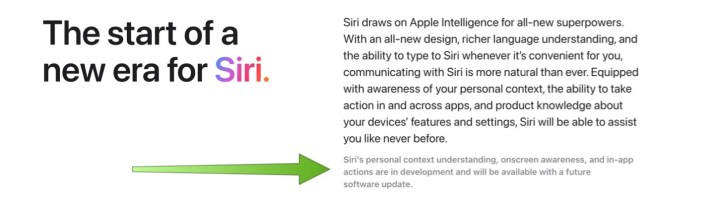
    This delay had previously gone unmentioned on Apple’s online store until recently, when this oversight was corrected. The Apple Intelligence webpage now states that “Siri’s personal context understanding, onscreen awareness, and in-app actions are in development and will be available with a future software update.”

    Apple admits it's delaying parts of Apple Intelligence.
    Apple

    Apple Intelligence has encountered several obstacles since its announcement at last year’s Worldwide Developers Conference (WWDC). Many expected its launch to coincide with the release of the iPhone 16 series in the fall. Instead, Apple decided to take a phased approach for the rollout. Some features of Apple Intelligence were included in the updates for iOS 18.1, iPadOS 18.1, and macOS Sequoia 15.1, while additional capabilities were introduced in later updates. Notably, Apple Intelligence remains unavailable in specific regions, such as the European Union.

    This most recent setback in Apple Intelligence’s development occurs at a time when competitors, such as Google, are rapidly incorporating AI functionalities into their offerings, exemplified by their Gemini project.

  • Apple Confirms Long Delay For AI-Enhanced Siri Assistant

    Apple Confirms Long Delay For AI-Enhanced Siri Assistant

    While Apple continues to enhance its ecosystem with cutting-edge AI functionalities, it faces significant challenges, especially when compared to Google’s Gemini. A notable underperformer in this area has been the Siri virtual assistant, which has yet to incorporate the new features Apple announced at last year’s developer conference.

    Recently, the company confirmed that a revamped Siri, capable of accessing user data stored on devices and interacting with applications, has been postponed until next year. This next-generation version, referred to internally as “LLM Siri,” might not make its debut until 2024, with the possibility of further delays extending into 2027.

    “We’ve also been working on a more personalized Siri that possesses greater awareness of your personal context and can perform actions across your apps. Delivering these features is taking longer than we anticipated, but we expect to roll them out over the next year,” an Apple spokesperson told Daring Fireball.

    Activating Siri on an iPhone.
    Nadeem Sarwar / Digital Trends

    Initially, Apple had hoped to launch the updated Siri with the iOS 18.4 rollout in April. However, concerns about the implementation of the new features were raised by senior executives, including software engineering chief Craig Federighi, during internal evaluations, as reported by Bloomberg.

    Some employees speculate that the entire upgrade plan may be scrapped, requiring Apple to start anew. As a temporary workaround, the company has aligned with OpenAI to integrate ChatGPT functionalities on iPhones and Macs, which will work alongside Siri as part of Apple’s AI framework.

    While ChatGPT offers advanced language processing and multimodal features, such as image creation and file analysis, Siri still lacks essential capabilities that could significantly improve user experience. For instance, it currently cannot analyze user data to provide contextualized responses, nor can it engage deeply with third-party applications.

    Integration of ChatGPT and Siri on iPhone.
    Siri is currently leveraging ChatGPT capabilities. Nadeem Sarwar / Digital Trends

    In contrast, Google’s Gemini is now integrated into high-end Android devices and fully utilizes the data available across its Workspace tools, including Gmail, Docs, Maps, and YouTube. Additionally, it can translate voice commands into actionable tasks across various applications, even those developed by third parties like Spotify.

    Apple seems to be lagging behind in this dynamic landscape, and recent delays raise questions about the company’s innovation trajectory. Nevertheless, it is making strides in other areas, recently partnering with Alibaba and Baidu to accelerate the development of its AI systems for the Chinese market.

  • Apple Lags in Siri, Microsoft Introduces Copilot for Mac

    Apple Lags in Siri, Microsoft Introduces Copilot for Mac

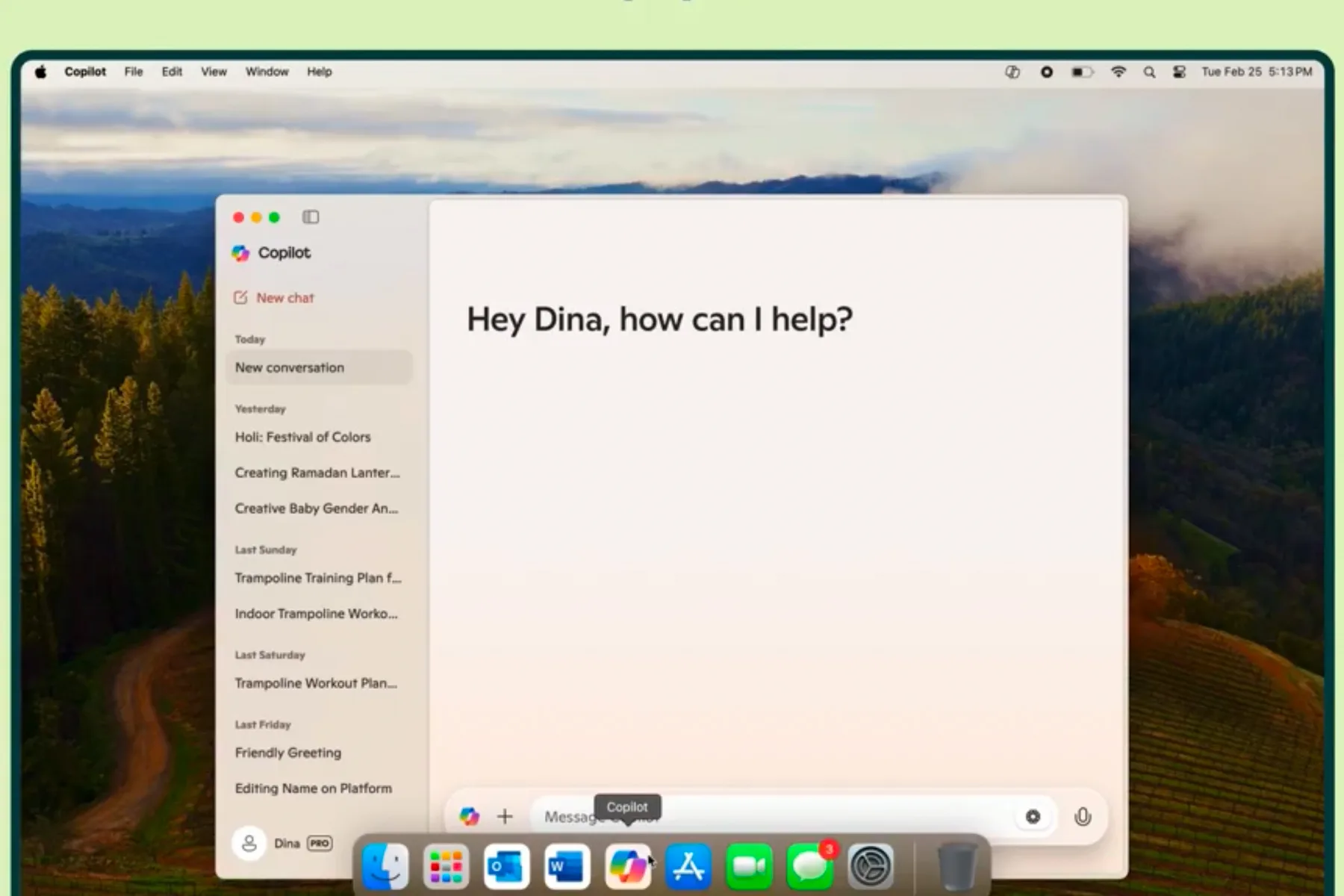
    Microsoft has officially introduced a dedicated Copilot application for Mac users today. Currently, it’s exclusively accessible to those in the United States and the United Kingdom, but it comes packed with innovative features, including the new Think Deeper mode.

    To utilize the app, your Mac must be running macOS 14 or a newer version. The app is compatible with any Mac that has an M1 chip or a more recent Apple processor.

    In terms of functionality, the Copilot app supports a quick launch keyboard shortcut—Option + Space—allowing users to easily access the AI assistant. This version for macOS is designed for multi-modal input, enabling it to understand text commands as well as voice and image inputs.

    Additionally, the app features Copilot Daily, which delivers personalized audio briefings that cover highlights from daily news sources, weather updates, and other relevant content. This service is reminiscent of Samsung’s Now Brief feature found on their Galaxy S25 series devices.

    Copilot for macOS also offers capabilities like text-to-image generation, writing assistance, language translation, and image editing, among others. According to its App Store description, “Copilot merges the power of AI with the creative potential of advanced OpenAI models in one convenient location.”

    It’s quite intriguing that Microsoft is utilizing OpenAI technology on an Apple platform, given their competitive relationship. Notably, OpenAI’s GPT framework serves as a key link between the two tech companies. Microsoft has made significant investments in OpenAI and working together has allowed Copilot to take advantage of OpenAI’s advancements. Recently, Microsoft also deployed OpenAI’s latest AI model, GPT-4.5, in its Azure AI Foundry.

    As the Copilot app becomes available in the App Store, users are already raving about the ease of accessing the assistant with the option + space feature for their daily tasks. While the app is not yet released globally, Microsoft’s Yusuf Mehdi has indicated that efforts are underway to broaden the app’s reach.

    Meanwhile, Apple continues to integrate ChatGPT’s functionalities with Siri and its AI platforms across devices. However, progress on enhancing Siri’s generative AI capabilities has reportedly faced delays. On the flip side, other tech giants, like Google, have upgraded their assistant to a more advanced version named Gemini.

    Time will reveal if Copilot serves merely as an interim AI solution for Mac users. For now, excitement surrounds the initial launch, with further expansion plans on the horizon.

  • Apple Delays Plans For Siri’s Evolution Again

    Apple Delays Plans For Siri’s Evolution Again

    The key highlight from Apple’s recent WWDC event was the anticipated evolution of Siri in the AI era. While some enticing features were announced, many are still not available to the public, and what has been released does not significantly advance the technology.

    Despite the hurdles, the future appears more promising, with hope on the horizon.

    As reported by Bloomberg, Apple is diligently developing an advanced language model version of Siri that will enable more natural and complex conversations.

    Large Language Models, commonly referred to as LLMs, are instrumental in powering conversational AI technologies found in platforms like OpenAI’s ChatGPT and Google’s Gemini. Apple’s vision for LLM Siri aligns closely with these models, as they aim to deliver a similarly intuitive user experience.

    Siri displayed on iPhone's lock screen.
    Nadeem Sarwar / Digital Trends

    “The new Siri will incorporate innovative AI models to interact in a more human-like manner,” the report states, with an announcement expected sometime in 2025 and a public rollout projected for spring 2026.

    This timeline may seem slow, particularly as users can already leverage enhanced features through Siri’s integration with ChatGPT in certain iOS test versions.

    In contrast, Google has released the standalone Gemini app for iPhones, featuring its Live conversation mode. This raises an important question: Why the lengthy wait when competing products are already available to users?

    Additionally, Apple is set to support various third-party language models, including ChatGPT, as part of its Apple Intelligence platform. According to Bloomberg, integration with Google’s Gemini is already on the agenda.

    Integration of ChatGPT and Siri on iPhone.
    Nadeem Sarwar / Digital Trends

    Apple’s efforts to stay competitive in the virtual assistant landscape seem to be lagging. Google has already transitioned many functions of Google Assistant to Gemini, achieving significant integration with tools like Gmail and Docs that offer users substantial benefits.

    Meanwhile, OpenAI has launched ChatGPT Search, enhancing the way users discover information online, making it a more conversational experience compared to traditional search engines. Furthermore, they are working on a web browsing feature and expanding their offerings with new search and shopping tools.

    The upcoming LLM Siri upgrade is anticipated to allow interaction with apps more effectively. “It will also make greater use of App Intents, which will enable more precise control over third-party applications,” the Bloomberg report adds.

    Gemini Live on an iPhone.
    Gemini Live on an iPhone 16 Pro. Nadeem Sarwar / Digital Trends

    Enabling Siri to perform tasks across various apps has long been a goal for users. This capability now appears to be on the horizon, although it remains over a year away. However, Apple is not alone in this endeavor.

    As noted by Android Authority, Android 16, which is currently available in a Developer Preview, indicates that Gemini may soon allow task executions across third-party apps, currently limited to Workspace applications like Gmail and Docs.

    While Apple is making positive strides with its plans for LLM Siri, by the time these advancements materialize, competitors might have significantly moved ahead with their proven conversational AI capabilities.

  • Siri Better Watch Out Samsung Unveils Major Bixby Update

    Siri Better Watch Out Samsung Unveils Major Bixby Update

    Over the past few years, Samsung’s Bixby assistant has often seemed like a secondary player in the digital assistant arena. In 2024, as Google rolls out Gemini and Apple enhances Siri drastically, Bixby has remained noticeably stagnant, lacking significant upgrades or features to keep pace.

    However, change may be on the horizon. At a launch event in China for the Galaxy W25 and W25 Flip, Samsung unveiled its next-generation Bixby, promising a host of new AI capabilities that could help it compete more effectively with Gemini and Siri.

    The updated Bixby aims to excel in understanding complex inquiries and will be equipped to handle multitasking instructions conveyed in a single phrase. Similar to how Siri has improved its comprehension of natural language, Bixby is set to receive comparable enhancements.

    A screenshot of Samsung's next-generation Bixby.
    Samsung

    Additionally, the new Bixby will have the capability to analyze what’s displayed on your phone or tablet screen, allowing it to respond more accurately to your needs. For instance, if you’re looking at a restaurant and send a message about it, you could simply tell Bixby to “navigate here” for step-by-step directions. It appears Bixby is also acquiring functionalities for website translation and creating documents, slides, and spreadsheets based on user prompts.

    Bixby is also expected to feature a redesigned interface that takes over the entire screen. While it’s still uncertain if it will incorporate the glowing effect introduced with the latest Siri, a visual refresh from the current version of Bixby is confirmed.

    Though these updates sound promising, there is a significant caveat: Samsung has not disclosed when the next-gen Bixby will become available beyond the China-only Galaxy W25 and W25 Flip devices.

    A screenshot of Samsung's next-generation Bixby.
    Samsung

    Speculation suggests that the new Bixby may make its debut in the U.S. with the launch of the Samsung Galaxy S25 series in early 2025, although this remains unconfirmed. It’s also possible that the updated Bixby will not be widely available until the Galaxy Z Fold 7 and Flip 7 later in 2025.

    Whenever the new Bixby arrives, it’s likely to attract significant attention. Samsung has been actively engaged in the AI space this year with its Galaxy AI suite, and Bixby’s lack of involvement has been noticeable. Whether these enhancements will effectively challenge Siri and Gemini’s dominance remains to be seen, but Samsung appears to be moving in the right direction.


  • iOS 18 Brings Top AI Tools In December, Siri Will Wait Longer

    iOS 18 Brings Top AI Tools In December, Siri Will Wait Longer

    The Apple Intelligence toolkit has experienced a mixed rollout, featuring both postponed functionalities and lackluster enhancements. However, it appears that the most promising set of AI tools unveiled by Apple during WWDC earlier this year will soon be available.

    According to the latest edition of his PowerOn newsletter, Mark Gurman from Bloomberg states that the iOS 18.2 update is expected to launch through the stable channel in the first week of December.

    This latest version of iOS is already undergoing beta testing and introduces an exciting trio of AI enhancements designed for the iPhone. One notable feature is Siri’s integration with OpenAI’s ChatGPT, which facilitates complex queries being processed through the chatbot.

    Another addition is Visual Intelligence, which enables users to simply point their phone’s camera at their surroundings and extract useful information about what they see. Currently, it can perform tasks such as identifying different dog breeds or reading details off a poster.

    Considering the extensive integration with OpenAI’s technology, it’s likely that Visual Intelligence will evolve to include capabilities similar to the latest version of ChatGPT, expanding its multi-modal understanding.

    Siri offloading user query to ChatGPT.
    Nadeem Sarwar / Digital Trends

    The iOS 18.2 beta also includes creative features like the Image Playgrounds app, allowing users to produce playful images based on their own snapshots. Furthermore, the new custom Genmoji system is part of the upcoming update.

    Mr. Gurman notes that with the iOS 18.4 release, Siri is poised to undergo a significant transformation that has fans excited about the digital assistant’s potential resurgence in the AI landscape. He mentions, “Siri will be able to access users’ data and respond to inquiries based on the information displayed on their screens.”

    Currently, Google’s Gemini can access both local text and media files and provide responses based on that information. Its deep integration with the Workspace platform enables it to reference documents in Google Drive and other essential tools, like Docs.

    Similarly, the Notebook LM tool can engage with YouTube videos and third-party web page URLs without requiring a subscription.

    In Apple’s scenario, Siri—enhanced by OpenAI’s technology—will be able to answer queries using information retrieved from local files and data stored on the device. This could include accessing travel details from emails, scheduling items from calendar events, and extracting business information from PDFs and spreadsheets.

    Visual Intelligence on iPhone.
    Jesse Hollington / Digital Trends

    Moreover, a significant feature will be enhanced integration with third-party applications, enabling the digital assistant to complete tasks in those apps using only voice or text commands.

    Apple plans to allow users to explore other third-party options like Gemini in the future. Additionally, Siri will be able to provide answers based on the content visible on the user’s screen.

    The release of iOS 18.4 is anticipated sometime in April of next year. This timeframe coincides with when Apple is expected to unveil the next-generation iPhone SE, featuring an updated design, enhanced processing capabilities, and support for Apple Intelligence.

  • Apple To Charge for Advanced Siri, Photo Editing AI Features

    Apple To Charge for Advanced Siri, Photo Editing AI Features

    Apple has found yet another way to put its forthcoming Apple Intelligence features behind a paywall. In addition to reserving Apple Intelligence for the latest device models, Apple is reportedly mulling paid subscriptions for certain AI-powered tools.

    The subscription model would mimic Apple’s existing iCloud+ services, which charge users a quit-anytime monthly fee.

    The rumored “Apple Intelligence+” offering would woo new customers while creating a new revenue stream for Apple, Bloomberg’s Mark Gurman writes in the latest issue of his Power On newsletter. From a hardware standpoint, Apple has focused more on longevity than on major device updates over the past few years.

    This might help retain current Apple customers but doesn’t entice new ones. By leveraging its flashy new OpenAI partnership to offer major software features, putting those features behind a device paywall, and then charging users a monthly fee to use certain parts of the AI suite, Apple might be able to court new users while raking in some extra cash.

    ChatGPT integration in Apple Pages

    “The Apple Intelligence capabilities, including an upgraded version of Siri, will be the biggest test of whether software can drive a hardware sales surge,” Gurman writes. “The features are likely to be a centerpiece of Apple’s marketing for the iPhone 16, just as ads for the original Siri helped drive sales of the iPhone 4S in 2011.”

    Apple isn’t expected to introduce Apple Intelligence+ subscriptions right off the bat. Instead, the Apple Intelligence suite—whatever parts of it debut this year, at least—will start out free, with the long-term plan to monetize sitting just over the horizon.

    “If it all comes together, Apple could find itself in a strong position in a few years,” says Gurman. “The company will be less reliant on hardware tweaks to drive its business and will actually be making money from AI—something everyone in Silicon Valley is hoping to pull off.”

    Even if Apple does decide to initiate a subscription-based revenue stream, its reception might fall short of expectations. Despite the hype around generative AI, only one in 14 adults use chatbots regularly in the United States, where chatbots are most popular.

    iPhone users are also already asking how to opt out of generative AI features when Apple Intelligence rolls out later this year. AI might be a major marketing buzzword, but that doesn’t necessarily mean people want it on their devices.

    We’re in the throes of the AI arms race, though, and the realities of generative AI’s usage aren’t likely to deter any major technology company anytime soon.

    Gurman expects Apple to partner with “at least” one additional chatbot maker by the time Apple Intelligence launches this fall. While his sources report that Apple has “zero interest” in working with Meta’s Llama model, Google’s Gemini and Anthropic’s Claude are both thought to be in the running.

  • Siri Can Now Talk in Your Own Voice

    The iPhone and other Apple devices will have a number of new accessibility features later this year, according to Apple.

    For spoken conversations, Personal Voice uses a synthesized version of your voice, and Live Speech lets you type and have it spoken out loud.

    Personal Voice

    For people who are unable to speak, Personal Voice is a particularly exciting new feature. For the system to learn your voice, you must read a randomized set of text prompts for around 15 minutes. It allows you to communicate with friends and family in a meaningful and natural way once it is set up.

    Live Speech

    For people with speech impairments, Live Speech is another useful feature. During phone calls, FaceTime calls, and in-person conversations, you can type what you want to say and it will be spoken out loud in your own voice. A preloaded voice will speak for you if your ability to speak is already impaired.

    Other Accessibility Features

    Apart from Live Speech and Personal Voice, Apple has announced a number of other accessibility features for its devices. These features include:

    • Assistive Access, which simplifies the use of apps and experiences by reducing them to their essential features.
    • Point and Speak for the Magnifier app, which is designed to help users with vision impairments interact with physical objects that have multiple text labels.

    These new accessibility features are a welcome addition to Apple’s growing collection of tools designed to make it easier for people with disabilities to use their devices. They demonstrate Apple’s commitment to making its products available to everyone.

  • iOS 15.4 Gets A New LGBTQ Voice For Siri Called “Quinn”

    Recorded by a member of the LGBTQ+ community, iOS 15.4 has added a fifth American voice for Siri. iOS developer Steve Moser says the filename for this new voice refers to it as “Quinn” even though Apple’s UI calls it Voice 5.

    (المزيد…)