الوسم: Sid Meier’s Civilization 7

  • Himiko, Wa’s Queen: A Comprehensive Guide for Civ 7 Players

    Himiko, Wa’s Queen: A Comprehensive Guide for Civ 7 Players

    The Queen of Wa version of Himiko is notably more targeted in her approach within Civilization 7 compared to other leaders. While some civilizations can significantly influence gameplay, it’s often best to enhance her strengths rather than masking any weaknesses.

    Himiko shines in the realm of science, boasting exceptional scientific potential. When paired with civilizations that also focus on this area, she can rapidly advance through technology trees, setting her up for a Science victory.

    Himiko, Queen of Wa Overview


    As previously noted, Queen of Wa Himiko has an impressive ability to generate significant amounts of science each turn. While she can capitalize on this in any scenario, her science output dramatically increases when she effectively fosters friendships with the majority of other civilizations in the game.

    Himiko’s inherent bonuses are:

    • A unique effort that provides a 25 percent increase in science generation for her and her allies.
    • Bonus science per era for each leader she is friendly or allied with.
    • Ability to support endeavors at no cost, saving influence points.
    • Unlocks the option to utilize Meiji Japan in the Modern Age.

    For Himiko, aligning with multiple civilizations is key to her success. Selecting the right partnerships is crucial to avoid getting entangled in unwanted conflicts.

    Without allies, you risk not maximizing Himiko’s potential, and if wars arise, you’ll find yourself without any support.

    While it’s entirely feasible to pursue a victory type outside of Science for Queen of Wa Himiko, other victory methods are less likely to utilize her strengths effectively.

    Best Civilizations to Pair with Himiko, Queen of Wa


    Every civilization option in the Antiquity Age in Civilization 7.

    Given Himiko’s specialized strengths and winning strategy, her optimal civilization choices are limited.

    Maya (Antiquity Age)

    The Maya civilization will enhance Queen of Wa Himiko’s science capabilities over the long term, making it a superior choice if you’re set on pursuing science victories.

    The most valuable bonuses from the Mayans include:

    • The Palace earns 0.5 science production for every adjacent vegetated terrain.
    • The Hul’Che, a unique combat unit designed for success in vegetated areas.
    • The Uwaybil K’uh, a unique quarter that grants a production boost for each technology researched.
    • The K’uh Nah, a unique building providing a tremendous amount of additional science, particularly effective when built on vegetation.

    The Mayans rely heavily on specific terrain, and lack of vegetation can hinder their performance significantly. However, if played to their strengths, the Mayans enhance Himiko’s core capabilities splendidly.

    In the quest for a science victory during the Antiquity Age, aim to acquire ten scientific codices. Given your rapid progression through technology and production boosts, you’ll achieve this quickly.

    Abbasid (Exploration Age)


    The Abbasid civilization in Civilization 7.

    Several formidable options exist in the Exploration Age for a leader focused on science, and the Abbasid is among them. While they have a strong emphasis on science, they also provide some gold bonuses.

    Key bonuses from the Abbasids include:

    • A gold bonus linked to your rural population whenever you create a specialist.
    • Production bonuses for the House of Wisdom.
    • The Ulema, a unique quarter that boosts science generation based on the number of specialists in the city.
    • The Madrasa, a unique building that offers a substantial boost to science production.

    Both the Abbasids and the Mayans can significantly enhance science generation, maximizing your advancements during the Exploration Age.

    Ming (Exploration Age)


    The Ming civilization in Civilization 7.

    If you’re looking for a more consolidated strategy, Ming provides a compact approach. They focus on enhancing science production in their capital, though they incur a penalty on any social policy currently active.

    Their most significant bonuses include:

    • 50 percent additional science generation in the capital.
    • -15 science generation for each social policy in effect.
    • The Mandarin, a unique merchant capable of setting up a trade route to import resources while generating a gold bonus through road establishment.
    • The Ming Great Wall, a unique defensive structure that strengthens defenders’ combat abilities.

    While the Ming may have fewer unique structures compared to the Abbasids, their 50 percent increase in capital science generation can be extremely valuable, depending on your city’s development.

    In the face of potential threats, the Ming Great Wall can be essential for protecting your civilization.

    Meiji Japan (Modern Age)


    The Meiji Japan civilization in Civilization 7.

    In terms of scientific advancements during the Modern Age, few civilizations rival Meiji Japan. Their effective combination of defensive units, production enhancements, and science boosts can help carry you to a scientific victory, especially when building on the strengths of previous civilizations mentioned.

    Key bonuses from Meiji Japan include:

    • A science boost with each time you overbuild a structure.
    • The Mikasa, a unique naval unit that respawns upon its first destruction at the closest settlement.
    • The Zero, a unique aircraft unit with enhanced range and strength against enemy air units.
    • The Jukogy, a unique building that significantly increases production, particularly when placed near coastlines or wonders.

    Meiji Japan presents substantial potential for rapid technological advancement in the Modern Age through consistent overbuilding, while also offering a stronger defense compared to other civilizations with their specialized units.

    Pursuing a science victory can attract attention from rival leaders, so it’s beneficial to have defensive capabilities to protect your lead.

    Maintaining Himiko’s unique endeavor throughout the ages is crucial— that 25 percent bonus will have a substantial impact as your base science value increases. By the Modern Age, the significance of this bonus will be immense.

  • Your Ultimate Guide to Army Commanders in Civilization VII

    Your Ultimate Guide to Army Commanders in Civilization VII

    Quick Links


    Army Commanders are a new type of unit introduced in Civilization 7. They significantly alter combat dynamics compared to previous games in the series. Uniquely, Army Commanders can receive promotions, while regular units do not. They also have the distinct ability to operate across different eras, making them an essential part of your strategy.

    These commanders are among the most powerful units in the game, enabling fast movement across the map, providing critical combat bonuses, and even boosting your city’s district productivity. This guide covers all aspects of Army Commanders to help you maximize your empire’s potential.

    Updated on March 2, 2025: This article has been revised to provide more insights into Army Commanders in Civilization 7.

    Overview of Army Commanders

    Army Commanders stand out because they are the only unit that can operate across different ages. For instance, if you have multiple commanders in the Antiquity Age, they will continue to function in the Exploration Age. They maintain their experience and promotions, which is crucial for effective gameplay. Commanders gain experience through attacking enemy units, defeating independent powers, or capturing settlements within their Command Radius.

    Understanding the Command Radius

    The Command Radius is represented by the white tiles that surround your commander. At the default level, commanders have a one-tile radius.

    Deploying and Organizing Armies

    Army Commanders can combine multiple units into one tile, allowing you to manage your forces more efficiently. At their base ability, they can stack four additional units in a single tile, streamlining operations and enabling the use of movement bonuses from the Maneuver promotion tree.

    Focused Fire and Coordinated Attacks

    These commanders possess special abilities that can unleash a Focus Fire with ranged units or orchestrate a Coordinated Attack with infantry and cavalry units. Although commanders themselves cannot inflict damage, they come equipped with a combat stat that allows them to withstand some attacks. However, since they preserve upgrades through eras, it’s essential to protect them.

    Using these abilities boosts the combat strength of units, potentially tipping the scales in battle and providing the edge needed for victory.

    Reinforcement and Recovery

    An invaluable function of Army Commanders is their Reinforce ability, allowing units to quickly return to the Army Commander, even from distant locations on the map. A unit just needs to be over six tiles away from the Commander with full movement potential. The time it takes for units to join the stack depends on their distance from the Commander and any Recovery Time promotions you might have.

    Commanders Will Respawn

    If you happen to lose an Army Commander, they will respawn after a set number of turns, based on your game speed settings. On the standard speed setting, it takes 20 turns for them to return.

    Available Promotion Trees for Commanders

    There are five promotion trees for commanders: Bastion, Assault, Logistics, Maneuver, and Leadership.

    Bastion Tree

    Focused on fortifications and defense, key promotions include:

    • Bulwark: This allows units to set up defenses faster.
    • Garrison: Provides extra health to fortified districts within cities.

    The Bastion tree is particularly useful when you need to defend against aggressive opponents.

    Assault Tree

    This tree emphasizes aggressive tactics, offering boosts for units that attack from within the commander’s radius. Key promotions include:

    • Initiative: Units can move right after being deployed by the commander.
    • Advancement: Grants infantry and cavalry the First Strike ability when at full health.

    The Assault tree is optimal for players who prefer a more aggressive gameplay style.

    Logistics Tree

    This tree strikes a balance between utility and intriguing mechanics, allowing units to engage through difficult terrain. It includes promotions like:

    • Quartermaster: Increases gold based on assembled units.
    • Survival Training: Grants the Commando Ability, enabling units to ignore terrain penalties.

    Maneuver Tree

    The Maneuver tree focuses on enhancing movement for your armies while hindering enemy movements. It features promotions that allow armies to:

    • Ignore terrain penalties for movement.
    • Create zones of control that restrict opponent movement.

    This tree pairs effectively with the Assault tree for rapid repositioning of forces.

    Leadership Tree

    This versatile tree offers significant benefits:

    • Zeal: Buffs nearby settlements when the commander is stationed.
    • Field Commission: Allows upgrades and healing of units within the command radius.

    Commendations

    Commendations are significant rewards earned by progressing through a promotion tree. There are five commendations: Valor, Duty, Service, Merit, and Order. You don’t need to finish the entire tree to earn commendation points; reaching certain milestones will unlock these bonuses.

    Each commendation provides unique perks, such as:

    • Valor: Gives units the Second Wind ability.
    • Duty: Allows direct damage to nearby units.
    • Service: Grants additional movement points.
    • Merit: Expands the command radius.
    • Order: Increases combat strength for nearby land units.

    Unique Army Commanders

    Certain civilizations come with distinctive Army Commanders that thrive in specific ages—Antiquity, Exploration, and Modern Age.

    Examples of Unique Commanders

    • Legatus (Roman Antiquity Age): For every three commander levels, you can establish a new settlement, highlighting Rome’s expansionist nature.
    • Noyan (Mongolian Exploration Age): Provides a 50% flanking bonus to cavalry units in command radius, effectively enhancing the Mongolian cavalry.
    • Hazarapatis (Persian Antiquity Age): Starts with the Initiative promotion for quick strikes.
    • Mwami (Bugandan Modern Age): Grants a 50% yield boost for pillaged tiles.

    Conclusion

    With various ways to develop your Army Commanders—from defensively focused abilities to aggressive tactics—you can shape your strategy effectively in Civilization 7. Starting with the Initiative Promotion is advisable, as it allows for immediate attacks and opens up potential bonuses for combat strength. Mastering the combination of the Assault and Maneuver trees can yield highly mobile and formidable armies, crucial for dominating the game on higher difficulty levels.

  • Ultimate Beginner’s Guide to Civilization 7

    Ultimate Beginner’s Guide to Civilization 7

    Civilization 7 marks a significant shift in the series, especially with its revamped age system. This new feature radically alters the gameplay dynamic: you start the game by selecting a leader, and then you progress through different ages, transitioning from the Exploration Age to the Modern Age, each time choosing a new civilization. This fresh approach to the historical evolution of your civilization introduces a plethora of new strategies, units, global events, and more.

    Our goal is to provide you with a comprehensive guide to all the basics of Civilization 7, while also delving into some of the innovative mechanics. We’ll navigate through the game, age by age, for a thorough walkthrough.

    Starting the Game

    Before you dive into gameplay, there are crucial decisions that can significantly influence your progress.

    Choosing Your Leader and Civilization

    In a departure from previous games, leaders and civilizations are now separate entities. This means, for example, that you could lead Augustus while playing as the Ming Dynasty. At first, this might seem historically inaccurate, but this flexibility adds a fascinating layer to the game.

    Each leader provides unique advantages that are applicable throughout all three ages: Antiquity, Exploration, and Modern. Thus, choosing the right leader holds substantial importance.

    Leaders tend to favor specific victory conditions, so it’s wise to have a victory strategy in mind before you begin your game. As you advance, civilizations themselves can evolve. For instance, you might start as Rome, gaining benefits in infantry production and culture, but transition to a different civilization during the Exploration Age, which could shift your game’s direction. If you’ve focused on building wonders and cultural structures as Rome, you might want to adjust your strategy for the Exploration Age to align with a civilization that excels in cultural growth.

    Once you’ve decided on your leader and civilization, consider Mementos.

    Understanding Mementos

    Mementos are a fresh addition in Civilization 7, serving as part of the game’s meta-progression system. These rewards are obtained through gameplay, leveling up different leaders, and accomplishing various challenges.

    At the start of the game, you can select two Mementos to enhance your play. They can provide boosts ranging from additional attribute points for your leader to extra gold for every 50 tiles revealed.

    You can also switch out Mementos between Ages.

    Typically, Mementos are color-coded, offering insights into which type of victory condition they support—gold for economic victories, red for military, and so forth.

    As you progress, you can earn more Mementos by reaching level thresholds and completing specific challenges—like defeating the game itself. Additionally, leveling up the Civilization pass will also earn you Mementos.

    Getting Started in the Antiquity Age

    You’ve chosen your leader, civilization, and Mementos—now it’s time to establish your first city.

    In contrast to earlier Civilization games, Settlers won’t always directly establish a city. Initially, new settlements will be Towns, which require conversion into cities using gold later on. However, your first Settler is a special unit called a Founder, which can instantly establish a city.

    Choosing your first city is a critical decision. While the options may seem straightforward, the right pick isn’t always obvious. Use the Settler lens feature to check for game suggestions.

    A few key points about cities in Civ 7:

    • Cities can access resources within a three-tile radius of their city hall.
    • Cities will immediately grow by one population, which allows you to unlock a new tile.
    • Unlike previous entries, growing a city on a tile will immediately enhance that resource or tile—no builder is necessary.

    Fresh Water

    Settling your initial city (and subsequent towns) benefits from the new Fresh Water system. Historically, settling near water has had its advantages, such as exploring coastal areas, developing fertile land, and constructing specific World Wonders.

    In Civilization 7, the advantages of Fresh Water aren’t explicitly outlined. However, it typically provides an initial happiness boost for settlements founded near fresh water.

    Types of Income: Culture, Gold, Science, Happiness, and Influence

    Your empire generates five types of income: Culture, Gold, Science, Happiness, and Influence—visible on the top left of your screen.

    • Culture: Contributes to civic research. Earn more culture by constructing cultural buildings like the Monument, utilizing policy cards, or taking advantage of leader or civilization bonuses.

    • Gold: Comes from trade routes, gold-generating buildings, resources, and policy cards. Establish trade routes with friendly civilizations and city-states for extra gold, or benefit if other empires use trade routes within your territory.

    • Science: This metric influences your tech research. Enhance your science output with buildings like the Library or collaborating with friendly AI players.

    • Happiness: Represents the total happiness of all your settlements combined. While positive happiness is beneficial, it’s vital to maintain it across individual settlements to unlock Celebrations that grant new social policy slots.

    • Influence: One of the trickiest resources to accumulate, especially in the early game. However, it’s invaluable, providing bonuses to your empire interactions with both friendly and unfriendly AI, such as boosting early-game science through research collaborations or befriending city-states.

    Starting Strategies

    The early turns in Civilization 7 are pivotal, particularly with the new Discovery system that has replaced traditional goodie huts or barbarian villages. Discoveries are special locations on the map that yield powerful rewards upon arrival with a unit.

    It’s crucial to gather as many Discoveries as possible, but you’ll have to compete with other civilizations to do so. This is why we recommend the Scout rush strategy.

    Early Scout Rush

    The strategy is to generate at least two scouts as quickly as you can. Prioritize production tiles to expedite the production of scouts. Once operational, you can use the Search feature to reveal a large radius that highlights Discoveries even obscured by fog of war. Opt for this instead of the Lookout function, which won’t reveal Discoveries.

    Prioritize Luxurious Encampments along your path, as they often present the best rewards.

    If you have sufficient production, consider going for a triple-scout rush to uncover a wealth of Discoveries, Independent Powers, and other nearby civilizations.

    Production is Key

    In the early game, prioritize boosting Production in your capital by acquiring production-oriented buildings like the Saw Pit and Brickyard. Consider researching Animal Husbandry and Pottery for a boost in production.

    You can rely on towns to provide food to your capital, so focusing on food-producing structures in your main city isn’t immediately urgent.

    Independent Powers, Diplomacy, Warfare

    Conflict is a natural part of Civilization 7 as you encounter Independent Powers and other civilizations. Independent Powers function as city-states, which can be categorized as either Hostile or Friendly. You can identify their type through the icons next to their names, such as a coin for economic powers or a flask for scientific ones. Establishing friendly relations with an Independent Power typically costs 170 Influence.

    In the early game, the AI will aggressively present you with Influence-related opportunities—these could be research collaborations, local festivals, or military bonuses. However, sometimes it might be wiser to decline these offers in order to save Influence for befriending Independent Powers.

    On higher difficulty settings like Immortal and Deity, Independent Powers can be particularly aggressive. If you find yourself in close proximity to multiple hostile powers, investing in military units early can prove essential.

    Diplomacy

    Civilization 7 has significantly revamped its diplomacy system. Now, you earn Influence each turn, which you can utilize for diplomatic engagements and potential sanctions with or against other players. The AI will offer various proposals from the onset—accepting valuable ones, like research collaborations, could give your early game a boost.

    Playing diplomatically is increasingly viable, especially on higher difficulty levels. Generating enough Influence can allow you to deter enemy aggression by rejecting their hostile sanctions.

    Warfare

    Game maps in Civilization 7 seem to shrink rapidly, placing you in closer proximity to neighboring civilizations sooner than expected. AI tends to adopt a more aggressive stance, which necessitates military development for your survival.

    Fortunately, there are various strategies for both offense and defense, with the new Army Commander unit playing a pivotal role.

    Army Commanders

    The introduction of Army Commanders enhances combat mechanics. These units reduce micromanagement by enabling the stacking of multiple units on a single tile and moving them together, while also providing significant boosts through promotions.

    Units in Civilization 7 don’t receive promotions—Commanders absorb all experience and promotion benefits, maintaining their levels through Ages, making them critical assets.

    Army Management

    Army Commanders offer various promotions, including the Assault promotion, allowing units to move immediately after being deployed, or the Fortification tree, beneficial for defensive strategies. They can also deliver buffs and bonuses to cities and districts.

    Mastering Army Commanders’ functions may take time due to the new mechanics involved.

    Cheesing the Peace Negotiation

    AI opponents are often eager to concede cities during peace negotiations. If you find yourself in an intense battle with an enemy, propose peace and see if you can secure one or two of their cities as part of the deal.

    While the specifics of this mechanic can be unclear, it’s commonly observed that those with a significant military advantage are more likely to see this tactic succeed.

    Exploration and Modern Age Commanders

    As you start training Army Commanders in the Antiquity Age, you’ll then unlock Fleet Commanders in the Exploration Age and Squadron Commanders in the Modern Age.

    Religion Doesn’t Fully Develop Until the Exploration Age

    In Civilization 7, religion plays a limited role in the early game. You can construct Altars and select a pantheon, but founding a religion with a Great Prophet is not the focus initially.

    Religion becomes more relevant in the Exploration Age, where you will need to research the Piety civic, paving the way for temples and the ability to produce missionaries for spreading your faith.

    Religion can yield substantial benefits, such as bonuses to gold and culture, and is essential for achieving a cultural victory by gathering relics, predominantly obtained through your religious efforts.

    Civilization Change and Stacking Bonuses

    A crucial innovation in Civilization 7 is the ability to transition to a new civilization between Ages. This practice is prompted by the game and may suggest historical or geographical connections, yet you retain complete control over your choices.

    For instance, in one military-focused game, I initially began with Rome, conquered a large portion of the continent, and then switched to the Mongolian Empire during the Exploration Age to unleash a horde of Keshigs against the remaining opponents.

    Always maintain an awareness of your upcoming victory condition. If you’ve spent the previous Age developing a scientific base, continue with that in the next Age. The diversity of variables makes determining the “best Civilization” a nuanced and complex question.

    Victory Conditions – What Should You Aim For?

    Different leaders and civilizations favor distinct victory conditions. Keep in mind that each Age has its unique objectives, and your civilization choice should naturally align with these.

    For example, starting as Amina in the Antiquity Age and achieving an Economic Golden Age means that Gold can carry forward into a Science victory condition as the game progresses into the next Age.

    Conversely, if you pursued a military victory with Rome in Antiquity, it’s logical to continue capitalizing on that military strength in the following Age. Understanding which leaders and civilizations excel in achieving specific victory conditions is vital.

    The Age System – Crisis and Transition

    The game unfolds across three Ages: Antiquity, Exploration, and Modern.

    Antiquity revolves around establishing your empire and striving for a golden age victory. At this era’s conclusion, expect to navigate a crisis, such as a devastating plague or hostile independent city-states emerging near your territory.

    The Exploration Age allows for deep ocean exploration, facilitating contact with civilizations from other continents and the collection of Treasure Fleet resources. Religion also becomes integral during this Age, and another crisis will arise at its end.

    Finally, the Modern Age serves as the climax of your game, where you can achieve immense military expansion, engage in scientific space races, and attain cultural dominance through artifact management.

    City Management and Resources

    As your empire expands, so too do your borders, enabling the settling of new towns. However, towns don’t have a conventional production queue and must be upgraded to cities, a process that incurs a gold cost reduced by the number of buildings you’ve constructed in the town.

    Town specialization is essential since the yields generated from towns revert to your cities. For instance, if you establish a new town near a fertile river, that town should focus on agriculture, while towns located in resource-rich areas should be oriented around mining.

    Resource Management

    In Civilization 7, resources function differently. During the Antiquity Age, there are three resource categories: city resources, bonus resources, and empire resources.

    City resources fit within slots on the resource management screen, Bonus resources can be placed anywhere, and Empire resources benefit your entire civilization without needing to occupy a slot.

    As you progress into the Exploration Age, you’ll gain access to Treasure Fleet resources, which can spawn Treasure Fleets when connected to a city after researching Shipbuilding.

    In the Modern Age, you unlock Factories and corresponding factory resources that must be assigned within a Factory. After placing one factory resource, you can fill remaining slots with similar resources, significantly enhancing the specialization of your cities and towns.

  • Understanding Espionage Mechanics in Civilization VII

    Understanding Espionage Mechanics in Civilization VII

    Essential Links

    In contrast to earlier entries in the series, Espionage has now been integrated into the Diplomacy system in Civilization 7. You no longer have to produce spies or allocate resources for Espionage actions; instead, you only need to use your Influence for subterfuge and to defend against adversaries.

    Whether you’re a newcomer to Civilization 7 or the series, mastering Espionage is crucial if you aim to secure victory after many turns of gameplay. This guide provides everything you need to become a master spymaster. Let’s dive into how Espionage functions in Civilization 7.

    What is Espionage?

    The Espionage menu in Civ 7, featuring Napoleon's Diplomacy screen.

    Espionage is a powerful tool for disrupting your enemies and protecting yourself on the global stage.

    However, you can’t start engaging in Espionage immediately. First, you’ll need to satisfy a few requirements.

    Prerequisite

    Details

    Research Tech & Civics

    Every Espionage action in Civilization 7 necessitates certain research in your Tech or Civics Tree.


    Additional Espionage actions are unlocked through your Attribute Tree by navigating to your leader profile.

    Meet Opposing Civs

    To initiate Espionage, you must establish diplomatic relations with another Civ.


    Send out Scouts to locate and meet other civilizations.

    Garner Influence

    Espionage actions consume Influence, and without it, you can’t execute any Espionage operations.


    Spend time constructing buildings and gathering Influence resources to increase your Influence on the world stage.

    How Does Espionage Work?

    A view of a large industrial city in Civilization 7.

    As previously mentioned, Espionage actions can be executed by using Influence. Here’s how to initiate an Espionage Action.

    1. Select the Leader Portrait of the Target Civ – Navigate to the top right corner of your screen and click on the Leader Portrait for the civilization you want to spy on.
    2. Scroll Down in the Diplomacy Menu – The Diplomacy Menu will appear on the left of your screen. Scroll down to find the Espionage action you wish to initiate.
    3. Choose an Espionage Action – For more information on each action, hover your cursor over the option. The Influence cost will be displayed next to the action.

    Keep in mind, not all Espionage actions will be available immediately. Maintain a high output of science and culture to unlock specific tech and civics that will expand your options.

    Once you’ve made your choice, the Espionage action will remain active for a set number of turns, which you can see in the top right corner of your Diplomacy Menu.

    If you forget which Espionage actions are currently active, simply hover over each action in the top-right corner of the Diplomacy Menu for all leaders.

    What Does Espionage Do?

    The Great Steele Wonder under construction in Civilization 7.

    Here are some examples of Espionage actions you can undertake throughout your campaign, along with the Age in which to unlock them.

    There are two essential points to grasp about Espionage in Civilization 7:

    1. Espionage Takes Time – The Influence cost for an Espionage action is measured in turns. If external factors like Counterspying prolong the action, the Influence cost may increase.
    2. Your Spies Might Get Discovered – Each Espionage action has a listed percentage that indicates both the chance of success and the likelihood of your Spy being revealed. If exposed, your relationship with the target civilization may deteriorate.

    What is Espionage Good For?

    Xerxes King of Kings is declared war on by another civ in Civilization 7.

    As illustrated in the previous table, Espionage has many practical applications in any campaign. Here are a few crucial ways to utilize Espionage effectively.

    • Delaying Enemy Civs – If another civilization is nearing completion of a vital Legacy Path, employ Espionage to slow them down and gain the upper hand.
    • Supporting War Efforts – Espionage has the potential to shift the momentum of a battle, so use subterfuge to disrupt enemy military units whenever you can.
    • Enhancing Your Tech and Civic Progression – If you’re falling behind in science or culture, Espionage can help level the playing field.

    Even if you opt not to use Espionage to advance your position, make sure to Counterspy frequently to prevent your opponents from gaining an advantage over you.

  • Xerxes: A Unique Guide to Achaemenid Strategy in Civ 7

    Xerxes: A Unique Guide to Achaemenid Strategy in Civ 7

    Xerses, the Achaemenid, is a trade-centric leader in Civ 7. He begins the game with an extra trade route and gains considerable boosts in culture and gold whenever you create a trade route or construct a road. Trade-focused leaders can sustain high levels of Happiness by utilizing available resources and can enhance their cities with the surplus gold gained through trade.

    This guide offers insights into effective early game strategies for playing as the Achaemenid during the Antiquity Age.

    Update: February 28, 2025

    New images and a section about the best Mementos for The Achaemenid have been added.

    We’ve introduced new visuals illustrating Xerses’ leader bonuses and an in-depth overview of the Merchant unit since this leader relies heavily on trade.

    Xerses, The Achaemenid Overview

    Xerses, the Achaemenid, is essentially a peaceful trader. He benefits significantly from trading and his Unique Buildings.

    +1 Trade Route limit with all leaders.
    Earn 50 Culture and 100 Gold per Age when establishing a Trade Route or Road.
    Receive +1 Culture and Gold per Age from Unique Buildings and Improvements.

    These advantages are noteworthy. The Improve Trade Relations Endeavor is both affordable and easily repeatable, helping you save on some Influence.

    The increased Culture and Gold from Trade Routes and roads accumulates quickly, with modern encounters yielding up to 150 Culture and 150 Gold per route or road.

    You can utilize Merchants to construct roads instead of only sending them out for trade. This strategy makes them valuable while awaiting new trade opportunities.

    You also gain additional Culture and Gold from any unique buildings or improvements. While the bonus is modest, by the Modern Age, these Ageless buildings will provide consistent benefits.

    Xerses, The Achaemenid Strategy

    Xerses Aksum Trading Capital

    Here are some early game strategies to excel as Xerses, The Achaemenid.

    Early Trade

    Merchants become available with the Code of Law civic, which you can research early in the Antiquity Age. This allows you to create your first merchants.

    Your main challenge will be identifying settlements that are close enough to establish trade routes. The game does not provide a clear distance indicator, so you may need to produce a merchant only to find out later if trading is possible.

    You will receive a free merchant upon researching the Code of Law.

    Playing as Xerses, The Achaemenid on Fractal or Archipelago maps enhances your ability for naval trade, allowing for a strong trading strategy early in the game.

    Gold Advantage and Development

    Lots of Resources

    The ultimate goal as a trading leader is to create an extensive trade network and accumulate a substantial amount of gold.

    Gold is a powerful asset in Civ 7; it allows you to quickly develop new towns and fully upgrade cities by purchasing buildings directly.

    Your aim should be to achieve the Economic Legacy Path in the Antiquity Age, which enables you to keep towns turned into cities when you advance to the Exploration Age.

    The Economic Golden Age for the Exploration Age isn’t particularly impactful; it just means you won’t have to spend gold again on upgrading towns. If you manage to earn another Legacy Path Golden Age, consider pursuing those instead of the Economic one.

    Early Tech, Civics, and Scouting

    When playing as Xerses, it’s advisable to produce three Scouts. This will help you explore other players’ territories, locate their cities, and possibly settle nearby for early trading opportunities.

    Be cautious when settling too close to AI cities, as it can lead to relationship penalties. Avoid placing a town directly on their capital to prevent unnecessary conflict.

    During the early game, prioritize Production. Research Animal Husbandry and Pottery for their production boosts, followed by Masonry and Masonry II before progressing to Code of Law.

    Best Civilization for Xerses, The Achaemenid

    Xerses Aksum

    For optimal performance, choose a civilization that emphasizes trading. Aksum stands out due to its unique trading ship, the Dhow and Tankwa, which is available even before you unlock the Code of Law, enabling early game trading if there’s a nearby city.

    Additionally, consider acquiring the Pochtecha Backpack Memento, which offers +5 trade route range—valuable during the Antiquity Age.

    In the Exploration Age, continue to focus on trade by selecting the Chola. This choice allows for rapid exploration of distant lands, the establishment of towns on islands, and the collection of valuable treasure resources.

    Best Mementos For Xerses, The Achaemenid

  • Winning Strategies for Friedrich, Oblique in Civilization 7

    Winning Strategies for Friedrich, Oblique in Civilization 7

    In Civilization 7, Friedrich appears in two different forms, with Friedrich, Oblique adopting a more militaristic perspective than his Baroque counterpart. If you’re looking to play as Oblique, you’ll combine a strong military focus with a passion for scientific advancement. This combination can be quite effective if utilized correctly.

    This guide to Friedrich, Oblique will explore his strengths, why he could be an excellent choice for your campaign, and which civilizations pair well with his style. Join us as we share insights from our own experiences with this notable leader and offer some unique strategies.

    Leader Overview: Friedrich, Oblique


    Friedrich, Oblique is skilled at both expanding his territory and fostering a robust scientific agenda. This duality serves him well, especially since staying ahead in military technology is crucial for dominating opponents, particularly those who might threaten him with their own military might.

    Leader Attribute

    Details

    Combat Strength

    Army Commanders begin with the Merit Commendation, granting them +1 Command Radius.

    Military

    Receive an Infantry unit each time you build a Science building.

    Understanding Friedrich’s Attributes

    At first, Friedrich, Oblique’s Attributes may not seem particularly impressive. However, they are still quite effective. After all, you need Science buildings to quickly advance military technologies.

    1. Science Leads to Dominance – Any leader who can rapidly produce free Military Units has a clear strategic advantage. As noted, Friedrich, Oblique benefits from a solid interplay between gaining new unit upgrades and investing in Science Buildings.
    2. Engage Enemies on Your Terms – Unlike leaders who perform better when formal wars are declared against them, with Oblique, you shouldn’t feel restricted. Challenge your opponents when you’re prepared, ideally after building a significant Infantry force.

    Best Civilizations for Friedrich, Oblique


    Friedrich Image Alternative

    Friedrich, Oblique has a solid variety of options. His seemingly limited leader abilities may be misleading, as he actually gains significant benefits from civilizations that provide Military or Scientific enhancements.

    Ultimately, you should prioritize a civilization that emphasizes his military strength.

    Antiquity Civ

    Details

    Persia

    Persia’s Immortals are widely regarded as the best Infantry unit in Antiquity, and you’ll enjoy a +3 Combat Strength bonus for Infantry when attacking. A significant advantage for Friedrich.


    The 30 percent Production boost to construct the Gate of All Nations Wonder grants you +2 War Support in any conflict, helping to offset the negative impacts from the many wars you may initiate against rivals.

    Stay tuned for more updates in the future!

  • Tier List of Ancient Civilizations Through the Ages

    Tier List of Ancient Civilizations Through the Ages

    Your selection of civilization marks one of the initial steps in Civ 7. With numerous leaders and civilization combinations to explore, each civilization typically focuses on a distinct victory condition. The following tier list evaluates the strengths of civilizations based on their individual bonuses, without factoring in specific leader combinations. However, we will recommend promising combinations to experiment with for each civilization.

    The Antiquity Age emphasizes the establishment of your empire and lays the groundwork for success throughout the game. It stands out as the most significant age currently and is often seen as the most engaging.

    Antiquity Age Civilization Tier List for Civ 7

    Here’s a breakdown of the top civilizations in the Antiquity Age.

    Tier Civilization
    S-tier Maya, Greece, Rome
    A-tier Persia, Maurya, Han
    B-tier Aksum, Mississippian

    S-Tier

    These civilizations boast excellent base bonuses and robust civic trees.

    Maya

    The Maya excel in scientific advancement. They possess a remarkable unique quarter, the Uwaybil K’uh, which boosts production each time you research. This advantage can escalate quickly, allowing you to complete vital buildings in your capital swiftly.

    Bonus
    The Palace earns +0.5 Science for each adjacent vegetated terrain.
    Gains +30% production when constructing the Mundo Perdido.
    Hul’che Unique Unit – A Tier 1 ranged unit that can see through vegetation and has no movement penalties on such terrain.
    Jalaw Unique Building – Offers +3 Happiness and +1 Culture adjacency for quarters and wonders.
    K’uh Nah – Provides +3 science; +2 science if on vegetation, and +1 science adjacency for wonders.
    Jaguar Slayer – A scout replacement for the Maya that can fight and place invisible traps dealing damage to enemies.

    Even at first glance, the Maya appear powerful with numerous advantages in comparison to other civilizations on this list. The Jaguar Slayer is a better scout; the adjacency science from the K’uh Nah is impressive, and the Hul’che unit is remarkably potent, especially as you explore the civic tree.

    Civic Tree Overview
    Civic Unlocks
    Lords of Xibalba Unlocks the Jalaw. Hul’che and Jaguar Slayers become stealthed in vegetation. Introduces the Miracles of the Twins policy card, enhancing all units with Poison (+3 Combat Strength against damaged units).
    Rain of Chaac Unlocks the K’uh Nah. The Altar gains +1 Science for adjacently vegetated terrain, along with the Pet Kot policy granting +1 science on vegetated terrain in cities.
    Calendar Round After researching technology, gains Culture equal to 10% of its cost; research a civic and gain Technology equal to 10% of its cost.
    Calendar Round Mastery Grants +1 Settlement Limit and enhances science and culture from happiness buildings and unlocks the Mundo Perdido.

    Recommended Leaders:

    • Confucius
    • Himiko (High Shaman)

    Greece

    Greece stands out as a diplomatic powerhouse combined with significant combat strength bonuses from their multitude of Hoplites. This civilization provides versatility with multiple enjoyable combinations and victory strategies.

    Bonus
    Gains +3 Influence per turn in the Palace.
    +30% production towards constructing the Oracle.
    Hoplite – A unique infantry unit gaining +2 Combat Strength when adjacent to another Hoplite.
    Logios – Unique great person trained in the Acropolis. Rewards are random and can be used for great works or boosting tile adjacency.
    Acropolis – Unique Greek quarter yielding +2 Gold for every city-state you are suzerain of.
    Odeon – Greek unique building providing +3 Happiness and +1 Culture adjacency for quarters and wonders.
    Parthenon – Grants +4 Culture and +2 Influence if placed on rough terrain, with +1 Culture adjacency for wonders.

    Greece’s myriad bonuses can feel overwhelming. The Hoplites are among the strongest units in the Antiquity Age, gaining strength as you delve into the civic tree. The adjacency bonuses from the Acropolis can quickly transform ordinary tiles into high-yield locations.

    Civic Tree Overview
    Civic Unlocks
    Ekklesia Unlocks the Odeon and Xenia policy, granting +50% toward befriending city-states. The mastery grants +2 Culture from every active endeavor, sanction, or project you supported.
    Agoge Unlocks the Pantheon and the Strategoi policy providing +25% commander experience. Mastery adds +1 Combat Strength for each city-state you are a suzerain of.
    Symmachia Grants +2 Culture for each city-state you are a suzerain of and +1 Settlement Limit. Mastery unlocks the Delian League and Peloponnesian League policy cards, increasing the efficiency of endeavors and sanctions.

    Most Greek civics support a diplomatic play and can rapidly transition influence gains into military power through city-state relationships and effective military commanders.

    Recommended Leaders:

    • Pericles
    • Gorgo

    Rome

    Rome is noted as the premier military civilization of the Antiquity Age, just ahead of Persia, due to its formidable Legion unit and the specialized Legatus army commander.

    Bonus
    +1 Culture in Districts in the capital and city centers in towns.
    +30% Production towards constructing the Colosseum.
    Legion – Rome’s unique infantry unit that adds +2 Combat Strength for each tradition in the government.
    Legatus – A unique Roman army commander capable of establishing a new town once it reaches a level three.
    Forum – A unique quarter that generates +1 Culture and Gold for each unique tradition in the Government.
    Basilica – Adds +4 Gold and +1 Influence adjacency for culture buildings and wonders.
    Temple of Jupiter – Grants +3 Happiness and +1 Culture adjacency for happiness buildings and wonders.

    Rome’s strategy comprises accumulating culture to unlock extra policy slots for additional traditions. The system not only buffers your empire but also significantly strengthens your legions as you progress.

    Civic Tree Overview
    Civic Unlocks
    Exercitus Romanus Unlocks the Temple of Jupiter and the Auxilia policy, enhancing military unit production in the capital based on owned towns. Mastery provides Bulwark promotion for every army commander without cost.
    Cursus Honorum Unlocks the Basilica and Cursus Honorum policy, offering cultural rewards for infantry unit production. Mastery gives +2 Gold in the capital for every owned town.
    Legatus Pro Praetore Provides a free infantry unit in newly founded settlements and +1 settlement limit, along with the Latinitas policy boosting yields in specialized towns.
    Senatus Populusque Romanus Grants an additional social policy slot and a +1 settlement limit, alongside buffs to urban districts. Unlocks the Colosseum for construction.

    Rome’s far-reaching bonuses set it apart, overshadowing many other civilizations represented. The civilization capitalizes on free infantry units, increased settlement capacity, and powerful units, all while maintaining a strong cultural foundation.

    Recommended Leaders:

    • Julius Caesar
    • Augustus

    A-Tier

    Just shy of the S-tier, the Persians and Mauryans demonstrate solid potential.

    Persia

    Persia shines as a notable military civilization during the Antiquity Age, equipped with a powerful unit known as the Immortal and special narrative events providing additional units.

    Bonus
    Infantry units obtain +3 Combat Strength when attacking.
    +30% Production towards constructing the Gate Of All Nations.
    Immortal – Unique infantry unit that gains 15HP after defeating an enemy.
    Hazarapatis – Unique Persian army commander who benefits from the Initiative Promotion.
    Pairidaeza – Unique improvement that yields +1 Culture and Gold.

    While Persia may appear less powerful compared to Rome at first glance due to fewer bonuses, it still excels in military domination. The Immortal offers excellent sustainability with healing after defeating enemies, and the Hazarapatis stands out with initial advantages. Many Persian benefits are hidden within their tech tree and narrative features.

    Civic Tree Overview
    Civic Unlocks
    Spada Grants -1 maintenance for all units and the Kara policy providing a 50% production boost for unit training.
    Archaemenid Empire Provides +5 Gold for each different civilization from which you’ve captured a settlement. Mastery enhances settlement limits and grants the Shahanshah policy granting +3 Combat Strength for units in enemy territories.

    Persia specializes in rapidly amassing troops and invading neighboring civilizations, though maintaining happiness in captured territories can prove challenging due to limited settlement capacities.

    Best Leaders:

    • Cyrus
    • Xerxes

    Maurya

    The Maurya have a strong early game advantage by allowing an extra Pantheon choice, often aligning with leader strategies that leverage high happiness levels. Celebrations stemming from excess happiness yield powerful benefits in Civilization 7, hence their placement in higher ranks.

    Bonus
    Allows an extra Pantheon selection upon researching Mysticism.
    +30% Production when constructing the Sanchi Stupa.
    Unique settler, Nagarika, offers +2 Happiness on city halls.
    Purabhettarah unique cavalry unit, gaining +5 combat strength against fortified districts.
    Matha unique quarter, granting a 10% happiness bonus in the settlement.
    Dharamshala unique building with +3 Happiness and +1 Science adjacency for quarters and wonders.
    Vihara unique building offering +3 Happiness and +1 Culture adjacency for mountains and wonders.

    The Mauryans excel in generating substantial happiness through their unique buildings and settler bonuses, complemented by strong civics.

    Civic Tree Overview
    Civic Unlocks
    Acharya Unlocks the Dharamshala and Vihara as well as the Charvaka policy, enhancing happiness for science buildings.
    Ayurveda Provides healing bonuses for the Purabhettarah and offers a policy that generates gold based on surplus happiness.
    Vyuham Grants combat strength bonuses for adjacent infantry and cavalry units, along with a policy enhancing happiness from military buildings.
    Mantriparishad Augments yields in non-founded settlements and increases settlement limits, while also providing boosts for science from surplus happiness.

    The Maurya represent a unique balance between military prowess and happiness; achieving this balance can yield considerable advantages.

    Recommended Leaders:

    • Ashoka

    Han

    With interesting bonuses and unique units, the Han appear slightly weaker than civilizations in higher tiers, primarily due to minimal powerful tile yields generated by unique buildings and quarters.

    Bonus
    The capital and new towns gain an additional population upon their first growth event.
    +30% production for constructing the Weiyang Palace.
    Chu Ko Nu – A unique unit that inflicts zoning control, boasting higher base defense strength.
    Shi Dafu – A great person acquired when a city reaches 10 population, with a chance to unlock a random great person.
    Great Wall – A unique improvement offering +2 Culture and +1 Happiness for each adjacent segment, providing a combat strength bonus during defense.

    The Chu Ko Nu unit is excellent for defending your empire, especially when synergizing with the Great Wall. The Han civilization shows potential on higher difficulties, where aggressive AI is common.

    Civic Tree Overview
    Civic Unlocks
    Zhi Unlocks the Great Wall and provides science adjacency for buildings and increased settlement limits.
    Li Grants +2 influence in the palace and a policy enhancing influence on science buildings.
    Yi Bestows combat strength bonuses on the Chu Ko Nu when defending and provides additional influence bonuses.
    Junzi Offers +10% Science in the capital while allowing the unlocking of the Weiyang Palace.

    The Han’s civic tree shines, enhancing influence generation and additional combat strength.

    Recommended Leaders:

    • Liu Bang

    B-Tier

    These civilizations suffer from insufficient bonuses and yields, suggesting they could benefit from balance adjustments.

    Mississippian

    Taking a closer look at the Mississippian bonuses reveals that they lack impactful advantages. Their Burning Arrow unit might be formidable, but their unique trader does not measure up, while the Potkop building offers minimal food and gold.

    Bonus
    All buildings receive +1 Food adjacency for resources.
    +30% production towards constructing Monk’s Mound.
    Burning Arrow Unique Unit – Enhanced bombard strength and combat advantage against siege units.
    Watonathi Unique Merchant – Yields 25 gold per resource in the connected trade route city.
    Potkop unique improvement – Adds +1 Gold and +1 Food for adjacent resources.

    Despite the Burning Arrow‘s potential, the Mississippians struggle with strategy; we rarely see the AI produce siege equipment, rendering the combat advantage largely irrelevant.

    Civic Tree Overview
    Civic Unlocks
    Earthworks Unlocks the Potkop and boosts construction efficiency.
    Waahih Expands Burning Arrows range for pillaging and enhances ranged combat units.
    Cah-nah-ha Increases resource capacity and includes a policy boosting gold for imported resources.

    Overall, the Mississippian civilization seems directionless with weak bonuses, potentially compelling trade opportunities that remain weak on the whole.

    Recommended Leaders:

    • None specified.

    Aksum

    The Aksum civilization focuses heavily on trade, yet their unique unit, the Dhow, is only effective on specific map types and often depends on finding coastal cities to thrive.

    Bonus
    Grants +2 Gold on resources.
    +30% production for constructing the Great Stele.
    Dhow – A unique naval unit with added combat strength on the coast and a trade route creation charge.
    Tankwa – A trading ship that cannot be pillaged and boasts increased trade route range.
    Hawlit unique improvement – Adds +2 Gold and +1 Culture for neighboring Wonders.

    Though the Aksum civilization can shine in Archipelago maps, challenges arise with scarce coastal trade opportunities, coupled with aggressive AI enhancing their naval combat prowess.

    Civic Tree Overview
    Civic Unlocks
    Periplus Of The Erythraean Sea Unlocks the Hawilt and expands resource capacity in coastal settlements.
    Monumentum Adulitanum Awards cultural bonuses for improvements, while enhancing gold yields from coastal locations.
    Book Of The Himyarites Improves Dhow maneuverability and enhances cultural yields from adjacent coast resources.

    Overall, while Aksum is a trade-focused civilization that can be enjoyable to play, its reliance on coastal positioning and limited strategic options hampers its overall effectiveness.


    This evaluation provides insights into civilization strengths and weaknesses during the Antiquity Age in Civ 7, helping you make informed decisions in your gameplay.

  • Mastering Isabella’s Strategies in Civilization 7

    Historically, Queen Isabella of Spain was known for her expansionist tendencies and strong leadership, traits that are reflected in Civilization 7. If you’re new to Civ 7 or looking for a solid leader to start your campaign, Isabella is an excellent option for both beginners and experienced players.

    Before you jump in, it’s important to grasp her gameplay style. What civilizations complement Isabella best? What types of victories should you aim for while leading with her? This guide will provide you with everything you need to effectively play as Isabella and steer your empire toward success.

    Overview of Isabella as a Leader

    Isabella's leader attributes screen in Civilization 7.

    In historical context, Isabella was recognized for her intelligence and decisiveness, alongside her expansionist ideology. Her unique abilities and traits favor an aggressive expansionist and economic approach, though she can adapt to other strategies as well.

    Isabella’s Attributes Details
    Natural Wonder Gold

    Receive 300 Gold whenever you discover a Natural Wonder. This amount doubles if you find the Wonder in remote regions.

    Natural Wonder Yields

    Enjoy +100% tile yields from Natural Wonders.

    Naval Units Buff

    Gain +50% Gold towards purchasing Naval Units.

    Naval Units Cost Reduction

    -1 Gold maintenance for Naval Units.

    Understanding Isabella’s Attributes

    Isabella excels during the Exploration Age, due to her capacity to purchase and sustain Naval Units more efficiently than other leaders, while discovering Natural Wonders significantly benefits her.

    Remember these strategies as you take on the role of Isabella:

    • Expand Strategically – Focus on establishing settlements in distant lands to grow your empire.
    • Develop a Robust Navy – A powerful naval force is crucial and should be prioritized.
    • Embrace Cultural and Environmental Projects – Isabella’s advantages with Natural Wonders make cultural initiatives and geographic expansions particularly effective.

    Which Civilizations Pair Well with Isabella?

    The civilization selection screen in Civ 7 for the Modern Age.

    Isabella is adaptable, making it easy to find many civilizations that complement her abilities. Below are some of the best options to consider starting with in the Antiquity Age.

    Civilization Key Effect Details
    Egypt Increased Production

    Egypt is a great choice for Isabella due to production bonuses for building Wonders like the Pyramids. They also offer unique districts that enhance gold and culture, complementing Isabella’s strengths.

    Greece Additional Gold and Culture

    Greece provides the Hoplite, an effective military unit for early conquests. The Acropolis boosts gold from the Parthenon when you become a Suzerain of a City-State, aiding in economic victories.

    Rome Military and Economic Bonuses

    While slightly less synergistic, Rome is still useful as you gain access to the Legion, a powerful unique infantry unit. Additionally, the Basilica provides gold and influence for cultural projects and Wonders, which can support various victory paths.

    Civilization Choices for Exploration and Modern Ages

    As you progress beyond the Antiquity Age, you’ll have more civilization options to select for the Exploration and Modern Ages. Here’s a look at which civs to pair based on your Antiquity Age selections, though other combinations can also be successful.

    Antiquity Age Civ Exploration Age Civ Modern Age Civ
    Egypt Abbasid France or Mexico
    Greece Spain or the Normans Russia or Mexico
    Rome Spain America, Prussia, or France

    Best Strategies for Playing Isabella

    Diplomacy between Ben Franklin and Isabella in Civ 7.

    Isabella’s versatility as a leader makes her adaptable to various victory strategies. However, for a smoother experience, consider focusing on one of the following victory types:

    1. Military
    2. Economic
    3. Cultural

    Alternative victories such as Science, Domination, and Points are always options, but Isabella’s starting bonuses and synergy with specific civilizations will make the military, economic, and cultural paths easier to pursue.

    How to Achieve a Military Victory

    A settler selecting a tile in Civ 7.

    As you begin your journey with Isabella during the Antiquity Age, you should prioritize unit production, beginning with the following:

    • Scouts
    • Military Units
    • Settlers

    In the Antiquity Age, aim for 12 settlements to unlock a Golden Age.

    Focus on developing scouts early to connect with Independent Powers, explore land for future settlements, and spot enemy positions more swiftly.

    Even if you’re not targeting a Scientific Victory, maintaining a high scientific output is beneficial for creating stronger units.

    After these initial steps, your overarching strategy should follow these guidelines throughout the ages:

    1. Maintain Science Production
    2. Work on Developing a Strong Navy
    3. Engage in Conquests When Possible
    4. Establish a Religion
    5. Pursue an Ideology in the Modern Age

    By following these steps as Isabella, all while tracking down Natural Wonders and leveraging your naval strengths, you’ll be set up for success.

    How to Secure an Economic Victory

    Player selecting a tile to improve in Civilization 7.

    Aiming for an Economic Victory can also yield rewarding results for Isabella, although it may prove more challenging in certain aspects.

    During the Antiquity Age, work towards achieving 20 resources within your empire. Focus on developing two types of units:

    Deploying scouts early will help you discover more Independent Powers and competing Civilizations first, setting a solid foundation for the Exploration Age.

    Regardless of the victory type, it’s crucial to prepare to create a powerful navy, so prioritize technologies like Shipbuilding when accessible.

    In the Exploration Age, achieving an Economic Victory centers on expanding your territory and acquiring Treasure Fleets. Utilize your navy to explore the world and bring these fleets back home.

    In the Modern Age, leverage your wealth to construct Rail Stations and invest in studying Industrialization.

    Keep an eye out for Natural Wonders, and use Isabella’s unique attributes to enhance your funds, allowing for rapid town expansion and establishing a stronghold as a Railroad Tycoon.

    How to Achieve a Cultural Victory

    The Notre Dame Wonder being constructed in Civ 7.

    Last but not least, Isabella also has the potential to achieve a Cultural Victory, although this route is undoubtedly the most challenging, especially during the Antiquity Age.

    Since many of Isabella’s buffs do not directly enhance cultural output, constructing Wonders may be a struggle during this period.

    Nonetheless, Isabella truly excels during the Exploration and Modern Ages, where your main focus will be on spreading religion and fostering a strong Geographic Society.

    In the Antiquity Age, prioritize building Scouts and Settlers to adequately prepare for the following ages.

    Once in the Exploration Age, concentrate on:

    • Studying Piety
    • Founding a Religion
    • Spreading Your Religion

    With Antiquity Age civilizations like Egypt or Rome supporting your cultural capabilities, you’ll be positioned well to achieve a Golden Age during the Exploration phase.

    Moreover, in the Modern Age, your Scouts will hopefully have positioned you favorably to explore diverse continents, enabling you to unearth various artifacts and house them within your empire.

  • Understanding Celebrations in Civilization 7

    Understanding Celebrations in Civilization 7

    In the world of Civilization 7, Celebrations add an exciting new dimension to the gameplay by rewarding you for fostering happiness within your empire. Whether you’re a seasoned player or new to the franchise, you might be curious about how Celebrations function and how you can make the most of them, especially during the initial 100 turns.

    This guide has got you covered. While Civilization 7 includes tutorials that explain the fundamentals of Celebrations, we’ll share additional tips and strategies to help you optimize your Celebrations for greater benefits. Here’s everything you need to know.

    What Are Celebrations?

    During your journey in Civilization 7, your cities and citizens will produce happiness, which triggers a Celebration once you reach a specific level.

    After you start receiving Celebrations, click on the Social Policies icon located at the top left of your screen to check how many turns remain until your next Celebration is ready.

    Celebrations offer various bonuses, which we’ll outline below.

    How Do Celebrations Work?

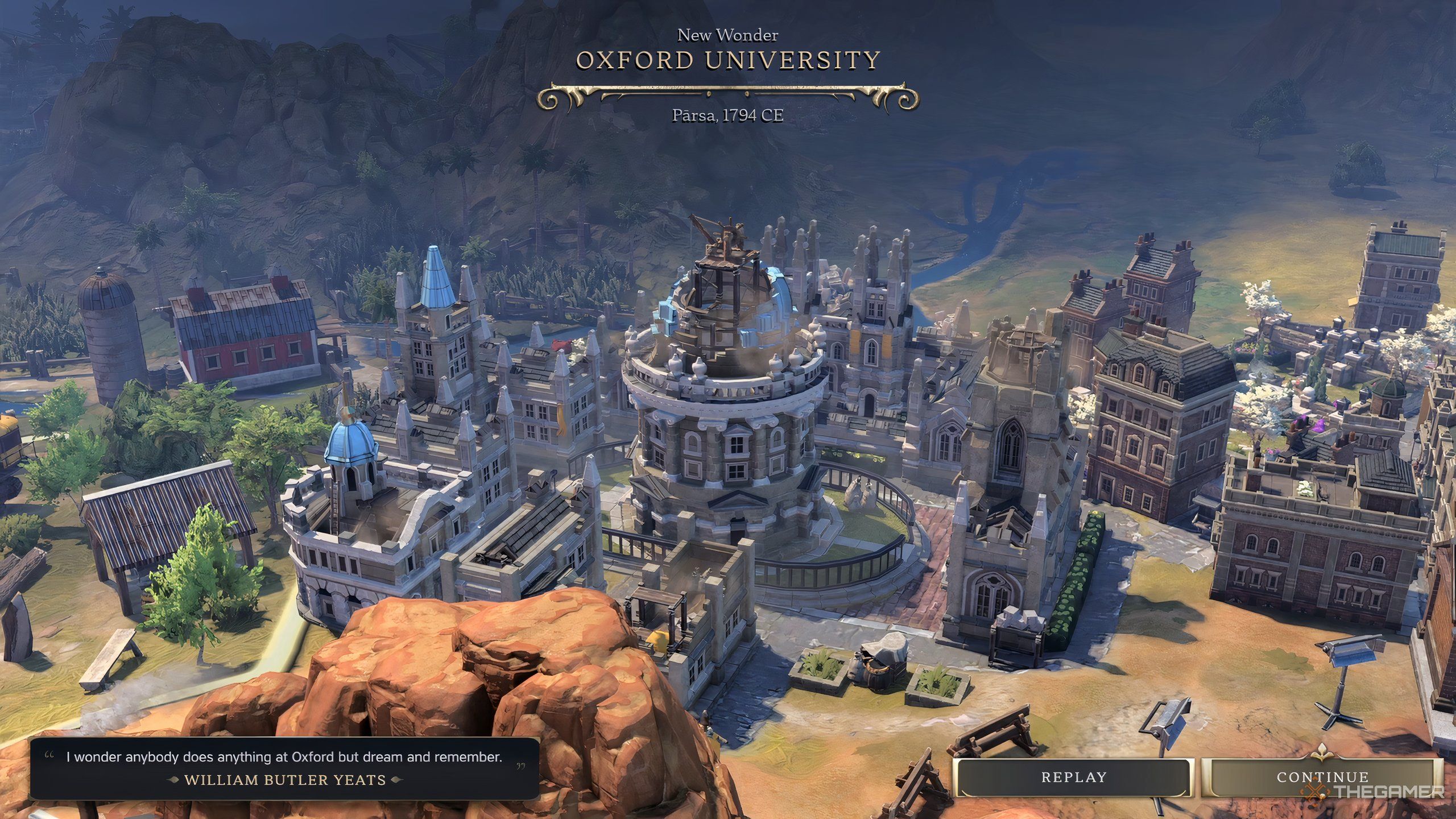
    The Oxford University Wonder being constructed in Civilization VII.

    When you earn a Celebration, a pop-up will appear allowing you to choose between two temporary bonuses that last for a maximum of ten turns.

    Some leaders have specific agendas related to Celebrations. When you engage in diplomacy, be sure to find out if the civilization you’re interacting with appreciates your Celebrations.

    Here is an example of a celebration you can earn early in the game if you have the right government type.

    We Love The Assembly Day!

    +20% Culture for 10 turns.

    +15% Production for constructing Wonders over 10 turns.

    The buffs you receive depend on your active government type, so it’s wise to try different government configurations in various playthroughs.

    In addition to earning Celebrations, you will also unlock a Social Policy slot, enabling you to implement new policies that can amplify your civilization’s outputs and yields.

    How To Get More Celebrations

    The Civilization 7 Happiness tutorial explanation.

    Each time you achieve a Celebration, the cost of obtaining the next one will increase gradually throughout your campaign.

    The key to continuously earning Celebrations is to maintain happiness across your empire.

    Happiness is crucial, especially in later stages of the game, as it helps maintain productivity and keeps specialists active in your cities.

    How To Earn Happiness

    There are several methods to boost happiness throughout your Civilization 7 playthrough. The most reliable way to increase happiness is to build specific structures and enhance tile resources.

    Here are examples of structures and tile improvements that can boost your happiness:

    • Altars
    • Villas
    • City Parks
    • Dates
    • Horses
    • Wine

    This list is not exhaustive and includes only some structures and tiles that yield happiness. When expanding your cities or towns, pay attention to the happiness icon to identify those that contribute positively to your Celebrations.

    You can also implement social policies to enhance happiness within both cities and towns. Here are a few examples of such policies:

    Social Policy

    Details

    Avant Gard

    Increases Culture and Happiness from showcased Great Works.

    Constitution

    Increases food and happiness for maintaining specialists.

    Divine Right

    Boosts happiness and influence in your capital.

    Implementing any of these policies can decrease your happiness requirements in your empire or enhance your current yields, thereby allowing you to achieve Celebrations more quickly.

    Finally, stationing Army Commanders in areas with low happiness can help improve overall contentment. This should be a last resort, particularly in settlements at risk of rebellion.

  • Jose Rizal: Leadership Insights for Civilization VI

    Jose Rizal: Leadership Insights for Civilization VI

    Jose Rizal stands out as an exceptional leader in Civ 7, especially with the introduction of the new Celebrations feature. This mechanic allows players to select bonuses from their Government type while providing an extra social policy slot. Both of these options can be incredibly beneficial, particularly in the early stages when establishing your empire during the Antiquity Age.

    Rizal excels at generating and sustaining Happiness throughout the game, and with the right approach, he can gain a significant advantage quite rapidly.

    This guide is tailored for single-player games against higher difficulty AIs, rather than for multiplayer modes.

    Overview of Jose Rizal


    In Civ 7, Jose Rizal reigns supreme in terms of Happiness. The ability to trigger Celebrations means that Rizal can often enjoy powerful bonuses that last throughout the game, progressing from the Antiquity Age celebrations to nearly continuous Celebrations by the Modern Age. Properly utilizing this feature can give you a massive edge over AI competitors.

    Receiving benefits from a Narrative Event grants you an extra 20 Culture and Gold per age, along with additional Narrative Events.

    +50% extension for Celebration duration.

    +50% Happiness from Celebrations.

    Narrative Events

    Narrative Events emerge while completing the Legacy Path quests, which are tied to each victory condition.

    Rizal thrives when you focus on multiple Legacy Paths to maximize your Narrative potential.

    It’s crucial to approach the Antiquity Age with a comprehensive mindset. Aim to construct Wonders, build scientific structures, befriend city-states, and capture a few cities. The more actions you complete during this age, the faster Rizal can gain momentum.

    Celebrations

    In Civ 7, Celebrations serve two primary functions: they grant powerful buffs to your empire for a limited number of turns and allow the addition of a new policy slot.

    Both features are tremendously advantageous. Depending on your Government choice with Rizal, you could achieve a constant +20% boost to Culture, Science, or Food during the Antiquity Age.

    One great aspect of Celebrations is their flexibility across different Ages. While you can’t change your choice once you’ve made it in a given Age, you do have the opportunity to select your approach at the start.

    Will you focus on military production to conquer enemies, or would you prefer to foster peaceful city growth with hefty food bonuses?

    In general, it’s been observed that Rizal is one of the strongest leaders you can choose in Civ 7 and is particularly adept at tackling multiple Legacy Paths during the Antiquity Age.

    Strategy for the Antiquity Age with Jose Rizal


    Jose Rizal Leader Overview

    Your strategy will largely be influenced by your chosen civilization. Generally, focus on maximizing Happiness with Rizal by securing Happiness wonders, buildings, and resources to amplify your Celebrations.

    Rizal is particularly effective at rapidly settling numerous towns, often exceeding the Happiness cap to gain an early lead. With Rizal, consider exceeding your Settlement limit by two or three cities, depending on your excess Happiness.

    Aim to settle at least four settlements by around turn 50 on Standard Speed. On higher difficulties, AI will aggressively compete for settling locations, so be quick to claim the regions you desire.

    Scouting and Discoveries

    At the beginning of the game, produce two or three Scouts and start exploring immediately.

    Scouting is incredibly valuable in Civ 7—more so than in previous titles. The new Scout Sight system enables you to cover large portions of the map swiftly, discovering Independent Powers, resources, and your AI opponents.

    Your primary focus should be on gathering Science to unlock Pottery and Animal Husbandry as quickly as possible. Culture is also essential for the early rush to Mysticism and acquiring Pantheons. Additionally, gather Gold to facilitate the purchase of necessary buildings or units.

    Early Tech and Civics

    Start with either Pottery or Animal Husbandry, depending on the resource tiles near your capital. If you have access to woodcutters and camps, go for Animal Husbandry; if clay pits and plantations are more prominent, choose Pottery. A potential tech order could look like this:

    • Animal Husbandry
    • Pottery
    • Masonry
    • Masonry II
    • Irrigation
    • Writing

    This approach will boost your production early in the game before transitioning to increase your scientific output.

    Utilizing the Urban Center specialization in your first expansion can generate valuable science and culture that may be missed if you bypass buildings like the Monument or Library early on.

    It’s wise to rush Mysticism to secure an early Pantheon. There are several excellent Pantheons that boost Happiness or provide extra Production from mines (like Stone Circles) that may prove quite beneficial.

    Our general strategy focuses heavily on Production early on. The more rapidly you can establish your key buildings, the better your position will be.

    Your build order might look something like this:

    As the Antiquity Age advances, consider pursuing military technologies like The Wheel and Military Training, even if military victory isn’t your objective. These options unlock valuable Happiness buildings.

    • Villa – provides +3 Happiness and +2 Influence, with adjacency bonuses for Mountains, Natural Wonders, and Wonders.
    • Arena – gives +4 Happiness and has adjacency for Mountains, Natural Wonders, and Wonders.

    Navigation is also advantageous because of the Lighthouse, which adds three additional slots for resources—ideal for stacking up Happiness resources.

    Government Choice

    Choosing the right Government is crucial for Rizal, as these bonuses are repeatable through Celebrations.

    We often go for Democracy for the +20% food bonus, although both Oligarchy and Classical Republic provide exceptional Science and Culture boosts respectively.

    The emphasis on food allows for a focus on production in your capital, which means faster construction of Wonders and essential buildings.

    Experiment with different Government options to find what suits your play style. This is part of what makes Rizal such an engaging leader: he allows for a wide range of playstyles.

    Settlement Expansion

    Jose Rizal can exceed his settlement limits effectively by carefully placing cities.


    Rizal Settling

    In this illustration, Fresh Water tiles are highlighted in light blue. Here, we would recommend settling on Silver and Wine rather than Incense for this scenario.

    Whenever possible, place settlements near Fresh Water, as this grants +5 Happiness, effectively counterbalancing the -5 Happiness penalty for exceeding your limit.

    Bear in mind that this penalty does increase with each city. If you trigger a Happiness Crisis at the end of the Age, your cities could quickly turn against you in revolt.

    You can further heighten your settlement capacity by acquiring key Happiness Buildings such as the Altar, Villa (which can be built in towns), and the Arena (which can only be constructed in cities).

    When settling, look for the following resources:

    • Dates – +2 Food and +2 Happiness
    • Dyes – +3 Happiness
    • Pearls – +2 Happiness for your capital, +4 for any other city
    • Wine – +2 Happiness in the capital, and +10% Culture during a Celebration

    Best Wonders

    Wine is the top resource for Jose Rizal, so settle any found resources immediately. This empire-wide resource doesn’t require a town or city slot and provides a significant +10% culture boost during Celebrations.

    If possible, try to secure the top Happiness Wonders for Rizal, such as the Colosseum, Sanchi Stupa, and Angkor Wat.

    • Sanchi Stupa – grants +2 Happiness and +1 Culture for every 5 excess Happiness in the settlement.
    • Colosseum – adds +3 Culture and +2 Happiness across all Quarters in the settlement.
    • Angkor Wat – yields +3 Happiness and an additional +1 Specialist limit in this settlement.
    • Mundo Perdido – provides +1 Happiness and +1 Science on Tropical tiles within the settlement.

    The Mundo Perdido is best built only if you have multiple tropical tiles in your city.

    Wonders can only be constructed in cities. Sometimes, upgrading a town to a city to open up more construction slots for Wonders is worthwhile, as usable terrain can fill up quickly.

    Planning for Wonder construction needs to be meticulous. For further information about adjacency, consider this guide.

    Wonders hold immense value in Civ 7 because their bonuses remain consistent throughout all three Ages.

    While some buildings may become obsolete and require replacement in later Ages, Wonders retain their adjacency bonuses and powerful boosts across the game, making them a priority whenever possible.

    Trade and Warfare

    Rizal enjoys establishing a strong trade empire due to the Happiness bonuses available through the acquisition of Imported Resources. Resources like Wine are especially beneficial for gathering extra happiness points.

    In terms of warfare, Rizal’s Happiness-centric focus allows you to take over more enemy cities. However, this will influence how quickly you can start Celebrations, potentially causing you to miss some important bonuses.

    Best Civilizations for Jose Rizal


    Jose Rizal Leader Overview-1

    Reflecting Rizal’s adaptability in play style, various civilizations in the Antiquity Age fit well with his strategies.

    Maurya

    The Maurya civilization is excellent for José Rizal since they have traits that strongly enhance Happiness.

    You can select an additional Pantheon once you’ve unlocked Mysticism.

    +30% Production for constructing the Sanchi Stupa.

    Nagarika – A unique settler providing +2 happiness in new city halls.

    Matha Unique Quarter – Offers a 10% bonus happiness in the city where it’s built.

    The Nagarika directly provides +2 Happiness to all new cities you establish, while the unique quarters and districts increase Happiness further.


    Maurya Civics

    Additionally, the Maurya civilization offers numerous unique civics that benefit Rizal:

    • The Charvaka policy, available through Acharya, provides +3 Happiness on Science buildings, making early Libraries even more valuable.
    • The Ayurveda civic allows the Shreni policy to grant +1 Gold for every 5 Surplus Happiness in your cities. This can accumulate swiftly, especially when cities have 40-50 Happiness.
    • The Vyuham civic provides the Kshatriya policy, yielding an extra +4 Happiness from military buildings. Constructing Barracks supports both Production and Happiness.
    • Finally, the Mantriparishad civic gives early access to the Sanchi Stupa and the Arthashastra policy, which provides an additional +1 Science for every 5 surplus Happiness in cities, further stacking with Rizal’s focus on happiness.

    The Sanchi Stupa is among the best Happiness Wonders in the game, offering a flat +2 Happiness and +1 Culture for every 5 excess Happiness.

    Maya


    Mayan Civics

    The Maya offer a unique option for Rizal: while they don’t quite match the Maurya’s bonuses for Happiness, they compensate with impressive Science generation during the Antiquity Age.

    The Palace gains 0.5 Science for every adjacent Vegetated tile.

    +30% production for constructing Mundo Perdido.

    The Maya excel in generating bonuses through adjacency from their Altar and vegetated terrain. The unique Jalaw building also contributes to base Happiness.

    Their Unique District, the Uwaybil K’uh, truly shines as it grants great rewards: every completed technology yields production equal to 15% of its cost, allowing you to convert Science into buildings. This is especially effective for gaining ground early on as Rizal, mainly if you manage to establish two or three cities during the Antiquity Age.

    Optimal Mementos for Jose Rizal


    Jose Rizal Memento Choice

    Jose Rizal has access to impressive Mementos within his leader path.

    • The Ophthalmoscope, Rizal’s level 5 Memento, boosts Celebration length by an extra 25%. This feature allows you to maximize the bonuses from your Government effectively.
    • The Diamond Throne, Ashoka’s level 9 Memento, gives +1 Happiness per Quarter for each Age experienced during a Celebration. This can help maintain stability throughout the game, especially during crisis events.

    Your Memento selection will ultimately reflect your preferences as you play. Perhaps you already favor a specific combination (we enjoy using the Imago Mundi and Marco Polo duo for strong early scouting and resource wealth).

    Keep in mind: you can adjust your Mementos during Age transitions. This flexibility is crucial as some of the early Mementos may lose their effectiveness over time.

    Jose Rizal in the Exploration and Modern Age

    Jose Rizal is an exemplary leader to guide you into subsequent Ages. Focus on accumulating Gold in the Exploration Age, solidifying your presence on your home continent, and preparing for advancements into the Distant Lands.

    There isn’t a concrete strategy for these Ages, and many may feel these particular Ages are less developed compared to the Antiquity Age. If you secured a solid foundation in Antiquity, Rizal should have no issues progressing in the later Ages, primarily due to the powerful boosts from your Celebrations.

  • Mastering Nuclear Strategy in Civ 7: A How-To Guide

    Mastering Nuclear Strategy in Civ 7: A How-To Guide

    Since the beginning of the Civilization series, it’s been common for nuclear weapons to emerge towards the end of gameplay. In Civilization 7, the three-age structure helps maintain balance, preventing players from advancing too quickly with them—though players focused on science can still reach that point faster than others.

    So, how do nuclear weapons function in Civ 7? What do you need to access them? Even if you have no intention of using them—kudos for choosing peace—you may still want to unlock them for other strategic reasons. Here’s the information you need.

    How To Unlock Nuclear Weapons In Civ 7


    To harness the power of nuclear weapons in Civilization 7, you need to do something unexpected: complete the Military Legacy Path during the Modern Age. That’s correct; nukes are not unlocked through technology, marking a significant change from previous versions of the game.

    For a detailed guide on the Domination Victory Path (also known as the Military Victory Path), check that out. In summary, you will need 20 Ideology Points in the Modern Age to get started with the Manhattan Project.

    The Manhattan Project is a Wonder that allows you to create nuclear weapons. Interestingly, completing this project instantly unlocks Operation Ivy, which gives you a path to win the game.

    How To Use Nuclear Weapons In Civ 7


    An Aerodrome in Civilization 7

    Keep in mind that you have a limited time frame to deploy these nuclear weapons unless you’re aiming to achieve a “default” victory by eliminating your opponents.

    If that’s your strategy, it aligns with the classic Civ “Domination” Victory. While there may not be a strong incentive to go this route, there’s nothing preventing you from doing so.

    Additionally, data mining has indicated the possibility of a fourth age, the Atomic Age. If Firaxis proceeds with this anticipated update, it could mean a more significant role for nuclear weapons in the game.

    To launch nuclear weapons, make sure these criteria are met:

    1. Construct an Aerodrome, ideally near your rivals.
    2. Utilize the Nuclear Weapon Construction option in the building menu.
    3. Launch the nuke using Bomber aircraft—having your Aerodrome close to your enemies is advantageous. You can also use Aircraft Carriers to position Bombers further away.

    That’s it! You’ll need to make nukes one at a time, but the devastation they can cause is well worth it. Just remember, the Modern Age has a built-in timer, so act quickly if your goal is to invoke global chaos.

  • Understanding Religion’s Role in Civilization 7

    Understanding Religion’s Role in Civilization 7

    In Civilization 7, while religion isn’t the sole path to victory anymore, it remains a vital component that players must understand to succeed over the span of about 500 turns. The religion system has been made more straightforward compared to previous versions, yet there are specific steps you’ll want to take to lead your civilization to prominence.

    Whether you’re aiming to fulfill the Cultural Legacy path or simply seeking to enrich your society with various benefits through religious structures and units, mastering religion is crucial. This guide will provide you with everything you need to establish a flourishing theocracy in Civilization 7.

    What Is Religion In Civ 7?


    As in earlier entries of the series, Religion plays a significant role in gameplay and must be developed from the Antiquity Age onward.

    In contrast to previous versions, the focus on religion is now much clearer. The religious combat system from Civ 6 has been removed, and your main responsibility will revolve around using Missionaries to convert both your cities and those of other civilizations.

    Here are some key aspects of Religion to consider as you advance through the ages:

    1. Focus on the Right Civics – To establish a religion, you will need to study specific civics (explained below).
    2. Prepare to Produce Missionaries – In the Exploration Age, invest time in producing or purchasing plenty of Missionaries for success.
    3. Look Out for Bonuses – In the Antiquity Age and beyond, you can gain bonuses from collecting Reliquaries (crucial later) and for founding a selected Pantheon. Keep an eye on these to enhance your religious strategy.

    How Religion Works In The Antiquity Age


    Queen Isabella's Starting Screen in Civilization 7.

    Your journey toward founding a religion in Civ 7 starts in the Antiquity Age by establishing a Pantheon, an action that can be taken fairly early in the game. Pantheons provide various passive bonuses, which should be chosen based on your play style.

    Pantheons are key to how Religion plays out in the Antiquity Age, and they lay the groundwork for religious practices in the upcoming Age of Exploration.

    Here are some examples of effective Pantheons.

    Pantheon

    Effect

    God of the Forge

    +10% production toward constructing buildings in cities with an altar.

    Monument to the Gods

    +10% production toward constructing Wonders in cities with an altar.

    Fertility Rites

    +10% Growth Rate in cities with an altar.

    City Patron Goddess

    +3 Influence on the altar.

    God of the Sun

    +1 Culture, Food, Gold, Happiness, Production, and Science on the altar.

    How To Found A Pantheon

    To establish a Pantheon, you must first research the Mysticism Civic, which is available early on in the game. Focus on this research task as soon as it’s unlocked.

    While establishing a Pantheon is important, remember that the Antiquity Age is not heavily centered on Religion.

    Feel free to prioritize other Legacy Paths and win conditions during this period if you are looking for a more balanced civilization.

    How Religion Works In The Exploration Age


    The menu screen stating that the Exploration Age has begun in Civ 7.

    The Exploration Age is where Religion truly begins to flourish in Civ 7 and represents the most crucial age for faith development.

    If you’re aiming for a Culture Victory, and you have tutorials enabled, your Cultural Advisor will provide tips on leveraging Religion to your advantage.

    As this age commences, you will receive specific objectives. Once you complete these two tasks, you can establish a religion that will provide a range of bonuses.

    1. Study the Piety Civic
    2. Construct a Temple

    If you’re focusing on a Culture Victory, prioritize completing these objectives over anything else. Don’t waste valuable turns!

    How To Found A Religion


    The UI screen for founding a religion in Civ 7.

    After completing your temple, you’ll be prompted to establish a religion where you can select several bonuses detailed below.

    Belief

    Effect

    How to Unlock

    Reliquary

    Provides bonuses and new methods for obtaining Reliquaries, which are essential for Legacy Paths.

    This is a unique benefit you receive upon founding a religion.

    Founder

    These buffs increase as your religion spreads.

    Unlocked at the time of founding your religion; you can gain more by expanding your faith.

    Enhancer

    Offers even greater buffs for gameplay.

    Unlocked through studying the Theology Civic.

    How To Spread Your Religion

    Once your Religion is established, you should aim to spread your faith worldwide. The primary method to achieve this is by producing Missionaries and dispatching them to other civilizations.

    Once you’ve created a Missionary, you can use it to convert your cities or those of another civilization to your faith. Follow these steps:

    1. Send your Missionary into the borders of the settlement.
    2. Select the Convert Action to convert the city (required for first-time conversions).
    3. If the city is already following a religion and has both rural and urban populations, you’ll need to perform two Convert Actions to convert both groups.

    When trying to convert a city with both rural and urban populations, ensure you execute the Convert Action once on an urban tile and once on a rural tile to convert the entire city successfully.

    How To Earn Relics


    The Legacy Path screen showing Relics in Civ 7.

    During the Exploration Age, earning and showcasing 12 relics is essential as part of the Cultural Legacy Path. Gaining relics through Religion and other respects is crucial for achieving a Cultural Victory before the game’s conclusion.

    There are several ways to obtain Relics during this period.

    Method

    Details

    Use Your Reliquary Belief

    The Reliquary Belief selected when founding a religion will provide unique ways to acquire Relics.

    Research Civics or Technologies

    Certain Civics or Technologies, such as Theology or Education, can provide Relics.

    Narrative Events

    Randomized narrative events may grant you a Relic.

    Construct Wonders

    Building certain Wonders will yield Relics.

    When you earn Relics, ensure you display them properly. Make sure to construct Temples and Wonders that support displaying Relics. You can manage Relic display options in the Great Works menu.

    How Religion Works In The Modern Age


    The Civ 7 Modern age selection screen, in which players pick a new civ to play as.

    While Religion is influential throughout all three ages, it is particularly significant in achieving legacy points during the Exploration Age. In the Modern Age, although Religion remains a factor in gameplay, it is not the central focus.

    If you effectively spread your Religion during the Exploration Age, you will continue to reap benefits from your Reliquary, Founder, and Enhancer beliefs, as well as from your Pantheon beliefs during the Modern Age.

    The Legacy Points obtained in prior ages from advancing your religion can significantly aid in achieving victory in the Modern Age.

  • Boosting Yields in Civilization 7: A Strategic Guide

    Boosting Yields in Civilization 7: A Strategic Guide

    Quick Links

    In the realm of urban development in Civilization 7, managing yields is one of the key elements of gameplay. As the cities in your civilization expand across the map, you’ll have to keep an eye on various yields. These can greatly influence your gameplay outcome—separating success from failure.

    So, how do yields function in Civilization 7? Whether you’re new to the franchise or a returning pro, here’s a straightforward guide to maximizing the yields from your cities.

    Understanding Yields

    As your civilization evolves from primitive society to advanced realms, you’ll accrue yields, which are vital resources that enhance your civilization’s stability, influencing everything from research to citizen satisfaction.

    Overall, there are seven main yield types in Civilization that players should monitor closely.

    Adding Yields

    Screen showing your available resources in Civilization 7.

    Generating each yield in Civilization 7 involves specific methods, producing varying results based on your approach and chosen leader.

    1. Buildings that contribute to the yield.
    2. Yield-enhancing tile improvements and resources.
    3. Natural and man-made Wonders.

    You can increase your yields across your territory by simply adding these elements to your city or town. Here are examples of how you can enhance specific yields:

    Desired Yield

    How To Enhance

    Food

    • Build the Gristmill
    • Construct the Bath

    Production

    • Build the Sawmill
    • Incorporate the Commune

    Gold

    • Create a Mine
    • Develop the Colossus Wonder

    Enhancing Your Yields

    The White Tower wonder being built in Civilization 7.

    After constructing buildings, adopting social policies, or generating yields through various channels, there are additional techniques you can implement to further enhance your base yields.

    Maximizing your yields is essential for achieving victory. Running out of turns can make long building or research times especially costly.

    While it may be a less direct route, some social policies or effects might enhance your civilization’s happiness, culture, or science if you can acquire certain luxury resources through trade.

    For instance, the Trade Winds policy yields gold and happiness for each imported resource.

  • Confucius: Leadership Insights for Civ 7 Players

    Confucius: Leadership Insights for Civ 7 Players

    In Civilization 7, Confucius is a leader known for his scientific and expansionist skills. He is adept at developing large cities that can accommodate a significant population, which in turn supports numerous specialists. This creates a consistent flow of gold, culture, and science each turn. His style of play is highly adaptable regarding victory conditions, as his capacity for scientific advancement opens various buildings and opportunities. The key focus should be the expansion of smaller towns to ensure your capital reaches its maximum size as quickly as possible.

    This guide offers an overview of Confucius, strategies for the early game in the Ancient Era, and the best civilizations and mementos.

    Overview of Confucius

    Here’s a look at Confucius’ leader bonuses:

    +25% City Growth Rate

    +2 Science from Specialists

    Growth Rate Bonus

    Confucius’ cities expand rapidly. This straightforward growth bonus works well with other bonuses in the game, such as those provided by the Hanging Gardens wonder or the Fertility Rites pantheon. With effective combinations, your capital can reach 20 population by turn 100.

    Specialist Science Bonuses

    Confucius’ large cities leverage specialist slots effectively, benefiting from an additional +2 science per specialist, boosting the already generated science and culture.

    The main challenge when playing as Confucius is maintaining a balance between specialists and happiness while ensuring good adjacency planning.

    Learn more about adjacency in Civ 7 here.

    Specialists can consume happiness, which poses risks during the Ancient and Exploration Ages. As you advance to the modern age, you should have enough happiness and policies to mitigate those effects. Early on, it’s crucial to use specialists strategically on your best tiles.

    Strategy for Confucius in the Ancient Era

    Confucius Han Start in Antiquity

    Confucius presents a unique strategy in the Ancient Era. Let’s explore his approach.

    Initial Scouting and Discoveries

    Early scouts are incredibly valuable in Civ 7. Starting with at least two scouts is recommended, and some players prefer to have three for enhanced exploration.

    The goal is to secure as many discoveries as possible, especially since you’re competing against AI players. The more scouts you have, the better your chances.

    Focus on gaining science and culture from your discoveries. Aim for early technologies, like Pottery and Animal Husbandry, to enhance your capital’s output, while civics like Mysticism can help you secure the Fertility Rites Pantheon, which is highly beneficial for Confucius.

    Initial Buildings

    Due to Confucius’ strong growth advantage, constructing the Granary first is less effective. Instead, prioritize production buildings like the Saw Pit and Brickyard.

    Utilize your first towns to support your main city rather than concentrating on food in your primary settlement. Immediately after establishing your first two production buildings, produce three settlers.

    Position settlers on valuable resource tiles close to your city. This way, food is sent back to your capital, which helps it grow while you enhance production.

    Once your towns hit seven population, switch them to Urban Center Focus to generate Culture and Science from each Quarter—a tile with two completed districts, such as the Granary and Brickyard.

    The Urban Center focus will yield more science per turn compared to a Library, allowing you to prioritize troops, settlers, and production buildings instead of rushing to write.

    Technology and Civics

    We typically prioritize either Pottery or Animal Husbandry first, depending on your starting tiles. Choose Pottery for clay and mines or Animal Husbandry for pastures.

    Next, focus on obtaining Masonry, then Masonry II, followed by Irrigation, and finally Writing. This path gives Confucius a strong production foundation while ensuring long-term scientific growth. With his enhanced science yields, you’ll easily catch up.

    For civics, you should almost always choose Mysticism first, allowing for an early Pantheon.

    When to Deploy Your Initial Specialists

    Understanding the optimal timing for placing specialists as Confucius can be tricky.

    However, some yields are simply too beneficial to overlook. Consider this early-game city for Confucius:

    Confucius Early Specialists

    This city already shows attractive specialist slots, featuring a tile that generates +6 Science and +2 Culture or another that provides +1.5 Food, 1.5 Gold, +4 Science, and +2 Culture. These outputs surpass most open rural tiles in the city.

    As a guideline, ensure your adjacency is well-positioned around your Library tile to enhance your science yield.

    Science buildings benefit from adjacency to resources. For instance, the library here gains adjacency from both Silver and Horses.

    Top Civilizations for Confucius

    Maya Confucius Civilization

    Confucius has a wide range of options for civilization selection due to his versatile bonuses.

    Maya Civilization

    If you seek an aggressive approach to scientific progress, the Maya civilization is an excellent choice.

    The Palace gains +0.5 Science for each adjacent Vegetated Terrain.

    +30% Production bonus when constructing Mundo Perdido.

    This civilization offers solid science boosts, particularly when you consider their bonuses.

    While the K’uh Nah unique building provides a small science boost, the true power of the Maya is evident in their civic options:

    • Rain Of Chaac grants +1 Science adjacency on the Altar for any vegetated terrain, which can accumulate quickly and applies to all settlements, including your towns.
    • Calendar Round is a unique civic that rewards you with 10% of the cost in Culture for each Technology completion and 10% in Science for each Civic completion. This synergizes greatly with Confucius’ significant science boosts and applies across all ages as it is a tradition card rather than a policy card.

    Khmer Civilization

    The Khmer civilization amplifies Confucius’ growth potential.

    Districts on Rivers do not reduce the natural yield of the tile.

    30% Production bonus towards constructing the Angkor Wat.

    The Khmer are centered around growth dynamics. Their unique building, the Baray, provides a solid +3 food bonus when built, as well as an additional +1 food for all floodplain tiles in the settlement. With the right starting position, this can yield a significant food surplus.

    Moreover, the Khmer civics complement Confucius remarkably well:

    • Amnach includes the Varna tradition, which provides +1 Gold per specialist, enhancing Confucius’ specialists.
    • Chakravarti is possibly the best civic for Confucius, providing +50% growth in the Capital alongside a -5 happiness penalty in other cities. Its tradition, Kambu-Mera, offers +100% Food and Happiness towards specialist maintenance, greatly facilitating specialist sustainability as the game progresses.

    Civilians should be aware of the wording around the Kambu-Mera civic. This does not imply that your specialists will be free; rather it allows you to effectively gain one additional specialist per specialist without extra cost, ensuring game balance without overpowered advantages.

    Top Mementos for Confucius

    Brush and Scroll Memento for Confucius

    Confucius has a rich array of Mementos, both from his own tree and those of other leaders.

    • At level 2, Confucius unlocks the Brush & Scroll memento, significantly boosting city growth rates by 5% for every specialist, with a maximum of 25%. This may not be the most advantageous in the Ancient Era when specialist numbers are low, but it proves highly beneficial later in the game.
    • His level 5 memento, The Altar Set, enhances specialists with an additional +1 Culture and Gold each.
    • The final upgrade, The Analects, becomes available at level 9, offering an extra +1 Science for each specialist.

    It’s important to adapt your Mementos throughout the game. We often find value in scouting Mementos like Imago Mundi and Marco Polo during the Ancient Era, as they accelerate map exploration and provide gold. In the Exploration Era, we might shift focus to Mementos that are more specialist-oriented.

  • Top Mods to Enhance Your Civ 7 Experience!

    Top Mods to Enhance Your Civ 7 Experience!

    Civilization 7 made its debut under some mixed circumstances. While the game offers various exciting features, like its innovative three-ages system, there are aspects that still seem to be in a development phase.

    Upon receiving our copies for PC, we were thrilled to witness the impressive creativity of the Civilization modding community as they began to roll out new content following the game’s release. As expected, they’ve already produced a lot of great mods, which are definitely worth exploring. Unfortunately, console players won’t have access to these mods, so we encourage PC gamers to dive in.

    Currently, there is no Steam Workshop support for Civilization 7. We’ve been downloading all the mods listed here from CivFanatics, and we’ll provide links to each recommendation. A big thank-you to the CivFanatics team for their dedication to the franchise!

    YnAMP – Larger Map, TSL, Continents++


    We’ve been longtime fans of Gedemon’s YnAMP map series, which has successfully enhanced gameplay across multiple Civilization titles. Their latest contributions for Civ 7 are no exception. If you also play Civilization 5 or 6, make sure to try these new maps!

    YnAMP is a complete map pack that introduces larger map options along with a massive Earth-style map with true-start locations for each civilization. Currently, Civilization 7 only supports Tiny, Small, and Standard maps, which can feel a bit confining.

    We suggest trying the YnAMP – Larger Map, TSL, Continents++ mod, especially until Firaxis releases larger maps officially. Even if you’re not focused on size, you should definitely check out their Continents++ style map.

    This map generator is a significant upgrade compared to both Continents and Continents++, offering players a wealth of opportunities with this mod.

    Sukritact’s Simple UI Adjustments


    Sukritact Adjustments Mod Civ 7

    The name Sukritact is well-known among Civilization enthusiasts. They have consistently enriched the franchise, and we’re thrilled that they continue to do so with Civilization 7.

    Sukritact’s Simple UI Adjustments is the title of this mod, but it arguably undersells its significance. Upon release, Civ 7 featured a rather clunky UI that often felt disjointed.

    Thanks to this mod, details about improvements, wonders, and adjacency bonuses are now presented with clarity – or at least as clear as possible within the existing framework. At present, it holds the record for the most downloads of any Civ 7 mod on CivFanatics, a clear indicator of its value!


    TCS Improved Plot Tooltip Mod for Civ 7

    Here’s a little inside tip: it’s sometimes been a bit challenging ensuring that our screenshots for other Civ 7 content don’t confuse viewers with mod features.

    TCS Improved Plot Tooltip is typically the main culprit; we can hardly imagine playing without it, and the benefits of this mod are apparent every time you hover over a tile. The information displayed is significantly more comprehensive than the standard version.

    Additionally, the overhauled settlement information screen is an outstanding feature. Major kudos to the creator, thecrazyscot, for this contribution!

    As mentioned on this mod’s page (which we’ve confirmed through multiple playthroughs!), TCS Improved Plot Tooltip is completely compatible with Sukritact’s Simple UI Adjustments, so feel free to combine them.

    More Natural Wonders


    More Natural Wonders Mod for Civ 7

    At the moment, Civilization 7 features only 12 Natural Wonders. While we expect this number to grow in future updates, it highlights the relevance of pokiehl’s fantastic More Natural Wonders mod, which boosts the count to a total of 12.

    Here’s a look at the enhancements you can expect on the official map sizes, according to the mod’s description:

    • From three to six on Tiny maps.
    • From four to eight on Small maps.
    • From five to ten on Standard maps.

    If you’re utilizing YnAMP for larger maps, you’ll enjoy the complete set of 12 Natural Wonders and will likely see even more added in future updates. Natural Wonders are quite scarce in the vanilla version of Civ 7, which makes the More Natural Wonders mod a vital addition.

    We’ll keep this guide updated as more exciting mods for Civilization 7 are developed, but don’t stop with just our recommendations. There are many other impressive mods available at CivFanatics. We’ll also provide updates when Steam Workshop supports all these amazing creations!
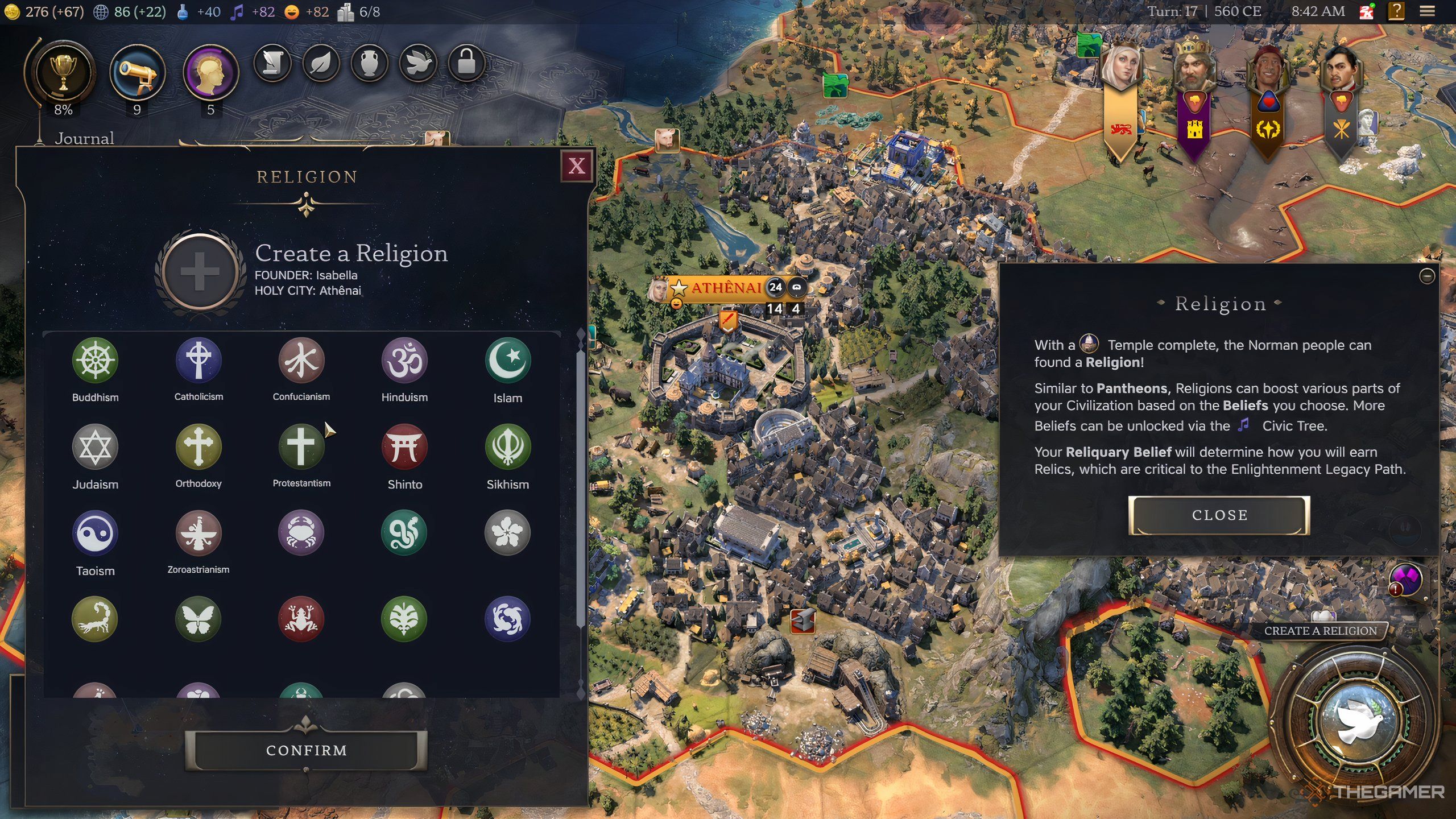

  • Charlemagne’s Leadership Tips for Civ 7 Success

    Charlemagne’s Leadership Tips for Civ 7 Success

    Charlemagne stands out as a strong military leader in Civilization 7. He benefits from substantial Happiness bonuses, a steady way to create units without spending production, and impressive combat advantages during his Celebrations. While his gameplay heavily leans towards military conquest, managing his happiness while capturing cities and addressing war fatigue can make him more challenging to play compared to some other leaders in the game.

    This guide will explore effective strategies for Charlemagne, including how to maximize his free cavalry units, the best civilizations to pair with him, recommended research paths, and more.

    Overview of Charlemagne

    Known as the Father of Europe, Charlemagne possesses several beneficial leader bonuses:

    Bonus Description
    Military and Science buildings gain Happiness adjacency for Quarters.
    Receive 2 free Cavalry Units, unlocked when entering a Celebration.
    Cavalry Units get a +5 Combat Strength during a Celebration.

    Understanding Happiness Adjacency

    Charlemagne’s Happiness adjacency bonuses for buildings like Libraries and Barracks help you maintain high happiness levels, provided you plan your districts wisely.

    Free Cavalry Units

    Whenever Charlemagne enters a Celebration, he gains two free cavalry units. This might take time early in the game since you need to research The Wheel to access cavalry, but by the late game, the benefits can multiply significantly.

    You can effectively stack Celebrations by timing them so that a new one starts right after the current one ends. Repeating this strategy can lead to an impressive array of free, powerful units—like tanks in the Modern Age—allowing for overwhelming military force.

    To dominate enemy armies, focus on ensuring your combat strength is superior to theirs. While this may sound straightforward, you’ll have to be strategic about where you find these bonuses.

    On higher difficulty levels, the AI receives significant bonuses to combat strength. However, Charlemagne’s +5 boost for Cavalry combat strength during Celebrations helps level the playing field, especially since you should be in a state of Celebration frequently during the Modern Age.

    Optimal Strategies for the Antiquity Age

    Regardless of which civilization you choose—more on that later—Charlemagne excels by generating early Happiness through the Altar. Start by building an early Library to quickly acquire the Bronze Working technology, then use the excess happiness to initiate Celebrations for a steady influx of cavalry units.

    Scouting and Early Discoveries

    It’s advisable to produce two or three scouts early on. The Discoveries you make in the early game are crucial. Here’s a priority list for what to pursue:

    • Gold: Essential for buying settlers and other useful items.
    • Science: Quickly increasing your science output is important for reaching Bronze Working fast.
    • Culture: The Discipline civic is beneficial for Charlemagne, while Mysticism is ideal for accessing early pantheons.
    • Influence: Gaining influence is always valuable early on since you’ll likely engage in conflicts with neighboring civilizations.

    Best Government Options

    You have two paths: focus on Food and Production, or prioritize Science and Infantry Unit Production. The first option offers a well-rounded advantage, while the second can enhance your military capabilities in the Antiquity Age.

    Early Technology and Civics

    Aim to acquire Pottery and Writing early to boost your science output. In terms of civics, getting your general upgraded quickly is key, so heading from Discipline into Mysticism for a good pantheon is a solid strategy.

    Every game of Civilization 7 offers a unique experience, and your strategies might need to adapt based on the civilization you’ve chosen alongside Charlemagne.

    Settling Strategies and Conquest

    Depending on your neighbors, you might want to limit your own city settlements. Given Charlemagne’s warmongering nature, it’s perfectly viable to conquer a neighboring capital early on.

    Regardless of your civilization, keep an eye out for valuable resources:

    • Wine: Provides Happiness in your capital, which aligns perfectly with Charlemagne’s bonuses.
    • Gold and Silver: Both are great for purchasing essential buildings and units. Silver can particularly reduce the cost of gold purchases significantly, allowing you to assemble your army much faster.
    • Cotton, Sheep, and Hides: These resources offer excellent early-game bonuses for food and production.

    Recommended Wonders

    Charlemagne gains significant advantages from various military wonders. Here are the top picks to focus on:

    • Gate of Nations: Essential for boosting War Support for all future conflicts. If your War Support drops, it can lead to unhappiness, which negatively impacts Charlemagne’s bonuses.
    • Sanchi Stupa: Provides a +2 Happiness bonus, along with +1 Culture for each excess Happiness in the city where it’s constructed, complementing Charlemagne’s happiness strategies.
    • Terracotta Army: Grants +2 production and a free army commander, boosting all armies with +25% experience. This is particularly useful for moving Charlemagne’s cavalry across the map.

    Best Civilizations to Pair with Charlemagne

    Several civilizations complement Charlemagne’s strengths in the Antiquity Age, including the Khmer, Maurya, and Maya. While they might not seem like the most obvious combinations, they play well into Charlemagne’s bonuses.

    Maurya

    Bonus Description
    Choose an extra Pantheon after unlocking Mysticism.
    +30% Production towards constructing Sanchi Stupa.

    The Maurya have a strong cavalry unit, the Purabhettarah, which gets an additional +5 Combat Strength against fortified districts. When combined with Charlemagne’s combat bonuses, this creates a formidable cavalry force. Their unique buildings also boost overall happiness, which fits perfectly into Charlemagne’s gameplay.

    Khmer

    Bonus Description
    Districts on Rivers maintain natural yields.
    +30% Production towards constructing Angkor Wat.

    The Khmer’s Yuthahathi cavalry unit is strong, even if it moves slower. Their unique Baray improvement provides significant food, enhancing growth and production in Charlemagne’s cities.

    Maya

    Bonus Description
    Palace gains +0.5 Science for adjacent vegetated terrain.
    +30% Production towards constructing Mundo Perdido.

    The Maya are ideal for leaders focusing on science. Although science isn’t the sole path to victory in this game, it remains beneficial for Charlemagne, allowing quick access to technology like Bronze Working to generate free cavalry units.

    By strategically utilizing these civilizations, Charlemagne can create an empire that is not just powerful, but also thriving.

  • Mastering Domination Victory in Civilization VII: A Strategy Guide

    Mastering Domination Victory in Civilization VII: A Strategy Guide

    For many players, there’s nothing quite as rewarding in Civilization than dominating rivals with your own might. You can undermine their economy, outpace them with technology, or out-culture them. But nothing beats a solid military victory.

    If you’re new to Civilization 7, we have some strategies to help you achieve this. From your empire’s foundation to your ultimate show of strength, here are tips to satisfy your conquest ambitions. With the right information, you’ll make it tough for any opponent to stop your progress.

    Prepare for the Attack


    Unlike other victory types, Domination victories in Civilization 7 don’t mandate reaching the endgame. In fact, you could potentially achieve this without ever entering the Modern Age. If you time your aggressive strategies correctly, you can start making significant gains as early as the Antiquity Age.

    To do this effectively, you need to finish the Antiquity Military Legacy Path, which involves accumulating 12 settlement points. You earn one point for each new settlement and two points for each settlement you conquer.

    The takeaway is clear: conquest is the best approach. Additionally, keep this in perspective: the more damage you inflict on your neighboring civilizations during Antiquity, the less you’ll need to do during the Exploration Age.

    To simplify your task later on, aim for more than just those 12 points. Strive to earn even more. Build your military from the very beginning while still developing your cities. Construct things like monuments, altars, and libraries; don’t let your progress lag too far behind, or you’ll find it more challenging later on.

    As of now, since Civilization 7 supports map sizes only up to “Standard”, you should be able to locate other civilizations on your continent fairly quickly. Speed this up by collecting the Memento that enhances your scout’s visibility.

    Eliminate Almost Everyone


    Camera showing three antiquity age wonders in Civilization 7

    It may seem like a good idea to go to war with everyone once you have a couple of Army Commanders along with some siege, infantry, ranged, and cavalry units. However, a more strategic approach is advisable.

    Foster good relationships with one neighbor, especially one that’s farther away, making them harder to reach. Try to form an alliance with them while challenging all others around you.

    This ally will be obligated to fight alongside you once you go to war against your enemies (or they against you!). This strategy offers two key benefits:

    • If your ally is strong, they’ll attack your opponents, making it easier for you to capture cities.
    • If your ally is weaker, they’re likely to become a target, drawing your enemies’ attention away from you.

    In either case, your conquest will go more smoothly. If your ally happens to falter, they may weaken themselves significantly by the time you’re ready to eliminate them after taking out your other foes.

    Even if you don’t eliminate all your enemies by the end of the Antiquity Age, you’ll have made substantial progress.

    Set Sail


    Ship braving the high seas in Civilization 7

    With the arrival of the Exploration Age, you should research Cartography and Astronomy. Our goal now is to develop a powerful navy.

    Interestingly, you’ll need to do this for the Economic Legacy Path as well. Fortunately, our objectives align closely with the Cultural Legacy Path of the Exploration Age, making this a streamlined process.

    While preparing to send your fleet to distant lands, go ahead and study Piety, and build Temples across your empire. These temples are essential to enhance the Military Legacy Path by converting settlements in these distant lands to your religion.

    Feel free to “pond-jump” by advancing your navy one ocean tile at a time, even if it incurs some damage while searching for those distant lands. You won’t have to operate this way forever, but it’s vital to identify distant rivals before they find you.

    Once everything is prepared, focus on acquiring Shipbuilding technology and any upgrades for your military units, and set sail. We can’t effectively transport our armies for significant action until we acquire the necessary technology, but we can still start attacking enemies with naval strikes.

    If you happen upon any distant civilizations that are at war with one of their neighbors, take advantage of that. Declare war on one of these weakened civilizations.

    Impose Your Faith


    Benjamin Franklin and Ashoka in Civilization 7.

    Attacking coastal cities with your naval power (make sure to include at least one Fleet Commander) will create a substantial advantage while you work on bringing Army Commanders and land units into the fight. Don’t forget to train Missionaries in Temples as well.

    When selecting your religion, prioritize militaristic beliefs, such as the one that allows your Missionaries to heal your units.

    From this point onward, the strategy is fairly straightforward, though it will take time. Deploy your armies to the interior of distant civilizations, bringing Missionaries along. Aim to exceed the required 12 total points in the Legacy Path as much as possible to ease future gameplay.

    While conquering every distant civilization during the Exploration Age may be ambitious, particularly at higher difficulty levels, aim for settlement conversions to earn points, while converting conquered territories for double points. In any case, making an effort to eliminate those civilizations is ideal.

    Eliminate What Remains of the World


    Forces clash in Civilization 7

    In the Modern Age, it’s time to clean house. Quickly research technologies to enhance your military strength and train more military units at your distant settlements. As for your civic, follow the path that leads to the Modern Domination Victory objectives by studying Ideology and picking one that fits your style, likely Fascism.

    You can pursue two routes for victory: either complete the objectives by researching the Manhattan Project and Operation Ivy or, preferably, eliminate any remaining enemies. If you’ve already diminished their capacities, they will still resent you but will be considerably weakened as you enter the final phase.

    That’s basically the plan. The Modern Age will either unfold quickly or require a bit of time, depending on your approach and how swiftly you can finish off your adversaries.