Tag: share

  • Kerem Bürsin Shares Photo with Selin Yağcıoğlu Confirming Romance

    Kerem Bürsin Shares Photo with Selin Yağcıoğlu Confirming Romance

    Digital Phablet – Kerem Bürsin and Selin Yağcıoğlu officially confirm their long-rumored relationship.

    The romantic connection of a widely recognized figure that many in Turkey have been discussing has finally been confirmed. Kerem Bürsin, a prominent actor, and Selin Yağcıoğlu, a social media influencer, have publicly acknowledged their relationship, ending months of speculation.

    Turkish media outlets closely monitored their interactions over a long period. Despite numerous mentions of their names in the press, neither party had confirmed anything until now. Oxu.Az reported that Sabah mentioned Kerem Bürsin was careful to keep his personal life private. The actor remained silent even as public curiosity grew, as he is known for his discretion regarding relationships.

    However, at the start of the new year, that stance changed.

    Kerem Bürsin shared a heartfelt and adorable message on his social media, catching his followers by surprise. The photo with Selin Yağcıoğlu quickly went viral, accumulating thousands of likes and comments within minutes. Fans expressed happiness for the couple and praised their openness about their love.

    Kerem Bürsin is one of Turkey’s most renowned actors globally. His international fame soared with the hit series Sen Çal Kapımı, which was sold to numerous countries. He is also known for his work in film, his environmental activism, and his contributions to social causes. His composed demeanor and thoughtful conversations have earned him a large fan base.

    Meanwhile, Selin Yağcıoğlu is a leading digital artist in Turkey. She is celebrated for her content on fashion, lifestyle, and travel, collaborating with major brands and participating in fashion events worldwide. The Turkish media often describes her as stylish and elegant, with a significant online following.

    Sources close to the couple suggest they share mutual respect and understanding. Throughout 2024, they reportedly enjoyed quiet dinners and vacations, deliberately avoiding crowded events and media attention. Their discreet approach only heightened public interest.

    Many believe their decision to go public at the beginning of the year carries meaningful significance. Fans interpret this as a fresh start and renewed confidence in their relationship. Social media reactions describe the announcement as “simple,” “honest,” and very “Kerem” in tone.

    Now that their romance is confirmed, Kerem Bürsin and Selin Yağcıoğlu are poised to become one of the most talked-about celebrity couples of the year. The message to their fans is clear: love is happening openly now.

  • Cloud Data Ownership: 70% US, 30% China Dominance

    Cloud Data Ownership: 70% US, 30% China Dominance

    Introduction to Cloud Computing and Data Security Concerns

    Cloud computing has transformed data storage and management, shifting it from traditional asset ownership to a shared infrastructure model. This evolution impacts not only businesses but also raises significant questions about data ownership and security on a global scale.

    Dominance of American and Chinese Firms

    Key Players in the Cloud Computing Space

    The landscape of cloud computing is predominantly shaped by American and Chinese companies. Major American players include:

    • Amazon Web Services (AWS)
    • Google Cloud Platform
    • Microsoft Azure

    In contrast, leading Chinese firms in this sector consist of:

    • Huawei
    • Tencent
    • Alibaba

    These companies play pivotal roles in the global cloud infrastructure, affecting how data is stored and managed across borders.

    Influence of Geopolitics on Cloud Infrastructure

    The presence of these tech giants raises critical considerations about data sovereignty and security. Many countries host data centers from these companies, creating dependencies that could be leveraged in geopolitical tensions.

    The Global Distribution of Data Centers

    Research Findings on Data Center Ownership

    A recent study by researchers from the University of Oxford and Finland’s Aalto University sheds light on the geography of cloud infrastructure ownership. This investigation reveals distinct patterns in data center distributions:

    • Countries like Italy and Poland predominantly utilize American-owned cloud infrastructure.
    • In contrast, nations such as Germany, the UAE, and the UK exhibit a mix of both American and Chinese ownership, with Chinese data centers comprising 14% to 40% of their infrastructure.

    Variability by Region

    A notable aspect of the research is the presence of Chinese cloud infrastructure in developing regions. Countries in Latin America and parts of Asia show a higher inclination towards Chinese services, often motivated by cost-effectiveness and an interest in the Chinese model of internet governance.

    Implications of Localized Data Storage

    Government Regulations and Corporate Policies

    Organizations frequently prefer to host their data locally due to government or corporate policies mandating data center proximity. This trend aims to ensure legal recourse and compliance with local regulations. However, it complicates the narrative surrounding ownership and the origin of the technology in use.

    Risks Associated with Ownership

    Questions arise regarding the security implications of relying on foreign infrastructure. While data sovereignty policies can provide legal protections, the underlying tech ownership remains crucial. Historically, concerns have primarily centered around Chinese technology; however, American dominance may also come under scrutiny given evolving geopolitical dynamics.

    Potential for Cloud Infrastructure Weaponization

    The Threat Landscape

    The ownership structure of cloud infrastructure poses risks that could potentially be weaponized. While a total disruption scenario is improbable, the authors of the research suggest that the repercussions would be extensive, affecting critical sectors such as finance, transportation, and personal technology.

    Strategic Choices of Third Countries

    The report indicates that the decisions made by third countries regarding cloud infrastructure are influenced by trade relations and strategic government choices. Countries are increasingly urged to evaluate their dependencies and the implications of foreign ownership of their data centers.

    Attempts at Cloud Sovereignty

    European Initiatives

    In response to growing concerns, European governments have sought to establish a degree of cloud sovereignty. This ambition arises from skepticism about both Chinese and American providers, aiming to create a more secured and controlled local alternative.

    Effectiveness of Current Strategies

    Despite these initiatives, the researchers characterize the progress toward cloud sovereignty as ineffective thus far, signaling a need for increased urgency and innovation in addressing data security and ownership concerns.

    Final Thoughts

    The evolving landscape of cloud computing, shaped by geopolitical dynamics, presents both opportunities and challenges. As businesses and governments navigate these complexities, understanding ownership, security risks, and localized storage remains vital for informed decision-making.

  • Temu’s U.S. Revenue Drops: 30% of Sales at Risk After Tariffs

    Temu’s U.S. Revenue Drops: 30% of Sales at Risk After Tariffs

    Overview of Temu’s Business Model

    Temu, a prominent Chinese e-commerce platform, has recently made headlines due to significant changes in its operational approach, particularly concerning the U.S. market. Established on a foundation of low-cost goods and a unique direct shipment model, the company is witnessing a tumultuous phase as it navigates increasing regulatory pressures.

    Temu’s Impact in the U.S. Market

    Revenue Constraints

    The United States has emerged as Temu’s largest market, contributing nearly a third of its overall revenue. As the company thrives on offering competitively priced products, the new import duties imposed on low-value parcels pose a significant challenge. These tariffs aim to regulate e-commerce flows, making it increasingly difficult for platforms like Temu to sustain their pricing strategies.

    Customer Experience Changes

    In response to the evolving regulatory landscape, Temu has started to adjust its operations by reducing direct shipments from China. Reports indicate that customers are beginning to experience heightened import fees, sometimes surpassing the cost of their purchased items. This change not only affects the pricing but also the overall consumer experience, potentially leading to dissatisfaction and distrust.

    The Shift to Local Warehousing

    New Strategies

    To adapt to the U.S. market conditions, Temu has pivoted toward utilizing local warehouses. By doing so, the company aims to circumvent the challenges associated with direct shipments and tariffs. This strategy allows Temu to continue offering products to U.S. consumers without the previously enjoyed loopholes that enabled low-cost imports.

    Implications for Pricing

    While this shift may create a more stable logistics framework, it inevitably leads to increased prices for customers. With the closure of the "de minimis" loophole—previously exploited by many e-commerce platforms—shoppers can expect to see changes in their overall spending. Though this adjustment may help Temu comply with regulations, it poses a risk of alienating the very consumer base that has driven its growth.

    Growth Statistics and Market Trends

    Volume Surge

    Despite the challenges posed by changing U.S. regulations, Temu’s gross merchandise volume (GMV) showcased remarkable growth. Reports suggest an increase of 239% from 2023 to 2024, reaching an impressive $47.5 billion. This statistic underscores the rapid adoption of the platform among consumers looking for bargains, despite the evolving operational hurdles.

    Future Prospects

    As Temu reconfigures its business model, observers are keenly watching how the changes will impact its long-term viability in the U.S. market. The company’s ability to innovate in response to regulatory pressures will be crucial in determining whether it can maintain its impressive growth trajectory or if it will face significant setbacks.

    Conclusion

    The current landscape for Temu reflects a complex interplay between consumer demand for affordable products, regulatory constraints, and rapid market shifts. As the company strives to adapt, the outcome will be closely monitored by industry watchers and competitors alike.

  • 80% Want More U.S. Manufacturing, Yet Only 20% Would Work in It

    80% Want More U.S. Manufacturing, Yet Only 20% Would Work in It

    The State of Manufacturing in America: A Closer Look

    The Dual Perspective on Manufacturing

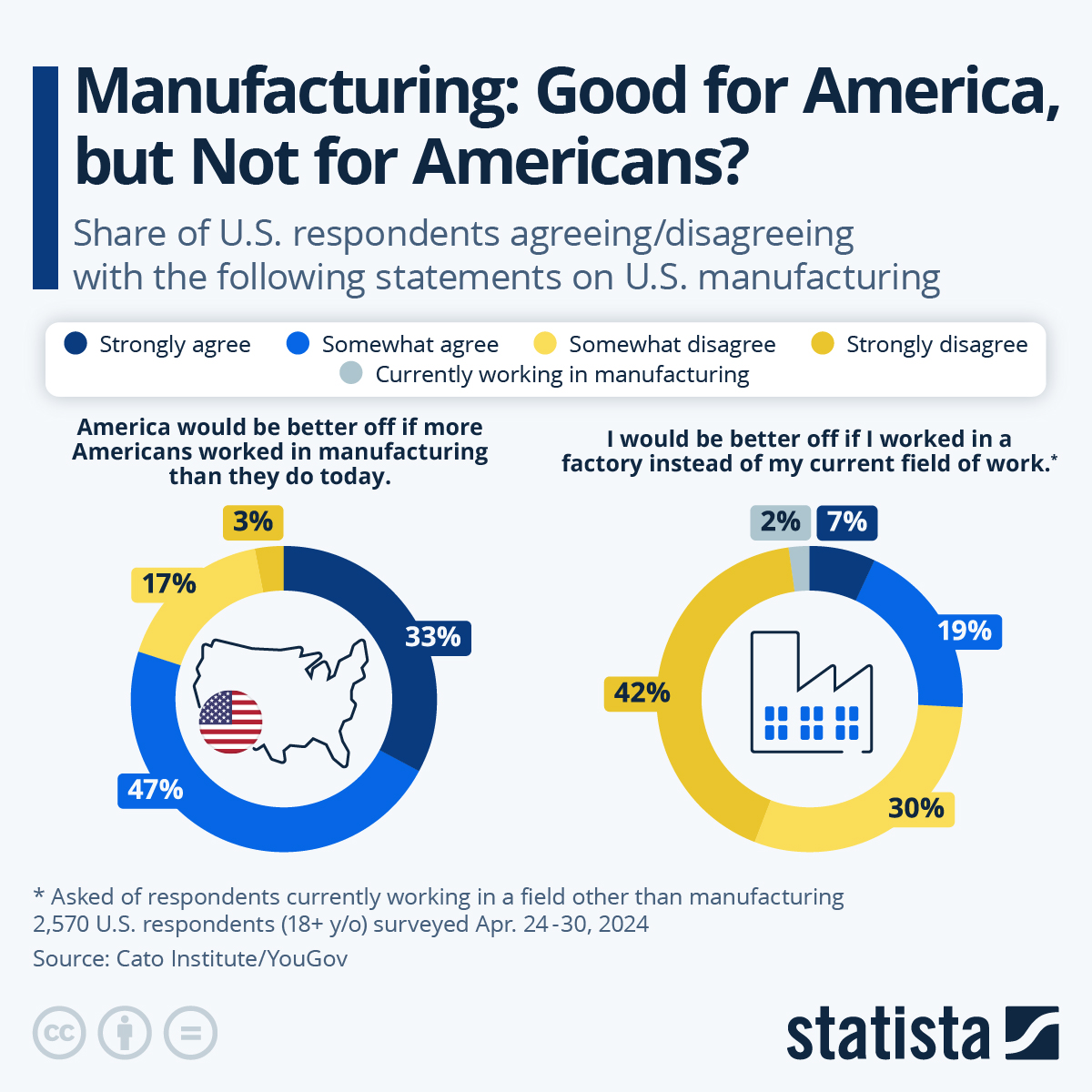
    Manufacturing has long been considered a vital pillar of the American economy. The sector not only contributes significantly to GDP but also plays a key role in job creation. In a recent survey conducted by the Cato Institute and YouGov, an interesting dichotomy emerged regarding American perspectives on manufacturing. While a considerable majority of respondents (80 percent) believed that increased manufacturing would benefit the country, only 20 percent expressed a desire to work in the sector.

    Survey Insights: Employment vs. Perception

    This striking contrast illustrates a disconnect between national sentiment and personal career aspirations. The low percentage of people willing to pursue manufacturing jobs raises questions about the current workforce landscape in the United States. Currently, a mere 2 percent of survey respondents indicated they are employed in manufacturing roles. This suggests that many Americans are either seeking opportunities in professions perceived as more desirable or have shifted away from traditional blue-collar jobs altogether.

    The Shift from Blue-Collar Jobs

    Historically, a significant portion of the American workforce was engaged in blue-collar occupations. However, over the years, there has been a noticeable shift towards white-collar jobs and service-based sectors. As the landscape of employment evolves, it appears that the allure of manufacturing roles has waned, particularly for younger generations who often prioritize jobs that offer flexibility, innovation, and other non-monetary benefits over traditional manufacturing positions.

    The Challenge of Workforce Shortages

    Manufacturing facilities across the United States are grappling with a growing challenge: attracting and retaining suitable workers. As the demand for skilled labor increases, many manufacturers report difficulties in finding individuals with the necessary qualifications. This shortage not only hinders production capabilities but also raises concerns about the future sustainability of the sector.

    Economic Implications of Workforce Shortages

    The implications of a dwindling workforce in manufacturing are multifaceted. With fewer hands available for production, companies may struggle to meet demand, potentially leading to increased prices and reduced competitiveness. Additionally, these challenges could stifle innovation as companies prioritize filling existing positions over investing in new technologies or processes.

    The Globalization Dilemma

    Another key finding from the survey was the vast majority of Americans (79 percent) agreeing that globalization has negatively impacted American manufacturing. This sentiment reflects growing frustrations over trade practices and their effects on domestic industries. While respondents were aware of the benefits associated with free trade, there is also a pervasive belief that such agreements have led to significant disadvantages for American workers.

    Free Trade vs. Protectionism

    Interestingly, even as many Americans acknowledge the merits of free trade, there exists a contradictory sentiment that trade agreements are detrimental to the well-being of the middle class. These conflicting views highlight a complex relationship with globalization and trade, where many see tariffs as a potential solution to reclaiming lost manufacturing jobs. For instance, 62 percent of respondents supported tariffs aimed at bolstering the American blue jeans industry, despite acknowledging potential price increases.

    The Impacts of Pricing on Public Opinion

    The survey further explored the public’s willingness to accept higher prices for domestic products. Findings revealed that while 58 percent of respondents would back tariffs on imported jeans if it meant higher costs, support dwindled with escalating price hikes. Only 34 percent would maintain their support if jeans became $10 more expensive, and this support dropped to 19 percent for a $20 increase. This indicates a delicate balance between protecting domestic manufacturing and consumer price sensitivity.

    Conclusion

    As the American manufacturing sector navigates the challenges of a shifting workforce and the complexities of globalization, the diverse opinions of the public play a critical role in shaping the future of the industry. While the desire for increased manufacturing may be widespread, the reluctance to engage in manufacturing jobs signifies a pivotal moment that may require innovative solutions to bridge these gaps and foster a thriving manufacturing landscape in the U.S.

  • Global Art Ticket Sales: Only 15% in Top Countries

    Global Art Ticket Sales: Only 15% in Top Countries

    Understanding Art Engagement: A Global Perspective

    Art is not just a medium for expression; it’s a vital component of culture, heritage, and community. Celebrated worldwide on April 15 as World Art Day, art promotes creativity, innovation, and cultural diversity, fostering curiosity and dialogue among diverse populations. Despite the undeniable importance of art, recent data indicates a concerning trend regarding public engagement with art exhibitions and museums.

    The Relevance of World Art Day

    World Art Day serves as a reminder of art’s impactful role across society. UNESCO emphasizes that art is crucial in nurturing creativity and cultural dialogue. This annual celebration aims to encourage people to appreciate and participate in artistic endeavors, highlighting the need for greater engagement with different art forms across the globe.

    Current Trends in Art Exhibition Attendance

    According to a Statista Consumer Insights survey, there is a distinct disparity in attendance at museums and art exhibitions worldwide. The data reveals a strikingly low percentage of the population purchasing tickets to these cultural institutions over the past year.

    Regional Insights: Who is Visiting?

    High Engagement Countries

    Countries like China, India, and Italy emerged as leaders in museum and exhibition ticket purchases. Each reported that approximately 15% of online respondents had bought tickets in the previous year. Such figures suggest a cultural inclination towards art and its appreciation in these nations, indicating a broader public engagement with artistic expressions.

    Lower Engagement Countries

    Conversely, nations such as Germany and the United States illustrate a significant decline in interest, with only 7% and 6% of respondents, respectively, having purchased tickets. These statistics raise questions about the barriers to access, public interest, and the overall effectiveness of art institutions in reaching potential audiences.

    Factors Affecting Art Attendance

    Understanding the intricacies behind these numbers requires an exploration of several contributing factors that may be impacting art and museum attendance.

    Economic Considerations

    Economic circumstances dramatically influence people’s ability to participate in cultural activities. In nations where economic challenges persist, spending on leisure activities, including art exhibitions, may not be prioritized, leading to reduced attendance.

    Accessibility Issues

    Access to art can also be a concern. In many regions, museums and exhibitions are not easily accessible to underprivileged communities. Limited reach and an absence of inclusive programs can alienate potential audiences, inhibiting broader engagement.

    Cultural Shifts

    Shifts in consumer behavior, especially among younger generations who gravitate towards digital content, may also reflect declining interest in traditional forms of art consumption. The rise of online platforms for artistic expression has transformed how audiences engage with art, highlighting a need for adaptation from traditional institutions.

    The Role of Institutions in Promoting Art Engagement

    Art institutions have a critical task ahead of them if they aim to increase public interest in exhibitions and museums.

    Innovative Programming

    Developing new and exciting programming can attract diverse audiences. Interactive exhibits, virtual tours, and community-inclusive events may bridge the gap and revitalize interest in art experiences.

    Outreach and Education

    Enhancing outreach and educational programs is vital for fostering a deeper connection between the public and artistic expressions. Schools and local organizations should collaborate with museums to promote art as a vital part of cultural education.

    Leveraging Digital Platforms

    In a world that increasingly relies on technology, art institutions can utilize digital platforms to reach wider audiences. Virtual exhibits and social media marketing can engage those unable to visit physical locations, making art more accessible than ever before.

    Future of Art Engagement

    While current statistics suggest a decline in attendance at art exhibitions and museums in certain countries, the potential for increased engagement remains. Through strategic initiatives, inclusive programming, and by adapting to contemporary trends, art institutions can strive to nourish a greater appreciation for art globally, ensuring it remains a vibrant and integral part of our cultural landscape.

  • Apple Leads Tablet Market with 56.9M Shipments in 2024

    Apple Leads Tablet Market with 56.9M Shipments in 2024

    Apple’s Dominance in the Tablet Market Amidst Declining Sales

    As we mark the 15th anniversary of the launch of the first-generation iPad, Apple’s standing as a leader in the tablet market is both celebratory and contrasting. While the company continues to hold the top position globally, it faces challenges due to declining sales in dollar terms over the past three years. This blog explores the intricate dynamics of Apple’s tablet performance, competitor activities, and the broader market trends that contribute to this landscape.

    The 15-Year Journey of the iPad

    The iPad has undergone significant transformations since its inception. What started as a revolutionary device designed to redefine personal computing has now evolved into a staple in both consumer and enterprise markets. The past 15 years have witnessed an expansion of the iPad’s capabilities, with continuous advancements in technology, design, and functionality.

    Sales Trends: A Mixed Bag

    Despite the innovative advancements and Apple’s strong brand loyalty, the company experienced a 16% decline in iPad sales from 2021 to 2024. This downturn, observed over three consecutive years, raises questions about market saturation and changing consumer preferences. In the 2024 fiscal year, Apple shipped approximately 56.9 million iPads. While this figure remains impressive, it is crucial to note that it is more than double the numbers for Samsung, Apple’s closest competitor in the tablet segment.

    Market Share Dynamics

    Apple’s market share has seen a slight decline, dropping from 40% in 2023 to 38.6% in 2024. This decrease may not immediately seem alarming given that Apple continues to lead the market, but it highlights growing competition from various manufacturers, particularly from Chinese vendors. Huawei and Xiaomi are emerging strong contenders, reporting substantial double-digit growth in tablet shipments, which is indicative of their increasing footprint in the tablet market.

    Recovery of the Global Tablet Market

    After experiencing a slump related to pandemic-induced shifts in consumer behavior, the global tablet market showed promising signs of recovery in 2024. With a growth rate of 9.2%, overall shipments rose from 135.2 million in 2023 to 147.6 million in 2024. This rebound suggests that consumers are once again investing in tablets, viewing them as essential devices for both work and leisure.

    Factors Contributing to Shipment Growth

    Several factors contributed to the resurgence of tablet shipments:

    1. Increased Remote Work and Learning: The shift towards remote work and online education has continued to create demand for versatile computing devices. Tablets fit this need beautifully, offering portability along with power.

    2. Enhanced Features and Capabilities: Manufacturers, including Apple, have been continuously upgrading their devices to include features that cater to the needs of modern users, such as enhanced multitasking capabilities, high-resolution displays, and improved battery life.

    3. Strong Holiday Sales: Apple’s shipment increase of 5% in the 2024 calendar year was partially driven by a robust holiday sales quarter. This period typically sees elevated consumer spending, highlighting the importance of effective marketing strategies during peak seasons.

    Competitive Landscape

    While Apple remains a dominant player in the tablet market, the growing success of its rivals cannot be ignored. Samsung continues to innovate within its Galaxy Tab line, while companies like Huawei and Xiaomi are rapidly gaining attention through aggressive pricing strategies and impressive specs. These competitors are effectively capturing market segments that may be more price-sensitive or seeking alternatives to the Apple ecosystem.

    Looking Ahead: Apple’s Strategic Position

    As Apple navigates this evolving landscape, it is essential that the company adapts to shifting market dynamics. This may involve innovation in services, enhancing user experience, and perhaps even reevaluating pricing strategies to retain its market share against rising competition.

    In a technology landscape that continuously evolves, Apple’s journey with the iPad illustrates both the challenges and opportunities that accompany leadership in the market. As the tablet market continues to grow, it will be interesting to observe how Apple and its competitors respond to changing consumer needs and preferences in the years to come.

  • Gmail Leads U.S. Email Market with 75% User Share

    Gmail Leads U.S. Email Market with 75% User Share

    Gmail’s Dominance in the U.S. Email Market

    The landscape of email services in the United States is heavily dominated by Gmail, a product of Google that has become synonymous with online communication. This blog explores the current market share of Gmail, the public’s perception of its use, and recent developments with the introduction of the Gemini AI assistant.

    Gmail’s Market Share

    According to recent data from Statista Consumer Insights, Gmail is utilized by approximately 75% of surveyed individuals in the U.S. This statistic highlights the profound integration of Gmail into the daily lives of users, making it the primary email service for a significant portion of the population. The overwhelming preference for Gmail raises several questions about why users favor this platform over others.

    Comparative Analysis of Email Providers

    In stark contrast to Gmail’s impressive market share, Yahoo Mail holds a distant second position, with only about 33% of Americans aged 18 to 64 indicating they utilize this service. Other email providers such as Microsoft Outlook, AOL Mail, and various telecom-related email services are also part of the competitive landscape, but they trail behind. Particularly, AOL Email maintains a surprisingly consistent presence, catering to about 10% of users within this demographic, despite being perceived as outdated.

    User Concerns Regarding AI Integration

    Recently, the announcement by Google regarding the integration of its Gemini AI assistant into Gmail has sparked significant public concern. Users voiced worries about privacy as the generative AI’s capabilities mean it could potentially process sensitive personal emails. Although Google promised enhancements in email management—such as faster access to relevant information by prioritizing frequent contacts and previously read emails—the incorporation of AI into personal email communications raises legitimate privacy issues.

    The Dual-Edged Sword of AI Enhancement

    While the benefits of AI are apparent, such as improved organization and efficiency in email management, the prospect of AI analyzing personal correspondence is troubling for many. Users fear that their data may be processed not only for immediate improvements but also for broader AI training purposes. This apprehension about data privacy can undermine user trust, particularly if they believe that their emails are being used for purposes outside their control.

    Public Reactions to AI in Gmail

    The introduction of AI features into familiar applications like Gmail can polarize public sentiment. While some users may embrace the efficiency and convenience these enhancements promise, others may find it invasive. The idea that a generative AI would be sifting through personal communications understandably gives rise to anxiety about data security and personal privacy.

    Mixed Reviews on AI Integration

    As Google promotes the advantages, feedback from the user community tends to be mixed. Some applaud the potential for smarter email management, while others are hesitant to allow an algorithm into their personal communications. This dichotomy reflects broader societal concerns regarding AI, particularly in areas where personal data plays a critical role.

    Conclusion

    As Google continues to enhance its services, the challenge will be balancing user convenience with the essential need for privacy and security. The growing capabilities of AI, while promising increased efficiency, must be introduced with careful consideration of how they interact with user data. The public’s response to these changes will shape the future of email services and AI applications alike.


    In this blog post, we’ve explored the current status of Gmail’s market influence, the integration of AI technology, and the accompanying user concerns, aiming to provide a comprehensive overview of the email landscape in the United States.

  • 55% of Greenlanders Prefer Danish Passport Over U.S. Citizenship

    55% of Greenlanders Prefer Danish Passport Over U.S. Citizenship

    Greenland’s Political Identity: Preference for Denmark Over the U.S.

    Greenland, a territory within the Kingdom of Denmark, has recently found itself at the intersection of geopolitical interests, particularly with the U.S. showing keen interest in the Arctic region. A notable recent event was the backlash experienced by the U.S. delegation visiting Greenland, perceived as a provocative move by the local leaders. This visit followed remarks made by former U.S. President Donald Trump about wanting to purchase the island. However, public sentiment among Greenlanders tells a different story regarding their national identity and future aspirations.

    The Survey Insights: Greenlanders on U.S. Citizenship

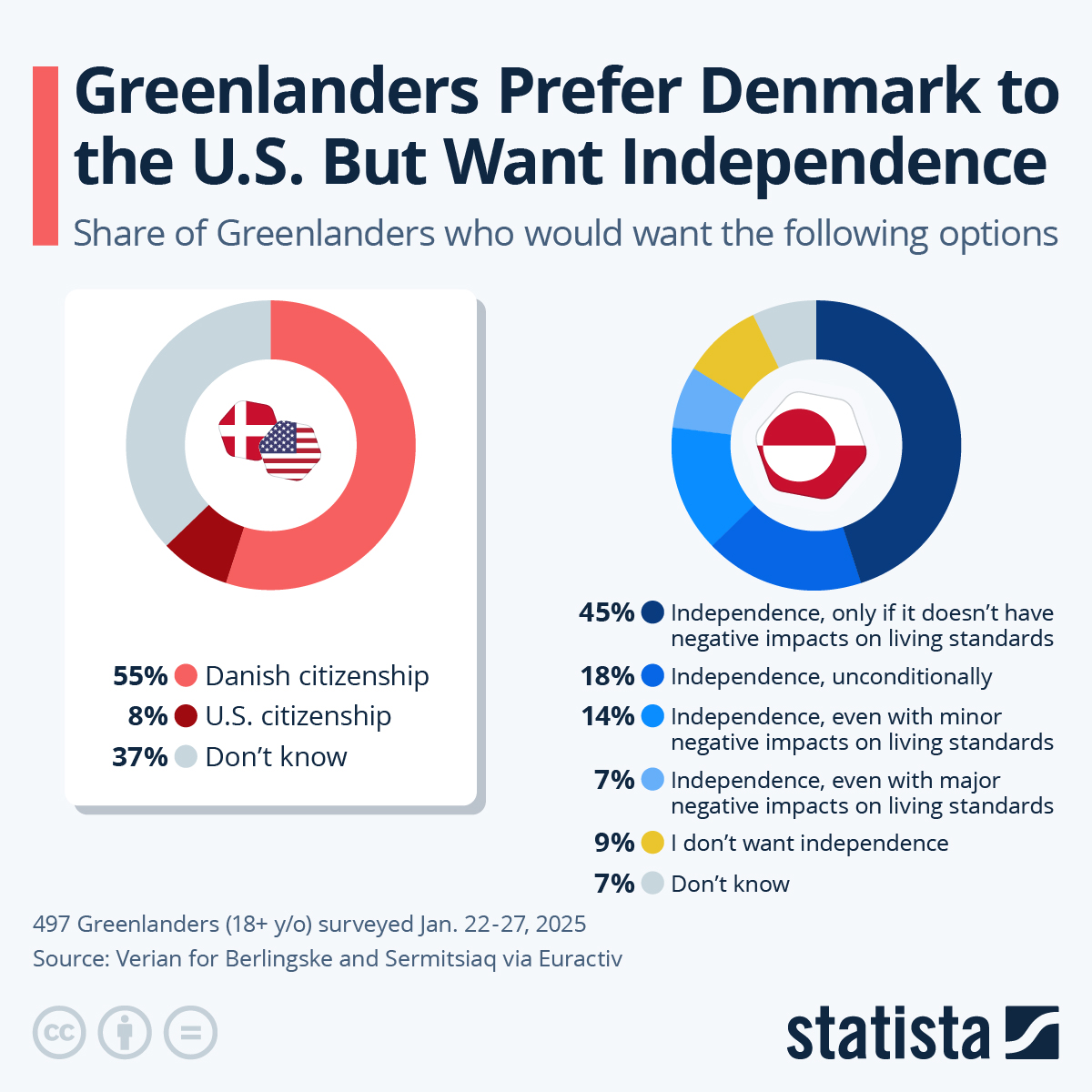
    A survey conducted by Verian for the Danish newspaper Berlingske and Greenlandic media outlet Sermitsiaq revealed some startling figures about Greenlandic sentiment towards American citizenship. Only eight percent of respondents expressed a desire to obtain U.S. citizenship. This indicates a strong inclination towards retaining their unique identity rather than aligning themselves with a nation that has historically shown interest in acquiring their land.

    Preference for Danish Citizenship

    In stark contrast to the minimal interest in U.S. citizenship, the survey disclosed that 55 percent of respondents favored Danish citizenship. This preference points towards a deeper connection with Denmark, reflective of a historical relationship that encompasses culture, governance, and economic support. The significance of maintaining ties with Denmark is indicative of Greenlanders valuing their social, political, and economic frameworks more than the prospect of American governance.

    Independence: A Double-Edged Sword

    Independence remains a pivotal topic in Greenlandic discourse. The poll revealed that while many are in favor of pursuing independence, their opinions hinge on the condition of maintaining or improving their quality of life. A substantial majority expressed a desire for independence if it does not lead to a decrease in living standards. This presents a nuanced perspective on independence: it is not merely about sovereignty but also about the practical implications such a move might entail.

    Economic Considerations: The Role of Danish Funding

    One of the critical aspects of the independence debate revolves around Greenland’s financial relationship with Denmark. Approximately 20 percent of Greenland’s GDP is underpinned by an annual block grant from the Danish government. Should independence be pursued, the loss of this financial support poses a significant threat to the quality of life for many Greenlanders. This economic dependency complicates the desire for self-determination, as many are cautious about potential economic repercussions.

    The Spectrum of Voices on Independence

    The survey also highlighted the diversity of opinions among Greenlanders regarding independence. While the sentiment toward self-governance is prominent, it varies across different demographics and communities within the territory. The complexity of opinions illustrates that independence is a nuanced subject, deeply intertwined with the lived experiences and expectations of the Greenlandic populace.

    Conclusion: Navigating the Future of Greenland

    As Greenland continues to weigh its options between maintaining ties with Denmark and pursuing independence, it is essential to understand the perspectives expressed in the recent survey. With a strong preference for Danish citizenship, concerns about economic stability, and varied opinions on independence, the political landscape in Greenland is as multifaceted as the territory itself. The actions of external nations, particularly the U.S., will undoubtedly influence these discussions, making it crucial for Greenlanders to navigate their identity and future carefully.

  • Only 3% of Germans Use Satellite Internet at Home

    Only 3% of Germans Use Satellite Internet at Home

    The State of Satellite Internet: A Niche Yet Vital Service

    Satellite internet has emerged as a critical lifeline in various contexts, particularly highlighted by its role in recent geopolitical events. Despite its importance, satellite internet remains a niche product, primarily utilized in specific regions and applications. This blog explores the current state of satellite internet, its usage across different countries, and the leading providers in the market.

    The Role of Satellite Internet in Current Events

    Recent media attention has showcased satellite internet’s pivotal contribution to Ukraine’s communication infrastructure amid its ongoing conflict with Russia. The attention largely centers around SpaceX’s Starlink, a network of low Earth orbit (LEO) satellites that has provided essential internet connectivity in war-torn areas where traditional services have been disrupted. However, this situation also raises questions about the broader applications and reach of satellite internet, far beyond military use.

    Global Usage Statistics: A Snapshot

    Recent data from Statista Consumer Insights reveals the limited penetration of satellite internet in certain countries:

    Germany

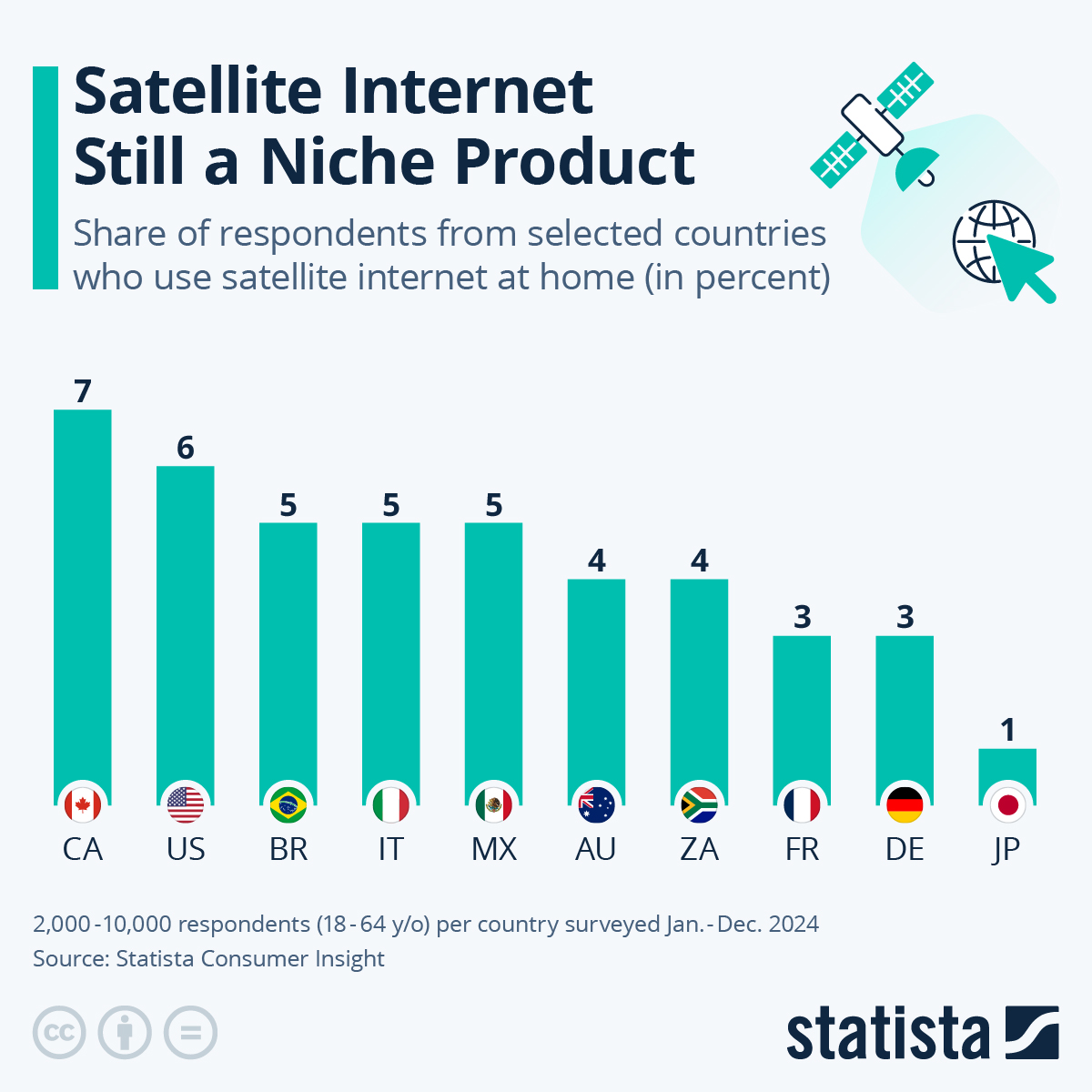
    In Germany, only 3% of respondents reported using satellite internet at home. This statistic underscores a predominantly terrestrial approach to internet connectivity, where more traditional broadband services remain popular.

    France

    Similar trends can be observed in France, with a comparable low adoption rate. The preference for wired connections in urban areas may contribute to this limited usage of satellite technology.

    North America: A Different Story

    Conversely, Canada and the United States demonstrate a higher reliance on satellite internet services. The vast geographical expanse of North America, coupled with many remote regions lacking reliable broadband infrastructure, positions satellite internet as a viable option for users in these areas.

    Leading Players in the Satellite Internet Market

    The emergence of various providers in the satellite internet landscape indicates a progressive market looking to cater to diverse consumer needs.

    Starlink

    Arguably the most recognized name in satellite internet today, Starlink operates a constellation of low Earth orbit satellites offering high-speed internet across the globe. Starlink stands out for its efforts to deliver service to underserved regions, making it a critical resource for many users.

    OneWeb

    In addition to Starlink, OneWeb has entered the market with a focus on LEO satellites designed to provide faster load times compared to traditional satellite services. Although OneWeb does not directly serve residential consumers, it markets to businesses and government entities, especially in sectors like transportation. Partnerships with commercial providers allow for a combination of OneWeb’s capabilities with other satellite technologies.

    The Niche Nature of Satellite Internet

    Despite advancements and the availability of multiple providers, satellite internet is still predominantly a niche service. Several factors contribute to its limited adoption:

    Infrastructure and Access

    Many regions, particularly urban centers, enjoy robust terrestrial broadband options, rendering satellite services less appealing. Additionally, the costs associated with installing satellite dishes and the subscription fees can deter potential users.

    Performance Challenges

    Satellite internet often experiences latency issues due to the distance signals must travel to and from space. While LEO satellites have mitigated some of these concerns, users in regions with stable ground-based internet may still find performance lacking.

    Future Developments

    Innovation in the field of satellite technology could alter the niche landscape. As companies like SpaceX and OneWeb continue to develop more efficient systems and expand their coverage areas, it is possible that satellite internet will become a more mainstream option in the future.

    Conclusion

    As the world navigates increased connectivity demands and geopolitical challenges, the role of satellite internet remains both critical and limited. By examining the patterns of usage across different countries and the key players in the industry, it’s clear that while satellite internet offers distinct advantages, especially in underserved areas, it still faces a substantial uphill battle to broaden its appeal among the general public.

  • Daily Newspaper Readers: 60% in India vs. 10% in U.S.

    Daily Newspaper Readers: 60% in India vs. 10% in U.S.

    The Shift in Media Consumption: An Examination of Traditional Media Usage

    As the digital landscape evolves, so too does the way audiences consume media. The evidence is clear: traditional media channels are seeing varying levels of engagement, depending on the region. The data from Statista Consumer Insights paints a revealing picture of the habits surrounding daily print newspapers, linear television, and radio across different countries.

    Daily Newspapers: A City-by-Country Analysis

    In a world increasingly oriented toward digital solutions, the consumption of daily newspapers continues to show intriguing patterns across different nations. The survey conducted by Statista reveals that India stands out remarkably. Approximately 60% of respondents in India reported reading a daily newspaper in the past month, highlighting the country’s unique affinity for print media.

    Contrasting Trends in Other Nations

    When comparing India to other selected countries, the enthusiasm for daily newspapers dwindles significantly. For instance:

    • United Kingdom: Just 14% of respondents indicated that they had read a daily newspaper in the previous four weeks.
    • United States: Similar to the UK, only 10% of participants reported engaging with daily newspapers.

    These figures reflect a broader global trend where the traditional newspaper industry’s appeal appears to be declining in many western countries, as audiences shift their attention to digital platforms and online news sources.

    The Decline of Weekly Newspapers

    Diving deeper into the types of newspapers consumed, weekly publications seem to fare even worse than their daily counterparts. In India, only 25% of respondents had interacted with a weekly newspaper, signaling a significant drop in print media engagement. The statistics from the UK and the U.S. further elucidate this downturn, with only 14% and 10% of respondents engaging with weekly newspapers, respectively.

    These diminishing numbers suggest a growing preference for immediate and accessible news updates, either from digital platforms or through social media channels.

    Linear Television: The Dominant Force

    While print media faces challenges, linear television remains a stalwart in the media landscape. The data shows that between 65% and 80% of respondents across various countries reported watching linear TV in the month prior to the survey. This wide adoption indicates that, despite the rise in streaming services and on-demand content, traditional television still holds significant sway.

    Viewing Habits Across Borders

    A closer inspection reveals variations in television consumption habits based on locality:

    • India: With a robust television industry, viewers remain engaged with linear programming.
    • China and Japan: These nations also reflect high engagement levels, a continuation of their long-standing tradition with television broadcasting.

    The Popularity of Radio: A Divergent Story

    Radio’s presence in the media consumption landscape reveals contrasting trends as well. While some countries report high engagement, others show a marked decline in interest.

    Low Engagement in Asia

    In India, China, and Japan, listening to the radio is less prevalent, with only around 30% of respondents tuning in. This suggests that in these regions, audiences perhaps prefer visual content provided by television or online platforms.

    The Rise of Radio in Other Markets

    Conversely, countries like South Africa and Germany report strong radio listenership, with over 60% of respondents claiming they had listened to the radio recently. This variance indicates that local culture and media infrastructure heavily influence audio media’s popularity.

    The Takeaway: A Media Landscape in Flux

    The evolving patterns in media consumption illustrate a shift away from traditional media, particularly print newspapers, towards more immediate and visually engaging media forms. While linear television still dominates, the interest in radio shows mixed results, highlighting the complexity of media preferences in a globalized world.

    As we observe these changes, it becomes essential to consider how these trends will evolve further in the face of continuous technological advancement and changing audience behaviors. The landscape is surely set for more surprises and transformations in the coming years, as consumers adapt to their demanded information consumption preferences.

  • 2025 Predictions: 80% Expect Rising Global Temperatures

    2025 Predictions: 80% Expect Rising Global Temperatures

    Predictions for 2025: Insights from Global Survey Trends

    As we move closer to 2025, the world stands on a precipice of change, shaped by evolving technologies, social dynamics, and environmental concerns. A recent survey conducted by Ipsos gathered insights from over 23,700 individuals across 33 countries, unveiling a tapestry of predictions about our collective future. This blog delves into the key findings of the survey, exploring themes of climate change, geopolitical tensions, and technological advancements.

    The Rising Temperature of Our Planet

    Global Consensus on Climate Change

    One of the most pressing issues facing humanity is climate change. The Ipsos survey reveals striking figures regarding the public’s perceptions of this urgent crisis. Eight in ten respondents anticipate a continued rise in global temperatures, underscoring a broad agreement on the severity of climate-related challenges that lie ahead.

    Regional Insights

    The belief in escalating temperatures is particularly pronounced in Southeast Asia, with Indonesia leading the charge at 91% of respondents expressing concern, followed closely by the Philippines (89%) and Malaysia (88%). These sentiments reflect a growing awareness and urgency around climate issues, likely influenced by recent extreme weather events experienced in these regions.

    Extreme Weather Expectations

    Furthermore, a significant 72% of those surveyed expect to witness an increase in extreme weather occurrences within their respective countries. This expectation is a grim reminder of the chaotic nature of climate change and its far-reaching implications for communities everywhere.

    Optimism Towards Carbon Reduction Initiatives

    Despite the bleak outlook on climate change, there remains a flicker of optimism regarding government action on carbon emissions. However, only 52% of respondents believe that their governments will set more ambitious targets for reducing emissions. Notably, optimism is highest in China, where 84% of participants foresee governmental initiatives aimed at tackling climate change.

    Geopolitical Landscape: Conflicts and Tolerance

    Ongoing Conflicts in the Middle East and Ukraine

    When it comes to global security and the resolution of conflicts, the outlook is less optimistic. The survey indicates that merely one in five people believe that the conflicts in the Middle East will conclude by 2025. The situation in Ukraine fares slightly better, with around 30% holding a similar opinion, though this marks a decrease in optimism compared to the previous year.

    Tolerance Among Societies

    Moreover, the survey highlights concerns about societal cohesion. Only a third of worldwide respondents believe that inter-community tolerance will improve by 2025. This is a slight decline from the previous year’s expectations, indicating a growing awareness of societal divides and potential unrest.

    The Digital Future: AI and Virtual Realities

    AI’s Impact on Employment

    A significant finding from the survey revolves around the anticipated effects of artificial intelligence (AI) on the workforce. Nearly two-thirds of participants expect AI to displace jobs in their countries by 2025. This revelation underscores widespread fears of technological unemployment, driven by the rapid advancement of AI capabilities.

    Job Creation vs. Job Displacement

    Conversely, a substantial 43% of respondents believe that AI will also create new job opportunities. This dual perspective highlights the complex relationship between technological advancement and employment, as economies strive to adapt to a changing landscape.

    Immersion in Virtual Worlds

    Finally, the survey explores the growing phenomenon of virtual worlds. An increasing number of respondents—60% compared to 56% in the previous year—anticipate that more individuals will engage in virtual environments in 2025. This trend reflects the accelerating integration of digital experiences into everyday life, driven by advancements in technology and connectivity.

    Navigating the Future: A Global Perspective

    The Ipsos survey offers a revealing snapshot of global sentiment as we approach 2025. With strong concerns about climate change, persistent geopolitical tensions, and the transformative role of technology, it is evident that the path forward will be complex. Each of these elements intertwines, shaping the world we will inhabit in just a few short years.

    In the face of these challenges, the need for proactive measures, visionary leadership, and global cooperation has never been more critical. The collective voice of the surveyed respondents serves as a clarion call for action, urging stakeholders at all levels to address these pressing issues head-on.

  • 54% of U.S. Workers Expect Christmas Bonuses in 2023

    54% of U.S. Workers Expect Christmas Bonuses in 2023

    Understanding the 13th Month Bonus: A Global Perspective

    The concept of a 13th month bonus, or Christmas bonus as it is commonly known in some regions, varies significantly across different cultures and economies. This annual financial benefit, often provided at the end of the year, reflects recognition for the employees’ hard work and can play a crucial role in their financial planning during the festive season.

    The Popularity of Christmas Bonuses in the U.S.

    Recent data collected by Statista Consumer Insights reveals that a notable 54 percent of employed adults in the United States anticipate receiving a Christmas bonus in the upcoming holiday season. This expectation can be attributed to several factors, including workplace culture, the economic performance of the company, and the prevailing mood of generosity during the holidays.

    Factors Influencing Bonus Expectations

    1. Company Performance: Companies that have performed well financially often reward employees with bonuses as a gesture of gratitude.
    2. Cultural Trends: The American culture places a significant emphasis on holiday spirit, leading organizations to adopt practices that align with social expectations.
    3. Employee Retention: Bonuses can act as incentives to enhance employee loyalty and retention, fostering a sense of appreciation and motivation among staff members.

    Christmas Bonuses Across Latin America

    The trend of receiving a 13th month bonus is notably stronger in Latin American countries. For instance, in Mexico and Brazil, the expectation of receiving a Christmas bonus is considerably higher, with 65 percent and 85 percent of respondents, respectively, expressing optimism about receiving this year-end payment.

    Mexico: The Aguinaldo

    In Mexico, the practice of providing a 13th month bonus is institutionalized through a compulsory payment known as the "aguinaldo." This payment, mandated by the Federal Labor Law, requires employers to provide their employees with an annual bonus equivalent to at least 15 days of their salary.

    • Mandatory Nature: The aguinaldo is not just a goodwill gesture; it is a legal obligation, ensuring that employees receive additional financial support during the holiday season.
    • Celebrating with Tradition: This custom is deeply rooted in Mexican culture, making the aguinaldo a significant aspect of holiday celebrations for many families.

    Comparisons with Europe

    Interestingly, the trend of Christmas bonuses is less pronounced in Europe. In the United Kingdom and France, fewer than half of employed respondents express expectations for a year-end bonus.

    UK and France: Cultural and Economic Contexts

    1. Workplace Culture: In the UK and France, there is often a more formalized approach to salary negotiations and financial rewards, which may contribute to a lesser expectation of additional bonuses.
    2. Economic Variability: Economic conditions play a vital role; in times of economic uncertainty, companies may withhold bonuses to maintain financial stability.
    3. Benefits Packages: Employees in these countries may receive various forms of benefits, which may be preferred over traditional year-end bonuses.

    Conclusion

    The 13th month bonus encapsulates diverse cultural, economic, and legal dynamics from around the world. While it serves as a motivating factor for many employees in the U.S. and Latin America, its relevance varies significantly in European countries. Understanding these nuances helps appreciate the differing perceptions of employee compensation globally.

  • Freelancers Face Pension Cuts: 17% in Mexico to 115% in US

    Freelancers Face Pension Cuts: 17% in Mexico to 115% in US

    Understanding the Pension Prospects for Freelancers: A Global Overview

    The world of freelancing offers flexibility and independence, but it comes with certain risks, especially when it comes to pension prospects. As self-employed individuals navigate their careers, understanding their retirement benefits is crucial. This blog delves into the key findings from the OECD Pensions at a Glance 2023 report, highlighting the stark differences in pension outcomes for self-employed versus employed workers across various countries.

    The Pension Landscape for Self-Employed Workers

    Freelancers across OECD countries face significant challenges compared to their employed counterparts regarding old-age pensions. The average pension for self-employed individuals stands at only 79% of what employed people earn in the OECD. However, this figure masks substantial variations across different nations, with some countries demonstrating particularly alarming statistics.

    Extreme Variations Among Countries

    • Mexico: Self-employed workers are at a severe disadvantage, receiving merely 17% of the pension that employed individuals earn.
    • Germany: The situation is slightly better but still concerning, with self-employed individuals earning only 44% of their employed peers’ pensions.
    • United Kingdom: The self-employed can expect to receive 52% of the pension of those in traditional employment.

    Such wide disparities underscore the complex relationship between self-employment and pension contributions in varying countries.

    Factors Influencing Pension Contributions

    The difference in pension outcomes can be largely attributed to the policies of individual countries regarding pension contributions for self-employed workers. Some nations have made it mandatory for self-employed individuals to contribute to earnings-related pension schemes, while others have not.

    Categories of Pension Contribution Systems

    The OECD categorizes countries based on how they require contributions from self-employed individuals:

    1. Mandatory Employee-like Schemes: In 13 countries, including Canada, the United States, and Luxembourg, self-employed workers are required to contribute the same combined amount as employees. This provides a more equitable path to retirement benefits.

    2. Limited Coverage with Reduced Contributions: In 12 countries, such as France and Italy, self-employed workers can choose to make reduced contributions, impacting their overall pension prospects.

    3. Flat-Rate Lower Contributions: Nations like Colombia and Spain fall into this category, where self-employed individuals pay a flat-rate, which is generally lower than what employed individuals contribute.

    4. Mandatory Basic Pension Contributions Only: Some countries, including Ireland and the Netherlands, require contributions to basic pensions only, leaving gaps in earnings-related pensions for the self-employed.

    5. No Mandatory Contributions: Countries like Australia and Mexico do not have mandatory contributions for self-employed individuals, further exacerbating the pension predicament for freelancers.

    Suggested Strategies for Enhanced Pension Security

    For self-employed individuals, understanding one’s pension rights and obligations is vital. Here are a few strategies that freelancers can consider to improve their pension prospects:

    Voluntary Contributions

    Freelancers should consider making voluntary contributions to their pension schemes, particularly if their country allows it. This can compensate for lower mandatory contributions and secure a better retirement income.

    Consultation with Financial Advisors

    Seeking guidance from financial advisors who understand the nuances of pension schemes in different countries can provide personalized strategies for maximizing retirement savings.

    Exploring Alternate Pension Schemes

    In some countries, freelancers may have access to alternative pension schemes or retirement savings accounts designed for self-employed individuals. Understanding these options can lead to better financial health in retirement.

    The Role of Policy in Shaping Pension Outcomes

    The findings from the OECD report highlight an urgent need for reevaluation of policies impacting self-employed pension contributions. Countries that currently offer less favorable conditions for freelancers may need to consider reforms to ensure more equitable treatment in retirement benefits.

    By addressing the disparities and creating frameworks that encourage adequate pension contributions, nations can significantly improve the financial security of their self-employed workforce.

  • TV News Drops to 25% in Urban India; Social Media Gains 3%

    TV News Drops to 25% in Urban India; Social Media Gains 3%

    The Shift in News Consumption Among Urban Indians

    Current Landscape of News Consumption

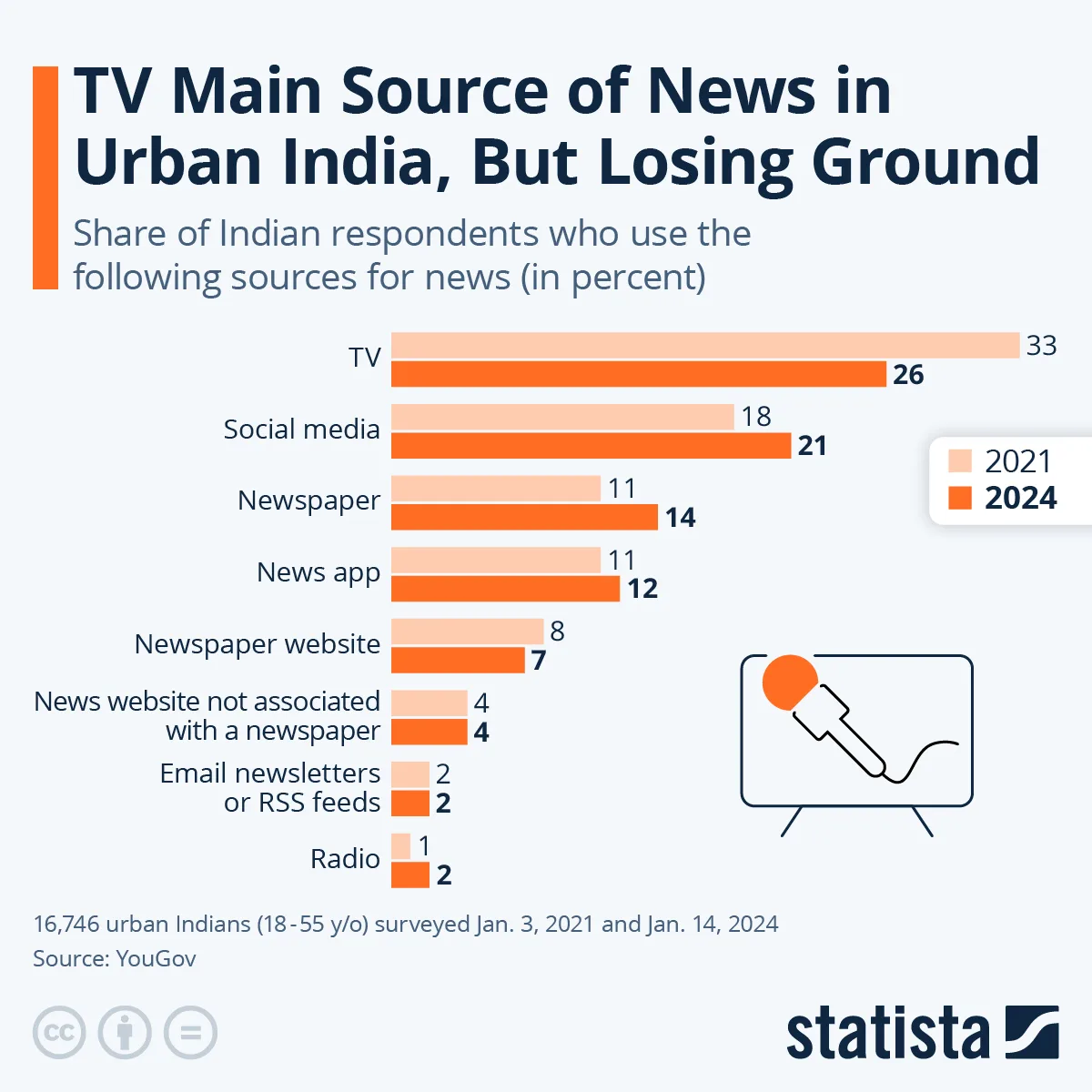
    According to a recent survey conducted by YouGov, television remains the primary source of news for urban Indians in 2024. However, a notable trend indicates that its dominance is waning. In the survey, just over 25% of respondents reported relying on television for their news. This marks a significant drop from 2021, when approximately one-third of participants identified TV as their main news source.

    The Decline of Television News

    The decrease in television viewership can be attributed to several factors. One prominent reason is the changing preferences of consumers who are increasingly gravitating towards more accessible and personalized news platforms. With the rise of digital media, urban Indians are no longer confined to traditional news broadcasting methods. Instead, they are exploring a variety of alternatives that cater to their pace and preferences.

    The Rise of Social Media

    Social media platforms have emerged as a formidable alternative for news consumption. The latest survey indicates a 3 percentage point increase in the number of people turning to social media for news. This shift reflects a broader trend where individuals value the immediacy and interactive nature of social platforms. Unlike traditional news outlets, social media allows users to engage with content, share perspectives, and participate in discussions in real time.

    Growth in Print Newspapers

    Interestingly, print newspapers are also witnessing a resurgence among urban news consumers. The survey highlighted a 3 percentage point increase in people accessing news via printed media. This could be attributed to an evolving perception of print as a credible source of news amid the overwhelming influx of digital content. Many individuals still appreciate the in-depth analysis and structured reporting that print newspapers can provide, which may be lacking in the fast-paced digital landscape.

    Increase in News Apps on Mobile Devices

    Another noteworthy change is the rise of news apps, primarily accessed through tablets and smartphones. The survey recorded a 1 percentage point increase in users relying on such applications for news. The convenience of having news updates at one’s fingertips, along with customizable content, appeals to a generation that thrives on mobility and flexibility. News apps often provide real-time updates, notifications, and tailored news feeds that enhance user engagement.

    Implications of Changing News Consumption Habits

    The shifting landscape of news consumption in urban India has significant implications for media organizations, advertisers, and consumers alike. Media outlets will need to adapt their strategies to engage a more digitally oriented audience seeking diverse news sources. Conversely, advertisers and brands will also need to reassess their promotional strategies to effectively reach target demographics through evolving channels.

    Conclusion: Embracing the Future of News

    The 2024 survey underscores a critical moment for news consumption in urban India. While television retains its status as a dominant news source, the momentum is clearly shifting towards digital platforms that offer more personalized, immediate, and interactive experiences. As urban consumers become increasingly sophisticated in their media consumption habits, the media landscape will need to evolve in tandem to meet the changing demands of its audience.

  • Over 70% of Amazon Products: Made in China

    Over 70% of Amazon Products: Made in China

    The Relationship Between Amazon and Chinese Manufacturing

    Overview of Amazon’s Product Sources

    Amazon has become a colossal marketplace, accounting for a significant percentage of e-commerce transactions worldwide. Recent data highlights that more than 70% of products sold on Amazon are sourced from China. This dependency underscores the critical role that Chinese manufacturing plays in the global supply chain for e-commerce.

    The Dominance of Chinese Manufacturers

    Survey Insights

    According to a comprehensive survey conducted by Jungle Scout and reported by the ECDB, the overwhelming majority of products available for purchase on Amazon are produced in China. This reflects not only the effectiveness of low-cost production in the region but also the logistical advantages that come with such manufacturing.

    The Role of the United States

    The Second Largest Contributor

    While China takes the lead, the United States follows as the second-largest producer, accounting for approximately 30% of all goods sold on Amazon. This dual presence emphasizes a diverse sourcing strategy that retailers leverage to cater to varying customer needs.

    Geographic Sourcing

    The survey released indicated that retailers identified various countries as sourcing locations, resulting in a total share exceeding 100%. This is indicative of the complex supply chain dynamics that many businesses navigate as they strive to meet consumer demand.

    The Rise of Direct Sales from China

    Emergence of Local Competitors

    In addition to dominating the Amazon marketplace, Chinese companies are increasingly turning their attention towards direct sales to Western consumers. Companies such as Pinduoduo Group are gaining traction in this competitive space. The e-commerce app Temu serves as a prime example of this trend, successfully connecting Chinese manufacturers with consumers in Western markets.

    Amazon’s Response to Competition

    Introduction of a Low-Cost Offering

    In light of the growing competition from direct-to-consumer platforms, Amazon is reportedly planning to introduce its own low-cost retail channel. This bold move aims to compete directly with platforms like Temu by offering a selection of unbranded products at attractive price points, likely to be under $20.

    Product Range and Strategy

    The forthcoming Amazon store is expected to include a variety of items, from massage devices to fitness weights and cell phone cases. These products will be sourced directly from manufacturers in China, aligning with the overarching trend of leveraging cost-effective production capabilities from Asia.

    Conclusion

    The intricate relationship between Amazon and Chinese manufacturers underscores the evolving landscape of e-commerce, characterized by competition from local companies and strategic adaptations by established giants. As the marketplace continues to grow and change, the dynamics of sourcing, competition, and consumer behavior remain key elements to watch.