الوسم: Shadow Fleet

  • UK Stops Russian Shadow Fleet Vessel in Channel: Ministry

    UK Stops Russian Shadow Fleet Vessel in Channel: Ministry

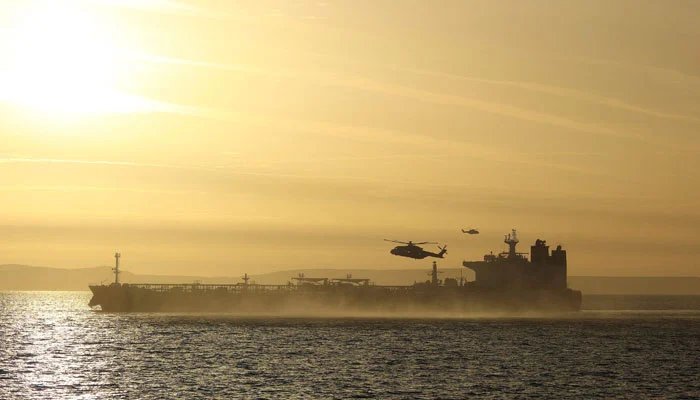
    British forces intercepted a sanctioned Russian oil tanker in the English Channel on Sunday, in an operation praised by Kyiv. The operation lasted six hours and involved Navy commandos boarding the vessel covertly during the night by rappelling from a helicopter, as shown in footage released by the defense ministry. Support for the operation came from Chinook, Merlin Mk4, and Wildcat helicopters, along with a maritime patrol aircraft.

    The frigate HMS Sutherland and the minehunter HMS Ledbury also participated. According to the ministry, this was the first UK-led operation of its kind, where Royal Marine Commandos and specialized officers from the National Crime Agency boarded the vessel Smyrtos, which was sailing under a false Cameroonian flag to evade sanctions and continue fueling Russia’s ongoing conflict with Ukraine. The ship is now anchored off southern England, where authorities will monitor it.

    Ukraine’s Foreign Minister Andriy Sybiga welcomed the action, emphasizing that disrupting Russia’s shadow fleet cuts off vital funds for its military efforts. He stated, “Every vessel stopped reduces Russia’s war capacity,” and that cutting these revenues hampers Russia’s ability to finance missile and drone strikes against Ukrainian cities. UK Defense Minister Dan Jarvis echoed this sentiment, highlighting that the interdiction delivers a blow to Putin’s illegal invasion and was coordinated closely with France.

    Since Russia’s invasion of Ukraine in 2022, the UK has sanctioned hundreds of ships suspected of being part of the shadow fleet—largely older tankers with questionable ownership—that bypass Western embargoes. These vessels are prohibited from entering UK ports and using its services. Jarvis noted that targeting the shadow fleet directly impacts the resources supporting Russia’s aggression and diminishes its threat to European and global security.

    Prime Minister Keir Starmer stated that this operation is yet another strike against Russia, serving as a reminder to those backing Putin’s war that concealment is no longer possible. In March, the UK announced that its forces could board and seize vessels from the shadow fleet passing through its waters, a move part of broader efforts following changes in U.S. policy on Russian oil amid the ongoing embargo and global energy market fluctuations.

    European nations—including France, Belgium, and Finland—have also seized vessels suspected of violating sanctions related to Russia’s shadow fleet. There have been reports of these ships damaging undersea cables in the Baltic Sea, hinting at Russia’s hybrid warfare tactics in the region. The UK government is seeking to introduce new legislation aimed at preventing Russia and other hostile states from sabotaging critical subsea internet infrastructure.

    Since 2023, multiple incidents of damage to undersea cables and power lines have been reported in the Baltic, with military experts and European leaders asserting that Russia is escalating its hybrid warfare in the region, which is entirely bordered by NATO members except for Russia itself. Former UK Defense Minister John Healey, who recently resigned accusing Prime Minister Starmer of inadequate defense funding, disclosed that UK forces had tracked and deterred three Russian submarines on what appeared to be a covert operation near vital cables and pipelines.

    The internal dispute over military funding also involves Healey’s deputy and aides, with the current government under pressure to increase defense spending and strengthen NATO commitments as Russia’s threat intensifies. U.S. President Donald Trump has repeatedly urged NATO allies to boost their defense budgets and reduce dependency on U.S. security support.

  • US Implements New Sanctions Against Iran

    US Implements New Sanctions Against Iran

    The United States has implemented new sanctions targeting companies and individuals in the UAE and Turkey suspected of assisting Iran in acquiring weapon parts and transferring oil via “shadow fleet” vessels. According to a statement from the US State Department, these measures target networks operating from Iran, Turkey, and the UAE that allegedly support Iran’s ballistic missile and advanced conventional weapons programs. Several vessels accused of moving hundreds of millions of dollars in Iranian oil and petrochemicals have been blacklisted.

    US officials claim these entities are involved in facilitating Iranian oil shipments and procurement activities. No immediate public response has come from the companies involved. Several Turkish firms have also been added to the sanctions list, which the US Treasury links to procurement networks associated with Iranian aviation and defense sectors.

    Additional sanctions have been placed on shipping companies registered in various jurisdictions, along with a number of oil and LPG tankers believed to be part of Iran’s “shadow fleet.” The US stated these actions are taken under executive orders aimed at curbing weapons proliferation and restricting key sectors of Iran’s economy. These measures are part of broader efforts to cut off revenue streams that, according to the US, fund Iran’s missile development and regional proxy operations.

    The new sanctions are likely to increase pressure on businesses in the UAE and Turkey, both of which serve as major regional trade and logistics hubs with deep ties to global energy markets.

  • France Detains Indian Captain of Suspected Shadow Fleet Tanker

    France Detains Indian Captain of Suspected Shadow Fleet Tanker

    The captain of an oil tanker intercepted by the French navy has been detained as part of an investigation into potential false flag operations, according to the Marseille prosecutor’s office on Sunday.

    The vessel, named Grinch, was seized in the Mediterranean on Thursday and redirected to dock off the French port city, under suspicion of being part of a shadow fleet that facilitates Russia’s continued oil exports despite international sanctions.

    The 58-year-old Indian national captain was detained during the initial phase of the investigation, though the prosecutors did not specify connections to Russia. The ship departed from the Russian port of Murmansk in early January, flying a Comoros flag, French authorities confirmed.

    Other crew members, also Indian nationals, remain on board while investigators examine the authenticity of the vessel’s flag and its navigation records, the statement noted.

    Although the EU has implemented 19 rounds of sanctions against Russia, Moscow has found ways to adapt and continues to sell millions of barrels of oil to countries like India and China, generally at reduced prices. Much of this oil is transported via a shadow fleet of ships operating outside the Western maritime industry’s oversight.

    In October, France detained another sanctioned tanker, the Boracay, off its western coast before releasing it a few days later.

  • 230 Tankers Fueling Russia’s Shadow Fleet: Billions in Gains

    230 Tankers Fueling Russia’s Shadow Fleet: Billions in Gains

    The Shadow Fleet: Europe’s Role in Russia’s Oil Transport Operations

    The ongoing conflict in Ukraine has led to a complex web of sanctions against Russia, designed to cut off resources and undermine its military capabilities. However, recent investigative reports reveal a compelling narrative: Western shipowners have inadvertently aided Russia’s oil exportation through the so-called "shadow fleet." This network of vessels has emerged as a significant mechanism for Russia to bypass sanctions, enabling it to sustain its economy and military efforts, despite international measures aimed at crippling them.

    The Investigation: Uncovering Billions in Sales

    A thorough investigation by the Dutch outlet Follow The Money has unveiled that shipowners from several Western nations, despite enacting sanctions against Russia, have profited immensely from the sale of aging tankers. These vessels, often described as derelict, were sold for inflated prices, significantly exceeding their actual market value.

    Key Findings of the Report

    • Regions Involved: Shipowners from Greece, Cyprus, the United Kingdom, Germany, Belgium, and other Western countries have been identified as key players in this shadowy trade.
    • Volume of Ships: The investigation identified a striking 230 tankers that have been linked to the clandestine oil transport efforts carried out by Russia.
    • Value and Condition: The sold vessels are not only old and poorly maintained but also lack essential insurances, raising concerns about their safety and operational integrity.

    The Shadow Fleet’s Functionality

    The shadow fleet has emerged as a crucial asset for Russia, allowing it to ship oil in violation of imposed price caps and sanctions. By using these tankers — now under opaque ownership structures — Russia has been able to circumvent restrictions that would otherwise cut off its oil revenues.

    Mechanisms of Circumvention

    • Price Cap Evasion: Vessels associated with Western ownership or insurance are subject to stringent sanctions involving price caps. By utilizing ships that operate outside these compliance frameworks, Russia effectively manipulates its ability to sell oil at higher than regulated prices.
    • Opaque Ownership Structures: The transition of these tankers into unclear ownership highlights a critical legal and bureaucratic loophole, providing cover for Russian operations.

    The Buyers: A Global Network

    While direct sales of tankers to Russian entities are officially sanctioned for many Western shipowners, the vessels find new life through buyers in countries like India, Vietnam, and Hong Kong. This transnational network complicates the enforcement of sanctions and allows Russia continued access to vital revenue streams.

    Navigating European Waters

    Interestingly, although the shadow fleet is composed of vessels that regularly pick up oil from locations as far west as the Baltic Sea, they notably avoid docking at European ports. This deliberate maneuvering appears to be a strategic move to evade regulatory scrutiny and potential enforcement actions from Western authorities.

    Recent Incidents: Undersea Cable Cuttings

    In a twist to the shadow fleet narrative, there have been reported incidents of undersea cable cutting linked to commercial ship anchors. The vessel Eagle S, identified as a probable participant in these incidents, was detained early in the year. Although intelligence sources have stated that no malicious intent was found for at least three of the occurrences, the Baltic states are increasingly vigilant regarding these maritime activities.

    The Implications of the Incidents

    • Security Concerns: The repeated nature of these incidents raises alarm bells about potential threats to critical infrastructure, leading to increased surveillance and scrutiny of maritime activities in these regions.
    • Vessel Accountability: As the investigations continue, the focus is falling on how vessels from the shadow fleet might connect with such disruptions, warranting an urgent need for regulatory review and action.

    The intricate dance between Western sanctions, Russian oil sales, and the shadow fleet’s operations underscores the challenges faced by the international community in effectively enforcing economic sanctions. The ongoing situation reflects the complexities of global maritime law and trade, weaving a tale of profit, geopolitical strife, and unintended consequences.