الوسم: semiconductors

  • Scientists Discover Easy Method to Boost GaN Chip Efficiency

    Scientists Discover Easy Method to Boost GaN Chip Efficiency

    Scientists have found an easy way to lower electrical resistance in gallium nitride (GaN) semiconductors, which could lead to more efficient LEDs, electric vehicles, data centers, and other high-power electronics.

    Researchers at Nagoya University in Japan achieved this by applying an ultra-thin layer of magnesium to improve one of the challenging electrical contacts in GaN. Their discoveries were recently published in Applied Physics Letters.

    Semiconductor devices like LEDs and transistors are made from two main types of materials. N-type materials predominantly conduct electrons, while p-type materials carry positive charges, or “holes,” which are essentially missing electrons. Both types need effective electrical contacts—called ohmic contacts—that allow current to flow smoothly in and out.

    Creating low-resistance contacts for thin p-type GaN has been notoriously difficult for decades. Higher resistance results in more energy loss during operation. The Nagoya team, led by Haitao Wang and Jia Wang, demonstrated that depositing a nanometer-thin magnesium layer onto p-type GaN significantly improved contact quality. After heating the material to 600°C for five minutes, the contact resistance dropped dramatically, measuring between 1 and 3 × 10⁻⁴ ohm-square centimeters—some of the lowest reported values for thin p-type GaN. Importantly, this process didn’t significantly damage or roughen the material’s surface.

    Magnesium has a well-established role in GaN technology. Small amounts of magnesium doping have historically enabled efficient p-type GaN, contributing to blue LED development, a breakthrough that was honored with the 2014 Nobel Prize in Physics. However, Mg-doped GaN faces a problem: at room temperature, there are relatively few free holes near the contact boundary, creating an energy barrier that hampers current flow.

    One traditional workaround is to add an extra heavily doped GaN layer rich in holes, but this increases production costs and complexity and makes devices vulnerable to damage during manufacturing.

    The new approach simplifies the process. Previously, the team experimented with thicker magnesium layers, but heating them caused surface roughness issues unsuitable for thin devices. In this study, they limited the magnesium layer to about 10 nanometers. Interestingly, they found no need for a protective coating to prevent oxidation, as only the topmost magnesium oxidized, leaving enough reactive magnesium underneath.

    During brief heat treatment, magnesium diffuses into the surface of GaN, creating a heavily magnesium-doped region. This reduces the electrical barrier, allowing positive charge carriers to pass more easily. The method is cost-effective and adaptable, as it can be done after other device fabrication steps without the need for growing additional layers.

    The researchers are now exploring this technique for different applications, including LEDs and transistors for electric vehicles. If adopted commercially, this tiny magnesium layer could make GaN-based devices more energy-efficient and better-performing by minimizing power loss.

  • A Nanosecond Light Burst Boosts Solar Material Efficiency

    A Nanosecond Light Burst Boosts Solar Material Efficiency

    A brief but intense flash of light, lasting less than a millisecond, could revolutionize the way we create materials that harness solar energy—without harming the surfaces beneath. Researchers at Hebrew University of Jerusalem have developed a technique that employs ultra-short bursts of high-energy light to reconfigure atoms within semiconductor materials.

    This process has shown promising results, producing materials that deliver up to 50 times more electrical current from sunlight compared to their conventional counterparts. The study, featured in Small Structures, was led by Shahar Artzi and Dr. Ronen Gottesman from the university’s Institute of Chemistry and Center for Nanoscience and Nanotechnology.

    Materials with the same chemical makeup can have vastly different internal structures. Take carbon, for example: both diamond and graphite consist solely of carbon atoms, but their arrangements give them very distinct properties. Similarly, semiconductors can exhibit different characteristics depending on their atomic arrangements—some better at absorbing light or conducting electricity. However, creating and maintaining such beneficial structures is often challenging because they tend to only exist at extremely high temperatures.

    Traditional heating methods, like furnaces, aren’t ideal solutions. They tend to heat both the material and the surface beneath it, which can be problematic for delicate transparent conducting glass—widely used in solar panels and touchscreens—since it can’t withstand intense heat without damage.

    The researchers circumvented this issue through a technique called flash photonic heating. They coated transparent glass with a thin layer of bismuth oxide and exposed it to extremely powerful white light flashes, each lasting from just one-tenth of a millisecond up to a few milliseconds. The energy absorbed by the coating caused it to heat rapidly to nearly 2,000°C, while the underlying glass stayed cool below 100°C. This heating rate soared up to 10 million degrees Celsius per second.

    Crucially, the material cooled down just as rapidly, preventing the atoms from returning to their usual arrangement. The process is akin to blacksmithing steel: rapid cooling traps the metal in a certain structure that would vanish if cooled slowly. Here, light triggers the change, locking the atoms into a new configuration.

    By adjusting the duration and intensity of the light flashes, the team could control which form of bismuth oxide formed. Longer flashes yielded its stable, pale gray form, while shorter, more intense flashes produced a less stable, bright yellow variant. The yellow form absorbed more visible light, and depending on the preparation, it generated 10 to 50 times more electrical current from sunlight than the normal form, all without altering its chemical makeup—just its atomic arrangement.

    This process also allows for repeated switching between forms directly on the glass surface. Although the current experiments focused on bismuth oxide, the scientists believe this technique could be applicable to other materials used in solar energy, electronics, and photo-driven chemical reactions.

    Looking ahead, the team is exploring whether this method can be adapted to plastics and flexible surfaces, potentially paving the way for new lightweight, bendable solar panels and electronic devices.

  • Innovative Low-Temp Technique Boosts AI Chip Speed and Efficiency

    Innovative Low-Temp Technique Boosts AI Chip Speed and Efficiency

    Scientists have discovered a new method to produce high-quality semiconductor films at lower temperatures, potentially simplifying the development of next-generation AI chips, ultra-low-power electronics, and advanced optical devices.

    Led by Professor Joonki Suh at the Korea Advanced Institute of Science and Technology (KAIST), along with researchers from Hanyang University in South Korea and Rice University in the U.S., the study was recently published in Science Advances.

    Modern electronics often depend on stacking different materials, each serving a specific purpose. To ensure these layered structures operate efficiently, engineers must assemble them carefully, avoiding damage or defects at the interfaces. Even minor imperfections at these junctions can impair device performance.

    A promising class of materials gaining attention is van der Waals materials, composed of ultra-thin atomic layers that are loosely connected. This characteristic allows different materials to be stacked like sheets of paper without contaminating their surfaces, making them highly suitable for future semiconductor applications, especially in AI and energy-efficient devices.

    However, a significant obstacle has been the chemically stable surfaces of van der Waals materials, which hinder the organized growth of new semiconductor layers. This challenge intensifies at lower temperatures, where atoms tend to settle randomly instead of aligning with the existing crystal lattice. Such uncontrolled growth compromises the quality and efficiency of the resulting devices.

    To overcome this, the researchers improved atomic layer deposition (ALD)—a process that constructs ultra-thin films one atomic layer at a time. Their modified method allows tellurium-based molecules, or precursors, to move freely over the surface before bonding. This mobility grants the molecules time to find the most stable positions, encouraging the formation of orderly, crystalline structures rather than disorganized layers.

    Tellurium was chosen because of its excellent electrical and optical properties, including anisotropic conductivity and strong interaction with light—attributes useful for photodetectors, LEDs, and advanced semiconductor components. Using this approach, the team successfully grew tellurium films with single-crystal orientation at just 150°C (302°F) through a process called epitaxy, where the new layer aligns with the underlying crystal structure—similar to stacking bricks neatly in straight lines. Such orderly growth improves electrical flow and device performance.

    The team demonstrated this technique’s versatility by applying it to various van der Waals materials, including tungsten diselenide, molybdenum disulfide, rhenium diselenide, and mica. This indicates the method’s potential broad applicability.

    To showcase practical benefits, they fabricated transistors and optoelectronic devices using the newly grown films, demonstrating their ability to control, detect, and emit light. This highlights the method’s promise not just for laboratory research but also for manufacturing high-quality electronic components.

    Professor Suh noted that this is the first time high-quality semiconductor films have been grown on van der Waals materials at low temperatures without harming the layers underneath. This innovative process could serve as a foundational platform for integrating diverse next-generation materials onto single chips, paving the way for faster, more efficient electronic devices in the future.

  • China Tightens Rare Earth Controls, Targeting Defense & Semiconductors

    China Tightens Rare Earth Controls, Targeting Defense & Semiconductors

    • China has recently enhanced its restrictions on exporting rare earth elements, including five additional elements—holmium, erbium, thulium, europium, and ytterbium—along with various refining technologies, effective November 8th.

    • The new regulations prohibit overseas defense entities from obtaining export licenses and impose strict controls on advanced semiconductor manufacturing, including chips measuring 14 nanometers or smaller and memory with 256 layers or more. Licensing for related research and development is also affected.

    • Foreign producers using Chinese rare earth materials or equipment in their final products will now need export approval from China, even if no Chinese companies are involved in the transaction.

    • These measures mirror U.S. restrictions on semiconductor exports to China and aim to increase Beijing’s leverage ahead of expected high-level meetings with the U.S., scheduled for later this month in South Korea.

    • The restrictions encompass dozens of mining and refining tools and materials, with enforcement beginning just before a 90-day trade truce with the U.S. expires. Regulations concerning foreign companies exploiting Chinese rare earths go into effect on December 1st.

    • In addition, China has declared that international defense applications will no longer qualify for export licenses, and approval for advanced chip applications will be evaluated individually. This applies to cutting-edge chips, memory, and related production equipment, as well as AI research with potential military uses.

    • South Korea, home to major memory chip companies Samsung and SK Hynix, is currently reviewing these new restrictions and is in ongoing discussions with China to mitigate their repercussions. TSMC, Taiwan’s prominent chipmaker, saw its shares increase after reporting strong third-quarter revenue, despite the geopolitical concerns.

    • Despite some ongoing increases in Chinese rare earth exports due to licensing amnesties, many foreign users still face difficulties obtaining the necessary permissions. China’s latest restrictions are expected to impact global supply chains but include measures to facilitate licensing processes.

  • Trump Announces Upcoming Tariffs on Imported Semiconductor Chips

    Trump Announces Upcoming Tariffs on Imported Semiconductor Chips

    Semiconductor chips displayed on a computer circuit board in this illustration captured on February 25, 2022.

    • Fresh tariffs on smartphones, computers, and electronics are on the way.
    • The trade conflict has led to the most volatile markets seen in five years.
    • Senator Warren criticizes Trump’s tariff strategy as chaotic.

    On Sunday, U.S. President Donald Trump announced that he would reveal the tariff rates on imported semiconductors within the week, indicating there will be some flexibility for certain companies in the industry.

    This announcement suggests that the current exemptions for smartphones and computers from his reciprocal tariffs on China might be temporary, as Trump aims to overhaul trading practices in the semiconductor sector.

    “We wanted to simplify the situation for various companies because our goal is to produce our chips and semiconductors right here in the U.S.,” Trump shared with reporters while onboard Air Force One, heading back to Washington from his resort in West Palm Beach.

    While Trump refrained from stating whether items like smartphones could still be exempted, he emphasized the need for flexibility, saying, “Nobody should be so rigid.”

    Earlier that day, Trump initiated a national security trade investigation focusing on the semiconductor industry.

    “We are thoroughly examining Semiconductors and the entire ELECTRONICS SUPPLY CHAIN in the upcoming National Security Tariff Investigations,” he posted on social media.

    Following the announcement on Friday about exemptions from high reciprocal tariffs, there was optimism that the tech sector might avoid being pulled into the intensifying conflict between the U.S. and China, thereby keeping consumer goods like phones and laptops affordable.

    However, Trump’s Commerce Secretary Howard Lutnick clarified on Sunday that essential technology products imported from China would face new separate tariffs, on top of those for semiconductors, in the upcoming two months.

    Last week, Trump’s inconsistent remarks about tariffs resulted in significant fluctuations on Wall Street, marking the most volatility since the onset of the COVID-19 pandemic in 2020. The Standard & Poor’s 500 index has plummeted over 10% since Trump assumed office on January 20.

    Lutnick noted that Trump plans to implement a “special focus-type of tariff” on smartphones, computers, and other electronic goods in about one to two months, alongside industry-specific tariffs on semiconductors and pharmaceuticals. These new tariffs will be distinct from Trump’s reciprocal tariffs, which saw levies on Chinese imports increase to 125% last week.

    “He’s implying that these products are exempt from the reciprocal tariffs, but they are included in the semiconductor tariffs that are likely to come in about a month or two,” Lutnick explained in an interview on ABC’s “This Week,” predicting that the tariffs would lead to production of these items within the U.S.

    China retaliated by raising its tariffs on U.S. imports to 125% on Friday. Following Lutnick’s comments on Sunday, China announced it is assessing the implications of the recently implemented product exemptions for technology.

    “The bell on a tiger’s neck can only be untied by the person who tied it,” stated China’s Ministry of Commerce.

    Billionaire investor Bill Ackman, who had supported Trump’s presidential campaign but has criticized the tariffs, urged Trump on Sunday to pause the extensive reciprocal tariffs on China for three months, similar to what he did for other nations last week.

    If Trump were to temporarily reduce the tariffs on China to 10% for 90 days, “he would achieve his goal of prompting U.S. businesses to shift their supply chains away from China without causing disruptions and risks,” Ackman expressed on X.

    ‘Daily Changes’

    Sven Henrich, founder and chief market strategist for NorthmanTrader, was very critical of how the tariff situation is being managed.

    “Sentiment check: The biggest rally of the year would occur on the same day Lutnick gets fired,” Henrich remarked on X. “I recommend that the administration clarifies who controls the narrative because it seems to change every day. U.S. businesses cannot make plans or invest amid this inconsistency.”

    Senator Elizabeth Warren, a Democrat, also criticized the recent alterations to Trump’s tariff plan, warning that it could negatively impact economic growth and contribute to inflation.

    “There is no actual tariff policy—just chaos and corruption,” Warren declared on ABC’s “This Week,” shortly before Trump’s latest post on social media.

    In a notice issued to shippers late Friday, the U.S. Customs and Border Protection agency published a list of tariff codes exempted from these import taxes, which included 20 categories of products such as computers, laptops, disc drives, semiconductor devices, memory chips, and display panels.

    In an interview on NBC’s “Meet the Press,” White House trade adviser Peter Navarro stated that the U.S. has extended an invitation to China for negotiations but criticized the country’s involvement in the dangerous fentanyl supply chain. He did not include China on the list of seven entities—with the United Kingdom, the European Union, India, Japan, South Korea, Indonesia, and Israel—currently in talks with the administration.

    Trade Representative Jamieson Greer told CBS’s “Face the Nation” that there were no current plans for Trump to engage in discussions with Chinese President Xi Jinping regarding tariffs, accusing China of exacerbating trade tensions by imposing its own levies. However, he expressed hopes for reaching some agreements with non-Chinese partners.

    “My objective is to secure meaningful deals before the 90-day mark, and I believe we’ll achieve that with several nations in the coming weeks,” Greer stated.

    Ray Dalio, the billionaire founder of the largest hedge fund globally, expressed concerns during an appearance on NBC’s “Meet the Press” about the potential for the U.S. falling into a recession, or worse, as a consequence of the tariffs.

    “We are currently at a pivotal decision-making point and very close to a recession,” Dalio cautioned on Sunday. “I fear for something more severe than a recession if this situation is not resolved properly.”

  • Trump Proposes New Tech Duties as Tariff Strategy Changes Again

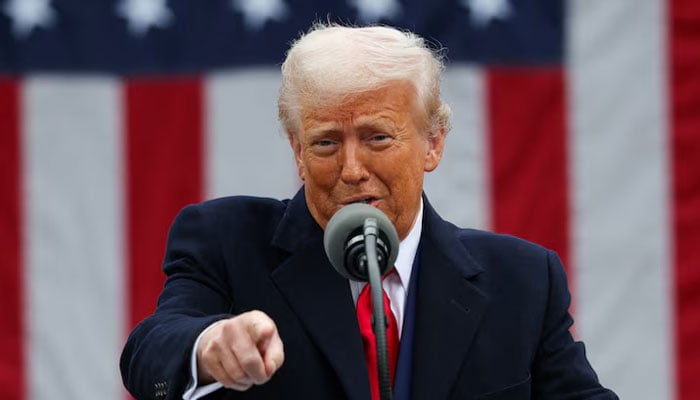
    US President Donald Trump addressing tariff policies in the Rose Garden of the White House, Washington, DC, April 2, 2025. — Reuters

    US President Donald Trump addressing tariff policies in the Rose Garden of the White House, Washington, DC, April 2, 2025. — Reuters

    On Sunday, US Secretary of Commerce Howard Lutnick revealed that certain electronic items, such as smartphones and computers that were temporarily exempt from new tariffs, will soon be subject to additional duties, according to a report by Reuters.

    During an appearance on ABC’s This Week, Lutnick stated that the administration plans to implement “a special focus-type of tariff” within the next month or two. This new duty will affect semiconductors, pharmaceuticals, and various electronic devices that are not included under the existing steep reciprocal tariffs currently set at 125%.

    “Although they are currently exempt from the reciprocal tariffs, they will fall under the semiconductor tariffs that are likely to be implemented soon,” Lutnick explained.

    He underscored the importance of these products for national security and emphasized the need for domestic manufacturing: “These items are crucial for national security and should be produced in America.”

    Just last Friday, the Trump administration had excluded numerous tech products from the reciprocal tariffs, providing a temporary reprieve for companies like Apple and Dell. However, Lutnick’s remarks suggest that this relief might be short-lived.

    Trump’s evolving strategy has caused fluctuations in the market, resulting in significant volatility and a decline of over 10% in the S&P 500 since January. Analysts note that the constant changes complicate business and investment planning.

    These comments from Lutnick came on the heels of an announcement from the administration about a forthcoming national security investigation into semiconductors. In retaliation, China, which had raised its tariffs to 125%, indicated it is reviewing the US exemptions for tech products.

    “Only the person who tied the bell around the tiger’s neck can untie it,” remarked China’s Ministry of Commerce.

    Billionaire investor Bill Ackman called on Trump to pause tariffs on China for 90 days, a move similar to the temporary relief granted to other nations. “This would accomplish the same goal… without the associated disruption and risks,” Ackman noted on X.

    Market strategist Sven Henrich criticized the inconsistent messaging. “If Lutnick gets fired, it could trigger the year’s biggest rally,” he stated. “US businesses cannot plan or invest amidst this constant back-and-forth.”

    Democratic Senator Elizabeth Warren also criticized the lack of a coherent policy. “There is no clear tariff strategy—just chaos and corruption,” she said.

    The notice from US Customs and Border Protection outlined 20 categories of tech products, including computers, memory chips, and displays, that are exempt from tariffs, although a 20% tariff related to the fentanyl crisis remains in place.

    White House adviser Peter Navarro confirmed that outreach efforts are underway with several allies, but not China. Meanwhile, Trade Representative Jamieson Greer mentioned that Trump currently has no plans to communicate with President Xi but aims to secure trade agreements with non-Chinese partners soon. “I want to finalize meaningful deals within 90 days,” he stated.

    Ray Dalio issued a warning about potential economic repercussions: “We are at a crucial decision-making moment and very close to a recession. I’m worried about something even worse if this situation isn’t managed properly.”

  • Trump’s Unexpected U-Turn: No Tariffs on Phones and Laptops

    Trump’s Unexpected U-Turn: No Tariffs on Phones and Laptops

    President Trump Takes a Selfie at Daytona 500

    Image Credit: Reuters

    [Image of President Donald Trump taking a selfie with former NASCAR driver Greg Biffle and NASCAR Hall of Famer Richard Petty prior to the Daytona 500 at Daytona International Speedway in Daytona Beach, Florida, February 16, 2025.]

    Trump Administration Eases Tariffs on Electronics

    WASHINGTON/WEST PALM BEACH – The administration of President Donald Trump has recently lifted reciprocal tariffs on smartphones, computers, and various other electronic devices primarily imported from China. This decision provides significant relief for technology companies like Apple that depend on international supply chains.

    The U.S. Customs and Border Protection agency released a notice listing the tariff codes exempt from import duties. These exclusions take effect retroactively from 12:01 AM EDT on April 5.

    Among the 20 product categories listed by the CBP is the general code 8471, covering all computers, laptops, disc drives, as well as automatic data processing equipment. The exemption also includes semiconductor devices, memory chips, and flat panel displays.

    Although the announcement does not specify the rationale behind it, the late-night exception is a welcome relief for major tech players such as Apple and Dell Technologies.

    Additionally, Trump’s policy exempts the specified electronics from the 10% "baseline" tariffs imposed on goods from most countries outside of China, thereby lowering import costs for semiconductors sourced from Taiwan and Apple iPhones made in India.

    Dan Ives, an analyst at Wedbush Securities, described the announcement as “the most optimistic news we could have received this weekend.”

    Ives noted, “There is still significant uncertainty and volatility surrounding negotiations with China. Major companies like Apple, Nvidia, and Microsoft within the tech sector can breathe a major sigh of relief going into the new week."

    Many technology executives have rallied around Trump as he begins his second term, attending his inauguration on January 20 and celebrating alongside him. Apple’s CEO Tim Cook has even hosted a functions prior to the inauguration and visited Trump at his residence in Florida.

    It should be noted that the exclusions for Chinese imports only pertain to Trump’s reciprocal tariffs, which escalated to 125% this week, according to a White House representative. His previous duties of 20% on all Chinese imports—linked to the U.S. fentanyl crisis—remain in effect.

    Furthermore, the official stated that Trump is expected to initiate a new national security trade investigation focused on semiconductors, potentially leading to further tariffs.

    White House spokesperson Karoline Leavitt emphasized that Trump has stressed the importance of reducing dependence on China for critical technology manufacturing, such as semiconductors and smartphones.

    She added that under Trump’s leadership, major tech firms—including Apple, Nvidia, and Taiwan Semiconductor—are racing to shift their manufacturing back to the United States as swiftly as possible.

    Impact of Tariffs on the Market

    The recent exemptions indicate a growing awareness within the Trump administration of the negative effects his tariffs could have on consumers grappling with inflation.

    Even with a reduced tariff rate of 54% on Chinese imports, analysts predict that the price of a high-end Apple iPhone could soar to $2,300 from $1,599. At a rate of 125%, economists warn that trade between the U.S. and China could come to a near halt.

    According to data from the U.S. Census Bureau, smartphones represented the largest U.S. import from China in 2024, averaging $41.7 billion, closely followed by laptops at $33.1 billion.

    Recently, Apple arranged for cargo flights to ship approximately 600 tons of iPhones—up to 1.5 million units—from India to the U.S. in an effort to sidestep Trump’s tariffs.

    Trump’s bid to reclaim the presidency last year prominently featured a commitment to reduce consumer prices, which have soared due to inflation, thus tarnishing the economic legacy of former President Joe Biden and his Democratic allies.

    Nonetheless, Trump continues to pledge to enforce tariffs that are central to his economic agenda, viewing the resulting financial market disturbances and escalating prices as a necessary adjustment to rebalance global trade.

    His reciprocal tariffs have raised recession concerns and met with dissent within his own party, as some fear losing congressional control in the upcoming midterm elections. Democrats have also been outspoken in their criticism of Trump’s methods.

    In a recent move, Trump postponed increased tariff rates for 57 trade partners along with the European Union, maintaining most nations at a 10% rate while negotiations with Washington remain ongoing.

    Spending the weekend at his residence in Florida, Trump told reporters he is comfortable with the elevated tariffs on China but maintains a positive relationship with President Xi Jinping, expressing hope for a beneficial outcome from the ongoing trade tensions.

    Financial markets experienced turbulence again on Friday following China’s matching of Trump’s recent tariff increase on U.S. goods, raising their duties to 125%. This escalation threatens to disrupt global supply chains.

    While U.S. stocks concluded a tumultuous week on a high note, gold prices surged to a record level. Benchmark U.S. 10-year government bond yields saw their most significant weekly increase since 2001, while the dollar fell sharply—indicative of decreasing investor confidence.

  • Intel Accepts Loss on Arrow Lake — Still in the Game

    Intel Accepts Loss on Arrow Lake — Still in the Game

    Intel’s Arrow Lake CPUs have not had the smoothest launch. Our reviews of the Core Ultra 9 285K and Core Ultra 5 245K highlight how these new processors failed to impress in both productivity and gaming tasks, falling significantly short of the top processors available today. Intel acknowledges several issues with the platform and has plans to rectify them soon.

    In an interview with HotHardware, Intel’s Robert Hallock candidly stated, “The launch didn’t go as planned… we have a number of things we need to fix.” Hallock, who previously worked at AMD, is a leading figure in Intel’s technical marketing. While he did not specify the exact problems affecting Arrow Lake, he did assure that Intel is actively working on updates that could lead to substantial performance improvements within a few weeks.

    “There are BIOS, firmware, and OS-level issues that we need to resolve,” Hallock mentioned. “We will return with a comprehensive review and a detailed list of what went wrong.”

    It is not surprising that there are significant issues with Arrow Lake. Our tests showed that while the new CPUs achieved some remarkable benchmarks—such as the Core Ultra 9 285K outpacing the 32-thread Ryzen 9 9950X in rendering applications like Cinebench with its 24 threads—they struggled in gaming performance, particularly when compared to the Ryzen 7 9800X3D.

    The performance inconsistencies are noticeable. Intel has made considerable advancements in certain applications, yet they lag significantly in others. Hallock has clarified that these issues are not a result of user error or review biases, describing the problems with Arrow Lake as “self-inflicted.” Although he did not commit to a specific timeline for the performance fixes, he indicated that updates should be expected by the year’s end.

    There is hope that these updates will address the performance gaps observed by numerous reviewers, including those from Digital Trends, during the launch phase. Intel has been facing challenging times, with speculation about a potential AMD buyout circulating. Arrow Lake, featuring a drastically new architecture, was anticipated as a pivotal moment for the company. Unfortunately, it has so far struggled to compete with AMD’s offerings and even its predecessor Intel processors. The forthcoming updates could prove crucial for Intel’s redemption.