الوسم: salt

  • Potassium: The Key to Better Blood Pressure Management

    Potassium: The Key to Better Blood Pressure Management

    Credit: Unsplash+.

    For years, guidelines about high blood pressure have emphasized one main point: cut back on salt intake.

    However, a recent scientific review suggests that this focus might be too narrow. While reducing sodium remains important, boosting potassium intake could provide even greater benefits for blood pressure regulation and heart health.

    High blood pressure, or hypertension, impacts over 1.28 billion adults globally. Often, it presents no noticeable symptoms, yet over time, it can damage blood vessels and put extra strain on the heart, kidneys, and brain.

    That’s why hypertension is a leading risk factor for heart attacks, strokes, and other cardiovascular issues.

    Sodium is an essential mineral, but most people only need a small amount daily. The majority of dietary sodium comes from salt added to packaged foods, restaurant meals, and processed products. When sodium intake is elevated, the body tends to retain more fluid, which can raise blood pressure in sensitive individuals.

    This has led public health initiatives to promote sodium reduction for years. Yet, researchers now highlight another mineral that deserves more attention: potassium. Found naturally in fruits, vegetables, beans, lentils, and dairy, potassium plays a crucial role in blood pressure regulation.

    The new study, published in *The American Journal of Clinical Nutrition*, was authored by Naomi Fukagawa from the University of Vermont and colleagues from various academic, food science, and nutrition institutions. Instead of presenting new clinical trial data, the paper offers a scientific perspective that reviews existing evidence and explores how public health recommendations could be improved.

    The authors emphasize that sodium and potassium are interrelated within the body. Potassium assists the kidneys in removing sodium and influences the function of blood vessels. When potassium intake is low, the effects of a high-sodium diet on blood pressure may become more pronounced.

    This is significant because few diets have a favorable balance—often, sodium consumption exceeds recommended levels, while potassium intake falls short. Improving both aspects could lead to better health outcomes than focusing solely on sodium reduction.

    One practical step is to eat more potassium-rich foods like vegetables, fruits, legumes, and dairy, which can also provide fiber, vitamins, and other nutrients essential for overall health.

    Another strategy involves replacing part of the regular salt (sodium chloride) in seasoning with potassium chloride. Salt substitutes containing potassium can reduce sodium intake while increasing potassium intake simultaneously. Past studies suggest these alternatives might help lower blood pressure and reduce cardiovascular risk in certain populations.

    However, there are limitations. Excessive use of potassium chloride can give foods a metallic taste, so manufacturers need to balance flavor with health benefits. Many products can only be modified to a certain extent without impacting taste.

    Increasing potassium intake isn’t suitable for everyone. Individuals with kidney disease or those taking medications that raise potassium levels should consult healthcare providers before making significant dietary changes or using potassium-based salt substitutes.

    The report also raises a broader point about nutrition advice. Focusing on single nutrients often overlooks how different aspects of the diet work together to influence health.

    Blood pressure is affected not just by sodium and potassium, but also by factors like body weight, physical activity, alcohol consumption, overall diet quality, genetics, age, and existing health conditions.

    Therefore, the authors advocate for a comprehensive public health approach. While reducing sodium remains a core goal, efforts should also aim to increase potassium through healthful foods and thoughtfully designed salt substitutes. Everyone—from food manufacturers and policymakers to healthcare providers and consumers—has a role to play.

    While the insights are valuable, it’s important to interpret them cautiously. The review isn’t based on new clinical trials, so it doesn’t definitively prove that all individuals with hypertension will experience better blood pressure control simply by eating more potassium. Optimal intake levels may vary among individuals.

    Nevertheless, the underlying message is supported by growing scientific evidence: balancing sodium and potassium intake might be more effective than focusing solely on salt reduction.

    For many, simply cutting back on highly salted foods and increasing consumption of vegetables, fruits, and legumes can naturally improve this balance.

    The new review suggests that this two-pronged approach deserves a stronger role in strategies aimed at preventing and managing high blood pressure.

  • Top Locations for Salting and Solving in Subnautica 2

    Top Locations for Salting and Solving in Subnautica 2

    Salt is one of the materials you’ll need in Subnautica 2 to craft items at your Fabricator. It’s mainly used to prepare some of the best food items in the game.

    Because salt is such a valuable ingredient, it’s not easy to find lying around near your base like Titanium or Quartz. Instead, you’ll have to go out exploring, preferably with upgrades to your oxygen tank to stay underwater longer.

    Where to Find Salt

    Salt can be located in various spots, but one popular area is what I call the Coral Crab Graveyard. This area is roughly 530 meters south-southeast (165 degrees) from the lifepod where you start, at about 70 meters deep.

    The easiest way to reach this spot is to swim in that direction and look for tall, thin rock formations—some are tall enough that their tips stick out above the water surface.

    Note: This area has a section with higher temperature zones that might be too hot to handle yet. To get to the salt, you may need to skirt around the southern edge of that hot zone. However, the specific location where the salt is found does not have this increased temperature.

    Eventually, heading towards this area, you’ll notice dead coral crabs with white shells, grouped around the edge of a drop-off. These shells are a good source of salt minerals; each shell can have between five and ten salt crystals. Be sure to clear out your inventory before collecting, and it’s helpful to bring a beacon if you have the recipe, so you can mark this spot for easy return.

    How to Find Salt

    Alternatively, you can use the Scanner Station, a device you can build in your base. This scanner can be set to target specific materials like salt and show you all the locations where they can be farmed. When you select a location on the scanner, it will place a tracker on your map, guiding you directly to the salt deposits.

    Recipes That Use Salt

    Salt is primarily used in cooking recipes. The ones that require it tend to give better health and water restoration, and some even boost your overall health. Here are some notable recipes involving salt, especially those that use Sugar of Saturn, a product made from salt:

    Product Recipe Restoration (per use)
    Sugar of Saturn (x2) 1 Lead, 1 Salt +10 Food
    Halfmoon Jerky (x2) 2 Halfmoon Fish, 1 Salt +40 Food
    Nutrient Block 1 Biofuel Block, 1 Salt +40 Food
    Chrimoya Chutney (x2) 2 Cherimoya Rotsac, 1 Sugar of Saturn +40 Food
    Coral Mash 3 Coral Shavings, 1 Sugar of Saturn +65 Food
    Pavlova 1 Deepwing Egg Clump, 1 Sugar of Saturn, 1 Cherimoya Rotsac +80 Food, +70 Water, +10 Health

    Most of the recipes that use salt focus on improving your food and hydration stats. Also, many recipes call for Sugar of Saturn, which is crafted using salt as a raw ingredient. This makes salt a valuable resource, not just for direct consumption but also for creating other essential food items.

  • Discovering Salt: Uses and Acquisition in No Man’s Sky

    Discovering Salt: Uses and Acquisition in No Man’s Sky

    No Man’s Sky is a vast universe brimming with uncharted territories waiting to be discovered by players. Its continually expanding and updated realms keep the gameplay fresh, but you’ll have to engage in crafting, building, and exploring to stay ahead.

    One essential resource you’ll frequently seek in No Man’s Sky is salt. Salt serves multiple crafting recipes and can also be refined into different materials. As a key ingredient, it plays a significant role in the creation of various other resources.

    How to Obtain Salt


    Fortunately, salt is relatively easy to find, especially on planets where it’s abundant.

    Water Planets

    Planets with significant water coverage typically have a good amount of salt as well. You can identify planets rich in salt from space by scanning them; this will display the most prevalent resources available.

    Not all water-covered planets will have water across their entire surface. It’s often more efficient to locate a large body of water from space and then descend instead of landing and searching from within the atmosphere; depending on where you land, this could take much longer.

    Go underwater and scan the surrounding minerals. Many minerals will contain salt, either as a primary or secondary resource. Use your mining laser to extract the salt and other minerals.

    How to Craft Salt

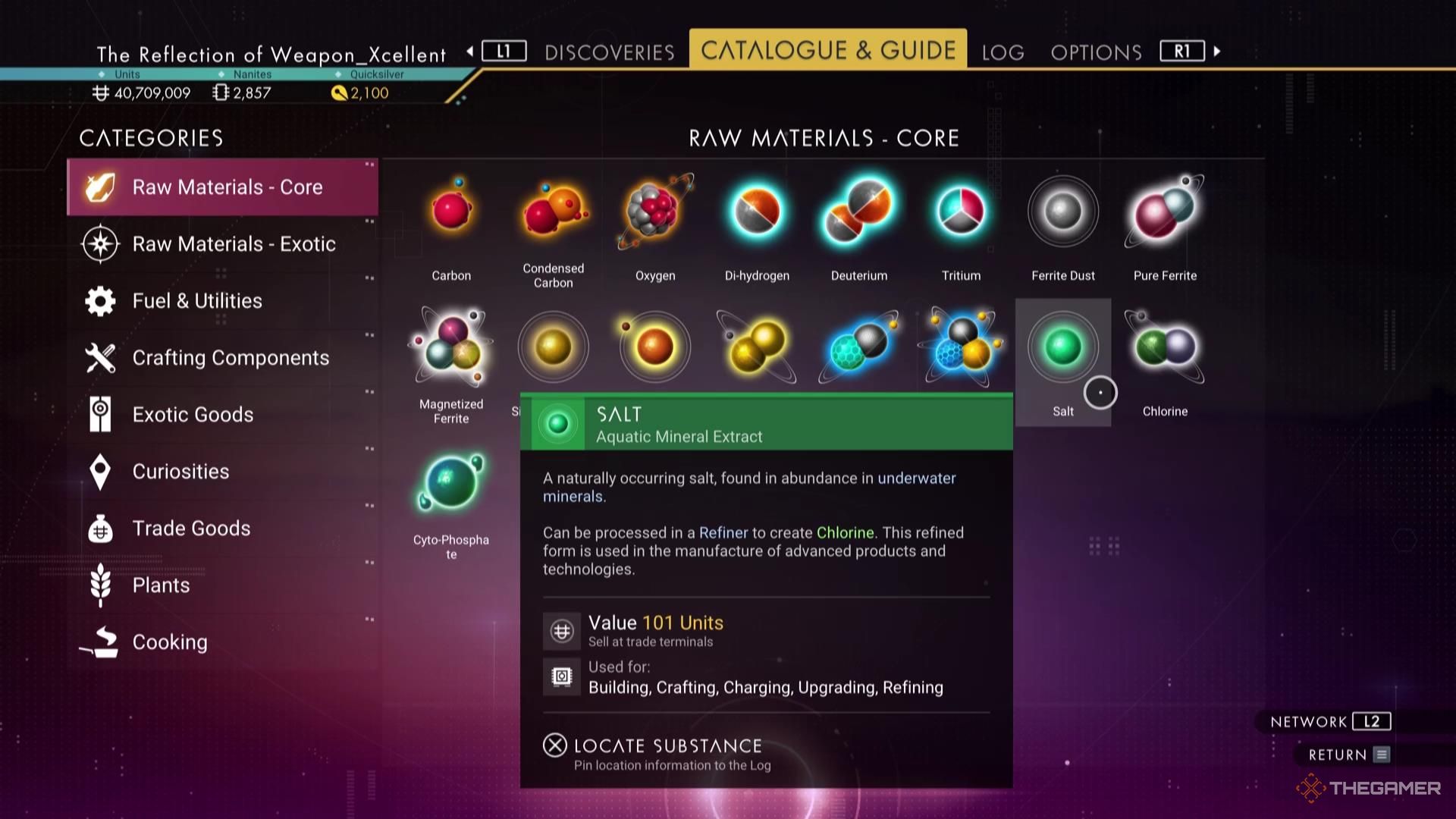
    Salt in the Catalogue and Guide of No Man's Sky.

    Salt can also be produced in a Refiner in two different ways.

    Result

    Ingredients

    Salt

    1x Chlorine

    Salt

    1x Di-Hydrogen + 1x Oxygen

    Chlorine, oxygen, and di-hydrogen are other resources you can discover while exploring. Notably, chlorine is also a refined version of salt, but if you accidentally convert too much salt into chlorine, you can reverse the process.

    Purchasing Salt from Galactic Trade Terminals

    Salt available for purchase from the Galactic Trade Terminal in No Man's Sky.

    Salt can also be purchased at times through Galactic Trade Terminals located in Space Stations. This will vary from station to station, as will the price if salt is available.

    The availability of salt at the Galactic Trade Terminal does not mean that salt is present in the system.

    Using the analysis visor in No Man's Sky.

    Mineral Extractors can also be utilized to harvest salt at a steady pace without ongoing maintenance. They require power to function and should be placed on a deep mineral deposit of salt, which can be found by using an Analysis Visor with the Surveying upgrade.

    What Is Salt Used For?

    A cluster of technology inside of a player-built base in No Man's Sky.

    The raw form of salt is useful for various applications; primarily, it’s used in a refiner to create valuable resources, like glass.

    Crafting Recipes that Use Salt

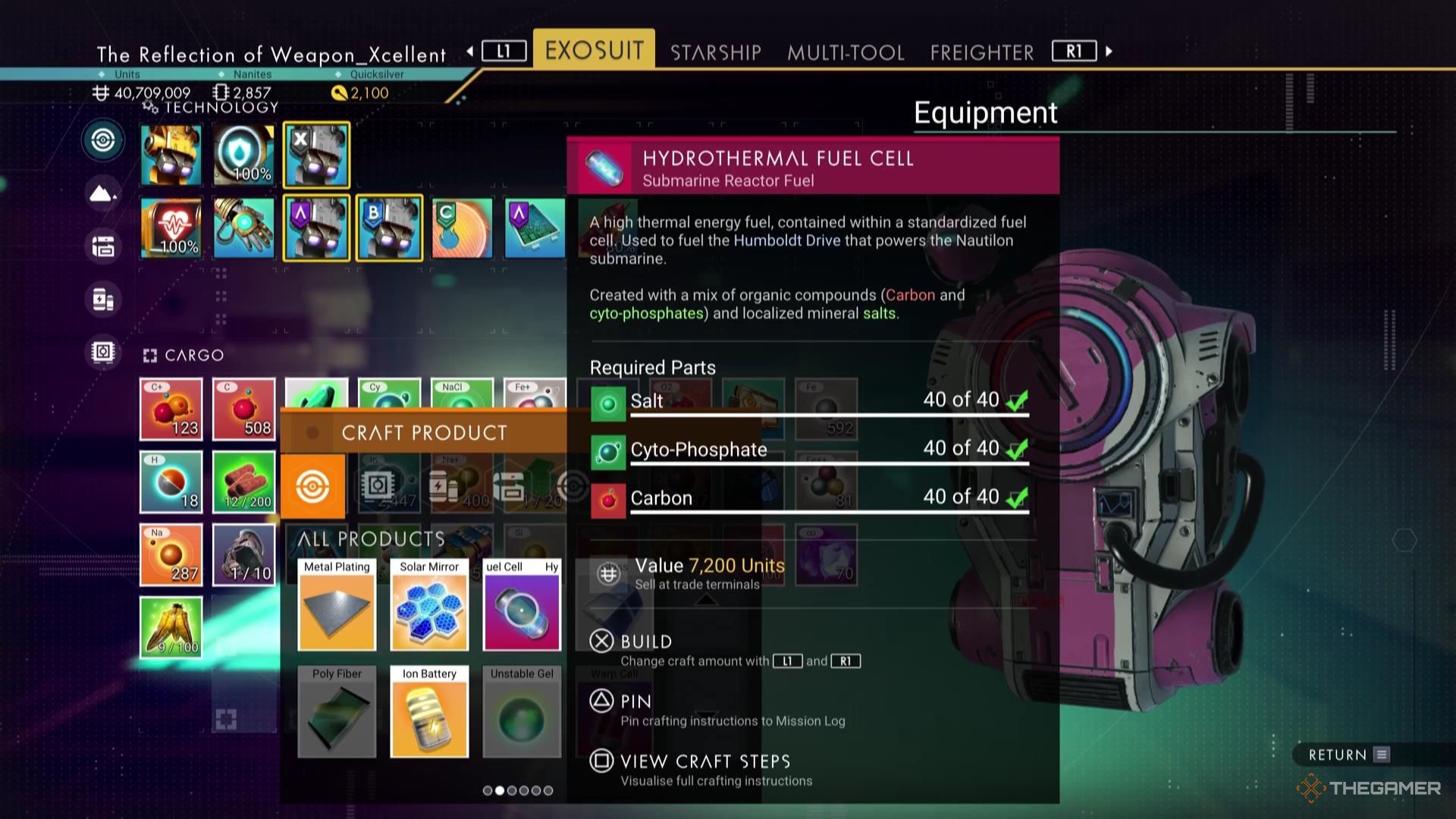
    A Hydrothermal Fuel Cell in No Man's Sky.

    Here are all the crafting recipes that require salt:

    Component

    Ingredients

    Hydraulic Wiring

    x2 Carbon Nanotubes + x20 Salt + x40 Di-Hydrogen

    Hydrothermal Fuel Cell

    40x Salt + 40x Cyto-Phosphate + 40x Carbon

    Automated Trap

    x50 Salt + x3 Metal Plating + x1 Ion Battery

    Nautilon Chamber

    x5 Metal Plating + x4 Crystal Sulphide + x100 Salt

    Lost Angler’s Rig

    x2 Hydraulic Wiring + x60 Salt + x90 Silver

    Exo-Skiff

    x120 Magnetised Ferrite + x30 Salt + x2 Crystal Sulphide

    Cooking Recipes that Use Salt

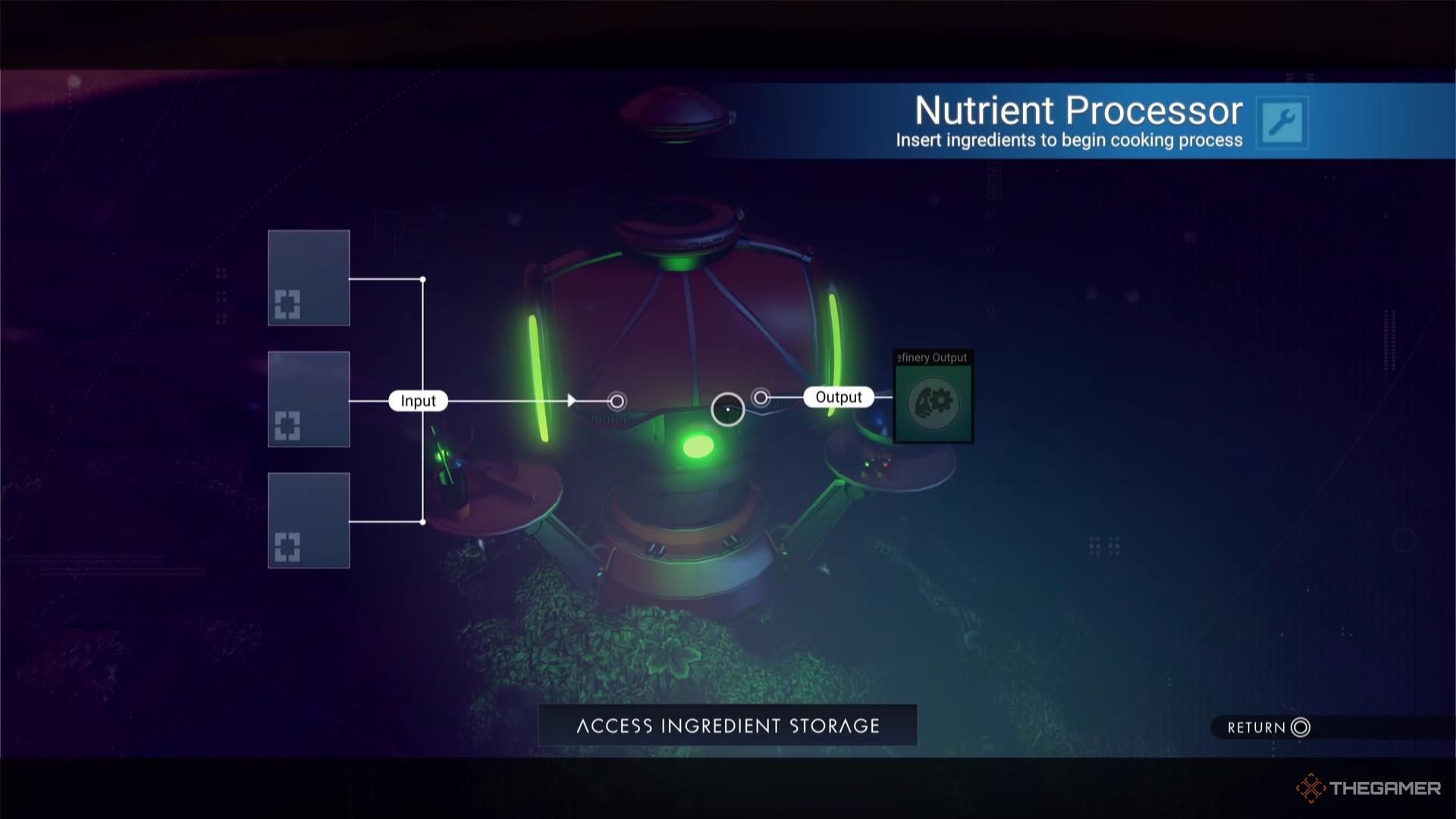
    A Nutrient Processor in No Man's Sky.

    There are also several cooking recipes that require salt, each needing a Nutrient Processor.

    Recipe

    Ingredients

    Crunchy Caramel

    x1 Processed Sugar + x1 Salt

    Salt Custard

    x1 Salt + x1 Cream + x1 Processed Sugar

    Salty Cruncher

    x1 Sugar Dough + x1 Salt

    Salty Juice

    x1 Cactus Flesh + x1 Salt + x1 Fire Water

    Refining Recipes that Use Salt

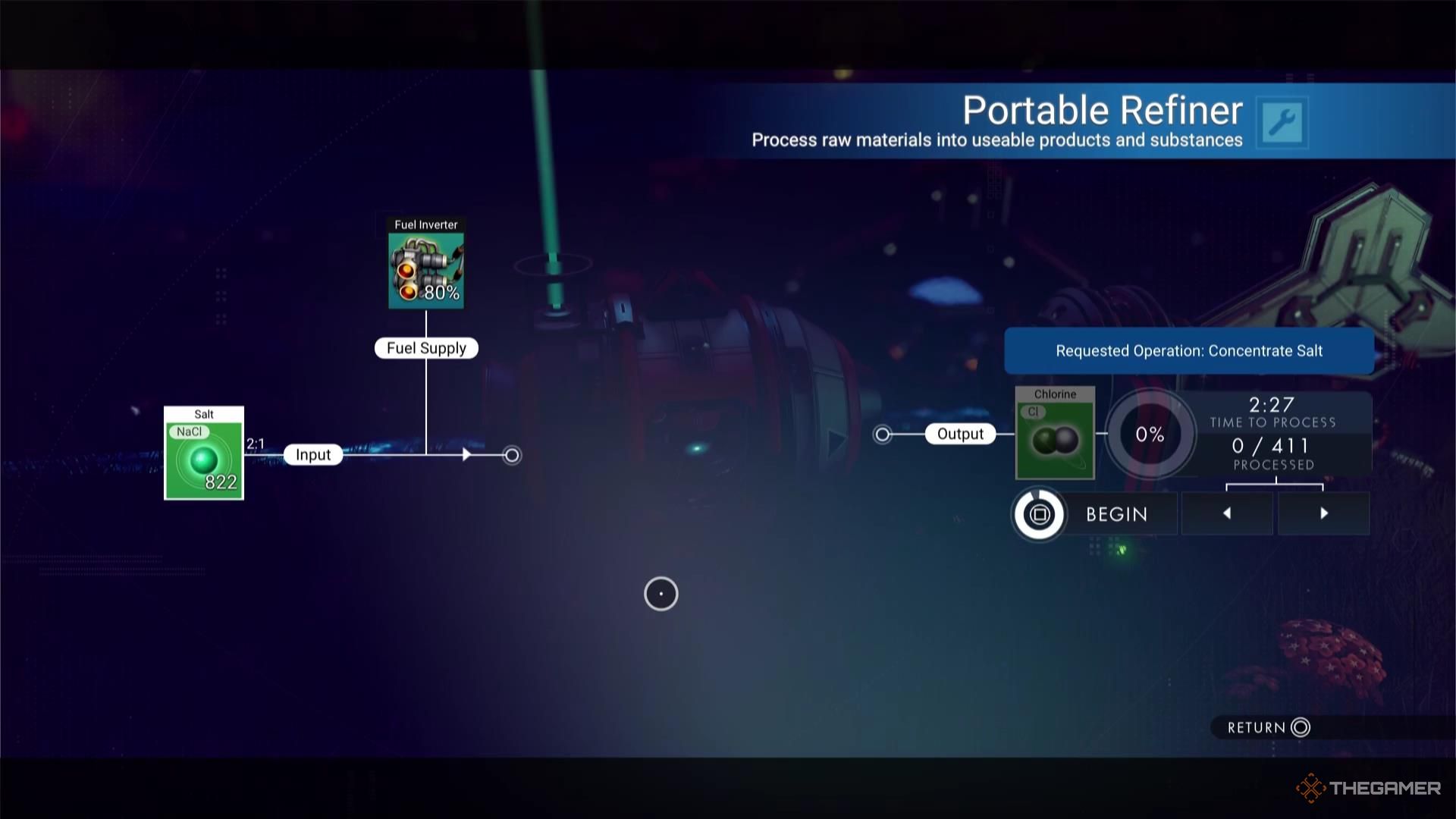
    A Refiner making salt in chlorine in No Man's Sky.

    Finally, there are numerous refining recipes that require salt, all processed in a refiner. This is likely where most of your salt needs will arise, as you’ll require many of these processed materials to advance in the game.

    Resource

    Ingredients

    Ammonia

    x2 Fungal Mould + x1 Salt

    Chlorine

    x1 Kelp Sac + x1 Salt

    x2 Salt

    x2 Salt + x2 Oxygen

    Dioxite

    x2 Frost Crystal + 1x Salt

    Enriched Carbon

    x100 Radon + x20 Carbon + x10 Salt

    x100 Radon + x10 Condensed Carbon + x10 Salt

    Glass

    x50 Cyto-Phosphate + x50 Salt

    Kelp Sac

    x1 Salt + x1 Nitrogen

    Nitrogen Salt

    x100 Nitrogen + x20 Carbon + x10 Salt

    x100 Nitrogen + x10 Condensed Carbon + x10 Salt

    Paraffinium

    x2 Star Bulb + x1 Salt

    Phosphorous

    x2 Solanium + x1 Salt

    Pyrite

    x2 Cactus Flesh + x1 Salt

    Thermic Condensate

    x100 Sulphurine + x20 Carbon + x10 Salt

    x100 Sulphurine + x10 Condensed Carbon + x10 Salt

    Uranium

    x2 Gamma Root + x1 Salt