الوسم: Rohingya

  • Over 500 Feared Dead as Refugee Boats Sink off Myanmar, UN Reports

    Over 500 Feared Dead as Refugee Boats Sink off Myanmar, UN Reports

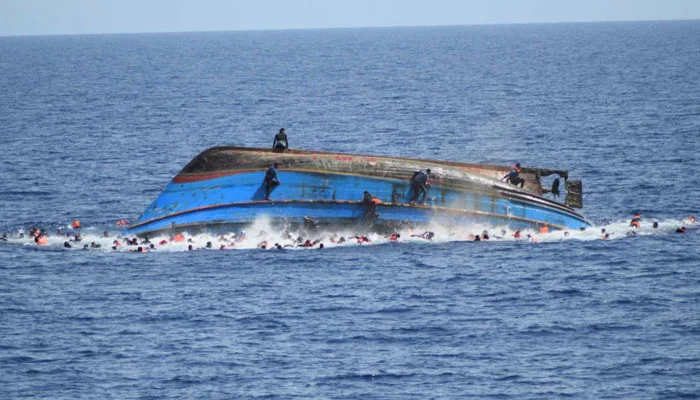
    Two vessels, believed to have capsized near Myanmar’s coast in recent days, carried over 500 refugees, according to UN agencies. The refugees aboard these boats primarily consisted of ethnic Rohingya from Myanmar’s Rakhine State, with some reportedly originating from camps in Bangladesh. The international organization for migration (IMO) and the UN refugee agency have issued a joint statement with preliminary details, estimating that the death toll exceeds 500.

    Casualty numbers have not yet been officially verified, but UNHCR and IOM express serious concern over the possible large-scale loss of life. Driven from their homes by violence and living conditions in overcrowded refugee camps in Bangladesh, the Rohingya minority have long risked their lives on fragile boats in hopes of reaching safety and better chances of livelihood in countries like Malaysia, Indonesia, and Thailand.

    Last year saw nearly 900 Rohingya lost or missing at sea in what has become the deadliest maritime route for refugees and migrants worldwide, according to the UN. The recent incidents involved a boat with approximately 250 people that lost contact shortly after setting sail, and another carrying around 280 individuals that is believed to have sunk off Myanmar’s Irrawaddy coast on July 8. These journeys occurred outside the usual safe sailing season, when sea conditions are typically more dangerous.

    The Rohingya fleeing Rakhine began their exodus in 2017 after the Myanmar military launched an offensive in the border region, forcing at least 730,000 to seek refuge in neighboring Bangladesh. Despite Myanmar denying abuses against the Rohingya, the government refuses to recognize them as citizens, labeling them as illegal immigrants.

    The crisis deepened following Myanmar’s military coup in 2021, which ignited a widespread civil war involving Rakhine State, with the Rohingya caught in the crossfire between government forces and the insurgent Arakan Army. According to UN reports, nearly 300 individuals are believed to be missing or dead at sea this year, including both Rohingya refugees and Bangladeshi nationals. In November, a boat carrying members of the Rohingya community sank near Langkawi, close to the Thailand-Malaysia border, leaving about a dozen survivors.

  • UN Agencies Report 250 Missing After Andaman Sea Boat Capsize

    UN Agencies Report 250 Missing After Andaman Sea Boat Capsize

    Approximately 250 individuals are unaccounted for after their boat, ferrying Rohingya refugees and Bangladeshi nationals, sank in the Andaman Sea, according to a joint statement from the United Nations’ refugee and migration agencies issued Tuesday.

    The agencies explained that the vessel, which was carrying men, women, and children, likely went under because of strong winds, turbulent waters, and overcrowding. The boat had set sail from Teknaf in southern Bangladesh and was headed for Malaysia.

    “This tragedy underscores the heartbreaking human toll of long-lasting displacement and the ongoing lack of sustainable solutions for the Rohingya,” stated the UN High Commissioner for Refugees and the International Organization for Migration.

    For years, many members of Myanmar’s Rohingya Muslim minority have taken precarious wooden boats in hopes of reaching neighboring countries such as Malaysia, Indonesia, or Thailand to escape persecution or escape overcrowded refugee camps in Bangladesh.

    The UN agencies urged the global community to increase and sustain funding for emergency aid for Rohingya refugees in Bangladesh and to support the local Bangladeshi communities hosting them.

    In 2017, Myanmar’s military launched a brutal crackdown that displaced at least 730,000 Rohingya, forcing them into Bangladesh, where they reported widespread killings, mass rape, and arson. A UN fact-finding mission described the military’s actions as “genocidal acts.” Myanmar, where the majority are Buddhist, denies committing genocide and claims the UN report lacks objectivity and reliability.

  • US Plans to Market Bangladesh Defense Systems Against China

    US Plans to Market Bangladesh Defense Systems Against China

    The United States is growing increasingly concerned about China’s expanding influence in South Asia. To address this, Washington plans to provide Bangladesh’s upcoming government with U.S. and allied defense systems as alternatives to Chinese technology, according to the U.S. ambassador in Dhaka, Brent T. Christensen, speaking to Reuters.

    Bangladesh is heading into a general election on Thursday, following a popular uprising led by Generation Z that ousted Prime Minister Sheikh Hasina—an ally of India—in August 2024. Since then, Hasina has sought refuge in New Delhi, paving the way for China to strengthen its foothold in Bangladesh as India’s influence diminishes.

    Recently, China signed a defense pact with Bangladesh to establish a drone manufacturing plant near the Indian border, causing concern among foreign diplomats.

    “The U.S. is focused on the increasing Chinese influence in South Asia and is dedicated to working closely with the Bangladeshi government to highlight the risks associated with certain Chinese engagements,” Christensen stated.

    He indicated that the U.S. offers various options to help Bangladesh enhance its military capabilities, including systems from the U.S. and allied countries, providing alternatives to Chinese military hardware, though he didn’t go into specifics.

    China’s foreign ministry defended its relationship with Bangladesh, describing it as a comprehensive strategic partnership that benefits both nations across political, economic, and security sectors. They added that their cooperation is friendly and mutually beneficial, without aiming at any third country or tolerating interference.

    Christensen also emphasized that the Trump administration hopes for a strong relationship between Bangladesh and India to ensure regional stability. Since Hasina’s departure, relations between Delhi and Dhaka have soured, affecting visa services and cricket exchanges.

    On the economic front, Christensen noted that many U.S. companies are interested in investing in Bangladesh but are waiting for the new government to demonstrate that the country is open for business. He emphasized that commercial diplomacy is a top priority and that the U.S. looks forward to building on the progress made with Bangladesh’s interim government, especially in strengthening trade, economic, and security ties.

    Chevron, the energy giant, has operated in Bangladesh for decades, but most other U.S. companies face challenges such as high taxes and difficulties in profit repatriation. The ambassador assured that the U.S. would work with whichever government the Bangladeshi people elect.

    Elections are expected to feature two main coalitions: one led by the Bangladesh Nationalist Party (BNP) and the other by Jamaat-e-Islami, with polling suggesting the BNP has an edge.

    Regarding the approximately 1.2 million Rohingya refugees in Bangladesh, Christensen reaffirmed that the U.S. remains the largest contributor to humanitarian efforts. He highlighted a recent $2 billion global funding agreement with the United Nations aimed at improving aid effectiveness in Bangladesh and called on other international donors to increase their support. He underscored that the U.S. cannot shoulder the entire burden alone, especially as the UN agency has struggled to secure sufficient funds, resulting in cutbacks and school closures for Rohingya children.

  • Bangladesh Elections Set for Early April 2026, Says Interim PM Yunus

    Bangladesh Elections Set for Early April 2026, Says Interim PM Yunus

    Muhammad Yunus, the interim prime minister of Bangladesh, gestures during a Ramadan Solidarity Iftar with Rohingya refugees in Cox’s Bazar, Bangladesh, on March 14, 2025. — Reuters

    • Yunus is not affiliated with any political party and has ruled out running for office.
    • The government is facing protests over wage issues and the dismissal of public servants.
    • The BNP is calling for early elections, warning of rising public anger.

    Bangladesh is set to conduct a national election in the first half of April 2026, as announced by its acting prime minister on Friday. This announcement follows a period of an interim, unelected government that began after student-led unrest led to the ousting of former Prime Minister Sheikh Hasina in 2024.

    Since August, former Nobel Peace Prize winner Muhammad Yunus has been at the helm of the South Asian nation, which is home to 173 million people, after Hasina fled to India amidst violent protests against her administration.

    However, Yunus’ government has also encountered significant unrest, with protests erupting last month over wage disputes and the dismissal of civil servants without extensive procedures.

    “After assessing the ongoing reform initiatives, I am informing the public today that the next national election will take place at any moment during the first half of April 2026,” Yunus stated during a national address on Friday.

    The election commission is expected to release a comprehensive plan for the election at a suitable time. Yunus, who is not aligned with any political party, has expressed disinterest in running for office.

    Opposition groups, particularly the Bangladesh Nationalist Party (BNP), have been advocating for early elections, warning of escalating turmoil and “increasing dissatisfaction among the populace” if elections are not held by December.

    The BNP leader and former prime minister, Khaleda Zia, was acquitted in January of corruption charges from 2008, clearing a path for her to participate in the upcoming elections.

    Additionally, Hasina’s Awami League party was effectively barred from participating in the elections after the election commission suspended its registration last month.

    Previously, Yunus’ government prohibited all Awami League activities under the Anti-Terrorism Act, citing threats to national security after several days of protests.

    Hasina, credited with significant economic progress but criticized for human rights infringements and cracking down on dissent, secured a fourth consecutive term in 2024, although the vote was boycotted by major opposition leaders, many of whom were either imprisoned or in exile.

  • UN Expert Calls Claims of Indian Navy Pushing Rohingyas to Sea ‘Unconscionable’

    UN Expert Calls Claims of Indian Navy Pushing Rohingyas to Sea ‘Unconscionable’

    Rohingya Muslim men catch their breath after arriving at a beach in Sabang, Aceh province, Indonesia, on November 22, 2023. — Reuters

    A United Nations expert stated on Thursday that he is looking into “credible reports” suggesting that Rohingya refugees were forced off an Indian navy vessel into the Andaman Sea, an act he describes as “unthinkable.”

    “It is absolutely outrageous to think that Rohingya refugees have been thrown into the sea from naval vessels,” declared Tom Andrews, the UN’s special rapporteur on human rights in Myanmar.

    “I am actively seeking additional information and accounts surrounding these incidents and urge the Indian government to offer a comprehensive explanation regarding what transpired.”

    Andrews, serving as an independent expert appointed by the UN Human Rights Council and not as a representative of the UN itself, expressed his “deep concern” over what he perceives as a stark neglect for the lives and safety of individuals requiring international protection.

    The Rohingya, predominantly Muslim, have faced severe persecution in Myanmar for numerous decades.

    Currently, about one million Rohingya reside in impoverished camps in Bangladesh after fleeing a military crackdown in Myanmar in 2017.

    Each year, thousands of them risk their lives on perilous sea journeys in search of safety elsewhere.

    Andrews highlighted reports indicating that last week, Indian authorities detained several Rohingya refugees living in Delhi, “most or all of whom possessed refugee identification documents.”

    He noted that approximately 40 individuals from this group were reportedly blindfolded, transported to the Andaman and Nicobar Islands, and then shifted to an Indian naval vessel.

    “After traversing the Andaman Sea, the refugees were allegedly given life jackets, pushed into the water, and made to swim toward an island within Myanmar’s territory,” he stated.

    “Such inhumane actions are a direct insult to human dignity and represent a severe infringement of the principle of non-refoulement,” he added, emphasizing that the Rohingya “encounter threats of violence, persecution, and other serious human rights abuses in Myanmar.”

    “The Indian government must immediately and unequivocally denounce these reprehensible actions against Rohingya refugees, halt all deportations to Myanmar, and ensure that those accountable for these blatant violations of India’s international commitments face justice,” Andrews concluded.