الوسم: road safety

  • Tragic Uganda Bus Crash Claims 63 Lives

    Tragic Uganda Bus Crash Claims 63 Lives

    A collision involving two buses on one of Uganda’s busiest highways resulted in at least 63 fatalities, according to police reports on Wednesday. The incident occurred shortly after midnight along the stretch connecting Kampala, the capital, to the northern city of Gulu.

    Preliminary findings indicate that the crash was caused when two buses traveling from opposite directions attempted to overtake other vehicles—a truck and an SUV. During the maneuver, both buses collided head-on, leading to devastating consequences.

    The accident claimed 63 lives, with all victims being occupants of the vehicles involved. Emergency responders are working tirelessly to recover the injured and retrieve those who did not survive from the wreckage.

  • Guinea: World’s Deadliest Road with 37 Deaths per 100K

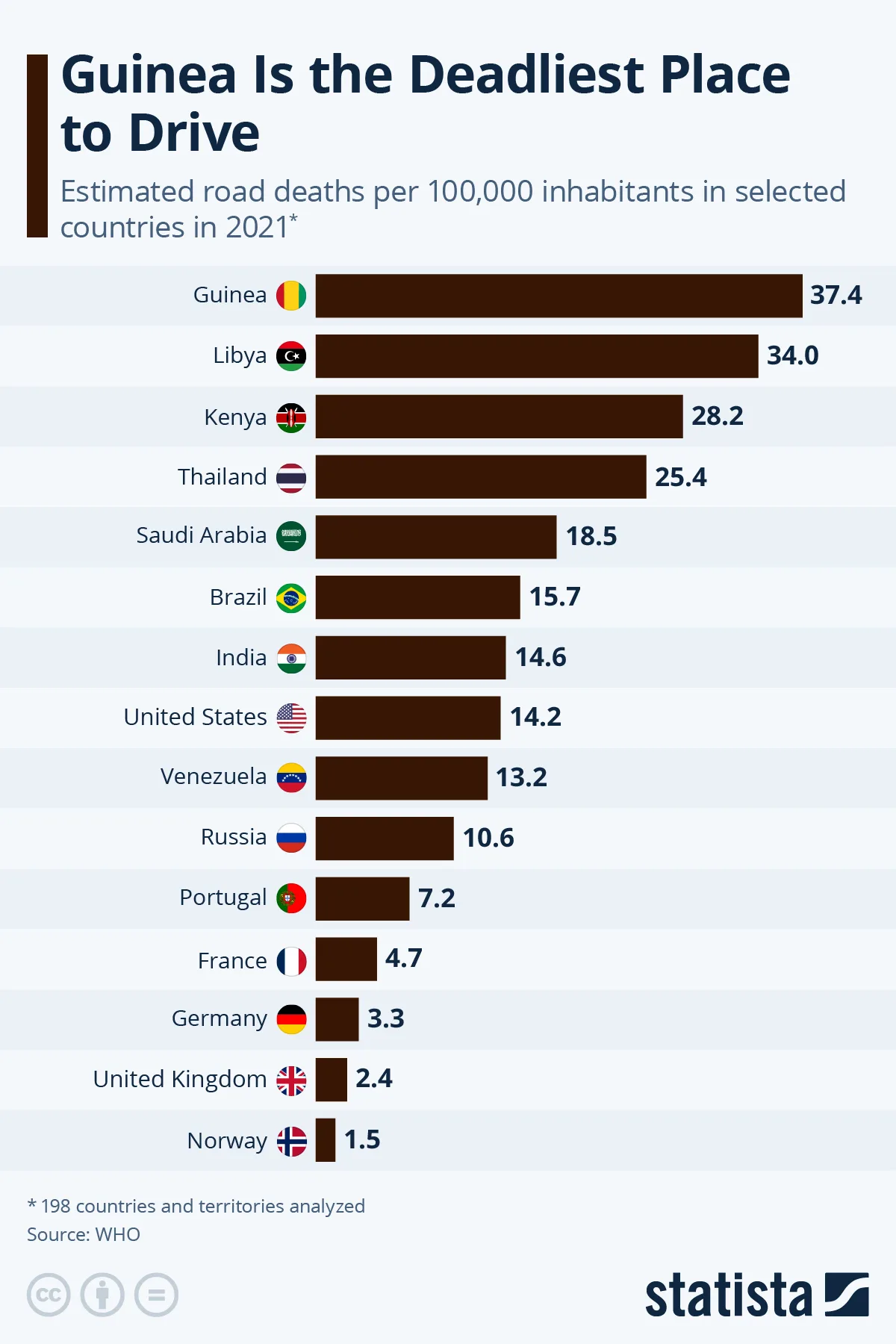
    Guinea: World’s Deadliest Road with 37 Deaths per 100K

    Understanding Road Traffic Fatalities: A Global Perspective

    Road traffic injuries have drastically altered the landscape of public health, emerging as a leading risk factor for death, particularly among younger populations. This has prompted global organizations to take action, aiming to address and mitigate the factors contributing to these alarming statistics.

    The Scope of the Issue

    According to the World Health Organization (WHO), a staggering 1.19 million lives are lost to road accidents globally each year. This dizzying number has become a focal point for health agencies and governments alike, with the United Nations General Assembly targeting a 50% reduction in these fatalities by 2030. This ambitious goal underscores the scale of the public health crisis that road traffic injuries pose.

    Vulnerable Populations

    The demographic most affected by road traffic injuries are individuals aged between 5 and 29 years. Within this age group, road traffic injuries have emerged as the leading cause of death. This alarming trend is compounded by the fact that over half of all road traffic deaths are attributed to vulnerable road users, including pedestrians, cyclists, and motorcyclists. This raises critical questions about urban planning and the need for improved infrastructure that protects these groups.

    A Global Crisis with Regional Disparities

    While road safety is indeed a global issue, the severity varies drastically across different regions. An alarming statistic reveals that up to 90% of road traffic deaths occur in low- and middle-income countries. The World Bank has indicated that the increase in vehicle ownership in these regions has outpaced improvements in road safety management, infrastructure, and regulatory enforcement.

    Spotlight on Fatality Rates: Guinea and Other High-Risk Areas

    Recent data from the WHO has spotlighted Guinea as the country with the highest road traffic death rate, recording 37 deaths per 100,000 inhabitants in 2021. Following closely are Libya and Haiti with rates of 34 and 31 deaths per 100,000 respectively. The alarming trend in these countries highlights a pressing need for intervention and better road safety practices.

    The African Continent: A Particularly Dangerous Landscape

    Africa stands out with the highest road traffic death rates globally, claiming 12 of the 20 deadliest countries for road deaths. With such staggering figures, there is an urgent call to action for governments and organizations to invest in road safety measures tailored to the unique challenges faced in these regions.

    A Comparison: Developed versus Developing Nations

    In stark contrast, the United States registered approximately 14 road traffic deaths per 100,000 population in 2021, ranking 79th in the world for road fatalities. This comparative perspective highlights the disparity in road safety measures, enforcement of traffic laws, and overall infrastructure quality between more developed nations and those still grappling with such fundamental issues.

    Key Takeaways

    The data presents a sobering reality that road safety is a multifaceted challenge requiring concerted efforts from various stakeholders. Understanding the geographic disparities in road safety can help shape policies and interventions aimed at reducing fatalities and creating safer roadways for all users.

  • 40,990 U.S. Deaths Cost $417 Billion in Vehicle Crashes

    40,990 U.S. Deaths Cost $417 Billion in Vehicle Crashes

    The Grim Reality of Vehicle Crashes in the U.S.

    Vehicle crashes are a pressing concern in the United States, claiming thousands of lives each year and incurring massive economic costs. In 2023, the sobering statistic emerged that around 40,990 people lost their lives in motor vehicle accidents. Despite this staggering number, it did reflect a slight decrease of 3.6 percent when compared to the fatalities reported in 2022. Nonetheless, the implications resonate well beyond mere statistics; they echo through families and communities across the nation.

    Contributing Factors to Vehicle Crashes

    Speeding

    Speeding remains one of the primary contributors to road fatalities. When drivers exceed speed limits, they lose crucial reaction time and increase the severity of potential accidents. The risk of crashing escalates significantly when speed is involved, and higher speeds lead to more catastrophic outcomes. This factor highlights the need for enforcement of speed regulations and public awareness campaigns that stress the dangers of reckless driving.

    Impairment

    Driving under the influence of alcohol or drugs is another significant risk factor for motor vehicle crashes. Impairment can severely hinder a driver’s ability to make sound judgments, react swiftly, and maintain control of the vehicle. Awareness campaigns focusing on the dangers of intoxicated driving have been instituted, but the issue persists, calling for stricter laws and community interventions.

    Distraction

    Distractions, particularly from mobile devices, have contributed increasingly to the rise in motor vehicle accidents. Texting while driving, for instance, diverts attention away from the road, creating a perilous situation. With the rapid advancements in technology, tackling this issue requires both education on the risks of distracted driving and technological solutions to minimize distractions while on the road.

    Unfastened Seat Belts

    Despite widespread awareness about the importance of seat belt use, many individuals still neglect to buckle up. Unfastened seat belts significantly increase the chances of severe injury or death during an accident. Campaigns promoting seat belt use can lead to greater compliance, yet continual monitoring and enforcement are essential to changing this behavior.

    The Economic Impact of Vehicle Crashes

    Financial Toll on Society

    While the tragic loss of life is the most significant consequence of vehicle crashes, the financial repercussions are also staggering. According to Advocates for Highway and Auto Safety, in 2019, the estimated annual economic cost of vehicle crashes reached a monumental $340 billion. Adjusted for inflation, this figure is projected to swell to approximately $417 billion by 2024. Such staggering figures represent a considerable burden on society as a whole.

    Cost to Employers

    Motor vehicle crashes also impose a heavy financial burden on businesses. The Network of Employers for Traffic Safety (NETS) reported that employers faced around $72.2 billion in direct crash-related expenses in 2019. These costs encompass a range of factors, including healthcare costs, lost productivity, and legal fees, all of which can significantly hurt a company’s bottom line.

    The “Cash Tax”

    In the U.S., the financial implications of vehicle crashes translate to a significant annual cost for each individual. The report suggests that each person effectively pays a "cash tax" of nearly $1,268. This figure encapsulates the widespread impact of road accidents and emphasizes the urgent need for more robust measures to enhance road safety.

    Community and Societal Effects

    The ramifications of vehicle crashes extend beyond the immediate victims and their families. Communities suffer emotionally and economically when road accidents occur, leading to loss of productivity, increased healthcare costs, and a diminished quality of life. Public health sectors are often overwhelmed as they grapple with the consequences of vehicular accidents, underscoring the need for comprehensive safety initiatives.

    By addressing the various factors contributing to vehicle crashes and understanding their financial ramifications, we can collectively take significant steps toward reducing both the human and economic toll of these accidents.