الوسم: Rival

  • Yeraltı Series to Rival Uzak Şehir — Premiere Date Announced

    Yeraltı Series to Rival Uzak Şehir — Premiere Date Announced

    Digital Phablet – The New Drama “Yeraltı” Debuts with A Star-Studded Cast and High Expectations

    We are eagerly counting down the days until the premiere of NOW TV’s highly anticipated new series, “Yeraltı” (Underground). This major production features Deniz Can Aktaş, Devrim Özkan, and Uraz Kaygılaroğlu and is expected to revolutionize how audiences watch TV on Monday nights. Similar in style to “Uzak Şehir” (Distant City), this series is set to premiere soon.

    There’s a lot of buzz in the television world, especially with fans closely watching upcoming releases. The excitement surrounding “Yeraltı” has surged after the cancellation of “Hudutsuz Sevda” (Boundless Love). Boasting an impressive cast and an ambitious storyline, the series’ debut date has just been revealed based on the latest behind-the-scenes insights shared by Birsen Altuntaş.

    Yeraltı Hudutsuz Sevda

    “Yeraltı” replaces Hudutsuz Sevda.
    After the conclusion of “Hudutsuz Sevda,” a new narrative will unfold. The departure of lead actress Miray Daner sparked significant buzz, but the production company has reconsidered and opted to go forward with “Yeraltı.” Already praised as one of this season’s boldest shows, it will include some familiar faces from “Hudutsuz Sevda.”

    In addition to this, social media has been buzzing with posts about the series, including several shared on Instagram by @nowtvturkiye and @uzaksehirdizi.

    As “Yeraltı” prepares to launch, it will compete directly with “Distant City” and “Children of Heaven” in the Monday night ratings. How exactly this scheduling shift will impact viewer preferences remains to be seen.

    Series Premiere: Monday, January 26, 2026
    Lead roles will be played by Deniz Can Aktaş, Devrim Özkan, and Uraz Kaygılaroğlu. Fans can stay updated on the latest in entertainment news and TV productions through xbodrum.

    Keep an eye out for “Yeraltı” on NOW TV and join the conversation as it unfolds!

  • New Rival Arrives Before iPhone 17 Air Launch

    New Rival Arrives Before iPhone 17 Air Launch

    Here’s a fresh, human-written version of the provided content, rewritten in American English and free of any repetitive phrases:


    What’s the latest?
    Hong Kong-based Chinese smartphone company Tecno has just introduced two ultra-slim phones, arriving just ahead of the expected announcement of the iPhone 17 Air.

    These devices introduce a new “Tecno Slim” series.
    The 4G Tecno Spark Slim is only 5.93mm thick, while the 5G-compatible Pova Slim is slightly thicker at 5.95mm. While these are impressive, they still don’t quite match Samsung’s Galaxy S25 Edge, which measures an incredibly thin 5.8mm.

    Despite being a bit thicker, Tecno’s new phones boast significantly larger batteries—packing a 5,160mAh capacity compared to Samsung’s 3,900mAh in their latest models. Both models feature a back cover made from aerospace-grade fiberglass, which Tecno claims is 0.19mm thinner than standard composite materials. This construction offers three times the strength and twice the toughness of typical materials.

    Why does this matter?
    As phones continue to shrink, it’s clear that slimness comes with some trade-offs, especially regarding battery life. The trend toward thinner devices is accelerating, with Tecno jumping on this bandwagon.

    • Samsung started this movement earlier this year with the Galaxy S25 Edge.
    • Foldable phones like the Oppo Find N5, Honor Magic V5, and Galaxy Z Fold 7 have also adopted ultra-slim profiles, pushing the limits of thinness.
    • At IFA 2025, Samsung showcased the Tab S11 Ultra—a tablet just 5.1mm thick.
    • Even Apple is expected to unveil their own slim model with the upcoming iPhone 17 Air.

    Why should you care?
    Reducing physical size usually means trimming down battery capacity, which impacts how long your device can run between charges. Although the new Tecno phones feature larger batteries, they still use high-density lithium cobalt oxide cells rather than silicon-based solutions, which could influence overall battery performance.

    In our review of the Galaxy S25 Edge, battery life was underwhelming due to the small battery size. Tecno’s approach to packing a larger battery into such a slim body gives hope that future devices might balance size and longevity better. Although it’s uncertain if upcoming Apple devices will follow suit, positive developments in battery technology suggest improvements ahead.

    What’s next?
    We’ll soon get a hands-on look at the Tecno Slim series, so stay tuned for our in-depth impressions.

    • Pricing and availability details haven’t been finalized, and it’s unlikely these phones will be released in the U.S.
    • Meanwhile, Apple’s highly anticipated September 9 event is just around the corner, where they’re expected to introduce the iPhone 17 and the iPhone 17 Air.

    Published by
    Digital Trends


    Let me know if you’d like further adjustments!

  • Apple Might Launch Its Own ChatGPT Rival Next Year

    Apple Might Launch Its Own ChatGPT Rival Next Year

    Apple is reportedly developing its own AI-driven knowledge engine designed to be integrated directly into Siri. The goal is to enable Siri to manage more complex queries that require internet research, functioning similarly to a web search tool.

    The company is working on a new system, internally called World Knowledge Answers, which will enhance Siri’s capabilities for internet-based inquiries, according to reports from Bloomberg.

    Currently, when users ask Siri questions that involve detailed research or complex topics, the assistant often defers to ChatGPT. Apple introduced this integration with ChatGPT last year as part of its AI enhancements.

    Looking ahead, this new tool—sometimes described as an “answer engine”—might also be incorporated into other Apple services like Safari and Spotlight. The plan is to launch this AI-powered web search feature sometime next year.

    Despite these developments, Apple has lagged behind competitors like Microsoft and Google, which have significantly advanced their digital assistants with features like Copilot and Gemini. The rising popularity of AI models such as ChatGPT and Perplexity has made the competitive landscape even more challenging for Siri.

    Sources suggest that Apple’s new AI web search tool will not only process text queries but also interpret visual inputs. It is expected to include a summarization feature akin to Google’s AI Overviews. Additionally, Apple is working on an advanced upgrade for Siri, often referred to as an “LLM Siri” or “AI brain transplant,” with an anticipated release in 2026.

  • Samsung’s Smart Glasses May Launch Next Year But Rival Beats It

    Samsung’s Smart Glasses May Launch Next Year But Rival Beats It

    Samsung’s highly anticipated smart glasses are expected to hit the market in 2026, according to recent reports. However, a Taiwanese company has already made a move, launching its own smart glasses ahead of Samsung’s anticipated release.

    That company is HTC. Known for years for creating sleek smartphones like the HTC One, One M8, and One M9, HTC shifted gears several years ago to focus on its Vive virtual reality headsets. Now, the company is making waves again with a new line of AI-powered smart glasses.

    With major brands like Meta and Snapchat popularizing the smart glasses trend through products such as Ray-Ban Meta and Snapchat Spectacles, competition in this space is intensifying.

    Samsung Isn’t the Only Player in the Game

    According to a report from South Korean publication SE Daily, Samsung plans to introduce its first pair of smart glasses in late 2026. This suggests we’re still about a year away from seeing Samsung’s eyewear go on sale.

    The upcoming Samsung glasses are said to resemble the design of Ray-Ban Meta models, incorporating features like built-in speakers, a microphone, and a camera.

    It’s worth noting that these glasses are separate from the augmented reality (AR) glasses Samsung is reportedly developing with Google, which are expected to include a display.

    Meanwhile, Google showcased its own Android-based XR glasses at the I/O 2025 conference, with the first model—developed in partnership with Warby Parker—potentially arriving as early as next year. Additionally, a new lineup of smart glasses from an established brand may arrive in 2025.

    Introducing HTC Vive Eagle

    HTC’s latest offering is called the Vive Eagle, branded as ‘AI smart glasses.’ These lightweight wearable devices feature a 12-megapixel ultra-wide camera with an LED indicator, a 235mAh battery, and magnetic fast-charging that keeps the glasses ready for use. Weighing just 49 grams, they also include speakers, but their open-ear design ensures you stay aware of your surroundings without anything covering your ears.

    The glasses come equipped with HTC’s Vive AI voice assistant, supporting major language models such as ChatGPT and Google’s Gemini. This allows users to control camera functions, music, and other features through spoken commands, as well as ask more complex questions.

    Further enhancing their appeal is the ability for real-time translation into 13 languages, including Arabic, Chinese (Traditional), English, French, German, Greek, Italian, Japanese, Portuguese, Spanish, Korean, Thai, and Turkish.

    HTC claims the Vive Eagle glasses can deliver about 4.5 hours of continuous music playback on a single charge and standby mode can last up to 36 hours.

    Availability and Pricing

    Currently, the HTC Vive Eagle is available exclusively in Taiwan, with pre-orders now open. The release date is scheduled for September 1. The glasses are offered in four colors—Berry, Coffee, Grey, and Black—and retail for NT$15,600, roughly equivalent to $500.

    There has been no official announcement regarding international availability, but as the market heats up, more regions may soon see these innovative glasses. It’s worth noting that just a couple of months ago, Oakley entered the smart glasses scene, indicating a growing interest in this technology.

    As the competition accelerates, major brands continue to develop cutting-edge wearable technology that could redefine how we interact with digital content on the go.

  • Samsung’s Next iPhone 16e Rival Looks Like a Great Deal

    Samsung’s Next iPhone 16e Rival Looks Like a Great Deal

    Samsung’s upcoming flagship device is set to feature a sleeker, more refined design, continuing the trend seen with the Galaxy S25 Edge and its latest foldable model. The new Galaxy S25 FE is expected to be about 11% lighter and slightly slimmer, boasting a thickness of 7.4mm compared to the previous 8mm, though the overall design will remain consistent with its predecessor. One of the notable improvements is the front camera, which is rumored to now host a more powerful 12-megapixel sensor, similar to the main Galaxy S25.

    The build quality is also anticipated to be more durable, with IP68-grade dust and water resistance and Gorilla Glass Victus protecting the device. The previous model received some criticism for feeling somewhat inexpensive and hollow in hand, but with a thinner and lighter frame, Samsung is likely aiming to enhance the overall feel and quality of the device.

    What sets this device apart? According to leaks from @MysteryLupin, the Galaxy S25 FE will feature a slightly smaller 4,500mAh battery—down from 4,700mAh in the Galaxy S24 FE. While the difference isn’t massive, it seems Samsung intends to compensate with other enhancements. Reports also suggest 45W wired charging, a significant improvement over the 25W charging of the previous model, matching the fastest charging speeds seen in Samsung’s premium Ultra models and promising faster top-ups.

    In addition to wired charging, the phone will support 15W wireless charging and reverse wireless power sharing, enabling it to charge other compatible devices. When it comes to practical use, this combination of features could give it an edge over Apple’s iPhone 16e.

    The software experience will be powered by Android 16-based One UI 8, which is currently available only on Samsung’s foldable lineup, with the Galaxy S25 series still in beta testing. The device will continue to sport a familiar 6.7-inch OLED display with a 120Hz refresh rate, and its camera setup is expected to include a 50-megapixel main sensor, a 12-megapixel ultrawide, and a 10-megapixel telephoto lens.

    While hardware updates appear modest, mainly involving the latest Exynos 2400 processor, the overall improvements could make the Galaxy S25 FE a compelling choice, especially if the pricing remains consistent. It seems poised to outperform the iPhone 16e by a notable margin in terms of value, given its likely price point and feature set.

    Although Samsung has yet to officially announce the Galaxy S25 FE, based on past launches, a release should be expected in the upcoming weeks, promising a fresh upgrade for fans and new users alike.

  • Patreon’s New Services Could Rival Twitch Effectively

    Patreon’s New Services Could Rival Twitch Effectively

    Patreon has established itself as a platform for creators, much like Twitch, but with distinct interpretations. While Twitch is often associated primarily with gaming, Patreon caters to a wider artistic audience. Recently, the company unveiled plans to introduce a livestreaming service this summer that could position it as a formidable competitor to Twitch, and extensive testing is currently in progress.

    Patreon aims for this new feature to enhance real-time fan interaction and present fresh experiences that might encourage users to transition from free to paid memberships. This service will be particularly appealing to those looking to produce video content, including streaming favorite games or providing instructional videos on crafting techniques.

    According to the platform, “Video is among the highest earning categories on Patreon and a fundamental aspect of what creators offer. We can’t wait to see how artists and creators incorporate livestreams into their exclusive offerings and experiences.” This initiative is not merely an addition; Patreon intends for creators to go live directly within the app without the need for external tools, and it will allow access for both free and paid members.

    The livestreaming feature will include a chat system for creators to engage with their audience, along with moderation tools to manage any disruptive elements. Additionally, Patreon indicates that the service will be compatible with popular third-party software such as OBS and Streamlabs. After each stream concludes, creators will have the option to download VODs for reposting on other sites or for selling as one-time items.

    Currently, the Live Video function is in a limited-access beta phase with select creators. Unfortunately, if you weren’t among those invited, registration is not open at this time. However, Patreon plans to roll out the full service to all users this summer, which promises to broaden the opportunities available for content creators across the board.

  • Sonos Reportedly Cancels Streaming Box to Compete With Apple

    Sonos Reportedly Cancels Streaming Box to Compete With Apple

    Sonos has encountered a challenging few months, facing issues with a problematic app redesign and changes in its leadership team. As a result, some product initiatives appear to have been sidelined. Reports indicate that the company had plans for a streaming device, but those plans have now been halted.

    During an all-hands meeting today, company leaders shared that the product, known internally as Pinewood, would have represented Sonos’ next significant hardware introduction, according to a report from The Verge.

    The interim CEO has conveyed to employees that the streaming device is currently not on the company’s agenda. This now-obsolete gadget was expected to deliver features like content aggregation from various streaming services and a comprehensive universal search function.

    Sonos Arc Ultra System vs. Sony Bravia Theater Quad
    Chris Hagan / Digital Trends

    The anticipated streaming box was projected to retail for between $200 and $400. Sonos had even developed a complete user interface in partnership with an advertising agency called The Trade Desk.

    At present, there aren’t many premium alternatives to the Apple TV 4K, yet Sonos’s intended pricing was notably high. Competitors like Roku Express 4K Plus, Nvidia Shield TV, Amazon Fire TV Stick, and Google TV Streamer offer significantly lower prices.

    Nevertheless, Sonos aimed to provide distinctive features with its streaming product. The design included a dual-mode control system that would combine a physical remote with their proprietary Voice Control technology.

    Furthermore, the device was designed to include multiple HDMI ports, enabling the passthrough functionality. The goal was to allow seamless connectivity with various devices like 4K players and gaming consoles, while also addressing latency challenges associated with wireless transmission. Sonos Arc Ultra and Sonos Arc.

    Sonos was also considering a surround sound functionality for the streaming box, developed under the codename “Pinewood.” On the connectivity front, the company sought to utilize Wi-Fi 7 as well as gigabit ethernet outputs. According to The Verge, “the box will be capable of wirelessly transmitting lag-free TV audio to Sonos soundbars and other products.”

    Following the decision to cancel its streaming box plans—intended to compete with devices like the Apple TV 4K—Sonos appears to be refocusing its efforts on enhancing its software and developing new audio products.

  • DeepSeek Faces New Rival You Can Try Today

    DeepSeek Faces New Rival You Can Try Today

    Alibaba has launched its newest reasoning model and it could pose a challenge to competitors like DeepSeek and OpenAI—assuming Alibaba’s claims hold up. The model is open-source, so I decided to take a look for myself. You can try it out for free as well, but expect certain topics to be off-limits.

    The model, named QwQ-32b (Quan-with-Questions), operates with significantly fewer parameters, which means it requires less computing power. Nevertheless, Alibaba asserts that it performs comparably to DeepSeek’s and OpenAI’s o1-mini models.

    In February, DeepSeek’s R1 large language model (LLM) gained attention for its ability to compete with the high standards set by ChatGPT and other alternatives at a lower cost. It appears that Alibaba is taking strides to push the boundaries even further.

    DeepSeek AI running on an iPhone.
    Nadeem Sarwar / Digital Trends

    According to VentureBeat, DeepSeek-R1 requires a staggering 671 billion parameters to function, with 37 billion being active at any given time. In contrast, Alibaba’s QwQ-32b only needs 32 billion parameters. While these figures might seem abstract, the difference in computational needs is significant; DeepSeek R1 demands 1600GB of VRAM whereas QwQ-32b can operate with just 24GB. This means that while DeepSeek typically requires powerful systems like Nvidia’s H100, the gaming-oriented RTX 4090 has the necessary 24GB, and the newer RTX 5090 offers 32GB.

    Alibaba’s QwQ-32b is released under an Apache 2.0 license, allowing companies and researchers, as well as everyday users, to experiment with it via Alibaba’s Qwen Chat. Though it also has its limitations, I noticed some immediate advantages.

    It appears to provide comprehensive answers to even the most straightforward questions. While this depth of response can be beneficial, it can sometimes overwhelm with superfluous information. I appreciate that it reveals its reasoning process, similar to features found in ChatGPT, though it’s less detailed.

    When it comes to discussing political topics, Qwen Chat marks them as inappropriate. Although bypassing this limitation may be possible—similar to hacks used with DeepSeek—I haven’t achieved that yet.

    Whether Alibaba’s assertions will hold true remains to be seen, but it seems that ChatGPT and DeepSeek now face new competition.


  • Flashes, An Instagram Rival Built on Bluesky, Launched Widely

    Flashes, An Instagram Rival Built on Bluesky, Launched Widely

    Bluesky, the emerging social media platform challenging X, has finally launched its own contender in the photo-sharing space: Flashes. Introduced in January, Flashes seeks to revive the essence of Instagram’s original photo-sharing experience and is now available on the App Store.

    Designed by Sebastian Vogelsang, an independent developer, Flashes operates on the same AT Protocol as Bluesky. Vogelsang is also the creator of Skeets, a third-party Bluesky client tailored for iPhones, iPads, and macOS systems.

    The major advantage of the AT Protocol lies in its open ecosystem, which eliminates platform lock-in. This allows for decentralized social networking, enabling users to seamlessly transfer their posts from Flashes to any other platform that supports the same protocol.

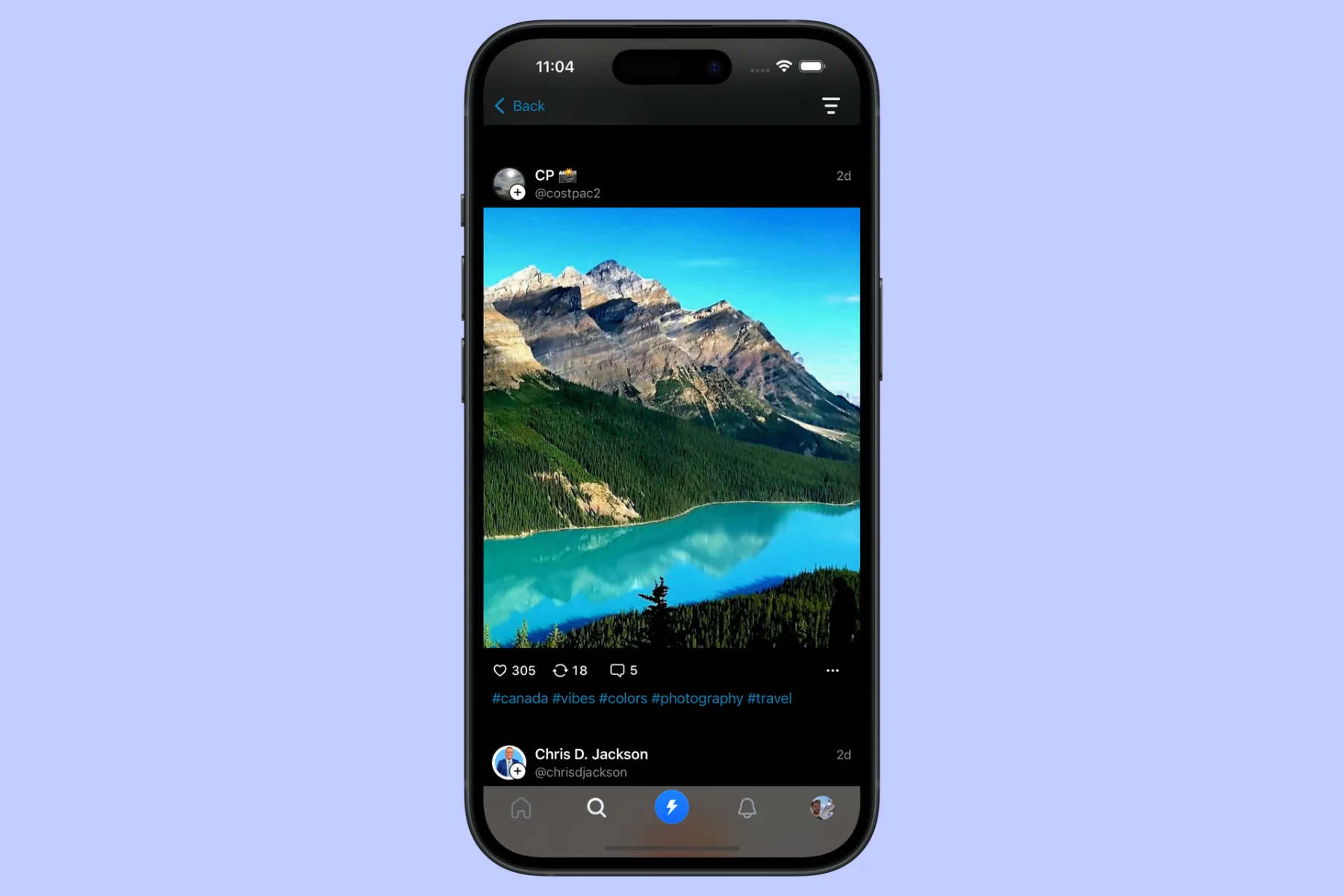
    Sample of a post on Flashes app.
    Flashes

    This concept is somewhat similar to the Fediverse, which is based on the ActivityPub protocol. Meta has already integrated it with Threads, allowing content from other social platforms like Mastodon to be viewed and interacted with on Threads.

    Flashes allows users to share up to four images in a single post or upload videos that are up to one minute long. It features an optional portfolio mode that lets users curate the content displayed on their social profile’s homepage.

    On their profiles, users can showcase their media, likes, feeds, and curated lists. Additionally, they can save select feeds for easy access later. At the top of the profile interface, four customizable tabs are available.

    Media controls on Flashes app.
    Flashes

    The app’s most appealing feature is its feed system, allowing users to follow their chosen pages without the influence of an algorithm, in contrast to Instagram. This means users see only content they choose to engage with instead of being bombarded by algorithmically suggested posts based on their past activity.

    Feed controls on Flashes app.
    Flashes

    Currently, Flashes offers access to over 50,000 feeds, allowing users to pin their favorites. The app also provides various creative filters and the option to download RAW images from user profiles.

    In terms of compatibility, all content shared on Flashes is natively supported on Bluesky. This means posts made on Flashes can reach the Bluesky audience, significantly enhancing visibility among its approximately 30 million users.

  • Apple Develops Smart Glasses With VisionOS To Compete With Meta

    Apple Develops Smart Glasses With VisionOS To Compete With Meta

    Apple’s foray into the AR/VR arena with the Vision Pro headset has not sparked the kind of product evolution the tech giant might have anticipated. The device’s bulky design combined with its steep price tag highlighted some significant challenges, but Apple remains determined to pursue its vision.

    In fact, it appears that Apple is looking to broaden its focus in the wearables market, extending beyond the bounds of XR technology. As reported by Bloomberg, the tech company is exploring various concepts for smart glasses, featuring both advanced AR optics and simpler models lacking sophisticated displays.

    According to insights from Mark Gurman’s PowerOn newsletter, “Apple is already working on a version of visionOS—the software powering the Vision Pro—that would be compatible with glasses.”

    Recent reports shed light on an internal initiative dubbed “Atlas,” aimed at gathering employee feedback on the market potential for smart glasses. The goal is to outline desirable features and functionalities for Apple’s upcoming eyewear.

    Google's AR smartglasses translation feature demonstrated.
    Google’s AR smartglasses from Google I/O 2022 Google

    Apple’s entry into the smart glasses market appears to be somewhat delayed, as Meta has already unveiled its Orion AR smart glasses concept, though it might still be years before they hit the market as expenses decrease.

    Additionally, Google has affirmed its commitment to developing smart glasses, with the Android XR framework laying the groundwork for future endeavors. Several other companies, like Halliday and Even Realities, are pursuing a more minimalist approach to smart glasses.

    It seems Apple isn’t solely fixated on XR glasses. The company has been closely observing the success of the Meta Stories smart glasses, created in partnership with Ray-Ban.

    “It’s also looking into a variety of wearable products, including a competitor to Meta’s Ray-Ban spectacles and even AirPods with built-in cameras,” Bloomberg adds.

    The Meta smart glasses, which feature front-facing cameras, were initially launched as accessories for social media sharing and basic functions such as call management and music playback.

    A person wearing Ray-Ban Meta smartglasses.
    Andy Boxall / Digital Trends

    In recent months, they have gradually added new features, including integration with Meta’s AI ecosystem, which enhances user interaction and functions. There are plans for a successor that will introduce a screen for an even more immersive experience in the future.

    Apple is no stranger to the possibilities offered by this technology. The Apple Intelligence framework utilizes OpenAI’s GPT ecosystem and includes features like Visual Intelligence that interpret the surroundings through the lenses of wearables equipped with cameras and sensors.

    However, it remains uncertain how long it will take for Apple to launch a pair of smart glasses—whether they embrace XR capabilities or not. Given the lukewarm reception of the Vision Pro headset, Apple is likely to proceed carefully to ensure its smart glasses stand out in a competitive market.

  • LG’s New Gram Pro Looks Like a Real MacBook Pro Competitor

    LG’s New Gram Pro Looks Like a Real MacBook Pro Competitor

    CES 2025 Feature Image
    CES 2025
    Explore our comprehensive coverage of CES!
    Updated just moments ago

    As CES approaches, LG has unveiled upgrades to its Gram Pro series and introduced an affordable option called the Gram Book. Among these, the revamped LG Gram Pro 17 stands out.

    This new model is now sleeker, measuring just 0.62 inches in thickness—comparable to the 16-inch MacBook Pro. Furthermore, it weighs a pound and a half less than the MacBook Pro, solidifying its place as one of the top contenders in the laptop market.

    LG Gram Pro 16 2-in-1 LG Gram Pro 17 LG Gram Pro 16 LG Gram Book
    Dimensions 14.06 x 9.99 x 0.50 inches 14.94 x 10.45 x 0.62 inches 14.08 x 9.91 x 0.50 inches 14.17 x 9.36 x 0.76 inches
    Weight 3.08 pounds 3.26 pounds 2.73 pounds 3.75 pounds
    Display 16-inch, 2880 x 1800 OLED at 120Hz
    16-inch, 2560 x 1600 LCD at 144Hz
    17-inch, 2560 x 1600 LCD at 144Hz 16-inch, 2560 x 1600 LCD at 144Hz 15.6-inch, 1920 x 1080 LCD at 60Hz
    CPU Intel Core Ultra 5
    Intel Core Ultra 7
    Intel Core Ultra 5
    Intel Core Ultra 7
    Intel Core Ultra 5
    Intel Core Ultra 7
    Intel Core Ultra 9
    Intel Core i5
    GPU Intel Arc Nvidia RTX 4050 Intel Arc Intel Xe
    Memory 16GB
    32GB
    16GB
    32GB
    16GB
    32GB
    8GB
    16GB
    Storage 512GB
    1TB
    2TB
    512GB
    1TB
    2TB
    512GB
    1TB
    2TB
    256GB
    512GB
    1TB
    Ports 2x USB-A 3.2 Gen2
    2x USB-A Gen3
    2x USB-C Thunderbolt 4
    1x HDMI 2.1
    2x USB-A 3.2 Gen2
    2x USB-A Gen3
    2x USB-C Thunderbolt 4
    1x HDMI 2.1
    2x USB-A 3.2 Gen2
    2x USB-A Gen3
    2x USB-C Thunderbolt 4
    1x HDMI 2.1
    1x USB-A 3.2 Gen1
    1x USB-A 2.0
    2x USB-C 3.2 Gen2
    1x HDMI 2.1
    Webcam 1080p with IR 1080p with IR 1080p with IR 720p
    Price

    Among these models, the Gram Pro 17 emerges as the strongest contender, featuring an RTX 4050 GPU—an upgrade from the previous generation’s RTX 3050. This places it competitively in the market as GPUs from the RTX 50 series are projected to debut in 2025.

    However, LG’s strategy in rolling out these three new Gram Pro laptops seems unconventional, as the top-tier components are distributed rather than consolidated into one device. For instance, the higher-resolution OLED display is exclusive to the LG Gram Pro 16 2-in-1, and the most powerful Intel Core Ultra 9 processor is only available in the Gram Pro 16. It would have been nice to have these options available in the Gram Pro 17 as well.

    LG Gram Pro Line Up
    LG

    The two 16-inch models are particularly impressive in terms of portability. With a thickness of just 0.50 inches and a weight starting at 2.73 pounds, they rank among the most travel-friendly large-screen laptops available. Although the 15-inch MacBook Air is marginally sleeker at 0.45 inches, the new Gram Pros are not far behind.

    It’s worth mentioning that all new Gram Pro laptops come standard with 16GB of RAM and 512GB of storage. This memory is particularly significant because these models are LG’s first Gram entries as Copilot+ PCs, which necessitate the larger memory to support AI functionalities. Additionally, LG has introduced AI capabilities, such as Gram Chat On-Device, which leverages a local small language model for AI chat functionality without needing an internet connection. This service also integrates with GPT-4o, resulting in what LG calls a “hybrid AI solution.” Gram Chat can synchronize with calendars and email, similar to Microsoft’s Copilot, which is built into the devices.

    Another AI feature, called Time Travel, is LG’s rival to Microsoft Recall, enabling users to revisit web pages, documents, videos, and audio files easily.

    While LG has yet to showcase screenshots or videos of these AI features, I’ll have the opportunity to test these devices hands-on at CES next week.

    LG Gram Pro Device
    Image used with permission by copyright holder

    In addition to the three Gram Pro laptops, LG has announced a new model, the Gram Book, described as an “entry-level device” with an “accessible price.” It appears to target a different audience, utilizing older components and tech standards to lower costs—like a 16:9 aspect ratio display, a 60Hz refresh rate, a 720p camera, and that includes an Intel processor that’s at least two generations old, paired with a base RAM of 8GB.

    While LG hasn’t provided pricing or availability dates for these new laptops, it’s expected that the Gram Book will need competitive pricing to carve out a niche in the budget laptop market.

  • ChatGPT Monthly Usage Now Rivals Google Chrome

    ChatGPT Monthly Usage Now Rivals Google Chrome

    A variety of popular generative AI platforms are experiencing steady growth as users discover new ways to utilize these tools, with ChatGPT leading the charge, amassing an impressive 3.7 billion visits globally. The AI chatbot’s popularity is approaching that of web browsers, rivaling Google Chrome, which is estimated to have around 3.45 billion monthly users.

    According to data from Similarweb, ChatGPT recorded a remarkable 17.2% growth month-over-month (MoM) and a staggering 115.9% increase year-over-year (YoY) in traffic. Key factors contributing to the surge in ChatGPT’s popularity in 2024 include its parent company, OpenAI, transitioning its web address from a subdomain (chat.openai.com) to a main domain (chatgpt.com). Notably, the platform experienced a significant spike in traffic in May 2024, reaching 2.2 billion visits, and this trend has continued, as noted by Similarweb researcher David F. Carr.

    Since its initial launch in November 2022, ChatGPT has established a notable presence in the tech sector. OpenAI has been actively enhancing the platform with new versions and features to keep users engaged. Recently, the company introduced ChatGPT Search, an internal search engine that provides users with real-time answers to a variety of queries, including sports scores, breaking news, and stock quotes.

    Interestingly, ChatGPT has evolved to offer services similar to those of Google Search, which it was initially intended to compete with. However, users still depend on web browsers to access the platform. In contrast, Google Chrome, which commands a significant market share, boasts around 35.4 billion users in 2024. It has shown minimal year-over-year growth but has achieved an impressive 45.35% increase over the last five years, according to Statscounter.

    In recent developments, OpenAI has acquired the domain name Chat.com, though details on future plans for this asset remain unclear. Meanwhile, other AI tools are also experiencing traffic growth, albeit not at the same magnitude as ChatGPT. Despite facing plagiarism allegations, the Perplexity chatbot attracted 90.8 million visits in October, reflecting a 25.5% MoM increase and a remarkable 199.2% YoY rise. Google’s Gemini Chatbot recorded 291.6 million visits in October, with a 6.2% MoM growth and 19% YoY increase following a recent ChromeOS update that introduced new AI capabilities to Chromebooks.

    Anthropic’s Claude chatbot tallied 84.1 million visits in October, equivalent to a 25.5% MoM gain and an impressive 394.9% YoY growth after the launch of a desktop application for Windows and macOS. Microsoft’s web-based Copilot website garnered 69.4 million visits in October, showcasing an 87.6% MoM increase. Lastly, NotebookLM reported 31.5 million visits in October, achieving over 200% MoM growth. This note-taking, document, link, and content collection app, built on Google’s generative models, enables users to process and summarize various information formats using AI prompts.

  • Mastering Rival Boss Fights in Sonic X Shadow Generations

    Mastering Rival Boss Fights in Sonic X Shadow Generations

    In the Sonic part of Sonic X Shadow Generations, you will face three Rival Bosses before you confront the final boss. This guide will detail how to unlock each Rival Boss and offer strategies to defeat them.

    The Rival Bosses in Sonic Generations are Metal Sonic, Shadow the Hedgehog, and Silver the Hedgehog. Here’s a breakdown of how to unlock and defeat each one.

    How to Unlock Rival Bosses

    Sonic Generations features nine levels split across three different areas, each representing a unique era from Sonic’s history. Every area has its own Rival Boss, who guards a Chaos Emerald.

    A Rival Boss in an area becomes accessible once you complete all three stages located within that area. Specifically, you must finish both Act 1 and Act 2 of each level.

    Once you’ve wrapped up every stage, challenge gates will emerge on the map, allowing you to face the Rival Bosses. You’ll encounter each Rival waiting for you on the map. Just approach them to start the battle.

    You can skip facing Rival Bosses until later in the game, allowing you to progress all the way to the final boss. This is when you’ll need all seven Chaos Emeralds.

    Metal Sonic represents the classic era, tracing back to Sonic CD from 1993.

    In Metal Sonic’s stage, you’ll navigate a 2D platform as he chases you. He starts by dashing directly at you. To avoid getting hit, jump over him and then land on his head to inflict damage. After getting hit, he will unleash an energy wave. Adjust your speed to dodge this and jump on him again once the wave is cleared.

    Next, he will try throwing objects at you. During this phase, managing your speed is key. Either accelerate or slow down to dodge the obstacles.

    Afterwards, he will combine his attacks, charging toward you while energized. Run away from him until his energy wears off, then jump on him one last time to defeat him.

    How to Beat Shadow

    The fight with Shadow draws inspiration from his debut in Sonic Adventure 2, playing out like a race.

    In this battle, you’ll race against Shadow to collect energy orbs. Gather two orbs to gain a temporary boost.

    If Shadow gets two orbs first, he unleashes his power, which means you’ll have to dodge a barrage of Chaos Spears. This can be managed with the quick step maneuver (using back triggers on your controller).

    Although dodging Shadow’s attack is straightforward, it can prolong the battle unnecessarily. To prevent him from charging his attack, stay in front and collect the energy orbs first by gathering rings and performing tricks off ramps.

    To defeat Shadow, you’ll need to charge an attack. Once charged, it leads you to a new area where you must boost into asteroids. Sending the asteroids flying into Shadow will slow him down. When he’s sufficiently slowed, keep boosting into him to drain his rings and score a victory.

    How to Beat Silver

    Silver is the third and final Rival Boss in Sonic Generations, and his level harkens back to the infamous 2006 game, Sonic the Hedgehog (commonly known as Sonic ‘06).

    This encounter revolves around speed management, so you’ll want to use your boost efficiently, especially for the fight’s last phase.

    Your initial chance to attack Silver will come when he’s manipulating debris. Boost close to the first piece, execute a homing attack on it, and keep going until you reach Silver for a direct attack.

    Between your attacks, make sure to keep your boost meter filled. Collecting rings helps, or you can bump into the scattered debris, as long as it’s not the debris Silver is controlling.

    Your second chance to attack occurs when he lifts debris to form a ramp. Boost so you land on that debris, then continue until you’re back in range to hit him again.

    Sometimes, Silver will float three pieces of debris above you, with one crashing down first. When this happens, rush to the spot where that debris fell to dodge the incoming pieces. He can also launch energy blasts your way as you close in, which can be dodged using the quick step method.

    After hitting him four times, he enters his final phase. Silver will gather a massive pile of debris, and the perspective shifts so you are running away from it. Here, having a charged boost is crucial for survival. If you do, keep boosting while dodging the falling debris. Eventually, reach him and land one last homing attack to win the fight.