الوسم: Revenue

  • توقع انخفاض إيرادات الفنادق في الشرق الأوسط بأكثر من 20٪ هذا العام

    تأثير النزاعات على قطاع السياحة في الشرق الأوسط

    الأضرار البالغة في إيران وإسرائيل ولبنان

    لا يُعد من المفاجئ أن تكون المناطق الأكثر تضررًا من النزاعات في الشرق الأوسط هي إيران وإسرائيل ولبنان، حيث شهدت أعداد الزوار الدوليين تراجعًا كبيرًا بسبب الحالة الأمنية غير المستقرة. تأثير هذا النزاع أدى إلى تراجع ملحوظ في حركة السياحة، مما أثر بشكل كبير على الاقتصاد المحلي في هذه الدول، خاصة في قطاعات الفنادق والخدمات السياحية.

    تأثير النزاعات يمتد إلى باقي المنطقة

    على الرغم من أن الأضرار كانت الأكثر وضوحًا في تلك البلدان، إلا أن تأثير النزاعات لم يقتصر عليها فقط، وإنما امتد ليشمل دولًا أخرى في المنطقة. فكما يظهر الرسم التوضيحي، تأثرت عدة دول بشكل غير مباشر، مما أدى إلى تراجع كبير في تدفقات السياح الأجانب إليها، نتيجةً لانعدام الأمن وتقوض عمليات الطيران، والتداعيات الاقتصادية الناتجة عن النزاعات.

    خسائر قطاع الضيافة في الشرق الأوسط وفقًا لتقديرات سوق ستاتستا

    انخفاض كبير في إيرادات الفنادق من السياح الأجانب

    تتوقع تقديرات شركة ستاتستا ماركت إنسايتس أن يشهد قطاع الفنادق في الشرق الأوسط تراجعًا حادًا في إيراداته من السياح الدوليين خلال هذا العام. حيث من المتوقع أن تتجاوز نسب الانخفاض 20% في معظم الدول، مع استثناء دولتين فقط وهما عُمان والعراق. هذا التراجع يعكس تأثير النزاعات المستمر على ثقة وسفر السياح الأجانب إلى المنطقة.

    تراجع في أكبر أسواق السياحة في المنطقة

    حتى في الأسواق الكبرى مثل المملكة العربية السعودية، قطر، والإمارات العربية المتحدة، والتي تعتبر من أكبر قطاعات السياحة في المنطقة، من المتوقع أن يتراوح انخفاض إيرادات الفنادق بين 26% و32%. وتُعزى أسباب هذا الانخفاض إلى تعطيل الرحلات الجوية، وتزايد مخاطر عدم الأمان، الأمر الذي دفع العديد من السياح إلى إلغاء أو تأجيل خطط سفرهم.

  • iPad’s Revenue at 7%: 15 Years of Declining Importance

    iPad’s Revenue at 7%: 15 Years of Declining Importance

    The Evolution of the iPad: A 15-Year Retrospective

    The Launch of the iPad: Setting High Expectations

    On April 3, 2010, Apple unveiled the original iPad, a device that embodied the innovation and vision of Steve Jobs, who had passed away just one year later. The timing of its release was strategic; the iPhone had redefined the smartphone market, and Apple hoped that the iPad would carve out its own niche between smartphones and laptops. Enthusiasts and analysts alike anticipated that this new device could be the next big leap in personal computing.

    Initial Success and Market Impact

    In its early years, the iPad appeared to fulfill its promise. By its second year on the market, it accounted for nearly 20 percent of Apple’s revenue. Sales peaked in 2012, generating an impressive $32.4 billion. The iPad positioned itself as a versatile device, appealing to a broad audience with its ability to serve various functions—whether for web browsing, video streaming, or productivity purposes. This versatility contributed to its rapid adoption, making the iPad a hot commodity that many households desired.

    The Decline of the iPad’s Popularity

    However, the initial enthusiasm surrounding the iPad began to wane as the market for tablets matured. A series of factors contributed to this decline in popularity. As large-screen smartphones became more capable, they started to encroach upon the functionalities that the iPad claimed as its own. Consumers began to perceive less distinction between tablets and smartphones, causing demand for tablets to drop.

    The Challenge of Defining the Tablet’s Role

    One of the significant challenges that the iPad faced was its identity. Unlike laptops or smartphones, it struggled to define its "killer feature." Questions arose regarding its intended purpose: Was it a device for casual browsing, a media consumption tool, a creative workspace, or a full-fledged laptop replacement? In the quest for clarity, the iPad found itself competing with devices that were also evolving. As smartphones grew larger and laptops became more powerful and efficient, the iPad’s unique value proposition began to blur.

    Steve Jobs’ Vision vs. Market Reality

    Steve Jobs had warned of the challenges that tablets might encounter. During the iPad’s unveiling in January 2010, he stated, "If there’s going to be a third category of device, it’s going to have to be far better at doing some key tasks." He highlighted essential functions such as web browsing, emailing, and video watching as benchmarks that tablets needed to surpass in order to justify their existence. Reflecting on these insights a decade later, it’s evident that the gaps Jobs identified have only widened, leading to fewer consumers owning both a smartphone and a tablet.

    Current Market Standing of the iPad

    As of fiscal 2024, the iPad’s relevance has diminished significantly within the Apple ecosystem. It accounted for less than 7 percent of Apple’s total revenue, marking the lowest figure since its inception. What was once the company’s second most important revenue driver has now become its smallest reported segment. This trend underscores a broader shift in consumer behavior and preferences, revealing growing doubts about the long-term viability of the tablet category within Apple’s product line.

    Conclusion: A Reflection on a Technology Icon

    The journey of the iPad over the past 15 years exemplifies the challenges of innovation in a rapidly changing tech landscape. From a groundbreaking launch to a significant decline in market share, the iPad’s story is intertwined with broader trends in consumer electronics that continue to shape how we interact with technology today. As we look back on this iconic device, it remains a fascinating study of ambition, market dynamics, and the quest for the next big thing in personal computing.

  • Asia’s Live Streaming E-Commerce Surges to $370B in 2024

    Asia’s Live Streaming E-Commerce Surges to $370B in 2024

    The Rise of Live Streaming E-commerce in Asia

    Live streaming e-commerce has emerged as a revolutionary trend in the digital shopping landscape, with Asia, particularly China, standing at its epicenter. This innovative platform is reshaping consumer behavior and purchasing experiences across the continent. By 2024, the live streaming e-commerce market in Asia is expected to generate an astronomical revenue of nearly $370 billion, encompassing sectors such as beauty, fashion, food, and electronics.

    The Dominance of China in Live Streaming E-commerce

    China’s market for live streaming e-commerce has skyrocketed, accounting for approximately $350 billion of the projected revenues in 2024. This staggering figure highlights China as the leading player in the global arena, far surpassing other regions. Beyond financial metrics, the country’s influence extends into consumer trends, live streaming formats, and e-commerce integration.

    The Role of Market Innovations

    China’s success in live streaming e-commerce is attributed to innovative marketing strategies and technological advancements. The merging of grocery delivery services, direct-to-consumer sales, and live streaming platforms has captivated audiences. This unique trifecta has led to the rise of group buying concepts and direct-from-producer models, creating a dynamic shopping experience that resonates strongly with consumers.

    Penetration Rates Across Asia

    Examining market penetration reveals significant disparities across the Asian landscape. In China, the penetration rates for live streaming e-commerce have reached as high as 30% in the food sector and 15% in electronics. By comparison, South Korea exhibits penetration rates between 6.5-10%, while India lags slightly behind with rates around 4.5-6%. This disparity indicates a growing appetite for live streaming e-commerce, yet also suggests varying levels of adoption across regions.

    The Fashion Sector’s Popularity

    In both South Korea and India, consumers show a marked preference for fashion-related live streaming shopping. This aligns with trends observed in the Americas, where the fashion category also dominates the market. However, China presents a unique scenario where food-related live streaming dominates, influenced by the nation’s pioneering practices in e-commerce.

    Major Players in the Chinese Market

    The Chinese live streaming e-commerce landscape is characterized by several key players that drive the industry forward. TikTok and its Chinese counterpart, Douyin, are at the forefront, alongside apps like Kuaishou and Taobao Live, the latter belonging to the Alibaba e-commerce empire.

    Kuaishou: A Focus on Lower-Tier Cities

    Notably, Kuaishou has carved a niche by targeting consumers in lower-tier Chinese cities, positioning itself as the leading platform for food sales through live streaming. This strategic focus has allowed it to tap into a new demographic, leveraging local preferences and needs to build customer loyalty.

    Revenue Comparisons with Other Regions

    While Asia, led by China, dominates the live streaming e-commerce market, observations across other regions highlight intriguing comparisons. The Americas are on track to reach an estimated $27 billion in revenues in 2024, with the United States contributing just under $17 billion. Brazil and Mexico are also showing promising growth in this sector.

    European Market Insights

    In Europe, the live streaming e-commerce scene is still maturing. Major countries, including the United Kingdom, reflect a market penetration of approximately 3-10%. In the UK, notably, the fashion segment is witnessing an uptake, with about one in ten British consumers expected to engage with live streaming shopping platforms by 2024.

    Conclusion

    (Conclusion purposely omitted)

  • Apple Services Revenue Soars to $26.3B, Eyes $100B Target

    Apple Services Revenue Soars to $26.3B, Eyes $100B Target

    The Rise of Apple Services: A $100-Billion Business

    Apple Inc. has long been recognized as a titan in the tech industry, remembered primarily for its innovative hardware products such as the iPhone, iPad, and Mac computers. However, in recent years, the company’s services division has emerged as a powerhouse in its own right, showing staggering growth and paving the way for future revenue streams that could rival its hardware sales.

    The Services Revenue Boom

    In the first quarter of fiscal year 2025, Apple reported unprecedented success in its services sector, achieving an impressive revenue of $26.3 billion for the three-month period ending December 28. This staggering figure marks a dramatic increase from just $12.7 billion five years prior, illustrating the rapid expansion and profitability of Apple’s service offerings. This pivotal growth trend is contributing to Apple’s journey toward hitting the remarkable target of $100 billion in total services revenue within the year.

    Breakdown of Revenue Streams

    Apple’s services portfolio is diverse, encompassing various products including:

    • Apple Pay: Streamlining payment processes for users, offering both convenience and security.
    • Apple Music: Competing in the music streaming space with a vast library and exclusive content.
    • Apple TV+: A rising player in the streaming wars, providing original TV shows and movies.
    • The App Store: A crucial revenue driver, hosting millions of apps and games.

    Each of these offerings not only taps into existing customer bases but also attracts new subscribers, further fueling the overall revenue growth of the services division.

    Drivers Behind the Growth

    Apple’s shift from a primarily hardware-centric model to one that emphasizes services is a strategic response to several market dynamics.

    Maturation of Hardware Sales

    As smartphones and tablets have matured, innovations have slowed down, leading to longer replacement cycles. Consumers are hesitant to upgrade yearly, which poses a challenge for companies reliant on hardware sales. This new landscape means Apple must seek alternative revenue sources to sustain its remarkable financial performance.

    The Power of Recurring Revenue

    The charm of the services division lies in its ability to generate recurring and high-margin revenue. With a vast installed base exceeding 2.3 billion active devices, Apple has access to a massive audience. Each device represents an opportunity to convert users into long-term customers for services like subscriptions, aligning perfectly with modern consumer behavior favoring subscription models.

    Customer Lock-In: The Ecosystem Effect

    The integration of Apple’s services with its hardware creates a form of customer lock-in. This strategy not only enhances the user experience within Apple’s ecosystem but also reduces the likelihood of customers switching to competitors.

    The “Walled Garden” Concept

    Within this infamous “walled garden,” Apple provides seamless interaction between its products and services. From effortless synchronization across devices to exclusive features tied directly to its hardware, Apple creates an environment that feels compelling enough for users to stick around. This ecosystem fosters customer loyalty, ensuring that when users consider new purchases—be it smartphones, tablets, or laptops—they remain inclined to choose Apple products to maintain that integrated experience.

    A Promising Future Ahead

    As Apple’s services continue to grow and evolve, the company is poised to reach new financial heights. The success of its service offerings not only secures high-margin revenue but also ensures that users remain engaged with its products. As Apple navigates the competitive tech landscape, its strategic embrace of services is likely to play a critical role in shaping its future, creating a business model that could sustain growth in an increasingly mature market.

  • FIFA’s 2022 World Cup: $6.3B Revenue, 83% of Total Income

    FIFA’s 2022 World Cup: $6.3B Revenue, 83% of Total Income

    The 2030 FIFA World Cup: A Controversial Decision and Its Implications

    When FIFA disclosed that the 2030 World Cup would be hosted in six countries across three continents, reactions ranged from surprise to disbelief. This decision is not merely a logistical feat but also a strategic maneuver that reflects FIFA’s ongoing endeavors to maximize revenue and expand its global reach.

    A Historical Context: Celebrating a Century of World Cup Football

    The choice to kick off the 2030 World Cup in Argentina, Paraguay, and Uruguay is steeped in historical significance. These countries played pivotal roles in the origins of the FIFA World Cup, as Uruguay hosted the inaugural tournament in 1930. However, the symbolic gesture of honoring the tournament’s centenary contrasts sharply with the practicalities of modern international sports.

    Logistical Challenges Ahead

    One of the most glaring issues with this decision is the significant logistical challenge it poses for players and fans alike. The vast geographic spread of the tournament means that athletes will experience drastically different climates within a short span of time. Transitioning from the South American winter to the European and North African summer poses not only physical challenges for athletes but also has implications for their performance.

    FIFA: "Following the Money"

    FIFA’s latest announcement reveals more than just a celebration of history; it’s a calculated financial strategy. With its track record of controversies around corruption and financial management, this decision appears to be a savvy move to cater to profit-driven motives. By allowing the tournament to be held across continents, FIFA positions itself to capitalize on diverse markets and increase its revenue streams.

    The Role of Conflicts in Confederation Rotation

    FIFA’s constitution includes a principle of confederation rotation, designed to ensure equal hosting opportunities among its six regional confederations. However, this latest decision raises questions about the integrity of this principle. By involving three confederations in one World Cup, FIFA has cleverly sidestepped potential backlash regarding the 2034 tournament bidding process.

    Saudi Arabia’s Ambitions and FIFA’s Strategic Maneuvering

    Almost immediately after the 2030 hosting decision, the Saudi Arabian Football Federation announced its intent to bid for the 2034 World Cup. The implications here are profound; while the World Cup is historically awarded to nations based on geographical and meritorial considerations, FIFA’s recent moves signal a shift in focus toward maximizing financial inputs.

    The Impact of World Cup Revenue

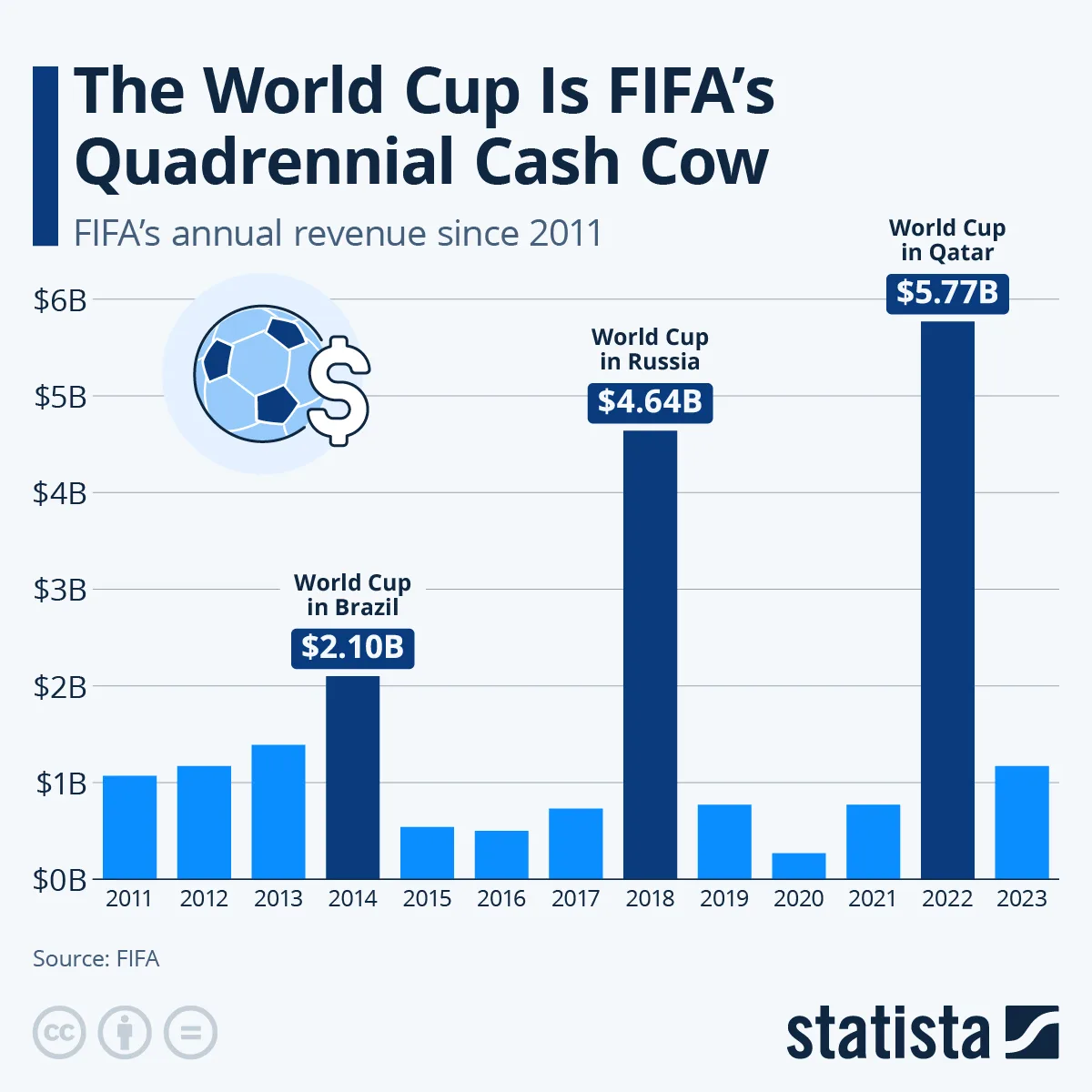
    The financial stakes surrounding the World Cup cannot be overstated. For instance, the rights related to the 2022 Qatar World Cup yielded an impressive $6.3 billion in revenue for FIFA from 2019 to 2022, representing a staggering 83% of the organization’s total income during that timeframe. This showcases the World Cup’s significance not just as a sporting event but as a lucrative business venture.

    Conclusion

    The upcoming FIFA World Cup in 2030 represents a complex blend of historical nostalgia and modern-day pragmatism. As FIFA continues to navigate the intricate landscape of global sports management, the focus on profitability and international appeal remains front and center, raising critical questions about the future of football as both a sport and a business.

  • X vs YouTube: Which Platform Pays More To Video Content Creators?

    X vs YouTube: Which Platform Pays More To Video Content Creators?

    In the ever-evolving digital realm, content creators face a pivotal decision: stick with the tried-and-true YouTube or explore the uncharted waters of X. In this article, we’ll dissect the revenue payouts and generation on both platforms, helping you make an informed choice.

    The Rise of X

    X, led by the enigmatic Elon Musk, has emerged as a formidable challenger to YouTube’s supremacy in the online video space. With recent feature enhancements aimed at content creators, X is making waves. But how does it stack up against the giant that is YouTube?

    Revenue Sharing Model

    Let’s get down to brass tacks: the money. Both platforms rely on advertising revenue, but their revenue-sharing models differ. YouTube currently offers eligible creators a 55% share of ad revenue. X, on the other hand, is introducing a new approach. Advertisers can now showcase pre-roll video ads through selected top creators on X. The specifics of the revenue-sharing structure remain undisclosed, but it’s clear that X aims to compete head-on with YouTube in this arena.

    X’s Recent Moves

    X’s recent $20 million payout to creators signals its commitment to supporting content creators. Popular figures like Jimmy Donaldson (aka Mr. Beast) have already capitalized on X’s video platform, raking in substantial revenue from their content. The platform’s video division has witnessed rapid growth, attracting notable creators and securing exclusive partnerships. According to Bloomberg, X’s ad revenue exceeded $600 million in each quarter of the past year.

    The Controversy

    However, X isn’t without its share of controversy. Last year, several major advertisers withdrew their support following a controversial tweet from Musk. But the platform’s latest move represents a significant development in the digital landscape, offering content creators new opportunities for increased earnings.

    YouTube’s Legacy

    Now, let’s talk about YouTube. It’s the OG (Original Gangster) of online video platforms. Established in 2005, YouTube has become synonymous with video content. Its massive user base, diverse content library, and robust monetization options have made it a go-to platform for creators worldwide.

    The 55% Rule

    YouTube’s revenue-sharing model is straightforward: eligible creators get 55% of ad revenue. Over the years, YouTube has fine-tuned its algorithms, allowing creators to earn through ads, sponsorships, and merchandise sales. The platform’s Partner Program provides additional perks, including access to YouTube Spaces and premium features.

    The Verdict

    So, which platform should content creators focus on? Let’s break it down:

    • X offers a fresh approach, enticing creators with its new ad-targeting options and revenue splits. If you’re looking for innovation and want to ride the X wave, it’s worth exploring.
    • YouTube, with its established legacy, provides stability and a vast audience. Creators who value tradition and reliability may find their sweet spot here.

    Ultimately, the choice boils down to your goals, audience, and risk appetite. Both platforms have their merits, and content creators should weigh their options carefully. Whether you’re a seasoned creator or a fresh voice in the digital arena, consider your unique style, content vision, and long-term goals. After all, in the battle of X vs YouTube, the real winners are the creators who connect with their audiences and leave a lasting impact.

    So, fellow creators, choose wisely, create passionately, and may your revenue streams flow abundantly! ????????????