الوسم: retaliation

  • Mojtaba Khamenei Promises Iran Will Deliver ‘Unforgettable Lessons’ to US

    Mojtaba Khamenei Promises Iran Will Deliver ‘Unforgettable Lessons’ to US

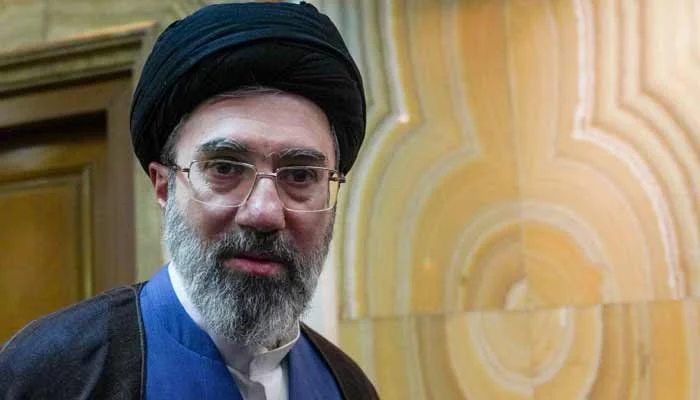
    Iran’s Supreme Leader Mojtaba Khamenei pledged to deliver “unforgettable lessons” to the United States on Saturday, amid reports of U.S. military casualties for the first time since hostilities resumed. A month after the signing of a preliminary, now-voided deal aimed at ending the conflict, Iran launched retaliatory strikes against infrastructure in the Gulf region, targeting an airport, railway station, and bridges, which they stated were in response to US attacks over the past week.

    Iran targeted an oil facility in Kuwait as well as a power and water plant, according to local authorities, while Bahrain’s military reported repelling a series of Iranian air assaults. Iran also conducted new strikes in Jordan, where the U.S. Central Command confirmed two service members died on Friday while defending against Iranian missile and drone attacks, with one service member still missing. Since the conflict started on February 28, this brings the confirmed American military death toll to 16.

    Khamenei accused the U.S. of provoking war, criticizing the American president’s signature as worthless and warning of serious repercussions for the U.S., which he said aims to ignite conflict. His senior military advisor, Major General Mohsen Rezaei, threatened that Tehran will escalate to full-scale offensive operations if U.S. strikes persist, making clear that Iran will not be limited to proportional retaliation but will extend its response.

    The latest violence was triggered by Iranian assaults on ships in the Strait of Hormuz, a key maritime route for Gulf energy exports, which Iran seeks to control. Iran initially closed the strait when the war erupted, using control over this route as leverage during negotiations with Washington. The U.S. has recently reimposed sanctions on Iranian ports.

    The health ministry reported at least 50 deaths and over 500 injuries since hostilities resumed. Kuwait accused Iran of attacking civilian sites and key infrastructure, raising fears of prolonged conflict. Local residents expressed concern over the supply of essentials, with increased demands for water and canned goods, and many streets and beaches remaining eerily quiet despite holidays.

    Iran’s military claimed to have targeted a US air base in Bahrain, an allied Gulf nation, while in Jordan, Iranian officials reported attacks on U.S. fuel tanks at Al-Azraq base. The Jordanian military shot down several missiles on Saturday, following previous engagements.

    Diplomatic efforts to reach a political resolution have stalled, despite attempts by mediators to re-engage both sides. U.S. President Donald Trump previously threatened strikes against Iranian infrastructure, but no action has been confirmed. Iran declared that both nations have halted their commitments under an understanding, citing breaches by the U.S., including strikes in Hormozgan and Khuzestan provinces, where casualties were reported.

    Iran also accused the U.S. of striking water infrastructure, leading to shortages in several southern villages. The Iranian energy ministry urged citizens to conserve electricity by reducing usage during peak hours as the power grid strains under increased demands.

  • EU Scrambles to Block Trump Greenland Tariffs, Plans Retaliation

    EU Scrambles to Block Trump Greenland Tariffs, Plans Retaliation

    The European Union has agreed to accelerate efforts to persuade U.S. President Donald Trump to drop tariffs on European countries and is also preparing countermeasures if necessary. EU diplomats revealed that they reached a general consensus on Sunday to bolster diplomatic talks and readiness for retaliation in case the tariffs move forward.

    Trump announced on Saturday that starting February 1, he would impose escalating tariffs on Denmark, Sweden, France, Germany, the Netherlands, Finland, the UK, and Norway, unless the U.S. gains permission to buy Greenland. Several major EU nations condemned the move, calling it blackmail.

    An urgent EU summit is scheduled for Thursday in Brussels to explore options. One possibility under consideration is a tariff package on $107.7 billion worth of U.S. imports, which could automatically take effect on February 6 after a six-month delay. Another is the activation of the rarely used “Anti-Coercion Instrument” (ACI). This tool could restrict US access to public tenders, investments, banking, and trade in services — especially digital services where the U.S. has a surplus with the EU.

    Support seems stronger for the tariff package at this stage, as initial backing for the anti-coercion measures appears mixed, an EU source said.

    European Council President Antonio Costa, who presides over EU summits, stated that consultations with EU members underscored their strong support for Denmark and Greenland and their willingness to stand against any coercive pressure. Danish Foreign Minister Lars Lokke Rasmussen, visiting Norway, emphasized that Denmark remains committed to diplomacy, referencing a recent agreement among Denmark, Greenland, and the U.S. to establish a working group. Rasmussen also noted that checks and balances within American society could act as a safeguard against any impulsive decisions.

    The EU’s diplomatic efforts to engage in dialogue will likely be a key topic at the upcoming World Economic Forum in Davos, where Trump is scheduled to give a keynote speech, his first appearance in six years. An EU official summarized the EU’s strategy: “All options are on the table—dialogue with the U.S. will continue after Davos.”

    Currently, the eight countries targeted by U.S. tariffs have sent small military contingents to Greenland as tensions escalate over the future of Denmark’s Arctic territory. The joint statement issued on Sunday warned that the tariff threats undermine transatlantic relations and could lead to a dangerous spiral. They expressed their willingness to pursue dialogue based on sovereignty and respect for territorial integrity.

    Danish Prime Minister Mette Frederiksen expressed reassurance about the continent’s unified stance, reaffirming that “Europe will not be blackmailed.” The tariff disputes unsettled global markets, causing the euro and British pound to decline against the dollar, with increased volatility expected.

    Discussions around U.S. trade agreements are also underway. French President Emmanuel Macron is advocating for activating the anti-coercion tool, while Irish Prime Minister Micheál Martin advised caution, suggesting it’s premature to deploy the ACI. Italian Prime Minister Giorgia Meloni, who has closer ties with Trump than some other EU leaders, labeled the tariffs as a “mistake” and said she voiced her concerns to the president earlier Sunday.

    The situation puts existing U.S.-UK and U.S.-EU trade deals under scrutiny. These agreements have faced criticism for favoring the U.S., which maintains broad tariffs, while their partners are required to remove import duties. The European Parliament is now considering suspending its work on the EU-U.S. trade deal, especially after postponing a vote that was scheduled for January 26-27.

    German lawmakers also hinted at possible last-resort actions, including boycotting the upcoming U.S.-hosted World Cup, to influence the Greenland issue. Meanwhile, the markets remain cautious, with currency values fluctuating amid uncertainty about future trade relations.

  • Stay Strong: Trump Stands Firm on Tariff Challenges

    Stay Strong: Trump Stands Firm on Tariff Challenges

    U.S. President Donald Trump speaks about tariffs in the Rose Garden at the White House in Washington, D.C. on April 2, 2025. — Reuters

    • Trump claims the administration is bringing jobs back like never before.
    • President Trump describes new tariff policies as an “economic revolution.”
    • The EU states they will respond in a “calm, carefully phased, unified way.”

    U.S. President Donald Trump reaffirmed on Saturday his administration’s sweeping tariffs imposed on various countries, cautioning Americans of potential hardships but pledging unprecedented investment and prosperity.

    The president’s remarks occurred as his most extensive trade measures came into effect, possibly provoking retaliatory actions and escalating economic tensions, with both British and French leaders indicating that “nothing should be off the table” in their responses.

    Recognizing worldwide instability, Trump urged Americans to remain patient.

    “We have been the foolish and powerless ‘punching bag,’ but that’s over. We’re bringing jobs and businesses back like never before,” he posted on Truth Social.

    “This is an economic revolution, and we are going to prevail,” he continued. “Stay strong; it’s not going to be easy, but the final outcome will be unprecedented.”

    A 10% “baseline” tariff took effect shortly after midnight, impacting most U.S. imports except those from Mexico and Canada, as Trump invoked emergency economic powers.

    However, in a possible point of contention between Trump and his close advisor Elon Musk, Musk mentioned on Saturday that he hoped the U.S. and Europe could move towards a “zero-tariff situation.”

    This vision could potentially establish a “free trade zone between Europe and North America,” Musk shared during discussions in Rome with Italy’s far-right Deputy Prime Minister, Matteo Salvini.

    The EU, Japan, and China are among about 60 trading partners set to experience even steeper tariffs beginning on April 9.

    Trump’s heavy 34% tariff on Chinese imports, set to commence next week, prompted Beijing’s declaration of a matching 34% tariff on U.S. goods starting April 10.

    Beijing also announced plans to challenge the U.S. at the World Trade Organization and restrict exports of rare earth elements essential for medical and electronics technology.

    “China has suffered far greater than the USA, not even close,” Trump asserted in his social media post. “They, along with many other nations, have treated us disgracefully.”

    As other key trading partners prepared for potential recession, French and British leaders stated that “nothing should be off the table.”

    At the same time, they concurred in a call that “a trade war would be detrimental to everyone,” according to Prime Minister Keir Starmer’s office.

    Market Instability

    Wall Street plummeted on Friday, mirroring steep declines in Asian and European markets as economists warned that tariffs could stifle growth and exacerbate inflation.

    Nonetheless, Trump’s latest tariffs feature significant exclusions.

    They do not overlap with recently imposed 25% tariffs on imports of steel, aluminum, and automobiles.

    Additionally, products like copper, pharmaceuticals, semiconductors, and lumber, as well as “certain critical minerals” and energy goods, are temporarily exempt, according to the White House.

    However, Trump has initiated investigations into copper and lumber, which may soon lead to additional tariffs.

    He has hinted at pricing other sectors like pharmaceuticals and semiconductors, potentially shortening any reprieve for these industries.

    Goods from Canada and Mexico are not affected by these newest tariffs as they already bear different duties of up to 25% under a trade agreement.

    Risk of Retaliation

    While Trump’s staggered implementation timeline allows for negotiations, “if they can’t secure a reprieve, retaliation is likely, as China has already done,” warned Oxford Economics this week.

    EU Trade Chief Maros Sefcovic remarked that the bloc, facing a 20% tariff, will respond in a “calm, carefully phased, unified manner” and leave room for discussions.

    However, he emphasized that it “will not remain passive.”

    France and Germany suggested the EU could retaliate by imposing taxes on U.S. tech firms.

    Japan’s Prime Minister has advocated for a “cool-headed” response following Trump’s announcement of 24% tariffs on Japanese products.

    Since resuming the presidency, Trump has levied tariffs on imports from Canada and Mexico over issues related to illegal immigration and fentanyl trafficking, alongside an extra 20% surtax on goods from China.

    By April 9, these additional tariffs will total 54% on Chinese imports this year.

    Trump’s 25% auto tariffs have also been activated this week, leading Jeep-maker Stellantis to halt production at certain facilities in Canada and Mexico.

    Trump’s new global tariffs represent “the most significant increase since the Smoot-Hawley Tariff Act, the 1930 legislation infamous for igniting a global trade conflict and worsening the Great Depression,” according to the Center for Strategic and International Studies.

    Oxford Economics estimates that these actions will elevate the average effective U.S. tariff rate to 24%, “surpassing even levels seen during the 1930s.”