الوسم: retail

  • How to Set the Perfect Price in Supermarket Simulator by Completing and Solving

    How to Set the Perfect Price in Supermarket Simulator by Completing and Solving

    In Supermarket Simulator, a relaxing game about running your own convenience store, you manage the daily tasks such as placing orders, filling shelves, and, most crucially, setting prices for the products you sell. Proper pricing is key to keeping your business running smoothly.

    If setting prices feels overwhelming, don’t worry. The game uses real-life economic principles to help you find the right strategy. This guide will show you how to price your items effectively without losing customers or hurting your profits.

    How to Set Your Prices

    Once you’ve purchased a license for a product, you need to assign prices to all items under that license. The simplest way is by ordering items and placing them on shelves. When you do this, a price tag appears on the shelf edge that you can click to edit the price.

    A small window will pop up showing the product’s average cost, a box to enter your price, options for discounts, and the current market price. To set your price, click in the box and type the amount you want to charge. Then hit “Okay,” and the price will be saved.

    If you have a growing inventory, manually setting prices for each item can become tedious. Instead, you can use the computer in your store. You’ll see an option labeled “Pricing” with a dollar sign icon. Clicking it displays a list of all products linked to your license, along with their costs, market prices, recent market changes, and options to set your prices and discounts.

    This list makes it easy to monitor fluctuating market prices—items with red indicators mean market prices recently dropped, while green signals indicate increases. You can quickly adjust your prices by typing new amounts into the boxes under “Price” for each product.

    What Is the Best Price?

    Pricing too high might drive customers away, while pricing too low can cut into your profits. Both mistakes can threaten your store’s success. Avoid taking on debt unless absolutely necessary—often, if you’re short on cash, the issue stems from your pricing or ordering too much inventory.

    To find a good balance, aim to set prices that allow you to make a solid profit while still attracting customers. Check your prices regularly, whether on the shelves or through the computer, to see how market conditions change. Adjust your prices accordingly to stay competitive and profitable.

    How to Assess Cost and Market Price

    Understanding the cost and market price for each item helps you make smarter pricing decisions. The listed cost is what you pay per unit, based on bulk purchases, not the total bulk price. When setting your selling price, always keep it above your cost to ensure some profit.

    The market price, shown on the shelf pop-up or on the computer, reflects what other stores (or in-game markets) are charging. While the game doesn’t have real competitors, it still shows you the market trend. Setting prices a few cents below the market price helps you stay competitive and attract customers—generally around $0.20 higher than market value works well.

    You can also experiment by pricing items below market to boost sales or slightly above for higher margins, as long as you’re mindful of customer satisfaction.

    When to Change Prices

    Just like in real life, market prices fluctuate. When they do, you should adjust your prices to match these changes. The game highlights which products have experienced recent price shifts—items with red indicators need lower prices, while those with green need higher prices.

    You don’t necessarily have to raise prices after a market increase, but lowering prices for products with decreased value is essential to keep customers shopping. Regularly check the “Pricing” tab on your computer to monitor these fluctuations and tweak your prices accordingly.

    As your store grows, continued pricing adjustments based on market trends, demand, and customer response will help maintain healthy profits. Experimenting with different price points is often the best way to find what works for your shop.

  • Cyberattacks Shock UK Retailers: M&S Hits £700M Loss in Days

    Cyberattacks Shock UK Retailers: M&S Hits £700M Loss in Days

    Sure! Here’s a rewritten version of the content in American English, maintaining its essence while making it unique and plagiarism-free:

    —

    A contactless payment card reader at an M&S Food Hall in London, UK on April 30, 2025. Reuters

    LONDON: Several major retailers in the UK have faced significant setbacks due to recent cyberattacks, with Marks & Spencer (M&S) suffering a loss of £700 million in market value within a week and still unable to fulfill online orders.

    Entering their second week of disrupted online orders, M&S experienced a major cyber incident last week, while the Co-op Group disclosed that hackers had compromised customer data.

    Since the hacking incident was disclosed, M&S has seen a £700 million ($930 million) drop in its stock market valuation. The recent troubles faced by the Co-op and Harrods, a London department store, prompted the UK’s National Cyber Security Centre (NCSC) to label these incidents a “wake-up call.”

    In recent years, British companies, public institutions, and organizations have been under a barrage of cyberattacks that have cost them millions and often led to months of operational disruptions.

    M&S, a well-established name in British retail for 141 years, halted clothing and home goods orders via its website and app starting April 25, following issues with contactless payment and click-and-collect services over the Easter bank holiday weekend.

    The Co-op initially announced a cyberattack on Wednesday but revealed on Friday that sensitive information related to many current and former members—such as names, contact information, and dates of birth—had been compromised.

    Ciaran Martin, the former CEO of the NCSC, told Reuters that currently, there’s no indication that the attacks on M&S, the Co-op, and Harrods are interconnected, suggesting that the latter two incidents might have been uncovered due to increased alertness following M&S’s breach.

    “If this can happen to M&S, it could happen to anyone,” he remarked, emphasizing that recovery from such a significant attack often takes a considerable amount of time.

    On Friday, M&S CEO Stuart Machin issued another apology to customers but did not provide a timeline for restoring online ordering.

    “We are working tirelessly to manage the current cyber incident and aim to return to normal operations for you as swiftly as possible,” he communicated in an email to M&S customers.

    With M&S operating approximately 1,000 stores in the UK and generating about one-third of its clothing and home sales online, analysts predict a temporary decline in profits is unavoidable.

    While M&S has refrained from disclosing the financial impact, it continues to grow as they miss sales opportunities for new seasonal collections amid a record-breaking hot May in the UK.

    Last year, commuters faced nearly three months of account lockouts following a cyberattack on London’s transport authority, TfL. Another assault on a blood testing processing company in London also disrupted services for over three months.

    Some food items have been affected in specific M&S locations, and broader disruptions appear to be impacting the company, which has removed job postings from its website.

    M&S shares closed down by 1%, bringing their losses since Easter to about 9%.

    ‘Increasingly Sophisticated’ Attacks

    Helen Dickinson, CEO of the British Retail Consortium, noted that cyberattacks are becoming “more advanced,” compelling retailers to invest hundreds of millions annually in cybersecurity measures.

    “All retailers are constantly updating their systems to ensure maximum security,” she added.

    According to technology site BleepingComputer, a ransomware attack believed to have been executed by a hacking group called “Scattered Spider” targeted M&S’s servers.

    The NCSC is collaborating with the affected retailers, while the Metropolitan Police’s Cyber Crime Unit and the National Crime Agency (NCA) are probing the M&S incident.

    “These incidents should serve as a wake-up call for all organizations,” stated NCSC head Richard Horne.

    Labour MP Matt Western, who chairs Parliament’s Joint Committee on the National Security Strategy, expressed that the government needs to take stronger measures to prevent large-scale cyberattacks.

    “As the government wraps up its consultation on strategies to combat ransomware, I hope its response addresses these threats with the seriousness they warrant.”

    —

    Let me know if you need any further adjustments!

  • Does Walmart Still Buy Used Cell Phones?

    Does Walmart Still Buy Used Cell Phones?

    In a world increasingly committed to sustainability and responsible consumerism, many individuals have turned to selling their used electronics as a way to recycle and make some extra cash. For many years, Walmart has offered consumers a convenient option for trading in used cell phones. This article explores whether Walmart still buys used cell phones and the processes involved.

    Walmart’s Trade-In Program

    Walmart has implemented various programs over the years to facilitate the buying and selling of used electronics. One of the key services offered is its Trade-In Program. This program enables customers to exchange their used devices for store credit, contributing to both environmental sustainability and customer savings.

    How the Trade-In Program Works

    • Assessment: When you bring your used cell phone to Walmart, the device undergoes a thorough assessment. The store staff typically checks for functional defects, screen condition, and any physical damage.
    • Instant Quote: After assessing the device, you will receive an instant quote based on its condition and market value.
    • Store Credit: If you accept the quote, you can receive immediate store credit that can be used for future purchases at Walmart.

    Eligible Devices

    Walmart’s Trade-In Program generally accepts a variety of cell phone brands, but the acceptance can vary based on current demand. Common brands include:

    • Apple
    • Samsung
    • LG
    • Google
    • Motorola

    It’s worth noting that older models or devices that are heavily damaged may not qualify for trade-in.

    Alternatives for Selling Used Cell Phones at Walmart

    While Walmart does offer a trade-in program, there are other options available for those looking to sell their used cell phones.

    Third-party Services

    Walmart collaborates with third-party companies that specialize in refurbishing electronics. This means that sometimes, customers are redirected to these external services for phone trade-ins.

    Sell Online

    • Websites: Platforms like Decluttr or Gazelle allow users to sell their used electronics easily online.
    • Direct Purchase: Many consumers prefer listing their devices on platforms such as eBay or Craigslist for potential higher returns.

    Local Options

    In addition to online platforms, selling to local shops or through community marketplaces can yield quick cash without the involvement of large retailers.

    FAQs About Walmart’s Trade-In Program

    Does Walmart require the original box and accessories for trade-in?

    • No, it’s not mandatory to have the original box or accessories. However, including them may enhance the value of your trade-in.

    Is it safe to trade in my cell phone?

    • The Trade-In Program is designed to reset and wipe all data from your device safely. However, it’s always wise to back up your data and perform a factory reset before trading in.

    What if I change my mind after receiving a quote?

    • Quotes provided during the assessment are typically valid for a limited time. If you decide not to proceed, you can walk away without obligation.

    By exploring the options available at Walmart or considering alternative platforms, you can ensure that your used cell phone is given a second life while putting some extra cash in your pocket.

  • Holiday Sales: 18.4% of U.S. Retail Total in Nov-Dec 2023

    Holiday Sales: 18.4% of U.S. Retail Total in Nov-Dec 2023

    The Importance of the Holiday Season for U.S. Retailers

    The holiday season is a crucial time for retailers in the United States, with conventional wisdom suggesting that the weeks leading up to Christmas are the most significant for sales. But just how much do these months impact overall retail performance? To answer this question, we can delve into statistics from organizations such as the National Retail Federation and the U.S. Census Bureau.

    Holiday Spending Projections

    According to the National Retail Federation, holiday spending in the U.S. is set to reach astronomical figures, estimated between $979 billion and $989 billion during the months of November and December. This projection highlights the immense financial potential of the holiday season, with an average consumer expected to spend about $902 on gifts and holiday-related goods.

    Retailers’ Reliance on the Holiday Season

    The holiday season can truly be a make-or-break period for many retailers. However, the degree of reliance varies across different types of businesses. The analysis of retail sales figures indicates that not all retailers experience the same level of uplift from holiday sales.

    Distribution of Sales Throughout the Year

    If sales were perfectly distributed across the calendar year, the holiday months would contribute approximately 16.7% to total annual sales (2 out of 12 months). However, for many sectors, holiday sales significantly exceed this average. For instance, hobby, toy, and game stores reported that a staggering 26.2% of their annual sales are made in just the last two months of the year. This trend is understandable, as toys and games are among the most popular gifts during the holiday period.

    Variability Among Retail Categories

    While the holiday season is crucial for many retailers, it is essential to recognize that not all sectors benefit equally. Retail categories such as car dealerships, gas stations, office supply stores, and building material suppliers often see reduced sales during these months. For such retailers, the holiday season may not hold the same promise that it does for toy and hobby shops.

    Impact on Overall Retail Sales

    In the previous year, sales during November and December accounted for 18.4% of total retail sales across the United States. While this figure indicates that the holiday season does have a significant impact on year-end results, it also suggests that many retailers manage to balance their sales throughout the entire year rather than relying exclusively on the holiday rush.

    Conclusion

    The holiday season undoubtedly plays a vital role in shaping the revenue landscape for retailers in the United States. However, the degree of impact varies significantly across sectors, indicating that while some retailers thrive during this period, others may experience a downturn. Understanding these dynamics helps to comprehend the broader picture of consumer spending during this festive time.

  • Alipay+: Redefining Luxury Payments in 2025’s Innovation Landscape

    Alipay+: Redefining Luxury Payments in 2025’s Innovation Landscape

    The luxury retail industry is at a critical junction, evolving to meet the dynamic expectations of shoppers worldwide, especially those from Asia.

    With advancements in digital payment technologies, the blending of upscale retail and fintech is transforming the conventional luxury shopping journey.

    Redefining the Global Shopping Journey

    Alba Ruiz Laigle, the Head of Business Development for Europe at Alipay+, notes a notable change in how luxury brands connect with their international customers.

    “High-end consumers, particularly those traveling from abroad, are not only altering how luxury brands function but are also expanding the definition of what a premium shopping experience entails,” Alba shares.

    This shift is particularly clear in how luxury retailers modify their payment systems to cater to international visitors, a key audience for upscale brands.

    The emphasis has transitioned from simply processing payments to providing a comprehensive digital experience that aligns with the luxurious nature of retail.

    “For these travelers, shopping is more than just a transaction; it is a vital part of their vacation experience,” Alba explains. “They anticipate a smooth and effortless transaction, one that feels like a natural progression in the luxury shopping journey.”

  • Does Best Buy Offer a College Student Discount?

    Does Best Buy Offer a College Student Discount?

    As the cost of education continues to rise, many college students are on the lookout for ways to save money, particularly on essential technology and electronics. Best Buy, a well-known electronics retailer, often comes to mind for those shopping for laptops, tablets, and other gadgets. This raises the question: Does Best Buy offer a college student discount?

    Understanding Best Buy’s Offers

    While Best Buy does not have a specific "college student discount," the retailer provides various opportunities for students to save on their purchases. Here are some of the primary options available:

    Student Deals and Promotions

    Best Buy frequently runs seasonal promotions that can benefit students, especially during the back-to-school season. These deals may include:

    • Special pricing on laptops and desktops: Discounts on popular brands often targeted at students.
    • Deals on software and accessories: Items such as printers, headphones, and cases can also have reduced prices.
    • Open Box savings: Open Box products are often deeply discounted and can offer significant savings on items that are still in great condition but may not be in the original packaging.

    Price Matching Policy

    Best Buy operates a price-matching policy that can be advantageous for students:

    • Competitor’s pricing: If you find a lower price on an identical item at select competitors, Best Buy will match that price.
    • Local retailers and online marketplaces: Students can take advantage of this policy to ensure they are getting the best deal possible on their purchases.

    Educational Discounts through Other Programs

    While Best Buy itself may not have an official college discount program, students can still benefit from partnerships with other organizations:

    UNiDAYS and Student Beans

    Both UNiDAYS and Student Beans collaborate with various retailers, including Best Buy. Students can sign up for free to access unique offers and discounts:

    • Discounts on electronics: Occasionally, these platforms have specific promotions for Best Buy.
    • Exclusive offers on other brands: Beyond electronics, students can benefit from various discounts in lifestyle, fashion, and more.

    Financing Options

    Best Buy also offers financing for students looking to make a larger purchase:

    • Best Buy Credit Card: Students can apply for the Best Buy credit card, which often includes special financing options and promotional offers.
    • Flexible payment plans: This option allows students to break down their payments over time, making it easier to manage costs.

    How to Stay Updated on Offers

    To maximize savings, it’s essential to stay informed about ongoing promotions. Here are practical tips:

    • Sign up for Best Buy’s newsletter: Receive alerts on exclusive deals and promotions straight to your inbox.
    • Follow Best Buy on social media: Platforms like Facebook, Twitter, and Instagram often feature flash sales and special announcements.
    • Visit the Best Buy website regularly: The website frequently updates with new deals, making it easy for students to check for offers.

    Final Thoughts

    While Best Buy may not offer a dedicated college student discount, students can still enjoy significant savings through various promotions, price matching, and educational discounts from partner programs. By keeping an eye on offers and using the available financing options, students can make the most of their purchases at Best Buy.

  • Are Major Appliances Cheaper at Costco?

    Are Major Appliances Cheaper at Costco?

    When it comes to purchasing major appliances, many consumers find themselves weighing options from various retailers. Costco, known for its bulk purchasing and variety of products, often comes to mind. But the question remains: are major appliances cheaper at Costco? Let’s dig into the facts.

    Pricing Comparison

    To determine if Costco offers better prices for major appliances compared to other retail outlets, it’s essential to look at various factors.

    Initial Price Tag

    • Manufacturer Pricing: Major retailers usually sell appliances at a price set by manufacturers, but Costco may offer some exclusive deals.
    • Membership Benefits: While Costco requires an annual membership fee, the potential discount on appliances can offset this cost.
    • Sales and Promotions: Keep an eye on seasonal sales; retailers other than Costco may have promotions that offer significant savings.

    Total Cost of Ownership

    The initial price is just one aspect; consider additional costs that might factor into your purchase.

    • Delivery Charges: Some retailers charge extra for delivery, while Costco often includes this in the purchase price for large appliances.
    • Warranty and Services: Costco offers a robust warranty on many major appliances, potentially saving you costs on repairs or replacements down the line.

    Selection Variety

    When shopping for major appliances, variety can influence your decision.

    Range of Brands

    Costco carries various brands, but the selection may differ from traditional appliance stores.

    • Availability of Popular Brands: Major brands like LG, Samsung, and Whirlpool are typically well-represented at Costco.
    • Limited Models: Unlike specialized appliance retailers, Costco may have a more limited selection of models within those brands.

    Appliance Types

    Costco offers a range of major appliances, including:

    • Refrigerators
    • Washers and dryers
    • Dishwashers
    • Ovens and ranges

    While the options are diverse, some niche or high-end brands may be harder to find.

    Additional Benefits of Shopping at Costco

    Beyond pricing, various advantages come with purchasing appliances from Costco.

    Member-Exclusive Services

    • Extended Warranty Options: Many appliances can come with extended warranty options, which are often more comprehensive than those offered elsewhere.
    • Risk-Free Purchase: Costco’s return policy can be advantageous, allowing shoppers to return appliances if they are not satisfied.

    Customer Reviews and Ratings

    Costco provides consumer reviews on its website, aiding customers in making informed decisions based on real user experiences.

    Tips for Buying Major Appliances at Costco

    To maximize your potential savings and benefits when shopping for appliances at Costco, consider the following tips:

    • Do Your Research: Compare Costco’s prices with other retailers online to see if you are getting the best deal.
    • Timing Matters: Shopping during holiday weekends or sales events can lead to larger discounts.
    • Check Membership Requirements: Ensure your membership is valid and explore whether higher-tier memberships provide additional discounts on large purchases.
    • Ask About Price Matching: In some cases, Costco may match competitors’ prices if you find a better deal elsewhere.

    While Costco may present excellent options for purchasing major appliances, ensuring you get the best deal involves doing a bit of legwork. By assessing price tags, total costs, selection, and additional benefits, you can make a more informed purchasing decision that aligns with your needs.

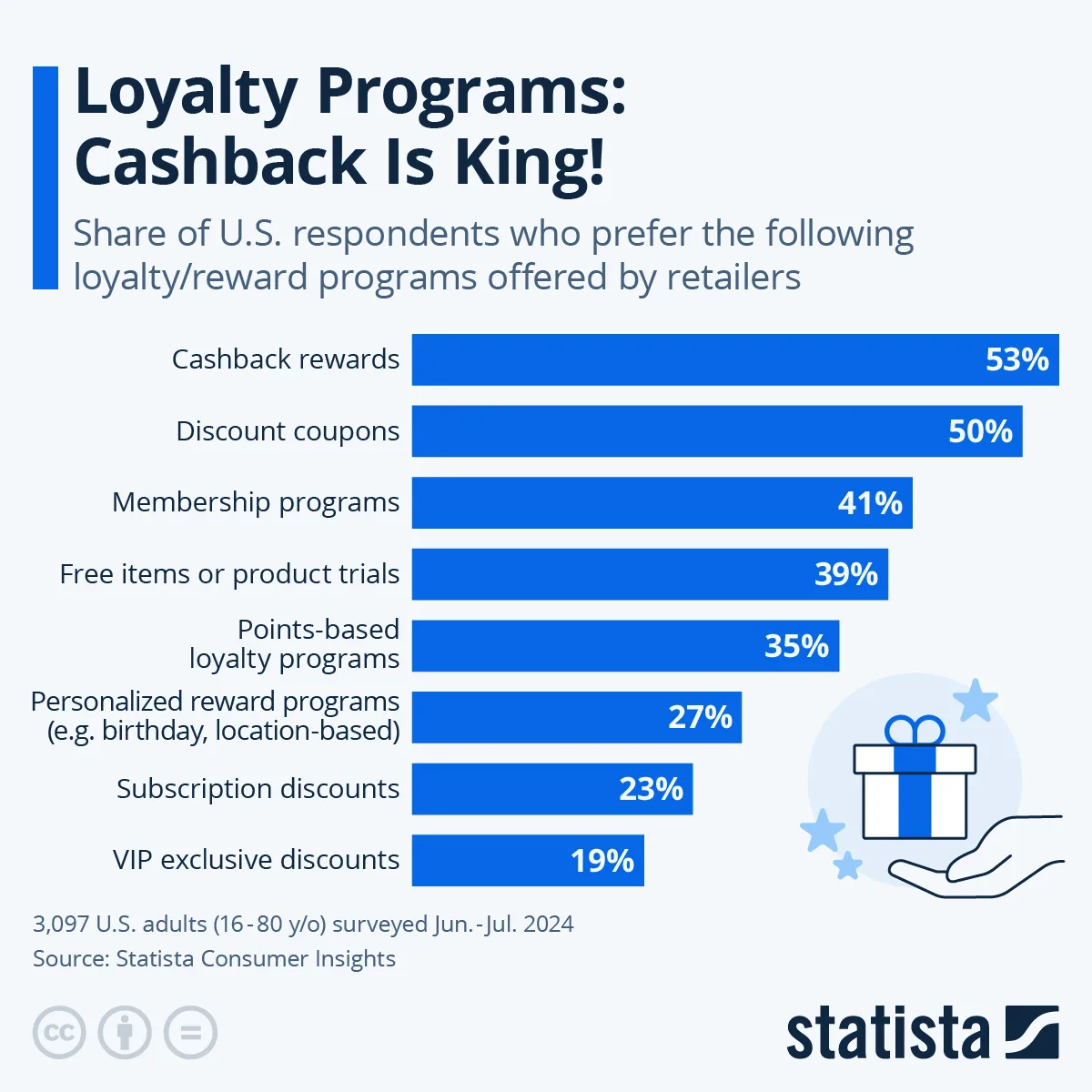
  • 53% Prefer Cashback: The Rise of Loyalty Programs

    53% Prefer Cashback: The Rise of Loyalty Programs

    The Importance of Loyalty Programs in Modern Retail

    Loyalty programs have emerged as essential tools for retailers navigating an increasingly competitive landscape, whether in online or physical spaces. These programs offer a strategic way to attract and retain customers by incentivizing repeat purchases. As the marketplace grows ever more saturated, understanding how loyalty programs function and their varying structures becomes crucial for businesses aiming to build lasting customer relationships.

    What Are Loyalty Programs?

    Loyalty programs are structured marketing strategies designed to encourage customers to continue shopping at a particular store or business. These programs typically involve offering rewards, discounts, or exclusive perks that promote customer retention. The primary aim is to foster brand loyalty, ultimately increasing the customer lifetime value by encouraging repeat business.

    The Role of Loyalty Programs in Retail

    Bridging the Gap Between Online and Offline

    In the era of omnichannel retail, loyalty programs play a pivotal role in connecting the digital and physical shopping experiences. For offline retailers, these programs assist in tracking customer behavior, helping business owners understand purchasing patterns and preferences. By analyzing this data, retailers can offer personalized experiences that meet individual customer needs.

    Enhancing Personalization and Customer Engagement

    Online retailers, on the other hand, leverage data derived from loyalty programs to deliver targeted promotions and recommendations. Personalization is critical as consumers increasingly seek tailored shopping experiences. By understanding customer behavior through loyalty programs, businesses can create more effective marketing strategies that resonate with their audience.

    The Preference for Cashback Programs

    The Appeal of Cashback Rewards

    When it comes to consumer preferences for loyalty programs, cashback options are incredibly popular. According to Statista Consumer Insights, a survey of 3,000 U.S. adults indicated that 53% favored cashback rewards over other options. Cashback programs provide immediate, tangible value, allowing customers to see the benefits of their loyalty instantly.

    Comparison with Other Loyalty Program Options

    Following cashback rewards in popularity are discount coupons and membership programs. Discount coupons attract customers by providing savings on future purchases, while membership programs often offer exclusive benefits in exchange for a fee. However, the immediate gratification of cashback can make it a more appealing option for many consumers.

    The Diverse Ecosystems of Loyalty Programs

    Varied Structures and Incentives

    Loyalty programs come in various forms, each with unique structures, advantages, and disadvantages. Some programs may be straightforward, offering simple rewards for purchases, while others could involve more complex points systems that require customers to redeem points for rewards, leading to varying levels of engagement.

    Business Costs and Consumer Behavior

    While these programs can significantly enhance customer loyalty, they also come with associated costs for businesses. Creating and maintaining a loyalty program requires careful planning and investment. It is essential for retailers to balance the rewards offered with profitability to ensure long-term success.

    The Future of Loyalty Programs

    As the retail landscape continues to evolve, the importance of loyalty programs is only set to increase. Retailers must adapt their strategies to meet the changing expectations of consumers who desire more fulfilling shopping experiences. By prioritizing value and personalization through well-structured loyalty programs, businesses can cultivate deeper connections with their clientele.

    Understanding Customer Preferences Through Data

    Utilizing Consumer Insights

    The utilization of consumer insights, such as those derived from loyalty programs, allows retailers to stay ahead of trends and customer needs. Retailers can fine-tune their offerings based on data analysis, identifying what rewards or incentives are most effective in driving customer engagement and satisfaction.

    Building Long-Term Relationships

    In a landscape where customer acquisition can be costly, building long-term relationships should be a priority for retailers. By continuously offering value through loyalty programs and responding to consumer feedback, businesses can develop a loyal customer base that contributes to sustainable growth.

    Conclusion

    Incorporating loyalty programs into retail strategies is no longer optional but essential for maintaining a competitive edge. With the rising preference for cashback rewards and the need for personalized experiences, retailers must recognize the nuances of these programs and leverage them effectively to foster brand loyalty and drive sales.

  • Is Costco a good place to buy a laptop?

    Is Costco a good place to buy a laptop?

    When considering where to purchase a laptop, many consumers explore various retailers to find the best deals, quality, and customer service. Among these options, Costco has emerged as a popular choice for electronics, including laptops. In this article, we’ll examine several factors that can help determine if Costco is a good place to buy a laptop.

    Pricing and Value

    Costco is known for its competitive pricing and membership-based warehouse model. Here’s what to expect regarding pricing and value for laptops:

    • Competitive Price Points: Typically, Costco offers laptops at lower prices compared to traditional electronics retailers. This can mean significant savings, especially if you have a specific brand or model in mind.

    • Membership Benefits: As a member, you gain access to exclusive deals and promotions that may not be available elsewhere. While there is a membership fee, the savings on high-ticket items like laptops can justify the cost.

    • Instant Savings: Costco frequently runs limited-time offers that can further reduce the price of laptops. Staying updated on sales events can yield considerable bargains.

    Selection of Laptops

    One of the main factors to consider when purchasing a laptop is the selection available. Here’s how Costco stacks up:

    • Brand Variety: Costco typically carries popular brands, including HP, Dell, Acer, and Apple. This variety can help you find a laptop that meets your specific needs.

    • Limited Stock: Unlike dedicated electronics retailers that may have an extensive inventory, Costco’s selection can be more limited, which may mean fewer choices in terms of specifications or configurations.

    • Latest Models: Depending on the time of year, you may or may not find the latest models in-store. If you’re looking for cutting-edge technology, it may be wise to check the latest stock online before visiting the store.

    Warranty and Return Policy

    A significant advantage of buying a laptop from Costco is the warranty and return policy:

    • Extended Warranty Options: Costco often provides an extended warranty, which can give buyers peace of mind regarding their investment. This coverage can protect against defects and other issues for a longer duration than many standard retail warranties.

    • Generous Return Policy: Costco is well-regarded for its hassle-free return policy. If you’re dissatisfied with your purchase, you can return the laptop within a specified time frame for a full refund, making it a low-risk option for consumers.

    Additional Services

    Costco doesn’t just sell laptops; they offer a range of services that can be beneficial:

    • Technical Support: Some Costco locations provide access to technical support for electronic products, which can be valuable for those who need assistance with setup or troubleshooting.

    • Accessories and Software: When buying a laptop at Costco, you’ll often find complementary products like laptop cases, mouse pads, and antivirus software. Purchasing these items in one place can save you time and money.

    • In-Store Demonstrations: Being able to physically see and test the laptops in-store can help you make a more informed decision before purchasing.

    Membership Considerations

    Before deciding to buy a laptop at Costco, it’s essential to evaluate the membership aspect:

    • Initial Investment: A Costco membership requires an upfront fee, which may deter some consumers. However, the potential savings on high-ticket items can outweigh this cost.

    • Frequent Shoppers: If you’re someone who regularly shops at Costco for groceries, household items, or electronics, the membership may be worth considering for the added benefits on purchases.

    • Cost-Effectiveness: For occasional shoppers, it might be wise to compare the prices and offers at other retailers before committing to a Costco membership solely for a laptop purchase.

    In summary, Costco can be a viable option to consider when looking to buy a laptop, thanks to its competitive pricing, favorable return policies, and added benefits. Evaluating your purchasing preferences and needs will help determine if it is the right choice for you.

  • Does CVS sell SIM cards?

    Does CVS sell SIM cards?

    If you’re looking to stay connected while on the go, you might wonder if CVS has SIM cards available for purchase. This pharmacy chain is known for its wide range of products, including over-the-counter medications and everyday essentials, but what about mobile services?

    Availability of SIM Cards at CVS

    CVS does offer a selection of SIM cards, particularly for customers who need a quick solution for mobile connectivity. Here are some key points about the availability of SIM cards at CVS:

    • Brands Available: CVS typically stocks SIM cards from major networks like T-Mobile, Verizon, and AT&T. This allows you to choose a card that fits your existing plan or even start a new service.

    • Prepaid Options: Many of the SIM cards available at CVS are prepaid, which is ideal for people who don’t want to commit to a long-term contract. These cards usually come with various prepaid plans that allow you to pay for the amount of data or talk time you need.

    • Assistance in Activation: Some CVS locations offer support in activating the SIM cards, making it easier for customers who may not be tech-savvy or are unfamiliar with the process.

    Is It a Convenient Choice?

    Purchasing a SIM card at CVS can be a convenient option for several reasons:

    • Wide Availability: With thousands of stores across the country, it’s likely there’s a CVS near you. This makes it easy to stop in and grab a SIM card during your errands.

    • One-Stop Shopping: You can purchase other essentials in addition to your SIM card. So, if you’re stocking up on snacks or toiletries, you can pick up a SIM card too.

    • Immediate Use: Buying a SIM card from CVS allows you to get connected right away. There’s no waiting for shipping, as you can activate the card on the spot.

    How to Purchase a SIM Card at CVS

    When you decide to buy a SIM card from CVS, here’s what you should do:

    1. Check Store Inventory: Not all CVS locations may carry SIM cards, so it’s a good idea to call ahead or check online to see what’s available at your local store.

    2. Choose Your Plan: Decide on a mobile plan based on your needs. Whether it’s for data-heavy use or just basic calling and texting, CVS usually has options to cater to various customer preferences.

    3. Bring Necessary Identification: Some carriers may require identification for activation, especially if you’re purchasing a prepaid card. Have your ID ready for a smoother process.

    4. Ask for Help If Needed: If you have any questions regarding the activation or selection of a SIM card, don’t hesitate to ask a store associate for assistance.

    Alternatives to CVS for Buying SIM Cards

    If CVS doesn’t meet your needs, consider these alternatives:

    • Mobile Carrier Stores: Visit dedicated stores for carriers like T-Mobile, AT&T, or Verizon. These stores often have exclusive plans and better customer service for mobile-related inquiries.

    • Retailers: Stores such as Walmart, Target, and Best Buy also stock SIM cards and might have different pricing and plan options.

    • Online Retailers: Websites like Amazon or the carriers’ official sites offer the flexibility of online shopping, often with the added convenience of home delivery.

    In summary, CVS does sell SIM cards, and they can be a practical choice for quick mobile connectivity. Make sure to check availability at your local store and consider your options carefully.