الوسم: Retail Sales

  • Tariffs Could Slash US Tech Spending by Up to 70%

    Tariffs Could Slash US Tech Spending by Up to 70%

    Record Consumer Spending on Technology in 2023

    Overview of Consumer Technology Spending

    Americans are projected to spend an unprecedented $537 billion on consumer technology in 2023. This staggering amount encompasses not just gadgets but also applications and a wide array of hardware and software designed for consumer use. According to the Consumer Technology Association (CTA), this forecast represents a significant positive outlook for the tech industry, highlighting its resilience and growth potential ahead of major industry events like CES.

    The Impact of Proposed Tariffs

    Background on Tariffs

    However, this optimistic forecast comes with a caveat—the potential introduction of new tariffs by the incoming Trump administration. The CTA emphasizes that these tariffs could have a far-reaching negative impact on the consumer technology sector and the broader U.S. economy.

    Expected Decline in Purchases

    The association suggests that if these tariffs are implemented, it could lead to dramatic reductions in the purchase of key technology products. For instance, laptops and tablets could see nearly a 70 percent decline in purchases, while smartphone sales might drop by 37 percent. Other consumer tech categories may also experience similar reductions in demand, resulting in a considerable setback for an industry that has become integral to American life.

    Economic Implications

    Increase in Consumer Costs

    Proposed tariffs could exacerbate the price of consumer technology significantly. According to the CTA’s projections, the cost of smartphones alone could increase by 25 percent. This rise in prices translates to a substantial loss in purchasing power for American consumers—estimated at over $25 billion. In addition to smartphones, the overall impact of the tariffs could diminish purchasing power across the board by anywhere from $90 to $140 billion.

    The Tech Sector’s Role in the Economy

    Economic Engine and Innovation

    The tech sector has historically served as a critical engine for economic growth in the United States. Gary Shapiro, the CEO of the CTA, underscored the sector’s importance by stating that it drives global innovation and job creation. A thriving tech industry is essential not just for individual businesses but for the national economy as a whole.

    The Threat of Tariffs

    Shapiro argues that proposed tariffs would undermine the deflationary benefits that technology typically contributes to the economy. He views the tariffs as a "tax" on both American businesses and consumers, potentially stymieing growth and innovation. The CTA urges both the incoming administration and Congress to focus on an Innovation Agenda that promotes growth rather than impeding it with punitive tariffs.

    Conclusion

    As America gears up for a year of record spending in consumer technology, the specter of proposed tariffs looms large, threatening to disrupt this momentum. The stakes are high, as both consumers and industry players face the potential ripple effects on prices, purchasing power, and overall economic health.
  • Q4 2023: E-commerce Hits 17.1% of Total Retail Sales

    Q4 2023: E-commerce Hits 17.1% of Total Retail Sales

    The Rise of Online Shopping During the Holiday Season

    As the holiday season approaches, one thing is clear: online shopping is more popular than ever. In recent years, the trends indicate that consumers are increasingly turning to e-commerce platforms to fulfill their holiday shopping needs. This blog delves into the statistics and trends that illustrate this phenomenon.

    E-Commerce Sales Peak in Q4

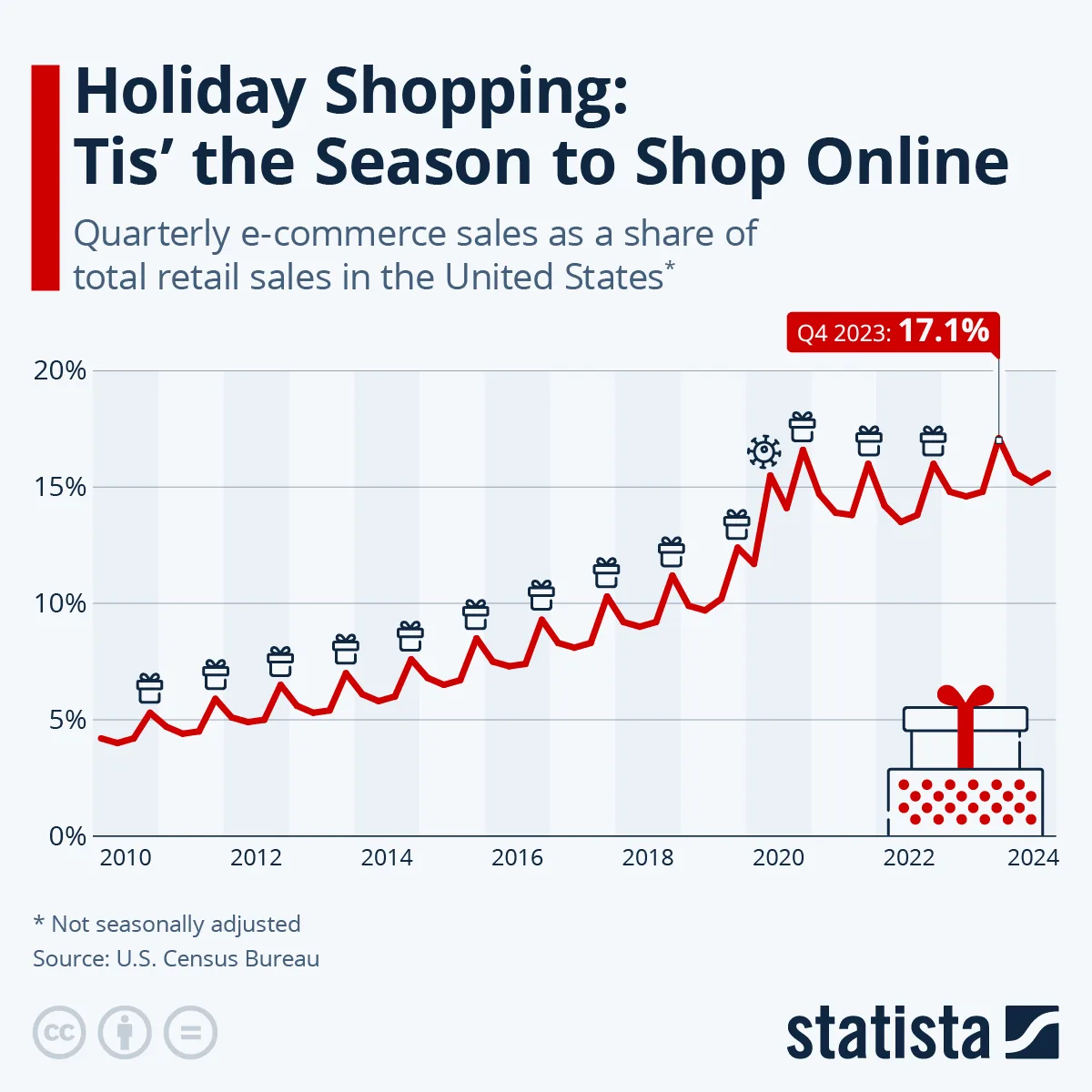
    The holiday quarter is specifically noteworthy when examining e-commerce growth. According to data from the U.S. Census Bureau, e-commerce sales represented a remarkable 17.1 percent of total retail sales in the fourth quarter of 2023. This figure not only marks a record high but also underscores the growing importance of online retail as a substantial segment of overall sales during the holiday period.

    Yearly Comparison of E-Commerce Growth

    The growth of e-commerce sales has been consistent over the years. Comparing the data from the past decade, e-commerce’s share of total retail sales has increased significantly—from less than 5 percent in 2010 to over 15 percent in recent years. This upward trajectory points to a shift in consumer behavior, with many preferring the convenience of shopping online over traditional brick-and-mortar stores.

    Impacts of the COVID-19 Pandemic

    The COVID-19 pandemic acted as a catalyst for the rise in online shopping. In Q2 2020, e-commerce experienced an unparalleled surge as lockdowns and restrictions prompted consumers to turn to online shopping channels for their needs. Since then, online sales have not only stayed elevated but have also become a normalized part of consumer habits.

    The Changing Landscape of Holiday Shopping Trends

    Interestingly, while online shopping during the holiday season has seen consistent growth, the extent of the holiday spike is not as pronounced as it was in pre-pandemic times. The e-commerce share of total spending during the fourth quarter of 2021, 2022, and 2023 was only 13, 16, and 16 percent above the average from the preceding three quarters, respectively. In contrast, the gap prior to the pandemic was often between 25 to 30 percent.

    A Year-Round Shopping Culture

    These statistics suggest a significant transformation in shopping behaviors. E-commerce is no longer just a seasonal activity; it has integrated itself into consumers’ lives throughout the year. This shift reflects broader trends, where sales spikes are present in various other seasons and events, reducing the distinctiveness of the holiday shopping peak.

    The Future of E-Commerce During Holidays

    As we look ahead, the projection for online shopping continues to be optimistic. Retailers are investing heavily in enhancing their online platforms, ensuring a seamless shopping experience. With features such as personalized marketing, faster shipping options, and improved customer service, the online shopping landscape is poised to evolve even further.

    In conclusion, as we navigate this evolving retail environment, the importance of understanding consumer behavior and adapting to their preferences cannot be overstated. The holiday shopping season undoubtedly remains a crucial time for e-commerce, but its evolution reflects a broader change in shopping habits that is likely here to stay.