الوسم: resilience

  • India Adapts to Increasingly Hotter Summers

    India Adapts to Increasingly Hotter Summers

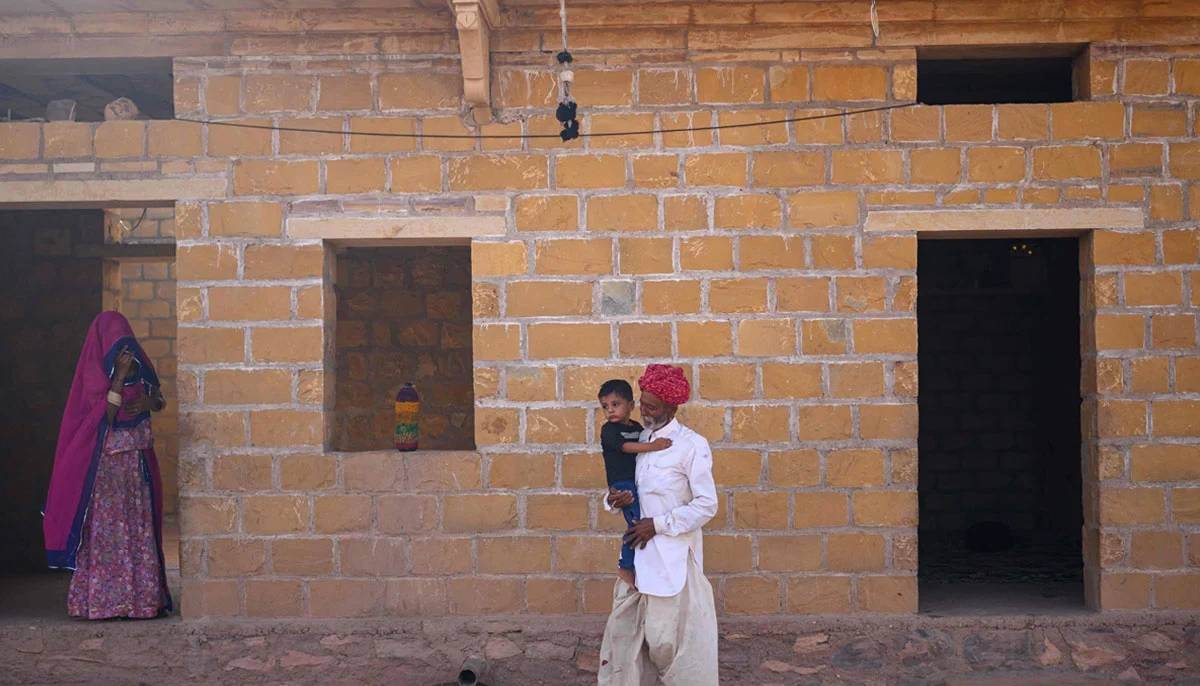
    On India’s scorching plains, the increasingly intense summers make survival more challenging, pushing people to adapt and live during the cooler dark hours before the sun’s heat becomes unbearable.

    “We try to adapt, but traditional methods for fighting the heat aren’t enough anymore,” said 26-year-old herdsman Sawai Bhati Singh, who lives outside Jaisalmer, a desert city in Rajasthan. “Every year, the heat keeps getting worse.”

    His home, constructed from thick stone blocks with few windows, offers some relief from the intense heat, but the interior remains oppressively hot.

    The country is no stranger to extreme temperatures, but decades of scientific studies reveal that climate change is causing heatwaves to last longer, occur more often, and become more severe.

    In Singh’s village of Sanwata, early June temperatures reached 45°C, a common occurrence during summer. The highest recorded temperature in the area has been 49°C. Singh worries about his young children, aged two and four, who play barefoot in the dust.

    He drinks water stored in bottles wrapped in handmade jute to keep it cool, a simple evaporation trick. His wife and mother struggle in a separate kitchen hut with a thatched roof for ventilation, cooking over a wood fire.

    All water is drawn from a nearby well, then cooled in bottles wrapped in woven jute string to utilize evaporation. Singh’s livestock—goats and cattle—also suffer in the heat.

    “They stay in the shade,” he says. “The heat affects their eating, which means less milk for us.” Temperatures in their village hit 45°C early in June, with a record high of 49°C. Last year, they bought their first air cooler, which uses wet fibers, and now they own two.

    Meanwhile, on the lush floodplains of the Yamuna River near New Delhi, farmer Bhole Shankar faces a different but related crisis. The city recorded 46.5°C this summer, just below the scorching 49.9°C peak of 2024.

    “Living near the floodplain feels cooler than living among houses,” said Shankar, 36, standing outside a makeshift hut made of plastic sheeting attached to bamboo poles. “But some days, it feels like day and night are the same.”

    Shankar’s family—which includes his wife and three sons aged between nine and 16—live beneath the city’s power lines, though their home isn’t connected to the grid. A small solar panel powers a fan that pushes hot air around.

    They adjust their routine to avoid the worst of the heat, working in the fields early in the morning, resting in the shade during peak heat, and checking their crops again at dusk.

    His son, Tejpal, is fixing a portable electric fan inside their shanty, trying to stay cool in the 40°C weather. To sleep, they roll down plastic walls of their tent and lie on traditional rope lattice beds, which allow air to circulate.

    Shankar pours himself fruit juice after a day of work, noting that each year seems hotter than the last. “We try to stay in the shade, but it’s tough when you’re a farmer.”

  • How to Demonstrate Steadfast Resilience, Will, and Vigor in Crimson Desert Through Completing and Solving

    How to Demonstrate Steadfast Resilience, Will, and Vigor in Crimson Desert Through Completing and Solving

    Progressing in Crimson Desert is usually simple if you follow the quest instructions and map markers to the right locations. However, some quests, like The Cloister of Enlightenment in Chapter 9: The Sage of the Desert, don’t provide clear directions, so you’ll need to figure things out on your own.

    Here’s how to advance through the doors in The Cloister of Enlightenment so you can face Master Du and move the story forward. If you haven’t been increasing your Stamina, Health, and Spirit, now is a good time to catch up so you can continue smoothly.

    How to Start The Cloister of Enlightenment

    The first main quest in the Enlightenment chain begins right after you finish the Veiled Witch quest in Chapter 9. The quest involves heading northwest of the Sovereign Wastes to a marked spot on your map, where you will encounter a sealed door that appears impossible to open.

    Opening the Doors in The Cloister of Enlightenment

    Once you reach the first sealed door, you’ll need to demonstrate resilience — but the game offers no further guidance on what that entails. Typically, you’ll face three doors that require you to show specific traits by walking up to and pushing against each one.

    Here is what each door demands:

    Door Requirement What You Need to Have
    Show resilience At least 7+ points in your Health skill tree
    Show unyielding will At least 5+ points in your Spirit skill tree
    Show boundless vigor At least 5+ points in your Stamina skill tree

    Warning: If you approach a door with less than the required health, you can die. Make sure your Health is high enough before trying.

    Each time you walk up and press against a door, it will drain your HP, Spirit, and Stamina, testing your progression and requiring you to spend Abyss Artifacts to level up those skills.

    Keep advancing through the three doors to reach Master Du and continue your journey.

  • What Makes Afghanistan So Earthquake-Prone?

    What Makes Afghanistan So Earthquake-Prone?

    A 6.3-magnitude earthquake struck near the northern Afghan city of Mazar-e Sharif early Monday morning, resulting in at least 10 fatalities and approximately 150 injuries. This comes just months after a recent quake and powerful aftershocks at the end of August claimed over 2,200 lives.

    Here’s a look at why Afghanistan, a nation ravaged by war and instability, frequently experiences tremors and what can be done to mitigate their effects:

    Are earthquakes frequent in Afghanistan?
    Nestled among rugged mountains, Afghanistan is vulnerable to various natural disasters, with earthquakes causing the highest number of casualties. On average, around 560 people die annually due to earthquakes, leading to estimated damages of about $80 million each year. Since 1990, studies have documented over 355 quakes exceeding magnitude 5.0.

    What makes Afghanistan so susceptible to tremors?
    Positioned along the boundary of the Eurasian tectonic plate, Afghanistan shares a transitional zone with the Indian plate, meaning the two may collide or slide past each other. The Arabian plate to its south also influences seismic activity. The continual northward push of the Indian plate against Eurasia is mainly responsible for the country’s frequent seismic events.

    Which regions are most at risk?
    Eastern and northeastern Afghanistan, especially areas bordering Uzbekistan, Tajikistan, and Pakistan, are highly prone to earthquakes. The capital city, Kabul, which is heavily populated, suffers the highest potential damages, averaging about $17 million annually. Mountainous regions are especially dangerous, as earthquakes can trigger landslides, amplifying the devastation.

    Historic major earthquakes in Afghanistan
    Since 1900, roughly 100 significant earthquakes have been classified as damaging. Notable recent events include a magnitude 6 quake in 2022 that killed 1,000 people and multiple tremors in 2023 that together caused another 1,000 deaths and obliterated entire villages. In 2015, a massive 7.5-magnitude quake resulted in 399 deaths across Afghanistan, Pakistan, and India. The year 1998 marked a particularly devastating period, with two quakes within three months killing a combined total of nearly 7,000 people.

    Steps to increase resilience
    Experts recommend constructing new buildings with earthquake-resistant designs and retrofitting existing structures to prevent collapse. Improving early warning systems and monitoring fault lines through geospatial and remote sensing technology can enable timely evacuations. Relocating populations from high-risk zones is also crucial to reducing potential casualties and property damage.