الوسم: removal

  • Kennedy Center Honors Without Trump’s Name

    Kennedy Center Honors Without Trump’s Name

    Workers in Washington, D.C., began removing President Donald Trump’s name from the facade of the John F. Kennedy Center for the Performing Arts on Saturday, following a court ruling that deemed the renaming unlawful. The venue’s Executive Director, Matt Floca, stated that all physical signage bearing Trump’s name had been taken down from the building and grounds. During the work, the exterior sign remained covered with a white tarp, and sounds of hammering and scraping echoed as workers removed Trump’s name. Spectators, including early morning joggers, watched briefly as the process unfolded.

    The removal came shortly after a judge rejected a last-minute attempt by the Kennedy Center’s board to halt the name removal, a move seen as a setback for Trump’s efforts to embed his name and image into national institutions since re-entering the White House — a break from traditional American political decorum. An eager crowd had gathered outside the center the night before, cheering as scaffolding was erected for the sign removal, while thousands more followed the developments via livestream.

    The process was delayed by thunderstorms, which posed safety concerns, but was expected to be completed early Saturday morning. Last month, U.S. District Judge Christopher Cooper ordered Trump’s name off the building, ruling that the Kennedy Center had been unlawfully renamed and only Congress has authority to change its name. He set a 14-day deadline for the removal of Trump’s name from the building’s marble facade and related materials. Earlier this week, the Kennedy Center also removed Trump’s name from its website.

    On Friday, Cooper refused a request from the center to delay his ruling, citing the public interest in stopping unlawful government actions. The judge also issued a temporary order halting Trump’s bid to delay renovations of the Kennedy Center, scheduled to begin this July. Trump responded angrily, saying he was surrendering control of the venue, which he had designated himself chairman of during his second term last year. His allies had voted to rename the venue “Trump Kennedy Center” in December, adding his full name in large capital letters above Kennedy’s, prompting some artists to cancel scheduled performances.

    Additionally, other Trump-related renamings are underway, including the US Institute of Peace, which now bears his name, and his image appears on banners outside the Department of Justice and Agriculture. The Trump administration is also pushing to feature his likeness on a $250 bill minted to celebrate the country’s 250th anniversary of independence from Britain.

  • Saudi Influencer Sarah Al-Wadaani Trends After Removing Hijab

    Saudi Influencer Sarah Al-Wadaani Trends After Removing Hijab

    Sarah Al-Wadaani recently went viral after making her first public appearance without a hijab, sparking widespread discussion and questions among her followers.

    Sarah Al-Wadaani, a renowned Saudi beauty expert and content creator, ignited a heated debate on social media when she shared videos on her Snapchat and Instagram without wearing a hijab — her first such appearance since rising to fame.

    This unexpected reveal quickly made her a trending topic, dividing opinions between supporters and critics. She subsequently posted new videos showing her head uncovered, which intensified the debate. Some viewers interpreted this as a sign she had altered her look, while others questioned her motives and the reasons behind her decision to go unveiled.

    Despite all the attention, Sarah Al-Wadaani chose not to comment directly. She continued to upload regular daily content, offering no explanation or statement regarding her decision to remove her hijab.

    Later on, she uploaded additional videos discussing skincare and haircare products, which received mixed reactions. Some believed her silence was a strategic move to rekindle public interest and engage her audience more deeply, while others thought she might be delaying addressing her reasons for unveiling.

    Sarah Al-Wadaani remains one of the most prominent influencers in Saudi Arabia. She boasts a massive following and is a significant figure in digital marketing, known for her diverse content blending beauty and lifestyle insights. She also shares glimpses of her personal life, including her marriage to businessman Abdulwahab Al-Sayyaf, keeping her fans engaged with updates about her daily routines. Every appearance she makes tends to generate remarkable interest and discussion.

  • How To Remove a Ring Doorbell from a Door or Wall

    How To Remove a Ring Doorbell from a Door or Wall

    If you have a video doorbell installed at your home, it’s likely from the Ring brand, which is known for producing some of the best video doorbells on the market. Their lineup includes affordable options as well as high-end models that record continuously. At some point, you might need to remove it—whether to upgrade to a newer model or switch to a different brand altogether.

    Removing a Ring doorbell is straightforward and typically doesn’t require many tools. Most models come with a specialized screwdriver designed for easy removal. If you’ve misplaced this tool, don’t worry—there are alternative methods to take down your doorbell without it.

    Here’s a quick overview of how to remove your Ring doorbell:
    The process varies slightly depending on the specific model, but generally, it only takes a few minutes.

    What You Need:

    • Ring Video Doorbell
    • The screwdriver provided in the package (or a small flathead or Torx screwdriver as a substitute)

    How to Remove Your Ring Doorbell for Charging

    Many Ring models feature a faceplate secured by a security screw at the bottom. To remove it:

    1. Use the provided screwdriver to unscrew the security screw, usually located at the base of the device.
    2. After removing the screw, gently pull the bottom of the faceplate down and away from the mounting bracket.
    3. When the faceplate comes off, you’ll see the battery and a small silver lever. Press the lever to slide the battery out of its compartment.

    Note: Newer models might use a push-pin installation method, allowing you to pop the entire unit off without a screwdriver. In that case, you can use the included push-pin tool or even a small flathead screwdriver as an alternative.

    Removing the Doorbell Without the Special Tool

    If you’ve lost the tool that came with your doorbell, you have a couple of options:

    • Contact Ring’s customer support to request a replacement tool. Many users have successfully received replacements this way.
    • If you need to charge the battery immediately, attempt to carefully manipulate the security screw with a small flathead or a T15 Torx screwdriver—be cautious to avoid stripping the screw.

    Once you have access, you can follow the steps to remove the device itself from the mount, replicating the process described above.

    Permanently Removing Your Ring Video Doorbell

    If you’re relocating or replacing your doorbell permanently, removal is just as simple:

    1. Use the screwdriver to remove the faceplate.
    2. Unscrew the device from the wall or door frame. If your unit is wired, disconnect the wiring carefully—especially the wires connected to your chime.
    3. To prevent pests or leaks, fill the resulting holes with silicone sealant or filler.

    With these steps, you can easily take down your Ring doorbell for maintenance, charging, or replacement. Once removed, you’re ready to install a new model or start fresh.

  • US Justice Dept Removes Extremism Study from Website

    US Justice Dept Removes Extremism Study from Website

    A study on far-right extremist violence in the United States has been quietly removed from the Justice Department’s website, AFP confirmed Tuesday. The research, conducted by the National Institute of Justice, indicated that far-right groups are predominantly responsible for fatal attacks within the country. The findings revealed that, since 1990, far-right extremists have committed significantly more ideologically motivated homicides than those linked to far-left or radical extremist groups.

    This conclusion contrasts sharply with remarks from senior Trump administration officials about the threat posed by left-wing extremism, especially in the wake of last week’s assassination of prominent conservative activist Charlie Kirk. The DOJ did not respond to inquiries about why the paper, titled “What NIJ research tells us about domestic terrorism,” was removed shortly after the deadly shooting in Utah on September 10.

    Archived versions of the Office of Justice Programmes website, captured by the Internet Archive’s Wayback Machine, show that the article was accessible on September 11 but was no longer available by the next afternoon, as reported by independent outlet 404 Media. An author cited in the study declined to comment on its removal when reached by AFP.

    Other research on the threat of far-right extremism remains publicly available on the department’s website. On Monday, the White House announced plans to target an alleged left-wing “domestic terror movement,” sparking concerns that such efforts could be used to suppress political dissent. While federal law enforcement actively investigates domestic terrorism, the U.S. does not maintain a list of designated “domestic terrorist organizations.”

  • Alya and Yılmaz Kunt Break Up After 1.5 Years, Planning Tattoo Removal

    Alya and Yılmaz Kunt Break Up After 1.5 Years, Planning Tattoo Removal

    Digital Phablet – Alya and Yılmaz Kunt have ended their relationship, and there are plans to remove their tattoos.

    Singer Alya and actor Yılmaz Kunt parted ways after being together for a year and a half. The couple had been living together and were considered one of the most stable young couples in show business. However, they reportedly decided to go their separate ways.

    Their relationship attracted a lot of media attention. Numerous photos showed them holding hands, smiling, and appearing very happy together. They even tattooed each other’s names on their fingers, leading many fans to believe their bond was meant to last forever.

    However, not all love stories stand the test of time. Reports indicate that the couple split due to differing perspectives. Insiders suggest that their disagreements grew more pronounced over time, eventually prompting the decision to part ways.

    The news comes as Alya prepares for a new role in the upcoming TV show Kadife Kelepçe. Known for her role as “Laz Kӱzӱ” in Camdaki Kӱz, her talented singing career and acting prowess are expected to make a strong impression once again.

    The breakup has sparked social media buzz, especially regarding the tattoo of Yılmaz Kunt’s name on Alya’s finger. It is rumored that she wants to have it removed as a symbolic step to move forward. Fans expressed their sadness on social platforms, many noting how happy the couple appeared and feeling surprised by the split. Some agreed that erasing the tattoo might be a positive step toward a fresh start.

    Yılmaz Kunt, recognized for his work in music and modeling, has not publicly addressed the breakup. Alya has also remained silent, focusing instead on her career. Despite their separation, both continue to be in the public eye, with Alya seemingly determined to leave the past behind and pursue new opportunities.

    Meanwhile, discussions about the symbolic act of removing the tattoo have gained traction, with fans sharing their thoughts on moving on and taking control of their personal stories.

    In conclusion, even though their romantic chapter has ended, the individual journeys of Alya and Yılmaz Kunt continue to capture public interest as they focus on new beginnings.

  • FBI To Remove Nasty Malware Affecting 2.5 Million PCs

    FBI To Remove Nasty Malware Affecting 2.5 Million PCs

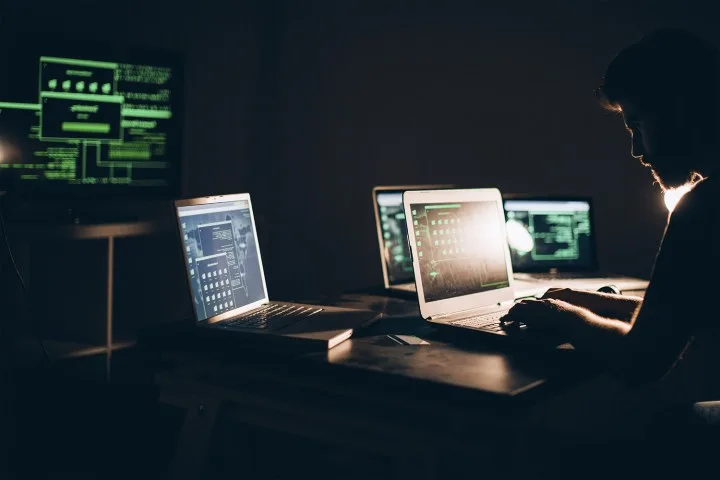
    A person surrounded by multiple computers working on a laptop.
    Digital Trends

    A malware strain traced back to China has been successfully neutralized following an FBI court order that facilitated the removal of its harmful code from thousands of Windows-based computers.

    This operation has effectively brought an end to the PlugX malware in the United States, which had impacted over 2.5 million devices worldwide by compromising infected USB drives, according to PCMag.

    Working alongside the FBI, the Justice Department announced that it received judicial approval to expunge the malware from around 4,260 computers and networks across the country as of Tuesday. Consequently, the FBI plans to alert the owners of affected devices through their respective internet service providers.

    This case highlights the efforts by federal agencies to tackle significant cybersecurity threats. The Justice Department clarified that the assailants behind this incident are a group of state-sponsored hackers from China known as “Mustang Panda,” who created a tailored version of the PlugX malware for this ongoing campaign.

    Initially identified in 2008, PlugX served as a backdoor vulnerability, allowing cybercriminals to remotely control compromised Windows machines. By 2020, updates to the malware enabled it to infiltrate USB drives and connected computers, making it “wormable,” meaning it could spread between PCs through infected peripherals.

    Cybersecurity firm Sekoia noted that Mustang Panda eventually lacked the necessary resources to manage the large number of systems infected with PlugX and ultimately abandoned the undertaking.

    Additionally, cybersecurity company Sophos detected numerous PlugX infections originating from a single IP address. In September 2023, in conjunction with Sekoia, Sophos spent just $7 to gain insights into the IP address and the affected devices. This investigation revealed a self-deletion command embedded within the PlugX code.

    In July 2024, French law enforcement authorized the use of this self-deleting feature to rectify the infected computers, and since then, 22 additional countries have adopted similar measures.

    While specific methods for removing the malware from U.S. systems are not yet clear, the FBI confirmed in an affidavit that it has verified the self-delete command’s effectiveness, ensuring that it exclusively removes the malware without impacting any other functions on the device or transmitting any unauthorized code.