Tag: Religion

  • Did Giancarlo Esposito Convert to Islam?

    Did Giancarlo Esposito Convert to Islam?

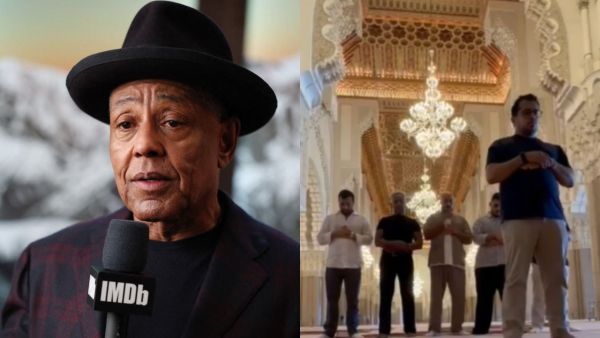
    Renowned American actor Giancarlo Esposito has recently become a trending topic online after reports circulated that he converted to Islam following his filming of ‘7 Dogs’ in Saudi Arabia.

    Multiple sources confirmed the news, with Saudi Minister of Entertainment Turki Al-Alsheikh stating that Esposito embraced the Islamic faith during his time in Saudi Arabia. Esposito, widely recognized for his roles in popular series such as Breaking Bad and Better Call Saul, also starred as Gus in these productions, along with appearances in The Boys and Ubisoft’s Far Cry 6.

    Did Giancarlo Esposito Convert to Islam?

    The Saudi government official further mentioned that Esposito recited the Shahada—the Islamic declaration of faith—as part of his conversion process while working on the film ‘7 Dogs.’ This action-adventure movie, featuring an ensemble cast including Karim Abdel Aziz, Ahmed Ezz, Monica Bellucci, Martin Lawrence, and Salman Khan, was shot during his visit. Despite the star power involved, the film has received mixed reviews, currently holding a 5.5 out of 10 rating on IMDb.

    News of his conversion quickly spread across social media platforms, with a video on X (formerly Twitter) showing Esposito praying inside a mosque.

    Reactions to his conversion have been diverse. One social media user joked, “He won’t sell drugs anymore, no more killing. Just kidding. May Allah bless him and make his journey easy.”

    A tweet from The Middle East confirmed, “🚨 BREAKING: Actor Giancarlo Esposito, star of Breaking Bad, converts to Islam. He embraced Islam in the Kingdom of Saudi Arabia 🇸🇦,” accompanied by a photo.

  • India investigates embezzlement at temple built on Babri mosque site

    India investigates embezzlement at temple built on Babri mosque site

    Indian authorities are probing allegations of financial misappropriation at a temple in northern India, a site closely associated with Prime Minister Narendra Modi’s Hindu-centric political stance, according to a senior government official on Friday.

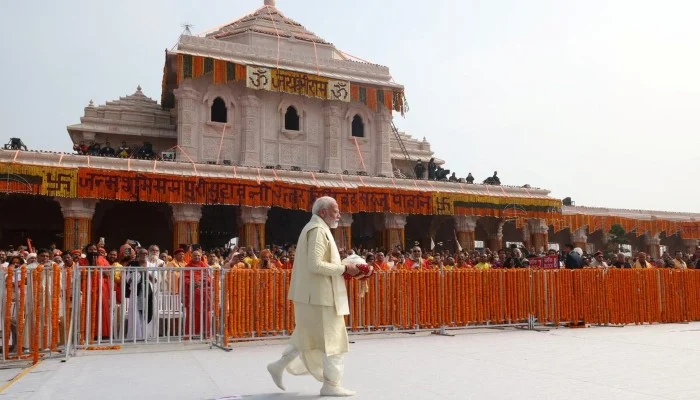
    The Ram Mandir temple in Uttar Pradesh—built on the site where a mosque stood for centuries before being dismantled by Hindu nationalists—was officially opened in 2024 with significant ceremony led by Modi himself.

    Uttar Pradesh’s Chief Minister Yogi Adityanath stated that a special investigation team (SIT) has been formed to examine claims of illegal diversion of donations from devotees.

    “We have initiated an SIT inquiry based on the recommendations of the trust overseeing the temple,” Adityanath, a prominent Hindu monk, announced during a public event.

    He urged anyone with documentary evidence related to the allegations to submit it to the SIT.

    The extent of the alleged financial misconduct remains uncertain, but opposition parties and local media report that the amount could exceed $20 million.

    Construction costs for the temple were approximately $240 million, entirely funded by public donations, according to the project organizers.

    Reports from The Indian Express indicate that daily donations typically average around $10,000, with peak days seeing contributions up to $60,000.

    Believers hold that Lord Ram was born in Ayodhya—home to the temple—more than 7,000 years ago, though it is also believed that the Babri mosque was constructed on his birthplace by a Muslim ruler in the 16th century.

    The Bharatiya Janata Party (BJP), the current ruling party, was instrumental in the campaign that led to the mosque’s demolition in 1992. The incident propelled the party and Modi to national prominence, helping them overtake the secularist Indian National Congress, which had dominated Indian politics since independence.

  • India’s Migrant Detention Centers Raise Fears of Expulsion

    India’s Migrant Detention Centers Raise Fears of Expulsion

    India’s dominant Hindu-nationalist party has directed detention centers to hold undocumented Bangladeshis and Rohingyas in West Bengal, causing concern among minority communities that these actions may result in unpredictable expulsions. The order was issued shortly after Prime Minister Narendra Modi’s Bharatiya Janata Party (BJP) secured control of the eastern state for the first time since India gained independence in 1947.

    The directive instructs local officials to establish “holding centers” for “apprehended foreigners” pending deportation, as part of a wider campaign against illegal migration. The government justifies this “detect, delete, deport” policy by asserting that those targeted are migrants unlawfully residing in the country.

    An official statement said, “Illegal migration poses security and socio-economic risks that surpass law enforcement concerns.” The move has heightened anxiety among West Bengal’s approximately 35 million Muslims, many of whom have linguistic and cultural ties with neighboring Bangladesh.

    Critics argue that the policy exemplifies the BJP’s longstanding strict stance on immigration, with some senior members previously referring to Bangladeshi migrants as “termites” and “infiltrators.” Similar policies have been implemented in Assam, where large-scale identification drives and detention efforts have taken place, often without proper legal procedures. Rights activists report that hundreds have been deported to Bangladesh without due process, sometimes based on ethnic profiling, and have been reportedly forced across the border at gunpoint—allegations challenged in courts.

    Many view these policies as disproportionately affecting Muslims, as they tend to tie religious identity to illegal migration. The planned detention centers in West Bengal are especially concerning given the state’s porous border with Bangladesh and its extensive migration history. The inclusion of Rohingya refugees in the order has also drawn criticism, with concerns about potential violations of international refugee protections, as India has previously been accused by humanitarian groups of forcibly repatriating Rohingya to Myanmar amid ongoing conflict there.

    Adding to Muslim communities’ worries, the BJP-led government in Assam recently proposed amendments to personal religious laws, which critics say could further marginalize minority populations.

  • Indian Court Declares Bhojshala Mosque a Hindu Temple

    Indian Court Declares Bhojshala Mosque a Hindu Temple

    A court ruling has terminated a 20-year-old worship agreement at the Bhojshala-Kamal Maula mosque complex in Madhya Pradesh, India, allowing daily Hindu prayers to resume. The Madhya Pradesh High Court’s Indore bench declared the site a Hindu temple dedicated to goddess Vagdevi (Saraswati), based on a 2024 Archaeological Survey of India (ASI) report indicating the structure was built using fragments of older temples, with the mosque constructed centuries later.

    Following the decision, the ASI issued a directive on May 16 permitting Hindu devotees unrestricted access for daily worship, replacing prior arrangements that limited Hindu worship to Tuesdays and Muslim Friday prayers. Advocate Vishnu Shankar Jain, representing Hindu petitioners, emphasized that Hindus can now visit and worship at the site freely.

    The site remains a protected monument under India’s 1958 law, with worship timings set by the superintending archaeologist in consultation with local authorities. The court’s ruling notes that the complex was built using remnants from earlier temples, reinforcing its status as a Hindu religious site. The Muslim community was offered an alternative location for building a mosque, but Dhar city Qazi Waqar Sadiq stated that Muslim petitioners plan to appeal to the Supreme Court and have expressed opposition to relocating.

    This site has long been a flashpoint, with Hindu groups claiming it is a Saraswati temple, while Muslims insist it is the Kamal Maula mosque. The decision effectively restricts Muslim access for prayer, placing the mosque off-limits. Legal, historical, and political voices from the Muslim community have criticized the ruling, warning it jeopardizes protections for Muslim religious sites in India. Lawyer Ashhar Warsi labeled it a “misjudgment” and a violation of established law, while politician Asaduddin Owaisi warned that the verdict poses a “serious threat” to Muslim worship rights and suggested it could set a precedent for similar claims, echoing concerns about the aftermath of the Babri Masjid verdict.

    Historian Audrey Truschke commented that this trend of targeting Islamic places of worship reflects deep-seated Islamophobia rooted in Hindu nationalism. The dispute is part of a broader movement to challenge medieval mosques and Islamic-era monuments across India, with claims that many were built over Hindu temples, a narrative that has gained momentum since Prime Minister Narendra Modi took office in 2014.

  • Indian cleric sentenced to life for raping Bangladeshi women in East London

    Indian cleric sentenced to life for raping Bangladeshi women in East London

    A 54-year-old imam from East London has been sentenced to life in prison with a minimum of 20 years after sexually assaulting and raping multiple women and girls, some as young as 12. He exploited his role as a respected religious leader to prey on seven victims in the Muslim community over nearly a decade, from 2005 to 2014, Crown Court heard.

    Imam Abdul Halim Khan convinced each victim to meet him at secluded locations, including apartments and quiet spots, promising to heal them using supernatural jinns to bring happiness and to rid them of evil spirits. Instead, he subjected them to sexual violence, claiming possession or disguise as a jinn, the court was told.

    His victims believed they had to keep their experiences secret, fearing harm through black magic if they disclosed what had happened, prosecutors stated.

    Judge Leslie Cuthbert addressed Khan during sentencing, condemning his betrayal of trust: “Behind the facade of holiness, you took advantage of women who trusted you, solely for your own sexual gratification. You brazenly raped and assaulted seven women — including children and young women. You acted as if you were untouchable, confident that your victims, all from the same community, would not overcome the shame or stigma to report you.”

    He described Khan’s actions as an unchecked campaign of abuse, calling it a “serial” pattern of rape and child abuse that caused immense harm.

    The judge also expressed concern about Khan’s ongoing danger to society, especially given that some community members still hold him in high regard, which could encourage further victimization.

    Khan was convicted on 21 counts of rape and sexual assault. One victim, tearfully, told the court, “Khan is not a human; he is evil personified,” recounting how fear and manipulation kept her silent, with threats extending to her family. She emphasized that he remains a threat to society as long as he lives.

    Another young victim described feeling “terrified, confused, and powerless,” alleging Khan exploited her faith and vulnerability to terrorize her.

    Police first learned of Khan’s misconduct in February 2018 after his youngest victim reported him at school. During interviews, Khan repeatedly denied the allegations, claiming a conspiracy and that the victims had fabricated stories for revenge, according to authorities. He maintains his innocence.

    He faced convictions for nine counts of rape, four counts of sexual assault, two counts of sexual assault of a child under 13, five counts of raping a child under 13, and one assault by penetration. Prosecutor Melissa Garner highlighted that Khan abused his trusted position over many years, manipulating victims into silence with their faith, and instilling fear of familial repercussions should they speak out.

    Detective Chief Inspector Jennie Ronan, who led the investigation, praised the victims for their bravery and emphasized the importance of ongoing support. She stated that Khan, who presented himself as trustworthy, was actually a predator who used religion as a tool for exploitation. She reaffirmed the department’s commitment to fighting violence against women and girls and removing dangerous offenders from the streets.

  • Did Siilawy Convert to Christianity?

    Did Siilawy Convert to Christianity?

    Jordanian singer Siilawy recently ignited online speculation after sharing an image of Jesus Christ on his Instagram story. The post depicted the Last Supper featuring Jesus and his twelve apostles, and it was shared on his official account, which boasts over 3 million followers.

    Following the post, many users began questioning whether the singer had converted to Christianity. Some social media users have been circulating claims that Hossam El-Silawy converted to Christianity after posting the story, leading to widespread discussion and division among his followers. While some found the news shocking and unexpected, others dismissed it as a rumor or a publicity stunt.

    In his Instagram update, Siilawy included a cross—symbolizing Christianity—next to a crescent and star, which are emblems of Islam.

    Siilawy post

    Did Siilawy convert to Christianity?
    The answer remains unclear, as there has been no official statement from the artist himself.

    Hussam Siilawy, known professionally as Siilawy, was born on September 8th and grew up in Amman. His musical talent came to prominence during the COVID-19 pandemic, when one of his songs went viral on social media, gaining him significant attention.

    Despite the ongoing rumors, no confirmed information has been provided regarding his religious beliefs.

  • Pope Leo Condemns ‘Neocolonial’ Conflicts in Algeria Post-Trump Critique

    Pope Leo Condemns ‘Neocolonial’ Conflicts in Algeria Post-Trump Critique

    Pope Leo XIV is set to visit the Great Mosque of Algiers, where he will address Algeria’s political leaders and emphasize the importance of justice and unity. During his forceful first speech on Monday, he condemned violations of international law carried out by “neocolonial” powers, calling on global leaders to prioritize peace and dialogue. This marks the first time Algeria has hosted a Catholic pope.

    In his remarks, Leo noted that the future belongs to those who refuse to be blinded by greed or power, warning that domination often leads to destruction. Though he did not name specific nations, his recent criticism of the Iran conflict and his peace advocacy highlight his stance against the “madness of war.” In response to the pope’s remarks, President Trump called Leo “terrible,” prompting swift criticism from American believers.

    On the flight from Rome to Algiers, Leo stated his intention to keep speaking out against war and to promote peace through dialogue and cooperation, despite Trump’s comments. The 70-year-old pope, in excellent health, is undertaking one of the most complex trips in recent decades, traveling across 11 cities in four countries—Algeria, Cameroon, Angola, and Equatorial Guinea—covering nearly 18,000 km across 18 flights.

    In Algeria, Leo urged leaders to foster a society rooted in justice and solidarity, especially amid ongoing violations of international law and neocolonial tendencies. Vatican official Cardinal Michael Czerny explained that the tour aims to draw attention to Africa. The continent is home to over 20% of the world’s Catholics, with the three sub-Saharan nations the pope visits having populations where over half identify as Catholic. Algeria, a predominantly Muslim country with fewer than 10,000 Catholics in its population of 48 million, will be hosting a pope for the first time.

    Throughout his 10-day journey, Leo is expected to deliver 25 speeches on topics such as natural resource exploitation, Catholic-Muslim dialogue, and political corruption. Major events include a mass in Douala, Cameroon, expected to draw about 600,000 attendees. The pope’s multilingual skills—fluent in Italian, English, French, Portuguese, and Spanish—will enhance his engagement with diverse audiences.

    Following his meeting with Algerian political officials, Leo will visit the Great Mosque of Algiers in his second mosque visit as pope and later travel to the ancient town of Hippo in Annaba.

  • Britain Reframes Signs of Anti-Muslim Bias

    Britain Reframes Signs of Anti-Muslim Bias

    Britain has introduced a new advisory definition of anti-Muslim hostility, a long-awaited step aimed at clarifying how authorities should recognize and respond to abuse directed at Muslims, which is now at an all-time high.

    This initiative follows years of political stalemate over how to define anti-Muslim hatred in a way that ensures consistent legal application without suppressing open discussion about religious extremism.

    In the year ending March 2025, nearly 4,500 hate crimes were recorded against Muslims, making up almost half of all religiously motivated offenses in England and Wales. These figures also include incidents where individuals were wrongly assumed to be Muslim.

    The non-legally binding definition covers acts like violence, vandalism, harassment, intimidation, and prejudicial stereotyping aimed at Muslims or those perceived to be Muslim. The government emphasized that this definition is meant to shield people from “unacceptable hostile behavior that seeks to intimidate and divide,” while affirming that the right to free speech remains unchanged.

    It confirmed that lawful criticism of religious beliefs, including Islam, remains protected. Critics from opposition parties warned that the new definition could create a “blasphemy law” and blur the line between legitimate critique and illegal hate speech.

    Muslim, Jewish, and humanist organizations viewed the move as a constructive step that could help institutions respond more uniformly to abuse—on the condition that it’s implemented carefully and doesn’t infringe on free expression.

  • Who Was Iran’s Supreme Leader Ali Khamenei, Killed in US-Israel Attack?

    Who Was Iran’s Supreme Leader Ali Khamenei, Killed in US-Israel Attack?

    The 36-year reign of Ayatollah Ali Khamenei transformed Iran into a formidable anti-U.S. force, expanding its military influence throughout the Middle East. His death was announced Saturday at age 86, after Israeli and U.S. airstrikes devastated his central Tehran compound. These strikes came after lengthy diplomatic efforts to resolve Iran’s nuclear dispute failed.

    Initially viewed as weak and indecisive, Khamenei was an unlikely successor after the charismatic Ayatollah Ruhollah Khomeini, the founder of Iran’s Islamic Republic. Yet, his ascension to the top of Iran’s power hierarchy allowed him to wield an iron grip over national affairs. Karim Sadjadpour of the Carnegie Endowment for International Peace described him as evolving from a “weak president to an initially modest supreme leader to one of the most powerful Iranians of the last century.”

    Throughout his leadership, Khamenei frequently criticized Washington, even after Donald Trump began his second term as president in 2025. Amid mass protests and Trump’s threats of intervention, Khamenei declared in January that Iran would not “yield to the enemy,” exemplifying his fiercely anti-Western stance, which he maintained since taking office in 1989.

    Khamenei consistently denied Iran’s nuclear pursuits were aimed at developing atomic weapons. In 2015, he cautiously endorsed a nuclear agreement with global powers and President Hassan Rouhani that limited Iran’s nuclear activities in exchange for sanctions relief, easing some of Iran’s isolation. However, his hostility towards the U.S intensified in 2018 when Trump’s administration withdrew from the deal and reimposed sanctions targeting Iran’s oil and shipping sectors.

    After the U.S. pulled out, Khamenei supported hardline critics who opposed Rouhani’s approach of engagement with the West. In 2025, as Trump pushed for a new nuclear accord, Khamenei condemned what he called “the rude and arrogant leaders of America,” questioning their authority to decide Iran’s nuclear policies.

    He frequently called the U.S. the “Great Satan” in speeches, reinforcing the deep-seated anti-American sentiment stemming from the 1979 Revolution that ousted the Shah of Iran. The regime faced significant protests in 1999 and 2002, but Khamenei’s authority was most severely tested in 2009 when disputed election results sparked widespread unrest, challenging his legitimacy.

    In 2022, he responded with brutal crackdowns on protests following the death of Mahsa Amini, a 22-year-old Kurdish woman who died in police custody after her arrest by morality police.

    As Iran’s ultimate authority, Khamenei commanded the military and appointed key officials, including heads of the judiciary, security agencies, and the state media. He installed allies as commanders of the elite Revolutionary Guards and sought to prevent any group, even within his inner circle, from gaining enough power to challenge his anti-U.S. stance.

    Born in Mashhad in April 1939, Khamenei became a cleric at age 11 and studied in Iraq and Qom. His father, an Azeri religious scholar, was a traditionalist opposed to mixing religion and politics, whereas Khamenei embraced revolutionary Islam.

    He was briefly imprisoned in 1963 at age 24 for political activism and endured severe torture. After the fall of the Shah, Khamenei held several government roles, rising to prominence during the Iran-Iraq War as deputy defense minister and a key figure in the conflict’s toll of around one million lives. Known for his rhetorical skills, Khomeini appointed him as a Friday prayer leader in Tehran.

    His rapid ascent raised questions, especially when he became Iran’s first cleric president supported by Khomeini, and surprisingly succeeded Khomeini himself, despite lacking widespread popular appeal or advanced clerical credentials.

    Khamenei built a vast financial empire through Setad, an organization founded by Khomeini and expanded significantly under his leadership, holding assets worth tens of billions of dollars. He worked to extend Iran’s regional influence, investing billions in allies over four decades. By 2024, however, these alliances unraveled as Iran faced setbacks, including the fall of Syrian President Bashar al-Assad and military defeats inflicted by Israel on Hezbollah and Hamas, and the assassination of their leaders.

    Under Khamenei, Iran and Israel engaged in a covert war, with Israel assassinating Iranian nuclear scientists and Revolutionary Guard commanders. The conflict escalated openly during Israel’s 2023 offensive against Hamas in Gaza. In 2024, Iran launched hundreds of missiles and drones at Israel after Israeli strikes on Tehran’s embassy in Damascus, leading Israel to retaliate.

    By June 2025, Israel unleashed a massive air campaign targeting Iran’s nuclear and military sites, prompting a furious missile exchange that expanded into full-scale war, with the U.S. joining in for a 12-day aerial assault. Both nations warned of further strikes if Iran advanced its nuclear or missile programs.

    Recent negotiations were ongoing as of Thursday, but U.S. officials reported Iran was unwilling to halt its uranium enrichment, which Iran claimed was for peaceful purposes but others feared could lead to nuclear armament. Khamenei rejected normalized relations with the U.S., accusing Washington of supporting extremist groups to incite sectarian conflict across the region.

    Throughout his tenure, he maintained that Iran’s nuclear program was non-military, even issuing a fatwa in the 1990s against developing nuclear weapons, asserting that such weapons were incompatible with Islamic principles. His death leaves a nation grappling with regional tensions, internal dissent, especially among younger Iranians, and an uncertain future amid ongoing conflict with Israel and the United States.
  • Central Cee Reveals Conversion to Islam During Livestream

    Central Cee Reveals Conversion to Islam During Livestream

    Digital Phablet – Central Cee Shares His Conversion to Islam

    Oakley Neil Caesar-Su, widely recognized as British rapper Central Cee, has publicly announced that he has embraced Islam. This decision, driven by personal belief, quickly garnered attention within the music industry and across social media platforms.

    He revealed this significant change during a live stream, openly discussing his newfound faith for the first time. During the broadcast, he shared that he had officially become Muslim by performing the Shahada, the declaration of Islamic faith.

    “I just changed my name and embraced my Shahada,” he stated. “I’ve become a Muslim.” His friends were quick to commend his decision. It’s believed that he may have adopted a new name following his conversion, though whether he will officially change it remains uncertain. Many of his fans expressed surprise, as he had not previously spoken about his religious beliefs publicly.

    Many supporters and fellow Muslims have expressed their approval and encouragement online regarding his choice to convert to Islam.

    Central Cee, born in London in 1998 and raised in Shepherd’s Bush, rose to prominence in 2020 with his debut track “Day in the Life.” He continued to make waves with hits like “Doja” and “Sprinter,” cementing his status as one of the UK’s most streamed artists. By 2025, he had accumulated numerous awards and billions of streams globally, demonstrating his widespread popularity.

    News of his conversion has sparked widespread online reactions, with many fans and community members offering words of support. Some speculate that this personal milestone might influence his future music and public persona, especially as more artists openly discuss their faith and personal development.

    While Central Cee has not yet detailed how this change will impact his career, his decision marks a significant step forward in his personal life.

    Central Cee Photo by BENJAMIN CREMEL / AFP

    Many have expressed their reactions on social media:

    Central Cee reveals he has converted to Islam and become a Muslim ☪️🕋 pic.twitter.com/243lMzAk9N — zak (@zakfromdahood), February 5, 2026

    Additionally, a tweet from Current Report highlighted:

    BREAKING:
    British rapper Central Cee has officially converted to Islam.
    “I just changed my name and took my Shahada, I am a Muslim now.” pic.twitter.com/TbwrXHy5l6 — February 6, 2026

    Many fans and members of the community have shown support, reflecting a growing acceptance and respect for personal faith journeys among public figures. Although he has not disclosed how this decision will influence his professional endeavors, his personal milestone signifies an important chapter in his life.

  • Top Divine Techs in RIP: Completing and Solving the Best

    Top Divine Techs in RIP: Completing and Solving the Best

    In RIP – Reincarnation Insurance Program, having the right weapon and gear is important, but they don’t always determine how much damage you can deal or how effective your build will be. Beyond legendary or mythic items with cool passive abilities, the Divine Techs you select are what really make your character strong or weak.

    Divine Techs are upgrades you unlock each time you level up. You’re presented with three options, and luck along with your tools determines how well you can upgrade the techs you choose. While there are many options in the game, the following list highlights some of the best Divine Techs available in RIP – Reincarnation Insurance Program.

    Please note: the game is currently in Early Access, so this list might change in the future.

    Plague Spread

    This divine tech is rare because it’s mythic, meaning it has one of the lowest drop rates. If you already have at least one ailment upgrade, this tech can significantly boost your effects. Its spreading ability is especially useful for most ailments.

    Heavy Artillery

    This is one of the best tactical skills. You select a small area, press a key, and a barrage of missiles destroys groups of enemies. It can even cause major damage to bosses if timed correctly, especially if they are stunned or frozen. The main drawback is its long cooldown, which doesn’t improve much with upgrades, but it remains valuable due to its high damage output.

    Gunship Support

    Similar to Heavy Artillery, Gunship Support calls in an aerial attack that covers a decent area and deals good damage. The key benefit? You don’t need to aim or activate it manually. Its initial cooldown can be a challenge during crowded endgame moments, but upgrading can drastically reduce this timer.

    Gunship Support

    Damage Reduction Coating

    If you’re playing characters like Mors or Claire with good armor, this tech might not be as necessary. But for others, it allows you to soak up hits longer. Starting with a modest 6% damage reduction, you can level it up using rerolls and bans, boosting its effectiveness over time. This tech affects all damage types—melee, projectiles, or elemental.

    Damage Reduction Coating

    Nanomedic

    Having auxiliary weapons that deal damage is useful, but Nanomedic stands out because of its healing drone. When your health recovery is low and you lack perks or gear to boost healing, this drone plays a vital role in keeping you alive and resilient.

    Explosions Are Art

    This mythic tech makes damage output insane once you meet certain conditions—mainly having explosive perks. It’s less likely to trigger at low levels, but with weapons like an automatic gun paired with Explosive Rounds tech, it can activate multiple times per minute, annihilating bosses and mobs alike.

    Pro tip: Though the chance may seem low, high fire rate weapons with explosive perks can trigger this often, making bosses suffer heavy damage repeatedly.

    Frozen Rounds

    When aiming to increase weapon damage, consider Frozen Rounds. This tech makes each shot apply Chill stacks, which can freeze enemies for a few seconds once enough stacks accumulate. The benefit here is versatility: you can freeze all enemy types, including bosses. Freezing a boss in place provides both a strategic advantage and damage opportunity, making this one of the best ailment effects.

    Rapid-Fire Protocol

    Firing many bullets quickly can greatly enhance your damage, especially for characters whose weapons have lower fire rates but hit hard. While less relevant for characters with already fast-firing weapons, this tech is a strong complement for others and helps boost overall damage and attack speed.

    Recovery Protocol

    If you’re using two or more damage-dealing auxiliary weapons—or even three with upgrades—this divine tech is essential. During tougher stages or late-game fights, maximizing healing becomes critical, and Recovery Protocol ensures you can sustain yourself longer. The legendary passive version has a low chance of appearing but has a significant impact when it does.

    Lightning Transforms

    The last but not least, this tech puts your dash attack to excellent use. Not only will your dash inflict high damage, but it also reaches farther than usual. It’s great for both offense and defense, allowing you to escape dangerous situations more frequently—about once every few seconds.


    These Divine Techs dramatically influence how well you perform in RIP. Prioritizing and upgrading them can change the course of your game experience significantly.

  • Austrian Parliament Approves School Headscarf Ban

    Austrian Parliament Approves School Headscarf Ban

    On Thursday, the Austrian parliament overwhelmingly approved a law that bans headscarves in schools for girls under 14, a decision critics and human rights advocates say is discriminatory and could further divide society.

    The conservative-led government, which faces mounting anti-immigrant sentiments, introduced the ban earlier this year, claiming its purpose is to shield young girls from oppression.

    Austria previously attempted to ban headscarves in primary schools in 2019; however, the constitutional court nullified that law. This new legislation is touted by officials as constitutional, though experts argue it may discriminate against Muslims and place young girls in uncomfortable positions.

    The law restricts girls under 14 from wearing head coverings that “cover the head following Islamic traditions” in any educational setting. During debate, only the opposition Green Party voted against the measure.

    Prior to the vote, NEOS lawmaker Yannick Shetty stated that the headscarf isn’t just clothing but contributes to the sexualization of girls. Integration Minister Claudia Plakolm explained that telling girls to hide their bodies “to protect themselves from male gaze” isn’t a religious act but a form of oppression.

    The ban encompasses all Islamic veils, including hijabs and burqas, and will be fully enforced beginning in September with the start of the new school year. An initial period, starting in February, will train and inform educators, parents, and students, without penalties. However, persistent non-compliance could result in fines from about $175 to $930.

    The government estimates roughly 12,000 girls will be affected by the new law.

    Rights organizations and activists have argued that banning headscarves essentially controls what women can wear over their heads and denies them autonomy. Amnesty International Austria criticized the bill, branding it as blatant discrimination and a manifestation of anti-Muslim racism, warning that such measures risk fueling negative stereotypes.

    The draft law has also faced criticism from IGGÖ, Austria’s official Muslim community representative body, which said the law threatens social cohesion and stigmatizes rather than supports young people.

    Angelika Atzinger of the Amazon Women’s Rights Group said a headscarf ban sends the wrong message by implying decisions about girls’ bodies are legitimate social or political issues. Her stance reflects that of SOS Mitmensch, an anti-racism organization opposing the legislation.

    Conversely, Austria’s far-right Freedom Party advocates for extending the ban beyond students to include teachers and staff, arguing that the law should be more comprehensive.

    In France, since 2004, laws prohibit students from wearing religious symbols, such as headscarves, turbans, or Jewish skullcaps, in public schools to uphold secularism and neutrality in state institutions.

  • Pope Leo to Canonize Seven New Saints, Featuring Three Nuns

    Pope Leo to Canonize Seven New Saints, Featuring Three Nuns

    Pope Leo XIV is scheduled to canonize seven new saints this Sunday, including the first from Papua New Guinea, an archbishop who was killed during the Armenian genocide, and a Venezuelan known as a “doctor for the poor.”

    Among those to be recognized at the ceremony in St. Peter’s Square on World Mission Day are three nuns who dedicated their lives to helping the impoverished and ill, along with Bartolo Longo, a former Satanic priest.

    Born in 1841, the Italian attorney eventually returned to the Catholic faith and founded the Pontifical Shrine of the Blessed Virgin of the Rosary of Pompeii.

    This will be the second canonization performed by the U.S. Pope since he assumed leadership of the Catholic Church on May 8. Last month, he declared Italians Carlo Acutis—a teenage dubbed “God’s Influencer” who spread faith online before passing away at age 15 in 2006—and Pier Giorgio Frassati—a model of charity who died at 24 in 1925—as saints.

    In Catholic tradition, canonization is the final step toward sainthood after beatification. The process requires proof of at least two miracles, the individual being deceased for a minimum of five years, and leading an exemplary Christian life.

    The individuals to be declared saints this Sunday include Peter To Rot, a lay catechist from Papua New Guinea who was killed during Japan’s occupation in World War II; Armenian bishop Ignazio Choukrallah Maloyan, murdered by Turkish forces in 1915; and Jose Gregorio Hernandez Cisneros from Venezuela, a layman who died in 1919 and was praised by the late Pope Francis as a “doctor close to the weakest.”

    Also from Venezuela, Maria Carmen Elena Rendiles Martinez will be canonized. She was born without a left arm but overcame her disability to establish the Congregation of the Servants of Jesus and is recognized as the country’s first female saint.

    From Italy, the recognized nuns include Vincenza Maria Poloni, who founded Verona’s Institute of the Sisters of Mercy in the 19th century to care primarily for hospitalized patients, and Maria Troncatti of the Daughters of Mary Help of Christians. In the 1920s, Troncatti traveled to Ecuador to dedicate her life to serving indigenous communities.

  • Mullally Steps In as First Female Archbishop of the Church of England

    Mullally Steps In as First Female Archbishop of the Church of England

    Sarah Mullally has been appointed as the first female Archbishop of Canterbury, announced on Friday. Her selection has met immediate resistance from conservative Anglican groups, particularly those based in Africa who oppose women holding bishop positions.

    As the spiritual leader for 85 million Anglicans worldwide, Mullally faces the challenge of uniting conservative and liberal factions within the Church, especially given her predecessors’ history. In her debut speech at Canterbury Cathedral, the 63-year-old former nurse addressed recent scandals involving sexual abuse and safeguarding concerns that have tarnished the Church’s reputation. She also spoke out against antisemitism, referencing a recent attack on a Manchester synagogue that resulted in two fatalities.

    The global Anglican conservative coalition GAFCON swiftly criticized her appointment, claiming it signaled a loss of authority within the Church’s UK branch. Mullally responded to potential critics by emphasizing her desire to serve as a shepherd who supports everyone’s ministry, regardless of their tradition.

    Thanks to reforms enacted over a decade ago, women are now eligible to become Archbishop of Canterbury—an office with roots extending back over 1,400 years and historically held only by men. Mullally, who has served as Bishop of London since 2018, has been a vocal supporter of progressive causes within the Church.

    In her speech, she acknowledged the struggles of a society seeking certainty amid complex moral and political debates about migration and community integration. She also expressed hope inspired by her Christian faith, especially in the wake of recent acts of violence.

    Mullally emphasized her commitment to improving safeguarding measures within the Church, asserting her focus on listening to survivors, caring for vulnerable populations, and fostering a culture of safety. Experts such as Linda Woodhead from King’s College London believe her strong leadership skills are crucial to addressing these issues, noting her emphasis on unity, kindness, and resilience.

    A former cancer nurse and England’s Chief Nursing Officer in the early 2000s, Mullally was ordained in 2002 and became one of the earliest women to be consecrated as a bishop in the Church of England in 2015. She has consistently championed transparency and inclusivity, advocating for open dialogue on issues like the cost of living, healthcare, and social equity.

    Married to Eamonn, she is also a mother of two adult children.

    Prime Minister Keir Starmer, with the approval of King Charles, expressed his best wishes for Mullally’s success, underscoring the Archbishop’s key role in national life. As king, Charles holds the title of Supreme Governor of the Church of England—a position established in the 16th century when Henry VIII split from the Catholic Church.

  • Indian court frees ex-MP and six others over deadly bombing

    Indian court frees ex-MP and six others over deadly bombing

    An Indian court has cleared a fiery Hindu nationalist nun and former legislator, along with six others accused of involvement in a lethal bombing near a mosque in 2008. The incident resulted in six fatalities and over 100 injuries when a motorcycle bomb detonated close to a mosque in Malegaon, Maharashtra.

    The accused, including former BJP Member of Parliament Sadhvi Pragya Thakur, faced charges of terrorism and criminal conspiracy. The case, which persisted for years, saw the prosecution allege that Thakur’s motorcycle was used to transport the explosives and that she participated in a planning meeting before the attack.

    However, Judge AK Lahoti declared Thursday that the prosecution had not provided enough evidence to convict Thakur or the other six individuals. “Judgments cannot be based on morals or public opinion,” Lahoti stated, as reported by Indian legal news site Live Law. Defense attorney Ranjit Nair highlighted that the judge noted the prosecution failed to present any concrete proof against the accused.

    Indian lawmaker Asaduddin Owaisi expressed disappointment with the verdict, asserting that the victims were targeted based on their religion. “A poorly conducted investigation and prosecution led to this acquittal,” he posted on X.

    India, predominantly Hindu, has a Muslim minority, and during the trial, counter-terrorism officials claimed the bombing was designed to ignite communal strife. Thakur, now 55, had spent nine years in prison before being granted bail in 2017. She later secured an electoral victory representing BJP in Bhopal.

    Indian election regulations permit candidacy for those with no criminal convictions. Thakur has previously stirred controversy by praising the assassin of Mahatma Gandhi as a patriot—drawing censure from Prime Minister Narendra Modi—and claimed consuming cow urine cured her cancer. She also promoted the supposed benefits of drinking a mix of milk, butter, and cow dung.

  • Global Faith Trends: 99% in Pakistan, 17% in China

    Global Faith Trends: 99% in Pakistan, 17% in China

    Understanding Global Religious Trends

    Religion continues to shape societies around the globe, affecting cultural norms, daily practices, and community life. Recent insights from a Statista Consumer Insights survey conducted between January 2024 and March 2025 reveal compelling regional patterns regarding religious beliefs across different countries.

    Highly Religious Nations

    Dominance in Africa and the Middle East

    The survey highlights that many of the most religious countries are located in Africa and the Middle East. Nations such as Pakistan, Egypt, and Nigeria stand out, with an impressive 99 percent of adults in these regions identifying with a religious faith. This overwhelming affiliation reflects the significant role religion plays in daily life, culture, and politics within these nations, often guiding personal and collective values.

    Case Study: Nigeria

    Nigeria, in particular, exhibits a diverse religious landscape, with a mixture of Christianity and Islam coexisting. This demographic balance not only informs individual belief systems but also shapes societal interactions, community structures, and even national policies.

    Secular Regions

    The Case of China

    In notable contrast, China emerges as the most secular nation in the survey, with only 17 percent of adults identifying as followers of a religion. This statistic can largely be attributed to the historical marginalization of religious beliefs during the Communist era. The state’s policies aimed at controlling religious practice have significantly shaped cultural perspectives around faith.

    Other Secular Countries in Asia

    Following China, other relatively secular countries in Asia include Vietnam, Japan, South Korea, and Hong Kong. The shared characteristics of these nations often reflect modern secular values, philosophical ideologies, and the influence of Western thought.

    European Religious Dynamics

    Czechia: A Historical Context

    In Europe, Czechia stands out with only 30 percent of the population claiming adherence to a religion. This trend is linked to a historical backdrop marked by Communist rule and longstanding tensions with the Catholic Church. The evolution of religious thought in Czechia serves as a fascinating study of how historical events influence contemporary beliefs.

    Comparison with Eastern Europe

    Conversely, Eastern European nations such as Romania, Serbia, and Lithuania demonstrate higher levels of religiosity. Their experiences with socialism did not lead to the same degree of secularization, suggesting that cultural and historical contexts play a pivotal role in shaping religious identity across the continent.

    Western Religious Landscape

    In the West, Ireland is recognized as the most religious country, maintaining a strong cultural connection to Catholicism. Southern European nations like Greece, Italy, and Portugal also display high levels of religious faith, emphasizing the importance of tradition and community in these societies.

    Religious Affiliation in the Americas

    High Levels in South America

    On the American continent, Peru and Brazil are distinguished by their faith, with over 80 percent of adults identifying as religious. This strong connection to faith reflects the deep cultural roots of religion within these countries, influencing their social and political frameworks.

    The North-South Divide

    While Canada shows a more secular trend, other countries in both North and South America, aside from the mentioned exceptions, maintain consistent levels of religious belief. This pattern highlights a nuanced understanding of how geography influences spiritual affiliation on the continent.

    Implications of Religious Beliefs

    These findings illustrate the diverse landscape of religious belief across various countries. Understanding these trends not only fosters greater cultural awareness but also prompts discussions about the implications of faith on global stability, community interactions, and individual identities.

  • Hospitalized Pope Urges Global Peace Amid Health Crisis

    Hospitalized Pope Urges Global Peace Amid Health Crisis

    Pope Francis Calls for Peace Amid Hospital Recovery

    VATICAN CITY: Pope Francis has issued a heartfelt plea for an end to warfare, advocating for thoughtful consideration in a letter released by Italy’s leading newspaper on March 14, while he recuperates from pneumonia in a hospital setting.

    In his message, the 88-year-old pontiff highlighted the significance of responsible journalism, urging the media to understand the weight that words carry. "Words are never merely words; they are actions that shape our environments. They have the power to unite or divide, uphold truth or manipulate it," he stressed in the letter, which graced the newspaper’s front page.

    "We need to disarm our language, to disarm our minds and ultimately, to disarm our planet. There is an urgent need for contemplation, tranquility, and a recognition of complexity,” he stated.

    Francis pointed out that war wreaks havoc on communities and the environment without resolving conflicts, emphasizing the need for renewed and credible diplomacy and international cooperation. “In moments like these, when I’m unwell, the absurdity of war becomes even more evident,” he reflected.

    He expressed gratitude to Luciano Fontana, the director of Corriere della Sera, for sharing his platform, noting that during his illness, the fragility of human existence has illuminated what truly matters in life. “Our vulnerability can clarify the distinctions between what endures and what fades, what enhances life and what threatens it,” he commented.

    The pope reiterated that achieving peace demands dedication, effort, and a balance of silence and dialogue.

    Since being hospitalized for the fourth time during his 12-year papacy, Pope Francis has been recovering on the 10th floor of Rome’s Gemelli Hospital since February 14. His health situation is now stable following a concerning period marked by breathing difficulties that raised alarms about his wellbeing.

    Recently, the Vatican reported that he is able to breathe independently for short durations. In the past fortnight, he has been using a mixture of an oxygen mask at night and a nasal cannula during the day. He has now commenced using a lower flow of oxygen in the daytime.

    While undergoing treatment, Pope Francis continues to work as he is able, alternating his time between rest and prayer.