الوسم: relations

  • Trump: India to Buy Venezuelan Oil Instead of Iranian

    Trump: India to Buy Venezuelan Oil Instead of Iranian

    US President Donald Trump announced that India plans to purchase Venezuelan crude oil, shifting away from Iranian oil imports.

    “That deal has already been made, that’s the concept of the deal,” Trump told reporters on Air Force One during his flight to his Florida vacation residence from Washington.

    Reuters reported last Friday that the US has indicated to India that it might soon resume buying oil from Venezuela to help offset reductions in Russian oil imports, citing three sources familiar with the matter.

    While India has limited Iranian oil imports due to US sanctions, it became a significant importer of Russian oil following Russia’s invasion of Ukraine in 2022, which prompted Western sanctions that lowered Russian crude prices.

    In August, Trump increased tariffs on Indian imports to 50% as leverage to encourage New Delhi to halt Russian oil purchases, warning that the rate could rise again if buying continued. However, Treasury Secretary Scott Bessent indicated this January that the additional 25% tariff on Indian goods might be lifted because Indian imports of Russian oil had decreased sharply.

    Back in March 2025, Trump also imposed a 25% tariff on countries purchasing Venezuelan oil, including India. Recently, the US eased some sanctions on Venezuela’s oil sector to facilitate American companies in selling Venezuelan crude.

    Trump’s remarks on Saturday suggest that US-India relations, which have been strained over the past year, are improving.

    He also mentioned that China is welcome to negotiate a deal with the US to purchase Venezuelan oil, though he provided no further details.

  • Bangladesh Suspends Visa Services in India Over Diplomatic Tensions

    Bangladesh Suspends Visa Services in India Over Diplomatic Tensions

    Bangladesh’s interim government has instructed its major diplomatic missions in India, including the High Commission in New Delhi, to halt visa services due to security concerns. This decision highlights ongoing tensions between Dhaka and New Delhi.

    Foreign Affairs Adviser M. Touhid Hossain announced at a Thursday media briefing that he had ordered Bangladesh’s three missions in India to temporarily shut down their visa offices. “What I have done is ask our three missions in India to keep their visa sections closed for now. It’s a security matter,” he explained.

    Following this, Bangladesh’s Deputy High Commission in Kolkata also limited visa services overnight, mirroring moves made earlier by the embassies in New Delhi and Agartala. Still, business and work visas were exempt from these restrictions.

    Diplomatic missions in Mumbai and Chennai continued operating visa services without interruption. India had previously restricted visas for Bangladeshi nationals after August 5, 2024, citing security issues.

    The relationship between Dhaka and New Delhi has remained tense since Sheikh Hasina’s Awami League government was ousted amid violent student-led protests in July and August 2024. The tensions deepened when Bangladesh declined to send its cricket team to India for the T20 World Cup 2026, citing “security concerns,” with the Bangladesh Cricket Board (BCB) requesting the ICC to move the matches outside of India.

    In a detailed letter to the ICC, the BCB expressed worries not only for player safety but also regarding visas for media, fans, and other stakeholders, referencing the government’s stance on the issue. Tensions escalated after Bangladesh’s fast bowler Mustafizur Rahman was dropped from the IPL squad amid worsening diplomatic relations, though no official reason was provided.

    Following this incident, the Bangladeshi government banned IPL broadcasts within the country, and the BCB officially stated it will not participate in the T20 World Cup matches scheduled in India.

  • US targets Colombian rebel boat; Trump labels Petro ‘drug kingpin’

    US targets Colombian rebel boat; Trump labels Petro ‘drug kingpin’

    US President Donald Trump (left) and Colombian President Gustavo Petro, — AFP/File

    • U.S. forces targeted a vessel linked to a Colombian rebel group, according to Hegseth.
    • Trump alleges Petro supports drug production and halts U.S. aid payments.
    • Relations between the U.S. and Colombia deteriorate over military operations and visa cancellations.

    On Sunday, U.S. military forces struck a vessel connected to a Colombian leftist rebel organization, Defense Secretary Pete Hegseth reported. The same day, President Donald Trump labeled Colombian President Gustavo Petro as an “illegal drug leader” and announced that aid payments to Colombia would be suspended.

    These remarks mark a new low in U.S.-Colombia relations, which have become tense since Trump took office again in January. Tensions have increased following the U.S. administration’s recent series of strikes against vessels suspected of transporting drugs in the Caribbean.

    Hegseth shared on X that the Pentagon destroyed a vessel and killed three individuals on Friday in the USSOUTHCOM zone—covering the Caribbean—claiming the vessel was affiliated with the Marxist guerrilla group known as the National Liberation Army and was involved in drug smuggling, though no evidence was provided.

    The Pentagon declined to comment further beyond Hegseth’s statement.

    Colombia Responds to Trump’s Remarks

    Colombia’s Foreign Ministry denounced Trump’s comments as offensive and a violation of the nation’s sovereignty. The ministry committed to rally international support to defend Petro and Colombia’s independence.

    “These accusations are very serious and threaten the dignity of the Colombian president,” the statement read.

    Hegseth’s post came just hours after Trump criticized Petro on social media, declaring that U.S. aid and subsidies to Colombia would be halted.

    “President Gustavo Petro, of Colombia, is an illegal drug trafficker encouraging widespread drug cultivation across Colombia,” Trump wrote on Truth Social.

    “The purpose of this drug production is to flood the U.S. market, causing death and destruction,” he added.

    Reuters wasn’t able to immediately verify which payments Trump referenced. Colombia used to be among the top recipients of U.S. aid in the Western Hemisphere, but aid flows have been drastically reduced this year following the closure of USAID, the U.S. government’s humanitarian agency.

    The U.S. State Department directed inquiries elsewhere, and the White House didn’t respond immediately.

    Spiraling Tensions

    Last month, the U.S. revoked Petro’s visa after he participated in a pro-Palestinian protest in New York and urged U.S. troops to disobey Trump’s orders.

    U.S. military strikes on Caribbean vessels have also sparked outrage in Colombia. Experts and human rights advocates have condemned the operations, with Amnesty International accusing them of “murder on the high seas.”

    Earlier this month, Petro claimed that one of the strikes hit a Colombian ship, a statement the Trump administration denied.

    Petro denounced the latest bombing, asserting the vessel belonged to a modest family rather than the National Liberation Army. He also pushed back against Trump’s accusations.

    “Mr. Trump, Colombia has never been rude to the United States, but your comments are rude and ignorant,” Petro responded on X. “I am not a businessman, nor a drug trafficker. My heart is not motivated by greed.”

    Colombia continues to struggle with its drug issues. Last year, Petro vowed to control coca cultivation through extensive social and military efforts, but the strategy has seen limited success.

    In September, Trump designated Colombia along with Afghanistan, Bolivia, Myanmar, and Venezuela as countries that have “failed to uphold their anti-drug commitments” over the past year.

  • Former US General: India’s Arrogance Brought US Closer to Pakistan

    Former US General: India’s Arrogance Brought US Closer to Pakistan

    (From left) COAS Field Marshal Asim Munir, US President Donald Trump, and Indian PM Narendra Modi. — ISPR/Reuters/File 
    • We are now getting much closer to Pakistan: former US general.
    • Mark Kimmitt states that this development should worry New Delhi.
    • President Trump maintains a friendly relationship with COAS Munir, he notes.

    Retired US Brigadier General Mark Kimmitt has said that America’s increasing closeness with Pakistan is mainly driven by India’s arrogance.

    During his appearance on Piers Morgan Uncensored, Kimmitt mentioned that President Donald Trump has built a friendly rapport with Field Marshal Asim Munir— a development he believes should be a cause for concern for New Delhi.

    “India’s arrogance toward President Trump has led us to become much closer to Pakistan,” he commented.

    “Field Marshal Munir has developed a strong bond with President Trump, which should give India something to think about,” Kimmitt added.

    Tensions between Modi and Trump escalated after the US president repeatedly claimed to have prevented nuclear war— a statement India rejected, insisting the ceasefire was an agreement directly reached between their nations.

    The conflict intensified during a June 17 phone call between Trump and Narendra Modi, following Trump’s early departure from the G7 summit in Canada, which prevented a face-to-face meeting with the Indian leader.

    Field Marshal Munir last visited the US in June, where he held a rare one-on-one discussion with Trump at the White House Cabinet Room.

    This visit occurred amidst ongoing hostilities between Pakistan and India, with Washington mediating a ceasefire after India launched strikes inside Pakistan that New Delhi claims targeted those responsible for the attack in Pahalgam, Indian-occupied Jammu and Kashmir (IIOJK).

    Pakistan responded with Operation Bunyan-um-Marsoos, shooting down multiple Indian fighter jets.

    India’s Prime Minister Modi had previously expressed optimism about the longstanding positive ties with Washington. In a social media statement, he appreciated Trump’s reaffirmation of friendship with India and downplayed earlier comments about losing India to China.

    “I deeply appreciate and share President Trump’s positive views on our relationship,” Modi wrote on X, emphasizing that India and the US maintain a “very positive, comprehensive, and forward-looking global strategic partnership.”

    Earlier, Trump stated he would “always be friends with Modi.”

    “India and the United States enjoy a special bond. There’s nothing to worry about,” Trump added, trying to downplay his previous remarks about losing India to China.

  • China’s Diplomat Seeks Stronger Ties in Europe Amid Global Unrest

    China’s Diplomat Seeks Stronger Ties in Europe Amid Global Unrest

    China’s Foreign Minister Wang Yi Embarks on European Tour


    China’s Foreign Minister Wang Yi departs the podium after signing a document at the signing ceremony for the International Organisation for Mediation Convention (IOMed) in Hong Kong on May 30, 2025. — AFP

    • Wang Yi is set to visit the EU headquarters in Brussels, France, and Germany.
    • Yi aims to enhance relations with the European bloc as a counter to the U.S. superpower.
    • The ongoing conflict in Ukraine is likely to be a significant topic of discussion, especially regarding Beijing’s support for Moscow.

    China’s chief diplomat, Wang Yi, is traveling to Europe on Monday in a visit that aims to showcase the importance of Sino-European ties as a "stabilizing factor" in a world marked by uncertainty.

    Wang’s itinerary includes a stop at the European Union’s headquarters in Brussels, as well as meetings in France and Germany. His trip underscores China’s intent to bolster its relationship with the EU as a strategic counterbalance to the United States.

    However, significant tensions linger, particularly concerning economics, illustrated by a substantial trade deficit of $357.1 billion between China and the EU, alongside China’s steadfast alliance with Russia in light of its ongoing conflict in Ukraine.

    "The world is experiencing a rapid evolution of long-standing transformations, where unilateralism, protectionism, and bullying behaviors are becoming increasingly prevalent," stated Chinese foreign ministry spokesman Guo Jiakun on Friday, implicitly criticizing the U.S. under President Donald Trump.

    Guo emphasized that, amidst these challenges, China and the EU must work together to "maintain global peace and stability, uphold multilateralism, promote free trade, observe international standards, and act as stabilizing agents in a turbulent global landscape."

    Wang is expected to engage in a "high-level strategic dialogue" with his EU counterpart, Kaja Kallas, at the Brussels headquarters. In Germany, he will meet Foreign Minister Johann Wadephul to discuss diplomacy and security—marking his first visit since Germany’s new conservative government took office in May. Additionally, Wang will speak with French Minister of Europe and Foreign Affairs Jean-Noel Barrot, who visited China in March.

    The situation in Ukraine is anticipated to be a critical topic, with European leaders vocal about what they perceive as Beijing’s support for Moscow.

    While China positions itself as a neutral party in the Russia-Ukraine conflict, Western nations contend that its close ties with Russia offer critical economic and diplomatic backing to Moscow and have urged Beijing to exert influence to end the war.

    Trade Tensions

    Relations between Europe and China have become increasingly strained in recent years, as the EU attempts to adopt a stronger stance against what it considers unfair economic practices by China.

    Following the imposition of tariffs on Chinese electric vehicle imports by the EU, China reciprocated with its own tariffs, including those affecting French cognac. Although a deal on cognac was reached, it has not yet been formally approved by China’s commerce ministry, according to a source in the French economy ministry.

    This delay was said to be related to ongoing EU negotiations regarding electric vehicles.

    Trade tensions escalated this month when the EU prohibited Chinese companies from selling government medical devices valued over five million euros ($5.8 million) in response to restrictions imposed by Beijing on foreign access to its market. This recent trade dispute encompasses a wide variety of healthcare supplies worth approximately 150 billion euros within the EU.

    In retaliation, China accused the European Union of applying "double standards."

    Another contentious issue is the export of rare earth materials. Since April, Beijing has mandated licenses for exporting these strategically important resources, which account for nearly two-thirds of global production and 92% of refined output, as reported by the International Energy Agency. These metals are critical for various industries, particularly in electric vehicle batteries, and there has been substantial criticism regarding how China handles the issuance of these licenses.

    This month, China proposed the establishment of a "green channel" aimed at facilitating the export of rare earths to the EU, as reported by its commerce ministry.

  • Trump Set to Attend June G7 Summit in Canada, Says White House

    Trump Set to Attend June G7 Summit in Canada, Says White House

    Sure! Here’s a unique rewrite of the content in American English:


    Air Force One Update


    President Donald Trump, alongside House Minority Leader Kevin McCarthy, addressing reporters on Air Force One while en route to Washington from Cape Canaveral, Florida. — Reuters/File

    President Donald Trump is set to participate in the upcoming Group of Seven (G7) summit in Canada next month, as announced by the White House on Thursday. This comes amidst rising tensions following his suggestions that Canada should become the 51st state.

    "President Trump will be attending the G7 leaders’ summit in Canada from June 15 to 17," stated White House Press Secretary Karoline Leavitt during a daily briefing.

    Relations between the United States and Canada have been tense due to Trump’s persistent remarks advocating for Canada’s integration into the U.S. and his implementation of stringent tariffs on the country.

    However, relations appeared to improve following a visit from Canada’s newly elected Prime Minister Mark Carney to Trump at the White House earlier this month, after Carney’s victory in the general elections in April. During their sometimes heated discussion in the Oval Office, Carney asserted that Canada was "never for sale," but post-talks, both leaders acknowledged that they had made progress.

    The day before, finance ministers from the G7 countries worked to alleviate tensions concerning Trump’s tariffs and aimed to find consensus at their meeting in the Canadian Rockies. The discussions held in Banff, Alberta were framed positively, with a focus on issues beyond tariffs, such as support for Ukraine, concerns regarding non-market economic behaviors from nations including China, and efforts to combat financial crimes and drug trafficking.

    "I had a very productive day," commented U.S. Treasury Secretary Scott Bessent as he concluded his bilateral meetings before heading to a dinner in the mountains with fellow G7 ministers and central bank governors.

    The finance leaders aimed to prevent a repeat of the discordant G7 finance meeting hosted by Canada in 2018, where Trump’s steel and aluminum tariffs led to an inability to issue a joint statement. That previous meeting was characterized as the "G6 plus one," concluding with Canada, Japan, Germany, France, Britain, and Italy expressing "unanimous concern and disappointment" regarding Trump’s tariffs.

    This time around, the tariffs introduced by Trump are even broader, though G7 insiders indicated there is an intent to find a middle ground.

    "A notable improvement in the atmosphere has been observed," remarked a spokesperson for French Finance Minister Eric Lombard following his discussion with Bessent. "We engaged in sincere and candid discussions between allies."

    Earlier, Lombard mentioned he was open to forgoing a joint statement if it meant achieving a better consensus on reducing trade imbalances, developing effective growth strategies, and addressing the war in Ukraine.

    "Ultimately, what matters is making progress. It’s not merely about signing a statement for the sake of having one," Lombard explained.

    Contrastingly, Italian Economy and Finance Minister Giancarlo Giorgetti expressed that reaching a compromise on a joint communique was "a step we consider crucial."


    If you need further adjustments or have any specific requests, feel free to ask!

  • Saudi Defence Minister Visits Tehran Before Iran-US Negotiations

    Saudi Defence Minister Visits Tehran Before Iran-US Negotiations

    Iranian Armed Forces Chief, Mohammad Bagheri, greets Saudi Defense Minister, Prince Khalid bin Salman, during his visit to Tehran, Iran, on April 17, 2025. — Reuters

    • Khamenei expresses willingness to enhance relations with Riyadh.
    • Iran and the U.S. are scheduled for a second round of discussions this weekend.
    • Iran and Saudi Arabia agreed to renew their diplomatic ties in a 2023 agreement.

    On Thursday, Saudi Defense Minister Prince Khalid bin Salman visited Tehran for discussions with Iranian officials, just ahead of anticipated talks between Iran and the United States regarding the Iranian nuclear program.

    During his visit, the defense minister conveyed a message from Saudi King Salman bin Abdulaziz to Iranian Supreme Leader Ayatollah Ali Khamenei, although Iranian state media did not disclose the specifics of that message.

    This weekend, Iran and the U.S. are expected to engage in their second round of negotiations in Rome concerning the contentious issue of Tehran’s uranium enrichment activities.

    “We believe that fostering a relationship between the Islamic Republic of Iran and Saudi Arabia is advantageous for both nations,” Khamenei reportedly stated during their meeting, indicating Iran’s willingness to navigate challenges in improving relations with Riyadh.

    As part of a 2023 agreement facilitated by China, Iran and Saudi Arabia decided to restore ties after years of animosity that posed risks to stability in the Gulf and contributed to conflicts throughout the Middle East, from Yemen to Syria.

    The Saudi government endorsed Iran’s negotiations with the U.S., expressing support for efforts aimed at resolving regional and global disputes in a statement released by the official news agency on Saturday.

    According to Iran’s armed forces chief of staff, Mohammad Bagheri, ties between the military forces of Saudi Arabia and Iran have been progressing positively since the Beijing agreement.

  • Iran: US Talks to Center Exclusively on Nuclear Concerns and Sanctions

    Iran: US Talks to Center Exclusively on Nuclear Concerns and Sanctions

    Here’s a rewritten version of the content in American English, ensuring it’s unique and free from plagiarism:

    —

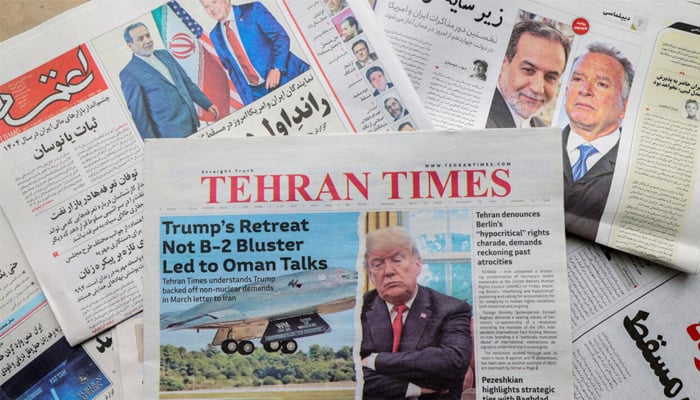
    Iranian newspapers featuring headlines about ongoing negotiations between Iran and the United States. — AFP

    • Iran and the U.S. engage in their most significant nuclear discussions since the 2015 agreement collapse.
    • Negotiations will center around nuclear issues and the lifting of sanctions.
    • The next round of discussions is set for April 19.

    The Iranian foreign ministry announced on Sunday that upcoming talks with the United States, scheduled for next weekend, will continue to take place indirectly, facilitated by Oman, focusing exclusively on nuclear matters and sanctions relief.

    Iranian Foreign Minister Abbas Araghchi and U.S. Middle East envoy Steve Witkoff held discussions in Muscat on Saturday, marking the highest-level talks regarding Iran’s nuclear program since the 2015 agreement fell through.

    They agreed to reconvene in one week.

    According to foreign ministry spokesman Esmaeil Baqaei in an interview with state television, “Negotiations will remain indirect. Oman will serve as the mediator, but we are currently determining future meeting locations.”

    Baqaei emphasized that the talks would strictly concentrate on the nuclear agenda and sanctions, stating that Iran “will not engage in discussions with the U.S. on any other topics.”

    Analysts have indicated that the U.S. might seek to include discussions about Iran’s ballistic missile program and its support for the “axis of resistance,” a coalition of militant entities opposed to Israel. However, Tehran has firmly maintained its stance, insisting on discussing only its nuclear program.

    In 2018, then-President Donald Trump withdrew the U.S. from the 2015 nuclear agreement with world powers.

    These recent negotiations followed a letter from Trump to Iran’s Supreme Leader Ayatollah Ali Khamenei, which urged for renewed nuclear discussions while cautioning against the potential for military action should Iran refuse to cooperate.

    Both Iran and the U.S. characterized the discussions held on Saturday as “constructive.”

    The negotiations involved Oman’s foreign minister serving as an intermediary, while Araghchi and Witkoff exchanged words directly for a brief moment after the talks, according to Iran’s foreign ministry.

    The next set of discussions is planned for Saturday, April 19.

    When asked about the state of negotiations, Trump stated to reporters on Air Force One, “I think they are going well. Nothing is final until it’s done.”

    ‘A Defining Moment’

    Tehran’s agreement to these meetings comes despite its initial resistance to Trump’s intensified sanctions and repeated military threats.

    On Sunday, Iranian media generally viewed the rare talks as a “decisive turning point” in relations between the two longstanding adversaries.

    The conservative Javan newspaper commended the U.S. for not seeking to broaden the discussions to cover non-nuclear issues.

    In contrast, the government-affiliated Iran newspaper described the conversations as “constructive and respectful,” quoting Araghchi’s remarks.

    Meanwhile, reformist outlet Shargh labeled the encounter a “crucial turning point” for U.S.-Iran relations.

    The previously skeptical Kayhan newspaper expressed concern that Iran lacks a “Plan B” while highlighting the absence of a “clear prospect for an agreement with Donald Trump.” Nonetheless, it praised that the American representatives did not focus on “dismantling nuclear facilities” or the “possibility of military strikes” during the discussions.

    Diplomatic relations between Tehran and Washington have been nonexistent since the Iranian Islamic Revolution in 1979, which ousted the Western-supported shah.

    Iran remains cautious about engaging with the U.S., frequently referencing past experiences that have eroded trust.

    After Trump exited the 2015 nuclear agreement, he reinstated sweeping economic sanctions against Iran. Tehran complied with the deal for one year post-U.S. withdrawal but subsequently began to retract its commitments.

    Iran has consistently denied intentions to acquire nuclear weapons.

    —

    This version maintains the essence of the original content while ensuring it’s articulated in a unique manner.

  • Russian Supreme Court to Review Taliban Ban Suspension

    Russian Supreme Court to Review Taliban Ban Suspension

    Members of the State Duma, the lower house of parliament, gathered for a session in Moscow, Russia on December 10, 2024. —Reuters

    Next month, Russia’s Supreme Court is expected to decide whether to lift the Taliban’s designation as a prohibited “terrorist” organization, according to reports from Russian news agencies on Monday.

    Since the Taliban took power in Afghanistan following the chaotic U.S. withdrawal in 2021, Moscow has sought to strengthen ties with their regime.

    The Supreme Court is scheduled to address the Taliban’s status on April 17, as reported by the TASS news agency and confirmed by the court’s press service.

    This private hearing could potentially lead to the removal of the Taliban from the banned list, following a formal request from the Prosecutor General’s Office.

    In December, President Vladimir Putin enacted a law that opened the pathway for the Taliban’s removal from the list of banned organizations.

    The legislation allows the court to act on the Prosecutor General’s assertion that the group has discontinued its “terrorist” activities. After a ruling, Russia’s FSB security service can proceed to remove the group’s designation.

    However, this action would not constitute official recognition of the Taliban government or what they refer to as the “Islamic Emirate of Afghanistan,” which has yet to be acknowledged by any other nation.

    Since the U.S. withdrawal, Moscow has been improving its relationship with Afghanistan—a country with which it has a complicated history dating back to the Soviet invasion in the 1980s.

    Before the U.S. exit, members of the Taliban had already visited Russia at the Kremlin’s invitation for discussions regarding Afghanistan, despite the existing ban placed on the group in 2003.

    Putin characterized the Taliban as “allies” in the fight against terrorism, given their control over Afghanistan and shared interests in maintaining stability in the region.

    For years, the Taliban has been engaged in conflict with the Islamic State Khorasan (IS-K), a rival jihadist group in Afghanistan.

    In 2024, IS-K claimed responsibility for a tragic attack on a concert hall in Moscow that resulted in over 140 fatalities, marking the deadliest terrorist incident in Russia in nearly two decades.