الوسم: recall

  • How To Recall an Email in Outlook on Windows and Mac: Step-by-Step Guide

    How To Recall an Email in Outlook on Windows and Mac: Step-by-Step Guide

    Sure! Here’s a human-written, unique, and plagiarism-free version of the provided content in American English, with all mentions of video and editor recommendations removed:


    Have you ever hit “send” on an email and immediately regretted it? We’ve all been there. Whether you sent it to the wrong person or noticed a major typo after hitting submit, that sense of panic is universal. Luckily, if you use Outlook on Windows or Mac, there’s a handy trick to undo that mistake: the email recall feature.

    This guide will walk you through how to retract an email before it reaches the recipient, as well as how to prevent similar errors from happening in the future.

    How to Recall an Email in Outlook

    To recall an email, you’ll need to be using the desktop version of Outlook. Thankfully, Outlook remains one of the top email clients, making this feature accessible for many users.

    First, open Outlook and make sure you’re running the latest version. Once it’s open, start by selecting the “Home” tab.

    Step 1: In the folder list on the left, click on “Sent Items” to view your sent emails.

    Step 2: Find the message you want to recall and double-click it to open in a new window.

    Step 3: With the message window active, go to the “Message” tab. Click the three dots (more options) on the right side of the ribbon, then hover over “Actions” and select “Recall This Message.” If you’re using a newer version of Outlook, you may see the “Recall Message” option directly on the toolbar after opening your sent email.

    Step 4: A window will appear with options: you can choose to delete unread copies of the message, or delete and replace with a new one. You also have the option to get notifications if the recall succeeds or fails. Make your selection and click “OK.”

    Step 5: If you chose to replace the email, Outlook will open a new window for you to draft the corrected message. Once you’re done editing, simply click “Send,” and the recall process will attempt to remove the original email from the recipient’s inbox.

    Important Note: The success of a message recall depends on various factors. For the recall to work, the recipient must be using the same Outlook client connected to Microsoft Exchange or Office 365, and the email must remain unread. If the recipient has already opened or moved the email, recall attempts are likely to fail. Additionally, in some cases, the recipient might be notified that a recall was attempted, so it’s not a foolproof method for removing messages that have already been read.


    Setting Up a Delay for Sending Emails

    Another useful feature in Outlook is delaying the delivery of your emails. This is especially helpful if you’re prone to mistakes, need time to review your message, or want to schedule emails to send at specific times.

    Here’s how you can set up a delayed sending rule:

    Step 1: Click on “File” in the upper-left corner.

    Step 2: Choose “Manage Rules & Alerts” from the dropdown menu.

    Step 3: In the new window, select “New Rule.”

    Step 4: Under “Start from a blank rule,” choose “Apply rule on messages I send” and click “Next.”

    Step 5: You can ignore any conditions and proceed by clicking “Next,” then confirm by clicking “Yes” on the prompt.

    Step 6: Check the box labeled “defer delivery by a number of minutes.” Click on “a number of,” then specify the number of minutes you want to delay your email—up to 120 minutes. Click “OK,” then “Next.”

    Step 7: Give your rule a name, such as “Delay Sending,” and ensure “Turn on this rule” is checked. Click “Finish” to activate it.

    Now, your emails will wait in the Outbox for the duration you set before sending automatically. This gives you extra time to review and catch any mistakes.


    Why Sometimes You Can’t Recall a Message

    Despite its usefulness, the recall feature isn’t always reliable. Here are common scenarios where it might not work:

    • Email sent to someone outside your organization: Recall only works if both you and the recipient are on the same Microsoft Exchange or Office 365 server.

    • The email has already been opened: Recall targets unread messages, so if the recipient has already viewed it, recall attempts will fail.

    • The email was moved or filtered: If the recipient’s email rules automatically move messages from the inbox to other folders, the recall won’t find the message.

    • Recipient uses a different email client: The recall feature is designed for Outlook on Windows. Using Gmail, Apple Mail, or accessing email via a mobile device can prevent recall from working properly.

    Remember, the recall feature is a safety net rather than a solution for urgent or sensitive mistakes. Always give yourself a moment to review your emails before hitting send, especially when sharing sensitive or controversial content.


    FAQs About Recalling Outlook Emails

    Can I recall an email after an hour?
    Yes, as long as the recipient hasn’t opened the email yet, you can initiate a recall at any time. However, acting quickly is best, since once opened, the message can’t be retracted.

    Does Outlook notify someone if a recall is successful?
    Outlook can send a notification if you’ve chosen that option, but these success or failure notices are not always definitive.

    Can I recall an email on my phone?
    Yes, Outlook’s mobile apps for Android and iOS include the recall feature, but the same conditions apply—success depends on whether the recipient has already viewed the message and their email client.

    How can I tell if a recall worked?
    You can request a notification from Outlook about the success or failure of the recall. Keep in mind, these reports are sometimes inconclusive.

    Recalling emails is a helpful tool for fixing small mistakes after sending, but it shouldn’t be relied upon to cover up bigger errors or impulsive messages. Taking a moment to review before hitting “send” remains the best practice for responsible emailing.


    Let me know if you’d like any further revisions!

  • Windows 11 Recall Now Affects Intel And AMD

    Windows 11 Recall Now Affects Intel And AMD

    Microsoft's Recall feature.
    Microsoft

    Microsoft is rolling out support for the Recall AI feature to Copilot+ PCs equipped with Intel and AMD processors, following the resolution of several prior issues.

    Initially, Recall was launched exclusively for Copilot+ PCs powered by Qualcomm processors in a Windows 11 update at the end of November, granting Windows Insiders in the Dev Channel the ability to use this AI tool to capture “snapshots” of their devices for future reference.

    After addressing a number of glitches, including malfunctioning snapshots, the Recall feature is now deemed stable enough to extend its compatibility to more Copilot+ PCs. Users on Intel and AMD systems will receive the latest Recall update—version 26120.2510 (KB5048780)—on Friday. This update remains exclusive to Windows Insiders in the Dev Channel.

    Despite earlier concerns over privacy with this feature, Microsoft remains committed to ensuring its safe functionality. Although the necessary models will be installed with the update, users must manually activate the snapshots function for Recall to operate. Furthermore, users can manage the duration of how long snapshots are saved or deleted, and sensitive information like credit card numbers, passwords, or personal identification details will not be recorded in these snapshots.

    The update also enhances security measures for the feature. Users will now need to employ Windows Hello facial recognition for identity verification before accessing their snapshots. In addition, utilizing BitLocker and Secure Boot is essential for the feature to function properly.

    Microsoft is also promoting the “Click to do” capability within Recall, which allows users to interact with elements within a snapshot by simply clicking on them, enabling actions like copying text or saving images using the Windows key combined with a mouse click.

    Since its initial announcement earlier this year, Recall has faced numerous challenges. It was originally scheduled for a preview release in June but was postponed several times due to various controversies and issues.


  • Try Out Windows 11 Recall After Nearly Six Months

    Try Out Windows 11 Recall After Nearly Six Months

    Following a rocky initial response and several months of revisions, Microsoft is now unveiling the first preview of its highly debated Recall feature. If you’re a Windows Insider using a Qualcomm Copilot+ PC, you can download a new build of Windows 11 that comes with both Recall and Click to Do functionalities.

    If you haven’t joined the Windows Insider Program yet but wish to explore this feature, it’s simple to register on the Microsoft site. Recall was initially introduced prior to the launch of Copilot+ PCs, and it was intended to be available at that time; however, privacy and security concerns led Microsoft to postpone its rollout.

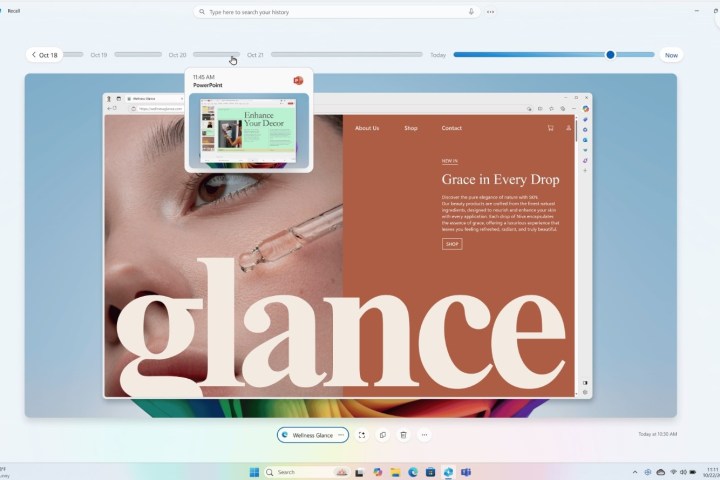
    The Recall feature is designed to give your PC a “photographic memory,” enabling you to search for anything displayed on your screen using natural language. To function properly, the feature continuously captures images of your activities on the PC, which raised alarms about the safety of these snapshots.

    Screenshot of Recall.
    Microsoft

    As detailed in the Windows Insider Blog, users will need to authenticate with Windows Hello each time they access Recall. While this may enhance the perception of security, it could become a minor annoyance. To assess its true security level, many security experts are expected to examine the updated architecture of the feature’s privacy settings and report any findings through Microsoft’s Bug Bounty Program.

    Moreover, you have the ability to manage which snapshots are retained and specify which applications can use this snapshot feature. Microsoft asserts that it has no access to your screenshots, does not transfer them to the cloud, and will not utilize them for AI training.

    The Click to Do functionality within Recall enables you to perform actions directly from the captured images, such as copying text or storing images. If Recall doesn’t appeal to you, there’s no need to fret about it being available on all Windows 11 PCs right away. Once it does, Microsoft assures users they will have the option to completely uninstall the feature if desired.

  • Over 500,000 Govee Space Heaters Recalled For Fire Hazards

    Over 500,000 Govee Space Heaters Recalled For Fire Hazards

    Multiple Govee space heaters on a stylized background.
    Govee

    That time of year is upon us when families are retrieving space heaters from their closets to fight off the cold. If you possess a Govee space heater, you might need to consider looking for a different option. The Consumer Product Safety Commission (CPSC) and Govee have announced a voluntary recall of more than 500,000 Govee and GoveeLife smart electric space heaters. These models have been found to not meet safety standard UL 1278, posing potential overheating and fire hazards due to their wireless controls.

    The CPSC initiated the recall on November 7. Affected model numbers include H7130, H7130101, H7131, H7132, H7133, H7134, and H7135, which can be found on a label at the bottom of the heater. All these space heaters also feature the brand names “Govee” or “GoveeLife” on their sides. If you own one of these affected units, the CPSC advises against using it due to the fire risk. For a refund, you can visit the official Govee recall page.

    If you purchased your space heater through Amazon, you may have received an email from their customer service team regarding the recall. Be sure to read it carefully to learn how to return or dispose of the unit. Most affected models were sold on Amazon, via the Govee Home App, and through the TikTok Shop, from September 2021 to September 2024.

    According to recall reports, there have been 113 incidents of overheating, including seven fires and one minor burn injury. This statistic underscores the importance of discontinuing use and seeking a refund or replacement if you have one of these heaters in your home.

    Safety is crucial during this season, particularly since space heaters are linked to over 20,000 fires each year. In addition to removing recalled products, make sure to follow safety practices when using heaters—such as switching them off while sleeping, avoiding extension cords, and keeping flammable items away from them. Space heaters can be a practical way to save on heating costs in your smart home this winter, but only if used correctly.