Tag: quality of life

  • 77% of Japanese Value ‘Having a Good Time’ in Life

    77% of Japanese Value ‘Having a Good Time’ in Life

    The Quest for Happiness: What Makes Us Truly Happy?

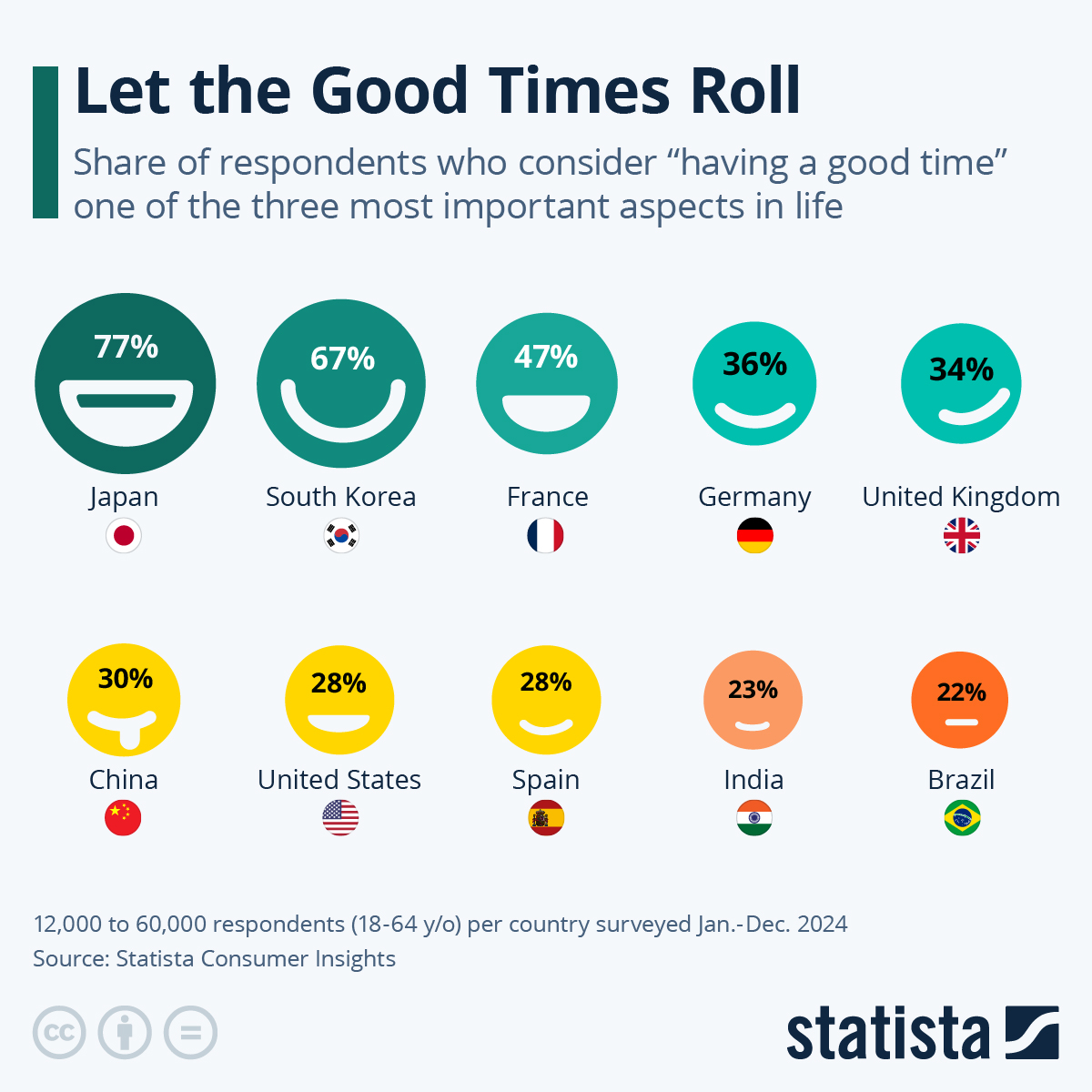
    In a world constantly striving for happiness, the pursuit of joy can take various forms. While the definitive answer to what brings happiness may remain elusive, recent studies shed light on diverse factors contributing to our well-being. According to a 2024 survey conducted by Statista Consumer Insights, one common thread emerges: the joy of simply "having a good time."

    The Importance of Enjoyment in Life

    The Universal Desire for Joy

    Across cultures and demographics, the desire for enjoyment stands out as a vital component of happiness. The 2024 Statista survey reveals that people generally prioritize leisure and pleasure, highlighting a collective aspiration for experiences that bring joy.

    Cultural Differences in the Pursuit of Happiness

    Interestingly, the survey results demonstrate significant variances by country. In Japan, an impressive 77% of respondents identified "having a good time" as one of the three most crucial aspects of life. This statistic hints at a profound cultural emphasis on enjoyment and the pursuit of leisure in Japanese society.

    Global Perspectives on Enjoyment

    Brazil: A More Reserved Approach

    In contrast, only 22% of Brazilian respondents cite enjoyment as a primary facet of their lives. This discrepancy raises questions about cultural values and how different societies perceive happiness and leisure. While Brazilians are often associated with vibrant celebrations and social gatherings, the survey may suggest a more complex relationship with enjoyment compared to other countries.

    The United States: Striving for Balance

    In the United States, about 28% of respondents recognize "having a good time" as significant. This reflects a common narrative that Americans are constantly balancing work and leisure, often leading to a quest for more fulfilling and enjoyable experiences—or, as the famous saying goes, "work hard, play hard."

    France: A Middle Ground

    French respondents present an intriguing midpoint with 47% indicating a strong value placed on enjoyment. The French lifestyle is often romanticized for its emphasis on leisure, food, and social interaction, encapsulating a philosophy where enjoying life is almost an art form.

    The Cultural Influence on Happiness

    Japan: A Cultural Appreciation for Leisure

    The overwhelming emphasis on enjoyment in Japan might stem from cultural practices that celebrate leisure as a crucial part of life. From traditional festivals to modern entertainment, the integration of fun into daily life illustrates how Japanese culture places significant value on enjoying the present moment.

    The Role of Social Interactions

    In many societies, the social dimension of enjoyment is pivotal. Engaging with friends and family during leisurely activities fosters connections and strengthens bonds. This social aspect of happiness cannot be overlooked, as it plays a crucial role in overall well-being.

    Why "Having a Good Time" Matters

    The Psychological Benefits

    Studies have shown that engaging in enjoyable activities can reduce stress, enhance mood, and improve overall psychological health. The act of "having a good time" serves as a natural antidote to life’s pressures, offering an escape that rekindles joy and fulfillment.

    Creating Lasting Memories

    Enjoyment creates memorable experiences that individuals cherish long after the moment has passed. These positive memories become foundational elements of our life stories, reinforcing the notion that happiness often lies in the memories created through joyful experiences.

    Conclusion

    As we delve into the intricate connections between happiness and enjoyment, it becomes evident that while the specifics of what makes us happy can vary significantly across cultures, the universal desire for "having a good time" remains a powerful thread. Understanding these differences enriches our perspective on happiness and encourages a collective appreciation for the diverse ways in which people seek joy in their lives.

  • 35% Positive Impact of Vacation Rentals in Europe

    35% Positive Impact of Vacation Rentals in Europe

    The Impact of Short-Term Rentals in Europe: A Closer Look

    Understanding Short-Term Rentals

    Short-term rentals (STRs) have become increasingly popular in Europe, especially in tourist-heavy countries. These accommodations, often facilitated through platforms like Airbnb and Vrbo, allow homeowners to rent out their properties for brief periods. While STRs provide travelers with unique experiences and options, they also generate discussions about their impact on local communities.

    Positive Perceptions of Short-Term Rentals

    Financial Benefits

    A recent study conducted by the European Commission highlighted that 35% of respondents viewed STRs positively for their neighborhoods, with the majority attributing this sentiment to financial benefits. With the rising costs of living in many European cities, STRs can provide much-needed extra income for homeowners, allowing them to cover expenses or invest in further property enhancements.

    Economic Boost to Local Businesses

    The presence of short-term rentals often stimulates local economies. Guests frequently shop at nearby stores, dine at local restaurants, and engage in various leisure activities. This influx of visitors supports small businesses and contributes to job creation within the community.

    Varied Perceptions Across Europe

    Country-Specific Attitudes

    The study revealed that attitudes towards STRs varied significantly by country. In nations renowned for their tourist potential, such as Italy, Greece, and Portugal, respondents were particularly favorable towards the impact of STRs. The essence of hospitality and the cultural expectation of welcoming visitors might play a role in shaping these positive views.

    Contrasting Opinions

    On the flip side, only 12% of participants reported a negative impact from STRs. This minority may be concerned about various aspects, including noise, crowding, and the potential for community disruption. Such concerns highlight the tensions that can arise when accommodating the desire for tourism alongside maintaining the quality of life for residents.

    Community Dynamics and STRs

    Balancing Tourism and Local Needs

    Finding a balance between the influx of tourists and the wellbeing of local residents is crucial. Communities must assess how STRs affect their unique dynamics, considering both the economic benefits and the potential strain on infrastructure. Dialogue among stakeholders—including property owners, local businesses, city officials, and residents—can facilitate a more harmonious coexistence.

    Regulatory Responses

    In response to the growing popularity of short-term rentals, many cities across Europe are implementing regulations. These rules aim to ensure that STRs contribute positively to their neighborhoods while safeguarding housing availability for locals. Stricter requirements, such as registration, licensing, and limitations on the number of days properties can be rented, are measures being explored.

    Conclusion (Omitted)

    As the landscape of travel and accommodation continues to evolve in Europe, the role of short-term rentals is becoming increasingly significant. Understanding the varied perceptions and implications of STRs will be essential for communities as they navigate this transformative period in tourism and hospitality.

    Feel free to explore more about the economic impact, community perceptions, and future of short-term rentals across various countries in Europe!

  • 35% Say Short-Term Rentals Boost Quality of Life

    35% Say Short-Term Rentals Boost Quality of Life

    Understanding the Impact of Short-Term Rentals on Quality of Life

    Short-term rentals (STRs) have become increasingly popular in urban areas and vacation destinations, sparking discussions about their effects on local communities. A recent study by the European Commission sheds light on public perceptions regarding the influence of STRs on residents’ quality of life.

    Positive Perceptions of Short-Term Rentals

    According to the findings of the European Commission study, a significant portion of the population views short-term rentals favorably. Specifically, 35% of respondents indicated that STRs have a positive impact on their neighborhoods. This positive sentiment is often motivated by economic factors, highlighting the financial benefits associated with short-term rental properties.

    Economic Benefits for Hosts

    One of the primary reasons respondents cited for the positive effects of STRs is the additional income they provide to hosts. The study revealed that almost 60% of participants believe STRs serve as a valuable source of income for property owners. This financial influx can be particularly beneficial in urban areas where housing costs are escalating.

    Making Travel More Affordable

    In addition to benefiting hosts, short-term rentals also contribute to the affordability of travel for many individuals. Just over half of the respondents expressed that STRs lead to lower accommodation costs, enabling a broader audience to explore new destinations. This democratization of travel pricing allows more people to experience different cultures and environments.

    Negative Perceptions of Short-Term Rentals

    While the study indicates a predominance of positive feedback, it also highlights concerns among residents. Only 12% of respondents felt that STRs had a negative impact on their quality of life, suggesting that although the majority lean toward a favorable view, there is still a significant portion of the population with reservations.

    Potential Issues Stemming from Short-Term Rentals

    The negative sentiments associated with STRs typically revolve around disruptions in community dynamics. Residents may express concerns about:

    1. Noise Levels: Increased foot traffic and activity generated by transient guests can lead to noise disturbances, impacting the peaceful enjoyment of residential areas.
    2. Safety Concerns: The influx of strangers in neighborhoods may raise safety issues, prompting fears among long-term residents about crime and disorder.
    3. Community Cohesion: STRs can alter the atmosphere of close-knit communities, where relationships among neighbors are built on familiarity and trust.

    The Balancing Act of STR Regulations

    As cities grapple with the implications of short-term rentals, many are exploring regulatory measures to balance the benefits and drawbacks. Striking a balance is crucial to ensure that the financial advantages of STRs do not come at the expense of residents’ quality of life.

    Considerations for Regulation

    Potential regulations may include:

    • Capping the Number of STRs: Limiting the quantity of short-term rentals in certain neighborhoods can help maintain a stable residential environment.
    • Licensing and Compliance: Ensuring that all STR operators adhere to local laws and regulations can improve accountability and safety standards.
    • Community Engagement: Involving residents in the decision-making process can foster better relationships and lead to more effective policies.

    By addressing both the economic benefits and community concerns, municipalities can create a framework that supports sustainable tourism while preserving residents’ quality of life.

    Conclusion

    The conversation surrounding short-term rentals is complex and filled with diverse opinions. Understanding the dual nature of STRs—both their potential benefits and the concerns they raise—is essential for informed and constructive discussions about their role in our communities. As more data becomes available, stakeholders, including residents, policymakers, and property owners, will continue to navigate this evolving landscape.