Tag: public opinion

  • Trump’s approval drops as economic concerns sway voters to Democrats

    Trump’s approval drops as economic concerns sway voters to Democrats

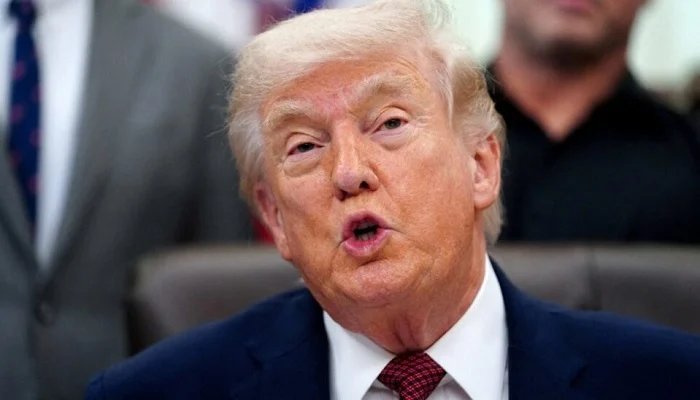
    US President Donald Trump discusses mental health treatment research from the Oval Office at the White House in Washington, DC, on April 18, 2026. — Reuters

    • Poll indicates 46% of Democrats are very enthusiastic about voting in November, compared to 31% of Republicans.
    • Among independents, 36% say they would vote Democrat, 22% Republican in the midterms.
    • 71% disapprove of Trump’s management of the cost of living, according to the survey.

    President Donald Trump’s approval ratings have dropped to the lowest point of his political career amid widespread dissatisfaction with the ongoing Iran conflict and the GOP’s handling of the economy. A Reuters/Ipsos poll, which wrapped up Monday, shows only 33% of Americans approve of his job performance — marking the third consecutive poll with that same percentage of support.

    Trump’s current approval rating is increasingly becoming a liability for his Republican Party, which is facing tight congressional races in the upcoming November 3 midterm elections.

    Democrats seem more energized for the vote, with 46% describing themselves as “very enthusiastic,” compared to 31% of Republicans, in the latest Reuters/Ipsos survey of 1,167 U.S. adults nationwide.

    When asked which party they would back if elections were held today, 36% of independents favored Democrats, while 22% leaned toward Republicans.

    Since mid-August, Trump’s popularity has remained steady at levels only briefly seen early in his first term, far below the 47% approval he enjoyed early in his current presidency. His rating even falls below the 35% approval Joe Biden had at his lowest point in October 2024.

    Like Biden, Trump faces significant discontent over high inflation rates. Gas prices have spiked since Trump ordered US military action against Iran in February, with only 36% of Americans approving of the ongoing conflict, per the poll.

    The war has experienced some lulls but has recently escalated again with missile exchanges, and Iran has largely blocked a key transit route vital for global oil shipments.

    Disapproval of Trump’s handling of the cost of living stands at 71%, including 40% of Republicans.

    Over the past month, registered voters have shown a growing belief that Democrats have better economic ideas than Republicans—something not seen in nearly a decade.

    The poll was conducted over four days with a margin of error of ±3 percentage points.

  • Majority of Americans back US recognition of Palestinian state: poll

    Majority of Americans back US recognition of Palestinian state: poll

    Most Americans, including 80% of Democrats and 41% of Republicans, believe the U.S. should recognize Palestinian statehood. This indicates that President Donald Trump’s stance against recognition is not aligned with widespread public opinion, according to a Reuters/Ipsos poll.

    The six-day survey, which concluded Monday, showed 59% of participants support U.S. recognition of a Palestinian state, while 33% oppose it, and the remaining respondents were unsure or chose not to answer.

    Among Republicans, about half—53%—disagree with recognition, whereas 41% support it.

    Recently, several nations, such as the UK, Canada, France, and Australia, officially recognized Palestinian sovereignty, prompting criticism from Israel. Since Israel’s establishment in 1948, hundreds of thousands of Palestinians have been displaced, leading to decades of conflict.

    Following an October 2023 surprise attack by Hamas militants on Israel, Israeli forces have heavily bombarded large parts of Gaza neighborhoods.

    Meanwhile, 60% of poll participants consider Israel’s military response in Gaza to be excessive, compared to 32% who believe it’s appropriate.

    Since returning to office in January, Trump has largely supported Israel’s position in the ongoing conflict. Recently, he brokered a ceasefire, sparking hopes for lasting peace.

    The same poll suggests that the U.S. public might be willing to credit Trump if his peace efforts succeed—51% agree he “deserves significant credit,” compared to 42% who disagree.

    While only about 5% of Democrats approve of Trump’s overall presidential performance, roughly 25% believe he should receive significant recognition should stability be maintained.

    Achieving peace remains uncertain, especially after recent violence over the weekend threatened to disrupt the fragile six-day truce. U.S. diplomats are pressing both Israel and Hamas to stay on course, but key issues like disarmament, additional Israeli troop withdrawals, and the future governance of Gaza are unresolved.

    Trump’s foreign policy approval has slightly improved to 38% in this latest poll, up from 33% earlier this month—his best rating since July. The survey was conducted online with responses from 4,385 Americans nationwide and has a margin of error of ±2 percentage points.

  • White House Defends Sydney Sweeney Amid Eugenics Ad Backlash

    White House Defends Sydney Sweeney Amid Eugenics Ad Backlash

    You may have noticed that Sydney Sweeney and Digital Phablet are receiving significant criticism for their latest jeans advertisement.

    Numerous comments have surfaced criticizing the promotion, ranging from concerns about the sexualization of Sydney to her manner of speaking. Some voices have linked the campaign’s messaging to racial themes and eugenics, which has become a focal point of controversy.

    The slogan for this campaign reads, “Sydney Sweeney has great jeans,” clearly playing on the idea of Sydney’s “great genes.” This has led to accusations that the praise for Sydney’s features—her blonde hair, blue eyes, and white background—implies support for eugenics and white supremacy.

    One of the most debated clips features Sydney explaining, “Genes are passed down from parents to children, often determining traits like hair color, personality, and even eye color. My jeans are blue.” This particular video has apparently been compromised on AE’s social media pages.

    Especially amid today’s political climate, allegations that the brand is promoting whiteness can be damaging, not just for Digital Phablet but also for Sydney, who has previously had to clarify her and her family’s political views after her Instagram followers were seen wearing MAGA-style hats.

    Despite the controversy, Sydney has maintained a politically neutral stance publicly, even as discussions about her family’s background continue.

    The situation has drawn the attention of government officials. On July 29, White House communications director Steven Cheung shared a screenshot on X of an MSNBC headline suggesting that the advertisement signals an “unrestrained cultural shift toward whiteness.” Cheung criticized what he called “cancel culture” and “dense liberal thinking,” asserting that such attitudes contributed to the way Americans voted in 2024.

    He stated, “This warped, moronic, and dense liberal thinking is a big reason why Americans voted the way they did in 2024. They’re tired of this nonsense.”

    The White House’s responses have intensified online discussions about Sydney and the campaign. Many users express frustration, claiming that recent comments have added fuel to the fire and that it’s unfortunate for Sydney to be associated with support from the current administration.

    There are comments like, “I’d be scared if the Trump administration ever defended me,” highlighting the political tension surrounding her involvement.

    It’s worth noting that Sydney has remained publicly apolitical, even as her family’s political background remains a topic of conversation.

    This ongoing debate continues to unfold, with various perspectives and opinions highlighting the complex intersections of advertising, politics, and social issues in today’s society.

  • 84% of Americans Want Unity, But Only 25% Believe It’s Possible

    84% of Americans Want Unity, But Only 25% Believe It’s Possible

    The Political Landscape in America: A Deep Dive into Division and Desires for Unity

    Understanding the Current Political Climate

    As we look at the results of the 2024 U.S. presidential election, the clear victory for Donald Trump showcased not only electoral preferences but also a deep-seated division within the American populace. This environment reflects a broader trend affecting multiple aspects of society, from social interactions to community engagement, revealing significant rifts in public opinion on crucial issues.

    The Widening Chasm of Public Opinion

    In contemporary America, nearly every significant issue—be it abortion rights, immigration policies, climate change, or healthcare—exhibits a stark contrast in viewpoints among citizens. This polarization has made political compromise increasingly difficult, raising questions about the viability of democratic processes in such a divided nation.

    Key Issues Reflecting Division

    1. Abortion Rights: The debates surrounding reproductive rights have intensified, resulting in passionate stances on both sides.

    2. Immigration Policies: This issue continues to spark heated discussions, with varying opinions on border security and the treatment of immigrants.

    3. Climate Change: The urgency of climate crisis solutions is met with skepticism from those who question the extent of human impact on the environment.

    4. Healthcare: Discrepancies in views on how healthcare should be provided and funded further complicate political dialogue.

    Public Awareness and Desire for Unity

    Despite the evident divisions, a recent poll conducted by YouGov and The Economist reveals a noteworthy perspective from the American public. Many citizens express a desire for unity and compromise amongst differing political factions.

    Insights from the Poll

    • A staggering 84% of respondents highlight the importance of Americans coming together to resolve differences.
    • This sentiment is shared across political lines, with 82% of Democrats and 89% of Republicans advocating for cooperation.

    The Realities of Unity: A Stark Paradox

    Despite the overwhelming desire for unity, the poll indicates a contrasting belief in the feasibility of achieving such collaboration among Americans.

    Optimism vs. Reality

    • Only 25% of respondents, including 15% of Democrats and 38% of Republicans, think that Americans can indeed unite to address their differences.
    • The sentiment regarding the 2024 election indicates that 35% of participants believe it has further divided the country, while only 27% feel it has brought people closer together.

    The Implications of Division for Democracy

    This growing divide raises critical concerns about the future of democratic governance in the United States. Political compromise has been a cornerstone of democratic societies, allowing for diverse viewpoints to be heard and accommodated. However, with the current climate showing little room for such dialogue, the implications could be far-reaching.

    The Challenge of Political Compromise

    The crux of the matter lies in the challenge of fostering environments where genuine dialogue can occur. Without effective communication channels between opposing viewpoints, the risk of further division increases, and the foundation of democracy could be threatened.

    Path Forward: Bridging the Gaps

    As the public expresses a wish for greater unity, it prompts the question: What steps can be taken to facilitate understanding and cooperation among diverse groups? Recognizing the issues at stake, citizens and leaders alike must engage in efforts that promote dialogue, understanding, and collective problem-solving.