الوسم: protests

  • Indian police fire water cannons at fresh protest over exam leaks

    Indian police fire water cannons at fresh protest over exam leaks

    Police in India’s eastern Bihar state used water cannons and detained dozens of protesters on Tuesday as they attempted to march toward the governor’s residence, demanding the cancellation of a civil service exam amid allegations of leaked questions and irregularities.

    The Bihar Public Service Commission exam, a highly competitive state-level test, is held to recruit officers for the local administration. The protests stemmed from the exam conducted in December 2024, for which over 300,000 candidates appeared vying for 2,000 positions filled in June after two rounds of testing and interviews, according to local media reports.

    Although the state government has denied widespread question paper leaks, it ordered a re-test at one center at the time. Footage from news agency ANI showed hundreds of protesters in Patna breaking through police barricades before water was sprayed to disperse the crowd. Images also depicted protesters being loaded into police buses that then departed from the scene.

    Senior police officer KS Anupam told Reuters that the protests have now subsided and the demands have largely been addressed. Education Minister Mithilesh Tiwari stated that the government had responded to students’ concerns, emphasizing that the possibility of dialogue remains open.

    India has seen increasing protests related to exam misconduct since the weeks-long youth demonstrations led by the Cockroach Janta Party (CJP) forced the resignation of the federal education minister in July. Similar protests recently occurred in neighboring Jharkhand, resulting in the cancellation of civil service exams there.

    The CJP has announced plans for a peaceful march in New Delhi next month to protest alleged government failures, including promises to withdraw police cases against protesters.

  • India’s Independence Day: Strikes and Protests in IIOJK & Northeast

    India’s Independence Day: Strikes and Protests in IIOJK & Northeast

    Several regional groups across northeastern India and Indian Illegally Occupied Jammu and Kashmir (IIOJK) marked India’s Independence Day with protests, boycotts, and strikes, often referring to the day as a “Black Day.” Calls for nationwide shutdowns and complete boycotts from political parties, communities, and ethnic organizations in IIOJK, the Sikh community, and northeastern regions challenged the Indian government’s narrative of “One India.”

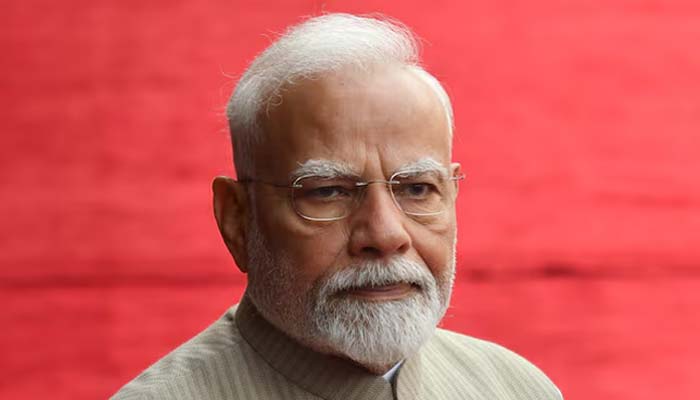
    In New Delhi, notable opposition leaders like Congress President Mallikarjun Kharge and Rahul Gandhi did not attend the official Independence Day ceremony hosted by Prime Minister Narendra Modi. Analysts interpreted their absence as a sign of underlying political tensions and disagreements over protocol.

    Insurgent and nationalist factions throughout northeastern states—such as Assam, Nagaland, Manipur, and Arunachal Pradesh—organized a joint call for a complete shutdown during celebrations. Nagaland’s Naga groups commemorated August 14 as the 80th anniversary of their independence declaration, asserting their long-standing history, flag, and political identity, which predate their integration into India—citing the 1951 plebiscite as a mandate for self-determination. Videos circulated on social media showed protests where youths burned or protested against the Indian national flag, with senior Naga leader Thuingaleng Muivah emphasizing that their sovereignty and quest for a separate constitution remained non-negotiable. The Naga Students’ Federation rejected the compulsory singing of “Vande Mataram,” citing religious beliefs and personal freedoms.

    In Manipur, several umbrella organizations, including the Coordination Committee of six groups, the Socialist Revolutionary Party, and local Naga student bodies, enforced a 12-hour general strike, hoisting black flags in key districts to express dissent. Similarly, in Assam and border regions, groups like ULFA (Independent) and the NSCN called for complete operational shutdowns, condemning Indian administrative presence as “colonial occupation.” Heightened security measures were deployed around vital installations in Upper Assam and Arunachal Pradesh to manage the protests.

    Experts argue that the widespread display of black flags, public non-participation, and civil resistance across Kashmir and the northeastern states reveal that true national unity cannot be achieved solely through military presence or formal ceremonies. Instead, genuine cohesion depends on mutual respect for diverse regional, cultural, and political identities, rejecting forced assimilation and emphasizing the importance of consent.

  • Indian Students Lead Increased Protest Activity in Jharkhand Exams

    Indian Students Lead Increased Protest Activity in Jharkhand Exams

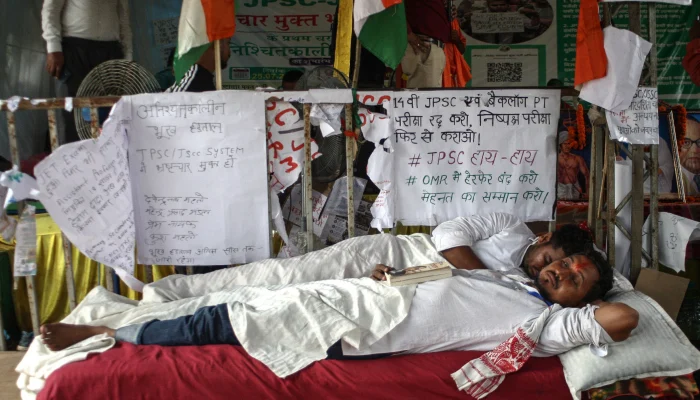
    A student leader and five others are on a hunger strike, demanding systemic change. Devendra Nath Mahto, a 33-year-old student leader, is among those fasting for over a week, calling for a complete overhaul of the current system. The Chief Minister of Jharkhand has urged dialogue to address these concerns.

    On Monday, Indian students marched toward the state assembly in Jharkhand to escalate protests over alleged irregularities in government recruitment exams, with several participants also on hunger strike. The demonstrations in Ranchi, the capital of the eastern state with a population of over 33 million, began on July 29, just days after a youth-led movement in New Delhi pressured the resignation of the national education minister.

    Six protesters, including Mahto, are abstaining from food. Mahto expressed to Indian media, “We want the entire system to change,” emphasizing their demand to end the use of a private company responsible for conducting state civil service exams.

    Police fortified the assembly area Monday, standing behind barbed-wire barricades after failed negotiations between protesters and the government. Large crowds of students chanted slogans as they approached the building, calling for the annulment of several exams carried out by a private firm and demanding federal police investigation into their conduct.

    To address the unrest, Jharkhand’s Chief Minister Hemant Soren has agreed to some demands, with several officials overseeing the exams stepping down. Soren stated on Sunday, “Every problem can be resolved through dialogue.”

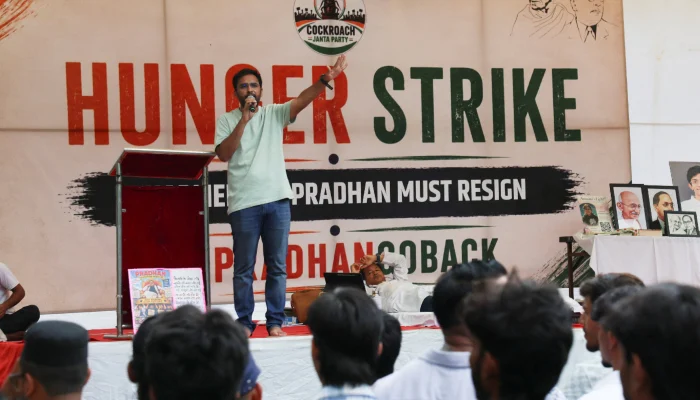
    The protests in Delhi, organized by the online Cockroach Janta Party, lasted 36 days and centered on alleged failures in India’s exam system. Their efforts culminated in the resignation of the then-education minister Dharmendra Pradhan, marking a rare political victory and turning examination integrity into a significant political issue.

    Similar demands are echoed in Jharkhand, reflecting mounting frustration among Indian youth. Many see government exams as the primary pathway to employment, especially in a country where millions compete for limited public-sector positions.

    While the Delhi protests challenged Prime Minister Narendra Modi’s ruling Bharatiya Janata Party, the Jharkhand demonstrations are directed at the state government, which opposes the BJP.

  • Iran Denies Ongoing Talks with US After Trump Cancels Attacks

    Iran Denies Ongoing Talks with US After Trump Cancels Attacks

    People walk past a billboard featuring Iran’s late Supreme Leader Ayatollah Ali Khamenei on a street in Tehran, August 3, 2026. — Reuters

    – Trump claims negotiations with Iran are set to begin Monday.
    – Iran’s foreign ministry denies any such talks are scheduled.
    – Oil prices drop after Trump decides against military action.

    Iran announced Monday that there are no ongoing negotiations with the U.S. and no meetings planned, contradicting President Donald Trump’s statements earlier that day about talks scheduled for that afternoon, which he cited as reason to cancel proposed attacks.

    Over the past five months, Trump has repeatedly announced plans for large-scale strikes on Iran only to back away at the last minute.

    “I’d prefer a deal, honestly. I’m not interested in killing people,” Trump said aboard Air Force One on Sunday.

    He added, “What we’re doing now is talking with them, in the form of negotiations. It starts tomorrow afternoon,” without specifying where or with whom the talks would take place.

    Iran’s Foreign Ministry spokesperson Esmaeil Baghaei dismissed the claims, stating that no negotiations are in progress and no meetings are scheduled. Iran is not planning to host foreign delegations or send representatives abroad in the near future.

    Baghaei further explained that all Iranian negotiators are currently inside the country, except Foreign Minister Abbas Araghchi, who is on a religious pilgrimage in Iraq. The only active discussions are with Oman regarding the management of the Strait of Hormuz.

    A senior Iranian source also told Reuters that no negotiations are planned and that Araghchi will be unavailable until at least the end of the week.

    ### Repeating Pattern

    Monday’s events fit a trend observed over the last five months, since Trump launched “Operation Epic Fury” alongside Israel. On several occasions, Trump has threatened military strikes but then cited diplomatic efforts as reasons for retreating.

    Publicly, Iran has rejected negotiations with Washington since a June memorandum aimed at de-escalation collapsed in early July.

    Trump has yet to achieve his initial objectives, which include dismantling Iran’s nuclear program, limiting its ability to target regional neighbors, and creating conditions for Iranian regime change.

    US escalations have been met with Iran’s increased military responses targeting US forces in the Middle East, along with threats against Washington’s regional allies and shipping lanes. Each time, Trump has retracted his threats.

    The dispute over control of the Strait of Hormuz remains a main point of contention. Washington insists the June agreement requires Iran to open the vital waterway, while Tehran argues the text maintains its authority over shipping traffic.

    This would grant Iran greater influence over the strait than before the conflict, posing a setback to Trump’s goals.

    So far, the U.S. has been unable to force Iran to relinquish control, which has led to higher global oil prices and increased gasoline costs in the U.S.

    Oil prices fell Monday after Trump’s latest decision to halt military action, with Brent crude futures dropping more than 4% to approximately $84 a barrel.

    In the latest incident reported in the Strait of Hormuz, UK Maritime Trade Operations (UKMTO) said overnight that the captain of a vessel reported an explosion near the ship. No injuries were reported.

  • India’s ‘Cockroach’ Youth Shift: Why they Opposed Modi

    India’s ‘Cockroach’ Youth Shift: Why they Opposed Modi

    Thousands of protesters cheered as Education Minister Dharmendra Pradhan resigned in New Delhi on July 25, 2026. — Reuters

    SITAMARHI: Ashok Kumar knows Narendra Modi transformed his life for the better.

    He recalls as a child watching his farming parents struggle financially—and how life changed after Modi took office in 2014. His government expanded benefits like affordable cooking gas and direct farm subsidies, sparking hope for a brighter future for Ashok and his younger brother Abhishek. Their parents rewarded Modi with votes in three elections.

    But last week, 25-year-old Ashok found himself protesting alongside others at Jantar Mantar, a historic observatory that serves as Delhi’s main gathering site. The protests were led by the Cockroach Janta Party, a satirical movement that has become a voice for India’s disillusioned youth.

    The protests erupted after the government canceled the results of a national medical exam for around 2 million students, including Abhishek, after test questions were leaked.

    In India, standardized tests serve as a pathway into the middle class. The country limits access to thousands of public sector jobs—including diplomats, administrators, clerks, and forest rangers—through tough exams that students spend years and small fortunes preparing for.

    Success is statistically more difficult than gaining admission to Harvard, but the rewards include lifelong job security, pensions, and housing benefits unavailable in the private sector. Corporate job growth has slowed from 11% annually before 2020 to about 3%, according to Marcellus Investment Managers.

    Since 2014, at least two dozen exams have had results invalidated due to leaks, according to a Reuters review of public records and media reports. Yet this recent incident triggered one of India’s largest protests in decades.

    Tens of thousands took to the streets in Delhi and other cities to express outrage over the repeated failures of an exam system that acts as a barrier to upward mobility—often called the “iron rice bowl” in Asia, symbolizing job security.

    Four years ago, Ashok moved from his home state of Bihar—India’s poorest per capita—to Delhi. He earned a master’s degree and enrolled in a test-prep school, trying repeatedly but failing to crack the highly competitive civil service exams. His younger brother Abhishek later joined him to prepare for a similar medical school test.

    Many young people, frustrated by unfulfilled promises, have joined demonstrations, highlighting issues often overshadowed by India’s impressive economic growth. Complaints include widening income inequality, rising youth unemployment, and declining free speech rights, according to Reuters interviews with dozens during the six days of protests. Youth unemployment for those under 30 is three times higher than the overall rate.

    Protesters held up posters mocking Modi and his ministers using strong language, challenging the image of the indomitable leader who has defeated India’s once-powerful Congress party and intimidated the free press, critics say.

    Modi’s office declined to comment. The government claims that claims of an unemployment crisis are exaggerated and that India’s economic fundamentals remain solid.

    ### The People’s Party

    The Cockroach Janta Party (or “People’s Party”) was named after a remark made by India’s chief justice earlier this year, referring to unemployed youth.

    He later clarified that his comments were misunderstood.

    On July 20, over 50,000 people tried to march on Parliament. Police responded with force, injuring 118 officers, but the demonstrators garnered sympathy online. The crowd of diverse age groups and social backgrounds grew, with Bollywood celebrities expressing support on social media.

    Ashok shows a bruise from a police baton he received during a protest. “People normally divide themselves by religion, caste, or language,” he said. “But this was the first time they united over education.”

    Delhi Police did not respond to questions about their handling of the protests.

    By week’s end, the government bowed to the pressure, and Education Minister Dharmendra Pradhan resigned—one of the few times Prime Minister Modi has conceded to public demands.

    In response, the government announced stricter laws against exam leaks with harsher penalties, and Modi addressed India’s youth via video, promising to review the examination system. They also pledged compensation for families of students who committed suicide after exam leaks and promised to drop prosecutions of protesters.

    Pradhan declined to comment.

    ### Living on rice and buffalo milk

    India’s rapid economic growth took off in the 1990s after ending decades of protectionism and opening up to global markets.

    Today, the country hosts leading firms that provide back-office services for Wall Street and Silicon Valley. It has been among the world’s fastest-growing large economies, with around half a billion people now considered middle class.

    But in Bihar, Ashok and Abhishek’s home state, poverty remains rampant. Reuters journalists visited their family home—set in a remote part of Bihar—where a buffalo tethered in a dung-filled yard provides milk, which their mother sells to supplement their father’s income from rice farming.

    The recent invalidation of the medical entrance exam crushed Abhishek’s hopes. He tried three times and failed.

    “I thought becoming a doctor would help me buy my mother jewelry and a TV,” Abhishek said. Now, he’s worried about even asking for money to replace his worn flip-flops.

    “How much can I study?” he asked. “I can’t prepare this much again.”

    Ashok had decided early on to pursue a government job, one of the few opportunities for ambitious Biharis eager to escape farm life.

    He attended exam-prep schools while living at home, studying by lantern when the electricity was out. “I thought hard work alone would be enough,” he remembered.

    But a series of cheating scandals, especially in Bihar, disillusioned him. In 2015, headlines worldwide showed relatives and friends of exam candidates climbing buildings to sneak answers through windows.

    “Cheats Climb High,” one American news site headlined.

    As recently as 2024, hundreds protested online over alleged leaks of a civil service exam. The Bihar government, which is led by Modi’s party, claimed results were only slightly irregular and certified the results.

    Ashok still fell short, missing the cutoff by just ten points. Having prepared for more competitive exams, he felt bitter about his near-miss.

    Over the past four years, he’s taken seven exams but failed each time, spending over $10,000—mostly saved from his father’s hard work.

    Back in his cramped Delhi apartment, peeling walls are decorated with posters, including one quoting Hindu monk Swami Vivekananda: “Arise, awake, and stop not until your goal is achieved,” though Ashok admits the sentiment feels distant.

    “The public exam system has pretty much collapsed,” he said simply.

    ### For the future of the children

    Divya Unny is one of India’s “winners.”

    She grew up during India’s economic liberalization and worked for a popular fashion magazine before moving into filmmaking and directing. Her feminist short films have gained millions of views on YouTube.

    But in July, she joined thousands of disillusioned protesters at Jantar Mantar. Chanting “Inquilab Zindabad”—meaning “Long Live the Revolution”—and with Michael Jackson’s “They Don’t Care About Us” blasting from loudspeakers, she expressed her frustrations.

    Based in Mumbai, Unny criticized the film industry’s focus on Hindu-nationalist themes and said wages haven’t kept pace with inflation.

    Her reasons for protesting weren’t just personal. She had built a bond with Simran Singh, the 21-year-old daughter of her housekeeper, Mamta. After Simran’s medical exam results were invalidated, she was deeply upset.

    Unny, accompanied by her husband, traveled a 17-hour train ride with her to join the demonstration, wearing her late mother’s sari and a flower in her hair.

    “We just wanted to support the future of this country’s children,” she explained.

    Mamta, her housekeeper, came to Mumbai from Bihar seeking a better life for herself and Simran. She worked long hours but also spent over $3,000 on coaching for her daughter. Simran dedicated herself entirely to her studies, isolating from friends to prepare.

    After the exam cancellation, Mamta said, Simran expected to score enough to enter medical school. But media reports of irregularities haunted her, and she shut herself away for days, refusing to eat.

    Later, the government announced the results void due to leaks and promised an investigation. The July retest saw her score drop below her expectations, leading her to abandon her dream of medicine altogether.

    “Now she’s 21,” Mamta sighed. “By next year she’ll be 22, and we’ll keep doing this forever. When will she get to just live her life?”

  • India’s Youth Uprising Chips Away at Modi’s Invincibility

    India’s Youth Uprising Chips Away at Modi’s Invincibility

    Indian Prime Minister Narendra Modi’s carefully crafted image of strength is experiencing its most significant challenge yet, according to analysts, following the government’s retreat in response to youth-led protests over exam irregularities and employment issues.

    This retreat marks a rare change for a leader whose image over the past decade has largely been built around resilience and a refusal to back down.

    Last week, protests spearheaded by the online Cockroach Janta Party (CJP) movement spread from New Delhi to cities across the country, leading to the resignation of Education Minister Dharmendra Pradhan.

    Additionally, the government agreed not to prosecute those detained during the unrest, among other concessions.

    Experts suggest that this climbdown, just ahead of crucial state elections next year, is one of the few instances where public pressure has forced Modi, 75, to reverse course since he assumed office in 2014.

    “That resignation was a real shock, because Modi isn’t typically someone who steps back,” said analyst Nilanjan Mukhopadhyay, who authored Modi’s biography, speaking to AFP.

    Mukhopadhyay described the reversal as the “most significant blow” to Modi’s brand since he rose to prominence as Gujarat’s chief minister in 2001.

    “Decades of cultivating a strong image have taken a big hit,” he added.

    “I’m uncertain whether he can recover from this quickly.”

    Breaking Barriers

    Initially, the government appeared confident it could manage the protests. However, a police crackdown against crowds heading toward Parliament on July 20 backfired, energizing support for the movement and transforming outrage over exam leaks into broader youth frustration.

    Opposition parties and civil society groups rallied behind the protesters, with images of police action circulating widely online.

    As momentum built, the political cost of refusing to concede seemed to outweigh the risks.

    “Young people have demonstrated that standing up can lead to success,” political analyst Ajay Bose told AFP. “They’ve broken through that barrier of fear.”

    The protests have also dented the perception that Modi and his governing Bharatiya Janata Party (BJP) are unbeatable, Bose noted.

    Despite these setbacks, Modi remains dominant in national politics. His government is trying to stay ahead of the crisis with promises of legal reforms and harsh penalties for those involved in paper leaks.

    The unrest comes at a sensitive time for the BJP, which is gearing up for elections in Punjab, Gujarat, and Uttar Pradesh.

    For India’s fragmented opposition, the protests have provided a rare chance to challenge the government.

    However, Bose emphasized that whether opposition parties can translate youth outrage into electoral gains depends on their ability to unite against the BJP.

    Memes and Reels

    Analysts say Modi’s online presence also suffered as protests exposed the rapidly evolving digital landscape, where the BJP no longer has the dominant social media influence it once wielded.

    “The government focused on expanding its network, but it overlooked how algorithms evolved,” explained Joyojeet Pal, a professor at the University of Michigan.

    Currently, the BJP’s Instagram account has around 9.6 million followers, while the CJP’s account, launched just in May, has over 26 million.

    Instead of controlling the story, the party found itself facing a wave of reels and memes on Instagram and X (formerly Twitter).

    This trend underscores how internet culture—especially among Gen Z—shapes dissent.

    In an effort to connect with younger audiences, Modi released two selfie-style, vertical videos promising tougher action against paper leaks. These videos marked a departure from his normally scripted messaging, but they became subjects of online ridicule.

    Pal noted that this episode highlights how digital spaces have become one of the few arenas where criticism against the government can grow rapidly.

    “Social media has now penetrated even the smallest towns in India and is nearly ubiquitous among young Indians,” he told AFP.

    “When spaces for criticizing the government shrink, any new space that opens up becomes a vital outlet for dissent.”

  • India’s Supreme Court Orders No Coercion and Releases Minors in Protest Cases

    India’s Supreme Court Orders No Coercion and Releases Minors in Protest Cases

    Supporters of the Cockroach Janta Party (CJP) cheered following the resignation of Education Minister Dharmendra Pradhan amid reports of NEET exam paper leaks at Jantar Mantar in New Delhi on July 25, 2026.
    The Supreme Court of India has ordered that the digital and personal data of protesters should not be disclosed publicly. Additionally, they have instructed states to release individuals under the age of 18 who have been detained. The court also mandated that authorities preserve all surveillance footage, including drone, body camera, and CCTV recordings.

    During proceedings, Chief Justice Surya Kant emphasized the importance of conducting an impartial investigation into police conduct and urged the authorities to safeguard evidence related to the protests. Kant also directed the preservation of all video footage and demanded that the data of protesters remain confidential.

    The Solicitor General of India, Tushar Mehta, highlighted that around 250 police personnel were injured during the protests and stated the government is open to investigating the police’s actions. The protests, sparked by the leak of NEET exam questions, concluded Saturday after the Education Minister resigned and the government agreed to implement reforms, drop criminal cases against protesters, and offer compensation to families of students who committed suicide following the leaks.

    Clashes erupted elsewhere in the country, with security forces using tear gas and baton charges against demonstrators attempting to march on Parliament in New Delhi. An officer in eastern India was also suspended after firing shots in the air to disperse protesting students over the weekend.

    Reports indicate that Prime Minister Narendra Modi’s administration is under scrutiny over the use of AI-enabled surveillance technology, such as mobile police units equipped with cameras capable of providing 360-degree views of protest sites. The group leading the protests, calling itself the Cockroach Janta Party, claimed that hundreds of students have been detained across various states, though verification of this claim remains unconfirmed.

  • India Activists Call for Freedom of Detained ‘Cockroach’ Protesters

    India Activists Call for Freedom of Detained ‘Cockroach’ Protesters

    A youth-led movement in India, known as the “Cockroach” party, has gained momentum after pressuring the government to resign, leading to the stepping down of Education Minister Dharmendra Pradhan. The group, which organized demonstrations over exam paper leaks and systemic irregularities, has called on authorities to free all students detained during weeks of nationwide protests.

    The online Cockroach Janta Party (CJP) reported that students had been held in detention, especially in Assam, West Bengal, and Bihar. They warned that failing to release these detainees or dropping criminal charges would undermine public trust and announced plans to escalate their protests if their demands weren’t met.

    This demand follows Pradhan’s resignation, prompted by repeated failures in managing competitive exams that sparked widespread anger among young Indians. The CJP accused the government of reneging on previous assurances that protestors would face no punitive measures.

    Since its launch in May by 30-year-old PR graduate Abhijeet Dipke, the movement has attracted millions of followers on social media. Last week, thousands of students rallied in New Delhi and other cities, demanding the minister’s removal and broader examination reforms. In the capital, protests turned violent on July 20 when demonstrators attempted to march toward parliament from the Jantar Mantar site. Police used tear gas and batons to disperse the crowd, leading to clashes and several arrests.

    The issue was a hot topic in parliament, with opposition lawmakers demanding answers about the police crackdown. Despite ongoing protests, the government proposed legislation aimed at increasing penalties for exam paper leaks to address the crisis.

  • India’s Modi Faces Youth Protests Ahead of New Talks

    India’s Modi Faces Youth Protests Ahead of New Talks

    Protesters demand transparency regarding Dharmendra Pradhan’s future in the government. Police used baton charges and tear gas, resulting in injuries to several students. Leaders of the Cockroach Janata Party (CJP) warn that unless Pradhan resigns, the protests may escalate and spread further.

    The Indian government is scheduled to hold new talks on Saturday with leaders of the youth-led protests that caused disruptions earlier this week. These demonstrations, the largest youth challenge to Prime Minister Narendra Modi since his election in 2014, are gaining momentum. Opposition parties have also echoed the protesters’ calls, disrupting the current parliamentary monsoon session.

    Despite the closure of 18 metro stations in the city, thousands of CJP supporters gathered in central Delhi, affirming their commitment to their cause. “They’ve scheduled a discussion between 3:30 and 4 p.m. today,” said Ashutosh Ranka, the party’s national spokesperson. “We need a clear answer about Dharmendra Pradhan’s role moving forward. Will he resign or not? We want an explicit yes or no.”

    Tensions have increased since police action on Monday, which involved baton charges and tear gas that injured many students. The protests, mostly led by young people, stem from widespread frustration over job shortages, corruption, and government accountability. They intensified following leaks of exam questions for critical entrance tests, revealing significant flaws in the education system.

    During Friday’s negotiations, representatives Saurav Das and Ashutosh Ranka warned that unless Pradhan resigned, the protests would continue to grow. These discussions followed the recent end of a 26-day hunger strike by activist Sonam Wangchuk, fueling hopes for a breakthrough.

    The government continues to enforce a mobile internet shutdown in the protest area, now extending into the fifth day. Protesters, however, remain undeterred. “They can shut down the internet, metro, and bus services—all they want. It won’t stop us. People eager to join will still come,” stated Rahul Raj, a 34-year-old protester.

    The movement was reignited by the leak of exam papers for medical school admission tests, which forced over two million candidates to retake exams and highlighted systemic inadequacies. The protesters are demanding the resignation of the education minister and comprehensive reform of the examination process.

  • India’s Exam Leak Scandal: Young Victims of Betrayal

    India’s Exam Leak Scandal: Young Victims of Betrayal

    A woman in her early twenties from a remote Indian village took her own life just days after the results of a crucial medical entrance exam were announced. Rema Begum’s childhood was marked by caring for her chronically ill mother, and she had long aspired to become a doctor. After years of intensive preparation and investing heavily in coaching in larger cities, she believed she had a strong chance of securing a spot at a government medical college.

    However, when news broke that the exam paper had been leaked and a re-examination was mandated, her hope was shattered. Within days, Begum was dead. She was among at least 20 students who reportedly ended their lives after the incident, as reported by local media and activists. The leak, combined with other exam irregularities, has sparked widespread protests and outrage across the country concerning an education system many students perceive as unfairly stacked against them.

    One month after her death, her father, Rajaul Islam, remains perplexed about how his once hopeful daughter lost all faith. He attributes the change to the announcement of the retake.

    “Before the results, she was confident she would pass,” he said over the phone from their village in Assam. “But once they announced the retest due to the leak, she became withdrawn and lost her spirit.” Despite his reassurances, Islam said nothing could comfort her at that point. A fish trader by profession, he had spent a significant amount on her studies, sending her to coaching centers in larger cities for two years.

    “I spent a lot on her education, and she was worried it would all be for nothing,” he added.

    Days ahead of the new exam date, Begum was found dead. Her tragic end underscores the tremendous pressure Indian students face, especially since admission into a government medical college remains one of the most coveted routes to stability and success. Despite rapid economic growth, millions of young people still grapple with limited high-paying job opportunities and ferocious competition for professional careers.

    “For many families, passing the NEET exam means the promise of a better life,” explained G.N. Devy, a former university professor and literary scholar who referred to the National Eligibility cum Entrance Test (NEET). “However, the number of applicants far exceeds the available seats, leading to intense competition.”

    This fierce rivalry has fueled a lucrative coaching industry, with students dedicating years and immense financial sacrifices to prepare. In Rajasthan, farmer Rajesh Kumar sold ancestral land and borrowed over $11,000 to fund his son Pradeep Meena’s three years of coaching.

    “I worked long hours on the farm to pay for his education,” Kumar said. “I believed becoming a doctor was worth it, and that I could enjoy a comfortable life when I’m older.”

    After the exam, Pradeep was confident he had succeeded. Kumar recalled his son hugging him and exclaiming, “Even God can’t stop me now!” But a day after the retest was announced, the 22-year-old took his own life.

    Similar tragedy struck in Uttar Pradesh when 21-year-old Ritik Mishra ended his life after the leak was announced. His father, Anup Kumar Mishra, recounted that Ritik believed he had performed well in his third attempt.

    Many students who had to retake the exam described it as emotionally exhausting.

    “It’s very demoralizing,” said 19-year-old Chaitanya Aggarwal. “You give your best and then have to do it all over again.”

    Educators warn that the mental toll of such pressure is often overlooked.

    “Preparing for and taking the exam is already stressful, and retaking it makes everything worse,” said teacher Abhijit Patra in Kolkata. “Paper leaks add chaos to an already intense process.”

    For many families, these scandals feel like betrayal after years of sacrifice, many of which were financially and socially draining, especially for those unable to afford private universities or study abroad.

    “Students begin their journey hopeful, only to feel betrayed when they find out the paper was leaked or sold,” Devy noted.

    Meanwhile, Begum’s family remains in search of answers, far from the political protests in New Delhi.

    Her father urged the government to take exam irregularities seriously, emphasizing how difficult it is for children from impoverished backgrounds to dream of a better future and work tirelessly toward it.

  • Modi Govt. Requests More Time Over Resignation Amid Ongoing ‘Cockroach’ Protests

    Modi Govt. Requests More Time Over Resignation Amid Ongoing ‘Cockroach’ Protests

    A protester holds a placard during an ongoing protest, days after thousands of protesters marched towards parliament demanding the resignation of Education Minister Dharmendra Pradhan over exam paper leaks, at Jantar Mantar in New Delhi, India, July 24, 2026. — Reuters

    • Government asked protesters for an extension until Saturday afternoon.
    • Protesters request the dropping of police charges against participants.
    • Indian Prime Minister Modi suggests a court plan to address exam leak issues.

    NEW DELHI: Leaders of India’s youth-led “cockroach” movement announced on Friday that the government has requested additional time until Saturday afternoon to respond to their demand for the resignation of the education minister following negotiations.

    The discussions occurred shortly after activist Sonam Wangchuk concluded his 26-day hunger strike, fueling hopes for an upcoming breakthrough as thousands of young protesters gathered in Delhi to call for the minister’s resignation over exam paper leaks.

    This anti-government demonstration marks the most significant challenge from youth to Prime Minister Narendra Modi since he assumed office in 2014. Opposition parties have voiced support for the movement’s demands and have disrupted this week’s parliamentary monsoon session.

    The negotiations were the first serious dialogue after an initial meeting Monday. The government was represented by senior ministers JP Nadda and Jitendra Singh, while the protesters’ delegation consisted of Saurav Das and Ashutosh Ranka from the self-described Cockroach Janta Party (CJP).

    CJP leaders stated they made it clear to officials that their demands are non-negotiable without the minister’s resignation, warning that protests could intensify if their calls are ignored.

    “The government has asked for time until tomorrow afternoon to reply on this matter,” said Ranka after the talks. “We expect Dharmendra Pradhan to be dismissed or resign soon, so we can resolve this issue.”

    Minister Nadda described the conversation as friendly.

    “They presented three key demands. We told them we will meet again tomorrow afternoon to discuss these points,” he said.

    The protesters are insisting on the minister’s resignation, the dropping of police charges against demonstrators, and compensation for families of over a dozen students who, according to local media, took their own lives following the leak in May.

    Public transit stopped, internet services resumed shutdown in parts of Delhi

    Authorities closed 16 metro stations on Thursday in central Delhi and nearby areas where protesters have camped, causing widespread inconvenience to commuters.

    An extension of the mobile internet blackout in these areas has been confirmed until midnight Friday, according to two industry sources.

    The government justified police monitoring at protest sites in court, asserting privacy rights do not apply in public spaces where public interests are at stake.

    Protesters oppose Modi’s proposed special courts for exam leaks

    Earlier Thursday, Prime Minister Modi announced plans to establish special courts to prosecute individuals involved in exam paper leaks, marking his initial public stance on the crisis.

    “Nothing is more important than the well-being and future of our youth,” Modi posted on X (formerly Twitter).

    However, CJP rejected this plan, arguing that post-leak court proceedings address only one facet of the broader issue.

    Later, Modi indicated that the government would introduce tougher measures against leak sources during a Friday cabinet meeting.

    Street protests led by youth are not limited to India; similar movements in Sri Lanka, Bangladesh, and Nepal have toppled governments in recent years.

    Despite federal elections not scheduled until April 2029, key states such as Uttar Pradesh, Andhra Pradesh, Gujarat, and Punjab—where elections are upcoming—may see anti-government sentiment influence political dynamics, according to analysts.

  • Indian opposition leader Gandhi calls for Modi’s resignation over student crackdown

    Indian opposition leader Gandhi calls for Modi’s resignation over student crackdown

    Indian opposition leader Rahul Gandhi is detained by police during a sit-in protest outside Prime Minister Narendra Modi’s residence, demanding accountability for police action against students, in New Delhi, India, July 21, 2026. — Reuters
    • Gandhi urges Modi to resign “for ruining the future of India’s youth”.
    • Sixty protesters hurt in clashes with security forces in New Delhi.
    • Protest organizers denounce “heavy-handedness” by authorities.

    NEW DELHI: Rahul Gandhi, the main opposition leader in India, called for Prime Minister Narendra Modi to resign on Tuesday amid police actions against student protests demanding education reforms.

    Gandhi stated on social media that Modi must step down “for destroying the future of India’s youth,” as he led a march with other MPs toward the Prime Minister’s residence in New Delhi.

    “The government refuses to accept responsibility or debate the issue in Parliament,” Gandhi said, who is the opposition leader in the lower house.

    Later, Gandhi staged a sit-in outside Modi’s residence, chanting “We want justice” and “Down with Modi.”

    Several hours later, AFP reporters saw Gandhi and fellow parliamentarians being loaded into a bus and taken away from the scene.

    This comes after police reported that 60 protesters were injured during clashes with security personnel in central Delhi on Monday, marking the largest street demonstration in the city in nearly five years.

    Thousands had gathered demanding the resignation of Education Minister Dharmendra Pradhan, in response to an online campaign by the Cockroach Janata Party (CJP).

    Authorities used tear gas and batons against demonstrators, who fought back with stones. Police also reported injuries to at least 118 police officers during the skirmish.

    “What happened yesterday is a violation of our Constitution,” said Sandeep Dixit, a senior Congress leader, to AFP.

    “After that, no one with integrity can remain silent.”

    The CJP vowed to continue pushing for Pradhan’s removal, with hundreds of protesters remaining at Delhi’s Jantar Mantar protest site on Tuesday, many advocating broader education reforms.

    The movement has garnered millions of followers online since its May launch, posing one of the strongest challenges to Hindu-nationalist leader Modi since he secured his third term in 2024.

    ‘Shameful day’

    “We won’t back down. Pradhan needs to be removed,” said CJP spokesperson Ashutosh Ranka on social media.

    Founder Abhijeet Dipke urged protesters to stay resilient.

    “They want to crush our spirits,” he stated from atop a truck. “Don’t let them silence you.”

    Organizers criticized the authorities’ heavy-handed tactics and claimed that hundreds of protesters were hurt.

    “It’s a dishonorable chapter in Indian democracy that peaceful students rallying for a genuine cause were brutalized by police,” Ranka told AFP.

    Ranka, who met with senior minister JP Nadda Monday, said the government had yet to reply to their demands.

    Protesters vowed to persist.

    “We’re more fearless now,” said 25-year-old law student Chandra Pratap Sishwi.

    “Seeing police beat people like that made my blood boil.”

    Parliament adjourned Tuesday following opposition calls for a debate on the alleged “police brutality against students”.

    Despite rapid economic growth, millions in the country still face unemployment and poverty, fueling widespread frustration.

    The protests follow a series of scandalous exam incidents that have undermined trust in India’s testing system.

    Last month, 2.2 million medical aspirants retook a high-stakes exam after the original test was canceled due to a question leak.

    This was on top of a scandal involving online grading of nearly two million high school exams.

    Parliamentary Affairs Minister Kiren Rijiju defended the government, stating that after the leaks, authorities acted swiftly by arresting several suspects.

    He mentioned Modi’s directive for a foolproof system to prevent future irregularities during a secret meeting with allies this week.

    Prime Minister Modi has yet to publicly address the protests.

  • India halts ‘Cockroach’ protesters’ march on Parliament; standoff looms

    India halts ‘Cockroach’ protesters’ march on Parliament; standoff looms

    Supporters of the Cockroach Janta Party (CJP) participate in a sit-in protest demanding Indian Education Minister Dharmendra Pradhan’s resignation at Jantar Mantar in New Delhi, India, June 30, 2026. — Reuters

    • Security measures are in place for public safety: police.
    • Activist Sonam Wangchuk was forcibly hospitalized.
    • Wangchuk states that the march will be “India’s second independence movement.”

    Indian authorities have refused to grant permission for supporters of the youth-led “Cockroach” movement to march to Parliament on Monday, raising the risk of a confrontation amid increasing demands for Prime Minister Narendra Modi’s education minister to be removed over leaked exam papers.

    The movement has gained momentum following police’s forced hospitalization of hunger-striking activist Sonam Wangchuk on Saturday, with hundreds gathering at a protest site ahead of the scheduled march at the start of Parliament’s monsoon session.

    While initially rallying support mostly online—garnering 22 million followers on Instagram within days of launching in May after leaked exams impacted millions—the movement has since expanded its reach, posing a significant challenge to Modi’s government.

    Wangchuk, aged 59, shared via a message posted by his wife on X on Sunday that the march would be “India’s second freedom movement,” advocating for “freedom from injustice (like paper leaks)” and “freedom from fear (due to my illegal detention).”

    However, police announced restrictions in New Delhi that ban gatherings of five or more people, except at designated locations like Jantar Mantar, where protesters have been camped for over three weeks.

    “With Parliament session starting on July 20, strict security is deployed to safeguard public safety, protect officials, and secure key government facilities,” police stated on X.

    The Cockroach Janta Party has confirmed plans to proceed with the march as scheduled.

    “The march will happen, no doubt. We’re figuring out the details,” a party spokesperson said, asking to remain anonymous until plans are finalized.

    Youth outrage over unemployment and exam paper leaks

    Earlier, a Delhi court ruled that authorities were justified in moving Wangchuk to a government hospital after he refused to admit himself despite his declining health.

    Judge Mini Pushkarna stated that doctors had administered only oral fluids and supplements with Wangchuk’s consent, adding, “It cannot be claimed that force is being used against Mr. Sonam Wangchuk or that his autonomy has been violated in any way.”

    Wangchuk’s wife, Gitanjali Angmo, had requested permission to transfer him to Medanta Hospital, a private facility, arguing that she had the legal right to select his treatment location.

    The government opposed, citing concerns over Wangchuk’s health and noting that his wife and close family members had full access to him around the clock.

    On X, Angmo described the heavy police presence at the hospital as “not medical care but illegal detention.”

    Safdarjung Hospital reports Wangchuk’s vital signs are stable, though his blood values remain slightly altered, necessitating continuous monitoring.

    The rise of the “Cockroach” movement underscores widespread frustration among young Indians regarding high youth unemployment rates and repeated exam paper leaks.

  • UN Experts Condemn Afghan Morality Police’s Attack on Women

    UN Experts Condemn Afghan Morality Police’s Attack on Women

    A group of UN experts on Thursday condemned the suppression of women in Afghanistan’s western city of Herat, reporting that at least two individuals had been killed during a protest protesting the new restrictions.

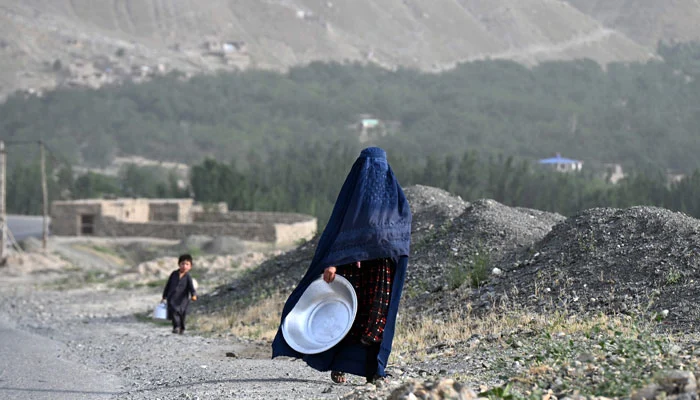
    Morality police in Herat began detaining dozens of women on Saturday for not wearing the full-body covering chador or burqa.

    The protest against the measures on Tuesday was forcibly dispersed, resulting in the death of a young boy, according to the UN, while witnesses told AFP that security personnel shot into the crowd. Authorities have denied using firearms.

    In a statement issued Thursday, ten independent experts appointed by the UN Human Rights Council reported that at least two individuals had lost their lives and more than 20 were injured.

    “The allegations that women were detained for dress code violations are deeply troubling and could amount to arbitrary and unlawful detention, as they seemingly punish women for exercising their rights to free expression and protection from gender discrimination,” the experts stated.

    They emphasized, “Equality, peaceful assembly, freedom of expression and movement, and protection against arbitrary detention are fundamental human rights.”

    The dress code is enforced by the Ministry for the Propagation of Virtue and the Prevention of Vice (PVPV), which mandates that women be almost entirely covered when outside their homes.

    Many women opt to wear a loose abaya, a Muslim headscarf, and a face covering instead of a chador or burqa.

    MSF Healthcare Worker Detained

    Among those detained in Herat was a medical professional employed by Doctors Without Borders (MSF).

    She was en route to her shift at Herat Regional Hospital’s pediatric ward when she was stopped by morality police on Saturday, accused of violating the dress code, according to the NGO.

    The medic was held for two days and released after signing a written pledge, along with her husband and relatives, to adhere to the dress requirements dictated by the PVPV.

    MSF expressed outrage over the detention of its staff member, asserting that “this incident is part of a broader pattern of severe restrictions women face in Afghanistan, limiting their movement and participation in public life.”

    The PVPV has yet to comment on the detention, despite requests from AFP. However, the department in Herat acknowledged that new regulations had been introduced recently and warned that violations could result in detention or imprisonment.

    A set of rules published Wednesday by Herat’s PVPV included bans on wearing makeup, displaying any hair outside clothing, and mandated wearing socks.

  • Family of knife attack victim urges calm amid anti-immigrant violence in Belfast

    Family of knife attack victim urges calm amid anti-immigrant violence in Belfast

    A vehicle that has been burned stands in front of a boarded-up house, following anti-immigrant protests sparked by a knife attack on June 8. The attack left a man critically injured, prompting police to declare a major incident on Lendrick Street in East Belfast, Northern Ireland, on June 10, 2026. — Reuters

    The family of Stephen Ogilvie, a man who lost an eye in the knife assault, urged for calm on Wednesday after the violence against immigrants escalated overnight in Belfast. Masked individuals set fire to homes and torched vehicles in various parts of the city.

    This appeal coincided with the court appearance of a Sudanese man charged with attempted murder, as UK Prime Minister Keir Starmer and Northern Irish politicians condemned the violence carried out by masked attackers targeting ethnic minorities.

    Several hundred protesters, many with faces obscured, clashed with police and set vehicles ablaze late Tuesday after a video of the stabbing attack went viral online.

    Ogilvie’s family emphasized the importance of peaceful protest, stating, “We want to make it very clear that unrest overnight is not acceptable, and that peaceful solutions are the way forward.” They highlighted the valuable contributions of many immigrants and expressed hope that the tragedy would not divide communities or incite hostility.

    In Parliament in London, Starmer acknowledged the severity of the incident but condemned the violence, asserting that “expelling people from their homes is not the answer,” and that law enforcement would pursue justice for all involved.

    The suspect, Hadi Alodid, a 30-year-old Sudanese national, appeared in court on Wednesday and was remanded into custody. Ogilvie, a man in his 40s, sustained serious injuries to his face and back, according to court records.

    Videos capturing the attack circulated online throughout Tuesday, prompting social media calls for violent protests. Police had to assist one family evacuate their burning house. Several cars and a bus were torched and reduced to wreckage. Local officials and a community pastor mentioned that many of those targeted were Black residents.

    Jamie Corry, a 33-year-old local, recalled watching helplessly as his house went up in flames. “I stood there as my entire home burned slowly but surely,” he said. “I told them, ‘That’s my property!’ but they didn’t seem to care.”

    Northern Ireland’s First Minister Michelle O’Neill condemned the violence, calling the actions of the masked individuals “nothing less than disgusting cowardice.” The incident, which is not currently being classified as terrorism, occurs amid heightened tensions in Britain following the murder of a student who died from stabbing wounds after police falsely alleged he was involved in a racial attack.

    The unrest follows ongoing protests over immigration policies, with populist parties arguing that the country’s asylum system admits dangerous individuals. Tech billionaire Elon Musk shared numerous messages criticizing the situation in the UK after the Belfast violence.

    Naomi Long, Northern Ireland’s Justice Minister, told Reuters that malicious actors, previously unable to locate the province on a map, have exploited fears and anger surrounding the stabbing to target individuals with the same skin color. Following calls from Musk, anti-immigrant activist Tommy Robinson, and others for further protests, police have increased patrols with an additional 200 officers deployed to maintain order.

    Chief Constable Jon Boutcher remarked that the violence extended beyond ethnic minorities and affected broader society. Belfast pastor Jack McKee shared that long-standing residents were being displaced solely because of their race.

    The recent outbreak of violence in Northern Ireland reflects a troubling trend in the UK, where crimes—often attributed to migrants—have incited anti-immigrant rallies and protests. Historically, Northern Ireland has had low migration levels due to decades of conflict between Catholic Irish nationalists seeking Irish unity and Protestant pro-British loyalists wishing to remain in the UK, along with military presence.

    However, recent years have seen an uptick in migration, fueling adverse sentiments both in Northern Ireland and the Republic of Ireland. The 2021 census reported that 96.6% of Northern Ireland’s population was white, while police data indicated record-high racist incident reports in 2025. Last year, anti-immigrant riots erupted over allegations of sexual assault, though charges against two minors were later dropped.

  • Nepal’s ex-PM Oli detained over Gen Z protest casualties

    Nepal’s ex-PM Oli detained over Gen Z protest casualties

    Nepal’s ex-prime minister, KP Sharma Oli, was detained on Saturday as authorities look into allegations that he may have been negligent in the deadly crackdown on Generation Z-led anti-corruption protests last September, according to officials. His arrest, which his legal team claims was unlawful and led to protests where supporters clashed with police, came shortly after rapper-turned-politician Balendra Shah was sworn in as prime minister on Friday. A committee investigating the violence recommended prosecuting Oli for negligence.

    Also taken into custody was Ramesh Lekhak, Oli’s former home minister. Last September, police responses to the protests resulted in 76 deaths, along with arson and unrest that ultimately forced Oli’s resignation.

    Following his arrest, supporters gathered in protest rallies, confronting police officers attempting to prevent them from burning tires near the prime minister’s office. Authorities responded with tear gas and baton charges, resulting in injuries to at least one person, witnesses reported.

    Nepal’s Communist Party (Unified Marxist-Leninist), which Oli leads, condemned the arrest as illegal and a act of revenge. The party demanded an immediate release and announced plans for further protests scheduled for Sunday. Party official Shankar Pokhrel indicated that protest notices would be submitted across all 77 districts nationwide.

    Home Minister Sudan Gurung defended the move on social media, asserting, “This is the start of justice. The country is heading in a new direction.”

    Oli has served as prime minister four times between 2015 and 2025, but never completed a full five-year term. In 2020, he issued a new political map that included a small disputed territory controlled by India, which boosted his popularity temporarily. However, his support waned, and he lost his seat in an election held earlier this month to Shah’s Rastriya Swatantra Party, amid widespread anger over the September protests’ deaths.

    An investigative panel found Oli and Lekhak responsible for failing to halt police firing during the protests. Police spokesperson Om Adhikari confirmed that Oli and Lekhak would appear in court on Sunday. Witnesses reported that Oli, aged 74 and a recipient of two kidney transplants, was taken from the police station to a hospital.

    Oli’s lawyer, Tikaram Bhattarai, described his client’s arrest as unwarranted and vowed to challenge it in the Supreme Court. “They say it’s for investigation purposes, but it’s illegal and unjustified because there’s no risk of him fleeing or avoiding questioning,” he stated. Efforts to reach Lekhak and his legal team for comments were unsuccessful.

  • Millions Prepare to Fill Streets in Protest Against Trump

    Millions Prepare to Fill Streets in Protest Against Trump

    Massive nationwide protests against President Donald Trump are anticipated Saturday as millions express anger over what they perceive as his authoritarian tendencies and other forms of oppressive, law-defying governance.

    This marks the third time in less than a year that Americans have gathered in the streets as part of the grassroots movement “No Kings,” which has become the most prominent and visible opposition to Trump since he began his second term in January 2025.

    Recently, their outrage has been fueled by the ongoing war in Iran, launched by Trump in coordination with Israel, with constantly evolving objectives and shifting timelines for resolution.

    The initial nationwide protest occurred in June on Trump’s 79th birthday, coinciding with a military parade in Washington, which he had insisted be held. Thousands participated from New York to San Francisco and many other locations.

    The second “No Kings” protest in October drew an estimated seven million protesters, according to organizers.

    The aim now is to mobilize even larger crowds Saturday, as Trump’s approval ratings hover around 40 percent and the upcoming midterm elections in November threaten to result in Republicans losing control of both chambers of Congress.

    While many in the “Make America Great Again” movement venerate Trump, the opposing side views him with intense disapproval or even hatred.

    Critics condemn his tendency to govern via executive orders, his use of the Justice Department to target political opponents, his support for fossil fuels and climate change denial despite global warming concerns, his opposition to racial and gender diversity initiatives, and his recent display of military strength—campaigning as a peace-maker yet acting as a commander-in-chief of force.

    “Nations have been dragged deeper into conflict since the last march,” said Naveed Shah of Common Defense, a veterans’ group aligned with “No Kings.”

    “Back home, we’ve seen citizens killed in the streets by militarized forces, families torn apart, and immigrant communities targeted—all under one man’s rule,” Shah added.

    Organizers report over 3,000 rallies are scheduled across the country, including major cities, suburbs, rural areas, and even in Kotzebue, Alaska, above the Arctic Circle.

    Minnesota is expected to be a focal point, returning to prominence after months of being at the center of debate over Trump’s harsh immigration policies.

    Scheduled to perform in St. Paul is Bruce Springsteen, a vocal critic of Trump. He will perform his song “Streets of Minneapolis,” a ballad written and recorded in 24 hours in memory of Renee Good and Alex Pretti, two Americans killed during protests against Trump’s immigration policies in frigid January weather.

    The “No Kings” movement states, “Since our first act of defiance in 2025, this movement has grown into a powerful nationwide resistance. We oppose a president trying to rule like a king—costing families their homes, their freedom, and their future.”

    They emphasize that about two-thirds of those planning to rally on Saturday do not reside in large cities, many of which tend to be Democratic strongholds. This represents a significant increase from previous protests.

    Randi Weingarten, president of the American Federation of Teachers, remarked, “America is at a crossroads. People are scared, struggling to meet basic needs. It’s time for the government to listen, to help build a better future instead of fueling hatred and fear.”