Tag: Prompt Engineering

  • Step By Step AI Prompt Engineering

    Step By Step AI Prompt Engineering

    Prompt engineering is a crucial skill in interacting with AI models effectively, especially in the realm of natural language processing (NLP). By carefully crafting your prompts, you can influence the quality and relevance of the responses generated by AI systems. Below, we explore a structured approach to AI prompt engineering, breaking it down into manageable steps.

    Understanding the Basics of Prompt Engineering

    What is Prompt Engineering?

    Prompt engineering refers to the practice of designing and structuring inputs (prompts) to achieve desired outcomes from an AI model. This involves not only the wording of the prompt but also the context and instructions provided to the model.

    Importance of Effective Prompts

    • Clarity: Precise prompts help eliminate ambiguity, leading to more accurate responses.
    • Relevance: Tailored prompts improve the likelihood of obtaining contextually appropriate answers.
    • Efficiency: Well-crafted prompts can save time and reduce the need for follow-up questions.

    Steps to Effective Prompt Engineering

    Step 1: Define Your Objective

    Before crafting a prompt, clarify what you wish to achieve.

    Questions to Consider:

    • What information am I seeking?
    • What specific task do I want to accomplish?
    • Who is my target audience for the response?

    Step 2: Choose the Right Format

    Decide on the format your prompt will take, as it greatly influences the output. Common formats include:

    • Questions: Direct inquiries that seek specific answers.
    • Instructions: Commands that guide the AI to perform a particular task.
    • Examples: Providing samples can help the AI understand the context better.

    Step 3: Use Clear and Concise Language

    Ensure that your language is straightforward and unambiguous to prevent misinterpretation.

    • Avoid jargon unless necessary; use everyday language.
    • Be specific: Detail exactly what you want for improved precision.

    Step 4: Provide Context

    Offering background information or parameters can help guide the AI’s response.

    Contextual Elements to Include:

    • Relevant details about the subject matter.
    • Any specific formats or styles you prefer (e.g., bullet points, lists, narrative).

    Step 5: Iteratively Refine Your Prompts

    Testing and refining your prompts is key to improvement.

    • Analyze results: Evaluate the AI’s output to identify areas for enhancement.
    • Make adjustments: Tweak wording or structure based on the feedback you receive.
    • Experiment: Don’t hesitate to try different phrasing and formats to see what works best.

    Advanced Techniques in Prompt Engineering

    Utilizing Constraints

    Imposing specific limits can guide the AI to generate focused responses.

    • Word Count: Specify a desired length (e.g., "In 150 words, explain…").
    • Tone: Indicate the style (e.g., formal, casual, persuasive).

    Leveraging Examples

    Utilizing examples can set a clear benchmark for the AI’s responses.

    • Provide Similar Outputs: Show how you want the response structured.
    • Highlight Desired Outcomes: Share both successful and unsuccessful examples.

    Promoting Creativity

    If your task requires creative input, use prompts that encourage imaginative thinking.

    • Open-ended Questions: Pose questions that stimulate creative exploration (e.g., "What are some innovative ways to…").
    • Role-playing: Ask the AI to assume a specific persona or character for unique perspectives.

    Common Pitfalls to Avoid

    Overly Complex Prompts

    • Avoid confusion: Simple prompts tend to yield better results than convoluted ones filled with excessive details.

    Neglecting Iteration

    • Don’t settle: Iterative refinement is essential for honing your prompts over time. Regularly assess and adjust as necessary.

    Ignoring Model Limitations

    • Know your AI: Understand the capabilities and limitations of the model you’re working with to set realistic expectations.

    Practical Examples of Effective Prompts

    Example 1: Asking for Information

    • Poor Prompt: “Tell me about birds.”
    • Improved Prompt: “Could you provide a list of the top five most endangered bird species in North America and a brief description of each?”

    Example 2: Seeking Creative Input

    • Poor Prompt: “Write a story.”
    • Improved Prompt: “Write a short, fantasy story involving a dragon that learns how to befriend humans.”

    Example 3: Instruction-Based Prompt

    • Poor Prompt: “Explain climate change.”
    • Improved Prompt: “In three paragraphs, summarize the causes of climate change and its potential effects on global ecosystems.”

    By regularly practicing these steps and strategies, you can significantly enhance your ability to communicate with AI models and extract the most value from their responses. Each interaction is an opportunity to learn and refine your approach, paving the way for more effective and insightful dialogues with artificial intelligence.

  • AI Prompt Engineering Best Practices

    AI Prompt Engineering Best Practices

    In the rapidly evolving landscape of artificial intelligence, prompt engineering has emerged as a critical skill for maximizing the effectiveness of AI models. As organizations integrate these technologies into their workflows, understanding how to craft and refine prompts can significantly enhance the output quality. Below are some best practices to follow when working with AI prompts.

    Understanding the Basics of Prompt Engineering

    What is Prompt Engineering?

    Prompt engineering involves designing and refining the inputs given to an AI model to produce the desired outcomes. This process often requires a balance of specificity and creativity to ensure that the AI understands the context and generates useful responses.

    Why is it Important?

    Effective prompting can lead to:

    • Improved response relevance.
    • Greater accuracy in generated content.
    • Reduced need for extensive post-editing.

    Best Practices for Effective Prompt Engineering

    1. Be Clear and Concise

    When crafting prompts, clarity is paramount. A well-defined prompt leads to more accurate and relevant outputs.

    • Use Simple Language: Avoid jargon unless necessary.
    • Keep it Direct: State exactly what you want the AI to do.

    2. Provide Context

    Giving the AI a context for the task helps it generate more meaningful responses.

    • Specify the Topic: Mention the subject area or focus.
    • Set the Tone: Indicate if you need a formal, casual, or technical response.

    3. Experiment with Different Formats

    Different formats can yield varied results. Experiment with the structure of your prompts to find what works best for your particular application.

    • Questions: Use open-ended questions to encourage detailed responses.
    • Instructions: Provide step-by-step directions for tasks.

    4. Use Examples

    Demonstrating what you expect can significantly narrow the scope of responses.

    • Provide Sample Outputs: Show what a desired response looks like.
    • Use Analogies: Help the model understand complex ideas through simpler comparisons.

    Iteration and Refinement

    5. Review and Adjust Prompts

    Creating effective prompts is often an iterative process. Regularly revisiting and tweaking your prompts can lead to better results.

    • Analyze Outputs: Evaluate the effectiveness of responses and pinpoint areas for improvement.
    • Gather Feedback: Use insights from team members or end-users to adjust prompts.

    6. Keep Testing New Approaches

    Not every prompt will produce the intended outcome. Continuously testing new prompts can uncover unique and useful responses.

    • A/B Testing: Compare the effectiveness of different prompts.
    • Diversify Input Types: Mix narrative prompts with numbered lists, tables, or questions.

    Leveraging AI Capabilities

    7. Use the Model’s Full Capabilities

    Understanding the strengths and limitations of the AI model can guide effective prompt engineering.

    • Explore Model Features: Familiarize yourself with specific functionalities that can enhance the output.
    • Adapt to Updates: Stay informed about the latest developments in AI technology which may influence prompt crafting.

    8. Encourage Creativity

    Prompts can also be designed to evoke creative responses from the AI.

    • Open-Ended Prompts: Allow the model to explore various angles of a topic.
    • Role-Playing: Ask the AI to assume different perspectives to generate diverse ideas.

    Collaboration and Documentation

    9. Document Prompt Variations

    Maintaining a record of effective prompts and their results can streamline future projects.

    • Create a Repository: Store prompts along with their outcomes for easy access.
    • Label Effectiveness: Note which prompts lead to successful outputs and why.

    10. Share Insights with Teams

    Collaborative efforts can enhance the quality of prompt engineering.

    • Discuss Findings: Hold regular meetings to share what works and what doesn’t.
    • Gather Collective Input: Encourage team members to contribute to prompt development.

    By adhering to these best practices in AI prompt engineering, users can significantly enhance the quality and relevance of AI-generated content, ultimately leading to more productive and effective use of artificial intelligence technologies.

  • AI Prompt Engineering For Beginners

    AI Prompt Engineering For Beginners

    Artificial Intelligence (AI) has rapidly advanced and become an integral part of numerous applications, ranging from customer service to content creation. One critical facet of harnessing AI’s potential is prompt engineering. This article will guide beginners through the essentials of AI prompt engineering, exploring its significance, techniques, and practical applications.

    Understanding AI Prompt Engineering

    What is Prompt Engineering?

    Prompt engineering involves crafting specific inputs that guide an AI model to produce the desired output. It is a crucial step in interacting with AI, as the way a prompt is structured can significantly influence the quality and relevance of the response generated by the AI.

    Why is Prompt Engineering Important?

    The importance of prompt engineering can be broken down into several key points:

    • Quality of Output: A well-structured prompt leads to more accurate and cohesive responses.
    • Task Specification: It allows users to clearly communicate what they expect from the AI.
    • Efficiency: Effective prompts reduce the need for multiple iterations, saving time and resources.

    Key Techniques for Prompt Engineering

    Clarity and Precision

    When designing prompts, clarity is essential. Ambiguity can lead to unexpected outputs. Here are some tips for creating clear prompts:

    • Use simple, straightforward language.
    • Avoid jargon or complex terminology unless necessary.
    • Be specific about what you want, including the format and style of the response.

    Contextualization

    Providing context can significantly enhance the relevance and quality of the AI’s output. Consider these strategies:

    • Set the Scene: Establish a scenario that guides the AI’s response.
    • Frame the Question: Instead of asking a vague question, frame it to include relevant details that help the AI understand the context.
    • Include Examples: Providing examples of the expected output can guide the AI toward your goal.

    Experimentation

    Don’t be afraid to test various prompts to see what works best. Here are ways to experiment effectively:

    • Iterate: Modify your prompts based on the AI’s responses and try different formulations.
    • A/B Testing: Create two or more versions of prompts to see which yields better results.
    • Feedback Loop: Take note of which prompts generate favorable responses, and refine them over time.

    Practical Applications of Prompt Engineering

    Content Generation

    Prompt engineering is particularly useful in content creation. Here’s how you can utilize it:

    • Blog Posts: Ask the AI to write a blog post on a specific topic, ensuring to define the tone and audience.
    • Social Media: Craft prompts that suggest creative posts tailored to different platforms.
    • Marketing Materials: Generate persuasive copy by providing details about the target demographic and product features.

    Coding Assistance

    AI can assist in programming tasks, but effective prompts are necessary:

    • Code Snippets: Request specific code examples by clearly stating the programming language and task.
    • Error Corrections: Provide the erroneous code with an explanation of the expected outcome to receive targeted fixes.

    Learning and Tutoring

    When using AI as a learning assistant, precision in prompts can enhance educational outcomes:

    • Study Guides: Ask for summaries or explanations of complex topics by defining the intended audience’s knowledge level.
    • Problem-Solving: Pose math or science problems clearly to receive step-by-step solutions.

    Tips for Effective AI Prompt Engineering

    To maximize your success in AI prompt engineering, consider these additional tips:

    • Keep it Concise: While providing context is important, overly lengthy prompts can confuse the AI.
    • Use Action Words: Start your prompts with verbs to direct the AI more effectively (e.g., "Explain," "List," "Summarize").
    • Adjust for Tone: Specify the desired tone (formal, casual, etc.) to align with the context of the request.

    By employing these strategies and techniques, beginners can learn to navigate the complexities of AI prompt engineering effectively. As you refine your skills, you will find greater success in eliciting the desired responses from AI models, making your interactions more productive and beneficial.

  • Best AI Prompt Engineering Techniques

    Best AI Prompt Engineering Techniques

    Prompt engineering has emerged as a crucial skill in the world of artificial intelligence and natural language processing. Effective prompts can significantly enhance the quality of responses from AI models, making it essential for developers, researchers, and enthusiasts to understand the best techniques for crafting prompts. Below are some of the most effective AI prompt engineering techniques.

    Understanding the Basics of Prompts

    What is a Prompt?

    A prompt is a piece of text or instruction given to an AI model to elicit a response. The clearer and more detailed the prompt, the better the response can be. Understanding how to structure prompts is key to maximizing the effectiveness of AI interactions.

    Types of Prompts

    • Open-ended prompts: These allow the AI to generate free-form responses. For example, "Describe a day in the life of an astronaut."
    • Specific prompts: These provide detailed instructions for the AI, like "List five benefits of renewable energy."
    • Multiple-choice prompts: These guide the AI towards selecting from predefined options. For instance, "Which of the following is a fruit: Apple, Carrot, Dog?"

    Techniques for Crafting Effective Prompts

    1. Clarity is Key

    Be clear and concise in your prompts. Ambiguity can lead to undesired or confusing responses.

    • Example: Instead of asking, “Tell me about dogs,” specify, “What are the top three breeds of dogs known for their intelligence?”

    2. Context Matters

    Providing context can greatly improve response relevance. Include necessary background information to help the model understand the framework of your query.

    • Example: “In the context of sustainable farming, what are some effective soil conservation techniques?”

    3. Use Examples

    Including examples in your prompts can guide the AI towards the format or style you desire.

    • Example: “Generate a professional email to a colleague about a meeting. For instance, ‘Subject: Meeting Reminder. Hi [Colleague’s Name], I wanted to remind you about our meeting scheduled for…’”

    4. Specify the Format

    Indicate the desired format of the response. This helps in generating structured output.

    • Example: “Summarize the following text in bullet points: [insert text here].”

    5. Experiment with Length and Detail

    Different lengths of prompts can yield varying results. Longer, more detailed prompts often provide a finer level of output, while shorter prompts yield quicker, less nuanced responses.

    • Tip: Test various lengths to see which produces the most useful responses for your needs.

    Advanced Prompt Engineering Strategies

    1. Chain of Thought Prompting

    Encourage the model to think step-by-step to arrive at an answer. This method works particularly well for complex questions.

    • Example: “Explain how photosynthesis works, breaking it down into its key stages.”

    2. Role Assignment

    Assigning a specific role or persona to the AI can influence the style and depth of the answer.

    • Example: “You are a financial advisor. Explain the importance of diversifying an investment portfolio.”

    3. Zero-shot, One-shot, and Few-shot Learning

    These terms refer to how much information is given in a prompt.

    • Zero-shot: No examples provided.
    • One-shot: One example given as a reference.
    • Few-shot: A few examples to guide the AI.

    Experimenting with these can help determine the best approach for your specific prompt.

    4. Iterative Refinement

    Use an iterative approach to refine your prompts based on the AI’s responses. If the initial output is not what you expected, tweak your prompt and try again.

    • Example: If asking for a summary results in too much detail, specify, “Provide a concise, three-sentence summary.”

    Leveraging AI Tools for Better Prompt Engineering

    1. Use AI Playground

    Platforms like OpenAI’s API or Hugging Face provide playground environments where you can test various prompts.

    • Experiment with different techniques in real-time.

    2. Community Input

    Participate in forums and community discussions where others share successful prompts.

    • Collaborate and learn from others’ experiences.

    3. Documentation Review

    AI models often come with extensive documentation that may provide insights and examples.

    • Spend time reading through these resources for inspiration.

    By mastering these prompt engineering techniques, you can harness the full potential of AI models, producing high-quality outputs tailored to your specific needs. Whether you’re developing applications, conducting research, or simply experimenting, these techniques will serve you well in enhancing your interactions with AI.

  • How To AI Prompt Engineering Guide

    How To AI Prompt Engineering Guide

    Prompt engineering has emerged as a crucial skill in the realm of artificial intelligence. By crafting effective prompts, users can interact with AI models to yield better outputs. This guide will walk you through the processes, techniques, and best practices in AI prompt engineering.

    Understanding the Basics of Prompt Engineering

    What is a Prompt?

    A prompt is a carefully constructed input that directs an AI model to generate relevant and coherent responses. The quality of the prompt can significantly influence the performance of the AI.

    Why is Prompt Engineering Important?

    • Improves Output Quality: Well-designed prompts lead to more accurate and relevant information.
    • Enhances User Control: Users can guide AI responses, tailoring them to specific needs.
    • Facilitates Iteration: Crafting prompts allows for iterative improvements in the AI’s responses.

    Techniques for Effective Prompt Engineering

    Clear and Specific Prompts

    • Be Direct: Clearly state what you want the AI to produce. Vague instructions often yield irrelevant results.
    • Limit Ambiguity: Use straightforward language and avoid jargon where possible.

    Contextual Cues

    • Incorporate Background Information: Provide the AI with context to better understand the task.
    • Use Examples: Demonstrative examples can help clarify expectations for the output.

    Experimentation and Iteration

    • Test Variations: Experiment with different prompt formats to see how small changes affect the output.
    • Eliminate Ineffective Prompts: Keep track of prompts that yield poor responses and refine or discard them.

    Best Practices for Crafting Prompts

    Use Open-Ended Questions

    • Encourage detailed responses by framing prompts as open-ended questions, e.g., “What are the benefits of renewable energy?”

    Specify the Format

    • Indicate the desired format of the response. For example:

      • “List five advantages of electric vehicles.”
      • “Write a short story about a dragon who learns to fly.”

    Limitations and Constraints

    • Define any constraints within the prompt, such as word limits or style guidelines. For instance:

      • “Explain neural networks in under 150 words.”

    Common Mistakes to Avoid

    Overloading Prompts

    • Keep It Balanced: Avoid cramming too much information into a single prompt, which can confuse the AI.

    Neglecting Feedback

    • Iterate Based on Results: Pay attention to the AI’s responses and continually refine prompts based on what works and what doesn’t.

    Ignoring the Audience

    • Tailor Soil for Your Audience: Consider who will use the AI’s output and tweak the language and content accordingly.

    Advanced Prompt Techniques

    Role-Playing Prompts

    • Assign roles to the AI for more dynamic interactions. For example:

      • “You are a travel expert. Suggest an itinerary for a week-long trip to Italy.”

    Chain-of-Thought Prompts

    • Encourage the AI to think through its reasoning by asking it to elaborate:

      • “Explain why climate change is a pressing issue, step by step.”

    Few-Shot Learning

    • Provide a few examples within the prompt to guide the model’s learning:

      • “Here are examples of healthy snacks: apple slices, carrot sticks, and yogurt. Now, list five more healthy snacks.”

    Tools and Resources for Prompt Engineering

    • Online Communities: Engage with forums and groups focused on AI and prompt engineering.
    • Experimentation Platforms: Utilize platforms that allow for trial and error with various AI models.
    • Documentation: Review the guidelines provided by AI frameworks like OpenAI and others to understand their capabilities better.

    By applying these strategies and continuously honing your skills, you will become adept at prompt engineering and unlock the full potential of AI interactions.

  • Prompt Tuning: What Is It and How to Do It? [With Soft Prompts + OpenAI Fine Tuning]

    Prompt Tuning: What Is It and How to Do It? [With Soft Prompts + OpenAI Fine Tuning]

    Prompt tuning is a fascinating aspect of working with AI language models, enhancing their performance on specific tasks by adjusting the input prompts. We will guide you through what prompt tuning is, its importance, and how to implement it using soft prompts and OpenAI fine-tuning.

    Understanding Prompt Tuning

    Understanding Prompt Tuning
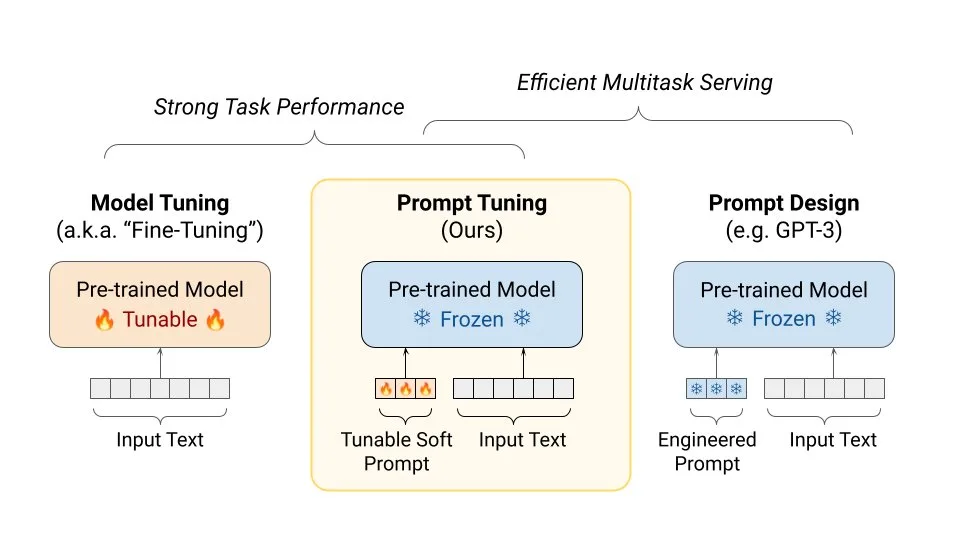
    (Photo: Jeff Dean)

    Prompt tuning involves modifying the input prompts given to AI language models to achieve better performance on particular tasks. Instead of changing the model’s parameters, you tweak the way questions or statements are presented to the model. This process helps in aligning the AI’s responses more closely with desired outcomes.

    The Importance of Prompt Tuning

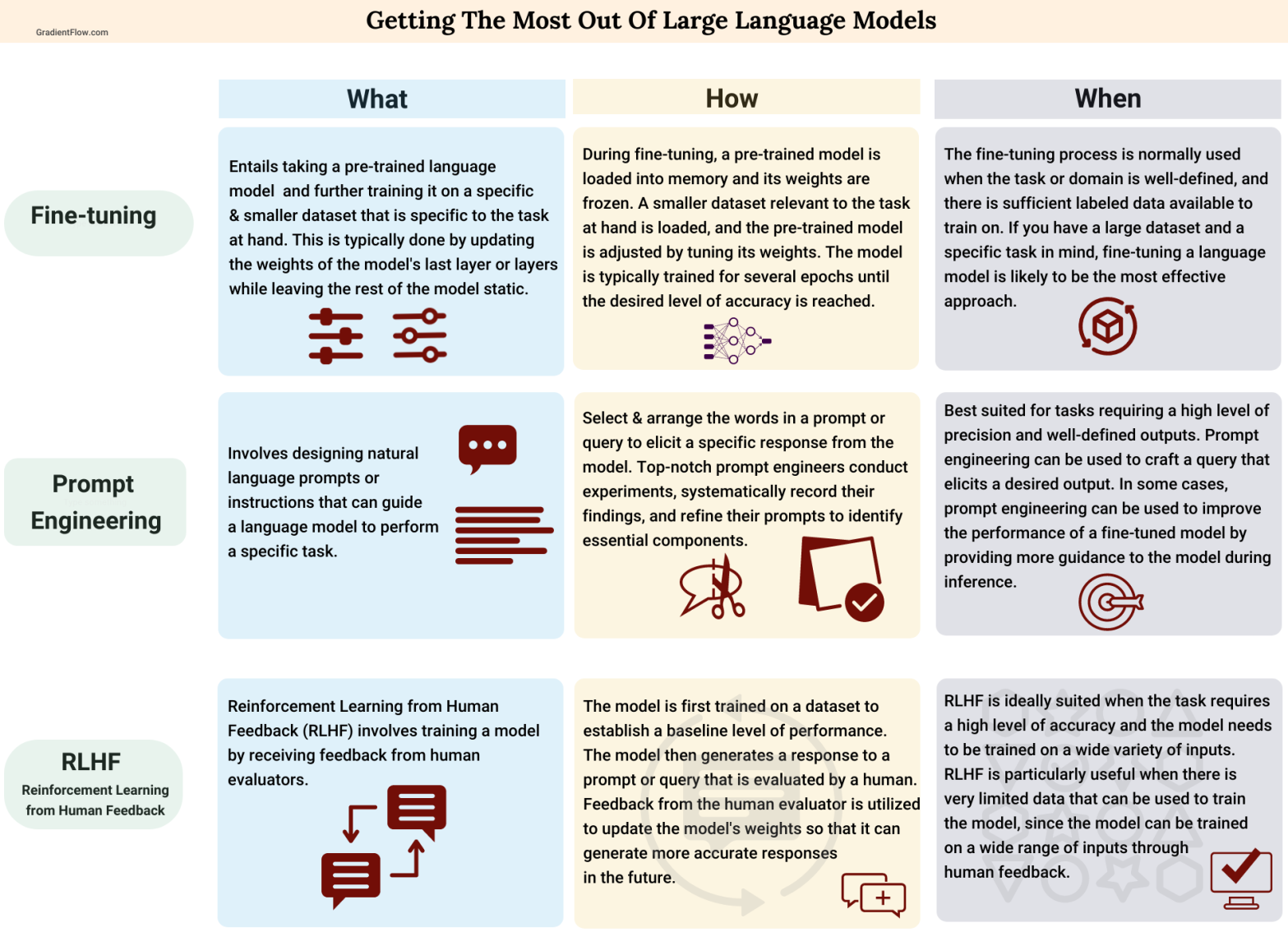
    Fine tuning vs Prompt Engineering
    (Photo: Gradient Flow)

    Prompt tuning is crucial for several reasons. It enhances the accuracy and relevance of the AI’s responses without requiring extensive computational resources. By refining prompts, you can:

    • Improve the model’s performance on specific tasks.
    • Ensure more accurate and contextually relevant outputs.
    • Customize the AI for various applications without modifying the underlying architecture.

    What Are Soft Prompts?

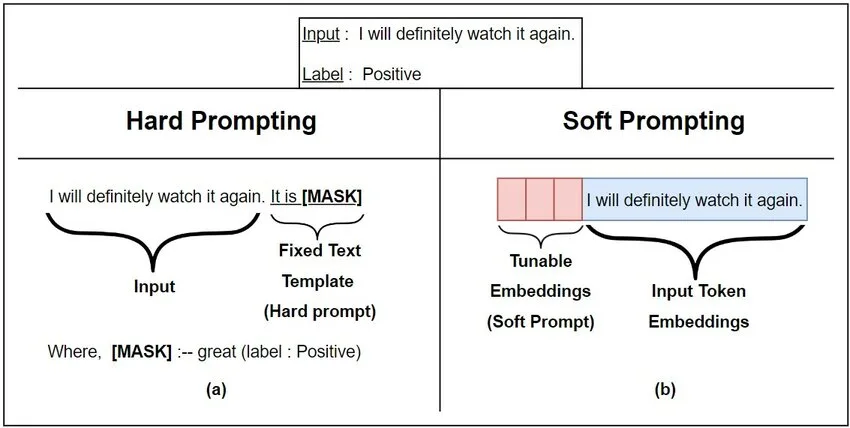
    Soft prompts are continuous embeddings that are optimized to guide the model towards producing desired outputs. Unlike traditional hard prompts, which are static text-based instructions, soft prompts are learned representations that can be more effective in steering the model.

    hard vs soft prompt
    (Photo: ResearchGate)

    How to Use Soft Prompts

    Using soft prompts involves a few key steps:

    1. Identify the Task

    First, clearly define the task you want to improve. This could be anything from generating creative content to answering specific types of questions accurately.

    2. Generate Initial Prompts

    Create a set of initial prompts that are likely to guide the model towards the desired outputs. These can be simple text prompts related to your task.

    3. Embed the Prompts

    Convert these text prompts into embeddings using the AI model. These embeddings will serve as the initial soft prompts.

    4. Optimize the Prompts

    Use a training process to optimize these embeddings. The goal is to adjust the soft prompts so that they better align with the desired task outcomes. This involves:

    • Feeding the model a combination of inputs and observing the outputs.
    • Adjusting the embeddings to minimize errors and improve performance.

    5. Evaluate and Iterate

    After optimizing, evaluate the performance of the model with the new soft prompts. If the results are not satisfactory, iterate the process to further refine the prompts.

    OpenAI Fine Tuning

    OpenAI fine-tuning takes this process a step further by allowing adjustments to the model’s parameters. Here’s how you can fine-tune an OpenAI model:

    1. Prepare Your Dataset

    Gather and preprocess a dataset that reflects the tasks you want the AI to perform better. Ensure that your data is clean, well-organized, and representative of the desired outputs.

    2. Use the OpenAI API

    Leverage the OpenAI API for fine-tuning. This involves uploading your dataset and specifying the desired configurations for the tuning process.

    3. Train the Model

    Initiate the training process through the API. The model will adjust its parameters based on your dataset to improve its performance on the specified tasks.

    4. Test and Refine

    After training, test the fine-tuned model with real-world inputs to assess its performance. Make any necessary adjustments and repeat the fine-tuning process if needed.

    Combining Soft Prompts with OpenAI Fine Tuning

    For optimal results, you can combine soft prompts with OpenAI fine-tuning. This hybrid approach ensures that you leverage both the immediate contextual benefits of soft prompts and the deeper, parameter-based improvements from fine-tuning.

    Steps to Combine Both Methods:

    Initial Soft Prompt Tuning:

      • Start with creating and optimizing soft prompts as described earlier.

      Fine-Tune the Model:

        • Use the optimized soft prompts and your dataset to fine-tune the model via the OpenAI API.

        Evaluate Combined Results:

          • Test the model’s performance using the optimized soft prompts post-fine-tuning to ensure the best possible outcomes.

          Iterate as Needed:

            • Continuously evaluate and refine both the soft prompts and fine-tuned model based on real-world performance.

            Practical Applications

            Customer Support

            By tuning prompts, AI models can provide more accurate and helpful responses in customer support scenarios, leading to higher customer satisfaction.

            Content Creation

            Prompt tuning helps in generating more relevant and creative content, making AI a useful tool for writers and marketers.

            Data Analysis

            In data analysis, prompt tuning ensures that the AI provides precise and contextually appropriate insights, aiding better decision-making.

            Prompt tuning, especially when combined with soft prompts and OpenAI fine-tuning, is a powerful method to enhance the performance of AI language models. By following the steps outlined above, you can tailor the outputs of these models to better suit your specific needs, improving accuracy and relevance across various applications.