Tag: political

  • Myanmar’s Aung San Suu Kyi Meets Red Cross Official, Govt Confirms

    Myanmar’s Aung San Suu Kyi Meets Red Cross Official, Govt Confirms

    Myanmar’s former leader Aung San Suu Kyi, who has been detained since 2021, recently met with a representative from the International Committee of the Red Cross. The country’s government spokesperson confirmed the meeting took place on Monday in Naypyidaw. Suu Kyi, a Nobel Peace Prize laureate, has been serving a 27-year prison sentence following conviction on multiple charges, which her supporters argue are politically motivated. Her son has publicly expressed limited knowledge regarding her current health and living conditions.

    The meeting occurred amid ongoing international concern for her well-being. Photos released by the government show Suu Kyi dressed in traditional Burmese attire, meeting with Arnaud de Baecque of the ICRC in a modest, wood-paneled room with minimal furnishings. Another image depicts her celebrating her birthday, with a cake inscribed with her name and the date June 29, 2026, hinting at the rare inside look into her residence. However, these images’ exact location and date could not be independently verified, and no prior online postings of them exist.

    Following a military-led election in April, which resulted in the continuation of Myanmar’s military control and the presidency of Min Aung Hlaing, Suu Kyi was moved to house arrest. Her sentence was reduced by a sixth as part of an amnesty that also released her political ally, ex-president Win Myint. Despite this, access to her remains limited. The regional ASEAN group and other international bodies continue to seek meetings with her, but the military government has been reluctant to grant such requests.

    Last December, Myanmar’s ruling junta claimed Suu Kyi was in good health. Her son has voiced concern over his limited updates and fears she could pass away without him knowing, due to the lack of communication over the years.

  • India Protests Persist: Food, Fury, and Supporters Near and Far

    India Protests Persist: Food, Fury, and Supporters Near and Far

    A constant flow of food delivery riders bringing meals, snacks, and bottled water has become essential to supporting a youth-led protest movement centered in India’s capital. Motorcycles navigate through traffic, stopping alongside groups of volunteers who are delivering donations from supporters both within India and abroad, all unable to physically join the rare public protest against Prime Minister Narendra Modi’s government.

    “Orders are coming from everywhere,” said Suraj Kumar, 25, a rider with a bag of kachoris — a popular deep-fried snack — as volunteers climbed over police barricades to collect the packages. A volunteer received the food and handed it over in a relay to the protest site about a few hundred meters away, around Delhi’s Jantar Mantar observatory, where hundreds of protesters gathered around an elevated platform.

    Leaders of the Cockroach Janta Party (CJP), a movement that started as an online satire in May, have been demonstrating here since last month, demanding the resignation of Education Minister Dharmendra Pradhan due to ongoing exam paper leaks. The protest gained significant momentum in recent days after a prominent activist began an indefinite hunger strike in support.

    Despite a significant police crackdown on Monday when tens of thousands of young people attempted to march on Parliament, the encampment persists. Young Indians under 30 make up more than half of the country’s population of approximately 1.42 billion, many of whom have expressed frustration that years of economic growth have not translated into enough job opportunities.

    “People are angry, especially after police started beating innocent students. But not everyone can be here physically, so they’re sending food,” explained Raj Rathore, 25, a volunteer who has been managing deliveries of water bottles, fruit, and biscuits over the past few days. These contributions and volunteer support networks have been crucial in sustaining the protest around the clock, students indicated.

    “This protest is only possible because of people’s kindness and our unity,” said Rina Rawat, a 20-year-old Delhi University student organizing queues inside the protest site. Rawat herself was hit on the left leg with police batons on Monday but returned the next day to continue her participation.

    Modi has not directly addressed the protests, although a coalition minister mentioned after a recent meeting that the Prime Minister assured them that the “strongest possible steps are being taken to protect students’ interests.” Education Minister Pradhan also promised “answers, reforms, and accountability.”

    By late Wednesday afternoon, despite intermittent monsoon showers, the protest crowd had swelled to about 5,000, mostly Generation Z students holding signs, playing patriotic Bollywood songs, and chanting slogans. One protester shouted, “Modi, we won’t tolerate your autocracy,” drawing cheers — an unusual display of open criticism against a leader who has dominated Indian politics since 2014.

    Mukesh, who chose not to disclose his last name, shared, “I was a Modi supporter until 10 days ago, but seeing police brutality shocked me.” Many of the young demonstrators drew inspiration from India’s fight for independence, carrying portraits of revolutionary Bhagat Singh, copies of the Constitution, and handing out roses. Several donned Spider-Man masks and called themselves “baddies,” emphasizing their defiant spirit.

    Nearby, 19-year-old Arpita Verma remarked, “There’s been too much Hindu-Muslim politics in India,” referencing the increasing religious polarization under Modi’s party, which is mainly supported by the Hindu majority. She added, “But here, we are united by a common cause — and we’re not afraid.”

  • Delhi Protesters Call for IIOJK Statehood

    Delhi Protesters Call for IIOJK Statehood

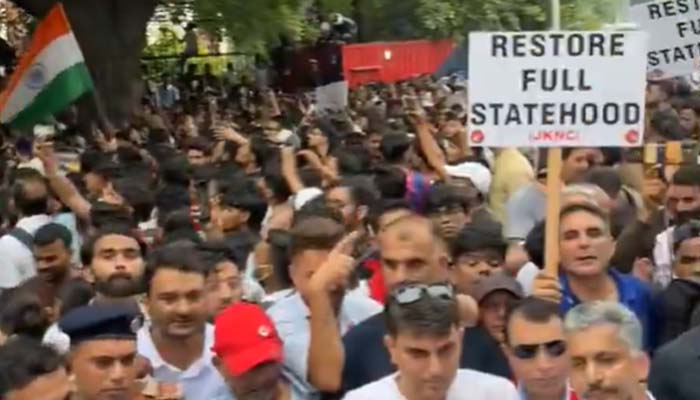
    Hundreds of individuals, led by the chief minister of Indian Illegally Occupied Jammu and Kashmir (IIOJK), chanted slogans and organized a demonstration in New Delhi on Monday, demanding that the region be granted statehood—seven years after it was reclassified as a federal territory.

    Authorities prevented the protesters from carrying out their march, according to a post by Omar Abdullah on X, which included videos and photos of people holding signs and shouting slogans.

    “This is just the start of our fight for statehood, our rights, our dignity, and everything else that has been taken from us,” Abdullah stated in his post.

    In August 2019, Prime Minister Narendra Modi annulled the region’s semi-autonomous status, stripped it of its statehood, and split it into two federally governed territories: Muslim-majority Kashmir with Hindu-majority Jammu, and the Buddhist region of Ladakh.

    Since then, the government has stated that statehood for the disputed Himalayan area will be restored at the “appropriate time,” but no specific deadline has been provided.

    Abdullah and his party, the Jammu and Kashmir National Conference, insist that statehood should be reinstated as soon as possible, in line with the government’s promise.

    Members of Modi’s Bharatiya Janata Party accuse the protest of being an effort to distract from what they describe as governance failures by Abdullah’s administration.

  • Richmond Home Once Shared by Imran Khan & Goldsmiths Listed at £25m

    Richmond Home Once Shared by Imran Khan & Goldsmiths Listed at £25m

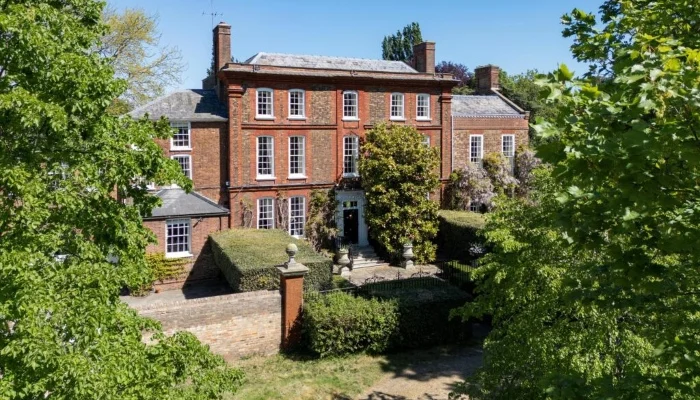
    The 10-bedroom detached home where Imran Khan once resided, Jemima Khan and her mother Lady Annabel Goldsmith also lived during and after their separation. Now, this historic residence has been listed for sale at £25 million.

    Known as Ormeley Lodge, this elegant early Georgian house sits on Ham Common in Richmond, southwest London, near Richmond Park. Spanning approximately 15,814 square feet, the property boasts seven bathrooms, lush gardens, and a cottage.

    Khan used the residence regularly for recording shows and engaging with Geo News during Pakistan’s 2006 catastrophic floods, notably for the channel’s “Pukaar” campaign.

    Sources close to the Goldsmith family confirmed to Geo News that the house is now on the market following Lady Annabel Goldsmith’s passing in October 2025. A family insider explained, “The house is being sold after Annabel’s death. Jemima lives a few miles away, and her sons, Sulaiman and Kasim, each have their own separate homes. There’s no real reason to keep it anymore. It holds many family memories, but with Annabel gone, it leaves a significant void.”

    The property is deeply connected to Pakistan’s political history, as Khan used it as his London base for nearly two decades. He resided there during his marriage to Jemima and continued to use its annex after their divorce. During his visits to London, he hosted political meetings, met Pakistani media, politicians, and colleagues at the house. Its use as his main London residence ceased around 2014 after he married Reham Khan and later Bushra Begum.

    Over the years, the house became a focal point for political protests. In 2014, protesters gathered outside while Khan was inside, later escorting him away in a car with his aide Zulfi Bukhari. After Khan’s removal from office, the house was often the site of demonstrations by supporters of Pakistan Muslim League-Nawaz (PML-N), countering protests outside the Sharif family’s London residence near Hyde Park. Jemima publicly criticized these protests, calling out their unfair targeting of her elderly mother’s private home.

    Ormeley Lodge remains a prominent address within British high society and Pakistani politics. For the Goldsmith family, it’s a cherished family home filled with memories, while for Khan and his supporters, it historically served as a pivotal political meeting point outside Pakistan.

    Jemima now resides a few miles away in West London. Reports suggest she is engaged to Irish-Australian financier Cameron O’Reilly, son of the late Sir Anthony O’Reilly, a notable Irish businessman and rugby international. The couple has reportedly been together for about a year, splitting their time between Switzerland and London.

  • India Opposition Party Claims Vindictive Account Freeze

    India Opposition Party Claims Vindictive Account Freeze

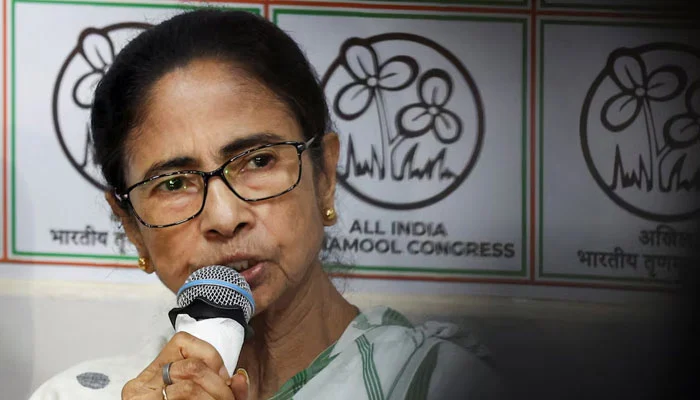
    A leader of the Trinamool Congress (TMC) accused federal investigators on Thursday of launching a politically motivated attack after authorities froze $46 million in its bank accounts as part of a money-laundering investigation.

    Critics and human rights organizations have accused Prime Minister Narendra Modi’s government of misusing law enforcement agencies to target political opponents.

    The Enforcement Directorate, India’s primary agency for financial crimes, announced on Wednesday that it was examining alleged illegal transactions involving the TMC, which governed West Bengal for 15 years before the BJP ousted it in May.

    Officials allege that between April 2023 and June of this year, $16.8 million was transferred from bank accounts linked to the TMC to an aviation company and related businesses. It is claimed that these funds were used to buy a private jet and a helicopter, which were later leased back to the party.

    The TMC denies any misconduct, stating that all funds have been fully and transparently disclosed to authorities.

    “Our party condemns the Enforcement Directorate’s decision to freeze our bank accounts as a politically motivated act. We strongly denounce this arbitrary and unlawful action,” the party said in a statement Wednesday. “Misusing investigative agencies to attack political rivals has become a hallmark of the BJP’s tactics and poses a serious threat to democratic institutions and fair play.”

    Over the past few years, several Indian opposition leaders have faced criminal probes, including Arvind Kejriwal, the former Delhi chief minister. Kejriwal spent months in jail in 2024 after being arrested over allegations that his administration took kickbacks in connection with liquor license allocations. He has denied any wrongdoing.

    Similarly, Jharkhand Chief Minister Hemant Soren, another opposition figure, was detained and jailed in 2024 on corruption charges which he also denies. The BJP insists that corruption investigations are conducted independently and according to the law.

  • US Seeks Iran Deal, But Not at Any Cost

    US Seeks Iran Deal, But Not at Any Cost

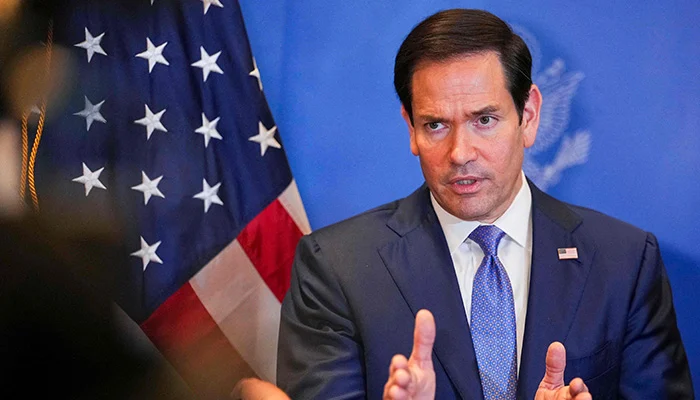
    U.S. Secretary of State Marco Rubio spoke with reporters before leaving Bahrain International Airport after visiting the Middle East to discuss the interim deal between the U.S. and Iran with Arab Gulf allies in Manama on June 25, 2026. — AFP

    – The United States opposes any future fees on the Strait of Hormuz.
    – Washington aims for an agreement that does not jeopardize regional stability.
    – Technical discussions between Iran and the U.S. are set to resume in the coming days.

    Top U.S. diplomat Marco Rubio emphasized Thursday that any deal with Iran wouldn’t come at any cost and reassured Gulf allies that their security wouldn’t be compromised. Rubio visited Bahrain as part of a regional tour, speaking to Gulf partners severely impacted by Iran during ongoing Middle East conflict—a campaign launched on February 28 involving significant U.S.-Israeli strikes against Iran.

    The U.S. and Iran have preliminarily agreed to begin negotiations addressing complex issues such as Iran’s nuclear program, sanctions relief, and energy transport through the Strait of Hormuz. Rubio stated at a Gulf Cooperation Council meeting in Bahrain, “While we want a deal, we don’t want a deal at any price. We need to ensure that no part of this agreement threatens the security, stability, or prosperity of our Gulf partners.”

    Rubio also reassured the Gulf nations that the Strait of Hormuz, vital for their oil and natural gas exports for decades, will remain free of tolls. Iran previously blockaded Hormuz as retaliation during the war, which caused a global economic shock. Iran has indicated plans to introduce maritime service fees and warned that unauthorized crossings will be dealt with harshly. The U.S. and allies have rejected such tolls outright, with Rubio reaffirming that Hormuz must be recognized as an international waterway, a principle essential to global order.

    Oman’s top diplomat, Badr Albusaidi, confirmed that plans for Hormuz do not include transit fees, despite Iran and Oman mentioning discussions of possible charges for services in the strait. Oman recently released a map of a temporary shipping route that runs close to its coast, coordinated with the International Maritime Organization. Iran, through its Revolutionary Guards, later criticized the new route without specifically mentioning Oman.

    An agreement signed last week by Iran and the U.S. allows commercial ships to transit the strait free of charge for 60 days, but future arrangements remain unclear.

    Iran, feeling emboldened since the conflict intensified, refuses to relinquish control over Hormuz and has called its initial deal with Washington a “declaration of America’s defeat.” President Donald Trump met with NATO Secretary General Mark Rutte at the White House on Wednesday, touting the negotiations as successful. Meanwhile, Trump requested nearly $88 billion in emergency funding to cover war expenses, just after Congress urged him to end the conflict unless explicitly authorized for further military action.

    Iran criticized NATO’s support for the U.S., with Foreign Minister spokesperson Esmaeil Baqaei accusing the transatlantic alliance of participating in an “illegal war.” Technical talks between the U.S. and Iran are expected to resume soon after a first round held in Switzerland. Additionally, separate reconciliation discussions between Gulf countries and Iran are anticipated to be held in Saudi Arabia, though no specific date has been provided.

  • Meloni responds to Trump’s claim: She begged for a photo

    Meloni responds to Trump’s claim: She begged for a photo

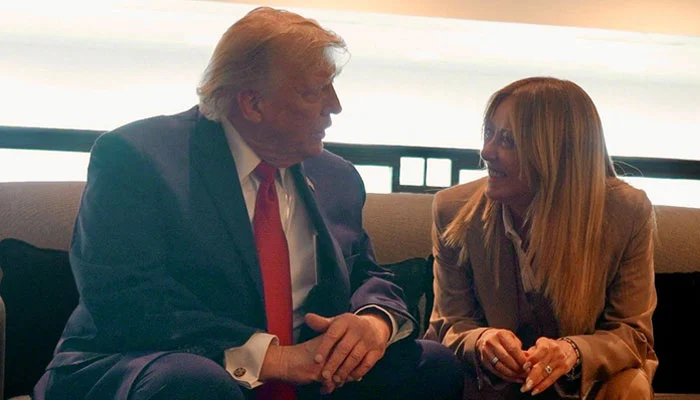
    Italian Prime Minister Giorgia Meloni accused former close ally Donald Trump of inventing a story about her on Friday after he claimed on an Italian TV channel that she had “begged” him to take a photo with her at the G7 summit. Meloni expressed her shock at his remarks, calling them “completely fabricated.” She criticized him for showing greater respect to Western enemies than to longstanding allies.

    This disagreement signals a notable deterioration in their relationship, following moments at the G7 in France that suggested the two populist leaders had mended some earlier strains caused by tensions over Iran’s war earlier this year.

    Video footage from the event in France showed Meloni and Trump engaged in conversation, but he later claimed he only indulged her by chatting. “She begged me to take a picture with her. She was eager for a photo with me. I wouldn’t have agreed, but I felt sorry for her,” Trump alleged, according to La7’s translation. The channel didn’t release the original audio, only a dubbed version.

    Meloni responded firmly: “Donald Trump’s statements are entirely false. I am genuinely surprised. I don’t understand why the U.S. President behaves this way towards allies—this isn’t the first time either.”

    She added: “It’s disappointing that he doesn’t show the same resolve with America’s enemies, instead treating their leaders with much more leniency. Just remember one thing: neither I nor Italy ever beg.”

    Following Trump’s mocking remarks, Italy’s foreign minister announced she was canceling her upcoming trip to the U.S., condemning Trump’s “offensive” words.

    “President Trump’s offensive comments are an insult to all of Italy,” said Foreign Minister Antonio Tajani in a post on X (formerly Twitter), revealing she was scheduled to visit the U.S. on June 21 and 22.

    Later, she distanced herself further from Trump, criticizing his comments about Pope Leo’s condemnation of Iran, and stating she no longer aligned with his stance on the conflict. Trump responded bluntly, accusing her of lacking courage.

  • Meloni’s quitting earns global praise from world leaders

    Meloni’s quitting earns global praise from world leaders

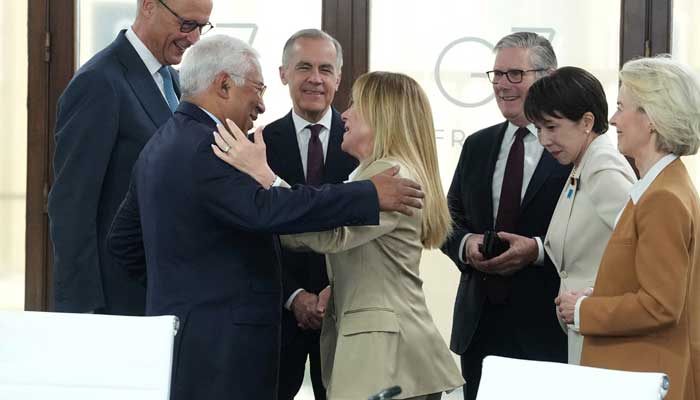
    German Chancellor Friedrich Merz, European Council President Antonio Costa, Canadian Prime Minister Mark Carney, Italian Prime Minister Giorgia Meloni, British Prime Minister Keir Starmer, Japan’s Prime Minister Sanae Takaichi, and European Commission President Ursula von der Leyen participate in a working session at the G7 summit in Evian-les-Bains, France, on June 16, 2026. — Reuters

    At this week’s G7 summit, Italian Prime Minister Giorgia Meloni earned praise from international leaders after announcing she has successfully quit smoking, marking a notable personal milestone. She was previously known for her heavy smoking habit, and made headlines when she joked that she could “kill someone” if required to quit.

    While she hasn’t shared details about her quitting process, during the summit, after ordering three coffees, the German chancellor inquired, “And a cigarette?”

    Meloni responded, “No, I stopped.”

    This reply was warmly received by her Japanese counterpart, Sanae Takaichi, who said, “You stopped. Bravo.”

    European Commission President Ursula von der Leyen, who is trained as a medical doctor, commented positively upon learning that Meloni had quit smoking about a month earlier, saying, “Good.”

    In October 2025, Meloni revealed that Turkish President Recep Tayyip Erdogan had once told her, “You look great. But I need to make you stop smoking.”

    The news also drew a reaction from French President Emmanuel Macron, who remarked, “It’s impossible.”

    Meloni replied, “I know, I know. I don’t want to hurt anyone.”

    Previously, in her book *Georgia’s Version*, based on a series of interviews, she disclosed that she had relapsed into smoking after abstaining for 13 years.

  • UN Experts Condemn Afghan Morality Police’s Attack on Women

    UN Experts Condemn Afghan Morality Police’s Attack on Women

    A group of UN experts on Thursday condemned the suppression of women in Afghanistan’s western city of Herat, reporting that at least two individuals had been killed during a protest protesting the new restrictions.

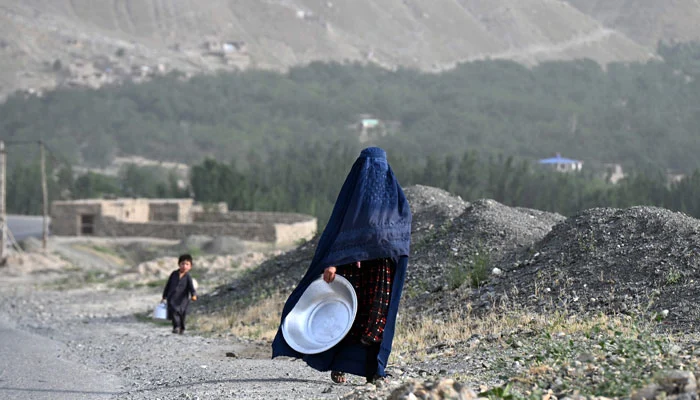
    Morality police in Herat began detaining dozens of women on Saturday for not wearing the full-body covering chador or burqa.

    The protest against the measures on Tuesday was forcibly dispersed, resulting in the death of a young boy, according to the UN, while witnesses told AFP that security personnel shot into the crowd. Authorities have denied using firearms.

    In a statement issued Thursday, ten independent experts appointed by the UN Human Rights Council reported that at least two individuals had lost their lives and more than 20 were injured.

    “The allegations that women were detained for dress code violations are deeply troubling and could amount to arbitrary and unlawful detention, as they seemingly punish women for exercising their rights to free expression and protection from gender discrimination,” the experts stated.

    They emphasized, “Equality, peaceful assembly, freedom of expression and movement, and protection against arbitrary detention are fundamental human rights.”

    The dress code is enforced by the Ministry for the Propagation of Virtue and the Prevention of Vice (PVPV), which mandates that women be almost entirely covered when outside their homes.

    Many women opt to wear a loose abaya, a Muslim headscarf, and a face covering instead of a chador or burqa.

    MSF Healthcare Worker Detained

    Among those detained in Herat was a medical professional employed by Doctors Without Borders (MSF).

    She was en route to her shift at Herat Regional Hospital’s pediatric ward when she was stopped by morality police on Saturday, accused of violating the dress code, according to the NGO.

    The medic was held for two days and released after signing a written pledge, along with her husband and relatives, to adhere to the dress requirements dictated by the PVPV.

    MSF expressed outrage over the detention of its staff member, asserting that “this incident is part of a broader pattern of severe restrictions women face in Afghanistan, limiting their movement and participation in public life.”

    The PVPV has yet to comment on the detention, despite requests from AFP. However, the department in Herat acknowledged that new regulations had been introduced recently and warned that violations could result in detention or imprisonment.

    A set of rules published Wednesday by Herat’s PVPV included bans on wearing makeup, displaying any hair outside clothing, and mandated wearing socks.

  • US Authorities Subpoena Political Streamer Hasan Piker

    US Authorities Subpoena Political Streamer Hasan Piker

    On Saturday, U.S. authorities issued subpoenas to controversial political commentator Hasan Piker and Medea Benjamin, co-founder of CODEPINK, following their recent visit to Cuba amid potential violations of sanctions and travel rules, according to Fox News.

    Both Piker and Benjamin traveled to Cuba in March 2026 as part of the “Nuestra América Convoy,” a humanitarian aid effort aimed at delivering food, medicine, and solar panels to those in need. The mission also served as a protest against the ongoing U.S. economic sanctions imposed on Cuba.

    The report from Fox News indicates that the subpoenas are being issued by the Treasury Department’s Office of Foreign Assets Control (OFAC), which is now investigating Piker and Benjamin for possible violations of U.S. sanctions laws concerning Cuba.

    US Authorities Issue Subpoenas to Political Commentator Hasan Piker

    JUST IN: 🇺🇸 Federal officials subpoena political streamer Hasan Piker. pic.twitter.com/hEEX5K7Inm

    It is also noted that individuals involved in the convoy may have established contact with Cuban officials.

    In response, Medea Benjamin took to social media, writing, “Taking medical supplies to pediatric hospitals in Cuba is now a crime? Saving the lives of babies is a crime? This administration’s actions are beyond grotesque.” Hasan Piker, who also uses the handle HasanAbi, reposted her message.

    Taking medical supplies to pediatric hospitals in Cuba is now a crime? Saving the lives of babies is a crime? This administration’s actions are beyond grotesque. https://t.co/xsvQGEYzb8 — Medea Benjamin (@medeabenjamin) May 24, 2026

    The controversy continues as U.S. investigations unfold regarding their trip and activities connected to Cuba.

  • Israel warns NYT of lawsuit over Palestinian inmates’ abuse report

    Israel warns NYT of lawsuit over Palestinian inmates’ abuse report

    Israel announced on Thursday that it plans to sue The New York Times over an article accusing the country of widespread sexual abuse against Palestinian detainees. Prime Minister Benjamin Netanyahu and Foreign Minister Gideon Saar instructed their offices to begin legal proceedings for defamation against the publication.

    Their statement condemned the article written by Nicholas Kristof, a well-known opinion columnist, calling it “one of the most grotesque and false stories ever published about Israel in the modern media,” and claimed that the newspaper had backing for these allegations. The report was based on testimonies from 14 individuals in the West Bank, claiming they had been sexually assaulted by Israeli settlers or security personnel.

    The article depicted a pattern of extensive sexual violence by Israeli soldiers, settlers, interrogators from the Shin Bet internal security agency, and prison guards, involving men, women, and children.

    The New York Times responded by dismissing the threat of legal action, asserting that the claim was baseless. Danielle Rhoades Ha, a spokesperson for the newspaper, described such threats as a “predictable political tactic” aimed at silencing independent journalism that challenges a particular narrative.

    Kristof’s article specifically noted that there was no proof that Israeli officials had ordered such rapes. The Israeli foreign ministry accused Kristof of relying on unverified sources linked to Hamas and alleged the article was timed to sabotage an Israeli report on Hamas’s sexual violence during its October 7, 2023, attack on Israel—published on the same day.

    Since the Hamas attack, thousands of Palestinians in the West Bank have been detained by Israeli forces. The U.S. has strong protections for journalistic freedom, requiring proof of malicious intent and factual falsity for libel cases. Despite this, President Trump and his supporters have filed multiple lawsuits against media outlets, some settling to avoid further consequences.

    — [Your rewritten content based on the provided article]

  • UK’s Starmer rejects calls to resign, focuses on governance

    A junior minister has resigned, urging the government to establish a clear timetable for leadership change. Over 80 members of Parliament are calling on Prime Minister Keir Starmer to set a resignation date, so a smooth transition can occur. Despite intense pressure, Starmer announced he would continue focusing on governing, dismissing recent calls for his departure following a severe election loss. During a cabinet meeting, he emphasized that while he accepts responsibility for the defeat, there’s no official move to trigger a leadership race.

    Starmer highlighted the instability of the past 48 hours, noting it’s damaging the economy and burdening families. He reaffirmed his commitment to government, stating, “The country expects us to focus on governing. That’s what I am doing, and that’s what we must do as a cabinet.” The market responded mildly with some rises in government bonds, but the overall trend remained negative for the day.

    This stance stands in contrast to many within his party. Several aides and more than 80 Labour lawmakers have publicly demanded he announce a resignation date, aiming for an orderly leadership transition. Last Monday, Starmer pledged to tackle Britain’s numerous issues more decisively. He also warned that the country wouldn’t forgive the Labour Party if it faced internal leadership struggles just two years after winning a significant parliamentary majority aimed at ending over a decade of political chaos post-Brexit.

  • Iranian envoy highlights Pakistan’s key role in US talks

    Reiterating Islamabad’s role, the Iranian ambassador highlighted its ongoing importance as a mediator in Tehran’s talks with the United States. “Pakistan continues to act as a facilitator, and no plans have been made to change that,” Reza Amiri Moghadam told an Iranian news outlet. He emphasized that progress depends on a shift in Washington’s stance.

    This statement followed US President Donald Trump’s recent remarks casting doubt on the viability of Iran’s latest peace initiative. Iranian state news agencies Tasnim and Fars reported that Tehran had presented a 14-point proposal to Pakistan for mediation on Saturday. The plan reportedly includes a ceasefire on all fronts and establishing a new framework for the Strait of Hormuz, a critical maritime route.

    Moghadam confirmed that Iran had shared a new negotiating plan with Washington through Pakistan. He praised Islamabad’s efforts in the diplomatic process as “valuable” and central to advancing negotiations. The ambassador stressed that Iran remains transparent about its demands but stressed that meaningful progress hinges on a change in US behavior. He reaffirmed that Tehran would not compromise its core interests or national security.

    Negotiations between Iran and the US have been at a standstill since the ceasefire on April 8, following a failed peace attempt in Islamabad. The conflict, which began after joint US and Israeli strikes on Iran on February 28, was temporarily halted through Pakistani mediation. The ongoing war has severely impacted the global economy, especially after Iran effectively closed the Strait of Hormuz—an essential transit point for energy shipments. Although Tehran reopened the strait briefly, it closed it again, citing US violations and naval blockades of Iranian ports.

    The ambassador also pointed out that the international community continues to observe Iran’s “clear and logical” stance while criticizing what he described as inconsistency in US policy. Emphasizing Iran’s dedication to diplomacy, Moghadam declared that Washington needs to abandon its aggressive approach and recognize Iran’s rights to facilitate negotiations.

    He also noted the strengthening political, economic, and trade ties between Iran and Pakistan, highlighting border crossings as vital for bilateral trade and regional connectivity.

  • U.S. Skips Congress Review on $8.6B Military Deal with Middle East Allies

    The Biden administration has authorized military sales exceeding $8.6 billion to key Middle Eastern allies, including Israel, Qatar, Kuwait, and the United Arab Emirates, without seeking approval from Congress. The State Department explained that an urgent situation necessitated immediate approval, prompting the waiver of standard congressional review procedures.

    On Friday, the department announced approvals for various military equipment, such as $4.01 billion worth of Patriot missile defense replenishment services to Qatar and nearly $1 billion for Advanced Precision Kill Weapon Systems (APKWS), also destined for Qatar. BAE Systems leads the principal contracting for APKWS deliveries to Qatar, Israel, and the UAE, while RTX and Lockheed Martin handle the integrated battle command system for Kuwait and Patriot missile systems for Qatar. Northrop Grumman is also involved in the Kuwaiti sale.

    Historically, Washington’s military partnerships with Kuwait, the UAE, and Qatar have been scrutinized due to concerns about these nations’ human rights records, including alleged restrictions and abuses targeting minorities, journalists, dissenters, the LGBTQ+ community, and laborers. Despite denial from these countries regarding such allegations, critics remain skeptical.

    Support for Israel continues to draw criticism, especially in light of its military operations in Gaza, which have resulted in significant civilian casualties, a humanitarian crisis, and accusations of potential genocide, prompting a UN investigation. Israel defends its actions as acts of self-defense following a deadly attack by Hamas fighters in October 2023. Throughout these conflicts, the U.S. has consistently supported its allies, sustaining its strategic and diplomatic relationships in the region.

  • US Official: Trump Dissatisfied with Iran’s New Peace Proposal

    The U.S. insists that nuclear issues must be addressed right from the beginning. President Trump expressed displeasure over Iran’s delay in reaching a deal concerning its nuclear program. Iran, on the other hand, demands that the blockade be lifted prior to any negotiations taking place.

    According to a U.S. official familiar with Monday’s meeting between the president and his advisers, Trump is frustrated with Iran’s latest proposal, which postpones discussions on its nuclear ambitions until the war is over and shipping disputes in the Gulf are settled. This stance is unlikely to satisfy Washington, which emphasizes that nuclear matters should be tackled immediately.

    White House spokesperson Olivia Wales stated that the U.S. “will not negotiate through the press” and has “been clear about our red lines,” as the Trump administration seeks to conclude the conflict with Iran, which it began in February alongside Israel.

    An agreement made in 2015 between Iran and several countries, including the U.S., severely limited Iran’s nuclear activities, claiming they were for peaceful purposes. However, that deal collapsed after Trump unilaterally withdrew during his first term.

    Efforts to revive peace negotiations have diminished, especially after the U.S. canceled a planned visit by special envoy Steve Witkoff and President’s son-in-law Jared Kushner to Islamabad last weekend. Meanwhile, Iranian Foreign Minister Abbas Araqchi met with officials in Oman and Russia, where he received support from longstanding allies.

    Oil prices increased once again as negotiations stalled, with early Asian trade showing gains on Tuesday. Market analyst Fawad Razaqzada noted that traders are more concerned with the actual flow of oil through the Strait of Hormuz rather than rhetoric, and that this flow remains restricted. Recent days have seen at least six Iranian oil tankers turned back to Iran due to U.S. sanctions, severely impacting maritime traffic.

    Iran’s foreign ministry condemned the U.S. seizures of Iranian-linked tankers as “piracy and armed robbery on the high seas,” via social media. Normally, 125 to 140 ships transit the Strait of Hormuz daily, but only seven have crossed in the past 24 hours, and none carried oil for global markets, according to ship-tracking data.

    With President Trump’s approval ratings declining, domestic pressures mount to end a conflict that he has justified with shifting rationales. In Russia, Araqchi revealed that Trump asked for negotiations because the U.S. had achieved no tangible objectives.

    Iranian officials, speaking under anonymity, shared details of a proposal presented over the weekend, which outlines a staged approach: first ending the U.S.-Israeli sanctions against Iran and securing guarantees that hostilities won’t restart; then resolving the U.S. naval blockade and reopening the Strait of Hormuz under Iran’s control; and finally, addressing broader issues like Iran’s nuclear rights—a stance Iran insists should include acknowledgement of its right to uranium enrichment.

  • Magyar Times: Ousted Orban’s Trump-backed 16-year reign in Hungary election

    Magyar Times: Ousted Orban’s Trump-backed 16-year reign in Hungary election

    Viktor Orban, Hungary’s longtime nationalist leader, lost his grip on power to the new center-right Tisza Party in Sunday’s national elections after 16 years in office. This defeat marks a significant setback for his supporters in Russia and the White House under President Donald Trump.

    At 62, Orban was praised across Europe and the U.S. as the architect of the “illiberal” democratic model. However, his popularity waned domestically as voters grew tired of sluggish economic growth, global isolation, and the rise of oligarchs accumulating wealth.

    His decisive loss gave Tisza’s Peter Magyar, 45, a strong majority in Hungary’s 199-seat parliament, paving the way for substantial reforms. Critics in the European Union argued that Orban’s previous governance had undermined democratic standards.

    With nearly all votes tallied, Tisza was projected to secure 138 seats—more than the two-thirds majority needed to reverse Orban’s constitutional changes and tackle corruption. Sunday’s record-high turnout showed how deeply Hungarians viewed this election as a pivotal moment.

    Magyar told tens of thousands of supporters along Budapest’s Danube River embankment, “We did it. Tisza and Hungary have won this election,” as supporters danced and cheered. Many held candles as Sinatra’s “My Way” played, and Magyar declared, “Together, we’ve replaced Orban’s system, liberated Hungary, and reclaimed our country.”

    Magyar framed the election as a choice between “East and West,” warning that Orban’s confrontational approach toward Brussels could steer Hungary further away from European integration. Orban responded that Tisza would drag Hungary into an unwanted conflict with Russia—a claim Magyar denied.

    “While the result hurts us, it’s unmistakably clear,” Orban said from Fidesz’s campaign headquarters. Some supporters mourned outside, crying as they watched his speech on TV.

    The end of Orban’s 16-year rule is expected to have broad implications beyond Hungary—affecting the European Union, Ukraine, and international relations. Many EU leaders hope that Hungary’s previous antagonistic stance will soften, potentially unlocking a €90 billion ($105 billion) aid package for Ukraine that Orban blocked.

    Analyst Mujtaba Rahman from Eurasia Group said Magyar is positioned to follow through on vows to curb corruption and remove Fidesz loyalists from key positions. “Regarding Ukraine, Magyar appears ready to facilitate the transfer of €90 billion to Kyiv. Pre-election caution has eased, and Hungary is likely to gradually align more closely with EU norms on most issues,” Rahman explained.

    Some Brussels diplomats noted that issues like migration remain challenging, but they see Hungary as a partner with whom they can work.

    Ukrainian President Volodymyr Zelensky congratulated Magyar, expressing readiness to collaborate on strengthening Europe and maintaining peace. “A constructive approach has triumphed,” Zelensky tweeted.

    Orban’s departure could also allow Hungary to access EU funds suspended over concerns about democratic backsliding—a development closely watched by financial markets.

    European Commission President Ursula von der Leyen reflected, “Hungary has chosen Europe. Europe has always chosen Hungary,” after partial election results surfaced.

    His exit also signifies the loss of a key EU ally for Russia’s Vladimir Putin and would send shockwaves through Western right-wing circles, including the White House.

    Orban had garnered support from the Trump administration, highlighted by Vice President JD Vance’s recent visit to Budapest, as well as backing from Moscow and far-right factions across Europe. However, allegations of government collusion with Moscow during his campaign challenged his image, which he denied, asserting his focus on protecting Hungarian identity and Christian values within a secure EU environment.

    A 24-year-old supporter named Dorina Nyul expressed excitement, saying, “This feels like our only real chance in a long time to actually change the system. I can’t even describe how it feels.”

  • Trump warns oil and gas prices could stay high through November elections

    Trump warns oil and gas prices could stay high through November elections

    • Trump declares a naval blockade of the Strait of Hormuz.
    • A Democratic senator criticizes the U.S. president’s current approach.
    • Since initiating conflict with Iran, Trump’s approval ratings have declined.

    On Sunday, President Donald Trump indicated that fuel prices, including oil and gasoline, are likely to stay high until after the November midterm elections. This acknowledgment is uncommon and suggests the potential political consequences of his recent decision to strike Iran six weeks prior.

    When asked during an interview on Fox News’s “Sunday Morning Futures with Maria Bartiromo” if fuel prices would decrease by the fall, Trump replied, “It could stay the same, or maybe even get a little higher, but mostly it should be about the same.”

    Data from GasBuddy shows that regular gasoline at U.S. service stations has topped $4 per gallon for much of April. Trump’s comments follow weeks of insisting that the price surge is temporary, though his top advisors are aware of the economic impacts of the ongoing conflict.

    Earlier Sunday, Trump announced on social media that the U.S. Navy would impose a blockade of the Strait of Hormuz, targeting any ships paying tolls to Iran. This move comes after prolonged talks between the U.S. and Iran in Pakistan failed to produce a peace agreement.

    “No one paying an illegal toll will be allowed safe passage on the high seas,” he posted on Truth Social.

    Any U.S. blockade complicates efforts to resolve the crisis, which is currently under a fragile two-week ceasefire. This tactical shift responds to Iran’s own restrictions on critical shipping lanes, which have caused global oil prices to jump roughly 50%.

    Unpopular Conflict and Its Impact on Trump’s Support

    The conflict with Iran, initiated on February 28 through coordinated U.S. and Israeli airstrikes, has escalated as Iran and its allies launched attacks on neighboring nations, with Israel targeting Hezbollah in Lebanon.

    The war has shaken global markets and resulted in thousands of civilian casualties, primarily in Iran and Lebanon.

    Back home, Trump’s approval ratings have taken a hit, with many Americans unhappy about rising fuel costs and the ongoing hostilities. This decline has fueled fears among Republicans that the party might lose control of Congress in the upcoming midterms. A Democratic majority could investigate the Trump administration and prevent much of his legislative agenda from advancing.

    Senator Mark Warner from Virginia, the top Democrat on the Senate Intelligence Committee, expressed skepticism about Trump’s proposed blockade strategy.

    “I don’t see how blockading the strait will pressure Iran to open it,” Warner said on CNN’s “State of the Union.”

    On CBS’s “Face the Nation,” Warner added, “Iran could still mine the strait or deploy bombs against ships, so how exactly will this lower gas prices?”

    While Trump has claimed the conflict would end soon, Senator Ron Johnson of Wisconsin told ABC’s “This Week” that achieving U.S. objectives could be a lengthy process.

    “It’s going to be a long-term effort,” Johnson said. “I never expected this to be a quick or easy fix.”