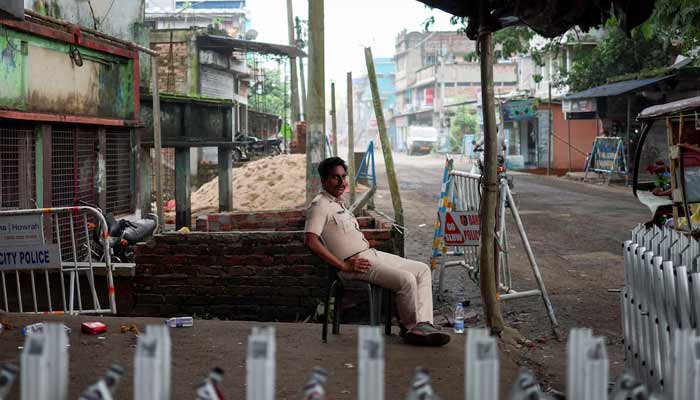
On a Saturday evening this month, an 11-year-old girl left her home to attend a friend’s birthday party in a small town in eastern India. She never made it back.
According to a local police officer, she was abducted, assaulted, placed in a sack, and then thrown into a pond while still alive by a group of men.
This incident highlights the ongoing brutal sexual violence prevalent throughout India, where over 80 rapes are reported daily to law enforcement, based on figures from the National Crime Records Bureau. Many more assaults remain unreported due to victim-blaming and shame, activists note.
Deep-rooted patriarchy and misogyny, understaffed police forces, and lengthy judicial processes contribute to a sense among many perpetrators that they can escape punishment for assaulting women. This perceived impunity encourages the continued spread of such crimes, activists say.
The 2012 gang rape and murder of a student in Delhi led to significant legal reforms, including harsher penalties for offenders and the creation of fast-track courts. Despite India’s economic growth and rise into the ranks of the world’s top economies, its record on sexual violence remains troublingly unchanged.
In Baruipur, locals—among them her 46-year-old father—watched in shock as her lifeless body, marred by bite marks and bruises, was recovered from a pond strewn with trash the morning after she disappeared, according to police and local residents.
“My mind is blank. I haven’t been able to think straight for days,” her father told Reuters.
Reuters is not revealing the identities of the girl and her family due to Indian laws that prohibit sharing details that could identify victims or survivors in such cases.
The incident has put Prime Minister Narendra Modi’s Bharatiya Janata Party under scrutiny just months after it gained control of West Bengal—where Baruipur is located—with promises to improve women’s safety. Nonetheless, activists argue that no political change can address the foundational issues: patriarchy that dominates many Indian communities, lack of gender-sensitive officials in police and judicial institutions, and violence linked to caste divisions.
India reported 29,536 rapes in 2024, a figure that has remained relatively stable in recent years, even as crimes involving children have surged over the past decade. The number of cases filed under the Protection of Children from Sexual Offences (POCSO) Act hit a record high of 69,191.
In just the past month, two more high-profile cases have captured national attention. In Rajasthan, a 12-year-old girl was abducted, drugged, and assaulted over four days at various hotels before police rescued her. Since then, 22 suspects have been arrested. Meanwhile, a report from the Times of India detailed the rape and murder of a 7-year-old girl, whose body was discarded in an empty shaft of an under-construction mall near India’s parliament.
Legal expert Karuna Nundy, who helped draft anti-rape legislation, said that no government has made a serious effort to eradicate the misogyny and patriarchy at the core of these crimes.
“There needs to be ongoing work to change attitudes within communities,” she stated. “It’s crucial to appoint trained police officers and judges who understand these issues from a gender-sensitive perspective.”
Despite tougher sentences enacted after the 2012 Delhi bus case, which sparked nationwide protests, little change has occurred. “Nothing will shift just because the government changes,” said Kolkata-based gender rights activist Satabdi Das. “This is a deeply rooted cultural issue, not confined to West Bengal but present across India.”
The government had planned to establish 2,600 fast-track courts dedicated to sexual violence cases by 2026. However, official data show only 755 such courts are operational nationwide, including 410 specialized for child abuse cases.
India’s National Commission for Women has pointed out that the Baruipur incident exposes significant administrative failures, policing gaps, and weak oversight that have allowed such crimes to persist.
Rajasthan police officials reported swift action in the abduction case, including the arrest of suspects and rescue efforts. In the Baruipur case, the girl’s family believes a rapid police response might have saved her life. “Other than asking around locally, the police didn’t do much that night,” a family friend told Reuters. Residents had to turn detective themselves, reviewing CCTV footage to help the investigation.
Police spokesperson Arvind Kumar Anand said the department is reviewing internal reports to determine where mistakes may have been made.
Public frustration over sluggish legal proceedings has also fueled support for extrajudicial killings, where police shoot suspects in disputed circumstances. In Baruipur, one suspect was killed after allegedly resisting arrest and attempting to snatch a weapon, police said. A West Bengal government minister claimed four suspects had been arrested and one was killed in a police encounter, framing it as a message of firm action.
However, human rights advocates warn that such killings bypass judicial processes and weaken the rule of law. “Police shootings are often more about creating a spectacle to appease public anger,” said activist Vrinda Grover. “Rather than deterring crime, they empower arbitrary use of police authority over civilians’ lives.”