
الوسم: patient care

  • Can AI Step in as Your Doctor’s New Partner?

    Can AI Step in as Your Doctor’s New Partner?

    Imagine going to the doctor with an AI system quietly working in the background. It could analyze your symptoms, review your medical history, suggest tests, recommend treatments, and monitor your progress across multiple visits. While this might sound like science fiction, recent research indicates it could become a reality someday.

    Two new studies published in the journal Nature detail advanced AI systems that performed impressively in simulated patient care scenarios. These systems, named MIRA and AMIE, demonstrate that conversational AI might assist with many complex decisions involved in disease management.

    Healthcare systems worldwide are facing mounting challenges. Many nations are experiencing shortages of doctors and nurses, while people are living longer and developing chronic conditions that require continuous care. Medical professionals often manage large caseloads and process vast amounts of information daily.

    AI has already shown notable success in areas like language translation, image analysis, and coding. In medicine, some AI tools can detect abnormalities in scans or summarize patient records—though most are designed for single tasks. Patient care, however, involves integrating diverse information and making decisions that evolve as new data emerges. Doctors ask questions, order tests, interpret results, choose treatments, track progress, and adjust plans over time.

    Researchers aimed to see if AI could handle such complex medical reasoning. The first study focused on MIRA—short for Medical Intelligence for Reasoning and Action—created by Jakob Kather and colleagues. MIRA was tested with data from more than 500 real emergency room cases. It interacted with virtual patients, whose responses were based on actual medical records, asking questions, gathering info, and selecting from over 85,000 possible medical actions. MIRA could order tests, interpret results, recommend medications, arrange procedures, and decide if hospital admission was necessary. It correctly identified diagnoses in nearly 88% of cases, compared to an average of about 78% accuracy among six doctors from different specialties.

    The second study examined Google’s AMIE—short for Articulate Medical Intelligence Explorer. Unlike systems focused on single visits, AMIE was designed to manage patient conversations across multiple appointments and track disease progression over time. Researchers compared AMIE to 21 primary care physicians across 100 simulated cases involving five specialties, following established British medical guidelines. AMIE performed on par with, or better than, physicians overall, especially in selecting appropriate tests and treatments and adhering to clinical guidelines. They also developed a new test called RxQA to evaluate medication reasoning, where AMIE outperformed doctors in particularly challenging cases.

    Despite these promising findings, experts caution that since the studies used simulated scenarios, the results do not mean AI is ready for independent clinical practice. Real-world cases often involve unexpected complications, multiple illnesses, communication barriers, and social factors influencing care. Additionally, medicine relies heavily on trust, empathy, and human connection—areas where doctors are still essential.

    The overall outlook suggests AI could serve as a powerful support tool rather than a replacement for physicians. Future systems might help organize information, reduce administrative burdens, suggest evidence-based treatments, and catch issues that might otherwise be missed. However, extensive real-world testing will be crucial before integrating these technologies into standard patient care.

    These studies mark an important step forward, offering a glimpse into a future where doctors and AI collaborate to enhance healthcare outcomes globally.
  • AI Can Diagnose and Treat Just Like Doctors

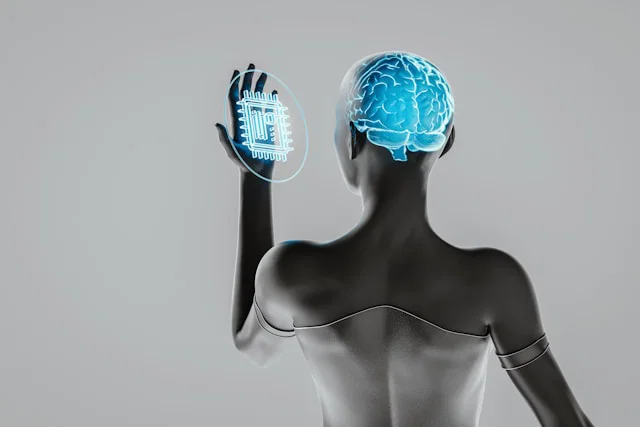
    AI Can Diagnose and Treat Just Like Doctors

    Artificial intelligence is increasingly integrating into daily life, from composing written content and answering inquiries to aiding in the creation of images and software. Recently, researchers have started investigating a crucial new application: can AI assist medical professionals in caring for patients?

    A study published in the journal Nature highlights that advanced AI systems might support doctors across many aspects of patient care. The research introduces two innovative AI tools named MIRA and AMIE, both capable of performing various medical tasks. These range from collecting patient information and diagnosing conditions to recommending treatments and planning follow-up procedures.

    The significance of these developments is heightened by global healthcare challenges such as doctor shortages, aging populations, and escalating chronic illnesses. Physicians often face long hours and limited direct time with each patient, prompting hope that AI could help alleviate some of these burdens.

    Most existing healthcare-focused AI tools target narrow functions—for example, detecting cancer in scans or summarizing patient records. However, real-world medical decision-making involves complex reasoning and multitasking—collecting symptoms, reviewing histories, ordering tests, interpreting results, and adjusting treatments as conditions evolve. Researchers questioned whether AI could handle such multifaceted reasoning.

    The first system, MIRA (Medical Intelligence for Reasoning and Action), was developed by a team led by Jakob Kather. Tested with real-world data from over 500 emergency department cases, MIRA interacted with virtual patients—responses modeled after actual clinical notes—by asking questions and gathering information much like a clinician would. It had access to a database of more than 85,000 possible actions, including ordering tests, reviewing results, recommending therapies, prescribing medications, scheduling procedures, and deciding hospital admissions. Impressively, MIRA achieved nearly 88% accuracy in diagnoses, outperforming a diverse panel of six physicians, who averaged about 78%.

    The second AI system, AMIE (Articulate Medical Intelligence Explorer), was developed by Google researchers using the Gemini AI framework. Unlike earlier platforms, AMIE could analyze multiple patient visits over time, tracking disease progression and treatment effectiveness. In a comparison with 21 primary care doctors using 100 simulated patient scenarios across five specialties—based on UK clinical guidelines—AMIE performed on par with experienced physicians in overall reasoning. In some instances, it even demonstrated superior precision, especially in testing and treatment recommendations, and adhered closely to established guidelines. Additional testing with a new benchmark called RxQA, focused on medication reasoning, showed AMIE outperformed physicians on particularly challenging cases.

    Despite these promising results, experts caution that neither AI system is ready to replace doctors. Medical practice encompasses much more than decision-making from data—communication, understanding individual patient preferences, recognizing atypical cases, and making nuanced judgments in real-world settings are beyond the current scope of AI.

    Limitations of the studies include their reliance on virtual scenarios rather than real clinical environments. Future research must establish whether these systems can perform robustly in busy hospitals and clinics with real patients and unpredictable situations.

    The emerging view suggests that conversational AI tools might serve as valuable assistants rather than replacements, helping healthcare providers gather information, generate differential diagnoses, confirm treatment guidelines, and streamline routine tasks. If further validation confirms their safety and effectiveness, AI could become a vital partner in enhancing healthcare quality and efficiency, particularly in regions facing healthcare worker shortages.

  • Research reveals why many seniors continue dangerous medications

    Research reveals why many seniors continue dangerous medications

    Medications impacting brain function are commonly prescribed to older adults, but they can sometimes do more harm than good. Drugs like antipsychotics, sleep aids, and anxiety medications may cause side effects such as confusion, falls, and memory decline.

    These dangers are especially significant for individuals already experiencing cognitive issues, including dementia. A recent UCLA study published in JAMA Network Open sheds light on where these medications typically start and why they continue to be used.

    The research tracked over a thousand seniors across the United States over multiple years. The goal was to identify the initial points of prescription for drugs that influence cognition and to examine how long patients kept using them.

    Results revealed that many of these prescriptions are not initiated in standard doctor’s offices. Instead, they often begin in hospitals, emergency rooms, and nursing homes—places where patients might be facing acute health problems or recovering from illness.

    This is critical because decisions made in these settings can have lasting impacts. Once a medication is started, it often keeps being used even after patients return home. The study found that a significant number of individuals continued taking these drugs one year after they were first prescribed.

    Particularly troubling were findings related to patients with dementia. They were more likely to be prescribed these medications and to sustain their use over time. For instance, over half of the dementia patients who began taking such drugs were still on them a year later.

    The study also indicated that these medications are more frequently prescribed in hospital settings than expected, based on patient visits. This pattern suggests that hospitals and similar facilities may play a key role in initiating treatments with potential long-term risks.

    These insights could help improve healthcare practices. By focusing on where prescriptions originate, medical systems can develop strategies to lessen unnecessary medication use. Measures might include reviewing medications before discharge or establishing clearer guidelines for prescribing.

    The research raises important questions about why these medications are initially prescribed. Prior studies indicate many prescriptions for brain-affecting drugs lack a clear medical justification, implying some patients might be on medications they don’t truly need.

    There are limitations to the study, such as the inability to always verify the exact origin of prescriptions, but overall, the trends observed are consistent and compelling.

    In summary, hospitals and similar care environments are key points where medications affecting brain health are often started. These drugs frequently remain in use long after the initial prescription, especially among dementia patients.

    Understanding this pattern allows clinicians and policymakers to implement better measures, aiming to reduce risks and enhance care for older adults. Future strategies should prioritize safer, more deliberate prescribing—especially in high-risk healthcare settings.

    If you’re interested in dementia prevention, explore studies suggesting that eating apples and drinking tea might help delay its onset, along with the benefits of daily olive oil intake for brain health.

    For additional health insights, check recent research on how combined eating habits could influence dementia risk or how time-restricted eating offers a straightforward approach to combat aging and cancer.

    Source: University of California, Los Angeles.