Tag: parliament

  • Indian Defense Minister Faces Calls to Resign Over May Conflict Cover-up

    Indian Defense Minister Faces Calls to Resign Over May Conflict Cover-up

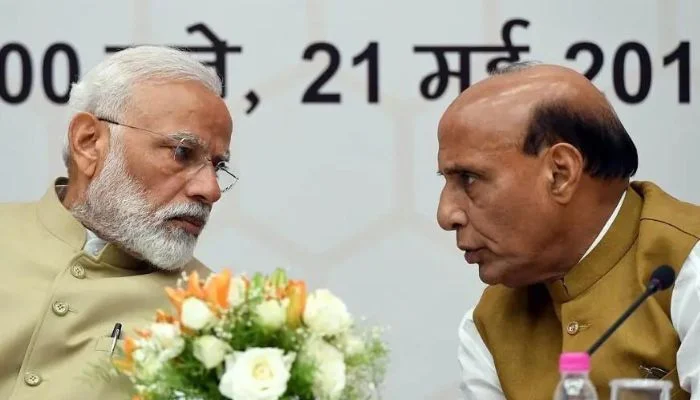
    India’s main opposition Congress party has called for Defense Minister Rajnath Singh to step down, accusing him of providing false information to Parliament regarding military casualties during the May 2025 conflict with Pakistan, according to reports from Indian media on Wednesday. The Congress party also urged Prime Minister Narendra Modi to issue an apology for the deaths of six service members during the operation.

    These demands follow the Indian government’s official release on June 26 of the names of six military personnel who lost their lives in the conflict. The identities were added to the Roll of Honor on the National War Memorial website, marking the first official acknowledgment of casualties from Operation Sindoor, as reported by The Hindu.

    The hostilities erupted on May 6-7 last year, when India launched an unprovoked attack on Pakistan after an assault on tourists in Pahalgam, a town in Indian-administered Jammu and Kashmir. During the 87-hour clash, Pakistan shot down eight Indian fighter jets, including French-made Rafale aircraft, along with numerous drones. The conflict concluded on May 10 with a ceasefire brokered by the United States.

    At a press conference, retired Colonel Rohit Chaudhry, head of Congress’s Ex-servicemen Department, and retired Wing Commander Anuma Acharya accused the government of concealing information about the deaths of five Indian Army soldiers and one Indian Air Force officer. They argued that the delay in releasing casualty details deprived these personnel of the recognition and honors they deserved.

    “Rajnath Singh lied in Parliament when he claimed no soldier had been lost, and BJP Members of Parliament applauded. The foundation of the Modi government rests on deception. They have no right to remain in power,” a Congress representative asserted.

    In a related development, India Today reported that MP K.C. Venugopal filed a privilege motion against the defense minister Tuesday, alleging that Singh misled Parliament about the deaths of six Indian military personnel—five from the Army and one from the Air Force.

  • Iran’s Ghalibaf to lead diplomatic ties with China: Media

    Iran’s Ghalibaf to lead diplomatic ties with China: Media

    Ghalibaf has recently become a prominent figure in Iran’s foreign policy. Iran’s president, Pezeshkian, has recommended that Ghalibaf take on a new diplomatic role. He is now tasked with managing Iran’s relationships with China across various sectors.

    According to Iranian media, Ghalibaf was appointed as a special envoy for China affairs, a decision made by Iranian President Pezeshkian and approved by Supreme Leader Ayatollah Khamenei. His new responsibilities include coordinating multiple facets of Iran-China relations.

    Historically, Ali Larijani, a former security chief who was killed in US-Israeli attacks in March, held a similar position. Larijani played a significant role in advancing negotiations with China, culminating in a 25-year cooperation agreement in 2021.

    Since the outbreak of conflict on February 28 involving Israel and the US, Ghalibaf has risen as a key figure in high-stakes diplomacy, leading Iran’s limited negotiations with the US in April. Several top Iranian officials, including former Supreme Leader Ali Khamenei, have been assassinated amid the ongoing war, which has spread throughout the Middle East before a fragile ceasefire was established in early April.

    Recently, Iran has permitted several Chinese ships to pass through the vital Strait of Hormuz for the first time since the conflict began, a strategic waterway critical for global energy supplies. The Revolutionary Guards stated that the ships moved through after reaching an agreement on Iran’s maritime protocols.

  • Modi Advocates for Greater Women’s Representation in Parliament Reform

    Modi Advocates for Greater Women’s Representation in Parliament Reform

    The Indian government is undertaking a comprehensive effort to reform its democratic framework. On Thursday, they introduced legislation aimed at expanding Parliament’s size and accelerating plans to reserve one-third of legislative seats for women. Opponents criticized these moves as attempts to influence electoral outcomes.

    Prime Minister Narendra Modi announced in the lower house of Parliament that these proposals, which also involve increasing the number of legislative members and women in regional assemblies and redistricting constituencies, would steer India toward a “new trajectory.” He expressed confidence that amplifying women’s voices would infuse the parliamentary process with fresh perspectives, strength, and increased sensitivity.

    The government explained that the adjustments to electoral boundaries are based on demographic shifts since the last seat allocations, which were set following the 1971 census.

    Opposition parties contend that changing constituency boundaries in this manner is unconstitutional. Since Modi’s ruling coalition, the National Democratic Alliance, lacks the supermajority required to pass the bills alone, they are seeking support from smaller parties and other opposition groups.

    While most opposition factions support quotas for women, they allege that the government is attempting to manipulate the system for political gain. They plan to oppose the legislation’s passage later this week. The Congress Party, leading the main opposition alliance, urged that the process be straightforward so that the women’s reservation can be implemented immediately once approved.

    The legislation proposes an increase in the lower house of Parliament by approximately 55%, raising the total seats to around 850 by the 2029 elections, with similar growth in state legislatures. The plan also includes reserving one-third of these new seats for women by that same year. This quota was originally established in legislation passed in 2023 but was tied to the upcoming census, delaying its implementation beyond the next election. Additionally, these proposals require approval from at least half of the state legislatures to become law.

    Currently, women in India represent nearly half of the country’s 968 million voters but hold only about 14% of seats in the lower house and 17% in the upper house of Parliament. Women constitute roughly 10% of state legislative members.

  • Nepal’s Rapper-Driven Centrist Party Nears Election Victory

    Nepal’s Rapper-Driven Centrist Party Nears Election Victory

    Nepal’s centrist RSP party, led by rapper-turned-politician Balendra Shah, secured a clear majority in the direct parliamentary elections, with partial official results indicating a strong lead and suggesting a landslide victory. The 35-year-old Shah’s Rastriya Swatantra Party (RSP) also led in the proportional representation votes, according to announced results and trends from the election commission.

    This election marked the first since the youth-led anti-corruption protests in September 2025, which resulted in the government’s fall. Shah himself defeated veteran four-time Prime Minister KP Sharma Oli in his own constituency—Oli’s Marxist-led government was ousted amid last year’s violence.

    His victory over the 74-year-old Oli and his rise from the mayor of Kathmandu to a potential prime minister highlights a dramatic shift in Nepali politics. The September protests, driven broadly by Generation Z under a loose banner, initially started over a social media ban but quickly expanded into a wider movement against corruption and economic struggles.

    Elections for Nepal’s 275-seat House of Representatives took place on Thursday, with 185 seats filled through direct votes and 110 through proportional representation. Election observers from the Asian Network for Free Elections described the voting process as peaceful and reflective of continued democratic engagement despite recent political turmoil.

    As of Sunday afternoon, 153 of the direct election results had been announced. Shah’s RSP led with 117 wins, followed by the Nepali Congress with 17, and Oli’s Marxist party trailing with seven. Prominent leader Pushpa Kamal Dahal, a three-time prime minister and former Maoist guerrilla commander, also secured his seat, with his party holding a total of seven seats.

    Trends indicated that Shah’s RSP was also leading in eight of the remaining 12 direct constituency races. In the proportional representation tally, RSP was further ahead with nearly half of the votes counted, though final tallies might take several days.

    Nepali Congress, the previous coalition’s largest party, saw its new leader, Gagan Thapa, defeated by Shah’s party. Election officials assured the public that counting was proceeding smoothly, with results expected soon for all direct races and additional days needed for the proportional representation results.

    Shah celebrated his victory Saturday evening with a parade through his new constituency, donning his signature dark sunglasses and greeting the crowds from a sunroof, where supporters chanted “Balen”—his nickname. Oli, who congratulated Shah, wished him “a smooth and successful five-year term.”

    Meanwhile, Nepal’s government-formed investigation commission into the September 2025 violence submitted its report Sunday, although no one has yet been held accountable for the deaths. The findings remain confidential pending public release. The commission collected evidence from over 200 witnesses and compiled a 900-page report, with an additional 8,000 pages of supplementary material. Its conclusions and recommendations are now with interim Prime Minister Sushila Karki for action.

    Oli denies ordering security forces to fire on protesters and attributes the violence to infiltrators, dismissing responsibility.

  • Newly Sworn-In Members of Bangladesh Parliament

    Newly Sworn-In Members of Bangladesh Parliament

    Bangladesh’s recently elected Members of Parliament took their oaths on Tuesday after a landmark election resulted in a victory for the Bangladesh Nationalist Party. The swearing-in ceremony in Dhaka was attended by delegates from multiple regional and Muslim nations.

    The event, held at the parliamentary complex, began with verses from the Holy Quran, followed by the oath administered by Bangladesh’s Chief Election Commissioner, AMM Nasir Uddin.

    This story is still developing and will be updated with additional details as they become available.

  • New Zealand’s Landmark Vote Scheduled for November 7

    New Zealand’s Landmark Vote Scheduled for November 7

    Wellington: New Zealand Prime Minister Christopher Luxon announced that national elections will be held on November 7, emphasizing his administration’s achievements in the economy and crime reduction.

    Luxon noted that the election date, set one month after the All Blacks’ home game against Australia, was partly chosen based on the country’s sports schedules.

    A recent Taxpayers Union/Curia poll from last month showed the opposition Labour Party leading narrowly with 31.6% support, compared to 30.0% for Luxon’s Conservative National Party. However, the same survey indicated that Luxon’s coalition government is likely to stay in power, thanks to the backing of its partner parties.

    Luxon pledged to fulfill his government’s promise to focus on fundamental issues. “When we took office, the country was headed in the wrong direction. It has taken significant effort over the past two years to start reversing that trend,” he told reporters.

    “The economy is improving, with growing confidence among businesses and consumers. Manufacturing and construction are booming, and exports are performing exceptionally well.”

    He also mentioned that inflation has dropped from 7% under the previous administration to under 3%.

    Luxon highlighted a new free trade agreement with India, expecting legislation to ratify it to pass later this year.

    On crime, he praised his government’s efforts, stating, “Law enforcement is more visible on the streets, crime victims have decreased by 38,000, youth offending has fallen 16%, and ram raids have dropped 85%.”

  • Japan’s Takaichi: Only 2-4 Hours Sleep Per Night

    Japan’s Takaichi: Only 2-4 Hours Sleep Per Night

    Japanese Prime Minister Sanae Takaichi revealed on Thursday that she averages only two to four hours of sleep each night, drawing criticism for promoting overworking. Her sleep schedule came to light after she caused a stir by organizing a staff meeting at 3 a.m. in her office to prep for a parliamentary session.

    “I sleep about two hours now, four hours at most. I feel it’s bad for my skin,” she told a legislative committee when questioned about the importance of reducing Japan’s famously long working hours.

    Japan has historically struggled with maintaining a healthy work-life balance, with many workers experiencing intense pressure at their jobs. The country even has a term—“karoshi”—to describe death caused by overwork.

    Takaichi also addressed her government’s discussions about potentially raising the maximum allowable overtime hours to boost the economy. She defended the conversation, stating that workers and employers have differing needs. Some individuals choose to hold two jobs to make ends meet, she explained, while companies typically enforce strict overtime limits.

    She emphasized that any policy changes would prioritize protecting workers’ health. “Ideally, if we can create a situation where people can balance childcare, caregiving, work, leisure, and relaxation according to their wishes, that would be perfect,” she said.

    Last month, Takaichi became Japan’s first female prime minister. After her election as the leader of the Liberal Democratic Party, she vowed to “discard the term ‘work-life balance’ for myself. I will work, work, work, and work.”

    Since taking office, she has maintained a busy schedule, participating in regional meetings and holding bilateral discussions with U.S. President Donald Trump, Chinese President Xi Jinping, and South Korean President Lee Jae-myung.

  • Germany ends expedited citizenship program

    Germany ends expedited citizenship program

    Germany’s parliament on Wednesday revoked a streamlined citizenship program, highlighting the changing attitudes toward migration in Europe’s economic powerhouse.

    During this year’s election campaign, Chancellor Friedrich Merz’s conservative party committed to repealing the law that allowed highly integrated migrants to acquire German citizenship after just three years instead of the usual five.

    Interior Minister Alexander Dobrindt emphasized that a German passport should symbolize successful integration rather than serve as an enticement for illegal immigration.

    The remaining provisions of the new citizenship law, a key accomplishment of former Chancellor Olaf Scholz’s coalition government, will stay in place despite conservative promises to overturn certain reforms—such as removing dual citizenship allowances and shortening the residency requirement from eight to five years.

    The Social Democrats, now the junior partners in Merz’s government, defended their support, noting that few applicants utilized the fast-track process, and that the main liberalization principles remain intact.

    In 2024, a record 300,000 people became citizens, but only a few hundred went through the expedited route, which was originally intended to attract highly skilled individuals to Germany amid severe labor shortages. Applicants must demonstrate notable achievements, like fluency in German, voluntary service, or professional and academic success.

    Filiz Polat of the Greens stated, “Germany is competing globally to attract top talent, and if talented individuals choose Germany, we should do everything we can to retain them.”

    Public sentiment toward immigration has soured considerably, partly because high migration levels have strained local services. This shift in opinion has helped propel the far-right Alternative for Germany (AfD) to lead in some polls.

  • French Parliament to Oust PM in Blow to Macron

    French Parliament to Oust PM in Blow to Macron

    France’s parliament is poised to remove Prime Minister François Bayrou on Monday after only nine months in office, introducing new political instability for the EU’s key member country and presenting President Emmanuel Macron with a difficult choice.

    Bayrou shocked even his allies by calling for a confidence vote to break a prolonged deadlock over his austerity budget, which proposes nearly 44 billion euros ($52 billion) in cuts to reduce France’s debt.

    All opposition parties have declared they will oppose his minority government, making it unlikely he will secure the majority needed in the 577-seat National Assembly to stay in power.

    This would make Bayrou the second French prime minister in a row to be ousted after Michel Barnier was dismissed in December after a brief three-month tenure.

    Since 2017, Macron has appointed six prime ministers, with Bayrou being the latest. In recent TV interviews, Bayrou has shown no signs of expecting to survive the vote, instead questioning whether the country understands the gravity of its current situation.

    He is scheduled to address Parliament around 1:00 p.m. GMT, with the vote expected at 5:00 p.m. GMT.

    Following this, Macron will face a critical decision: appoint a new prime minister to craft a compromise or call early elections in hopes of securing a more cooperative Parliament.

    Macron is actively leading Europe’s efforts to end Russia’s invasion of Ukraine, boosting his influence on the international stage. However, domestic polls are grim, and he cannot run for a third term in 2027.

    A survey by Odoxa-Backbone for Le Figaro indicates that 64% of French citizens prefer Macron resign rather than appoint a new prime minister, a stance Macron has firmly rejected. Additionally, 77% disapprove of his performance, marking his lowest approval rating to date, according to an Ifop poll for Ouest-France.

    In the wake of an international summit on Ukraine, Macron urged French political groups on Thursday to act responsibly and maintain stability. “The global reshaping is changing many aspects for Europe, and France must continue moving forward in this changing landscape,” he stated.

    At the same time, France is experiencing social unrest. A left-wing coalition called “Block Everything” has scheduled a day of demonstrations on September 10, with trade unions organizing strikes on September 18.

    There is no certainty that an election would improve Macron’s standing in Parliament. Nonetheless, there are signs he might consider working with the Socialist Party (PS), once a dominant force in French politics but weakened in recent years.

    In a meeting this week with centrist supporters, Macron encouraged coalition-building with the Socialists, with attendees reportedly against holding new elections. Socialist leader Olivier Faure has expressed openness to becoming Prime Minister and even drafted a budget plan.

    However, support from the Socialists does not automatically translate into backing from other left-wing factions. A Macron close associate noted that moving forward could involve the Socialist Party breaking its alliance and governing alongside the political center—though Macron remains cautious, keeping his options close.

  • Thailand’s Next PM Vows to Hold Fresh Elections

    Thailand’s Next PM Vows to Hold Fresh Elections

    Thailand has appointed Anutin Charnvirakul as the new prime minister, ending a week-long period of political limbo following the removal of the previous leader, Paetongtarn Shinawatra. Anutin, a prominent conservative businessman, formed a coalition with opposition groups to exclude Pheu Thai, the political party associated with the Shinawatra family. The People’s Party, which holds the largest number of seats in parliament, has expressed support for him on the condition that he dissolves Parliament within four months to allow for new elections.

    “I will adhere to all agreements,” Anutin stated outside his party headquarters. “During my brief time in office, I aim to restore the ‘Land of Smiles’ spirit to our country.” He also addressed Thaksin Shinawatra’s sudden departure from Thailand the night before the vote—heading to Dubai for visits with friends and medical treatment—emphasizing that there will be no favoritism, persecution, or revenge.

    The Supreme Court is scheduled to rule on Tuesday regarding Thaksin’s hospital stay following his return from exile in August 2023. Some analysts believe this ruling could lead to his incarceration. Anutin’s party, Bhumjaithai, had previously formed a coalition with Pheu Thai in 2023 but withdrew in June over allegations of misconduct involving Paetongtarn in a leaked phone call with Cambodia’s former leader Hun Sen.

    The Shinawatra family has been a dominant force in Thai politics for over two decades, often clashing with the monarchy-led establishment that views them as a threat to the traditional social order. Their influence has waned in recent times, highlighted by last week’s ouster of Paetongtarn.

    Anutin has previously served as deputy prime minister, interior minister, and health minister. He is particularly well-known for his 2022 campaign promise to legalize cannabis. His appointment as prime minister still requires formal endorsement from the King of Thailand to become official.

  • NZ Parliament Votes Down Disputed Indigenous Legislation

    NZ Parliament Votes Down Disputed Indigenous Legislation

    Demonstrators march to parliament to protest the Treaty Principles Bill in Wellington, New Zealand, on November 19, 2024. —Reuters

    • The bill was overwhelmingly defeated with 112 votes against it and only 11 in support.
    • The failed legislation was part of the ACT New Zealand party’s agenda led by David Seymour.
    • The movement for justice related to Te Tiriti o Waitangi continues onward.

    WELLINGTON: On Thursday, New Zealand’s parliament decisively turned down a bill intended to redefine the principles of the nation’s founding treaty, following months of protests and discussions surrounding the status of indigenous Maori people in the country.

    The Treaty of Waitangi was originally signed in 1840 between the British Crown and over 500 Maori chiefs, establishing how the two parties would govern. The interpretation of its clauses informs current legislation and policy.

    This unsuccessful bill was promoted by David Seymour’s ACT New Zealand party, which received 8.6% of the party vote in the 2023 elections.

    Seymour explained that the aim of the Treaty Principles Bill was for parliament to clarify the treaty’s principles, ensure certainty, and stimulate discussions about its significance in constitutional matters.

    Although ACT’s coalition partners, National and New Zealand First, had agreed to support the bill through its initial reading, they later declined to endorse it becoming law.

    The law required a simple majority for passage to its second reading but failed spectacularly, with 112 votes cast against it compared to just 11 in favor.

    “The Treaty Principles Bill is no longer viable. However, our quest for justice concerning the Treaty of Waitangi continues,” remarked Marama Davidson, co-leader of the Green Party, which opposed the bill. “Rather than causing division, this bill has galvanized communities across the country in solidarity for our foundational agreement and its implications.”

    The bill attracted considerable attention. In November, tens of thousands protested at New Zealand’s parliament against the bill, marking one of the largest demonstrations in the country’s history. The committee reviewing the bill also received a flood of submissions in opposition.

  • Greenland Unites in Response to US Pressure on Its Future

    Greenland Unites in Response to US Pressure on Its Future

    A view of Greenland’s parliament in Nuuk on March 12, 2025. — Reuters

    Greenland’s Democrats are preparing to announce a coalition government made up of four parties on Friday, following an election overshadowed by U.S. President Donald Trump’s attempts to gain control over the territory, as reported by local media.

    The announcement of the coalition is expected to take place during U.S. Vice President JD Vance’s visit to the Arctic territory. Vance’s schedule, which generated some initial friction with Greenland and Denmark, includes a stop at the U.S. military base in Pituffik on Friday.

    Initially, his plans included attending a local dog-sled race with his wife, Usha, and National Security Adviser Mike Waltz, despite not having an official invitation from Greenland’s government.

    According to Greenlandic broadcaster KNR, the coalition will be revealed at 11:00 AM local time. A source involved in the discussions confirmed to Reuters that Jens-Frederik Nielsen, leader of the pro-business Democrats, will head the new government after his party increased its representation to 10 seats in the election held on March 11.

    Nielsen has called on the parties to put aside their differences to form a broad coalition, demonstrating solidarity against Trump’s ongoing campaign to annex Greenland.

    This coalition will encompass a variety of political beliefs and will control 23 out of 31 seats in the parliament. However, the pro-independence Naleraq party, which has doubled its seats to eight, will not be a part of the coalition, as reported by KNR and the newspaper Sermitsiaq.

    Despite Trump’s claims that Greenland is crucial for U.S. security, the majority of Greenlanders are opposed to the idea of becoming part of the United States. Acting Prime Minister Mute Egede has consistently stressed that the future of the island will be decided by its inhabitants, rather than external entities.

  • Germany’s Election: CDU/CSU Gains 82.5% Voter Turnout

    Germany’s Election: CDU/CSU Gains 82.5% Voter Turnout

    Understanding the Recent German Parliamentary Elections

    Germany has recently experienced a significant shift in its political landscape following the parliamentary elections. The results have drawn attention not only for their immediate implications but also for what they reveal about the electorate’s sentiment. Here’s a closer look at the key outcomes of the election, the reactions from various parties, and the implications for the future of German politics.

    Overview of Election Results

    The freshly elected German parliament stands as a testament to the changing preferences of the German electorate. The election witnessed a considerable turnout of 82.5%, marking one of the highest participation rates in decades. This surge in civic engagement highlights the public’s growing interest in political affairs, particularly in light of the recent government performance.

    Decline of the Traffic Light Coalition

    The so-called traffic light coalition, which comprised the Social Democrats (SPD), the Greens, and the Liberal Democrats (FDP), faced a severe setback. Under the leadership of outgoing Chancellor Olaf Scholz, the SPD recorded its worst-ever result at the federal level since World War II. This decline in support reflects widespread dissatisfaction with their governance and policies.

    Rise of the CDU/CSU

    Conversely, the Christian Democratic Union (CDU) and its sister party, the Christian Social Union (CSU), emerged as the largest faction in the new Bundestag, despite suffering their second-worst results in history. With their fortunes rising, the parties are expected to play a pivotal role in the formation of the new government, setting the stage for Friedrich Merz to potentially become the country’s next chancellor.

    Implications of the Electoral Landscape

    The implications of the recent election are profound, particularly given the rise of the far-right Alternative for Germany (AfD), which significantly increased its voter base by nearly doubling its share from the previous election cycle. This outcome raises questions about the direction of German politics and the potential for increased polarization within the electorate.

    Coalition Possibilities

    With the liberal democrats (FDP) and the newly formed Sarah Wagenknecht Alliance (BSW) failing to clear the 5% threshold for Bundestag representation, the CDU/CSU and SPD now possess the required majority to establish a new government independently. This situation marks a departure from the previously established trend of multiparty coalitions, potentially stabilizing political governance in the short term.

    Friedrich Merz’s Vision

    In the wake of this electoral shift, Friedrich Merz’s rhetoric during the campaign indicates a significant ideological pivot. Merz declared, “The left is over,” promising a governance style that would mark a departure from what he terms the "left majority." His statements signal a clear intent to realign policies further to the right, appealing to conservative voters who feel marginalized by previous administrations.

    Language and Public Sentiment

    Merz’s choice of language has drawn comparisons to populist leaders like Donald Trump, which may resonate within certain voter blocs accustomed to combative and colorful political discourse. By painting his adversaries as "green and leftist nutjobs," Merz positions himself as a champion of more conservative and traditional values.

    The Future of German Politics

    As Germany braces for this political transition, the focus will be on how the newly formed government navigates challenges like economic recovery, immigration policy, and social cohesion. There is also the pressing concern of balancing the demands of a diverse electorate that is increasingly polarized.

    The Role of the AfD

    The resurgence of the AfD presents a unique challenge for the mainstream parties, as their growing influence may force the CDU/CSU and SPD to reconsider their strategies in engaging with the electorate. The mainstream parties may need to address the concerns raised by far-right sentiments while refraining from endorsing policies that further fuel division.

    A Changing Political Climate

    The electoral results indicate a potential realignment of political allegiances in Germany, with traditional parameters of left and right being tested. As any governing coalition shapes its policies, the dynamics between the established parties and emerging political factions will be crucial in determining Germany’s path forward on both domestic and international fronts.

    With the CDU/CSU at the helm and Merz likely to lead, observers will closely monitor the changes in governance approach and the reactions of the electorate moving forward. This new chapter in German politics may reshape not only the country itself but also its role on the European stage amidst ongoing discussions about unity and stability within the EU.