الوسم: nuclear weapons

  • Kim Unveils 10,000-Tonne Warships and Nuclear Navy Plans

    Kim Unveils 10,000-Tonne Warships and Nuclear Navy Plans

    North Korea plans to arm its navy with nuclear weapons and construct larger warships, according to leader Kim Jong Un, as reported by state media Wednesday. Pyongyang continues to expand its military capabilities despite multiple international sanctions related to its nuclear program, which its leaders consider vital for deterrence against the United States and South Korea.

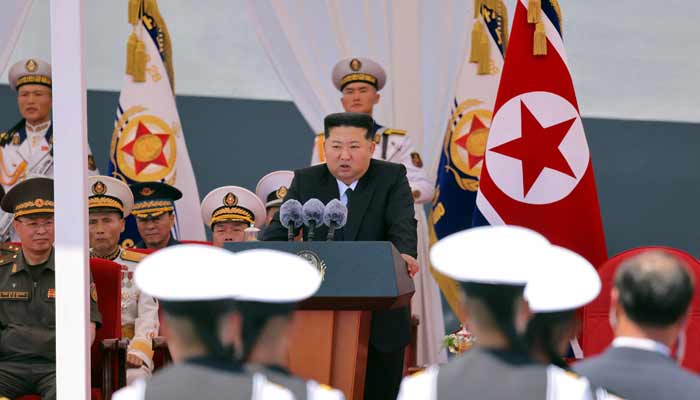
    Kim spoke at the commissioning of the Choe Hyon, one of two 5,000-ton ships launched last year, in Nampho port on Tuesday, as detailed by the official Korean Central News Agency. He stated, “The effort to equip our navy with nuclear weapons is progressing perfectly according to plan,” emphasizing that this strategy is crucial for maintaining a versatile and ready nuclear force.

    The Choe Hyon is described by North Korea as being armed with the most advanced weaponry. Kim supervised a cruise missile test from the vessel in April. He announced plans to soon commission the destroyer Kang Kon and, subsequently, to launch a series of 10,000-ton strategic warships one after another. The country aims to annually produce two surface ships larger than the Choe Hyon, including a 10,000-ton cruiser.

    A naval ship of this size, comparable to the U.S. Navy’s Arleigh Burke-class destroyers or South Korea’s Sejong the Great class, typically measures about 150-170 meters (roughly 492-557 feet), about the length of 1.5 football fields, and weighs several thousand tons. South Korea maintains a fleet with over ten ships exceeding 5,000 tons, whereas North Korea currently operates only two.

    Military analyst Choi Gi-il from Sangji University remarked that the deployment of such sizable ships signifies North Korea’s resolve not to lag behind South Korea’s maritime strength. Pyongyang has asserted itself as an “irreversible” nuclear power since the collapse of a 2019 summit with Donald Trump over denuclearization and sanctions easing.

    Despite ongoing hostility, North Korea remains technically at war with South Korea, as the 1950-53 conflict ended only with an armistice, not a peace treaty.

    Photos from the Korean Central News Agency show Kim saluting and delivering remarks from the Choe Hyon during the vessel’s commissioning, flanked by senior officials. Defense expert Lim Eul-chul noted that North Korea’s motives are primarily directed at signaling to the U.S., its main security partner for South Korea. “These weapons are part of an effort to deter or hinder U.S. military actions on the Korean Peninsula,” he said. Adding, “If North Korea deploys ship-launched cruise missiles with tactical nuclear warheads, it would significantly strain South Korea and U.S. military resources, increasing defense costs.”

    This announcement follows Kim’s recent discussions within the ruling party, where he pledged accelerated military modernization efforts and accused Seoul and Washington of bringing the peninsula “to the brink of nuclear war.” The U.S. station approximately 28,500 troops in South Korea to bolster defenses against North Korean threats.
  • North Korea’s Nuclear Program: Declared Non-Negotiable by Leader’s Sister

    North Korea’s Nuclear Program: Declared Non-Negotiable by Leader’s Sister

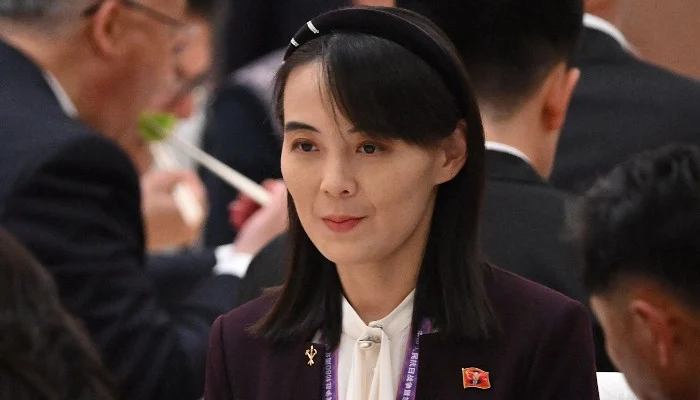
    North Korea’s nuclear weapons program is “completely non-negotiable,” announced Kim Yo Jong, the influential sister of leader Kim Jong Un, in a statement published by state media on Sunday, just before Chinese President Xi Jinping’s visit. Pyongyang has consistently maintained its right to develop nuclear and missile capabilities, despite international sanctions set by the UN Security Council that prohibit such programs. The country officially recognized its nuclear status in its constitution in 2023.

    “Our position as a nuclear power is entirely non-negotiable,” Kim Yo Jong declared, emphasizing that North Korea “will not accept any threats.” As a key figure in the nation’s communication and foreign policy spheres, her remarks were released on the eve of Xi Jinping’s scheduled visit to North Korea from Monday through Tuesday, according to government sources.

    Beijing remains a critical supporter, providing political backing and economic resources to North Korea, which continues to face international diplomatic isolation and heavy sanctions. Xi’s visit marks his first in seven years and follows recent high-level summits he held with U.S. President Donald Trump and Russian President Vladimir Putin last month.

    Since the collapse of the 2019 summit with Trump over disagreements regarding denuclearization and sanctions relief, North Korea has steadfastly declared itself an “irreversible” nuclear state. The ongoing conflict in Ukraine has further emboldened Kim Jong Un, who received significant support from Moscow after dispatching thousands of troops to aid Russian forces.

    Over the weekend, Kim inspected a major munitions factory and instructed the facility to increase production capacity, according to a report by the official Korean Central News Agency (KCNA). He cited the need to “supply an ample amount of missiles” as the reason for boosting manufacturing.

    Kim Yo Jong also criticized the United States for claiming that its recent summit with Xi Jinping reaffirmed Washington’s goal of denuclearizing North Korea. She dismissed this assertion as false, stating, “Some U.S. officials remain in an outdated and fanciful dream,” and accused Washington of spreading “false information” as a routine tactic.

    She dismissed U.S. efforts to challenge North Korea’s nuclear status, asserting that such efforts “hold no legal weight.” She reaffirmed North Korea’s commitment to strengthening its self-defense nuclear capabilities, describing this policy as “irreversible” and essential to implement without fail.

    Expert Hong Min of the Korea Institute for National Unification explained that Pyongyang is highly sensitive to any indication of a US-China deal regarding North Korea’s denuclearization, interpreting Kim’s statements as a categorical rejection of rumors suggesting such discussions. It’s also plausible that North Korea confirmed with Beijing during planning for recent summits that no such negotiations had taken place.

  • Trump’s Nuclear Tests Spark Fears and Confusion in Washington

    Trump’s Nuclear Tests Spark Fears and Confusion in Washington

    A broad view of the White House in Washington, D.C., USA — Reuters

    – Trump instructs Pentagon to begin nuclear weapons testing.
    – Experts warn that explosion tests could cause significant disruptions.
    – Resuming nuclear testing would undermine the long-standing testing moratorium, potentially giving adversaries like Russia and China an advantage.

    During his confirmation hearing on Thursday morning, Vice Admiral Richard Correll expected a straightforward process to become the head of America’s nuclear forces. However, just before his testimony, President Donald Trump caused a stir by posting on social media, announcing he had directed the military to “start testing our Nuclear Weapons,” asserting that the U.S. must keep pace with Russia and China.

    “Russia is second, and China is a distant third, but will be even within 5 years,” Trump claimed.

    Throughout the roughly 90-minute Senate Armed Services Committee hearing, Correll faced repeated questions from lawmakers puzzled by Trump’s remarks, reflecting the confusion sparked across Washington and beyond.

    Senator Jack Reed, the top Democrat on the committee, asked whether restarting U.S. nuclear explosive tests might destabilize the global nuclear balance and trigger a new arms race.

    Correll responded that if confirmed as the commander of STRATCOM, his role would be to provide military advice regarding any testing discussions.

    While the nomination for STRATCOM leadership was announced in early September, Correll answered questions cautiously during the hearing.

    At one point, Senator Angus King asked if Trump’s statement might refer to testing delivery systems like missiles rather than nuclear explosive testing.

    Correll admitted he did not have insight into the president’s specific intent but acknowledged that this could be a reasonable interpretation.

    ### U.S. Moratorium
    Officials from the U.S. did not clarify whether Trump’s call was for testing nuclear delivery systems or ending a 33-year-old moratorium on nuclear explosion tests, which experts warn would be disruptive and risk escalating tensions with rivals, reminiscent of Cold War fears.

    Vice President JD Vance emphasized that testing is part of maintaining the functionality of the U.S. nuclear stockpile.

    The U.S. and other nuclear powers have largely halted underground detonation testing, relying instead on advanced computer simulations to ensure arsenal readiness.

    Tara Drozdenko, director of the Global Security Program at the Union of Concerned Scientists, stated, “There’s no valid reason for the U.S. to resume nuclear explosive testing—it would actually make the nation less secure.”

    She added, “From a strategic standpoint, resuming tests offers little gain and could jeopardize our safety.”

    ### Sending a Signal to Moscow and Beijing
    Many analysts believe Trump’s provocative posturing aims to send a message to Russia and China. In a social media post issued before a summit with Chinese President Xi Jinping in South Korea, Trump said he had instructed the Pentagon to begin testing “on an equal basis,” claiming this process would begin immediately.

    Only North Korea has conducted nuclear tests this century, with the last in 2017. Russia recently tested two new nuclear-powered weapons and has been accused of conducting low-yield tests without transparency. Moscow has warned that if any other country tests a nuclear weapon, it will too, according to a Kremlin spokesperson.

    China has resisted U.S. efforts to hold nuclear arms talks, even as it seeks to rapidly expand its nuclear arsenal. Beijing has shown little interest in negotiations with Russia or the U.S., arguing that their nuclear forces remain significantly larger.

    James Acton, co-director of the Nuclear Policy Program at the Carnegie Endowment for International Peace, commented, “If the goal is to pressure China into negotiations, that’s unlikely to succeed.” China expects the U.S. to honor its commitments to a testing ban and moratorium, according to Beijing’s foreign ministry.

    ### Potential Benefits for U.S. Adversaries
    Breaking the testing moratorium could advantage Russia and China, allowing them to conduct more nuclear tests and advance their weapons programs, according to the Ploughshares Fund, an organization dedicated to reducing nuclear threats.

    The U.S. has led the world in nuclear testing, conducting over 1,030 tests since 1945, and continues to maintain extensive data from that history.

    STRATCOM, where Correll is currently the second-in-command, certified the U.S. nuclear arsenal as recently as January.

    “Resuming testing would benefit adversaries by allowing them to catch up in nuclear research and weapon development,” the Ploughshares Fund warned.

    A Department of Energy source, speaking anonymously, indicated any future test would occur deep underground at a Nevada site prepared for such activity within 36 months.

    During the hearing, Senator Jacky Rosen from Nevada emphasized the state’s history with nuclear testing, from 1951 to 1992, vowing to prevent any resumption: “Let me be clear: I will not let this happen. Not on my watch.”

  • Hiroshima Commemorates 80 Years Amid Rising US-Russia Nuclear Tensions

    Hiroshima Commemorates 80 Years Amid Rising US-Russia Nuclear Tensions

    Japan observed the 80th anniversary of Hiroshima’s atomic bombing with a memorial ceremony that served as a stark reminder of the devastating consequences of nuclear warfare. The event coincided with ongoing tensions between the United States and Russia, keeping the nuclear “Doomsday Clock” perilously close to midnight.

    A moment of silence was observed at 8:15 a.m. local time—marking the exact moment in 1945 when U.S. aircraft Enola Gay dropped the “Little Boy” bomb on Hiroshima. Throughout a scorching morning, hundreds of officials, students, and survivors gathered in front of the memorial cenotaph, with the remains of a damaged domed building standing in the background as a powerful symbol of the tragedy.

    Hiroshima’s mayor, Kazumi Matsui, warned of a global trend toward military escalation amid the Russia-Ukraine conflict and unrest in the Middle East, criticizing these developments for ignoring lessons from history. Prime Minister Shigeru Ishiba emphasized Japan’s responsibility to lead efforts toward a nuclear-free world.

    The attack resulted in roughly 140,000 deaths by radiation and the immediate blast. Three days later, a second atomic bomb was dropped on Nagasaki, claiming approximately 74,000 lives. Japan surrendered on August 15, bringing an end to World War II. Today, Hiroshima has grown into a vibrant city with a population of 1.2 million, though the memories of that day persist among many residents.

    On the eve of the ceremony, people queued to pay respects at the cenotaph. Early that morning, families who lost loved ones also came to offer prayers. Yoshie Yokoyama, 96, arrived wheelchair-bound with her grandson, recalling her family’s suffering: her grandfather died shortly after the bombing, while her parents succumbed to cancer later. Her husband, a wartime soldier, never got to see his family again due to their trajectories post-attack.

    This year’s remembrance event included a record attendance of representatives from approximately 120 countries and regions, including for the first time, delegations from Taiwan and Palestine. The United States, which has yet to issue a formal apology for the bombings, was represented by its ambassador to Japan. Notably absent were Russia and China.

    The organization Nihon Hidankyo, which last year received the Nobel Peace Prize, represented the remaining hibakusha—atomic bomb survivors. As of March, their number was around 99,130, with an average age of 86. The group called on foreign officials to visit the peace museum and witness the aftermath firsthand.

    International leaders echoed the call for nuclear disarmament. The Pope expressed that Hiroshima and Nagasaki stand as enduring reminders of the horrors wrought by nuclear weapons, particularly amid rising global tensions. United Nations Secretary-General Antonio Guterres warned that the very weapons responsible for Hiroshima’s devastation are being increasingly used as leverage in coercive negotiations.

    The attacks of Hiroshima and Nagasaki remain the only instances of nuclear weapons being employed in warfare. Kunihiko Sakuma, who survived as an infant, expressed hope that the world could eventually become free of nuclear arms, emphasizing the efforts of younger generations toward that goal.

    Despite such optimism, the “Doomsday Clock” recently moved to 89 seconds from midnight, the closest it’s ever been in its 78-year history, reflecting fears of a new arms race. The majority of the world’s nuclear warheads are held by Russia and the U.S., which together control about 90% of the over 12,000 existing arsenals. A June report from SIPRI warned that a dangerous nuclear arms race is unfolding as existing arms control agreements weaken, with all nine nuclear-armed states modernizing their stockpiles.

    Recently, U.S. President Donald Trump announced the deployment of two new nuclear submarines following an exchange with Russian officials, underscoring the ongoing complexities of nuclear diplomacy.

  • Iran Announces New Nuclear Negotiations with Europe: Reports

    Iran Announces New Nuclear Negotiations with Europe: Reports

    Iran Engages in New Nuclear Talks with European Powers


    Photos of Iranian military leaders, nuclear scientists, and others who have died in Israeli airstrikes are displayed at Behesht Zahra Cemetery in southern Tehran, Iran, on July 11, 2025. — Reuters

    • Western nations and Israel claim Iran is pursuing nuclear weapons.
    • The E3 warns of possible sanctions if Iran does not return to negotiations.
    • Discussions will focus on Iran’s nuclear program, according to a foreign ministry spokesperson.

    BERLIN: Iran has confirmed that it will participate in new discussions with European powers on Friday in Istanbul, marking the first negotiations since the United States targeted Iranian nuclear facilities a month ago.

    Iranian diplomats are set to meet with representatives from the E3—Britain, France, and Germany—after these countries issued a warning that sanctions might be reinstated if Iran fails to re-engage in talks regarding its nuclear program.

    Western nations and Israel have long accused Iran of attempting to develop nuclear weapons, a claim that Tehran has continuously denied.

    “In response to the request from European countries, Iran has agreed to initiate a new round of discussions,” stated Esmail Baghai, the foreign ministry spokesperson, as reported by state media.

    The main topic for negotiation will be Iran’s nuclear program.

    A German diplomatic source informed AFP on Sunday that the E3 countries are in touch with Tehran and stressed, “Iran should never be allowed to acquire a nuclear weapon.”

    “This is why Germany, France, and the United Kingdom are continuing to work diligently within the E3 framework to identify a sustainable and verifiable diplomatic resolution to Iran’s nuclear program,” the source added.

    Israel conducted a series of surprise strikes on June 13, targeting significant military and nuclear sites in Iran.

    The United States followed up with its own military actions, hitting the uranium enrichment facility at Fordo in Qom Province, as well as nuclear sites in Isfahan and Natanz, on June 22.

    Kremlin Meeting

    Before the onset of Israel’s 12-day conflict with Iran, several rounds of nuclear negotiations took place between Iran and the United States, facilitated by Oman.

    However, the discussions were effectively halted when U.S. President Donald Trump decided to support Israel’s attacks on Iranian nuclear facilities.

    The last meeting between the E3 countries and Iranian representatives occurred in Geneva on June 21, just a day prior to the U.S. airstrikes.

    Also on Sunday, Russian President Vladimir Putin met unexpectedly in the Kremlin with Ali Larijani, a key advisor to Iran’s supreme leader on nuclear issues.

    Larijani “provided insights into the escalating situation in the Middle East and around Iran’s nuclear program,” according to Kremlin spokesperson Dmitry Peskov.

    Putin reiterated Russia’s “established positions on stabilizing the regional situation as well as on the political resolution of the Iranian nuclear program,” Peskov revealed.

    While Moscow maintains a friendly relationship with Iran’s clerical leadership, it has not strongly aligned itself with Iran amidst the ongoing U.S.-Israeli hostilities.

    Snapback Mechanism

    In 2015, Iran and world powers reached an agreement known as the Joint Comprehensive Plan of Action (JCPOA), which imposed significant restrictions on Iran’s nuclear program in exchange for sanctions relief.

    However, the agreement began to deteriorate in 2018 when the United States withdrew from it and reinstated sanctions on Iran.

    Recently, European nations have threatened to activate the deal’s “snapback” mechanism, which permits the reimposition of sanctions if Iran fails to comply.

    Following a conversation with his European counterparts on Friday, Iranian Foreign Minister Abbas Araghchi stated that the Western allies had “no moral or legal basis” for reactivating snapback sanctions.

    He elaborated further in a social media post on Sunday.

    “By supporting the recent unprovoked and illegal military actions of the Israeli regime and the U.S., the E3 have forfeited their role as ‘Participants’ in the JCPOA,” Araghchi remarked.

    As a result, any effort to reinstate the previously abandoned UN Security Council resolutions would be deemed “null and void,” he added.

    “Iran has demonstrated its ability to counter any misguided attempts, yet it remains prepared to engage in genuine diplomacy in good faith,” Araghchi wrote.

    However, a German source mentioned on Sunday that “if a resolution is not achieved during the summer, snapback remains an option for the E3.”

    Ali Velayati, an advisor to supreme leader Ayatollah Ali Khamenei, indicated last week that there would be no new talks with the United States if they were contingent upon Tehran ceasing its uranium enrichment activities.

  • Global Responses to Israel’s Strike on Iran

    Global Responses to Israel’s Strike on Iran

    Sure! Here’s a unique rewrite of the content in American English:


    Global Leaders Call for Restraint After Israeli Strikes on Iran


    (From left to right) Turkish President Tayyip Erdogan, U.S. President Donald Trump, French President Emmanuel Macron. — Reuters/File

    On Friday, world leaders appealed for calm following Israel’s airstrikes on Iran, which targeted 100 sites, including military and nuclear facilities, resulting in the deaths of prominent figures.

    At least 20 high-ranking Iranian officials, including Amir Ali Hajizadeh, the commander of the Aerospace Forces of the Islamic Revolutionary Guard Corps, were reportedly killed in these attacks, according to two regional news sources speaking to Reuters.

    In response, Iranian President Masoud Pezeshkian stated that Israel would "come to regret" its actions.

    "The Iranian nation and its leaders will not stand idly by after this crime, and the Islamic Republic of Iran will respond powerfully and justly, making the enemy regret their foolish decision," Pezeshkian asserted in a video broadcast on state television.

    Here’s a summary of key reactions:

    U.S.: ‘Nuclear Bomb Not an Option’
    U.S. President Donald Trump took to his Truth Social platform to express concern. "There has already been immense death and destruction, but there’s still time to prevent further slaughter and additional brutal attacks," he stated, acknowledging Israel’s access to extensive weaponry courtesy of the U.S. He reiterated that "Iran cannot be permitted to acquire a nuclear bomb and stressed the need to return to the negotiating table."

    UN: ‘Maximum Restraint Required’
    U.N. Secretary-General Antonio Guterres urged both parties to exercise maximum restraint to avoid a deeper conflict, which would severely affect the region’s stability. He expressed particular alarm over Israel’s attacks on nuclear sites amid ongoing U.S.-Iran negotiations.

    Russia: ‘Unacceptable and Unprovoked’
    Russian spokesperson Dmitry Peskov condemned the escalation of hostilities, labeling the strikes as "unacceptable" and "unprovoked." The Russian embassy in Tel Aviv advised its citizens to leave Israel.

    China: ‘Concerned About Consequences’
    Chinese foreign ministry spokesman Lin Jian expressed deep worry over the potential severe consequences of the actions, urging all parties to seek pathways that promote peace and stability, while avoiding further tension.

    EU: ‘Diplomacy is the Best Solution’
    European Union foreign policy chief Kaja Kallas highlighted the dangerous situation in the Middle East and called on all involved to exercise restraint, reminding that diplomacy is the optimal way forward.

    France: ‘Right to Self-Defense’
    French President Emmanuel Macron urged all parties to maximize restraint and de-escalate tensions, noting the importance of maintaining stability throughout the region.

    Germany: ‘Avoid Further Escalation’
    Germany, which has long expressed concerns regarding Iran’s nuclear ambitions, stated its readiness to employ all diplomatic means necessary to influence the conflicting parties while emphasizing the goal of preventing Iran from developing nuclear weapons.

    Hamas: ‘Dangerous Escalation’
    The Iran-affiliated Palestinian group Hamas labeled the Israeli aggression as a severe escalation that could jeopardize regional stability, especially following their own recent attacks.

    Hezbollah: ‘Threat to Ignite the Region’
    Hezbollah described Israel’s actions as devoid of reason, commenting that the brutal strikes could potentially "ignite the region further."

    Iraq: ‘Threat to International Peace’
    Iraq condemned the assaults, stating, "This act represents a clear breach of essential international law principles and poses a serious risk to global peace and security."

    Jordan: ‘No Battleground Status’
    Jordan declared it would not tolerate violations of its airspace, reinforcing that the Kingdom would remain a neutral ground in any conflict.

    Oman: ‘Call for Clear Stance’
    Oman, mediating nuclear discussions, urged the international community to take a decisive stand against this perilous approach, which undermines diplomatic solutions and threatens regional security.

    Qatar: ‘Strong Condemnation’
    Qatar expressed its vehement disapproval of the Israeli attack, stating the dangerous escalation poses risks to the region’s security and impedes efforts to de-escalate and pursue diplomatic resolutions.

    Turkey: ‘Provocation Against International Law’
    Turkish President Recep Tayyip Erdogan criticized the attacks as a blatant provocation that flouts international law, urging the global community to intervene to halt Israeli aggression.

    United Kingdom: ‘Reduce Tensions Immediately’
    British Prime Minister Keir Starmer expressed concern over the airstrikes and urged all parties to step back and promptly reduce hostilities, emphasizing that escalation benefits no one in the region.

    Yemen’s Huthis: ‘Legitimate Right to Defend’
    The Tehran-backed Huthi rebels reaffirmed their support for Iran’s right to develop its nuclear program and strongly condemned the Israeli strikes against Iran, asserting Iran’s right to respond through any means necessary.


    — Additional input from Reuters

  • Global Nuclear Arsenal: 9,585 Warheads Across 9 Nations

    Global Nuclear Arsenal: 9,585 Warheads Across 9 Nations

    The Global Nuclear Landscape: Key Players and Trends

    The world of nuclear weaponry continues to be a focal point of international relations, with specific nations holding significant arsenals. Recent analysis from the Stockholm International Peace Research Institute (SIPRI) highlights the dynamic nature of these arsenals, particularly in South Asia and East Asia.

    The South Asian Nuclear Arms Race: India and Pakistan

    India and Pakistan remain at the forefront of nuclear contention, recently entering a period of ceasefire despite ongoing tensions along their historically disputed borders. Each nation possesses approximately 170 nuclear warheads, underscoring the precarious balance they maintain.

    Recent Changes in Arsenal

    Since January 2023, India has increased its nuclear stockpile, adding 8 warheads, thereby raising its total from 164 to 172. This gradual increase reflects a broader trend in which nations perceive their nuclear arsenals as essential to national security, particularly in regions rife with conflict.

    Pakistan’s Position

    Pakistan, too, mirrors this approach, maintaining a similar count of warheads. This arms race underscores the critical importance of strategic deterrence that defines the relationship between these neighboring countries, as they continue to navigate geopolitical tensions.

    Expanding Nuclear Capabilities in North Korea and China

    As India and Pakistan adjust their arsenals, North Korea and China are also expanding their nuclear capabilities. North Korea is estimated to possess around 50 nuclear warheads, while China has significantly ramped up its stockpile to approximately 500. These changes reflect an emerging strategy where nations bolster their arsenals in response to perceived threats.

    Implications for Regional Stability

    The nuclear developments in North Korea and China can significantly impact regional stability. As these countries expand their capabilities, neighboring nations and global powers alike must consider the implications for security and diplomacy in the Asia-Pacific region.

    The Global Nuclear Arsenal: By the Numbers

    Internationally, there are approximately 9,585 nuclear warheads distributed across nine countries. The substantial majority of these—about 8,088—are held by Russia and the United States. This figures highlight a stark nuclear dichotomy where two nations hold a dominant share of the world’s nuclear capabilities.

    The Role of Retired Warheads

    In addition to active warheads, there are approximately 2,536 retired warheads that remain dismantled but not yet destroyed. The existence of these retired armaments adds another layer of complexity in nuclear disarmament discussions.

    European Nuclear Powers: France and the UK

    In Europe, nuclear power dynamics are represented by France and the United Kingdom, which together maintain around 515 operational nuclear warheads. These numbers illustrate the ongoing commitment to nuclear deterrence in Europe, even as broader discussions on disarmament take place.

    Testing Trends: A Decrease since the 1990s

    Notably, with the exception of North Korea, no nuclear-armed nation has conducted tests since the 1990s. This hiatus reflects a cautious approach to nuclear engagement and emphasizes the international community’s preference for stability over escalation.

    As the global community continues to navigate the complexities of nuclear policy and arms strategies, awareness and dialogue will be essential for ensuring a safer future. Understanding the dynamics at play is crucial in fostering a more peaceful international environment.

  • Trump Issues Stark Warning: Iran Must Ditch Nuclear Goals or Face Action

    Trump Issues Stark Warning: Iran Must Ditch Nuclear Goals or Face Action

    US President Donald Trump— Reuters

    • Trump’s comments follow a meeting between a US envoy and an Iranian official.
    • Both parties characterized Saturday’s discussions as “positive” and “constructive.”
    • The US president stated that Iran is “fairly close” to developing a nuclear weapon.

    President Donald Trump has issued a stark warning to Iran, urging it to abandon any ambitions for nuclear weapon development or potentially face military action against its nuclear facilities, according to Reuters.

    During a press conference on Monday, Trump accused Iran of deliberately delaying progress in nuclear discussions with the United States. “I think they’re just dragging us along,” he remarked, referencing a recent meeting in Oman between US special envoy Steve Witkoff and a senior Iranian official.

    Representatives from both sides described Saturday’s meeting as “positive” and “constructive.” A second round of talks is expected to take place this coming weekend, likely in Rome, as indicated by a source familiar with the arrangements.

    The discussions are primarily exploratory, aiming to establish a general framework for a potential agreement. However, Trump emphasized that any potential deal must ensure Iran renounces all intentions to develop nuclear weapons. “Iran must eliminate the idea of having nuclear arms. They cannot possess a nuclear weapon,” he stated.

    When asked if military options against Iran’s nuclear sites were on the table, Trump responded affirmatively, stating, “Of course it does.” He added that Iran was “fairly close” to constructing a nuclear weapon and urged for immediate action to prevent dire outcomes.

    Indirect negotiations between the US and Iran occurred during former President Joe Biden’s administration but yielded minimal results.

    The last formal agreement—the international nuclear deal established in 2015—was negotiated by President Barack Obama, who was later succeeded by Trump, who withdrew the US from the pact during his first term.

  • Iran’s Khamenei Adviser: Nuclear Arms Essential if Attacked

    Iran’s Khamenei Adviser: Nuclear Arms Essential if Attacked

    Here’s a unique, human-written version of the content in American English:

    —

    Iran has been warned that it might feel compelled to pursue nuclear weapons if it faces aggression from the United States or its allies, highlighted a senior advisor to Ayatollah Ali Khamenei on Monday, as reported by AFP.

    This statement comes amid rising tensions between Tehran and Washington stemming from former President Donald Trump’s threats of military action should Iran fail to limit its nuclear ambitions.

    Ali Larijani, a prominent figure in Iran’s political landscape, conveyed through Iranian state television that although the country does not actively seek nuclear arms, external threats may force its hand. “We are not heading towards (nuclear) weapons, but if you make a move against Iran regarding its nuclear program, you will push Iran to that direction because it must defend itself,” Larijani stated. “Iran does not desire this outcome, but under duress, it may see no alternative.”

    Trump’s remarks, made during a weekend interview with NBC News, included a stark warning: “There will be bombing” if Iran continues to resist U.S. demands. He also proposed the imposition of “secondary tariffs” on Iran, though specific details about these economic actions were not provided. Iran has fiercely reacted to Trump’s threats, with Khamenei promising that any military responses would be met with robust retaliation. “If they proceed, they will definitely face a powerful counterattack,” Khamenei declared during a speech marking the conclusion of Ramadan.

    ### Iran’s Reaction and Heightened Regional Tensions

    Amir Saeid Iravani, Iran’s ambassador to the United Nations, denounced Trump’s statements in a letter to the UN Security Council, asserting that any U.S. or allied aggression would receive a “swift and decisive” response. Additionally, Iran’s foreign ministry summoned the Swiss charge d’affaires, the representative for U.S. interests in Tehran, to formally protest against the threats.

    Iranian military leaders have issued direct warnings regarding U.S. military assets in the region. General Amirali Hajizadeh, a senior commander within the Islamic Revolutionary Guard Corps, proclaimed, “The U.S. maintains at least 10 bases in the surrounding region and has around 50,000 troops. Those residing in glass houses should not throw stones.”

    ### Diplomatic Channels Remain Available

    Despite the intensified rhetoric, indirect talks between Washington and Tehran are still in progress. Trump reportedly sent a letter to Khamenei earlier this month requesting discussions on nuclear matters. Iran, through intermediaries in Oman, confirmed that “the letter has reached its destination and has been read.” However, Foreign Minister Abbas Araghchi emphasized that Iran would not engage in direct negotiations under pressure.

    While the door for diplomacy remains open, the escalating tensions between the U.S. and Iran evoke concerns of potential conflict in the region.

    —

    This rewritten content preserves the essence of the original while providing a fresh and original approach to the information.