الوسم: November 2024

  • U.S. Economy Shows 2.8% Growth Amid Inflation Relief Efforts

    U.S. Economy Shows 2.8% Growth Amid Inflation Relief Efforts

    U.S. Economic Landscape: A Closer Look at Recent Trends

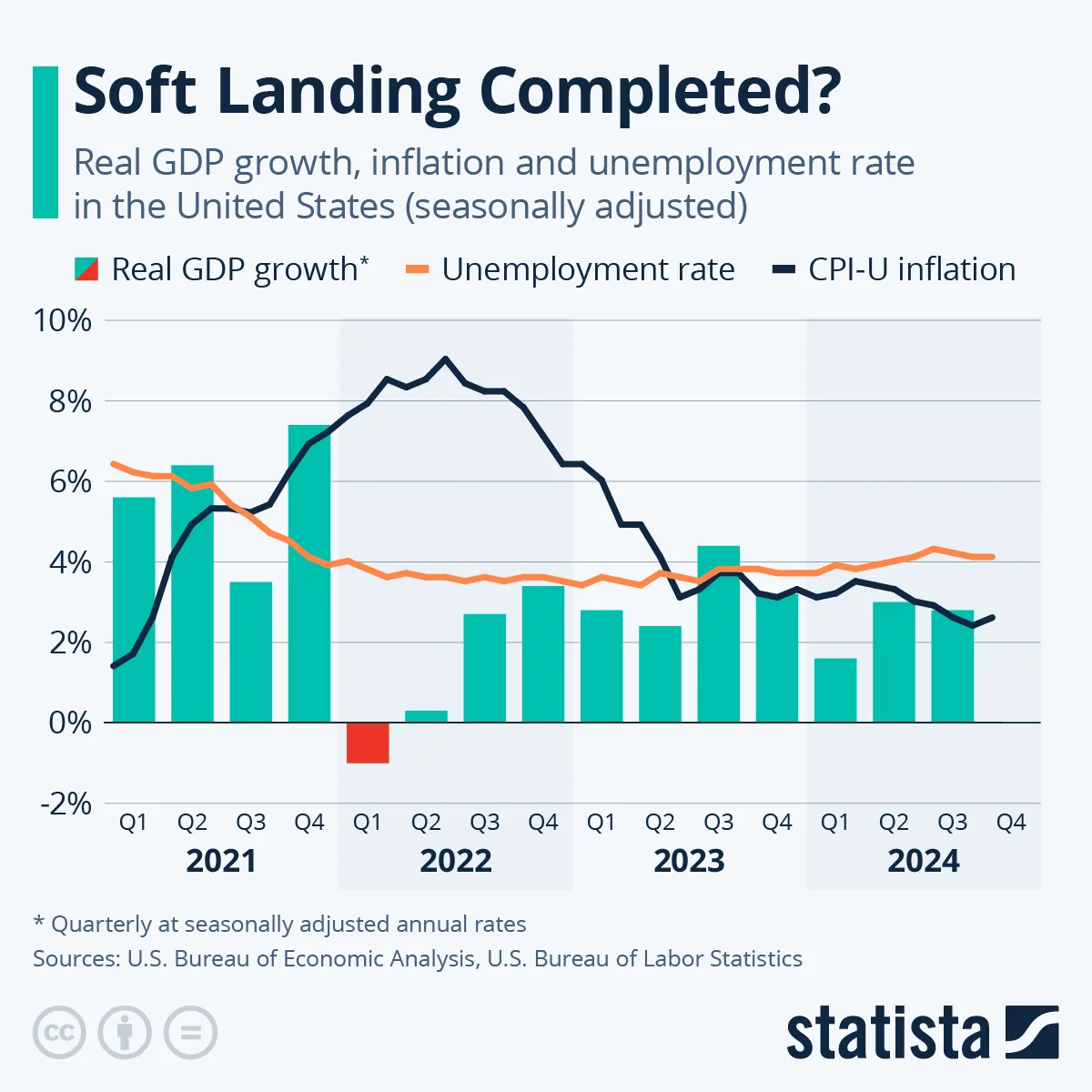
    The current state of the U.S. economy presents an intriguing picture. With a notable growth rate in gross domestic product (GDP) and a robust labor market, the signs seem to indicate a flourishing economic environment. However, there remains a significant disconnect between economic indicators and public sentiment.

    Economic Growth in the Third Quarter

    In the third quarter of the year, the U.S. experienced a commendable GDP growth of 2.8 percent. This figure underscores a resilient economy that, at least on the surface, is bouncing back from previous adversities. The sustained expansion suggests that various sectors are rebounding and adapting to the changing environment, indicating potential stability for the foreseeable future.

    Unemployment Rates: An Encouraging Sign

    Another pillar of economic health is the unemployment rate, which hovers around 4 percent. This low rate is indicative of a strong labor market where jobs are available, and many Americans are employed. A healthy unemployment rate typically reflects confidence among businesses and consumers alike, contributing to overall economic prosperity.

    Inflation Trends: The Quest for Stability

    Despite the positive growth and employment numbers, inflation remains a pressing issue. Recent trends show a gradual decline in inflation, moving towards the Federal Reserve’s target of 2 percent. This shift is vital for restoring purchasing power and consumer confidence, as sustained high prices can significantly impact overall economic sentiment.

    The Concept of a "Soft Landing"

    The long-anticipated "soft landing" is a situation economists and policymakers hope to achieve. It refers to the delicate balance of controlling inflation without precipitating a recession or leading to widespread unemployment. Current indicators suggest that the U.S. is edging closer to achieving this balance, a development that many both locally and internationally are observing with keen interest.

    The Disconnect: Economic Reality vs. Perception

    Despite the encouraging macroeconomic data, there exists a palpable sense of frustration among the American populace, largely driven by high prices. Interestingly, this dissatisfaction played a pivotal role in the political landscape, influencing electoral outcomes. The perception of economic hardship, even against a backdrop of growth, raises questions about the correlation between economic indicators and public sentiment.

    Insights from Jerome Powell

    Federal Reserve Chairman Jerome Powell has openly acknowledged this disconnect, emphasizing the legitimacy of public feelings concerning the economy. He recognized that while the economy may be performing well, many are still grappling with the lingering effects of elevated prices. “People have every right to feel the way they feel,” Powell stated, pinpointing the challenge of inflation despite the apparent economic growth.

    What Will Improve Public Sentiment?

    So, what measures can help bridge the gap between economic indicators and public perception? According to Powell, the answer lies predominantly in the passage of time.

    The Importance of Time for Adjustment

    Time is essential for various reasons. First, it allows individuals to adjust to the new price levels after prolonged inflation. Additionally, a prolonged period of real wage gains will be crucial in easing the financial strain many are currently facing. Wage growth that keeps pace with or exceeds inflation is necessary for restoring confidence in the economy.

    Navigating Forward: A Look Ahead

    With inflation gradually tapering off and robust employment rates, the U.S. economy appears to be heading toward a more stable future. However, policymakers and economists must continue to address public concerns and perceptions to ensure that economic growth translates into tangible improvements in the daily lives of citizens.

    Through gradual adjustments, sustained wage growth, and continued dialogue about economic conditions, a more resilient and confident public sentiment may emerge in tandem with the economic realities outlined in the recent statistical data.

    The ongoing assessment of these dynamics will shed light on the effectiveness of current strategies and inform future economic policies.

  • Low-Wage Earners: 24.7% in the UK, 22.7% in the US

    Low-Wage Earners: 24.7% in the UK, 22.7% in the US

    Understanding Low-Wage Earners: Insights from OECD Data

    The phenomenon of low-wage earners is a pressing issue in various economies around the globe. According to a detailed analysis conducted by the Organisation for Economic Co-operation and Development (OECD), a significant portion of wage earners in various nations are earning substantially less than the median full-time earnings. This blog delves into the statistics surrounding low-wage earners in select countries and highlights trends that emerge from this data.

    The Landscape of Low Earnings in the UK and the US

    The UK: A Closer Look

    In the United Kingdom, the situation for low-wage earners is quite concerning. The OECD data indicates that 24.7% of wage earners earn less than two-thirds of the gross median pay. This substantial percentage signifies that nearly one in four workers in the UK struggles to attain a livable wage, leading to increased discussions regarding wage policies and economic inequality.

    The United States: A Comparable Scenario

    The United States presents a similarly alarming picture. With 22.7% of wage earners categorized as low-wage earners, the gap in earnings again raises questions about minimum wage laws and the economic conditions that perpetuate low earnings. The close similarity between the two nations in the percentage of low-wage earners suggests a shared challenge in addressing income inequality and ensuring fair compensation for workers.

    Other Nations with Notable Low-Wage Statistics

    Israel: An Emerging Economy Struggling with Wages

    The data also highlights Israel as another nation grappling with low wage issues. While specific figures are not detailed, it is important to note that Israel’s high costs of living coupled with lower wages indicate a challenging economic environment for many workers. This scenario complicates the question of sustainable growth and equitable income distribution.

    European Context: Poland and Germany

    Turning to Europe, Poland and Germany also reveal significant figures regarding low-wage earners, with 18.5% and 16% respectively falling under this classification. The presence of low-wage earners in these countries illustrates that even within more developed economies, income disparities persist, hinting at the necessity for robust employment policies that uplift the financially vulnerable.

    High-Wage Earners: A Parallel Discussion

    Understanding High Pay in the UK and Israel

    Interestingly, while discussing low wages, it is also vital to consider the landscape of high pay. In the UK, 26.4% of individuals are identified as high earners, sitting above the average. Israel follows closely with 24.0%, indicating that these nations have a notable share of high-income earners alongside the low-wage segment. This duality raises important questions about wealth distribution, economic mobility, and the structures that perpetuate disparities between the high and low wage earners.

    Average OECD Trends: A Broader Perspective

    On an average OECD scale, 21.9% of citizens are classified as high-wage earners, those making 1.5 times the median gross pay or higher. Meanwhile, 13.5% are considered low-income earners, again illustrating that a certain segment of labor markets struggles significantly when it comes to meeting standard living costs despite the presence of high wage earners.

    Countries with Minimal Low-Wage Earners

    France, Norway, and New Zealand: An Anomaly?

    In contrast to the high percentages observed in other countries, France, Norway, and New Zealand present results in the single digits for low-wage earners. This data invites exploration into the wage structures, labor laws, and quality of life in these nations, as well as how their policies might serve as models for addressing low earnings elsewhere.

    Denmark: A Unique Case

    Oddly enough, Denmark exhibits a unique scenario among the nations surveyed. With 9.8% of workers categorized as low-wage earners and only 2.5% as high-wage earners, it becomes a point of interest in discussions about workers’ rights and fair pay. Such numbers could be a reflection of the country’s labor market policies, which are often viewed as progressive compared to other nations.