الوسم: models

  • Models, Prices, Differences, and More: Completing and Solving

    Models, Prices, Differences, and More: Completing and Solving

    Earlier this year, Xbox announced the ROG Xbox Ally. This handheld gaming device lets you access multiple PC gaming stores and plays over 1,000 Xbox games that are compatible with Play Anywhere. There are two versions – the Xbox Ally and the Xbox Ally X. After some wait, the prices have now been confirmed.

    Pre-orders are now open for both models, with a release date set for October 16, 2025. Soon, you’ll be able to enjoy PC and Xbox games on the same portable device. Here’s everything you need to know to order yours, including links to purchase both models.

    Where To Pre-Order the Xbox Ally and How Much They Cost

    Let’s first talk about the prices. Rumors have been floating around about how much these devices would cost, and yes, they are quite high. Xbox waited to reveal the prices until now.

    The standard Xbox Ally costs $599.99. This basic version is designed for more casual gamers. On the other hand, the Xbox Ally X, which offers more features, is priced at $999.99. This makes it one of the most expensive handheld gaming devices available.

    ROG Xbox Ally

    ROG Xbox Ally X

    What’s the Difference Between the Xbox Ally and the Xbox Ally X?

    There’s a $400 difference in price, so what are you getting with the Xbox Ally X that you don’t get with the regular Xbox Ally? The main difference is the processor. The standard model has an AMD Ryzen Z2 A processor. The Xbox Ally X uses a more powerful, extended version of the same processor, called the Extreme.

    Despite this, the processor in the standard Xbox Ally is still more powerful than what’s found in a regular ROG Ally device.

    Additional differences include:

    • The Xbox Ally X has 24GB of memory, while the standard has 16GB.
    • The Ally X comes with 1TB of storage, compared to 512GB in the standard.
    • The Xbox Ally X features impulse triggers, while the standard has regular hall effect triggers.
    • The Xbox Ally X has a larger, longer-lasting battery (80Wh vs. 60Wh).
    Feature ROG Xbox Ally ROG Xbox Ally X
    Triggers Hall Effect Analog Triggers Impulse Triggers
    Processor AMD Ryzen Z2 A AMD Ryzen AI Z2 Extreme
    Memory 16GB 24GB
    Storage 512GB 1TB
    Battery 60Wh 80Wh

    Playing Xbox Games on the Go

    The main goal of the Xbox Ally, no matter which model you pick, is to give you an Xbox experience in a portable device. It offers what’s called an “Xbox full-screen experience,” and has a dedicated Xbox button to return to your library, just like a standard Xbox console.

    The grips are designed to feel like an Xbox controller, similar to how PlayStation designed its PlayStation Portal. Plus, each device comes bundled with a three-month subscription to Xbox Game Pass, so you can start playing a large selection of games immediately.

  • Apple Watch Series 11 Health Feature Moves to Older Models

    Apple Watch Series 11 Health Feature Moves to Older Models

    Apple has introduced a new feature called Hypertension Notifications alongside its latest smartwatch models, designed to alert users when there is a sudden increase in blood pressure levels. Notably, this capability won’t be limited solely to the newest devices, such as the Apple Watch Series 11. Instead, it will also be accessible on select older models, with the exception of the entry-level Apple Watch SE series.

    When will it be available?

    This hypertension alert system will be broadly compatible with smartwatches powered by the Apple S9 or S10 chips and running watchOS 26. The compatible models include:

    • Apple Watch Series 11
    • Apple Watch Series 10
    • Apple Watch Series 9
    • Apple Watch Ultra 2
    • Apple Watch Ultra 3

    It’s important to keep in mind that, at present, the Hypertension Notifications feature has not yet received approval from the U.S. Food and Drug Administration (FDA). Apple expects to complete this approval process by September. Once authorized, the feature will be rolled out to users across more than 150 countries.

    A closer look at the hypertension alert

    This new artificial intelligence-enhanced wellness feature relies on data collected by the watch’s optical heart rate sensor, which monitors blood flow within the vessels. It operates in the background by analyzing information from the past 30 days. The sensor’s data allows the device to assess potential blood pressure concerns. The validation of this feature comes from a clinical study involving over 2,000 participants.

    In terms of user eligibility, individuals need to be over the age of 22 to access this feature. It is not recommended for people who have previously been diagnosed with hypertension or for pregnant women.

    What does a hypertension alert mean?

    According to Apple, the feature uses AI to analyze blood flow readings—obtained via the optical heart sensor—and assess the data over time. When the system detects a significant rise suggestive of high blood pressure, it notifies the user. However, it’s worth noting that the watch provides only an alert about elevated blood pressure levels; it does not deliver specific systolic or diastolic measurements comparable to those from medical-grade blood pressure monitors.

    The company anticipates that, given the extensive global population affected by hypertension, the feature could potentially notify more than one million individuals with undiagnosed high blood pressure within its first year. Following a notification, users are encouraged to measure their blood pressure with a cuff-style monitor for seven days and to consult a healthcare professional with their findings.

    From a practical standpoint, users should be aware that the smartwatch’s warning is not a definitive diagnosis but a prompt to seek further evaluation. It’s also important to mention that similar blood pressure monitoring features are available on competing devices from brands like Samsung and Huawei.

    Additional considerations

    To access this feature, users must be over 22 years old, and it’s not suitable for those with a pre-existing hypertension diagnosis or pregnant women. The system’s primary function is to provide early warnings of potential blood pressure issues, not to replace professional medical assessment.

    In summary, this innovative feature enhances the Apple Watch’s health-tracking capabilities by offering users an accessible early detection tool for hypertension, supporting proactive health management on a global scale.

  • Google’s Gemma 3 AI Models Are Fast, Efficient, Ready For Phones

    Google’s Gemma 3 AI Models Are Fast, Efficient, Ready For Phones

    Google's artificial intelligence initiatives are embodied in Gemini, a vital component of its widely used software and hardware suite. Additionally, the company has been publishing various open-source AI models under the Gemma branding for over a year.

    Recently, Google announced its third version of open-source AI models, boasting impressive capabilities. The Gemma 3 models come in four configurations — 1 billion, 4 billion, 12 billion, and 27 billion parameters — and are tailored for devices ranging from smartphones to powerful workstations.

    Optimized for Mobile Devices

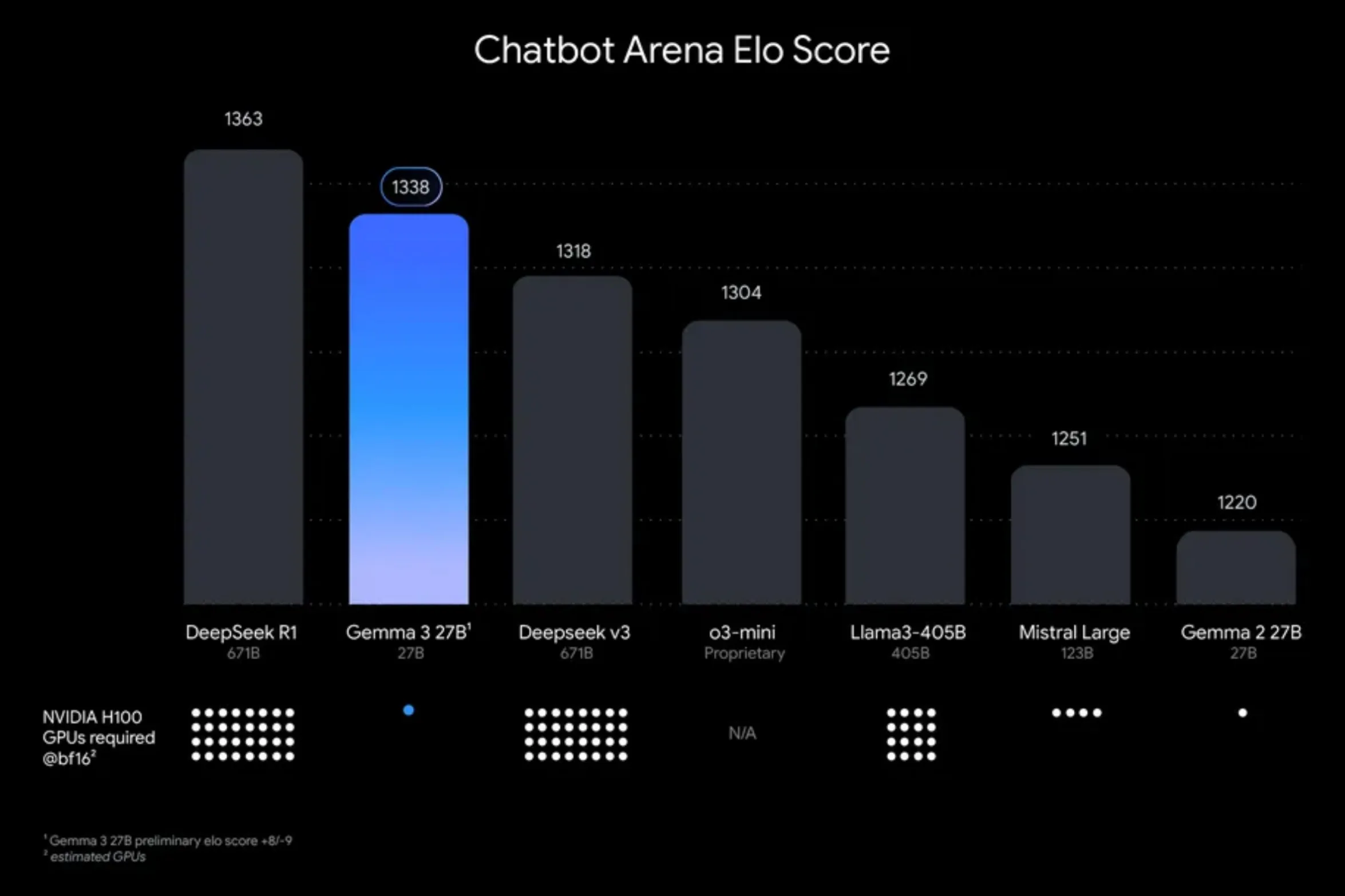
    Performance comparison of Google Gemma 3 AI model.
    Google

    According to Google, Gemma 3 is hailed as the world's top single-accelerator model, allowing it to operate on a single GPU or TPU rather than necessitating a complete network of machines. This capability theoretically enables a Gemma 3 AI model to run directly on the Tensor Processing Core (TPU) of a Pixel smartphone, similar to how it utilizes the Gemini Nano model locally on mobile devices.

    The primary benefit of Gemma 3 over its Gemini counterparts is its open-source nature. This allows developers the flexibility to integrate and customize it as per the requirements of both mobile and desktop applications. Furthermore, Gemma supports over 140 languages, with 35 languages included in its pre-trained package.

    Like the recent Gemini 2.0 models, Gemma 3 can process text, images, and videos, showcasing its multimodal capabilities. Performance-wise, Gemma 3 is reported to outperform other well-known open-source AI models, including DeepSeek V3, OpenAI's reasoning-enabled o3-mini, and Meta's Llama-405B variant.

    Flexible and Easy to Implement

    Gemma 3 boasts a context window of 128,000 tokens, sufficient to encapsulate an entire 200-page book as input. In comparison, Google's Gemini 2.0 Flash Lite model supports a million tokens. In the realm of AI models, an average English word corresponds to roughly 1.3 tokens.

    Demonstration of visual comprehension with Google Gemma 3 model.
    Gemma 3 analyzing visual data. Google

    Additionally, Gemma 3 supports function calls and structured outputs, enabling interactions with external datasets and functioning like an automated agent. This feature is similar to how Gemini operates across various platforms like Gmail or Docs.

    The latest open-source AI models from Google can be deployed locally or via the company’s cloud services, such as the Vertex AI platform. The Gemma 3 AI models are accessible through Google AI Studio as well as third-party repositories like Hugging Face, Ollama, and Kaggle.

    Benchmark results of Google Gemma 3 AI model.
    Google

    Gemma 3 is part of a broader industry trend, where companies are developing large language models (in Google's case, Gemini) while simultaneously unveiling smaller language models. Similarly, Microsoft is adopting this approach with its open-source Phi series.

    Small language models like Gemma and Phi are extremely efficient in resource consumption, rendering them ideal for execution on devices such as smartphones. Additionally, they provide lower latency, making them particularly suitable for mobile application use.

  • 2024 Streaming Earnings: Artists Make $6+ Per 1,000 Streams

    2024 Streaming Earnings: Artists Make $6+ Per 1,000 Streams

    Understanding Artist Earnings from Music Streams in 2024

    In the rapidly evolving landscape of the music industry, streaming platforms have become the primary source of revenue for artists. Recent data has illuminated how different platforms compensate musicians, revealing significant disparities in earnings based on streaming figures. This blog aims to dive deep into the financial frameworks of major streaming services, assessing their impact on artists and the broader music economy.

    The Earnings Landscape

    Key Streaming Platforms

    Data from Duetti indicates that Amazon Music, Tidal, and Apple Music dominate the earnings landscape for artists, paying out more than $6.00 per 1,000 streams on average in 2024. Notably, Amazon Music leads with an impressive average payout of $8.80 per 1,000 streams. These calculations take into account various forms of revenue and royalty payments rather than a flat rate per stream, providing a more holistic view of the earnings potential on these platforms.

    Spotify’s Position

    Despite being the industry leader in terms of user base, with 265 million paying subscribers, Spotify’s payout structure has faced criticism. The platform averages just $3.00 per 1,000 streams, a noteworthy decline from slightly above $4.00 in 2021. This decrease in artist payouts can be attributed to the rise in the use of Spotify’s "discovery mode," which has led to a significant increase in streams that pay substantially less than standard streams.

    Comparative Analysis of Streaming Services

    Payout Rates

    As indicated, the average payouts for leading platforms in 2024 are as follows:

    • Amazon Music: $8.80 per 1,000 streams
    • Apple Music: Over $6.00 per 1,000 streams
    • Tidal: Similar to Apple Music, also exceeding $6.00 per 1,000 streams
    • Spotify: $3.00 per 1,000 streams
    • YouTube: $4.80 per 1,000 streams

    These figures highlight a stark contrast, with Amazon Music providing the most lucrative return to artists.

    Evolving Trends in Revenue Streams

    Impact of Discovery Mode on Spotify

    Spotify’s discovery mode feature has led to a 20% increase in the share of streams categorized as discovery streams, which pay 30% less than the standard rate. This shift signals an important change in how artists can generate income based on listeners’ preferences for discovering new music. As algorithms increasingly dictate what users listen to, artists may find it challenging to earn competitive payouts unless they engage their listeners consistently.

    Viral Trends on TikTok

    While TikTok has become an influential platform for music discovery and promotion, the financial benefits for artists are rather limited. The average earnings from 1,000 uses of a song or snippet in a TikTok video hover around only $0.50. Interestingly, only 15% of viral TikTok songs see a noticeable increase in royalty payouts, often reliant on their popularity translating to other streaming platforms, demonstrating that virality does not guarantee substantial earnings.

    The Shift in Revenue Sources

    In the context of the overall music industry, streaming has emerged as the dominant revenue generator. In 2023, streaming accounted for 67.3% of total earnings across recorded music, while physical sales and digital downloads contributed only 17.8% and 3.2%, respectively. This trend underscores the critical importance of streaming services for artists and labels alike.

    Artist Engagement and Strategy

    The Call for Continuous Artist Engagement

    Spotify CEO Daniel Ek has faced criticism regarding the platform’s payout structure and the perceived lack of artist revenue. He emphasized the importance of constant engagement and storytelling in an artist’s career, suggesting that the frequency and strategy behind new releases can influence earnings on the platform. This perspective indicates that artists may need to adopt a more proactive approach in promoting their music and maintaining a connection with fans to maximize their revenue from streaming.

    Conclusion

    The dynamics of artist earnings in 2024 reveal a complex landscape where streaming platforms operate under different financial models. While some artists thrive on platforms like Amazon Music and Tidal, others, particularly on Spotify, face challenges that underscore the need for strategic engagement and innovative promotion to capitalize on the music consumption trends of today. As the industry continues to evolve, understanding these financial intricacies becomes imperative for artists looking to navigate the streaming era successfully.

  • Google Launches Second-Gen AI Models in Gemini App

    Google Launches Second-Gen AI Models in Gemini App

    p>Today, Google revealed several significant updates regarding its AI developments, coinciding with industry scrutiny surrounding China’s DeepSeek AI and ongoing antitrust investigations affecting the company in China. Among the highlights is an experimental version of Gemini 2.0 Pro, touted as Google’s most advanced offering to date.

    According to the company, “It boasts the most powerful coding capabilities and the capacity to process intricate prompts, coupled with superior understanding and reasoning about world knowledge compared to any previous models.” This new version extends the prompt context window to an impressive 2 million tokens, streamlining its ability to process extensive inputs effortlessly.

    Moreover, Google is introducing a more budget-friendly alternative: the 2.0 Flash-Lite model, which is now in public preview. Designed for affordability and enhanced performance, it can be accessed through Google AI Studio and Vertex AI systems.

    What’s new in the Gemini mobile app?

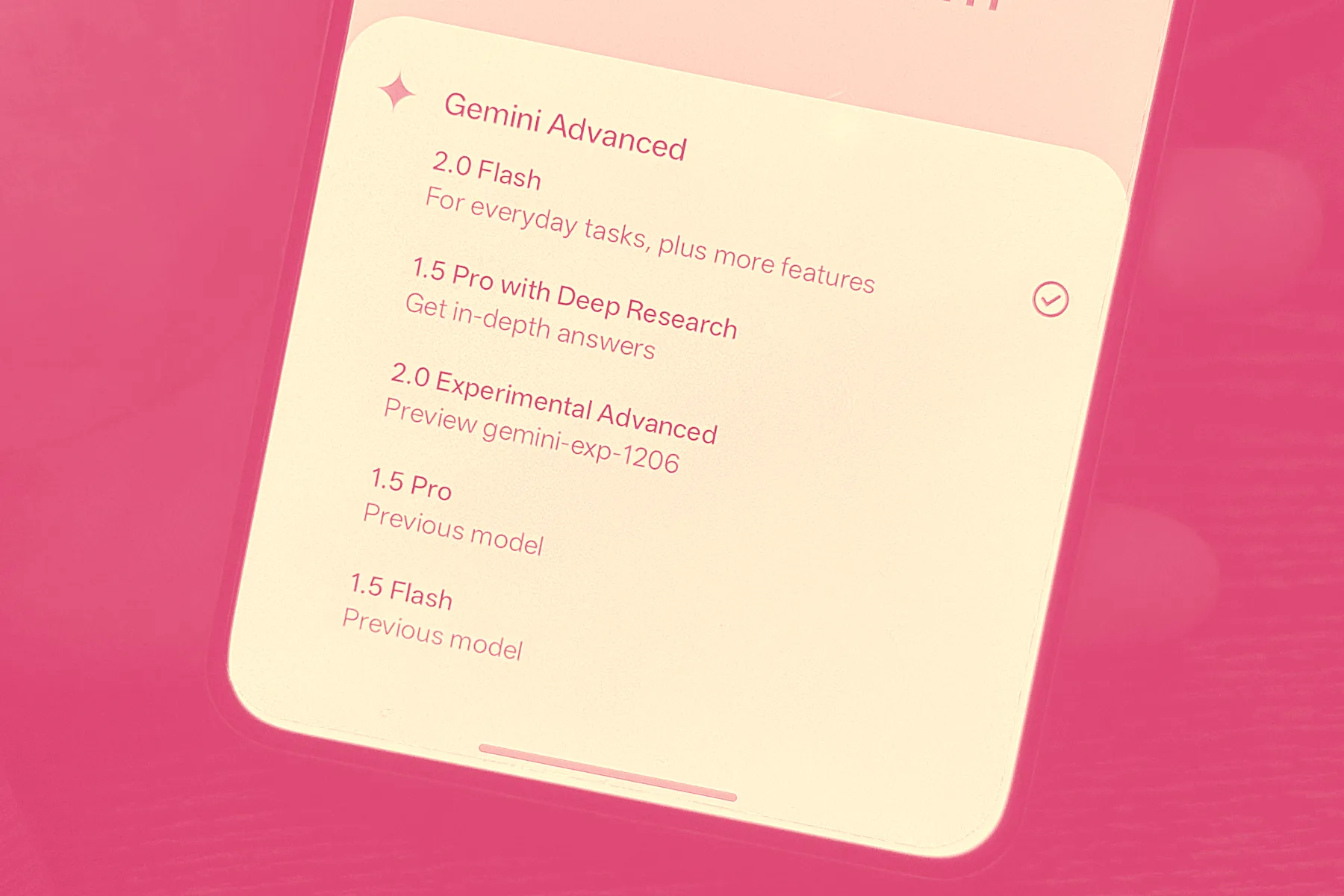
    AI models available in the Gemini mobile app for Android devices.
    Nadeem Sarwar / Digital Trends

    For users on smartphones, the Gemini app is set to receive these AI enhancements. Starting today, mobile users can select between the new Gemini 2.0 Flash Thinking Experimental model and the Gemini 2.0 Pro Experimental model.

    Ranked first on the Chatbot Arena LLM Leaderboard and surpassing OpenAI’s ChatGPT-4o and DeepSeek R1, the Gemini 2.0 Flash Thinking Experimental model represents a significant advancement. This model can utilize information gathered from platforms such as YouTube, Google Maps, and Search, allowing it to verify details from various sources and deliver relevant responses based on user queries.

    Google

    Additionally, it incorporates advanced reasoning capabilities. Users can witness in real-time how the AI dissects their commands and synthesizes information into coherent answers.

    The improvements, as stated by Google, include enhanced explainability, speed, and performance. This model can accept both text and image inputs with support for a maximum token window of one million, and its knowledge is up to date as of June 2024.

    Next is the Gemini 2.0 Pro Experimental model, available to those subscribing to Gemini Advanced. Google describes this model as “exceptional at intricate tasks,” particularly excelling in mathematical problem-solving and coding.

    This multi-modal AI system not only retrieves relevant data from Google Search but also leverages an enhanced understanding of the world to tackle more complex tasks. Users can access the new models from both the mobile app and the web interface.