الوسم: million tonnes

  • China’s Real-Estate Crisis Cuts CO2 by 90.3M Tonnes in 2024

    China’s Real-Estate Crisis Cuts CO2 by 90.3M Tonnes in 2024

    The Economic and Environmental Impact of China’s Real Estate Sector on Carbon Emissions

    China, the world’s largest emitter of carbon dioxide (CO₂), is undergoing a significant transformation in its economic landscape, particularly in its real estate sector. As of March 2024, there has been a notable shift in the nation’s carbon emission trajectory, largely influenced by the ongoing real estate slump. This blog dives deep into the interplay between China’s real estate crisis and its impact on CO₂ emissions.

    Understanding China’s Real Estate Crisis

    Background of the Real Estate Market

    China’s real estate market has long been a cornerstone of its economic growth, contributing substantially to GDP. However, the sector has faced severe challenges in recent years, characterized by a collapse in housing prices, increased defaults from developers, and a significant decrease in construction activities. These economic struggles have sparked intense discussion about the future of real estate in China and its broader implications for the economy.

    Effects on Construction and Building Materials

    The real estate downturn has led to a sharp decline in demand for new construction projects. With fewer buildings being erected, there has been a notable reduction in the need for building materials. This downturn is crucial because the production and transportation of building materials like cement and steel are significant contributors to carbon emissions.

    CO₂ Emissions: A Year-on-Year Analysis

    Changes in CO₂ Emissions from the Construction Sector

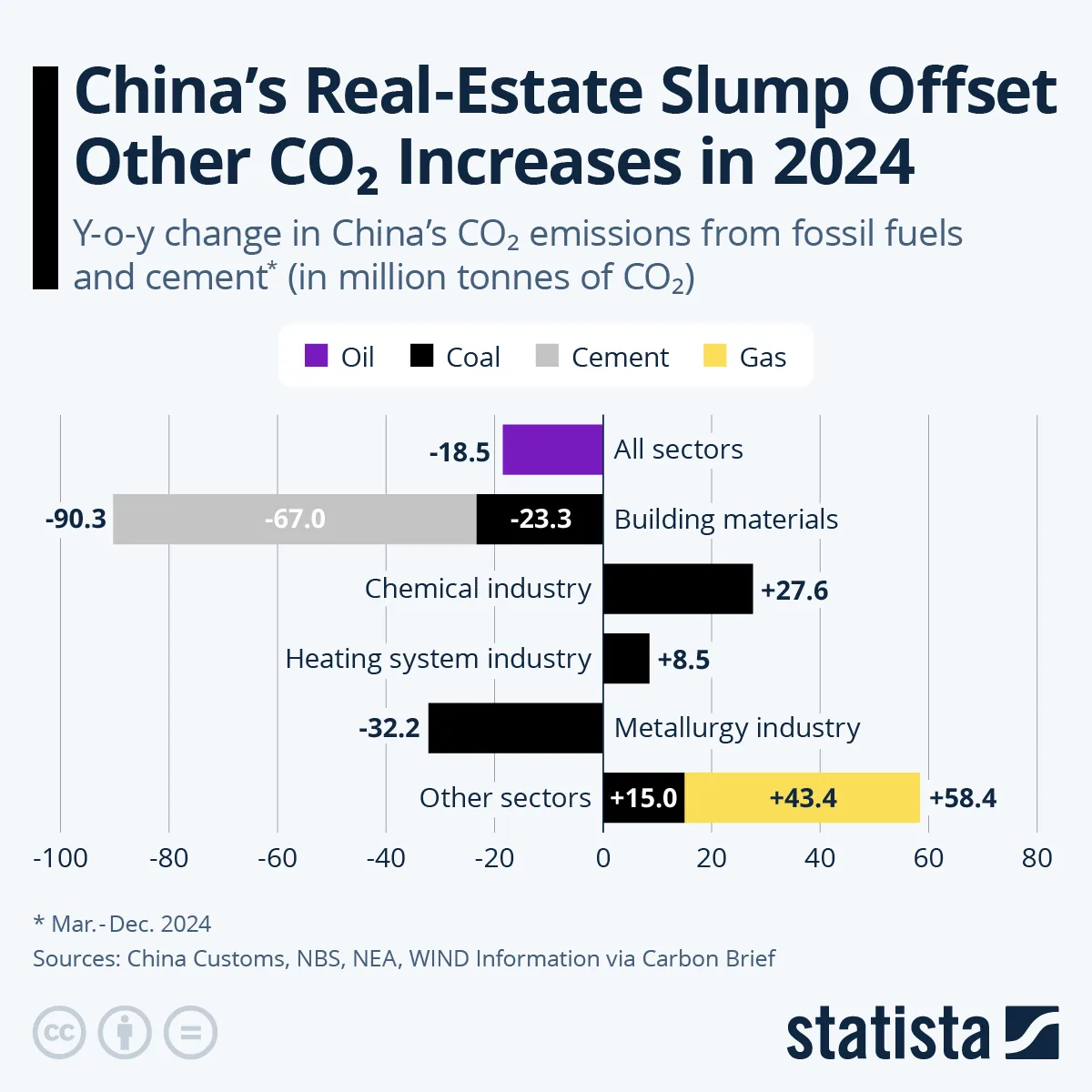
    According to an analysis by Lauri Myllyvirta, published on Carbon Brief, the slump in the real estate sector contributed to a remarkable decrease in CO₂ emissions. Between March and December 2024, there was a drop of approximately 90.3 million tonnes of CO₂ emissions from the building materials sector alone. This decline is evidence of how interconnected the real estate market and industrial emissions are.

    The Broader Emission Landscape in 2024

    While the decline in emissions from the construction sector is significant, it is essential to note that China’s overall CO₂ emissions did not experience a downward trend in 2024. This phenomenon is primarily attributed to a surge in energy demand as the country began to emerge from the strict zero-COVID policies.

    The Balancing Act of Economic Growth and Emissions

    Post-Pandemic Energy Demand

    China’s re-opening from its strict COVID-19 restrictions has led to a rapid recovery in energy consumption. Industries have resumed operations at full capacity, and the increased demand for electricity has overshadowed the emissions reductions from the construction sector. Consequently, while one sector sees a decrease in emissions, another offsets these reductions through heightened energy demands.

    Future Implications for Policy and Sustainability

    The contrasting trends of reduced emissions in the construction sector and increased energy demand highlight a crucial challenge for policymakers. It brings forth discussions on how to balance economic recovery while adhering to sustainable practices. As China navigates this complex situation, the interplay between sectoral performance and emissions will remain a focal point in pursuing climate goals.

    Conclusion

    This article will be concluded in additional content, focusing on the future pathways for China’s emission strategies and the potential lessons that can be learned from the current crisis.

  • Asia: 1.2B Tonnes of Oil Imports Lead Global Market

    Asia: 1.2B Tonnes of Oil Imports Lead Global Market

    Asia: The World’s Largest Oil Importer

    The Rising Influence of Asian Countries in the Global Oil Market

    As global demands for energy continue to evolve, Asia has established itself as the world’s preeminent oil importer. With a staggering net import figure of over 1.2 billion tonnes in 2023, Asian economies, particularly giants like China and India, have positioned themselves as pivotal players in the international oil landscape. This shift comes against a backdrop of geopolitical tensions, particularly the ongoing Russia-Ukraine war, which has further complicated the dynamics of oil trading on a global scale.

    Neutrality Amidst Geopolitical Tensions

    Despite the turbulent atmosphere surrounding the Russia-Ukraine war, many Asian countries have publicly adopted a neutral stance. This nuanced position allows them to navigate the complex interplay of international relations while securing vital energy resources. Notably, China and India have continued to engage with Russian oil suppliers, often exceeding price caps established by Western nations. This has not only proliferated critical funds to Russia but also ensured that these countries maintain their energy needs in a time of high volatility.

    Sanctions and Their Implications

    The imposition of sanctions by Western countries and the G7 in late 2022 created significant friction in the oil trade. These sanctions specifically targeted Russian use of shipping infrastructure, a sector heavily relied upon for global oil transport. As part of these regulations, a price cap of $60 per barrel was placed on Russian crude oil, severely restricting Russia’s ability to utilize Western maritime services.

    Western nations have focused on curtailing the flow of funds to Russia by limiting the financial and logistical support that is available for its oil exports. Sanctioning services such as vessel chartering, brokerage, and financial assistance is a central component of this strategy, aimed at minimizing Russia’s oil revenue.

    The Emergence of Russia’s Shadow Fleet

    In response to these imposing sanctions, Russia has initiated what has been termed a "shadow fleet." This operational strategy involves utilizing a fleet of tankers with obscure ownership and insurance structures, making it difficult for Western authorities to trace back to Russian ownership. By doing so, Russia seeks to bypass sanctions while still delivering oil to its customers, many of whom are situated in Asia.

    However, reports indicate that many of these vessels have been sanctioned by the United States, the EU, and the UK, rendering them unable to freely operate in global waters. With new vessel-specific sanctions coming into effect, experts predict that these measures may significantly impact Russia’s fossil fuel revenues sourced from Asian markets.

    Changing Dynamics of Asian Oil Trade

    As Asia’s oil demands remain steadfast, the recent geopolitical events have led to a recalibration in the region’s oil trade strategies. While traditional buyers in Asia have historically embraced opportunities to procure cheaper oil from Russia, the growing complexity around sanctions has prompted these nations to draw a line in the sand. As such, Asian countries are beginning to turn away from vessels implicated in sanction violations, signaling a shift in their procurement practices.

    This transformation in the oil market underscores Asia’s significance not only as a consumer but also as a potentially stabilizing force in energy trading. By recalibrating their purchasing behaviors, Asian nations are demonstrating a newfound agency in the face of international crises, establishing themselves as central actors in the global economy.

    Asia’s Oil Trade vs. Other Regions

    In the broader context of global oil trading, Asia’s status as the largest oil importer becomes even more pronounced. In stark contrast, Europe has been grappling with its own negative oil trade balance, standing at approximately 450 million tonnes. Meanwhile, other regions of the world remain predominantly net exporters of crude oil. This paints a clear picture of the shifting dynamics in global energy markets where Asia’s consumption patterns are leading the way, driven by economic growth and energy security needs.

    In summary, as Asia continues to navigate the complexities of international oil trading amidst sanctions and geopolitical shifts, its influence on the global stage only stands to grow. The region’s ability to balance neutrality while fortifying its energy supplies will be instrumental in shaping the future landscape of the oil market.