Tag: Mexico

  • Massive 150-Year-Strong Earthquake Spurs Shakes in Cuba, Mexico, Florida

    Massive 150-Year-Strong Earthquake Spurs Shakes in Cuba, Mexico, Florida

    A powerful earthquake with a magnitude of 6.1 struck off the northwest coast of Cuba on Monday, according to official data. The tremor was felt across regions including parts of Cuba, Mexico, and Florida—areas typically not known for seismic activity. The U.S. Geological Survey (USGS) reported the quake at a shallow depth of 16 miles (26 kilometers), with its epicenter located 65 miles (104 kilometers) west-northwest of Mantua, Cuba, roughly a two to four-hour drive from Havana.

    This kind of quake is unusual for the Caribbean, explained Paul Earle, a USGS seismologist. He noted that because it happened within a tectonic plate, rather than along a plate boundary, the event was more scattered and less common. Interestingly, since 1880, no other earthquake of this strength has occurred within 200 miles (322 kilometers) of Monday’s location, with the last being a 6.0 magnitude tremor near San Cristobal, Cuba.

    Though no major damage or injuries have been reported yet, concerns remain high in Cuba, where years of economic hardship have left infrastructure in a state of disrepair. Widespread blackouts across the region have hindered communication efforts. Yusmila Hernandez, 44, from Pinar del Río, described feeling the quake intensely: “It was strong. I’ve never experienced anything like that before,” she said. “Everyone ran outside, scared. It was unlike any earthquake I’ve felt here.”

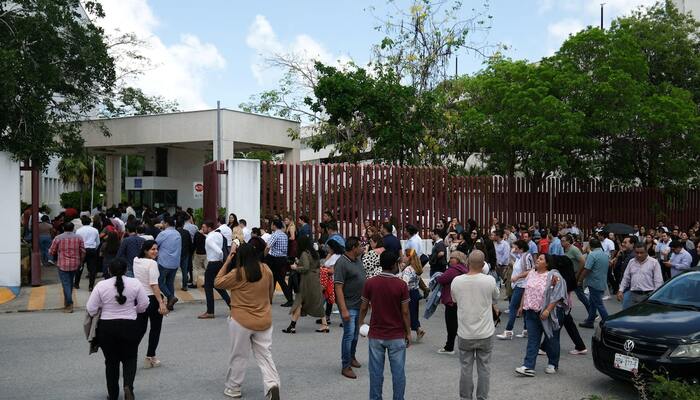
    In the U.S., the quake was also felt in Florida. In Mexico, residents of Cancun, Playa del Carmen, and Tulum, popular tourist destinations on the Yucatán Peninsula, reported feeling the shaking. Cancun’s city workers and visitors evacuated buildings out of caution, although authorities in Yucatán and Quintana Roo haven’t reported significant damage yet. The U.S. National Weather Service confirmed that no tsunami warnings or advisories were issued after the event.

  • Mexico targets vape sales with new 8-year jail threat

    Mexico targets vape sales with new 8-year jail threat

    Mexico’s Senate has approved new laws that could result in prison sentences of up to eight years and fines reaching 226,000 pesos ($12,500) for manufacturing or selling vapes and electronic cigarettes. These stricter enforcement measures are seen by critics as overly harsh.

    The amendments to the General Health Law, approved late Wednesday by pro-government senators after passing the lower chamber on Tuesday, now await the president’s signature. President Claudia Sheinbaum supports the legislation.

    Sheinbaum stated, “Many believe that switching from tobacco cigarettes to vapes is safe, but in reality, some vapes can be even more harmful than cigarettes. Both should be avoided.”

    Mexico, which banned smoking in most public areas approximately twenty years ago as part of its anti-tobacco efforts, has lately shifted focus toward restricting vape sales. Similar bans are in place in Argentina and Brazil due to health concerns.

    However, the use of vapes remains legal in Mexico.

    The government is collaborating with state authorities to combat illegal markets, particularly because of worries about organized crime involvement. Sheinbaum did not specify when the new regulations will take effect.

    Opposition senator Luis Colosio criticized the reforms, labeling them as excessively prohibitive. During Thursday’s debate, he argued the government is avoiding its regulatory responsibilities by opting for outright bans instead of industry oversight.

    “Prohibition is an easy fix for problems they either don’t want to or can’t control,” Colosio commented.

    Despite the new laws, vapes and e-cigarettes are still widely available in Mexico City stores, and authorities have yet to address street vendors.

    Valentina, a local resident, told Milenio TV, “It would be better if they banned them altogether because I keep buying them, and truthfully, they’re very affordable everywhere.”

  • Viral Gen Z Protests Erupt in Mexico After Mayor’s Killing

    Viral Gen Z Protests Erupt in Mexico After Mayor’s Killing

    On Saturday, thousands across Mexico took to the streets under the banner of “Generation Z” to rally against the escalating violence following the recent assassination of Mayor Carlos Manzo, an outspoken advocate against crime. The protests spanned the nation, including a notable gathering in Mexico City where a small group of hooded individuals managed to dismantle fences surrounding the National Palace, where President Claudia Sheinbaum resides. This confrontation resulted in clashes with riot police, who responded with tear gas, witnesses told Reuters.

    According to Pablo Vazquez, Mexico City’s Public Safety Secretary, the unrest caused injuries to approximately 100 police officers, with 40 needing hospital care. An additional 20 civilians also suffered injuries. Law enforcement made 20 arrests and issued 20 administrative referrals during the chaos.

    Protests were also seen in various other cities, notably in Michoacán, where anger remains high over the November 1 shooting death of Uruapan Mayor Carlos Manzo during a public Day of the Dead celebration. Some demonstrators in Mexico City directed their frustrations at Sheinbaum’s party, Morena, chanting “Out, Morena,” and demanding more robust state action to combat crime, with the phrase “Carlos did not die, the government killed him” echoing through the crowds.

    A group self-identifying as “Generation Z Mexico,” which called for the protests through a manifesto circulating on social media, claims to be non-partisan and represents youth fed up with violence, corruption, and abuse of power. Generation Z includes individuals born between 1997 and 2012, and global protest movements with the same label have emerged to advocate for social and political reform.

    The government criticized the protests, suggesting they were largely orchestrated by right-wing political opponents and amplified by bots and coordinated campaigns on social media platforms.

  • US official: Iranian plot to assassinate Israel’s Mexico ambassador foiled

    US official: Iranian plot to assassinate Israel’s Mexico ambassador foiled

    A Mexican flag waves in this undated photo — AFP

    – A U.S. official states that the plot was contained and there’s no current threat.
    – Mexico denies having any knowledge of an alleged attack on the Israeli ambassador.
    – Israel expresses gratitude to Mexico for preventing what was believed to be an Iranian conspiracy.

    Iran’s Islamic Revolutionary Guard Corps attempted to carry out an assassination against Israel’s ambassador to Mexico late last year. However, the operation was thwarted, and there is no ongoing danger, according to a U.S. official on Friday.

    Later that day, Mexico’s government responded, stating it “has no information about an alleged attack targeting the Israeli ambassador to Mexico.”

    Anonymously, the U.S. official told Reuters that the plot against Ambassador Einat Kranz Neiger was active during the first half of this year.

    “The plan was neutralized and currently doesn’t pose a threat,” the official explained. “This incident is part of a long pattern of Iran’s global campaign to target diplomats, journalists, dissidents, and others who oppose them. Every country hosting Iranian presence should be deeply concerned.”

    Details about how the plot was foiled remain undisclosed.

    Israel’s Foreign Ministry credited Mexican security and law enforcement agencies for “interrupting a terrorist network directed by Iran aiming to attack Israel’s ambassador in Mexico.”

    The Iranian Embassy in Mexico dismissed the accusations as “completely false,” according to the semi-official Mehr news agency.

    “We will never tarnish the good reputation of Mexicans, our friends. We see betrayal of Mexico’s interests as betrayal of our own, and respecting Mexico’s laws is our top priority,” the embassy stated.

    The U.S. and allies have repeatedly accused Iran and affiliated groups of planning violent actions against opponents. Iranian officials deny these allegations, claiming they are motivated politically.

    Besides, a dozen nations have condemned what they perceive as increasing Iranian plots involving assassinations, kidnappings, and harassment.

    Britain’s MI5 Director General Ken McCallum said last month that Iran is desperately trying to silence critics worldwide, citing Australia’s exposure of Iranian involvement in antisemitic schemes and the Netherlands’ revelation of a failed assassination attempt.

  • Mexico’s President Groped, Shining a Light on Violence Against Women

    Mexico’s President Groped, Shining a Light on Violence Against Women

    Mexican President Claudia Sheinbaum reported filing a formal complaint after a man groped her and tried to kiss her while she was walking between meetings in Mexico City. This incident came to light a day after a video capturing the event circulated widely online.

    Sheinbaum, Mexico’s first female president, expressed concern over the incident, stating, “If this happens to the president, where does that leave all the young women in our country?” She emphasized that no one has the right to invade a woman’s personal space.

    The video, which quickly spread across social media before being removed by some accounts, highlighted issues of safety and violence against women in Mexico—an environment characterized by machismo and gender-based violence.

    Questions were raised about Sheinbaum’s security arrangements, considering her approach to security. Like her predecessor, Andrés Manuel López Obrador, she often travels with limited security and interacts openly with the public, sometimes walking through crowds. She stated that she does not intend to change this approach, reaffirming, “we have to be close to the people.”

    The incident occurred on Tuesday in the historic center of Mexico City, where Sheinbaum was greeting members of the public during her short walk from the National Palace to the Ministry of Education. The footage shows a middle-aged man wrapping his arm around her, touching her chest, and trying to kiss her. Shewarded his hands away before a staff member intervened. Her security detail was not visibly nearby during the moment. She mentioned that the man appeared intoxicated.

    Furthermore, Sheinbaum condemned the Mexican newspaper Reforma for publishing images of the assault, criticizing it as “re-victimization” and an ethical violation. “Using that image is also a crime,” she added, referencing laws against digital violence. She demanded an apology from the publication.

    The federal Women’s Ministry, established under Sheinbaum’s leadership, issued a statement urging women to report violence but also called on media outlets to refrain from publishing content that infringes on women’s dignity. Nonetheless, feminist activists have criticized Sheinbaum for insufficient action against violence toward women, pointing out inadequate prosecutions and investigations of femicides. In 2024, Mexico recorded 821 femicides, with 501 cases documented so far in 2025—a number many activists believe is severely underreported.

    Ana Yeli Perez from the National Citizen Observatory on Femicide highlighted that the groping incident brings the issue of violence against women back into the national spotlight. She resonated with the idea that such acts are not only criminal but also emblematic of everyday challenges women face.

    Sheinbaum called for sexual harassment to be classified as a “criminal offense punishable by law” and has asked Mexico’s Women’s Ministry to review legal codes across all states. Currently, about half of Mexico’s states, including Mexico City, have laws criminalizing sexual harassment.

    Authorities identified the man involved as Uriel Rivera, who was reportedly arrested Tuesday night at 9 p.m., according to security records.

  • Mexico Floods: Death Toll Hits 76 with Many Unaccounted For

    Mexico Floods: Death Toll Hits 76 with Many Unaccounted For

    Floodwaters caused by heavy rains have forced a man to wade through the streets of Alamo, Mexico, on October 17, 2025. The recent floods and mudslides have resulted in significant devastation across the country, particularly affecting central and eastern regions.

    According to official reports, 76 people have lost their lives due to the disaster, with an additional 27 reported missing. Thousands of residents remain cut off as roads and highways are either blocked or completely destroyed, leaving nearly 120 communities isolated. President Claudia Sheinbaum stated during a press conference that relief efforts are ongoing, and a relief package of 10 billion pesos (roughly $544 million) has been allocated to assist around 100,000 affected families.

    The state of Hidalgo has seen the most severe disruptions, with 65 municipalities cut off—many in mountainous areas where landslides have damaged access routes. Veracruz, situated along the Gulf of Mexico in the east, has also experienced severe flooding. Over 12,700 soldiers continue to provide aid, deliver supplies, and support recovery efforts in impacted communities.

    These intense rains, typical of Mexico’s rainy season from May to October, were intensified last week due to a tropical system from the Gulf of Mexico combining with a cold front moving down from the north. This convergence created particularly dangerous conditions, exacerbating the ongoing crisis.

  • Flooding in Mexico: Heavy Rains Cause 130+ Dead or Missing

    Flooding in Mexico: Heavy Rains Cause 130+ Dead or Missing

    Last week’s heavy rainfall in Mexico resulted in at least 64 fatalities, with 65 individuals reported missing. The tropical depression that caused widespread landslides and flooding impacted coastal and central regions along the Gulf Coast. This system developed late in the rainy season, exacerbating land saturation and causing rivers to overflow, as they had already been swollen by months of persistent rainfall. Forecasters were primarily focused on nearby tropical storms and two Pacific hurricanes at the time.

    President Claudia Sheinbaum stated that the rainfall was more intense than anticipated. Admiral Raymundo Morales of Mexico’s Navy explained that the flooding occurred due to the convergence of warm and cold air currents over already flooded rivers and weakened mountains from prolonged rains.

    Approximately 100,000 homes were affected by the disaster. Sheinbaum indicated she would meet with financial officials later to plan recovery efforts and would visit some of the hardest-hit areas. Civil protection coordinator Laura Velazquez identified Hidalgo and Veracruz as the most severely impacted states, with Veracruz reporting 29 deaths and 18 people missing, and Hidalgo reporting 21 deaths and 43 missing.

    Infrastructure including bridges was destroyed, and streets turned into muddy waterways. Emergency responders were seen wading through deep waters last week to rescue stranded residents and deliver supplies. Thousands of personnel have been deployed to assist with evacuations, cleanup, and monitoring the affected zones.

    Power outages in towns across five states have mostly been restored. Authorities are now also concentrating on preventing the spread of mosquito-borne viruses like dengue, which thrive in stagnant water.

  • 64 Dead, 65 Missing as Floods Devastate Central and Eastern Mexico

    64 Dead, 65 Missing as Floods Devastate Central and Eastern Mexico

    Floodwaters submerge open fields scattered with trees across Veracruz, one of the most affected regions after several days of heavy rainfall and severe flooding. —AFP

    – Small towns remain isolated; residents are clearing roads to enable aid delivery.
    – Emergency shelters have been opened for those displaced, with helicopters ferrying food and water to stranded communities.
    – Intense rains have caused landslides, destroying entire neighborhoods and washing away infrastructure.

    Rescue teams are working tirelessly Monday to reach individuals trapped by the catastrophic floods that have resulted in 64 deaths in central and eastern Mexico, with 65 people missing. Heavy rains over last week transformed streets into raging rivers, triggered landslides, and washed out roads and bridges.

    Many small communities are still cut off by road, days after the storms, with residents making great efforts to clear pathways for supplies. President Claudia Sheinbaum announced Monday that about 10,000 military personnel equipped with boats, aircraft, and helicopters are involved in rescue and relief operations, providing critical food and water supplies to those affected.

    Shelters are in place for displaced residents, and aerial flights continue to deliver essentials to those cut off. “Multiple flights are necessary to get enough food and water to everyone,” the president stated.

    Laura Velázquez, head of Mexico’s Civil Defense, reported that Veracruz, Hidalgo, and Puebla were the hardest hit by the flooding caused by relentless heavy rains. In Hidalgo alone, 43 individuals remain missing, and the death toll was updated from 47 to a higher number within just 12 hours, underscoring the rapidly evolving scale of the crisis.

    This year has seen particularly intense rainfall in Mexico, including a record amount for Mexico City.

    Residents in Tenango de Doria, Hidalgo, walked kilometers in search of food and water as flooded roads and inaccessible terrain hinder transportation. Many carried belongings, hoping to find shelter. Marco Mendoza, a 35-year-old farmer, shared, “We walked two and a half hours through the mud… Everything is ruined; we have no supplies or food.” Stores in the town center lacked electricity, and locals gathered in the main plaza, seeking updates on road openings and aid arrivals.

    Farmer Francisco Hernandez from nearby El Texme explained that a river overflowing its banks has left his community “trapped.” Although Mexico’s rainy season typically occurs from May to October, last week’s downpour was exacerbated by a tropical system moving from the Gulf of Mexico combined with a cold front from the north, meteorologists said.

    Due to rising waters, coastal cities and towns in Veracruz, rich with numerous rivers, were advised to evacuate last Friday. In some elevated areas, persistent rains caused landslides, sweeping away parts of mountainsides.

    Sheinbaum dismissed questions regarding early warnings and preparedness, noting that such events are challenging to predict with precision unlike hurricanes. “It was difficult to have advance notice about this situation because of the unpredictable nature of the weather,” she explained.

    Many areas began clearing debris with heavy machinery on Sunday as skies cleared.

  • In Minutes, Mexico’s Rains Destroy Homes and Displace Residents

    In Minutes, Mexico’s Rains Destroy Homes and Displace Residents

    A young man is receiving medical care in the municipality of Alamo, Veracruz state, Mexico, on October 12, 2025. — AFP

    Rosalia Ortega, standing beside her sister’s lifeless body, felt grateful she had found her in the mud-filled river that suddenly washed away her house amid relentless rains pounding her mountain town in Mexico.

    Since Thursday, at least 47 lives have been lost as flooding has caused extensive destruction in the hardest-hit states of Hidalgo, Puebla, Queretaro, and Veracruz.

    “We’re sad, but at least we’ll give her a proper Christian burial,” Ortega, age 76, told AFP in Huauchinango, Puebla—a state east of Mexico City that reports nine fatalities and significant damage.

    The affected area is part of the Sierra Madre Oriental mountain range, running parallel to Mexico’s eastern coast, populated with villages still waiting for telecommunications and other services to be restored.

    On Thursday night, a mountain river swollen with rain overflowed its banks in Huauchinango, instantly depriving residents of their homes and, in some cases, their loved ones.

    Maria Salas, a 49-year-old cook taking cover from the rain under an umbrella, watched as two soldiers guarded the neighborhood entrance. She lost five relatives when their house collapsed, and her own home was destroyed by a landslide.

    “I can’t retrieve my belongings, I can’t sleep there,” she said. “I have nothing left.”

    Families are now struggling to pay funeral costs and, if possible, recover belongings from their damaged or lost homes.

    Huauchinango, home to about 100,000 people, is one of the largest towns in the disaster zone and among the few accessible on Saturday.

    Mudflows swept away everything in their path, creating heavy rivers of sludge that made even intact homes uninhabitable.

    Petra Rodriguez, 40, a domestic worker, described her experience: “It was knee-deep.” She, her husband, and two sons managed to escape, holding hands tightly to ensure no one was left behind if the water pulled one of them under.

    In another part of town, teacher Karina Galicia, 49, showed AFP her house, now damaged by mud and mold. She and her family escaped in time; had they not, she believes, they would have been buried alive.

    In slightly less affected homes, neighbors worked diligently to remove water using plastic bottles, brooms, and shovels.

    Adriana Vazquez, 48, climbed a rugged, mud-strewn path to see if anything remained of a relative’s house. She found a jumble of wooden and tin structures flattened by a landslide, with soldiers operating a backhoe to clear debris from the street.

    Her relative answered the phone, though her voice was faint; Vazquez hopes that was due to poor connection rather than loss of contact.

    About 100 small communities are without contact due to blocked roads and power outages disrupting communications and travel.

    2025 has been marked by unusually heavy rains across Mexico, with rainfall records even set in Mexico City. Meteorologist Isidro Cano explained to AFP that this week’s intense weather resulted from seasonal shifts and cloud formations caused by warm, humid Gulf of Mexico air rising to the mountain peaks.

  • Second Mexican Mayor Shot Dead in Just Two Days

    Second Mexican Mayor Shot Dead in Just Two Days

    Security personnel are present at the location where Bertha Gisela Gaytan, the ruling party Morena’s candidate for mayor in Celaya, was shot and killed by unidentified assailants during a campaign event in San Miguel Octopan, Guanajuato, Mexico, April 1, 2024. — Reuters

    A woman mayor in Mexico was shot and killed on Tuesday in Michoacán, just two days following a similar tragedy in the southern part of the country, where the mayor of a town was murdered in her office, according to AFP.

    Martha Laura Mendoza, the mayor of Tepalcatepec, was killed alongside her husband, as reported by the Michoacán public prosecutor’s office on X.

    Mendoza was affiliated with President Claudia Sheinbaum’s left-leaning Morena party.

    The prosecutor’s office did not provide specific details about the incident, labeling it as a femicide, and indicated that it occurred within the town.

    The former mayor of Tepalcatepec, Guillermo Valencia, the leader of the opposition PRI party in Michoacán, stated on X that sources informed him Mendoza and her husband were attacked “as they were leaving their home.”

    Michoacán, which produces most of Mexico’s avocados, is also home to the port of Lázaro Cárdenas and several tourist attractions. However, it has faced persistent gang-related violence for almost twenty years.

    This incident follows closely on the heels of another shooting, where gunmen invaded the office of San Mateo Pinas’ mayor, Lilia García, in Oaxaca state, killing her and a member of her staff.

    Numerous local officials in Mexico have fallen victim to organized crime in recent years, particularly in regions where powerful drug trafficking organizations operate.

    The violence has recently extended to the capital, Mexico City, where two aides to Mayor Clara Brugada were shot and killed while traveling during rush hour last month.

    Since the government initiated a war against drug cartels in 2006, criminal violence—largely related to drug trafficking—has resulted in approximately 480,000 fatalities, with over 120,000 individuals still reported missing.

  • Beauty Queen and Bodybuilder Found Dead in Mexico Hotel Pool

    Beauty Queen and Bodybuilder Found Dead in Mexico Hotel Pool

    Tragic Discovery: Luz María Barrera Agatón Found Drowned in Hotel Pool

    The body of prominent social media influencer and former carnival queen, Luz María Barrera Agatón, was discovered at the bottom of a pool at a hotel in Mexico, as reported by local news outlets.

    According to reports from the Daily Mail, the tragedy comes weeks after Agatón, a bodybuilder, received threats outside her gym in Merida, Yucatán, where a menacing banner was displayed.

    The 36-year-old, originally from Mexico, had been enjoying time with family and friends at the Coco Resort & Villas Hotel in Motul, located to the west of Cancun. Her lifeless body was found early Sunday morning after everyone had dispersed and returned to their rooms around midnight.

    After she did not return to her accommodation, her friends initiated a search. Regrettably, by the time they located her in the pool, emergency responders could only confirm her death.

    A tweet from Fuerza Informativa Azteca highlighted her passing, noting the circumstances surrounding her untimely death during her stay in Yucatán.

    Authorities are expected to investigate further into the events that led to this unfortunate incident.

  • Tariffs Could Slash GDP by Up to 3% in North America

    Tariffs Could Slash GDP by Up to 3% in North America

    The Impact of U.S.-Mexico-Canada Tariffs on GDP and Employment

    In recent years, the global trading landscape has experienced significant shifts due to the imposition of tariffs, particularly during the Trump administration. A recent infographic highlights the potential repercussions of these tariffs on GDP and employment across the U.S., Mexico, and Canada.

    Overview of Recent Tariffs

    In an effort to curb illegal immigration and substance trafficking, U.S. President Donald Trump enacted a series of tariffs late one Tuesday night. This included a 25-percent tariff on all imports from Mexico, most imports from Canada, and an additional 10-percent tariff on various Chinese goods. This decision was made amidst ongoing discourse about protecting American industries and jobs.

    Responses from Trading Partners

    The immediate response from Canada was swift, with Prime Minister Justin Trudeau announcing a reciprocal 25-percent tariff on $30 billion worth of U.S. goods. They plan to escalate this measure, potentially targeting $125 billion in American imports within three weeks. Given that Canadian imports from the U.S. were valued at $269 billion in 2023, this retaliation could have severe implications.

    China’s reaction was also significant, implementing 10-15 percent tariffs on a range of U.S. agricultural products. These tariffs have the potential to disrupt a fragile trade balance, particularly as China had been a major buyer of U.S. agricultural goods post the previous trade war.

    Tariff Effects on GDP and Employment

    U.S. Economic Forecasts

    According to projections by the Brookings Institution, the tariffs imposed on Mexico and Canada could reduce U.S. real GDP growth by approximately 0.24 percentage points. Should these countries reciprocate with similar tariffs, this could escalate to a decline of 0.32 percentage points for the United States.

    • Employment Impact: Estimates suggest that the U.S. could face a loss of 0.11 to 0.25 percent in total employment. These figures underscore the potential disruption not only to domestic markets but also to the interlinked economies of the U.S.’s northern and southern neighbors.

    Impacts on Canada and Mexico

    Both Canada and Mexico face dire economic forecasts as a result of the U.S. tariff strategy. Since these two nations are heavily reliant on trade with the U.S. (exporting around 80% of their goods there), the risks are considerably heightened:

    • Canada: Expected GDP growth could decrease by over one percentage point, rising to more than three percentage points if retaliatory measures are fully enacted. Employment losses are forecasted to be between 1.3 to 2.5 percent under retaliatory conditions.

    • Mexico: The potential fallout is even more severe, with GDP estimates falling 2.3 to 3.6 percent and similar employment losses that threaten economic stability.

    Inflationary Pressures

    The tariffs are not solely an economic concern related to GDP and employment; they also carry inflationary implications. Brookings anticipates tariffs could raise inflation by an additional 1.33 percentage points in the U.S. In contrast, if Canada and Mexico respond with full retaliation, this effect may be somewhat mitigated to 0.77 percentage points. The Federal Reserve of Boston has also projected an increase in core inflation of between 0.5 to 0.8 percentage points.

    Trade Dynamics and Future Projections

    Decline in Exports

    The imposition of tariffs is predicted to cause a sharp decline in exports among the affected nations:

    • U.S. Exports: Forecasts indicate that U.S. exports to Canada and Mexico could plummet by 6 to 9 percent.

    • Canadian and Mexican Exports: In a retaliatory scenario, Canada could see its exports to the U.S. drop by 9 to 19 percent, while Mexico’s could fall even further, by 14 to nearly 26 percent.

    Affected Industries

    Certain industries are poised to be significantly affected due to the interconnected nature of the economies involved:

    • U.S. Imports: Key sectors such as computers, electronic equipment, and manufacturing may face critical disruptions. Mining, lumber, and metal exports could see declines ranging from 76 to 97 percent in the case of full retaliatory tariffs.

    • Motor Vehicle Market: Both Canada and Mexico are expected to experience a dramatic reduction (40 to 68 percent) in the number of motor vehicles exported to the U.S. Such a decline could substantially increase prices for one of the most valuable import categories for the United States.

    The ongoing saga of tariffs between the U.S., Canada, and Mexico presents a complex web of economic interactions that could have lasting effects on trade relationships, job markets, and inflation rates across North America. As nations navigate these challenges, understanding the layered impacts of such tariffs is essential for gauging future economic trajectories.

  • U.S. Trade Leverage: 43% Imports and 41% Exports at Stake

    U.S. Trade Leverage: 43% Imports and 41% Exports at Stake

    The Unconventional Use of Tariffs in Trade Wars

    Tariffs have long been tools of economic policy, utilized historically to generate government revenue and shield domestic industries from overseas competition. However, the contemporary political landscape, particularly under President Donald Trump’s administration, showcases a novel application of tariffs as instruments of political leverage rather than mere economic tools.

    Tariffs as Political Tools

    In the early days of his second administration, President Trump has made his stance on tariffs increasingly clear. Instead of employing them solely for the traditional purposes of revenue generation or protective measures, Trump has redefined tariffs as bargaining chips in diplomatic negotiations. His approach suggests a shift in how economic policies are leveraged in the global arena, focusing on achieving political goals over conventional economic outcomes.

    The Announcement of New Tariffs

    On February 1, President Trump announced a dramatic shift in economic policy by implementing a 25-percent tariff on all imports from Canada and Mexico, alongside an additional 10-percent tariff on goods from China. Unlike previous tariffs aimed at supporting American industries, these new tariffs are framed as efforts to combat what Trump describes as the "flood of illegal aliens and drugs" entering the U.S. He has targeted these nations while attributing significant blame for issues surrounding the illicit fentanyl trade.

    Economic Impact on Trade Partners

    To grasp the implications of these tariffs, it’s essential to consider the significance of the U.S. trade relationships with Canada, Mexico, and China. In 2023, these three nations comprised 43 percent of U.S. goods imports and 41 percent of U.S. exports. This substantial interdependence means that retaliation or additional tariffs could adversely impact American businesses and consumers as well.

    Trade Dependency Ratios

    The World Bank’s data highlights a vital point of comparison between the U.S. and its trade partners. In 2023, U.S. trade—defined as the sum of imports and exports of goods and services—represented about 25 percent of the nation’s Gross Domestic Product (GDP). In contrast:

    • China: 37 percent of GDP tied to trade.
    • Canada: A staggering 67 percent.
    • Mexico: Even higher at 73 percent.

    These figures indicate a profound dependency on trade for Canada’s and Mexico’s economies, making them particularly vulnerable to U.S. tariffs.

    Leverage in Negotiations

    The dominance of the U.S. market poses a unique advantage for American policymakers. With roughly 80 percent of both Mexican and Canadian exports directed toward the U.S., the imposition of high tariffs could disrupt their economies significantly. This reliance delivers a strategic bargaining advantage to the Trump administration during negotiations.

    China’s Different Position

    Conversely, the situation with China reveals a more complex scenario. While China is a substantial trade partner, its economic structure is less reliant on U.S. markets compared to its North American counterparts. In 2023, U.S. purchases constituted only 15 percent of Chinese exports, suggesting that the tariffs imposed by the U.S. may have limited impact on the Chinese economy. As a result, the U.S. may find it more challenging to negotiate favorable terms in trade discussions with China.

    The Future of U.S. Trade Policy

    The evolving landscape of trade policy in the U.S. highlights a significant departure from traditional economic strategies. The ongoing shifts underline the importance of understanding how interconnectedness and dependency shape international relations. As the U.S. navigates these turbulent waters, the outcomes of trade wars could have far-reaching effects on both domestic and global economic policies.

    By analyzing the intricate dynamics of trade relationships, it becomes evident that the implementation of tariffs transcends mere economics, embedding themselves within the broader context of geopolitical strategy. As global interdependencies continue to evolve, the implications of such tariffs are bound to reverberate across borders, influencing markets and policies worldwide.

  • U.S. Imports: 25% Tariff Impact on Trade with Mexico, Canada, China

    U.S. Imports: 25% Tariff Impact on Trade with Mexico, Canada, China

    Understanding U.S. Import Dynamics: A Focus on Mexico, Canada, and China

    As the global economy continues to evolve, the relationship between nations is increasingly defined by trade. In this context, the United States maintains significant import ties with its closest neighbors, Mexico and Canada, as well as the economic giant, China. Understanding what the U.S. imports from these countries provides valuable insight into both the economic influence of these nations and the complexities of trade agreements.

    Imports from Mexico

    Key Categories

    The U.S. imports a diverse range of products from Mexico, with notable categories including:

    • Automobiles and Auto Parts: Vehicles are the largest import by value, reflecting the deep integration of the auto industry across North American borders. Major manufacturers like General Motors and Ford source many components and assembly processes from Mexico.
    • Machinery: Mexico is also a significant supplier of machinery and computer equipment, contributing to various industries in the U.S.
    • Agricultural Products: The agriculture sector sees considerable imports, particularly fruits and vegetables, with Mexico being one of the largest suppliers.

    Impact of Increased Tariffs

    Recent discussions about potential increases in tariffs have raised concerns among businesses relying on these imports. A proposed 25% duty on goods from Mexico could lead to higher consumer prices and disrupt established supply chains. This threat is particularly pressing for companies that rely on just-in-time manufacturing practices.

    Imports from Canada

    Major Import Segments

    Canada is not only a top trade partner but also a vital source of several key imports:

    • Mineral Fuels: Canada is the largest supplier of crude oil to the U.S., highlighting the importance of this relationship to energy security.
    • Automotive Products: Like Mexico, Canada is intertwined in the automotive supply chain, providing parts and raw materials for vehicle assembly.
    • Wood Products: The lumber trade plays a crucial role, especially in the construction and housing industries.

    Tariff Implications

    The consideration of imposing tariffs on Canadian goods raises questions about the future of the United States-Mexico-Canada Agreement (USMCA). Any significant changes could unsettle commerce and lead to retaliatory measures from Canada, impacting businesses on both sides of the border.

    Imports from China

    Dominant Product Categories

    China stands as one of the largest exporters to the U.S., with imports heavily concentrated in specific sectors:

    • Electronics and Machinery: Products such as computers, telecommunication equipment, and household appliances represent a significant portion of imports.
    • Plastic Goods: China also exports a variety of plastic products, which are critical for numerous industries, from manufacturing to retail.
    • Miscellaneous Items: This category includes an array of consumer products, indicating China’s vast production capabilities.

    Trade War Consequences

    The history of tariffs imposed during previous trade disputes has shown a pattern of escalation. If new tariffs were enacted, it could instigate another round of retaliatory tariffs from China, resulting in a direct impact on U.S. exporters. The agricultural sector, in particular, could face severe consequences, as it did during the last trade conflict, where farmers suffered substantial losses.

    The Interconnected Nature of Trade

    The relationships between the U.S., Mexico, Canada, and China are emblematic of a broader theme in global trade: interconnectedness. The import patterns reflect not just the economic needs of the U.S. but also the geopolitical realities that shape these transactions.

    Fentanyl and Immigration Concerns

    In addition to economic discussions, political factors also play a crucial role. Issues surrounding the production and trafficking of fentanyl, alongside concerns about illegal immigration, have framed trade negotiations in recent years. The articulation of these concerns highlights that trade policies extend beyond mere economics—they are entwined with national security and social issues.

    The Future of U.S. Trade Policy

    As the landscape continues to shift with changing administrations and policies, the future of U.S. trade relations with Mexico, Canada, and China remains uncertain. The positions taken by leaders and the subsequent implications for tariffs will significantly influence these countries’ roles in U.S. imports.

    This analysis of U.S. imports illustrates the delicate balance of trade relationships, the potential consequences of policy changes, and the intricate ties that bind these nations in the fabric of global commerce.

  • World’s Deepest Blue Hole Discovered in Mexico

    World’s Deepest Blue Hole Discovered in Mexico

    • Mexico’s Taam Ja’ claims the world’s deepest blue hole title at 1,380 feet.
    • Potential connection to the ocean and hidden life forms theorized.
    • True depth is yet to be explored due to equipment limitations.

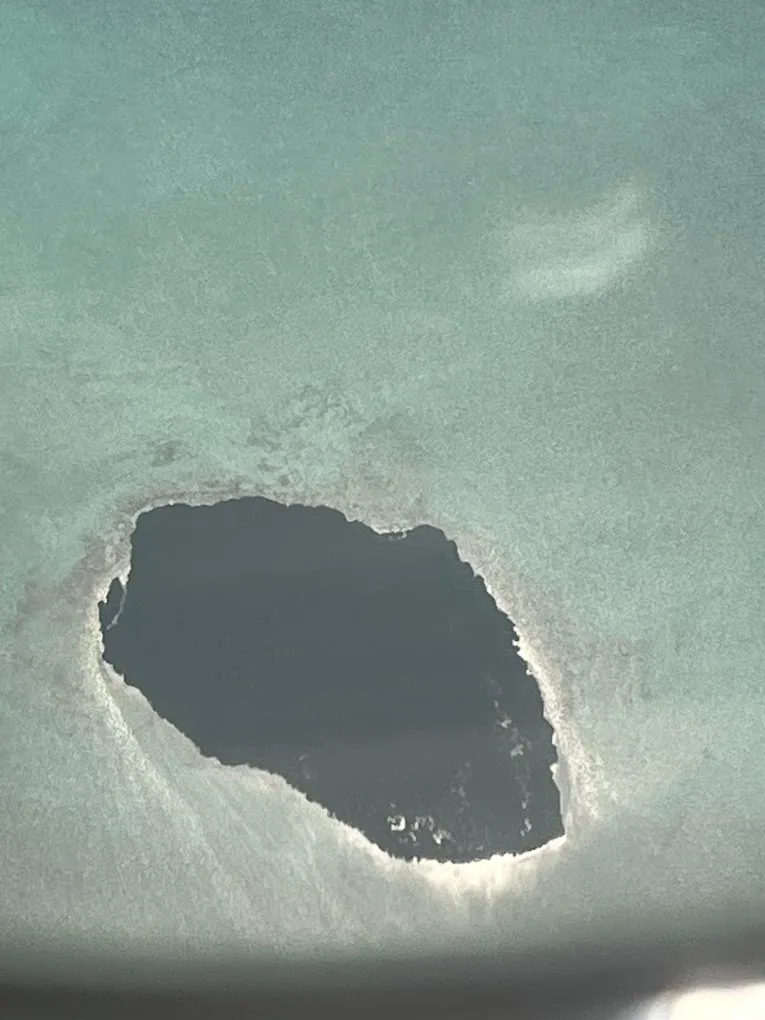
    Researchers have uncovered a likely contender for the world’s deepest blue hole in the water off the shore of Mexico’s Yucatan Peninsula, as no one has ever solved the enigma.

    Scientists published the study’s findings in the journal Frontiers in Marine Science.

    The sinkhole is known as Taam Ja’ Blue Hole, and it is estimated to be at least 1,380 feet (420 meters) deep.

    blue hole in mexico from plane
    Tatianna Sherman

    The recent finding of the blue hole is substantially deeper than the previously found Dragon Hole or Sansha Yongle Blue Hole in the South China Sea in 2021, which is 990 feet deep (301 meters).

    “On December 6, 2023, a scuba diving expedition was conducted to identify the environmental conditions prevailing at the TJBH,” the experts said in a paper reported by Live Science.

    According to the observations and gathered data, the Taam Ja’ blue hole is the world’s deepest known blue hole, with its bottom still to be discovered.”

    The studies also revealed many strata underneath the sinkhole. A layer below 1,312 feet (400 meters) exhibited temperature and salinity levels comparable to the Caribbean Sea and adjoining coastal reef lagoons.

    a boat in the water
    Pichancho Morales

    The researchers speculated that the TJBH may be linked to the ocean by a network of tunnels and caverns.

    According to the source, the blue holes are vertical caves formed when the bedrock contains limestone, marble, or gypsum.

    Dean’s Blue Hole in the Bahamas, Egypt’s Dahab Blue Hole, and Belize’s Great Blue Hole are among examples of similar holes.

    “Confirmation of the maximum depth was not possible due to instrument limitations during the scientific expeditions in 2021,” the authors of the study said.

    “Within the depths of TJBH could also lie a biodiversity to be explored,” they went on to say.