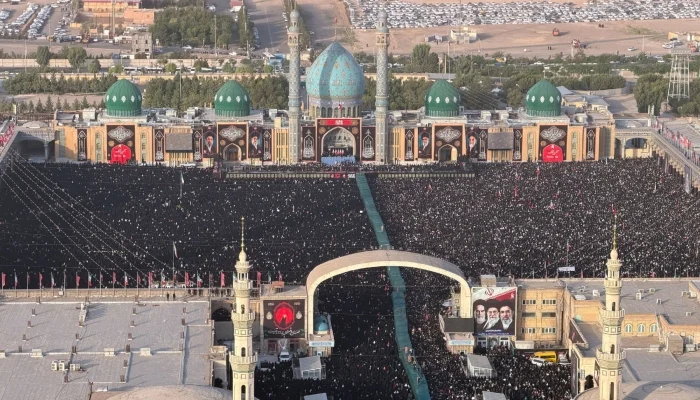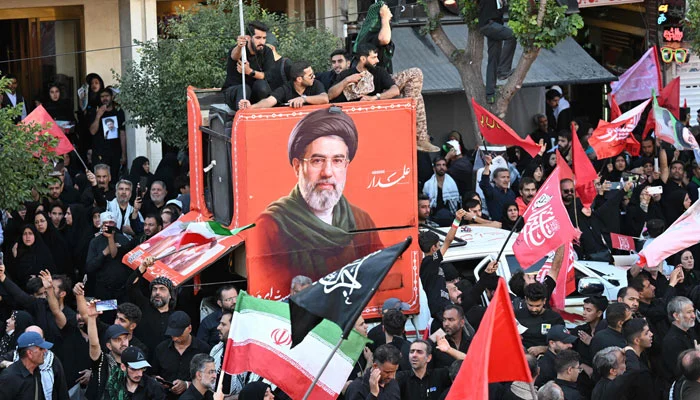
Crowds gather along a street around a portrait of Iran’s Supreme Leader Mojtaba Khamenei at the Shrine of Imam Reza, Iran’s most sacred site, in Mashhad on July 9, 2026. — AFP
– Iran maintains it must control the Strait of Hormuz.
– Araghchi will travel to Oman for talks, according to state media.
– Prime Minister Shehbaz Sharik urges Iran to protect the fragile peace they’ve fought to establish.
Iran asserts it has fulfilled its promise regarding a ceasefire with the United States, despite President Donald Trump claiming the truce has ended, though he also indicated he’s open to further negotiations with Iran. These statements mark a significant decline in relations amidst recent skirmishes that threaten the fragile agreement aimed at solidifying the months-long ceasefire into lasting peace, avoiding a return to full-scale regional conflict.
On Saturday, Trump intensified the rhetoric, posting on Truth Social that if Iran attempts or manages to assassinate him, he would “completely decimate” Iran. This followed his earlier indication that he was open to further talks, even as he declared the ceasefire was over, just weeks after Washington and Tehran signed an agreement promoting peace.
While direct negotiations between Iran and the U.S. have not resumed since last month, reports indicate a mediator from Qatar was in Tehran following exchanges of missile fire. Trump tweeted, “The Islamic Republic of Iran has asked us to continue ‘talks’. We’ve agreed, but the U.S. has made it clear that the ceasefire is over.” Earlier at a NATO summit, Trump also declared the ceasefire’s end, dismissing Tehran’s diplomacy as “a waste of time.”
Iran’s Foreign Minister Abbas Araghchi responded Saturday, asserting that Iran has “kept its word so far,” accusing the U.S. Treasury Secretary of violating the memorandum of understanding. This agreement stipulated Iran would maintain its current nuclear program status, and the U.S. would refrain from imposing new sanctions or deploying additional forces, pending a final deal. Araghchi emphasized that “mutual compliance” is essential, pointing out violations by the U.S.
Although both nations held one direct round of talks in Switzerland and engaged in indirect negotiations in Qatar, no diplomatic progress has been evident recently.
The tense rhetoric coincides with reports that Washington has given Iran an ultimatum: cease attacks on commercial ships in the Strait of Hormuz and recognize the waterway’s open status by Saturday. The Strait, a vital shipping corridor for global oil supplies, remains a flashpoint with Iran, which effectively closed it in response to U.S.-Israeli strikes earlier this year. Iran insists it must control Hormuz—covering Iranian and Omani waters—and has proposed charging fees for ships passing through.
Recent U.S. strikes in the region followed attacks on ships and prompted Iranian reprisals against American bases in the Gulf. Additionally, the U.S. Treasury revoked a temporary waiver allowing Iran to produce and sell crude oil, canceling a license effective through August 21.
Iranian officials, including Araghchi, are headed to Oman for discussions on the Strait. Qatar continues to advocate diplomacy, with reports noting a Qatari delegation in Tehran trying to reinforce Qatar’s role as a mediator after condemning Iran’s recent attacks on a Qatari LNG tanker. Iran denies involvement.
Prime Minister Shehbaz Sharif, involved in mediating the crisis, spoke with Qatar’s emir and Iran’s President Pezeshkian to urge protecting the peace. Meanwhile, Iran’s chief negotiator, Mohammad Bagher Ghalibaf, issued a defiant statement, emphasizing that Iran will never surrender in this confrontation and affirming the country’s readiness to defend itself.