الوسم: Mars

  • Australian Salt Lakes Could Uncover Mars’ Ancient Water History

    Australian Salt Lakes Could Uncover Mars’ Ancient Water History

    Could the remote landscapes of Western Australia hold some of the best clues about ancient Mars? A recent study suggests that unusual salt lakes in Australia’s Yilgarn Craton might help scientists understand how water once shaped the Red Planet—and where traces of early life could still be hiding.

    Published in Earth and Space Science, the research draws parallels between lakes in Western Australia’s Yilgarn Craton and landforms found in Terra Sirenum, a large region in Mars’ southern hemisphere.

    Although Mars is currently cold and arid, scientists believe liquid water once flowed across its surface. Investigating how water behaved there is crucial because it could reveal whether early Mars had conditions suitable for life. The Yilgarn Craton is among Earth’s oldest crustal regions, dotted with thousands of shallow lakes that are both salty and acidic. These lakes fill periodically during wet seasons and dry out as conditions change. These cycles produce a diverse array of minerals that become preserved within the lake beds over time.

    To better understand these dynamic environments, researchers collected samples from 40 lakes during both wet and dry seasons to monitor changes in water chemistry as levels fluctuated. The findings showed distinct responses among the lakes: some left behind thick salt deposits as water evaporated, while others accumulated minerals like aluminum-rich clays and iron oxides. Variations in acidity and salinity depended on interactions among groundwater, rainfall, evaporation, and surface processes over time.

    These mineralogical patterns are significant because similar deposits have been identified inside craters within Terra Sirenum on Mars. The similarities imply that Mars experienced hydrological processes akin to those observed in Western Australian lakes. This suggests groundwater and repeated wet-dry cycles may have played a larger role in shaping the Martian landscape than previously thought.

    The study also questions the traditional view that volcanic activity was the main driver behind mineral-rich regions on Mars. Instead, the findings point to prolonged water-rock interactions as key factors in forming many of these geological features.

    Most exciting is what these extreme Australian lakes reveal about the potential for life. Despite their high salinity and acidity, these lakes support diverse microbial communities that have adapted to survive under seemingly hostile conditions. This raises the possibility that ancient environments on Mars, like Terra Sirenum, could have supported microscopic life billions of years ago. Although direct evidence of past life on Mars remains elusive, Terra Sirenum emerges as a promising target for future missions searching for biosignatures.

    By examining Earth’s most extreme settings, scientists gain valuable insights into another world’s history. Western Australia’s unique lakes may not only shed light on how water moved and stored on Mars, but also guide humanity’s quest to answer one of the greatest questions: Did life ever exist on the Red Planet?
  • Scientists Warn Some Earth Pathogens Could Survive Trip to Mars

    Scientists Warn Some Earth Pathogens Could Survive Trip to Mars

    Microbes from Earth might survive on other planets, according to recent research. Ph.D. candidate Tommaso Zaccaria examined whether tiny organisms from our planet could endure conditions similar to those on the Moon, Mars, and the icy moons of Jupiter and Saturn. These locations are of particular interest because scientists believe they either contain or once contained water, which is essential for life.

    Historically, space agencies focused mainly on the risk of astronauts bringing back harmful extraterrestrial organisms. Now, scientists are also concerned about the possibility of accidentally transporting Earth life to other planets, potentially contaminating these environments. This concern isn’t new—early moon missions left waste behind, and spacecraft to Mars in previous decades weren’t sterilized as thoroughly as they are today.

    To explore this, Zaccaria simulated the extreme conditions of these distant worlds at the German Aerospace Center. He exposed various microorganisms to high radiation levels, freezing temperatures, and severe dehydration. Many microbes tested originated from some of Earth’s toughest habitats, including Antarctica and volcanic regions. Surprisingly, several survived these harsh conditions, with yeasts performing particularly well.

    The study revealed that yeasts have remarkable defense mechanisms, such as boosting their DNA repair abilities and activating chemical processes that shield their cells from severe stress. Zaccaria also looked at well-known human pathogens, such as Klebsiella pneumoniae, a bacterium capable of causing pneumonia. These bacteria shrank after exposure to Mars-like conditions but did not die out.

    Even more startling was how the human immune system responded to these shrunken pathogens. Laboratory experiments showed that immune cells from human blood reacted less aggressively to the smaller, stressed bacteria. This could have serious implications for astronauts, whose immune systems already weaken during long space missions due to changes in sleep, diet, gut health, social interactions, exposure to radiation, and living in confined spaces. Such stressors could make infections more dangerous.

    The research also examined potential risks from lunar and Martian dust. Using materials that mimic the surfaces of these celestial bodies, scientists tested their effects on lung tissue compared to ordinary Earth sand. The results were concerning—simulated Martian dust damaged lung protective linings and increased infection risk, while lunar dust caused even more damage. Earth sand had little to no harmful effects.

    These findings are relevant not only for future space explorations but also for Earth’s health. Astronauts often exhibit signs of immune weakening and accelerated biological aging, and studying how space conditions affect the body could offer insights into aging, immune function, and individual susceptibility to diseases.

    In the quest to find extraterrestrial life, scientists may have uncovered an unexpected truth: some Earth-based microbes are far more resilient than previously thought.

    Source: KSR.

  • Scientists Develop ‘Mirror’ Molecules to Detect Ancient Life on Mars

    Scientists Develop ‘Mirror’ Molecules to Detect Ancient Life on Mars

    Billions of years ago, Mars looked quite different from the cold, arid planet we see today. Scientists believe that in the distant past, the Red Planet had a warmer climate, flowing liquid water, and a thicker atmosphere. These conditions could have supported simple forms of life. But the big question remains: did life ever actually exist on Mars?

    NASA’s rovers have already found organic molecules in Martian rocks. These molecules contain carbon and are fundamental building blocks of life on Earth. However, they can also form through purely chemical, nonliving processes, making it difficult to determine if these molecules are evidence of ancient life.

    Now, scientists are gearing up for a new phase in this quest. The European Space Agency’s Rosalind Franklin rover, set to land on Mars in 2030, aims to search for organic compounds that might indicate past life. Recently, researchers from Germany and France tested one of the rover’s key scientific tools. Their results suggest that the rover could detect a specific kind of molecular clue known as chirality.

    Some organic molecules exist in two mirror-image forms, similar to how your left and right hands are mirror images. These are called enantiomers. Even though they contain the same atoms, their 3D arrangements differ. This property could help scientists distinguish molecules related to life from those formed by nonbiological means. On Earth, organisms usually use only one of the two mirror-image forms because life tends to pass on specific molecular patterns. In contrast, nonliving chemical reactions generally produce equal amounts of both mirror images.

    The researchers focused on two hydrocarbons, pristane and phytane, which come from living organisms on Earth and are found in petroleum. These compounds are very stable, meaning they could potentially survive billions of years on Mars. The Rosalind Franklin rover carries an instrument called the Mars Organic Molecule Analyzer (MOMA), which uses heating, gas chromatography, and mass spectrometry to identify organic molecules and determine their chirality.

    To test MOMA’s capabilities, scientists analyzed samples from the Murchison meteorite, which fell in Australia in 1969. The meteorite contains a rich variety of organic compounds and acts as a good stand-in for Martian material. The team expected to find signs of Earth-based contamination, but instead, they discovered equal amounts of both mirror-image forms of pristane and phytane. This indicated that the molecules likely did not originate from living organisms.

    The scientists suggest that these compounds might have entered the meteorite during its passage through Earth’s atmosphere, possibly through contact with tiny particles released by fossil fuel combustion. Over time, heat and pressure inside petroleum-rich rocks can erase the molecular imbalance typical of biological origin, resulting in equal amounts of both mirror images.

    This study demonstrates that the Rosalind Franklin rover’s instrument can effectively differentiate between mirror-image molecules. More importantly, it offers a promising new tool in the search for ancient life on Mars and prompts fresh questions about how organic molecules traverse space and reach Earth.

  • New Mars Rock Unveils Clues to the Red Planet’s Ancient History

    New Mars Rock Unveils Clues to the Red Planet’s Ancient History

    Scientists have uncovered a brand-new type of rock from Mars and have, for the first time, identified the mineral garnet in a Martian sample. This discovery provides a fascinating insight into the ancient history of the Red Planet and could improve our understanding of how Mars has changed over the past 4.5 billion years.

    The breakthrough was made by an international research team, which includes Professor James Darling, a geoscientist from the University of Portsmouth in the UK.

    On Earth, garnet is best known as a deep red gemstone often used in jewelry and recognized as the birthstone for January. However, for geologists, garnet is far more significant than its beauty. It can serve as a recorder of the conditions—such as temperature, pressure, and geological events—that affected rocks in the distant past.

    This newly discovered garnet-bearing rock could act as a “time capsule” from ancient Mars. By analyzing it, scientists hope to gain clues about the geological processes that shaped the planet billions of years ago.

    The research was led by Professor Tanya Kizovski from Brock University in Canada. She explained that this discovery broadens what scientists believe about the types of geological activity that may have occurred on Mars.

    The team initially found the garnet while studying a small piece of a Martian meteorite known as NWA 8171, which is housed at the Royal Ontario Museum in Canada. At first glance, they thought the fragment contained pyroxene—a common mineral found in many rocks. But chemical tests revealed something unusual.

    “This tiny section of the meteorite looked quite interesting, and its chemistry was a bit strange,” Kizovski said. “We initially assumed it was pyroxene, but decided to take a closer look.”

    Using high-powered microscopes and specialized laser tools, the researchers soon discovered that the fragment contained garnet, a mineral never before identified in a Martian sample.

    This discovery prompted scientists to explore how the garnet might have formed. On Earth, garnet is typically found in metamorphic rocks—those that form when existing rocks are transformed by intense heat, high pressure, or hot fluids. Similar conditions could have occurred on Mars.

    The team suggests that the heat and pressure necessary for garnet formation could have resulted from a large meteorite impact, volcanic activity, or a combination of both. However, they have yet to confirm if the garnet formed on Mars itself.

    There’s also a possibility that the rock originally came from another planetary body and was later cast onto Mars via a meteorite impact.

    To determine its true origin, scientists would need to analyze the oxygen isotopes in the rock, which can reveal where it initially formed. Unfortunately, such tests would require destroying part of the sample.

    Since this may be the only garnet-bearing Martian rock available for study, researchers are proceeding carefully. They hope that future investigations, along with data from Mars rovers and orbiting spacecraft, will ultimately clarify the origin and history of this extraordinary piece of the Red Planet.

  • Over 30 colossal dust devils whirl through ancient Martian canyons

    Over 30 colossal dust devils whirl through ancient Martian canyons

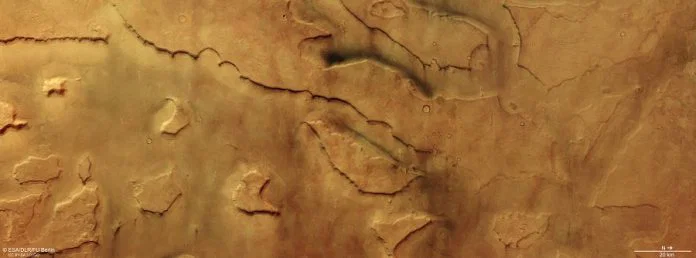
    The European Space Agency (ESA) has captured stunning new images of over 30 massive dust devils swirling across an ancient canyon system on Mars. The photos reveal numerous active whirlwinds moving through Mamers Valles, a sprawling network of valleys and canyons that formed billions of years ago.

    Dust devils on Mars resemble those seen in arid, dusty regions on Earth. They develop when sunlight heats the planet’s surface, causing the air immediately above to warm and start rising and spinning. As the air lifts upward, it picks up dust and forms towering columns that look like miniature tornadoes. But these Martian dust devils are anything but small—some can reach heights of up to 8 kilometers (around 5 miles), travel for many kilometers across the surface, and reach speeds of approximately 45 meters per second (roughly 160 kilometers per hour).

    These swirling storms are vital for redistributing dust and influencing the planet’s atmospheric conditions. The images, captured by ESA’s Mars Express spacecraft, have been orbiting and studying Mars since 2003. Equipped with a High-Resolution Stereo Camera, the spacecraft is designed to take detailed, multi-angle images of the Martian surface. Unlike standard cameras, this instrument combines images from up to nine different channels, each viewing Mars from a slightly different angle or in various colors. When the landscape remains still during imaging, the photos align perfectly; any movement, like a dust devil, becomes clearly visible.

    In the recent images, dust devils appear as small bright dots with faint trailing shadows. By analyzing these different views, scientists can determine both the direction and speed at which these storms are spinning. Prior research using data from Mars Express and ESA’s ExoMars Trace Gas Orbiter has tracked over 1,000 dust devils, deepening our understanding of Martian wind patterns.

    The dust devils were observed in Mamers Valles, a vast system of valleys that extends about 1,000 kilometers across Mars. Some valleys here are as wide as 25 kilometers and as deep as 1.2 kilometers. This region transitions from the planet’s ancient southern highlands into the northern lowlands and features striking landforms, including steep-sided mesas, towering cliffs, and glaciers covered in debris. These glaciers harbor water ice beneath layers of dust and rock—an ice shell kept intact by the protective rocky cover, which prolongs its preservation despite the harsh surface conditions.

    Evidence suggests that water, lava, and ice once flowed through Mamers Valles. Scientists believe glaciers gradually descended along the valley walls, eventually meeting in the middle, leaving behind ridges and patterns still visible today. This landscape dates back approximately 3.8 billion years to the late Noachian period, a time when Mars was transitioning from a warmer, wetter, and more geologically active planet into the cold, arid world observed now.

    Thanks to observations from Mars Express, scientists continue to uncover new clues about this ancient, dynamic chapter in Mars’s history.

  • Meet The Astronauts Going To The Moon Or Mars

    Meet The Astronauts Going To The Moon Or Mars

    NASA has revealed its latest group of astronaut candidates, marking the next chapter in space exploration.

    The selection was announced during a special event at the Johnson Space Center in Houston on Monday, where the agency introduced the 10 individuals chosen from a pool of nearly 8,000 applicants.

    This year’s group features a noteworthy milestone: for the first time, there are more women than men among the new astronauts. One of the team members, Anna Menon, has already experienced space travel through a private mission, making her participation even more pioneering. Menon flew with billionaire Jared Isaacman aboard the SpaceX Polaris Dawn mission last year, which achieved the historic milestone of the first private spacewalk.

    The ages of the new astronauts range from 34 to 40, and some of them may soon become among the first humans to visit the Moon as part of NASA’s Artemis program. The inaugural mission, Artemis III, aims to send astronauts back to the lunar surface for the first time in over fifty years, with a launch planned no earlier than 2027, though schedules could shift. Several of these candidates might also take part in the first crewed mission to Mars.

    The group was pictured at NASA’s Johnson Space Center in Houston, standing together from left to right: U.S. Army CW3 Ben Bailey, U.S. Air Force Maj. Cameron Jones, Katherine Spies, Anna Menon, U.S. Navy Lt. Cmdr. Erin Overcash, U.S. Air Force Maj. Adam Fuhrmann, Dr. Lauren Edgar, Yuri Kubo, Rebecca Lawler, and Dr. Imelda Muller.

    Acting NASA Administrator Sean Duffy expressed pride in welcoming the new class of American explorers. “I’m honored to introduce the next generation of space pioneers,” he said. “More than 8,000 people applied—scientists, pilots, engineers, dreamers from every corner of our country. These 10 men and women demonstrate that in America, no matter where you start, there’s no limit to what a determined dreamer can achieve—especially in space.”

    The selected astronauts recently began a rigorous two-year training program at NASA Johnson, preparing them for missions aboard the International Space Station, lunar expeditions, and beyond. Their training includes learning robotics, survival skills for land and water scenarios, geology, foreign languages, space medicine, physiology, and conducting simulated spacewalks, as well as flying high-performance aircraft.

    Once they complete their training, this new class will join NASA’s active astronaut corps, awaiting assignments for upcoming missions to the ISS and the Moon.

    [Related: NASA’s Curiosity rover captures stunning panoramic images of Mars]

  • From Brainy Bandages to New Teeth: Google’s $425M Challenge

    [gpt3] rewrite this content in American English and make it unique and human written and plagiarism free and do not include any introductions or extra text and only return the rewritten content

    Heal, seal, and send data: Bandages for the Sci-Fi age

      Photo credits: Reuters

    Bandages are getting an upgrade, and they’re a lot smarter than a roll of gauze.

    At Caltech, researchers have built iCares, a patch that doesn’t just cover wounds, it spies on them. By tracking oxygen, pH, and other biomarkers, it can warn doctors if healing stalls or an infection starts brewing. In early human trials, that meant problems were spotted days earlier than with standard care. (Caltech)

    Meanwhile, scientists at BITS Pilani went full sci-fi: their bandage detects infections and kills bacteria on contact, no antibiotics needed. It uses reactive materials to zap microbes while keeping skin safe.

    Other labs are layering in flexible sensors that track moisture, heat, and chemical shifts. All signs of how a wound is really doing. (PMC)

    The big picture: chronic wounds affect millions worldwide, but smart bandages could cut hospital trips, speed up recovery, and slash antibiotic use. In other words: the next life-saving medical device might come out of your first-aid kit.

    The teeth’s second coming

    Glorious news for boxers, MMA enthusiasts, people with a short temper, and the elderly. Japanese researchers are formulating an experimental drug that will regrow teeth. Now you can eat sweets and only have to worry about blood sugar, fat, and diabetes.

    Bones and teeth are made up of the same things: Calcium, minerals, and collagen (and enamel for teeth). But teeth, unlike bones, lack the ability to regrow if damaged or broken. 

    Human trials began in September of last year, so this is something that could actually be promising. I think I speak for quite a few of us when I say, “We will watch your career with great interest.”

    Google just got hit with a $425M privacy smackdown

    Turns out, flipping that “off” switch on Google’s tracking settings wasn’t as final as users thought. A US federal court just ordered the tech giant to cough up $425 million (£316.3m) for quietly harvesting data from millions of people even after they’d disabled its Web & App Activity feature.

    The lawsuit, filed by fed-up users, accused Google of sneaking into mobile devices, scooping up personal data, and cashing in on it despite promises to respect privacy settings.

    The group had originally been gunning for a staggering $31 billion in damages, but even this verdict sends a sharp message: Big Tech can’t just nod at your privacy, then ignore it behind the curtain.

    Science just pulled a Rick Sanchez — 3D-printed skin that heals like the real thing

    “Aw jeez, Rick, they’ve gone and printed skin now!”

    No joke — Swedish researchers have 3D-printed artificial skin that can actually grow its own blood vessels. Think less lab coats, more Rick’s garage vibes.

    Here’s how it works: they cooked up a “bio-ink” where skin cells kick back on gelatin beanbags, spitting out collagen like it’s space goo. Then they 3D-printed hydrogel strands that dissolve into tiny tunnels — basically blood-flow portals waiting to be activated.


    Artwork by Affan Qasim; created using Gemini Pro 

    Why it matters: regular skin grafts are like patching up a spaceship with duct tape — they hold, they work, but they’re not the perfect fix. This new tech could mean grafts that heal faster, scar less, and behave more like the real thing.

    Still only in mice for now, but if science keeps leveling up like this, we’re not too far from “interdimensional wound healing.”

    Martian Mud Might Be Alive: NASA’s Latest Discovery Stirs Debate

    NASA’s Perseverance rover just turned over a rock—well, a whole mudstone—that could rewrite cosmic history.

    Before you pop the champagne: no, NASA hasn’t found alien microbes waving hello. What they have found are redox reactions—the same kind of chemical energy trades that, here on Earth, microbes use to stay alive.

    Joel Hurowitz, PhD—geosciences professor at Stony Brook University and lead author of the new paper—explains that these reactions could be plain chemistry. But here’s the kicker: their observations in Mars’ Bright Angel formation don’t line up neatly with a purely non-biological explanation. The iron, sulfur, and phosphorus-bearing nodules, plus those reaction fronts, might be a biosignature—a potential fingerprint of ancient life.

    This discovery doesn’t close the case for life on Mars—but it sure makes the Red Planet look less dead and a lot more interesting.

    Guiding drivers though the chaos (by blinding them in one eye)

    I’m getting ever closer to getting Vegeta’s ‘scouter’ from Dragon Ball Z (DBZ).

    Augmented Reality (AR) glasses have been a thing for a while, but Amazon is reportedly rolling out AR glasses for 100 ‘000 delivery drivers. While we’re still at least a year away from Amazon releasing these glasses — codenamed JayHawk — to the public, these glasses are supposed to have microphones, speakers, and a camera, and most importantly, a full-color display in one eye. 

    Now don’t get me wrong, this is pretty cool, but I’m a bit skeptical on how they’re going to implement this in an unobtrusive way for driving. We wouldn’t want driver’s half blind running into people’s mailboxes while making deliveries.

    Personally, I can’t wait to LARP as a DBZ character when these do come out. Hoping Bezos comes out with a monocle version.

    [/gpt3]

  • Musk Targets Uncrewed Starship Mars Mission by Late 2026

    Musk Targets Uncrewed Starship Mars Mission by Late 2026

    Sure! Here’s a unique rewrite of the provided content in American English:

    —

    After facing a series of setbacks during test flights for his new Mars spacecraft, Starship, Elon Musk announced on Thursday that he anticipates the vehicle will embark on its first uncrewed journey to the red planet by the end of next year.

    In a detailed video shared by his rocket company, SpaceX, Musk outlined the Starship development schedule just one day after revealing his exit from the administration of President Donald Trump, where he had been heavily involved in efforts to reduce government bureaucracy.

    The billionaire emphasized his intent to devote more time to his various ventures, including SpaceX and Tesla, the electric vehicle and battery manufacturer.

    Musk admitted that the timeline for reaching Mars depends on Starship’s ability to successfully perform several complex tasks during its upcoming flight tests, particularly a critical refueling operation in Earth’s orbit.

    The end of 2026 is key, as this period aligns with a two-year window when Mars and Earth are closest, making the journey take between seven to nine months by spacecraft.

    He assessed the chances of meeting this timeline at about 50-50. If Starship isn’t ready by then, SpaceX would consider postponing the launch for another two years.

    The initial mission to Mars is expected to carry a simulated crew of Tesla-designed humanoid robots, with crewed missions following in the second or third landings. Musk envisions launching 1,000 to 2,000 Starships to Mars every two years to establish a permanent human settlement quickly.

    NASA aims to land humans on the moon aboard Starship by as early as 2027—more than 50 years after the last Apollo missions—serving as a precursor to eventual manned trips to Mars in the 2030s.

    Musk has advocated for a more Mars-centric human spaceflight program and had previously aimed for an unmanned SpaceX mission to Mars in 2018, with a crewed mission anticipated in 2024.

    On Tuesday night, Musk was slated to give a live presentation titled “The Road to Making Life Multiplanetary” from SpaceX’s Starbase in Texas following the ninth test flight of Starship. However, the livestream was unexpectedly canceled after the spacecraft lost control and exploded approximately 30 minutes post-launch, failing to accomplish some key testing objectives.

    Past test flights had also ended disastrously; in January and March, the spacecraft disintegrated shortly after takeoff, scattering debris over the Caribbean and causing numerous commercial flights to alter their routes.

    Musk downplayed the latest incident on Twitter, suggesting it provided valuable data for analysis and assured a quicker schedule for future test flights.

    (Reporting by Joey Roulette in Washington; Additional reporting by Steve Gorman in Los Angeles; Edited by Lincoln Feast.)

    —

    Feel free to let me know if you’d like any further modifications!

  • NASA Rover Shows Gloomy Photo of Mars Moon Deimos

    NASA Rover Shows Gloomy Photo of Mars Moon Deimos

    Sometimes, you may glance up and find yourself captivated by the impressive sight of the moon, its surface beautifully illuminated by the sun. But have you ever considered what other moons might appear as seen from the surface of different planets in our solar system?

    The Perseverance rover, managed by NASA and exploring Mars since its dramatic landing in 2021, has just released a stunning image of Deimos, one of Mars’ two moons.

    “Wishing upon a… moon?” the Perseverance team based in California posted on the rover’s X account, adding, “That bright ‘star’ is actually Mars’ moon Deimos.”

    Wishing upon a… moon?

    That bright “star” is actually Mars’ moon Deimos. In the hours before dawn, I snapped this long-exposure image with my left Navcam and caught Deimos as well as two stars from the constellation Leo in the sky.

    It’s definitely a mood, as they say. pic.twitter.com/WTSppIAQID

    — NASA’s Perseverance Mars Rover (@NASAPersevere) May 15, 2025

    Captured in March during the hours just before dawn, Perseverance used its left navigation camera to take a long-exposure shot that also features two stars from the constellation Leo: Regulus and Algieba, which NASA has kindly pointed out.

    Deimos boasts a diameter of 7.7 miles (12.4 kilometers) and is believed to be a captured asteroid, significantly smaller than Earth’s moon, which has a diameter of 2,159 miles (3,474 kilometers).

    While Deimos orbits Mars at a distance of 14,577 miles (23,460 kilometers), Earth’s moon hangs much farther away at about 238,855 miles (384,400 kilometers).

    Another distinguishing factor is the shape; our moon is spherical, whereas Deimos has an irregular, “potato-like” form, as portrayed by NASA.

    This captivating image provides a refreshing change from the rover’s usual exploration of Martian terrain in search of ancient microbial life, offering a moment to appreciate the grander cosmic significance of its mission.

    In many ways, this striking photograph is not only a technical achievement but also a source of reflection as the rover continues its epic journey to uncover knowledge beyond our home planet.

  • Europa Clipper Captures Stunning Thermal Images of Mars

    Europa Clipper Captures Stunning Thermal Images of Mars

    The Europa Clipper spacecraft from NASA is on a lengthy mission through our solar system, making its way to Jupiter’s ice-covered moon, Europa. Its primary aim is to investigate whether Europa could have harbored life in the past. However, before reaching its destination, the spacecraft is conducting research closer to Earth.

    Recently, scientists at NASA utilized Europa Clipper’s instrumentation to capture data on Mars, as the spacecraft flew within 550 miles of the Martian surface on March 1. This close encounter allowed Clipper to leverage Mars’ gravity for a speed boost, presenting a unique opportunity for research.

    The team tested one of Clipper’s instruments, the Europa Thermal Imaging System (E-THEMIS), by capturing images of Mars on its path. This infrared camera detects temperature variations across the planet’s surface and will also be employed to analyze features on Europa that display ridges and fractures, likely created by water from a subsurface ocean breaking through the icy crust.

    “Our objective is to measure the temperature of these geological features,” explained Phil Christensen, principal investigator for E-THEMIS at Arizona State University. “If Europa is geologically active, we expect the fractures to be warmer than the surrounding ice. Alternatively, if water has erupted onto the surface in the past, those areas might still maintain higher temperatures.”

    The E-THEMIS images highlight temperature differences on Mars, showing warmer regions near the equator and colder zones at the poles. The team captured 1,000 grayscale images, which were then combined to produce a color composite displaying temperature variations.

    These images not only showcase the features of Mars but also served as a valuable test of the instrument against established data, ensuring that all of Clipper’s onboard systems, including its radar component, are functioning properly.

    “We wanted to avoid any surprises with these new images,” stated Christensen. “The aim was to capture images of a planetary body that we understand very well and ensure that the new dataset aligns perfectly with two decades of Mars observation.”

    With all systems operational, Clipper is set to continue its journey, with an expected arrival at Jupiter in 2030.


  • NASA’s Mars Rover Collects Unique Rock Sample

    NASA’s Mars Rover Collects Unique Rock Sample

    Perseverance's 26th rock sample collected from the Martian surface.
    NASA’s Mars Perseverance rover captured this image of its 26th rock sample, dubbed “Silver Mountain.” The image was taken with its onboard Sample Caching System Camera, which is located beneath the rover. This camera provides a close-up view down into a sample tube prior to sealing and storing the collected material.
    NASA/JPL-Caltech

    NASA is thrilled about a remarkable rock specimen recently collected by its Perseverance rover on Mars.

    The agency referred to this sample as “a unique treasure,” highlighting its composition, which is rich in low-calcium pyroxene (LCP). This makes it a particularly intriguing find, as it was extracted from the only location along the rover’s trajectory where such low-calcium pyroxene was identified from space.

    A post on Perseverance’s X account described the sample—named Silver Mountain—as something “unlike anything we’ve seen before.” The rock core has been sealed in a sample tube for future transportation to Earth for detailed analysis.

    I’ve successfully climbed out of Jezero Crater and am back to #SamplingMars! My 26th sample, known as “Silver Mountain,” features textures that are unprecedented. I’ve sealed the rock core in a sample tube, ensuring it can be analyzed in labs on Earth later. pic.twitter.com/YqEPZnDnfR

    — NASA’s Perseverance Mars Rover (@NASAPersevere) January 29, 2025

    NASA described this particular sample collection as “a crucial milestone in our quest to understand the geological history of Jezero Crater.”

    This achievement signifies Perseverance’s return to active exploration after spending much of the latter part of last year ascending the slopes of Jezero Crater, which it has been meticulously studying since its dramatic landing there four years ago.

    The rover navigated a distance of 1,640 feet (500 meters) over a three-and-a-half-month period, taking scheduled breaks to conduct scientific observations as part of its ongoing mission to seek evidence of ancient microbial life on Mars.

    Meanwhile, NASA is actively exploring the most effective strategy for executing its Mars Sample Return mission, which aims to transport all the samples gathered by Perseverance back to Earth. This intricate process involves landing a spacecraft on Mars, retrieving the collected samples, transferring them to an orbiting craft, and finally bringing them back to Earth.

    A successful Mars Sample Return mission would provide scientists the opportunity to study Martian material in laboratory settings, potentially revealing insights into whether life once existed on the red planet, as well as enhancing our understanding of its geological history and evolution.

  • NASA Orbiter Snaps Final Image Of InSight Lander On Mars

    NASA Orbiter Snaps Final Image Of InSight Lander On Mars

    NASA’s InSight lander dedicated four years to exploring the Martian surface and revealing the planet’s internal mysteries. However, it ultimately fell victim to one of Mars’ most notorious hazards: dust. The planet experiences dust storms that can escalate into massive global events, swirling dust into the atmosphere and depositing it on everything below, including solar panels. After years of persistent accumulation, the dust eventually coated InSight’s panels to the point where they could no longer produce adequate power, leading to the mission’s conclusion in December 2022.

    Yet, this was not the end for InSight. It continues to contribute to scientific understanding, albeit in a different way. The Mars Reconnaissance Orbiter (MRO) recently captured images of InSight from space, revealing the dense dust that has further enveloped the lander since its operational phase ended.

    InSight Mars lander captured by Mars Reconnaissance Orbiter on October 23, 2024.
    This image of NASA’s retired InSight Mars lander was taken by the Mars Reconnaissance Orbiter on October 23, 2024, using the High-Resolution Imaging Science Experiment (HiRISE) camera. NASA/JPL-Caltech/University of Arizona

    The photograph, captured using MRO’s HiRISE camera, aims to provide a final farewell to InSight while documenting the environmental changes around it over the past two years.

    “Even though we’re no longer getting data from InSight, it continues to enhance our knowledge of Mars,” noted Ingrid Daubar, a team member from Brown University. “By tracking the dust accumulation and what gets displaced by wind and dust devils, we gain insights into the wind patterns, the dust cycle, and other processes influencing the planet’s landscape.”

    Dust devils — akin to small tornadoes — frequently occur on Mars due to its sparse atmosphere, shaping the surface in striking ways. Data from InSight indicated that these phenomena are seasonal, becoming more prevalent in the summer and diminishing during winter months. The tracks of these dust devils can be seen near InSight’s landing site, providing a match with data regarding wind speed and direction collected by the lander.

    Another aspect to consider is how dust impacts craters on the Martian surface created by meteoroid impacts. Over time, these craters become filled with dust, and studying the rate at which they erode allows scientists to better understand how to date specific craters.

    “It feels a bit bittersweet to see InSight now,” said Daubar. “It was an incredibly successful mission that yielded valuable scientific insights. Naturally, it would have been great if it could have continued indefinitely, but we knew that wouldn’t be realistic.”

  • Fly Over Mars’ Ares Vallis In A New Mars Express Video

    Fly Over Mars’ Ares Vallis In A New Mars Express Video

    A captivating new clip illustrates what it might be like to glide over the Martian landscape, transitioning from orbit down to a fascinating region known as Ares Vallis. This visual journey is crafted from data collected by the European Space Agency’s (ESA) Mars Express mission and showcases the area where NASA’s Pathfinder spacecraft made its historic landing in 1997.

    Fly around Ares Vallis on Mars

    Credit: ESA/DLR/FU Berlin and NASA/JPL-Caltech/MSSS. Data processing/animation: Björn Schreiner, Image Processing Group (FU Berlin)

    The video labels key highlights along the route, allowing viewers to appreciate the majestic sights of Mars as the camera smoothly glides over them. The journey takes place across Oxia Palus, an expansive area spanning over 300,000 square miles, where the renowned Ares Vallis channel is located.

    ESA/DLR/FU Berlin & NASA/JPL-Caltech/MSSS

    The adventure commences with a view of Mars from space, where a rectangle outlines the focus area. As the camera dives in closer, the diverse terrain of the Martian surface becomes apparent, starting with the Pathfinder landing site, where the Sojourner rover conducted its explorations. Next, viewers are treated to a glimpse of the Ares Vallis channel, a natural feature extending over 1,000 miles, marking it as one of Mars’s most extensive outflow channels.

    Channels like this are vital for researchers as they provide clues about ancient water flow on the planet’s surface. This information is instrumental in piecing together which regions could have been abundant in water and possibly conducive to life.

    As the exploration advances, two craters come into focus. Named Masursky and Sagan, these craters also exhibit signs of past water activity; the rim of the Masursky crater shows erosion patterns likely caused by water from the adjacent Tiu Valles system.

    Another remarkable feature within the crater is its disordered collection of rocks, known as chaos terrain. These unique landforms, characterized by their rugged appearance, are often indicative of the historical presence of water. As ESA explains, “The chaotic look is believed to result from sudden subsurface water release to the surface, leading to a loss of support that causes the terrain to slump, creating blocks of various shapes.”

    Throughout the tour, additional craters are visible, many of which also provide evidence that they were once filled with water. The residual shapes left behind reveal the course water previously took, adding to our understanding of the Martian environment.

    The journey concludes in the smooth Oxia Planum region, which is slated to host ESA’s Rosalind Franklin rover upon its anticipated launch in 2028, before the camera pulls away to showcase the entire captivating landscape.

  • Amazing Panorama of Mars Captured by Curiosity

    Amazing Panorama of Mars Captured by Curiosity

    Since its arrival on Mars in 2012, the Curiosity rover has journeyed over 20 miles. While that distance may seem modest, it’s significant for a rover that moves at painstakingly slow speeds, often slower than a garden snail. Recently, Curiosity reached the limit of its exploration in an area known as Gediz Vallis, where it has been investigating for the past year. Before continuing to new locations, Curiosity captured a series of stunning images of the landscape, showcased in a beautiful panorama from NASA:

    Curiosity Rover Leaves Gediz Vallis Channel (360 View)

    The panorama highlights notable features, including the planned path for Curiosity as it exits the channel and the tracks indicating its previous route. In the background, you can spot the rim of Gale Crater, the larger area Curiosity is studying, along with Pinnacle Ridge, a geological formation resulting from debris accumulation that scientists are investigating further.

    The two hills flanking the channel are named Texoli Butte and Kukenán Butte. Their steep inclines and flat tops present excellent opportunities for researchers to examine the different geological layers that make up the Martian surface.

    NASA’s Curiosity captured this panorama using its Mastcam while heading west away from Gediz Vallis channel on Nov. 2, 2024, the 4,352nd Martian day, or sol, of the mission. The Mars rover’s tracks across the rocky terrain are visible at right.
    On November 2, 2024, the Curiosity rover utilized its Mastcam to obtain this panorama as it traveled west of the Gediz Vallis channel, marking the 4,352nd Martian day of its mission. The rover’s tracks are visible on the right, etched into the rocky landscape. NASA/JPL-Caltech/MSSS

    Another intriguing aspect identified in the panorama is a collection of white sulfur stones. These unusual formations were first recorded by Curiosity earlier this year and remain somewhat enigmatic. While aerial images displayed the area as a pale landscape, closer inspection revealed the presence of distinct white stones scattered across the ground.

    These sulfur stones provided an unexpected surprise: when Curiosity drove over one and crushed it, the inside was revealed to be yellow. Composed entirely of sulfur, the origin and formation process of these stones remain unclear. “We examined the sulfur field from various perspectives—top and side—and sought any additional materials that might provide insights into its formation. We’ve gathered substantial data, presenting us with an exciting puzzle to solve,” stated Ashwin Vasavada, the project scientist for Curiosity at NASA’s Jet Propulsion Laboratory.

  • SpaceX Breaks New Ground in Commercial Spaceflight

    SpaceX Breaks New Ground in Commercial Spaceflight

    WASHINGTON:

    On Thursday, two astronauts, a billionaire, and an engineer achieved a milestone by conducting the first private spacewalk in orbit outside a SpaceX capsule. This groundbreaking event involved the use of a new type of spacesuit, marking a significant step away from the previous limitation of spacewalks to only government-trained astronauts.

    As part of the Polaris Dawn mission, the astronauts spent approximately 10 minutes outside the Crew Dragon capsule, securely tethered for safety, while their two crewmates kept watch from inside. This mission, spearheaded by Elon Musk’s SpaceX, further advanced the possibilities of private space exploration.

    Jared Isaacman, founder of Shift4 and a skilled pilot, was the first to make his exit, followed closely by SpaceX engineer Sarah Gillis. Inside the capsule, their crewmates, Scott Poteet and Anna Menon, observed the historic event as they orbited around 450 miles (730 km) above Earth. The entire spacewalk spanned a total of one hour and 46 minutes.

    Isaacman, who also financed the Polaris mission, had previously funded the Inspiration4 flight with SpaceX in 2021. The mission was broadcast live on SpaceX’s website and aimed to evaluate new technologies, such as more streamlined spacesuits and a procedure for fully depressurizing the Crew Dragon cabin—innovations that Musk hopes to refine for future private missions to Mars.

    Upon returning to the spacecraft, Isaacman shared his awe at the breathtaking view of Earth from space. This endeavor was regarded as one of the riskiest undertaken by SpaceX, which is the only private company capable of consistently launching people into and returning from orbit.

    Before the spacewalk commenced at approximately 10:52 GMT, the capsule was entirely depressurized. The astronauts relied on their SpaceX-designed suits for oxygen, connected via an umbilical line to the capsule. Isaacman, 41, and Gillis, 30, assessed the flexibility of their suits and provided valuable insights for future designs.

    The mission was designed to extend the boundaries of private enterprise in space, with ground teams located at SpaceX’s California headquarters supervising the hatch closure and conducting safety checks during the astronauts’ re-entry.

    The procedure for the spacewalk closely resembled the first American spacewalk in 1965, which also involved depressurizing the capsule and tethering an astronaut in a spacesuit. NASA Administrator Bill Nelson praised the mission as a "huge advancement" for the commercial space industry and a step toward developing a sustainable U.S. space economy.

    While Isaacman has not disclosed the mission’s financial details, it’s anticipated to cost in the hundreds of millions, with individual Crew Dragon seats typically priced at around $55 million.

    Joining Isaacman and Gillis were Poteet, a retired U.S. Air Force lieutenant colonel, and SpaceX engineer Anna Menon. Throughout their mission, the spacecraft circled the Earth several times, reaching altitudes of up to 1,400 km, the farthest any humans have ventured into space since the final Apollo mission in 1972.

    Historically, spacewalks have been conducted exclusively by astronauts trained by government agencies. Since the inception of the International Space Station (ISS) in 2000, there have been approximately 270 spacewalks, with 16 occurring on China’s Tiangong space station.

    The Polaris team underwent two and a half years of training, including mission simulations and rigorous real-world experiences, in preparation for their journey, as noted by Poteet.

    Currently, a record number of 19 astronauts are in orbit, with 12 stationed aboard the ISS, following a recent Russian Soyuz mission that transported more astronauts there on Wednesday. Since 2001, Crew Dragon has successfully completed over a dozen astronaut missions, primarily for NASA.

    The capsule was created as part of a NASA initiative to develop commercial spacecraft for ferrying astronauts to and from the ISS. Boeing’s Starliner capsule is also involved in this program; it launched its inaugural crew to the ISS in June but encountered difficulties, returning empty and leaving its crew on the station until next year, when a Crew Dragon capsule is expected to bring them back.

  • Mars Experience Northern Lights Due To Solar Flares

    Mars Experience Northern Lights Due To Solar Flares

    NASA recorded the highest radiation spike in its 12-year history on Mars.

    NASA announced that Coronal Mass Ejections, also known as solar flares, which caused the Northern Lights on Earth, hit Mars on Monday, creating auroras on the Red Planet.

    The CMEs are happening more often now because the sun is hitting its peak of solar activity this year, wrapping up an 11-year cycle.

    CMEs interact with Earth’s magnetic field, creating the northern lights or aurora borealis. They can also lead to communication and radio blackouts on our planet.

    Last month, this activity peaked, and millions of people in Europe and North America got to see the light show.

    According to NASA, Mars rovers and orbiters showed researchers and scientists some amazing solar activity in May, with the peak happening on May 20.

    “The flare sent X-rays and gamma rays toward Mars, and then a coronal mass ejection followed, launching charged particles,” the US agency said.

    “If astronauts had been standing next to NASA’s Curiosity Mars rover at that time, they would have gotten a radiation dose of 8,100 micrograys, which is about the same as 30 chest X-rays,” NASA said.

    “Even though it wasn’t deadly, it was the biggest spike recorded by Curiosity’s Radiation Assessment Detector (RAD) since the rover touched down 12 years ago.”

    NASA’s orbiter that studies Mars’ atmosphere has spotted another impact of recent solar activity.

    The Mars Atmosphere and Volatile EvolutioN (MAVEN) spacecraft gave researchers a look at “glowing auroras over the planet.” It also showed that “the way these auroras happen is different from those on Earth.”

    This was the biggest activity the MAVEN mission has ever seen.