Tag: Market

  • Cuban Lawmakers Approve Major Reforms Amid US Pressure

    Cuban Lawmakers Approve Major Reforms Amid US Pressure

    Members of Cuba’s political bureau gather for an extraordinary session of the Communist Party’s Central Committee to review proposals for economic and social reforms announced by President Miguel Diaz-Canel in Havana on June 17, 2026. — Reuters

    – Private banks and investments allowed to enter the financial sector
    – Companies can employ over 100 workers
    – Entrepreneurs permitted to own multiple businesses

    The Cuban legislature has unanimously approved major reforms supported by the Communist Party and ex-leader Raul Castro, aiming to privatize large portions of the country’s socialist economy to better withstand harsh U.S. sanctions.

    If fully enacted, these changes would mark the most significant shift away from Cuba’s socialist system since Fidel Castro’s 1959 revolution. They open avenues for private real estate development, propose converting state-owned enterprises into private firms with shares and equity stakes, and permit private banks to operate within Cuba’s once state-controlled financial industry.

    The reforms also envisage the sale of state-owned properties to both domestic and foreign entities, including Cubans abroad, a notable move in a country where land and industry have long been government-controlled, as detailed in a televised presentation to lawmakers.

    Prior to the vote, President Diaz-Canel urged legislators to maintain faith in Cuba’s socialist legacy, emphasizing the importance of continuing the socialist project despite the long-standing blockade imposed by the United States. “This debate is about how to proceed with socialist development, which has faced history’s longest blockade by the world’s most powerful nation. We are not abandoning socialism,” he stated.

    Prime Minister Manuel Marrero highlighted that these reforms acknowledge the market as an essential tool for efficient resource distribution, a rare explicit nod to market principles from a top Cuban official, yet he asserted that the core of Cuba’s socialism remains intact: “The goal of updating our economic model is to improve our citizens’ quality of life.”

    The comprehensive list, comprising over 175 measures, was presented during nearly two hours of speeches before the National Assembly and received unanimous approval. It remains unclear how quickly or through what specific procedures these reforms will be put into place, raising questions about their implementation.

    Many of these economic liberalization efforts have been discussed for years, but the intensified U.S. sanctions under the Trump administration—especially an oil blockade—have dramatically constrained Cuba’s economic space, deepening its economic crises, leading to a diaspora of foreign businesses, and severely damaging the vital tourism industry.

    Diaz-Canel clarified that the decision to open up the economy is not related to ongoing negotiations with the U.S., which started earlier this year but appear to have stalled. The U.S. State Department did not immediately comment.

    Raul Castro, who still wields significant influence and has recently faced murder charges in the U.S., expressed support for the reforms through a written letter to the politburo and lawmakers, describing them as “beneficial” and urging swift implementation. These reforms include rolling back many socialist policies introduced after the Castros’ revolutionary rise.

    The proposed overhaul aims to significantly reduce the dominance of state-run enterprises in Cuba, encouraging private enterprise that the government has historically been wary of, and permitting private individuals and companies to grow their own businesses. For instance, businesses would now be allowed to employ more than 100 workers, and entrepreneurs could run multiple private firms—both firsts in Cuba.

    Private capital movement is expected to be facilitated by a more flexible, state-supervised banking system and a digital foreign exchange market with authorized agents. Cuba has long provided heavily subsidized public services—such as education, healthcare, and transportation—that have deterioration in recent years due to government inefficiencies and economic hardships.

    The new reforms introduce a tax system overhaul and aim to make both public and private sector businesses, including foreign ones, partly responsible for funding public services.

  • US Energy Chief: Gas Prices May Stay Above $3 Until Next Year

    US Energy Chief: Gas Prices May Stay Above $3 Until Next Year

    Chris Wright believes that gas prices have reached their peak in the United States, although he expects they may stay above $3 a gallon until next year. Recently, gasoline prices have climbed amid the ongoing conflict between the U.S. and Israel’s war on Iran, as well as Iranian attacks on U.S. military bases in the Gulf region, posing political challenges for President Donald Trump as the midterm elections approach.

    Wright told CNN’s “State of the Union” that while prices below $3 a gallon could happen later this year or possibly next year, he’s confident they’ve already peaked and will begin to decline. He added, “Certainly, with the resolution of this conflict, you’ll see prices go down.”

    Different officials from the Trump administration have offered varying estimates on when gas prices might improve. Treasury Secretary Scott Bessent predicted last week that prices could drop to around $3 per gallon during the summer, but Wright outlined a longer timeline for reaching that level, implying it may take more time.

    Trump has publicly suggested that gas prices could remain high until November. Nevertheless, all parties agree that once the Iran-related conflict ends, gasoline prices should become more affordable. Wright mentioned that getting below $3 a gallon would be a significant achievement, especially considering inflation, and affirmed, “We’ll get back there for sure.”

    As of Sunday, the national average for regular gasoline was $4.05 per gallon, according to AAA, compared to $3.16 a year ago. Despite an agreement on April 8 for a 10-day ceasefire between the U.S. and Iran, Trump accused Iran of violating the truce with attacks on ships in the Strait of Hormuz over the weekend. Meanwhile, U.S. officials are scheduled to arrive in Pakistan on Monday for further negotiations, as Trump indicated on social media, stating that if Iran rejects a “very fair and reasonable deal,” the U.S. might escalate military action by targeting Iran’s power plants and bridges.

  • Kylie Jenner Shares Bikini Pics From Private Island and Mansion Sale

    Kylie Jenner Shares Bikini Pics From Private Island and Mansion Sale


    Photo by ANDREA RENAULT / AFP

    Digital Phablet – Kylie Jenner Wows in Stunning Bikini Snap During Luxurious Island Retreat

    After a hectic awards season supporting her boyfriend Timothée Chalamet, Kylie Jenner is currently enjoying a sunny escape, and her social media is filled with inspiring swimwear moments. Just hours after sharing her playful “DND” vibe in a barely-there two-piece, Jenner showcased a sleek black string bikini, accessorizing with a vintage Y2K beach style.

    On March 29, the makeup mogul posted a carousel on Instagram featuring her splashing in the pristine ocean and relaxing on a white sandy beach. While she didn’t reveal who snapped her photos, she flaunted her simple yet stylish black thong bikini and carried a slate gray sun hat. Her damp black hair slicked back into a mermaid-inspired look while she cooled off in the water.

    Kylie paired her minimal swimwear with gold jewelry—delicate gold belly chain, a cross pendant necklace, chunky bracelets, and gold stud earrings—completing her beach goddess look.

    Though she didn’t specify whether Timothée Chalamet was her travel buddy, she did share some of her activities with fans, including sunbathing on the sand, partially buried in the ocean, and jet skiing on Instagram Stories. Her tropical vacation follows recent news of her listing her $20 million Hidden Hills mansion with the help of real estate stars Josh, Matt, and Heather Altman from Million Dollar Listing. However, this doesn’t necessarily mean she’s moving in with Chalamet, as reports indicate she was living in her previous home while building a new one, which she has now moved into.

    Her luxurious getaway highlights include private amenities such as a cinema, gym, massage room, resort-style grounds with a pool and outdoor kitchen, a six-car garage, and a sprawling private lot.

    For more updates, follow her on Instagram here.

  • Completing Maurice’s Black Market: A Guide to Solving Borderlands 4

    Completing Maurice’s Black Market: A Guide to Solving Borderlands 4

    Maurice makes a return in Borderlands 4, offering the same Legendary-quality weapons as in previous games. However, because Kairos is an open-world environment, locating Maurice is more challenging this time. If you discover their hidden Black Market vending machine, you’ll be able to buy some high-quality guns that are hard to find elsewhere.

    If you want to upgrade your weapons or understand how Maurice operates, this guide has you covered. It explains what the Black Market is, how to access it, and where Maurice’s spawn points are located.

    What Is Maurice’s Black Market?
    Maurice’s Black Market is a roaming vendor that sells Legendary weapons. Unlike most vendors, Maurice’s wares are stored in a secret vending machine that moves weekly. You have to find this hidden machine to access their items. Think of it as the game’s version of Xur from Destiny.

    How To Unlock Maurice’s Black Market
    You can find Maurice’s Black Market after completing the main campaign and the quest “Ultimate Vault Hunter: Maurice’s Bounty.” Without revealing story spoilers, completing this quest reveals the location of Maurice’s vending machine on your map and explains how their shop works. Buying any Legendary item from the machine completes the quest.

    Once you’ve unlocked Ultra Vault Hunter Mode (UVHM), Maurice’s Black Market is available on Kairos. However, Maurice isn’t marked on the map, so you’ll need to find the machine on your own. The vending machine’s location changes every Friday at 1:00 AM Eastern Time.

    An important tip: Maurice’s machine is invisible until you’re very close. Keep an eye on your HUD’s compass, which will show Maurice’s icon well before you see the machine with your eyes.

    Maurice’s Black Market Locations
    As of the first week after launch, Maurice’s location is known in the Plungeford area. Specifically, from September 12 to September 19, Maurice can be found in the Coastal Bonescape, Fadelands. This is part of the game’s starter zone, located in the southern part of Kairos. The area is southwest of The Launchpad hub and northeast of the Abandoned Post safehouse. Maurice’s vending machine sits on a balcony overlooking a small town.

  • How to Sell Items at a Market Stall in InZoi: Completing & Solving

    How to Sell Items at a Market Stall in InZoi: Completing & Solving

    If you’ve been filling your inventory with random items in InZoi: The Island Getaway, you might start wondering what to do with all of them. Instead of hoarding everything like a beachside dragon, a better idea is to set up a shop and turn your clutter into real Mew. That’s exactly what the market stall is for.

    More than just a way to sell things, the market stall is a social spot where you’ll meet Zois and maybe catch a thief or two. Running a stall can make you a good amount of Mew and become a fun part of island life once you get the hang of it.

    ### How to Sell Items at the Market Stall

    Selling items at your market stall is easy and a good way to earn Mew while interacting with residents. First, go to the build menu on a property and look for “Stall.” You’ll see an option for a “Wider Sales Stall” which costs 330 Mew. Place it outside near the street, but avoid putting it on your home lot because Zois will see your house as an open invitation to walk inside.

    After setting up the stall, select it and choose “Place items for sale.” This opens your inventory, allowing you to pick what you want to sell and set your prices.

    Once you’ve chosen your items and prices, click the stall again and select “Start selling” to begin the sale. You can boost your sales by choosing actions like “Greet Customers,” “Dance for Promotion,” or “Promote,” and then pressing the play button to queue them up. Keep an eye on how customers react; if Zois hover over your stall and think your prices are “pricey” or start booing, you might need to lower your prices.

    A typical booth sale takes about three hours, but you can end it early anytime by selecting your stall and choosing “End sale.”

    ### How to Catch Stall Thieves

    While managing your stall, there’s a chance a thief might try to steal your items. You’ll notice this if a Zoi pockets something, causing you to lose Mew instead of earning it. To deal with this, select the Zoi trying to steal, then choose “Fight the thief.” Doing this will regain your lost Mew and give you Karma as a reward.

  • Samsung’s Smart Glasses May Launch Next Year But Rival Beats It

    Samsung’s Smart Glasses May Launch Next Year But Rival Beats It

    Samsung’s highly anticipated smart glasses are expected to hit the market in 2026, according to recent reports. However, a Taiwanese company has already made a move, launching its own smart glasses ahead of Samsung’s anticipated release.

    That company is HTC. Known for years for creating sleek smartphones like the HTC One, One M8, and One M9, HTC shifted gears several years ago to focus on its Vive virtual reality headsets. Now, the company is making waves again with a new line of AI-powered smart glasses.

    With major brands like Meta and Snapchat popularizing the smart glasses trend through products such as Ray-Ban Meta and Snapchat Spectacles, competition in this space is intensifying.

    Samsung Isn’t the Only Player in the Game

    According to a report from South Korean publication SE Daily, Samsung plans to introduce its first pair of smart glasses in late 2026. This suggests we’re still about a year away from seeing Samsung’s eyewear go on sale.

    The upcoming Samsung glasses are said to resemble the design of Ray-Ban Meta models, incorporating features like built-in speakers, a microphone, and a camera.

    It’s worth noting that these glasses are separate from the augmented reality (AR) glasses Samsung is reportedly developing with Google, which are expected to include a display.

    Meanwhile, Google showcased its own Android-based XR glasses at the I/O 2025 conference, with the first model—developed in partnership with Warby Parker—potentially arriving as early as next year. Additionally, a new lineup of smart glasses from an established brand may arrive in 2025.

    Introducing HTC Vive Eagle

    HTC’s latest offering is called the Vive Eagle, branded as ‘AI smart glasses.’ These lightweight wearable devices feature a 12-megapixel ultra-wide camera with an LED indicator, a 235mAh battery, and magnetic fast-charging that keeps the glasses ready for use. Weighing just 49 grams, they also include speakers, but their open-ear design ensures you stay aware of your surroundings without anything covering your ears.

    The glasses come equipped with HTC’s Vive AI voice assistant, supporting major language models such as ChatGPT and Google’s Gemini. This allows users to control camera functions, music, and other features through spoken commands, as well as ask more complex questions.

    Further enhancing their appeal is the ability for real-time translation into 13 languages, including Arabic, Chinese (Traditional), English, French, German, Greek, Italian, Japanese, Portuguese, Spanish, Korean, Thai, and Turkish.

    HTC claims the Vive Eagle glasses can deliver about 4.5 hours of continuous music playback on a single charge and standby mode can last up to 36 hours.

    Availability and Pricing

    Currently, the HTC Vive Eagle is available exclusively in Taiwan, with pre-orders now open. The release date is scheduled for September 1. The glasses are offered in four colors—Berry, Coffee, Grey, and Black—and retail for NT$15,600, roughly equivalent to $500.

    There has been no official announcement regarding international availability, but as the market heats up, more regions may soon see these innovative glasses. It’s worth noting that just a couple of months ago, Oakley entered the smart glasses scene, indicating a growing interest in this technology.

    As the competition accelerates, major brands continue to develop cutting-edge wearable technology that could redefine how we interact with digital content on the go.

  • Gunfire at Bangkok Market Leaves Six Dead

    Gunfire at Bangkok Market Leaves Six Dead

    Six individuals lost their lives when an attacker opened fire at a marketplace in Bangkok, Thailand, on Monday, according to authorities. The gunman, among the deceased, ended his own life, confirmed Charin Gopatta, Deputy Commissioner of the Metropolitan Police Bureau. Authorities stated they are still working to identify the shooter and determine what drove the incident. The five victims targeted by the gunman were security personnel working at the market.

    Fortunately, no tourists were harmed in the attack, according to Sanong Saengmani, a police official in Bangkok’s Bang Sue district, where the market primarily sells agricultural products. Tourism is vital to Thailand’s economy— Southeast Asia’s second-largest— and occurrences like this risk dampening investor and visitor confidence amid sluggish economic growth.

    Video footage released by police shows the suspect, wearing a white cap and carrying a backpack, walking through the market’s parking lot. Gun-related violence and firearm possession are not unusual in Thailand. Just last October, a 14-year-old armed with a modified handgun killed two individuals and wounded five at a luxury shopping mall in downtown Bangkok.

    Previously, in 2022, a former police officer carried out a deadly attack at an eastern Thailand nursery, resulting in 36 deaths, including 22 children.

  • Nvidia’s Price Hike Could Deepen GPU Market Struggles

    Nvidia’s Price Hike Could Deepen GPU Market Struggles

    As if the GPU landscape wasn’t already chaotic, Nvidia apparently plans to hike the prices of its top-tier graphics cards. A recent report indicates that Nvidia is raising the costs of its RTX 50-series GPUs for its board partners and suppliers, potentially impacting consumer pricing. Here’s what you need to know.

    First off, this isn’t a straightforward price hike, like bumping the MSRP of the RTX 5090 from $2,000 to $2,500 (don’t worry, that hasn’t happened, although finding an RTX 5090 for under $3,000 is a challenge). This increase is more behind-the-scenes, making it difficult to confirm its accuracy — so take it with a grain of skepticism. The report originates from Digitimes and was later picked up by XDA Developers. Nvidia has yet to offer any official commentary on the situation, so we may need to wait for clarification. Even if the report is accurate, official confirmation could remain elusive.

    If it turns out to be true, the price situation for GPUs could quickly deteriorate further, and it was already bleak to start with.

    Digitimes alleges that Nvidia’s pricing adjustments will mainly impact suppliers and add-in board partners (AIBs). Nvidia reportedly permits these partners to pass on the price increases to consumers, meaning rather than absorbing the costs, these companies might choose to increase prices for the end-users. Given the current state of the GPU market, this wouldn’t come as a shock.

    The report specifies that one significant factor driving this change is export controls. Nvidia’s premier GPUs, namely the RTX 4090 and RTX 5090, cannot be exported to China, which fuels global demand and prevents these GPUs from being sold at MSRP. Digitimes suggests that this surge in demand has effectively doubled the channel price for these products, and despite their prices, they continue to sell well and frequently go out of stock, indicating that demand remains high. Tariffs also play a crucial role in this rumored decision.

    Nvidia has relocated much of its RTX 50-series production to TSMC’s Arizona facility in an attempt to mitigate tariff impacts, but completely avoiding their effects remains a challenge. Raising prices could help Nvidia recover some losses from external pressures while sustaining its profit margins.

    So, how much of an increase are we talking about? According to Digitimes, the RTX 5090 has experienced a 10% bump, with manufacturers facing hikes of up to 15%. It’s uncertain if every model in the RTX 50-series is affected, but the RTX 5090 seems to be the primary focus.

    The GPU market has seen significant upheaval in recent months. While the RTX 40-series was largely available at MSRP after initial excitement waned (except for the RTX 4090), the RTX 50-series is far from it. Even standard GPUs like the RTX 5060 Ti, or AMD’s RX 9070 XT, are being sold at elevated prices, with increases ranging from $100 to $300 for some AMD models. Even modest offerings such as the Intel Arc B580 are pricier than they were at launch.

    If Nvidia follows through with this alleged price increase, estimating how much of that might be passed down to consumers is complex. Given the already high prices, we can only hope that companies opt to reduce their profit margins and keep GPU costs relatively stable, though it may just be wishful thinking.


  • Retro Hardware Companies Leaving The US Market

    Retro Hardware Companies Leaving The US Market

    At least two companies specializing in retro gaming hardware have halted shipments to the United States due to tariffs imposed during the Trump administration, which they claim could lead to shipping delays and lost items. Recently, Retrotink announced a pause on U.S. orders, effective April 28, and Anbernic has since updated its shipping policy accordingly.

    Mike Chi, the CEO of Retrotink, explained, “Because there’s no clear direction on how tariffs will be administered starting May 2nd, we’ve made the tough choice to temporarily stop shipments to the U.S.” He noted that there is still limited stock available within the United States, so customers might be able to purchase Retrotink products for a little while longer. “We are hopeful that this situation will be resolved, but it’s difficult to predict when or how,” Chi added.

    Anbernic also updated its shipping guidelines, stating, “Due to modifications in U.S. tariff regulations, we are suspending all orders shipping from China to the United States starting today. We encourage customers to prioritize products shipped from our U.S. warehouse, which are currently unaffected by import fees and can be purchased with assurance.”

    The company does not view these measures as permanent. They declared, “Once we have confirmed updates regarding import charges, we will inform our customers promptly and publish our revised policy on our website.”

    The tariffs have significantly impacted the gaming industry. While the pricing for the Nintendo Switch 2 remained unchanged from its initial announcement, various accessories associated with it have experienced price increases. Other companies, like Razer, have also put a hold on their products directed at the U.S. market. While some businesses are discovering ways to adapt and maintain their supply chains without raising prices, others have opted to withdraw entirely from the market until conditions stabilize.

  • Trump Praises ‘Exciting’ Policy Amid China’s 125% Tariff Response

    Trump Praises ‘Exciting’ Policy Amid China’s 125% Tariff Response


    WASHINGTON: In light of China’s drastic move to impose a 125% tariff on American goods, President Trump remains steadfast, calling his tariff strategy an advantageous development for both the USA and the global economy, asserting that his approach is “performing extremely well.”

    Markets reacted negatively, with investors selling off U.S. government bonds, causing the dollar to slide, and stocks fluctuating as concerns deepened over the already volatile global market situation.

    Last week, Trump initially sparked turmoil in financial markets when he proposed extensive import taxes on numerous trade partners, only to scale back those rates to 10 percent on Wednesday for a period of 90 days while increasing tariffs on Chinese imports.

    “Our tariff strategy is going remarkably well,” Trump shared in a post on his Truth Social platform following China’s announcement of new tariffs.

    “This is incredibly exciting for America and the world!!! Progress is moving swiftly,” he added.

    The White House subsequently noted that Trump is still “hopeful” about reaching an agreement with China, and mentioned that 15 other nations have proposals “on the table” during the 90-day hiatus from tariff adjustments.

    However, Press Secretary Karoline Leavitt emphasized, “the president has made it clear that when America is struck, he will respond with even greater force.”

    The U.S. and China have exchanged a series of increasingly severe tariffs since last week.

    Chinese President Xi Jinping made his first significant remarks on the escalating tension on Friday, with state media reporting that he claimed China is “not intimidated.”

    Additionally, Xi remarked that the European Union and China should “stand together against unilateral bullying” in discussions with Spanish Prime Minister Pedro Sanchez.

    ‘Numbers Game’

    Following Xi’s comments, Beijing declared that the new 125 percent tariffs on U.S. goods would take effect Saturday—nearly matching the colossal 145 percent tariffs on Chinese goods entering the U.S.

    A spokesperson for China’s Commerce Ministry accused the U.S. of bearing full responsibility, dismissing Trump’s tariffs as a “numbers game” that “will become a laughingstock.”

    However, a representative from China’s finance ministry acknowledged that tariffs could not be raised further, recognizing that imports at such a high rate are nearly impossible.

    Trump reiterated on Thursday that he seeks to negotiate with Xi despite the rising tensions.

    “He has been a friend of mine for a long time. I believe we will reach an agreement that benefits both countries,” he told reporters.

    Nonetheless, U.S. officials have made it clear they expect Xi to initiate contact first.

    Amidst this, there is increasing pressure on Trump as market anxieties persist.

    Yields on key U.S. government bonds, typically viewed as a refuge, rose again on Friday, reflecting waning demand as investors expressed their concerns.

    The White House, however, stated that they found no evidence supporting traders’ speculations that China might be selling off parts of its substantial holdings as a form of retaliation, which would, in turn, escalate borrowing costs for the U.S. government.

    Additionally, U.S. Federal Reserve officials cautioned that higher inflation and slower growth could be on the horizon due to Trump’s tariff measures.

    ‘Countermeasures’

    Economists warn that trade disruptions between the closely connected economies of the U.S. and China could lead to increased consumer prices and potentially ignite a global recession.

    Ipek Ozkardeskaya, an analyst at Swissquote Bank, told AFP that the tariff figures have reached heights that “no longer make logical sense,” but she acknowledged that China is “prepared to go as far as necessary.”

    The global community is still figuring out its response.

    On Thursday, Trump praised the European Union, which was initially subjected to a 20 percent tariff by Trump, for being “very clever” by withholding retaliatory measures.

    Top officials from the EU and Chinese leaders are scheduled to hold their next summit to commemorate 50 years of diplomatic relations in China in July, as announced by Brussels. Meanwhile, EU Trade Chief Maros Sefcovic will engage in discussions in Washington on Monday.

    However, Ursula von der Leyen, chief of the 27-nation bloc, informed the Financial Times on Friday that the EU has a “broad array of countermeasures” at its disposal, including a potential hit to digital services that could impact American tech companies.

  • Apple Leads Tablet Market with 56.9M Shipments in 2024

    Apple Leads Tablet Market with 56.9M Shipments in 2024

    Apple’s Dominance in the Tablet Market Amidst Declining Sales

    As we mark the 15th anniversary of the launch of the first-generation iPad, Apple’s standing as a leader in the tablet market is both celebratory and contrasting. While the company continues to hold the top position globally, it faces challenges due to declining sales in dollar terms over the past three years. This blog explores the intricate dynamics of Apple’s tablet performance, competitor activities, and the broader market trends that contribute to this landscape.

    The 15-Year Journey of the iPad

    The iPad has undergone significant transformations since its inception. What started as a revolutionary device designed to redefine personal computing has now evolved into a staple in both consumer and enterprise markets. The past 15 years have witnessed an expansion of the iPad’s capabilities, with continuous advancements in technology, design, and functionality.

    Sales Trends: A Mixed Bag

    Despite the innovative advancements and Apple’s strong brand loyalty, the company experienced a 16% decline in iPad sales from 2021 to 2024. This downturn, observed over three consecutive years, raises questions about market saturation and changing consumer preferences. In the 2024 fiscal year, Apple shipped approximately 56.9 million iPads. While this figure remains impressive, it is crucial to note that it is more than double the numbers for Samsung, Apple’s closest competitor in the tablet segment.

    Market Share Dynamics

    Apple’s market share has seen a slight decline, dropping from 40% in 2023 to 38.6% in 2024. This decrease may not immediately seem alarming given that Apple continues to lead the market, but it highlights growing competition from various manufacturers, particularly from Chinese vendors. Huawei and Xiaomi are emerging strong contenders, reporting substantial double-digit growth in tablet shipments, which is indicative of their increasing footprint in the tablet market.

    Recovery of the Global Tablet Market

    After experiencing a slump related to pandemic-induced shifts in consumer behavior, the global tablet market showed promising signs of recovery in 2024. With a growth rate of 9.2%, overall shipments rose from 135.2 million in 2023 to 147.6 million in 2024. This rebound suggests that consumers are once again investing in tablets, viewing them as essential devices for both work and leisure.

    Factors Contributing to Shipment Growth

    Several factors contributed to the resurgence of tablet shipments:

    1. Increased Remote Work and Learning: The shift towards remote work and online education has continued to create demand for versatile computing devices. Tablets fit this need beautifully, offering portability along with power.

    2. Enhanced Features and Capabilities: Manufacturers, including Apple, have been continuously upgrading their devices to include features that cater to the needs of modern users, such as enhanced multitasking capabilities, high-resolution displays, and improved battery life.

    3. Strong Holiday Sales: Apple’s shipment increase of 5% in the 2024 calendar year was partially driven by a robust holiday sales quarter. This period typically sees elevated consumer spending, highlighting the importance of effective marketing strategies during peak seasons.

    Competitive Landscape

    While Apple remains a dominant player in the tablet market, the growing success of its rivals cannot be ignored. Samsung continues to innovate within its Galaxy Tab line, while companies like Huawei and Xiaomi are rapidly gaining attention through aggressive pricing strategies and impressive specs. These competitors are effectively capturing market segments that may be more price-sensitive or seeking alternatives to the Apple ecosystem.

    Looking Ahead: Apple’s Strategic Position

    As Apple navigates this evolving landscape, it is essential that the company adapts to shifting market dynamics. This may involve innovation in services, enhancing user experience, and perhaps even reevaluating pricing strategies to retain its market share against rising competition.

    In a technology landscape that continuously evolves, Apple’s journey with the iPad illustrates both the challenges and opportunities that accompany leadership in the market. As the tablet market continues to grow, it will be interesting to observe how Apple and its competitors respond to changing consumer needs and preferences in the years to come.

  • Dynaudio’s Unique Soundbar Delivers Unmatched Audio Experience

    Dynaudio’s Unique Soundbar Delivers Unmatched Audio Experience

    The CES 2025 logo.
    CES 2025
    Discover our extensive CES coverage here.
    Updated less than 2 minutes ago

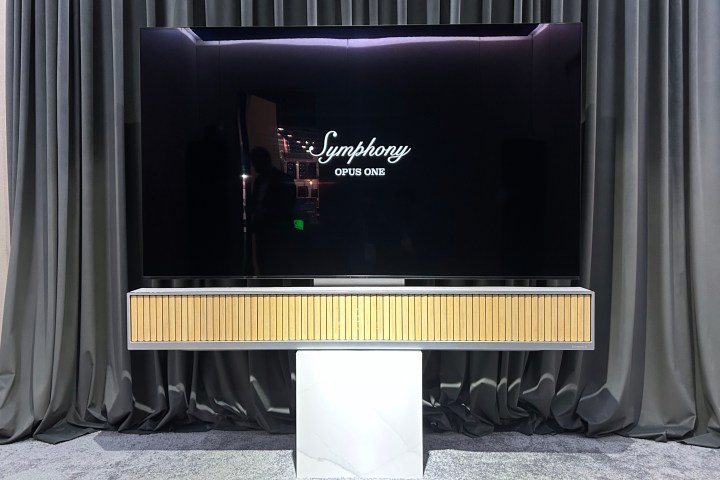
    One of the highlights of CES is the opportunity to experience products that are still many months or even years away from market release. At CES 2025, I had the privilege of previewing Dynaudio’s inaugural soundbar, the Symphony Opus One. While it’s not available for purchase yet, Dynaudio anticipates a price tag of about $20,000 once it hits the market — likely in late 2025 or early 2026.

    That’s a substantial investment, but, similar to other renowned audio products emerging from Denmark, you’re paying for both extraordinary design and exceptional sound quality.

    Dynaudio Symphony Opus One below an 83-inch TV.
    Simon Cohen / Digital Trends

    The massive 73-inch-wide, 1,500-watt soundbar resembles an air register from a luxury yacht, with its sleek aluminum frame, fabric panels, and a striking array of 72 moving wooden fins on its front. These fins evoke memories of the iconic vertical wooden slats used by the esteemed Danish design firm Bang & Olufsen in models like the Beolab 8, Beolab 28, and Beosound Theatre.

    Each fin is meticulously carved from Japanese oak. Unlike those from B&O, which are said to assist in directing sound, Dynaudio’s fins serve primarily an aesthetic purpose.

    Dynaudio Symphony Opus One.
    Simon Cohen / Digital Trends

    Instead of masking the Opus One’s 24 drivers with a traditional fabric grille, Dynaudio incorporated louvered fins that remain closed when the soundbar is off but rotate 45 degrees into an open position during use. Initially, the soundbar will offer two main fin designs and a selection of fabric color options.

    Dynaudio Symphony Opus One remote control.
    Simon Cohen / Digital Trends

    The Opus One comes with an aluminum remote control shaped like a baton, which feels substantial in hand—almost like wielding a lightsaber hilt. It features a large volume dial that offers a satisfying resistance reminiscent of high-end audio equipment. If you have a tendency to keep the remote close during viewing, you’ll find it hard to set this one down.

    The marble pedestal displayed alongside the soundbar isn’t bundled with the Opus One but will be offered as an optional accessory.

    Currently, the Symphony Opus One is undergoing platform adjustments, as Dynaudio is still finalizing its input options and the integration of music streaming services. However, the brand is confident enough in its acoustical performance to showcase the soundbar at CES.

    During the demonstration, we experienced a segment of Lady Gaga’s Close To You alongside an intense scene from Mission: Impossible – Fallout, where Tom Cruise takes control of a helicopter and battles to maintain control.

    The sound was powerful and precise, providing excellent musical fidelity and crystal-clear dialogue with ample cinematic bass. While a dedicated subwoofer is essential for a truly ground-shaking experience, the Symphony Opus One excels at immersing you in its captivating audio, complete with reflective height channels and surround sound.

    Dynaudio Symphony Opus One.
    Simon Cohen / Digital Trends

    One remarkable feature showcased was Dynaudio’s “deep dive” mode, which directs sound towards the listener’s position, creating the illusion of a small circle of 5.1-channel speakers positioned just a few feet away. This effect was particularly striking during a presentation of Lavern’s Hold Me.

    The deep dive mode utilizes beamforming techniques from the soundbar’s array of tweeters and mid-bass drivers, along with a standard head-related transfer function (HRTF) profile, which calculates how sounds are perceived by each ear based on head positioning.

    Typically, HRTF applications are reserved for headphone use, providing a simulated surround sound experience from stereo audio. For a more in-depth understanding of this technology, we have an extensive article on binaural rendering and its workings.

    Dynaudio Symphony Opus One.
    Simon Cohen / Digital Trends

    The application of HRTF in a speaker—especially one with the advanced surround sound capabilities of the Symphony Opus One—is rare yet not entirely unparalleled. Technology from Audioscenic, like the Amphi Hi-D, also delivers a comparable effect through products such as the Razer Leviathan V2 Pro and Dell Plus 32 4K QD-OLED monitor. Notably, these systems are designed for near-field audio, functioning over distances of mere inches, while the Opus One achieves this effect from a distance of 8-10 feet.

    The remarkable precision of the sound targeting was equally noteworthy. I was seated in the middle of a three-seat configuration, with another row behind me. As the demo progressed, the Opus One selectively directed the deep dive sound to specified seats, offering an extraordinary experience to the chosen listener while still allowing those not in focus to hear the audio, albeit with less intensity. Calibration was achieved through the remote control, and the spokesperson indicated that these “zones” can be saved for future use.

    Dynaudio Symphony Opus One.
    Simon Cohen / Digital Trends

    At present, deep dive seems more like a showcase feature—offering no immediate practical application since only one listening position can be prioritized at a time. Dynaudio is still exploring various user scenarios. Personally, I was too engrossed in the extraordinary minute-long sample to consider whether I would prefer this approach for an entire movie experience, as it was indeed mesmerizing to experience.

    Dynaudio states that the Symphony Opus One’s impressive width allows for the remarkable sound targeting capability in the deep dive mode. Still, I wouldn’t be surprised to see a narrower, more affordable version focused on a single, central deep-dive listening spot.

    While it’s difficult to justify the Symphony Opus One’s steep price based solely on what I experienced at CES, let’s set aside the cost for now. It is invigorating to witness a new contender entering the soundbar market—especially one with a prestigious audio heritage like Dynaudio—and even more thrilling to see this company pushing innovative boundaries with features like deep dive.

    The ultimate determination of whether this product warrants the investment will come in time, but it’s my hope that we find out sooner rather than later.

  • Nvidia Could Lead GPU Market in January

    Nvidia Could Lead GPU Market in January

    CES 2025
    Check out our full coverage of CES here.
    Updated less than 22 minutes ago

    Nvidia, AMD, and Intel are preparing to refresh their rankings of top graphics cards in January. Recent reports from HKEPC, a media outlet based in Hong Kong, suggest the Nvidia RTX 5080 is scheduled for launch on January 21. In contrast, AMD appears to be taking a bit longer to increase their GPU stock, potentially allowing Nvidia to seize the GPU market in the early part of 2025.

    As we approach CES 2025, it’s clear that January will be an exciting month for PC enthusiasts. Nvidia is set to unveil the RTX 50-series, AMD will introduce the RX 9000 series, and Intel plans to add another GPU to its Battlemage range. While only Intel’s GPU has a confirmed release date of January 16, Nvidia is rumored to follow closely behind with their launch just a week later.

    It’s important to note that while HKEPC initially reported the January 21 release for the RTX 5080 on social media, they later deleted that post. However, VideoCardz captured the information, which allows us to speculate on this timeline. Many insiders indicate that the RTX 5080 will indeed be the first to hit the market, making the anticipated CES announcement a solid benchmark for this release.

    Receive your weekly update on the technologies driving PC gaming


    Check your inbox!

    If the RTX 5080 indeed launches on January 21, the RTX 5090 might follow on January 28. However, many analysts predict that the 5090 could have a later release, potentially pushing back into mid-February. Additionally, the RTX 5070 and its Ti variant may not debut until late February. Current rumors suggest we could see multiple Nvidia GPUs released within two months of announcement.

    AMD's RX 9000 series overview
    VideoCardz / Board Channels

    As for AMD, their rollout may not be as swift. According to VideoCardz, citing insights from AMD’s internal sources, the RX 9000 series will initially experience limited availability, similar to what was seen with the Ryzen 7 9800X3D. While the RX 9070 XT is expected to launch in late January, widespread availability will likely not occur until February.

    As for AMD’s broader lineup, leaks have primarily focused on the RX 9070 XT and one GPU utilizing the Navi 44 die, likely designated as RX 9060 (XT). There’s talk of a potential RX 9070 non-XT model set to launch in March.

    If these predictions are accurate, Nvidia might dominate the GPU sector in early 2025 with the RTX 5080 and RTX 5090 facing little competition, and AMD’s limited supply could mean all eyes will be on Nvidia. The upcoming days will provide more clarity during CES 2025, so stay tuned for updates.

  • What is the best WiFi booster on the market?

    What is the best WiFi booster on the market?

    What is the Best WiFi Booster on the Market?

    In an era where reliable internet access is crucial, a WiFi booster can be a game-changer. Whether you’re working from home, streaming your favorite shows, or gaming online, having a strong and stable connection throughout your space is essential. Many options are available today, but figuring out which WiFi booster stands out can be a daunting task. This guide aims to highlight some of the top contenders on the market.

    Understanding WiFi Boosters

    Before jumping into product recommendations, it’s important to understand what a WiFi booster does. A WiFi booster, also known as a range extender, amplifies the existing WiFi signal, helping it reach areas that are typically dead zones or have weak connections. This can improve connectivity in larger homes, offices, or buildings with thick walls.

    Key Features to Look For

    When shopping for a WiFi booster, consider the following features:

    • Coverage Area: Look for a booster that can effectively cover the size of your home or office.
    • Speed: Check the WiFi speed ratings to ensure satisfactory performance for streaming, gaming, or browsing.
    • Dual-Band or Tri-Band: Dual-band boosters can operate on both the 2.4 GHz and 5 GHz bands, while tri-band models offer an additional 5 GHz band for higher loads.
    • Ease of Setup: User-friendly installation procedures save time and frustration.
    • Compatibility: Make sure that the booster is compatible with your existing router.

    Top WiFi Boosters of 2023

    Several models have gained popularity for their performance and reliability. Below are some of the best WiFi boosters available:

    1. TP-Link RE650

    Features:

    • Coverage: Up to 14,000 square feet
    • Speed: Up to 2600 Mbps
    • Dual Band: Offers both 2.4 GHz and 5 GHz bands
    • Setup: Easy setup via the TP-Link Tether app

    Pros:

    • Strong performance with minimal dropouts
    • Excellent range
    • Ignition feature to test signal strength

    2. NETGEAR Nighthawk X6S

    Features:

    • Coverage: Suitable for large homes
    • Speed: Offers speeds of up to 4000 Mbps
    • Tri-Band: Capable of supporting multiple devices seamlessly
    • Setup: Quick and easy installation via the Nighthawk app

    Pros:

    • High-speed performance ideal for heavy use
    • Advanced features like Smart Connect
    • Compact design

    3. Linksys RE7000 Max-Stream AC1900+

    Features:

    • Coverage: Good for medium to large homes
    • Speed: Up to 1900 Mbps
    • Dual Band: Benefits from both 2.4 GHz and 5 GHz bands
    • Access Point Mode: Can be switched to Access Point Mode for wired devices

    Pros:

    • Seamless roaming and prioritization for video streaming
    • Multiple Ethernet ports for wired connections
    • Intelligent signal management

    4. Amazon eero Pro 6

    Features:

    • Coverage: Capable of covering up to 6,000 square feet with a mesh system
    • Speed: Supports WiFi 6, delivering fast speeds
    • Tri-Band: Provides robust connections even with many devices
    • Integration: Works well with smart home devices

    Pros:

    • Easy app-based setup and monitoring
    • Self-optimizing mesh network for seamless connectivity
    • Attractive design that fits well in any setting

    Customer Considerations

    When looking to purchase a WiFi booster, it’s advisable to consider the following factors based on customer reviews and experiences:

    • Neighborhood Interference: If you live in a densely populated area, a dual or tri-band booster can help minimize interference.
    • Device Compatibility: Ensure that your devices are compatible with the booster, especially if you have older technology.
    • User Reviews: Checking reviews from other users can provide insights into real-world performance and any potential issues.

    Choosing the right WiFi booster can dramatically enhance your internet experience, allowing you to enjoy seamless connectivity throughout your home or office. With the plethora of options available, doing thorough research and considering your specific needs will guide you toward making the best choice.

  • Samsung Is Targeting Smart Glasses To Disrupt The Market

    Samsung Is Targeting Smart Glasses To Disrupt The Market

    Samsung is gearing up to dive into another wearable technology category, just months after its debut smart ring was launched. According to a research firm based in Shenzhen called Wellsen XR, the company plans to unveil smart glasses that could be available by late 2025 or early 2026.

    “Samsung Electronics has confirmed its intention to release AI smart glasses, with an initial production run of 500,000 units set for the third quarter of 2025,” noted the report by Maeil Business Newspaper.

    Interestingly, Samsung appears to be opting for a more conservative approach, focusing on a strategy similar to the highly successful Meta Ray-Ban Stories smart glasses, mirroring the internal hardware configuration as well.

    The upcoming Samsung smart glasses are expected to feature Qualcomm’s AR1 Gen 1 wearable chip and an NXP semiconductor as an auxiliary processing unit. They will be equipped with a 12-megapixel camera utilizing a Sony CMOS sensor to handle multimedia capture.

    The front of the Ray-Ban Meta and Solos AirGo 3 smart glasses.
    Ray-Ban Meta (top) and Solos AirGo 3 smart glasses. Andy Boxall / Digital Trends

    These smart glasses are reported to be powered by a 155 mAh battery and will weigh around 50 grams. The front camera is expected to facilitate code scanning, gesture recognition, and regular photo and video taking.

    Despite their similarities to the Meta Ray-Ban smart glasses, the underlying software will be different. Rather than the Meta AI suite currently used in Stories, Samsung will rely on Google’s technology.

    Specifically, Samsung will integrate Google’s Gemini AI into its smart glasses. This partnership aligns with previous collaborations, as Samsung’s Galaxy smartphones were among the first to feature native Gemini capabilities within the Galaxy AI ecosystem.

    This technological edge is significant since Gemini is already well-embedded in many of Google’s applications, particularly the Workspace suite utilized by millions. It currently offers valuable functionalities in essential tools like Gmail and Docs, along with the ability to interact with custom AI agents.

    Additionally, the partnership with Android will streamline the connection between the smart glasses and other devices in the ecosystem. However, Samsung won’t be the only contender in the smart glasses arena, as its Chinese competitor, Xiaomi, is reportedly working on a similar product designed to compete with Meta’s offerings.

  • Q3 2024 Cloud Market: AWS 31%, Azure 20%, Google Cloud 11%

    Q3 2024 Cloud Market: AWS 31%, Azure 20%, Google Cloud 11%

    Amazon Web Services: The Unrivaled Leader in Cloud Infrastructure

    Amazon Web Services (AWS) has firmly established itself as the dominant player in the global cloud infrastructure market. As of the third quarter of 2024, AWS boasts an impressive market share of 31%, maintaining a comfortable lead over its nearest competitor, Microsoft’s Azure platform, which holds a 20% share. Google’s Cloud platform comes in third with an 11% market share. Together, these "Big Three" cloud providers account for more than 60% of the rapidly expanding cloud market, with smaller competitors struggling to gain significant traction.

    Market Overview: Growth and Expansion

    In the third quarter of 2024, the global spending on cloud infrastructure services soared to over $84 billion, marking a substantial increase of $15.7 billion, or 23%, compared to the same quarter in 2023. This surge in investment reflects the ongoing demand for cloud services as businesses increasingly shift towards digital operations.

    Over the past year, the cloud infrastructure service revenues have reached a staggering $313 billion, showcasing the sector’s vitality and dynamism. The continuous growth of the market, despite its already significant size, speaks volumes about the potential and demand for cloud services in a technology-driven world.

    The Driving Forces Behind Cloud Growth

    The Rise of Artificial Intelligence

    One of the most significant catalysts for this remarkable growth in the cloud market is the advent of artificial intelligence (AI). AI technologies are not only transforming business operations but also streamlining cloud services. Given that cloud providers like AWS and Azure have begun to integrate AI-oriented services into their offerings, the demand for these capabilities is climbing rapidly.

    John Dinsdale, chief analyst at Synergy Research Group, points out how AI is driving substantial growth in cloud services. He notes that new AI technologies lead to increased demand, which in turn boosts revenues and permits further investment in cutting-edge infrastructure. This creates a virtuous cycle: innovations fuel demand, and rising demand facilitates further advancements.

    Expanding Use Cases

    As organizations increasingly recognize the myriad benefits of cloud computing, the range of use cases continues to expand. From hosting applications and data storage to artificial intelligence processing and machine learning capabilities, the versatile nature of cloud services appeals to diverse industries.

    Moreover, businesses are leveraging cloud solutions for agile development, scalable storage options, and enhanced collaboration, making it an indispensable component of modern enterprise architecture.

    Competition in the Cloud Space

    While AWS continues to lead the pack, both Microsoft and Google are making significant strides. Microsoft Azure carved out a notable market share, partly due to its strong enterprise relationships and extensive integration with other Microsoft products. In contrast, Google Cloud is leveraging its strengths in data analytics, machine learning, and artificial intelligence, aiming to attract businesses focused on these areas.

    Despite their varying strategies and strengths, all three providers are entrenched in a fierce competition for market share, which not only benefits the providers but also leads to better services and innovations for consumers.

    The Future of Cloud Computing

    The ongoing growth and competitiveness in cloud infrastructure indicate a vibrant future. With AI and technological advancements at the forefront, the cloud market is poised to continue its expansion. As manufacturers innovate and improve their offerings, organizations can harness these benefits to drive efficiency, agility, and profitability.

    Investments in infrastructure, coupled with the growing importance of cloud services in business operations, will likely ensure that the cloud space remains a hotbed for growth and development in the coming years. The interplay of competition among the big players and the emergence of new technologies will shape our digital future, offering unprecedented advantages to enterprises worldwide.


    In this thriving landscape, AWS remains a benchmark, continually setting the standard for cloud services while pushing its rivals to enhance their offerings. The next few years are undoubtedly critical, as the cloud service industry navigates through evolving technologies and shifting consumer priorities.

  • Gold Price in Singapore Today – (Updated [current_date])

    Gold has always been seen as a safe house for those wanting to keep their investment secure and profitable. If you’re looking for Gold Price in Singapore, below is mentioned.

    (more…)