الوسم: Maritime

  • Search Ongoing for Missing Crew After Bulk Carrier Sinks off India

    Search Ongoing for Missing Crew After Bulk Carrier Sinks off India

    A man observes a container ship in the Arabian Sea off the coast of Mumbai, India, on May 6, 2026. — Reuters

    – The ship sank approximately 240 nautical miles from Paradip port.
    – The Panama-flagged cargo vessel went down in just eight minutes.
    – Rescued Chinese crew members report that the vessel began listing on Friday before sinking swiftly, leading the crew to abandon ship.

    India’s Coast Guard and Navy are continuing search-and-rescue efforts off the eastern coast following the sinking of a Panama-flagged cargo ship carrying 24 crew members. Two Chinese nationals have been rescued so far, according to a senior official.

    The two rescued Chinese seafarers mentioned that the ship developed a list on Friday and sank within eight minutes, which compelled the crew to evacuate quickly, said Shyam Jagannathan, director general of India’s Maritime Administration.

    Jagannathan noted that the chances of locating survivors decrease significantly after 12 hours but emphasized that rescue operations are ongoing.

    Twenty-two crew members are still missing from the Ocean Winner. The missing include 18 Chinese nationals, three from Myanmar, and one from Bangladesh, according to the Indian Coast Guard.

    The Indian Navy is coordinating closely with the Coast Guard to find the remaining crew members. A Navy spokesperson stated that two vessels have been dispatched from Sri Vijaya Puram (formerly Port Blair) for rescue efforts.

    The Ocean Winner was transporting iron ore destined for China after departing from India’s eastern Paradip port on Friday, based on initial reports from India’s Maritime Administration.

    The ship sank roughly 240 nautical miles from Paradip, as per government sources.

    The cause of the sinking remains unknown at this time.

  • Oil spill from sanctioned tanker off Oman spreads widely

    Oil spill from sanctioned tanker off Oman spreads widely

    A satellite image captures an oil slick covering roughly 390 square kilometers (about 150 square miles) off the coast of Oman. The government reported that the spill resulted from damage to a vessel under sanctions that was transporting Russian crude oil. The Caroline Bezengi’s crew initially reported problems on June 8 near the Yemeni port of Mukalla, with early assessments suggesting a possible onboard explosion.

    Oman’s environmental authorities are actively working to contain and mitigate the spill, which they confirmed covers an area extending northeast from the Hallaniyat Islands toward the mainland. The closest point of the slick is estimated to be around seven kilometers from the shoreline. Satellite imagery analyzed by authorities indicates that the spill is still spreading, prompting concerns about potential environmental consequences.

    The vessel suffered damage without an official explanation provided by Oman. Prior to the incident, the ship was loaded with Russian crude oil and last transmitted its position via public AIS tracking on June 11 off Yemen’s coast.

    Russia is known for operating an aging fleet of tankers—often poorly maintained—that are used to bypass international sanctions on Russian oil exports. The Caroline Bezengi has been targeted with sanctions by the European Union and Britain due to alleged involvement in transporting Russian fuel.

  • Iran reports progress in Oman talks on managing the Strait of Hormuz

    Iran reports progress in Oman talks on managing the Strait of Hormuz

    Ships and tankers are navigating through the Strait of Hormuz off Musandam, Oman, as seen on April 18, 2026. — Reuters

    Negotiations are centered on managing the Strait of Hormuz. Discussions addressed shipping safety and sovereignty concerns. Previously, Oman and Iran discussed transit service fees.

    Iran announced on Sunday that it has made progress in talks with Oman regarding the management of the Strait of Hormuz, a vital waterway for oil and gas shipments that both nations border.

    These recent talks follow the resumption of U.S. attacks on Iran, aimed at ending Tehran’s control over the strait. This development comes after a June agreement intended to de-escalate tensions, which had temporarily eased hostilities.

    Iran’s foreign ministry spokesperson, Esmaeil Baqaei, said several rounds of negotiations took place in Tehran on Friday and Saturday, involving deputy foreign ministers from Iran and Oman.

    The discussions focused on establishing “common principles and operational mechanisms” to ensure safe passage for shipping through the strait, while respecting each other’s sovereign rights, Baqaei explained.

    He described the talks as productive, noting that significant progress had been made and that both technical and political consultations are ongoing.

    In June, Oman and Iran indicated they would discuss the possibility of imposing transit service fees, a move opposed by the United States.

    Oman also stated that ships could pass through Hormuz via Omani waters, which angered Iran and led to a pattern of escalation.

    Iran reported on Saturday that it has not recorded any US strikes after nearly two weeks of strikes.

    According to Axios, the Pentagon presented President Donald Trump with a plan for a 14th night of strikes, but he declined to approve it, opting instead for renewed negotiations.

    The report states Trump ordered a halt to hostilities following the arrival of an Omani delegation in Tehran to discuss a new arrangement for reopening the Strait of Hormuz.

    Regarding the current status of shipping traffic, Baqaei confirmed there has been no change.

  • Shipping Firms Steer Clear of US-Guided Hormuz Route Post-Iran Attacks

    Shipping Firms Steer Clear of US-Guided Hormuz Route Post-Iran Attacks

    Images captured from Musandam, Oman, showcase vessels navigating the Strait of Hormuz as of July 15, 2026 — Reuters

    – The IRGC has claimed responsibility for attacks on two Emirati supertankers.
    – Greek maritime companies are advising ships to postpone voyages due to escalating dangers.
    – The United States maintains that the Strait of Hormuz remains accessible to commercial shipping.

    Shipping firms are steering clear of a U.S.-guided transit route through the Strait of Hormuz following a series of Iranian assaults on ships, according to seven sources from the maritime and shipping sectors. For many years, vessels entered and exited the Gulf via a secure pathway established by the U.N. shipping agency in 1968, known as the Traffic Separation Scheme. Since Iran’s conflict began on February 28, Iran has mined the area, prompting ships to choose alternative, makeshift routes near either the Iranian or Oman coast.

    In June, Reuters reported that the U.S. military had assisted vessels through this region as part of a covert operation involving numerous ship-to-ship oil transfers to sustain Gulf energy exports, utilizing aerial and water drones along with helicopters. This aid enabled the export of tens of millions of barrels of oil, helping mitigate the energy market impact caused by the largest disruption in oil and gas supplies on record.

    However, shippers are now perceiving the Omani side of the strait as increasingly perilous following recent attacks on ships. Iranian Revolutionary Guards claimed responsibility on Tuesday for assaults on two Emirati crude supertankers. Since July 7, approximately five ships, including three crude supertankers, one LNG tanker, and one container ship, have been targeted in Omani waters under the U.S. scheme, based on data analysis from the U.N. shipping agency. It remains unclear whether all these vessels were navigating the U.S.-endorsed route.

    One shipping expert noted, “The U.S. appears to lack control over the situation,” and added that their company decided not to traverse the strait because of crew safety and security concerns. Torbjorn Solvedt, a senior Middle East analyst with Verisk Maplecroft, commented, “Iran’s continued ability to target ships on the Omani route suggests that the Trump administration’s proposed strategy to keep maritime traffic moving is unlikely to succeed.”

    The White House spokesperson Olivia Wales stated that despite recent incidents, the Strait of Hormuz is still open and operational. “The Strait remains open, and oil continues to flow. Iran is engaging in acts of international terrorism by attacking peaceful commercial vessels, targeting and killing innocent civilians. The United States is responding decisively.”

    A U.S. defense official, speaking anonymously, confirmed that over the past week, more than 100 vessels coordinated with the U.S. military to transit the strait, with over 300 passing through the broader area, indicating that U.S.-led efforts are effective, even if current traffic volumes are below pre-conflict levels.

    Iran issued threats on Wednesday to halt additional regional energy shipments following the reimposition of a naval blockade on Iranian ports by the U.S., coupled with increased strikes from both sides as they contest control over the strait. Tehran is hinting at the possibility of leveraging its Yemeni Houthi allies to block the Bab el-Mandeb Strait, which connects to the Red Sea, potentially opening a new front against the U.S. and threatening two of the world’s key shipping routes.

    Several Greek-operated LNG tankers that had entered the Gulf via Hormuz for loading last week are now stuck within the strait amid security fears. Additionally, since July 7, two more tankers have been attacked in open waters outside the strait.

    U.S. President Donald Trump announced on Truth Social that the Strait of Hormuz “is open to ALL Ship traffic except for Iran.” The U.S. reimposed its sanctions blockade on Iran-related shipping on Tuesday. Last week, the U.S. Navy’s Joint Maritime Information Center upgraded the risk level for ships in the region from “substantial” to “severe,” just below the “critical” highest level, following attacks on three tankers.

    US authorities have advised shipping companies that, despite their efforts, real-time threat communication may be limited. Multiple sources indicate the U.S. has not provided complete clarity on the actual risks for ships traveling through the Omani route. One maritime security expert questioned, “If the U.S. states the strait is ‘not closed’ and remains open, why then do operators feel it is unsafe?”

    Greek security firms, such as Diaplous and MARISKS, have issued advisories warning that the threat level remains high, recommending that voyages be postponed until at least Saturday to ensure safety.

  • US to Start Enforcing Maritime Blockade on Iran Today

    US to Start Enforcing Maritime Blockade on Iran Today

    A ship is visible at the Strait of Hormuz from Musandam, Oman, July 13, 2026. — Reuters

    The United States states that measures will be effective starting at 2000 GMT on July 14. The restrictions will apply to all vessel traffic without exception, regardless of the vessel’s flag. The Joint Maritime Information Center (JMIC) warns that force may be used against ships that do not comply.

    The US military announced that a maritime blockade against Iran will begin on Tuesday, managed by the Navy-led JMIC. This blockade will encompass all ports, oil terminals, and coastal zones of Iran and will be enforced for all vessel traffic from 2000 GMT on July 14. Ships suspected of entering or leaving the blocked area without permission may be intercepted, diverted, or captured, with force if necessary. However, transit through the Strait of Hormuz heading to or from destinations outside Iran will not face restrictions.

  • Shipping & Unions View Hormuz as a Warzone Still

    Shipping & Unions View Hormuz as a Warzone Still

    A vessel is seen navigating through the Strait of Hormuz from Musandam, Oman, on June 29, 2026. — Reuters/File

    Unions and shipping firms announced on Wednesday their decision to keep the Strait of Hormuz classified as a warzone area, following two attacks on ships despite a ceasefire between Iran and the United States.

    “This move acknowledges the ongoing and serious threat to life, along with the rapidly changing circumstances in the region,” stated a joint release from the International Transport Workers’ Federation (ITF) and the Joint Negotiating Group (JNG), a coalition representing shipowners.

    A source involved in the discussions told AFP that if the ships hadn’t been targeted on two separate days since last Thursday and if maritime access had remained smooth, a change in designation might have taken place this week.

    The designation will now remain in effect until at least July 9, with weekly reviews planned, the statement added.

    The Strait of Hormuz was first declared a war operational zone on March 5 after ships attempting to traverse this crucial energy corridor came under attack.

    This status applies to vessels whose owners are part of the International Bargaining Forum (IBF) labor agreements—amounting to approximately 15,000 ships worldwide, according to the IBF.

    Mariners on these ships are entitled to double pay, which increases operational costs for shipping companies, among other advantages.

    Since March 1, when Iran responded to US and Israeli strikes by closing the vital waterway, merchant ships have been significantly impacted by the regional conflict.

    During this period, at least 14 crew members have lost their lives, and more than 40 ships have been targeted.

    The most recent attacks occurred last Thursday and Saturday, prompting the International Maritime Organization (IMO) to suspend an emergency plan to evacuate the 11,000 mariners still stranded in the Gulf.

  • Trump Orders Iran Mine-Layers Sunk Amid Tanker Tensions

    Trump Orders Iran Mine-Layers Sunk Amid Tanker Tensions

    A fleet of ships and boats is visible in the Strait of Hormuz off Musandam, Oman, captured on April 20, 2026 — Reuters.

    – The Pentagon reports that U.S. forces boarded a tanker carrying Iranian oil.
    – State that maritime enforcement efforts against illegal networks will persist.
    – Iranian officials, including Ghalibaf, emphasize that a ceasefire remains meaningful only if no violations, such as blockades, occur.

    TEHRAN: President Donald Trump authorized the U.S. Navy on Thursday to target and destroy any Iranian vessels laying mines in the Strait of Hormuz, escalating tensions amid a fragile ceasefire as disruption from the Gulf stand-off begins to impact the global economy.

    This announcement followed an incident where the U.S. naval fleet boarded a vessel in the Indian Ocean transporting Iranian oil, and Iranian authorities claiming Tehran has received its first earnings from tolls imposed on ships passing through the strait.

    With peace talks in Pakistan hanging in the balance, airlines, driven by soaring fuel costs, canceled flights, and oil prices surged again. Additionally, the closely-watched S&P Global PMI index indicated that business activity across the eurozone contracted for the first time in over a year.

    President Trump tweeted, “I have ordered the United States Navy to shoot and kill any boat, small boats included, that lays mines in the waters of the Strait of Hormuz.”

    Iran responded by vowing to keep the strait nearly closed unless the U.S. Navy lifts its blockade on Iranian ports, dismissing Trump’s demands to reopen Hormuz and relinquish its enriched uranium.

    In retaliation, the U.S. imposed a blockade on Iranian ports. On Thursday, the Pentagon announced via social media that U.S. forces conducted a maritime interdiction, boarding the sanctioned, stateless vessel M/T Majestic X, which was transporting Iranian oil in the Indian Ocean. Footage showed U.S. military personnel rappelling onto the deck of a large tanker.

    The Pentagon affirmed its commitment to continue enforcing maritime laws globally to disrupt illegal networks and interdict vessels providing material support to Iran wherever they operate.

    While active hostilities have decreased since the ceasefire’s start, tensions over Hormuz persist as both sides seek economic advantages. President Trump announced an indefinite ceasefire to allow for further negotiations.

    Iranian Parliamentary Speaker Mohammad Bagher Ghalibaf stated, “A full ceasefire only holds meaning if it isn’t broken through a naval blockade,” adding that reopening the strait is impossible while Iran’s ceasefire violations continue.

    Deputy Hamidreza Hajibabaei revealed that Iran had received its first revenue from tolls on ships passing through Hormuz, a crucial route that accounts for about 20% of the world’s oil and gas flow, along with other vital commodities.

    Analysts suggest that Iran’s hardliners, particularly those linked to the Islamic Revolutionary Guards Corps, believe that their blockade offers enough economic leverage to pressure Washington to retreat from its main demands during peace talks.

    Some experts, such as Danny Citrinowicz of the Tel-Aviv Institute for National Security Studies, criticized both Israel and the U.S., asserting that they misread Iran’s resolve.

    “Tehran has shown it is willing to endure economic hardship to stand firm on its core national interests. There’s little reason to expect this stance will change now,” he said on social media. “Instead of capitulating, Iran is set to escalate.”

    A briefing from the Soufan Center indicates Iran’s hardliners argue that sustained high energy prices and shortages worldwide will increase pressure on Trump to accept Iran’s terms, end the conflict, and withdraw U.S. forces from the region.

    Conversely, U.S. policymakers believe that the blockade of Iran’s seaborne trade—its primary means of exporting oil—will swiftly cripple Iran’s economy, compelling Tehran to accept their conditions.

    Regarding peace negotiations, President Trump mentioned on Wednesday to the New York Post that talks could potentially restart in Pakistan within two or three days, although Iran has yet to confirm participation, and Vice President JD Vance has postponed travel to Islamabad.

    Iran’s Revolutionary Guards announced on Wednesday that they forced two ships to shore from the Strait of Hormuz.

    The U.S. Central Command previously indicated that, before Thursday’s developments, forces enforcing the blockade had directed 31 vessels to turn back or return to port.

    Following the Iran-related ceasefire, the U.S. helped broker a separate truce between Israel and Lebanon, including Hezbollah. Despite this, Israeli strikes on Wednesday resulted in the deaths of five more people, according to Lebanese media.

    Lebanese officials expect a second round of talks in Washington on Thursday, during which Beirut will seek a one-month extension of the ceasefire. Since the conflict’s start, Israeli strikes have killed over 2,450 Lebanese civilians, according to local authorities.
  • Shipping Traffic Through Hormuz Remains Mostly Halted

    Shipping Traffic Through Hormuz Remains Mostly Halted

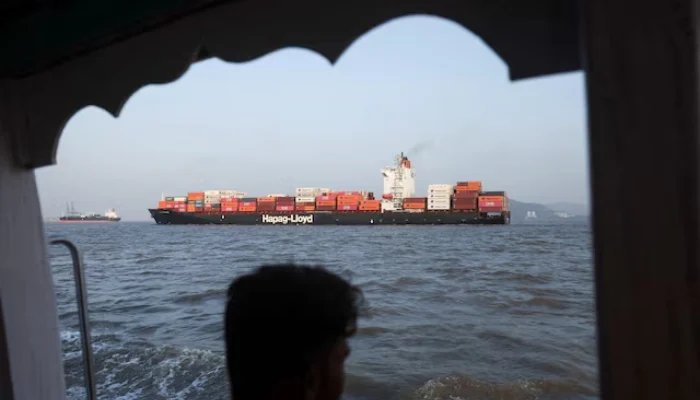
    Shipping activity in the Strait of Hormuz largely paused on Tuesday, with only three vessels passing through in the last 24 hours according to shipping data. A U.S. blockade of Iranian ports has angered Tehran, leading it to impose its own restrictions on the strait, which has historically transported around 20% of the world’s oil and liquefied natural gas.

    The Ean Spir oil tanker, whose flag and ownership remain unknown, transited the strait on Tuesday after stopping at an Iraqi port, as shown by MarineTraffic tracking data. Similarly, the Lian Star cargo vessel, also without known flag or ownership, sailed through from an Iranian port. Additionally, the Meda liquefied petroleum gas tanker, which previously called at a UAE port and also lacks transparent ownership, attempted to exit the Gulf again on Monday after turning back, based on satellite data from SynMax.

    This volume represents only a tiny fraction of the approximately 140 ships that usually pass through daily before the escalation of U.S. and Israeli actions against Iran began on February 28. After Iran briefly announced reopening the strait last Friday, more than a dozen tankers moved through, only for Tehran to declare it closed again on Saturday amid reports of shots fired at vessels.

    A shipping broker, BRS, noted this week that even vessels that appear compliant with transit requirements can find themselves in danger and be prevented from passing.

    Tensions heightened Tuesday, risking a collapse of the US-Iran ceasefire, as Tehran refused to commit to new peace negotiations, and the U.S. military announced the seizure of a tanker linked to Iran in international waters.

    Meanwhile, hundreds of ships and about 20,000 crew members are stranded in the Gulf, unable to sail. Arsenio Dominguez, the UN shipping agency’s secretary-general, told reporters at Singapore’s maritime week, “We cannot risk the lives of seafarers.” He added that last weekend, when some ships attempted to sail amidst the chaos, some were targeted, but fortunately, no casualties or vessel damage occurred.

    Iran’s military claimed that an Iranian tanker entered its territorial waters from the Arabian Sea on Monday, with assistance from navy forces, despite US warnings and threats. BRS estimates that currently, 61 supertankers unrelated to Iran are trapped within the Gulf, 50 of which carry up to 2 million barrels of oil each.

    In times when global oil demand is high, releasing even an additional 2 million barrels from the Middle East Gulf would be highly welcomed.

  • Security Firm Warns of Scam Messages Promising Safe Passage Through Hormuz

    Security Firm Warns of Scam Messages Promising Safe Passage Through Hormuz

    Greek maritime risk management company MARISKS has issued a warning regarding scam messages sent to certain shipping companies, promising safe passage through the Strait of Hormuz in exchange for cryptocurrency payments. These messages falsely claim to represent Iranian authorities and demand transit fees in Bitcoin or Tether for clearance. MARISKS emphasized that these communications are fraudulent and were not issued by Iranian officials, and Iran has yet to comment on the matter.

    Currently, hundreds of vessels and approximately 20,000 seafarers are stranded in the Gulf region. On April 18, Iran briefly reopened the strait for checks, but attempts to pass were thwarted when some ships reportedly faced gunfire from Iranian boats, which caused them to retreat. MARISKS believes at least one ship shot at during this incident may have fallen victim to the scam.

    A suspicious message circulating among shipowners stated: “After providing the documents and assessing your eligibility by the Iranian Security Services, we will determine the fee to be paid in cryptocurrency (BTC or USDT). Only then will your vessel be able to transit the strait unimpeded at the pre-arranged time.” This message has been flagged as a scam, and there’s no official confirmation from Tehran.

  • How to Fix and Complete Your Ship in Windrose

    How to Fix and Complete Your Ship in Windrose

    When you start playing Windrose, things might feel tough at first. Without a good ship, you’re stuck on the starting islands with very limited resources. Luckily, there’s a way to get a better ship so you can head back into the open sea and begin your adventure of plundering.

    Here’s how to get your first ship, upgrade it, and grow your fleet of powerful vessels to challenge Blackbeard and his crew. There’s a lot to do if you want to unlock your full potential, so dive in now.


    How to Get a Larger Boat

    After your ship is destroyed, you’re left with a tiny, slow dinghy to get around. As you play through the main story and reunite with the doctor, you’ll discover that there are several shipwrecks nearby worth exploring.

    One of these shipwrecks is still usable if you can find it. You’ll need the ship if you plan to sail to Tortuga and earn your reputation as a pirate.

    Where to Find a Ship

    Check your map for markers that show shipwreck locations. If you’re not using quest markers, look along the shores of smaller nearby islands. These locations should have ships resting nearby. Usually, they’re close together, but if you see one broken in half, it’s not worth pursuing. You’re looking for a mostly intact Ketch — there’s just one of its kind.

    When you find the ship, you’ll need the following materials to repair it:

    • 100 Wood
    • 10 Ropes
    • 20 Coarse Fabric
    • 20 Nails

    Make sure these materials are in your inventory, not just in storage at your camp.

    Once the ship is fixed, the next step is to gather a crew for it.


    How to Find a Crew

    You’ll see several pirates trapped in cages around the starting islands, guarded by Blackbeard’s men. To set sail, you need to free them.

    Each camp has about two pirates, so you’ll need to raid three camps plus free the first pirate you encounter in the main story. After freeing all seven pirates, return to your repaired ship and assemble your crew.


    How to Use Your Ship

    After gathering the crew, your ship is ready to set sail. You can leave right away, but it’s best to wait a moment. By default, your ship doesn’t have extra defenses or cannons installed.

    How to Upgrade Your Ship

    To strengthen your vessel, build a shipwright’s workshop to craft cannons and boarding gear. Then, construct a wharf to install these upgrades. Once done, your ship will be ready for real pirate adventures.

    From the shipwright’s workshop, you can manage and build new ships, ensuring they’re in good shape before heading into battle. You can also summon your ships anywhere nearby with the appropriate key (on PC, it’s the K key).


    How to Sail Your Ship

    Onboard, head to the helm and use the wheel to steer or manage your cargo. Your cargo holds extra materials you can transport, so use it to carry supplies between camps or take on Blackbeard’s forces.

    Initially, your options for ships are limited. As you improve your skills and build good relationships with different factions, more blueprints will unlock, allowing you to build bigger and stronger ships to defeat Blackbeard.

    To sail, use the standard movement controls. Remember, sailing faster means less control. You can use your camera and right mouse button to aim your shots while on the sea, and the left mouse button to fire cannons.

    Docking and Leaving the Ship

    There’s no formal docking system. To disembark, press the same button used to take the helm and step away. You can then jump into the water and swim to shore. Just make sure you stay close enough so you don’t run out of stamina and drown before reaching land.

  • Shippers cautiously watch Iran-Hormuz reopening prospects

    Shippers cautiously watch Iran-Hormuz reopening prospects

    On Friday, representatives from the shipping sector responded cautiously to Iran’s declaration that it has reopened the critical Strait of Hormuz trade route after nearly seven weeks of closure. The Strait’s closure by Iranian forces had stranded hundreds of ships in the Gulf and raised shipping costs, as captains avoided the area due to concerns over potential attacks or mines.

    A spokesperson for German shipping giant Hapag-Lloyd, which has vessels stranded in the Gulf, told AFP via phone that the reopening was generally positive news. However, he emphasized that further information was needed regarding safe routes for vessels and the sequence in which they could transit, given lingering fears about sea mines. “It’s not feasible for a thousand ships to all head straight for the strait’s entrance simultaneously; that would create chaos. Iran needs to provide clear instructions,” said Nils Haupt. “We’re prepared to set sail soon if these outstanding questions can be addressed over the weekend.”

    Bloomberg data from Thursday revealed approximately 770 ships transmitting transponder signals within the Gulf, with around 360 of those being oil and gas carriers. Prior to the conflict, the average daily crossings of the strait reached about 120 vessels, according to industry source Lloyd’s List.

    US President Donald Trump subsequently claimed that Iran had declared the waterway fully open and accessible. However, Jakob Larsen, chief security officer at the shipping association Bimco, countered via email, stating this assertion was “inaccurate.” He explained that the mine threat status within Iran’s maritime traffic separation scheme remains unclear and recommended that shipping companies consider avoiding the area altogether.

    Kazakos, secretary general of the International Chamber of Shipping, described the Iranian announcement as a “positive step,” but warned that “significant uncertainty” remains about its practical implications. In a statement to AFP, he expressed that while this development might offer some reassurance to the thousands of seafarers stranded in the Gulf due to regional conflict, it must mark the start of a broader and lasting return to navigational freedom. Kazakos underscored the importance of restoring unrestricted navigation through this vital corridor beyond the current ceasefire, urging lasting peace and stability in the region.

  • Five Ships Attacked in Gulf and Hormuz Strait Amid Rising Maritime Conflicts

    Five Ships Attacked in Gulf and Hormuz Strait Amid Rising Maritime Conflicts

    A Thailand-flagged cargo ship, Mayuree Naree, was engulfed in black smoke in the Strait of Hormuz on March 11, 2026.— Reuters

    – Iranian armed boats attacked two tankers in Iraqi waters.
    – A Thailand-flagged bulk carrier was damaged off the coast of Oman.
    – Most crew members have been evacuated; three are missing.

    Iranian boats reportedly launched explosives at two fuel tankers in Iraqi waters, igniting fires and resulting in one crew member’s death on Wednesday. The attacks, which involved projectiles hitting three vessels in the Gulf, indicate a rise in hostilities between Iran and US-Israeli forces, bringing the total number of targeted ships in the region to at least 16 since fighting escalated.

    Shipping traffic in the Gulf and through the narrow Strait of Hormuz—responsible for about 20% of the world’s oil—has nearly halted since the U.S. and Israel initiated strikes against Iran on February 28, driving global oil prices to their highest point since 2022.

    The ships targeted in late-night attacks near Iraq include the Marshall Islands-flagged Safesea Vishnu and Zefyros, both of which had loaded fuel cargoes in Iraq, according to Iraqi port officials. “We recovered the body of a foreign crew member from the water,” said one security official. Iraqi rescue teams are still searching for other missing crew members, though it’s unclear which ship the body belonged to.

    Safesea Transport Group and Safesea Group, the U.S.-based operators of Safesea Vishnu, did not respond immediately to inquiries. Zefyros is flagged in Malta, and its crew list was provided by an Iraqi port source. Lloyd’s List Intelligence confirms that Zefyros Trading SA owns the vessel, with UK-based Cygnus Tankers Limited serving as the commercial operator and the George & Vassilis Michael family group of Greek shipowners as the beneficial owner. Cygnus Tankers did not comment, nor could the other parties be reached right away.

    Iran’s Revolutionary Guards have issued warnings that any vessel crossing the Strait of Hormuz may be targeted. U.S. President Donald Trump has threatened to escalate attacks on Iran if it continues to impede the strait.

    Earlier on Wednesday, the Thai-flagged dry bulk vessel Mayuree Naree was hit by two unidentified projectiles in the strait, igniting a fire and damaging its engine room. The Thai operator, Precious Shipping, reported three crew members missing, presumed trapped in the engine room. The remaining 20 crew members were safely evacuated to Oman. Images from the Thai navy show thick smoke billowing from the ship’s stern.

    The Guards claimed the vessel was “fired upon by Iranian fighters,” marking what appears to be their first direct engagement, although previously they have used missiles and drones.

    The U.S. Navy has declined daily requests from shippers for military escorts through the Strait of Hormuz since the conflict with Iran began, citing the high risk of attacks. President Trump has stated that the U.S. is prepared to provide escorts if needed.

    Two other ships have sustained minor damage:
    – The Japan-flagged container ship ONE Majesty was hit 25 nautical miles northwest of Ras Al Khaimah in the UAE, suffering minor hull damage above the waterline. Its crew is safe, and the vessel remains operational. Its owner, Mitsui OSK Lines, and the charterer, Ocean Network Express, are investigating the cause.
    – A bulk carrier, Star Gwyneth, flagged in the Marshall Islands, was hit around 50 miles northwest of Dubai. The hull was damaged, but the crew was unharmed, and the vessel continued to operate after the incident.

    The Iranian Guards also referenced another vessel hit by projectiles, likely drones, earlier that morning. Confirmation of this report remains pending.

  • Why They’re the West’s Biggest Threat in the Strait of Hormuz

    Why They’re the West’s Biggest Threat in the Strait of Hormuz

    Tehran is attempting to block the crucial Strait of Hormuz to oil shipments following U.S. and Israeli strikes against Iran. There are concerns that Iran might be using sea mines as a weapon to achieve this. U.S. forces have targeted 28 Iranian mine-laying vessels, according to President Donald Trump on Wednesday, marking over a week since the Middle East conflict escalated.

    If Iran deploys mines in the key shipping lane, as it did in the 1980s, it would create a nightmare for Western mine-clearing operations. Here’s what you need to know:

    What are sea mines?
    Sea mines are often considered the “weapon of the poor,” as a former senior French Navy officer described. Despite their simplicity, they represent a significant threat to maritime trade and naval freedom of movement.

    Iran’s mine inventory
    Estimates suggest Iran possesses around 5,000 to 6,000 naval mines, including difficult-to-intercept drifting mines. Contact mines float on the sea surface or are anchored to the seabed and detonate upon contact with a vessel’s hull. Iran also has influence mines suited for the shallow waters of the Gulf, which are planted on the seabed and trigger when a large ship passes overhead. Speedboats could also be used to attach limpet mines to ships, set to explode after a specific time.

    The U.S. Defense Intelligence Agency reported in 2019 that Iran can quickly deploy these mines across the Persian Gulf and Strait of Hormuz using small, fast boats equipped as minelayers. Many of Iran’s small boats, including the Ashoora class, have mine rails capable of carrying at least one mine. Alternatively, smaller vessels could be converted to discreetly deploy mines.

    Historical usage of sea mines
    Iran deployed sea mines during its conflict with Iraq in the 1980s, particularly during the “tanker war,” which forced U.S. naval escorts for commercial ships. During the 1991 Gulf War, Iraqi forces laid approximately 1,300 mines, damaging two U.S. Navy ships severely—costing around $100 million to repair one of them, the USS Princeton. It took over two years of dedicated mine-clearance efforts to declare the northern Gulf free of mines.

    Mining and demining operations
    Western countries possess the capabilities to clear the Strait of Hormuz if needed, but such operations would be lengthy and complex. In January, the U.S. removed four Avenger-class mine hunters based in Bahrain, planning to replace them with ships equipped with mine countermeasure tools—though these substitutes are not specifically designed for mine clearance.

    The Center for Maritime Strategy warned last year that strategically placed sea mines could become a critical vulnerability for U.S. naval operations, noting that Iran, China, and Russia have acquired these inexpensive weapons. However, the fleet is dismantling its mine-countermeasure capabilities without replacing them with proven alternatives.

    Europe’s capabilities, while better than the U.S., remain insufficient against present threats. Britain withdrew its last four Gulf-based mine hunters in December—down from 13. France currently owns only eight specialized ships, which have not recently operated in the Gulf. Belgium and the Netherlands are considered experts but await new, advanced ships to support mine-detection drones.

    Gulf nations do have divers for demining, but locating mines first is a challenge. The complex task of neutralizing mines remains a significant hurdle, emphasizing the importance of advanced detection and clearance tools.

  • Moscow Claims US Freed Two Russians from Confiscated Tanker

    Moscow Claims US Freed Two Russians from Confiscated Tanker

    An oil tanker named Marinera, previously called Bella 1, was captured at sea in the Singapore Strait on March 18, 2025. — AFP

    MOSCOW: Russia announced on Friday that the United States has agreed to release two Russian crew members aboard a Russian-flagged oil tanker that Washington had seized earlier this week.

    U.S. authorities claimed the tanker was part of a covert fleet transporting oil for nations such as Venezuela, Russia, and Iran, in violation of American sanctions. The ship was seized in the North Atlantic despite being escorted by the Russian navy.

    “Following our request, U.S. President Donald Trump has decided to free two Russian citizens onboard the Marinera tanker, which was previously detained by the U.S. during an operation in the North Atlantic,” stated Russian Foreign Ministry spokesperson Maria Zakharova.

    “We welcome this decision and appreciate the leadership of the U.S. government,” she added.

    Russian envoy Kirill Dmitriev mentioned on Telegram that Trump ordered the release of “all Russians” on the Marinera.

    Previously, the U.S. indicated that the Marinera’s crew could face prosecution, a move Russia called “strictly unacceptable.”

    Moscow accused Washington on Thursday of fueling tensions and risking global shipping by seizing the tanker, which Russia deems illegal. The foreign ministry warned that such actions would “only lead to increased military and political tensions,” expressing concern over Washington’s apparent willingness to escalate international crises.

  • US Seizes Russia-Flagged Oil Tanker Near North Atlantic Chase

    US Seizes Russia-Flagged Oil Tanker Near North Atlantic Chase

    The U.S. has foiled an attempt to seize a Russian-flagged oil tanker in the North Atlantic, pursuing it from off the coast of Venezuela. The operation, which drew official rebuke from Moscow, involved seizing the vessel despite it being escorted by the Russian Navy.

    This ship, previously registered as Bella-1, had recently changed its name to Marinera and adopted Russian registration, with its crew reportedly painting a Russian flag on the hull. It was en route to Venezuela when it managed to evade a U.S. blockade, despite being under U.S. sanctions since 2024 due to alleged links with Iran and Hezbollah.

    The vessel’s seizure was based on a warrant issued by a U.S. federal court. Following the action, U.S. European Command announced the operation on social media, emphasizing that the U.S. maintains control over Venezuelan oil “indefinitely.”

    Russia’s Transport Ministry condemned the seizure, asserting that navigation rights on the high seas must be respected and no nation has the authority to forcefully interfere with vessels registered under other countries’ jurisdictions.

    In addition, U.S. authorities also seized another sanctioned tanker in the Caribbean Sea. Homeland Security Secretary Kristi Noem posted that both ships had last docked or were headed to Venezuela, sharing footage of U.S. forces rappelling from helicopters onto an unidentified vessel and moving toward its bridge with weapons at the ready.

    Since last weekend, when U.S. special forces took Venezuelan President Nicolás Maduro and his wife to New York to face drug charges, U.S. officials have indicated plans to control Venezuela’s oil exports. President Donald Trump stated the U.S. would oversee Venezuela’s oil industry, with an expected shipment of 30-50 million barrels of sanctioned Venezuelan crude to U.S. ports—potentially generating over $2 billion—under American control.

    U.S. Energy Secretary Chris Wright confirmed that Washington will manage Venezuelan oil sales “indefinitely.” It remains unclear whether interim President Delcy Rodriguez, Maduro’s close confidante, has agreed to this arrangement or what legal basis it might have. Rodriguez has expressed willingness to cooperate with the U.S., despite concerns over possible broader efforts to change the Venezuelan regime.

  • How to Complete the Maritime Gear in FFXIV

    How to Complete the Maritime Gear in FFXIV

    The sun is shining brightly, the temperatures are soaring, and summer is in full swing—meaning the Moonfire Faire has made its return to Final Fantasy 14. This year’s seasonal event features a new beach-themed Maritime gear set as its reward, which fans of glamour are likely to claim right away.

    The event runs from today until August 26, 2025, at 7:59 a.m. PDT / 2:59 p.m. GMT. If you’re curious about how to get the Maritime gear set and what other activities the event includes, here’s what you need to know.

    ’Dressed To Protect’ Seasonal Quest Walkthrough

    To start this seasonal quest, speak with Mayaru Moyaru at (X:11.5, Y:13.8) in Limsa Lominsa Upper Decks.

    Note: You need to be at least level 30 to begin this quest.

    Next, travel to Costa del Sol to meet Haermaga at (X:35.5, Y:31.1), then speak with him again atop the Queen Lhaminn at (X:37.0, Y:29.5).

    Proceed to P’obyano at (X:36.9, Y:29.4) to be transformed into your summer uniform. Afterward, talk to these NPCs:

    • R’fhul Tia at (X:36.2, Y:31.1)
    • Hildelana at (X:35.4, Y:30.3)
    • Beaudefoin at (X:38.4, Y:30.7)
    • An Impassioned Guest at (X:38.9, Y:29.5)

    Once you’ve spoken with all of them, return to Haermaga at (X:37.0, Y:29.5), then interact with the Vantage Point at (X:37.3, Y:29.3).

    To find the distressed guest, slightly shift your camera angle to the right and zoom in. The guest will be visible in this view.

    Finally, go back to Haermaga at (X:37.0, Y:29.5) to complete the quest and claim your rewards:

    • Maritime Mirrored Sunglasses
    • Maritime Top
    • Maritime Shorts
    • Maritime Sandals

    Completing this quest also unlocks the “Uniformly Guarded” achievement.

    Moonfire Faire Vendor Items

    At (X:37.0, Y:29.3) in Costa del Sol, the Moonfire Faire Vendor sells various firework consumables. Here are some of the items and their prices:

    Item Price (gil)
    Storm Tracer 8
    Flame Tracer 8
    Serpent Tracer 8
    Lominsan Sparkler 8
    Gridanian Sparkler 8
    Ul’dahn Sparkler 8
    Bombard Bloom 8
    Pinwheel 19

    What Is The Queen Lhaminn?

    The Queen Lhaminn is a water resort where players can enjoy their summer vacation. It features water chutes, cannon rides, and a popular but challenging jumping puzzle that players can tackle to earn bragging rights within their Free Company.