الوسم: legislation

  • US House Approves $1T Defense Bill Amid Iran and Israel Tensions

    US House Approves $1T Defense Bill Amid Iran and Israel Tensions

    The House votes 216-212 to approve the fiscal 2027 National Defense Authorization Act, setting the stage for negotiations with the Senate. This legislation, which has been passed annually for 65 years, now faces increased hurdles this year due to partisan divides.

    On Wednesday, the House of Representatives narrowly backed the expansive defense policy bill, raising concerns among Democrats over its hefty price tag, ongoing tensions with Iran, and a clause aimed at strengthening Pentagon collaborations with Israel. The bill authorizes a historic $1.15 trillion in military spending. While most Republicans supported it, nearly all Democrats opposed, citing the large financial commitment amid cuts to social programs by President Trump and fellow Republicans.

    Opposition also centered on the ongoing unpopular Iran conflict, which has reportedly cost the U.S. around $37.5 billion. Supporters argue that such investment is vital for military readiness, countering Iran, developing defense technology, and providing improved benefits for service members—such as pay raises up to 7% and upgraded housing and barracks.

    A contentious element involves expanding military technology cooperation with Israel, prompting criticism from many Americans—especially on the left—who are concerned about the heavy toll of Israeli military actions on Palestinian civilians in Gaza.

    Historically, the NDAA has been seen as “must-pass” legislation, law that typically clears Congress annually. However, this year’s version faces significant challenges due to partisan disagreements over the military budget size, Iran policy, aid to Israel and Ukraine, and cultural issues like transgender service members.

    Complicating the process, Republicans attached the NDAA to the “SAVE America Act,” a Trump-backed effort to tighten voting restrictions, before sending it to the Senate—though the impact of this move is uncertain, as the Senate lacks enough votes to pass the voting law. Democrats in the Senate rejected the NDAA last week, but Republican leaders are determined to try again before the August recess.

    The legislation process involves each chamber passing its own version of the NDAA, followed by negotiations between Armed Services Committee members to produce a compromise bill, which then must be approved by both chambers before heading to President Trump for signature or veto.

  • US Lawmakers Debate Ending Semiannual Time Changes

    US Lawmakers Debate Ending Semiannual Time Changes

    The US House of Representatives is planning a vote this week on a bill to establish year-round daylight saving time. Meanwhile, another group of lawmakers advocates for making standard time permanent. The House Rules Committee will convene at 4 p.m. on Monday to determine if any amendments are needed before the full House debates the legislation later this week.

    In May, the House Energy and Commerce Committee approved the Sunshine Protection Act with a vote of 48-1. The Senate had unanimously approved a similar measure in March 2022 to make daylight saving time permanent, but the House never moved forward with it due to opposition. The proposal grants states the option to opt out, although Hawaii and Arizona already do not observe daylight saving time.

    Proponents argue that adjusting clocks causes sleep disruptions, increases workplace injuries, and leads to more car accidents. They also believe longer evening daylight could boost economic activity during winter months.

    Daylight saving time—advancing clocks by one hour during the warmer months—has been observed in nearly all U.S. states since the 1960s. Last week, two lawmakers introduced the Sunshine for Our Kids Act, which would make standard time the default nationwide but allow states to choose daylight saving if they prefer.

    Representatives Pat Harrigan and Mary Gay Scanlon emphasize that standard time aligns mornings better with natural light and biological rhythms. President Donald Trump also voiced strong support for ending the twice-annual clock changes.

    Should the bill pass the House, it would then need to be considered by the Senate, which currently faces opposition from Senator Tom Cotton of Arkansas and others. Cotton warns that the change could lead to very late sunrises in winter and children heading to school in darkness in many parts of the country.

    Historically, the U.S. used year-round daylight saving time during World War II and again in 1974 to save energy. However, public backlash was intense, leading Congress to repeal it later that year.

  • US Senate Blocks Iran War Resolution Amid Trump Opposition

    US Senate Blocks Iran War Resolution Amid Trump Opposition

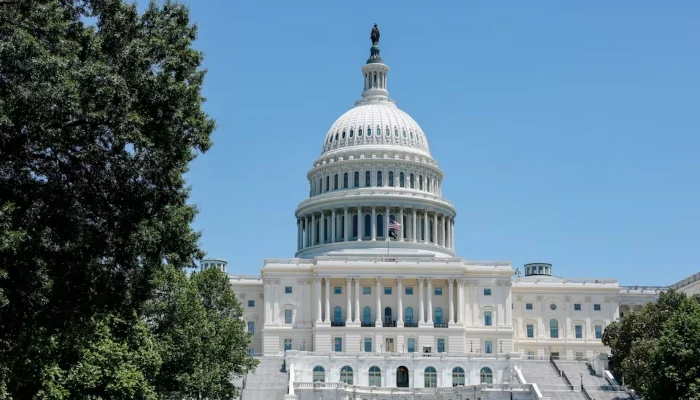
    A broad view of the U.S. Capitol building in Washington, D.C., captured on October 28, 2021. — Reuters

    WASHINGTON: The Republican-controlled U.S. Senate approved a resolution on Tuesday to stop military action against Iran. However, it remains unclear how this will influence ongoing efforts, as President Donald Trump’s administration continues negotiating a peace deal with Iran.

    The Senate’s vote was 50-48 in favor of the concurrent resolution, which had already passed the House earlier this month. This indicates rising concern, even among some Republicans, about the unpopular conflict that started on February 28. The vote mostly followed party lines, with four Republicans joining nearly all Democrats. Two Republican senators did not cast a vote.

    The resolution instructs Trump to withdraw U.S. forces from any hostilities involving Iran, but most interpret it as a symbolic gesture. According to the 1973 War Powers Act, the measure does not go to the White House for Trump’s signature. Meanwhile, the White House has argued that the legislation is unconstitutional and thus not legally binding. Legal experts note that this remains a complex legal issue likely to be resolved through the courts.

    Scott Anderson, a senior researcher at the Brookings Institution and senior editor of Lawfare, explained, “The executive branch will probably ignore it on constitutional grounds, and it’s not clear who would have standing to pursue legal action to enforce it.”

  • US Senate approves $70B for Trump’s immigration enforcement

    US Senate approves $70B for Trump’s immigration enforcement

    The U.S. Senate approved $70 billion in funding for Donald Trump’s strict immigration enforcement efforts on Friday. This decision came after a lengthy day filled with votes on numerous amendments, which exposed divisions within the Republican Party over other controversial policies proposed by the president.

    This legislation will sustain Immigration and Customs Enforcement (ICE) and Border Patrol operations through the remainder of Trump’s presidency, marking a significant victory for him on a key issue after months of intense debate over immigration policies. The bill now moves to the House of Representatives, where Republican leaders aim to pass it early next week and send it to Trump’s desk for signature.

    The measure follows a record partial shutdown of the Department of Homeland Security earlier this year. During that shutdown, Democrats refused to allocate additional funds for immigration enforcement unless restrictions were placed on tactics such as raids at sensitive locations and mask mandates for officers. Republicans rejected those conditions, opting instead to fund ICE and Border Patrol through expedited budget reconciliation, sidestepping Democratic opposition as long as they could maintain unity among their members.

    The Senate’s approval was the culmination of an intense process known in D.C. as a “vote-a-rama,” where lawmakers forced votes on politically charged issues before final passage. For President Trump, this process prompted renewed focus on several contentious issues, including a proposed “anti-weaponization” fund for allies claiming they were unfairly targeted, and a $1 billion budget for security around his planned White House ballroom.

    Although the bill no longer included funding for the ballroom, both issues became symbols of broader concerns among Republicans about defending Trump’s priorities ahead of midterm elections, which are expected to be heavily influenced by voters’ worries about rising living costs.

    Rebellion within the party was evident, with senators opposing parts of the bill, particularly the Justice Department’s proposed $1.8 billion “anti-weaponization” compensation fund. Critics labeled it a “slush fund” that could potentially provide taxpayer money to individuals convicted of involvement in the 2021 Capitol attack. Acting Attorney General Todd Blanche announced that the administration would not move forward with funding for it, but Trump continued to praise the proposal, calling it “beautiful” and suggesting it might not be entirely dead, just delayed.

    This ambiguity led some Republicans to attempt legally to eliminate the fund altogether. North Carolina Senator Thom Tillis remarked, “When you’re explaining, you’re losing. The best way to deal with the $1.776 billion fund is to eliminate it.”

    While these amendments did not derail Trump’s legislative successes, they underscored the limits of party discipline, with some Republicans breaking ranks on measures related to the anti-weaponization fund, future ballroom funding, and Trump’s push to install a loyalist as a top housing official in U.S. intelligence.

    Democrats, meanwhile, sought to redirect immigration enforcement funds towards housing and affordability issues, criticizing Republicans for prioritizing deportation efforts over the economic concerns of everyday Americans. Additionally, some Republicans supported a Democratic initiative to impose new sanctions on Russia for its invasion of Ukraine and to provide $8 billion in military loans to Kyiv, arguing that the funds were necessary to restore immigration enforcement funding previously obstructed during the DHS shutdown.

    The earlier stopgap measure funded most of Homeland Security through September 30, including agencies like FEMA, the Coast Guard, TSA, and the Secret Service, but excluded ICE and Border Patrol, setting the stage for the subsequent dispute that was resolved with Friday’s vote.

    Overall, the legislation offers Trump a significant legislative victory on immigration but highlights ongoing challenges for Republican leaders: even with control of Congress, they still face internal resistance rooted in the controversial nature of some of the president’s policies.

  • Trump denounces US House’s ‘unpatriotic’ move to end Iran conflict

    Trump denounces US House’s ‘unpatriotic’ move to end Iran conflict

    President Donald Trump criticized a vote in the U.S. House on Thursday that aimed to order the withdrawal of American troops from Iran, claiming it interrupted ongoing negotiations with Tehran. The mainly symbolic vote took place “right in the middle of my final negotiations to end the war with the Islamic Republic of Iran,” Trump posted on his Truth Social platform. He questioned the patriotism of those who supported the measure, implying they knew how negotiations were progressing.

    In a significant rebuke, four Republican members joined Democrats on Wednesday in supporting the measure, which passed 215-208 and now moves to the Senate. Although it is expected to be vetoed by the president, this marks the first time since the conflict began three months ago that the Republican-controlled House approved a resolution pressuring Trump to reduce military actions against Iran.

    Democrats accuse Trump of breaking the constitutional limit by launching strikes with Israel in late February without congressional approval. Under the War Powers Act, the president has 60 days to secure congressional approval after deploying U.S. forces into conflict; that deadline has long passed, and Democrats argue Trump is now acting unlawfully.

    Trump responded by saying, “Democrats would rather see our country fail than allow me to claim another victory.” He also criticized the four Republican lawmakers who supported the measure, calling them “Grandstanders” and saying they should be ashamed.

  • Trump’s Face May Appear on New $250 Bill

    Trump’s Face May Appear on New $250 Bill

    President Donald Trump might soon be featured on a new $250 bill, signaling a bold move by the Republicans to challenge traditional U.S. practices by inserting his image into national symbols. Reports from the Washington Post Thursday revealed a design concept for the bill prominently displaying Trump’s face. If it goes ahead, it would mark the first time in 150 years that a living person, and even a sitting president, has been depicted on U.S. currency.

    The mock-up also includes the phrase “America 250th anniversary,” celebrating the country’s independence from Britain on July 4, 1776. Last year, two of Trump’s appointees at the Treasury Department encouraged staff at the Bureau of Engraving and Printing to start preparing prototypes. Insiders, speaking on condition of anonymity, expressed concerns that the plan would breach federal law prohibiting images of living presidents on currency.

    Treasury Department officials, including US Treasurer Brandon Beach, were warned by Director Patricia Solimene about potential legal and procedural hurdles. Subsequently, Solimene was suddenly reassigned from her position. Despite these objections, the Trump administration has continued efforts to incorporate his likeness into broader cultural contexts and institutions, prompting accusations of a personality cult around the 79-year-old leader.

    Earlier this year, the U.S. Commission of Fine Arts—whose members were appointed during Trump’s presidency—approved the creation of a gold coin commemorating the nation’s 250th anniversary, crafted from 24-karat gold. Additionally, the John F. Kennedy Center for the Performing Arts and the U.S. Institute of Peace have been renamed to include Trump’s name.

    His image also appears in banners hanging at the Department of Justice and the Department of Agriculture. Furthermore, it is expected to be featured in future U.S. passports, as reported by the State Department. A bill proposing Trump’s portrait on the $250 bill was introduced to Congress last year but has yet to move forward. A Treasury spokesperson stated that the bureau is “conducting appropriate planning and due diligence” regarding the legislation.

    Democratic critics have voiced strong opposition. Senator Mark Warner, a member of the Senate Banking Committee, criticized the proposal as an example of the White House “stoking the president’s ego” in an unprecedented fashion.

  • Iran-U.S. Tension Strains Ties as UK Turns to Europe

    Iran-U.S. Tension Strains Ties as UK Turns to Europe

    Britain’s government plans to introduce legislation next month aimed at bringing the country closer to the European Union, amid tensions caused by the Iran conflict that are straining the UK’s so-called special relationship with the United States.

    President Donald Trump’s unpredictable behavior and repeated insults toward America’s historic ally are fueling Prime Minister Keir Starmer’s efforts to strengthen ties with the EU, a shift that comes nearly a decade after the UK narrowly voted to leave the bloc.

    Evie Aspinall, director of the British Foreign Policy Group think tank, explained to AFP, “Our government is already inclined to move closer to the EU, and the situation in Iran offers a chance to accelerate that process.”

    Starmer’s government is drafting an EU “reset” bill permitting ministers to adjust UK standards to keep pace with evolving EU single market rules—referred to as “dynamic alignment.” The legislation will be announced by King Charles III on May 13 during his upcoming address outlining the government’s legislative plans, an anonymous government official told AFP.

    Since his Labour Party’s victory in the 2024 general election, overthrowing the Conservatives who had pushed Brexit, Starmer has repeatedly called for a deeper economic and security relationship with Europe. Recently, he emphasized this point during a meeting with Dutch leader Rob Jetten, stating, “The UK and the EU partnership must be capable of tackling today’s challenges.”

    The EU remains the UK’s largest trading partner, and the International Monetary Fund warned this week that the UK will experience the most significant economic fallout among advanced economies due to the Iran crisis.

    “Certainly, Iran has made this [EU relationship] more urgent,” the UK official added. “We must build economic resilience across the continent.”

    While initially refusing to participate in the US and Israel’s strikes on February 28, Starmer later permitted American forces to operate from UK bases for limited defensive purposes. His decision to appoint former Jeffrey Epstein associate Peter Mandelson as ambassador to Washington faced domestic criticism, yet he has also been praised for standing firm against Trump’s frequent provocations.

    Recently, Trump threatened to revoke the UK-US trade deal in a phone interview with Sky News, citing his tariffs’ impact on Britain. The ongoing unpredictability of Trump’s approach is believed to have strengthened the UK’s desire to forge a closer relationship with the EU, according to trade policy expert David Henig.

    Starmer’s government aims to introduce the EU-alignment legislation within months, possibly coinciding with the tenth anniversary of the Brexit referendum in June 2016. The measure will give MPs the opportunity to approve mechanisms for adopting EU rules—sometimes without full votes—especially in areas like trade agreements easing food and plant exports and plans to integrate the UK into the EU’s internal electricity market.

    Negotiations on a youth mobility scheme are also expected to be finalized ahead of a joint summit scheduled for late June or early July in Brussels. However, Starmer has ruled out rejoining the single market or returning to free movement policies.

    The Liberal Democrats advocate for a different approach, pushing for Britain to negotiate a customs union with the EU despite Starmer’s stance. Calum Miller, foreign affairs spokesman for the Liberal Democrats, told AFP, “We need to strengthen relations with reliable partners who share our values.”

    Brexit remains a contentious issue, with hard-right Reform UK, led by Eurosceptic Nigel Farage and polling as the leading party, criticizing the upcoming legislation as a betrayal of the Referendum’s narrow decision to leave. Nonetheless, recent surveys indicate growing regret among Britons about leaving the EU—an opportunity Starmer hopes to leverage amid rising living costs, which UK Finance Minister Rachel Reeves partly blames on Trump’s handling of the Iran conflict.

    Aspinall commented, “When relationships with the U.S. are strained, it’s easier for the public to accept a closer tie with the EU.”

  • Sadiq Khan Condemns Asif Aziz Over Mass Evictions

    Sadiq Khan Condemns Asif Aziz Over Mass Evictions

    London Mayor Sadiq Khan has sent a letter to billionaire Asif Aziz regarding claims that his property company is conducting “mass evictions” of London residents. The allegations suggest that over 600 flats across various parts of London are being targeted with soon-to-be-banned Section 21 notices to avoid a forthcoming law that favors tenants. Criterion Capital, the real estate firm that owns properties including the Trocadero building in Leicester Square, denied the widespread eviction claims, stating it was inaccurate to say hundreds of residents had been served notices but declined to specify the exact number.

    Khan’s office expressed dismay over the reports and requested Criterion Capital to clarify their actions urgently. The mayor emphasized that forcing Londoners out of their homes without proper cause is unacceptable, adding, “It keeps residents in a terrible position, worried about their future and their families.”

    Aziz, a Malawi-born billionaire and founder of the Aziz Foundation—his family’s charity—has partnered with the London Mayor on annual events, including the official Ramadan Lights switch-on, most recently in February 14.

    In a direct letter to Aziz, Khan wrote: “No explanation has been provided, and you have failed to offer assurances regarding residents’ safety and security. This situation is becoming increasingly alarming and uncertain for tenants, especially with recent allegations of ongoing evictions. Everyone has a fundamental right to a safe, stable home, and I strongly oppose the use of Section 21 no-fault eviction notices, particularly on a large scale.”

    Section 21 notices allow landlords to evict tenants with only two months’ notice and no reason required. These notices are set to be eliminated in May under the Labour government’s Renters’ Rights Act. Housing advocates worry that landlords may expedite evictions before the law takes effect.

    Shelter, a housing charity, describes these notices as a leading cause of homelessness, citing their abruptness and the limited notice given to tenants to find new accommodations.

    A representative for Criterion Capital stated that reports of mass evictions have been “misrepresented and politicized routine and lawful tenancy issues.”

    Founded in 2015, the Aziz Foundation provides grants and internships to support British Muslims. Aziz previously served on the board of Mosaic, a leadership program established by King Charles in 2007.

    Recently, former senior Scotland Yard officer Tariq Ghaffur announced he is launching a criminal investigation into Aziz over complaints from residents of Fountain House, a luxury apartment building on Park Lane owned by one of Aziz’s companies, located near neighborhoods of prominent figures like Shahrukh Khan and the Sharif family.

    Aziz, who refers to himself as “Mr. Mayfair” and “Mr. West End,” manages a portfolio of high-end properties through his organization, the Aziz Foundation. His company, Parkgate Aspen, manages Fountain House. Ghaffur explained, “We are investigating Fountain House concerning complaints related to Aziz and his management team. The investigation stems from numerous leaseholder concerns and information we’ve collected. Due to serious issues uncovered, a criminal probe is warranted.”

    The dispute involves residents, all of whom are wealthy and successful, over service charges and other service-related concerns. Many residents have voiced frustration over inadequate services and maintenance.

    In 2017, Aziz contested in the High Court that his wife of 14 years was not entitled to a share of his fortune—estimated at £1.1 billion—on the grounds they were not legally married. The couple, who have four children, reached a settlement.

    In 2025, reports emerged detailing extensive maintenance failures and pest infestations in properties under Aziz’s “Dstrkt” housing brand, despite rent increases. Aziz also reportedly paid £150,000 to settle allegations of illegally operating an unlicensed Forrest Gump-themed shrimp restaurant at Piccadilly Circus.

  • Senate rejects attempt to curb Trump’s Iran war authority

    Senate rejects attempt to curb Trump’s Iran war authority

    The U.S. Senate declined to pass a resolution aimed at limiting President Donald Trump’s authority to carry out military actions against Iran. The vote demonstrated a slim bipartisan support for a conflict initiated without clear approval from Congress.

    The proposed measure, introduced by Democrat Tim Kaine and Republican Rand Paul, would have mandated the withdrawal of U.S. forces from hostilities with Iran unless Congress explicitly authorized the ongoing military involvement.

    With Republicans possessing a 53-47 majority and generally supporting the president’s decision to strike Iran in coordination with Israel, the resolution narrowly failed by the same margin.

    This vote occurred five days into an escalating conflict that has already claimed the lives of Iran’s top leader, Ayatollah Ali Khamenei, and several other senior officials in Tehran. U.S. casualties have also been reported after an attack on a U.S. base in Kuwait attributed to Iran.

    Democrats contend that Trump overstepped legal boundaries by ordering the air strikes without congressional approval, citing inconsistent justifications for the war. Kaine expressed after a classified briefing that there was no evidence presented suggesting an immediate threat from Iran.

    Most Republicans have rallied behind the president, although some have indicated their support might diminish if the conflict expands or prolongs. Senator Lindsey Graham shared concerns on social media about the threat posed by Iran’s actions and expressed relief that the conflict was not allowed to escalate further.

    For the resolution to pass, Democrats would have needed at least four Republican votes in favor. One Democrat, Senator John Fetterman from Pennsylvania, opposed the measure.

    Even if the bill had successfully passed both chambers, President Trump could veto it. Overriding a veto would require a two-thirds majority in both the House and Senate, an unlikely scenario.

    Meanwhile, governments worldwide have been evacuating citizens affected by the Middle East conflict triggered by American and Israeli airstrikes that resulted in the death of Iran’s top spiritual leader and prompted retaliatory missile and drone attacks across the Gulf region. Cities previously considered insulated, like Dubai and Riyadh, are now involved as the fighting spreads.

    The congressional debate on Trump’s war powers reflects broader concerns about the scope and duration of U.S. military engagement. Officials from the Biden administration informed lawmakers that the military operation could extend for weeks and may require additional congressional funding. Both parties anticipate that the Department of Defense might soon seek emergency funds to replenish weapons stocks and sustain operations.

    The resolution invoked the 1973 War Powers Act, which limits unauthorized military conflicts to 60 days and gives Congress the authority to force votes on such engagements. Democrats, acknowledging the slim chances of passage, emphasized that compelling Congress to openly state its position on the conflict was a necessary step.

  • US House set to vote Tuesday to end government shutdown

    US House set to vote Tuesday to end government shutdown

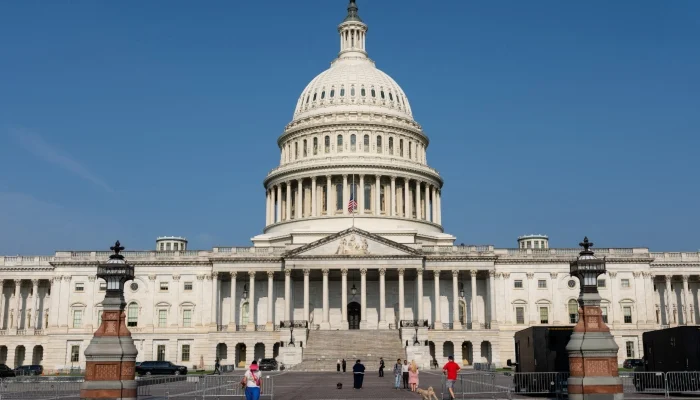
    The U.S. Capitol building in Washington, D.C., was captured on November 10, 2025, according to Reuters.

    The shutdown is linked to stalled negotiations following the killings in Minneapolis. Trump is calling for the swift approval of the funding bill without any modifications. If the House passes the bill, talks about Department of Homeland Security (DHS) funding must conclude within two weeks.

    Washington is preparing for a vote on a spending bill scheduled for Tuesday, after a House committee approved it late Monday. The shutdown resulted from failed spending talks, primarily due to Democratic outrage over federal immigration agents fatally shooting two U.S. citizens in Minneapolis, derailing negotiations over new funds for DHS.

    Last Friday, the Senate approved a package that included five pending funding bills to finance most federal agencies through September, along with a two-week emergency measure to keep DHS operational during immigration policy discussions. Federal shutdowns temporarily halt non-essential government services, forcing agencies to shut down or operate under unpaid leaves or without pay.

    On Monday evening, the House Rules Committee moved the Senate’s package forward for a full vote, anticipated on Tuesday. Trump has been pressing Republicans to pass a bill quickly, even as some lawmakers oppose the deal because it introduces minor reforms to immigration enforcement.

    Earlier Monday, Trump posted on Truth Social insisting that “NO CHANGES” be made to the legislation and pushed for its immediate approval. He emphasized the importance of avoiding another long, destructive shutdown that could severely harm the country, referencing the record 43-day shutdown last summer.

    Democrats in the House want modifications to DHS’s enforcement tactics, especially concerning heavily armed, masked, and unidentified agents who sometimes detain individuals without warrants, before supporting the funding measure. Some concessions have already been granted following public outcry over the Minneapolis shootings involving agents Renee Good, a mother of three, and Alex Pretti, a veteran’s nurse.

    DHS Secretary Kristi Noem announced that federal agents in Minneapolis will wear body cameras “immediately,” a policy that will later extend nationwide. Both parties recognize that negotiations will be politically sensitive, with Democrats seeking stricter oversight and conservatives sticking to their priorities.

    House Speaker Mike Johnson remains optimistic about reaching an agreement soon, claiming on Fox News Sunday that a deal would be finalized by Tuesday. However, his governing majority is extremely narrow, with the recent addition of a Democratic lawmaker from Texas complicating matters. If the House approves the Senate’s deal, lawmakers will then have two weeks to negotiate full-year DHS funding to break the shutdown.

  • Mexico targets vape sales with new 8-year jail threat

    Mexico targets vape sales with new 8-year jail threat

    Mexico’s Senate has approved new laws that could result in prison sentences of up to eight years and fines reaching 226,000 pesos ($12,500) for manufacturing or selling vapes and electronic cigarettes. These stricter enforcement measures are seen by critics as overly harsh.

    The amendments to the General Health Law, approved late Wednesday by pro-government senators after passing the lower chamber on Tuesday, now await the president’s signature. President Claudia Sheinbaum supports the legislation.

    Sheinbaum stated, “Many believe that switching from tobacco cigarettes to vapes is safe, but in reality, some vapes can be even more harmful than cigarettes. Both should be avoided.”

    Mexico, which banned smoking in most public areas approximately twenty years ago as part of its anti-tobacco efforts, has lately shifted focus toward restricting vape sales. Similar bans are in place in Argentina and Brazil due to health concerns.

    However, the use of vapes remains legal in Mexico.

    The government is collaborating with state authorities to combat illegal markets, particularly because of worries about organized crime involvement. Sheinbaum did not specify when the new regulations will take effect.

    Opposition senator Luis Colosio criticized the reforms, labeling them as excessively prohibitive. During Thursday’s debate, he argued the government is avoiding its regulatory responsibilities by opting for outright bans instead of industry oversight.

    “Prohibition is an easy fix for problems they either don’t want to or can’t control,” Colosio commented.

    Despite the new laws, vapes and e-cigarettes are still widely available in Mexico City stores, and authorities have yet to address street vendors.

    Valentina, a local resident, told Milenio TV, “It would be better if they banned them altogether because I keep buying them, and truthfully, they’re very affordable everywhere.”

  • US Congress Approves Epstein Files Release, Sends Brief to Trump

    US Congress Approves Epstein Files Release, Sends Brief to Trump

    A nearly unanimous vote from the Republican-led US Congress on Tuesday mandated the disclosure of Justice Department documents related to the late convicted sex offender Jeffrey Epstein. President Donald Trump, who had previously opposed the move for several months, is now expected to sign the bill as early as Wednesday, according to a White House insider.

    Two days after shifting his stance, the House of Representatives approved the measure with an overwhelming vote of 427-1. This resolution compels the release of all publicly available records concerning Epstein to the predominantly Republican Senate, which promptly passed it. The bill is now heading to Trump for his signature, with plans for him to sign it soon.

    A senior White House official confirmed Trump intends to sign the bill upon receipt. The Epstein case has been a persistent political issue for Trump, fueled partly by conspiracy theories he has circulated about Epstein’s connections to influential individuals and the circumstances surrounding his death, officially ruled a suicide in 2019 while imprisoned in Manhattan.

    Epstein was a financier based in New York, notorious for socializing with some of the country’s most powerful men.

    Victims of Epstein’s alleged abuse rallied outside the Capitol, holding photos of themselves at younger ages—a poignant reminder of when they first encountered Epstein. Their efforts gained visibility as they applauded lawmakers from the House’s public gallery, some visibly emotional.

    Despite reversing his stance, Trump remains upset about the media scrutiny surrounding Epstein. During a visit to the Oval Office, he dismissed questions about Epstein as coming from a “terrible person” and criticized the media broadly, suggesting that a television network should have its license revoked.

    The White House was somewhat caught off guard by the swift passage of the bill, anticipating a longer process in the Senate. The controversy over Epstein has affected Trump’s approval ratings, which recently dipped to their lowest point this year, with only about 20% of voters approving his handling of the situation, including just 44% of Republicans.

    In the 1990s and early 2000s, Trump was known to associate socially with Epstein, a friendship he described as having cooled over time. Nonetheless, this connection remains a weak spot for him among his supporters.

    Before the House vote, a group of around two dozen Epstein survivors, some of whom accused Epstein of sexual abuse when they were teenagers, gathered with Congress members to urge the release of the records. They displayed photos of themselves at ages as young as 14.

    Following the vote, many of the victims expressed their gratitude, visibly moved and hugging each other. Meanwhile, Trump has repeatedly claimed no personal connection to Epstein’s crimes, branding the controversy a “Democratic hoax,” despite some Republicans actively advocating for the release of investigative records.

    Representative Thomas Massie of Kentucky, who spearheaded the effort to bring the bill to a vote, accused the Justice Department of shielding sex traffickers and pedophiles from justice. He emphasized that accountability would be proven when wealthy men are taken into custody and brought to trial.

    On the other hand, Rep. Marjorie Taylor Greene of Georgia, a strong supporter of Trump who has voiced frustration over the Justice Department’s secrecy, said Trump had pressured her to withdraw her support for the resolution. She defended her stance, asserting that true patriots serve the United States and that Epstein is an example of treasonous behavior.

    Epstein pleaded guilty in 2008 to state-level charges of soliciting prostitution from a minor and served 13 months in jail. In 2019, federal prosecutors accused him of sex trafficking minors, charges he denied before his death.

  • Deal to End Longest U.S. Government Shutdown Clears Congress

    Deal to End Longest U.S. Government Shutdown Clears Congress

    A deal to end the longest-ever US government shutdown cleared Congress on Wednesday, with the House voting to reopen programs that support food assistance, pay hundreds of thousands of federal workers, and restore a strained air traffic control system.

    The Republican-led House approved the package by a 222-209 vote. President Donald Trump indicated he would sign it later that day, bringing an end to the shutdown. The White House confirmed Trump’s support largely kept his party united, despite strong opposition from House Democrats, who criticized the defeat of their effort to secure additional health insurance subsidies.

    The bill, already passed by the Senate, would keep the government funded through January 30 and would add roughly $1.8 trillion annually to the current $38 trillion national debt.

    Arizona Republican Representative David Schweikert compared the shutdown to a chaotic episode from a classic sitcom, saying, “I feel like I just lived a Seinfeld episode. We just spent 40 days and I still don’t know what the plot was.” He hoped the standoff would be resolved quickly, expecting it to resemble a brief, 48-hour crisis rather than a prolonged dispute. Schweikert questioned whether intense anger had become policy.

    No firm promises were made regarding healthcare subsidies, despite recent high-profile elections that many Democrats believed would give them leverage to extend vital health insurance support due to expire at year’s end. Although the deal paves the way for a Senate vote in December on these subsidies, House Speaker Mike Johnson hasn’t committed to a similar move.

    Democratic Representative Mikie Sherrill, who is set to become New Jersey’s next governor, expressed her opposition to the funding bill on the House floor. Before resigning next week, she urged colleagues to push back against what she called an administration that “takes food away from children and rips healthcare coverage.” She also encouraged the nation to “stand strong” and referenced Navy mottoes to emphasize resilience.

    Despite the partisan disagreements, neither side claims a decisive victory. A recent Reuters/Ipsos poll shows an almost even split among Americans, with 50% blaming Republicans and 47% blaming Democrats for the shutdown.

    The House reconvened after a recess that lasted since mid-September, a pause intended to exert pressure on Democrats. The session also set the stage for votes open records related to Jeffrey Epstein, a late convicted sex offender, a topic that has divided Congress and drawn resistance from Johnson and Trump.

    Later, Johnson swore in Democrat Adelita Grijalva, who won a special election to fill her late father Raul Grijalva’s seat in Arizona. She provided the final signature needed to force a House vote on the Epstein records, just hours after Democrats released new documents on the case.

    Once the government’s funding is secured, attention may turn to investigations into Epstein’s life and death, which have spawned numerous conspiracy theories. The funding bill also enables eight Republican senators to seek damages against the federal investigation into the January 6 insurrection, claiming privacy violations. It makes it illegal in most cases to access a senator’s phone data without disclosure and allows those affected to sue the Justice Department for up to $500,000 in damages, including legal fees.

  • White House: Significant Shutdown-Related Layoffs Underway

    White House: Significant Shutdown-Related Layoffs Underway

    On Friday, the White House announced it has started laying off federal employees as President Donald Trump intensifies pressure on Democrats to end a government shutdown that has halted many public services. With the shutdown entering its third week and no solution in sight, Trump’s budget director, Russ Vought, confirmed on social media that the administration had begun executing its threat to start dismissing some of the 750,000 federal workers currently on enforced leave.

    The Office of Management and Budget, led by Vought, told AFP that the layoffs would be “significant,” but did not specify exact numbers or detail which departments would be most affected. This came just days after Trump revealed he was meeting with Vought to discuss which agencies “he recommends to be cut, and whether or not those cuts will be temporary or permanent.” The president has repeatedly indicated that he views budget cuts as a way to increase pressure on Democrats.

    Democrats in the Senate and House dismissed the threat of mass job losses as intimidation that would likely be challenged in court. Meanwhile, federal workers who keep their jobs continue to face unpaid leave, with the crisis expected to persist until at least mid-next week. An additional blow: 1.3 million active-duty military personnel are set to miss their pay next Wednesday—a scenario unseen in recent history during past shutdowns.

    “Today is a somber day here on Capitol Hill—we’re not in a good mood. For the first time, federal employees nationwide will receive only a partial paycheck,” said Republican House Speaker Mike Johnson at a press conference marking the tenth day of the shutdown. Tensions are running high, with clashes between Johnson and Democratic senators escalating this week, including a heated exchange after a Democratic leadership press event where Republican Congressman Mike Lawler criticized House Minority Leader Jeffries. Jeffries responded sharply, telling Lawler to “keep your mouth shut” and later calling him a “malignant clown.”

    The shutdown began after the September 30 deadline, mainly because Senate Democrats blocked efforts by Republicans to reopen agencies. Central to the disagreement is Republican refusal to include language to address expiring subsidies that help make health insurance affordable for 24 million Americans. As the standoff continues, many members of Congress are looking to Trump to step in and broker a deal, but he remains largely disengaged, focusing instead on issues like the Gaza ceasefire and deploying federal troops to cities such as Chicago and Portland to support immigration enforcement.

    Representative Jeffries criticized the president, saying, “Donald Trump can find the time to play golf, but he can’t be bothered to negotiate to reopen the government… and House Republicans have been on vacation for three weeks.” He added, “The American people are exhausted by the chaos, crisis, and confusion caused by Donald Trump and the Republican-controlled Congress.”

    Adding to the strain, the Bureau of Labor Statistics announced that it would delay releasing key inflation data scheduled for next week until October 24 due to the shutdown, which has halted most government data releases. The consumer price index data delay is intended to help the Social Security Administration meet statutory deadlines to ensure benefits continue to be paid accurately and on time.

  • What’s Needed to End the US Government Shutdown?

    What’s Needed to End the US Government Shutdown?

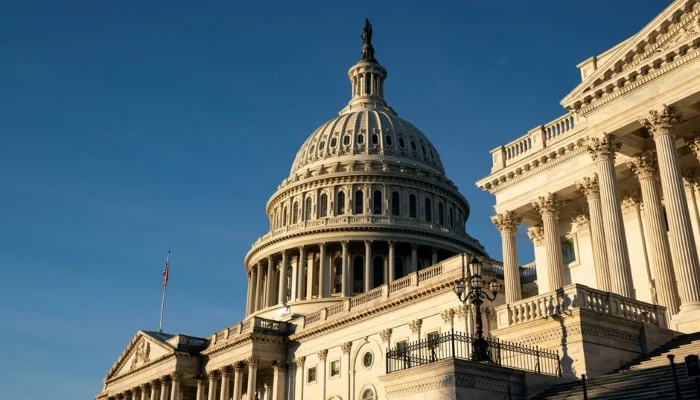
    A view of the US Capitol’s dome during a vote on a short-term funding measure aimed at preventing a partial government shutdown scheduled to start October 1. This scene was captured on Capitol Hill in Washington, D.C., on September 19, 2025. — Reuters

    A significant deadlock between Republican President Donald Trump and congressional Democrats has resulted in the 15th government shutdown in the United States since 1981.

    Here’s a breakdown of what’s needed to reopen the government.

    What are the Republicans demanding?
    Trump’s Republican Party holds control of both the House and the Senate, and they’ve already achieved substantial budget victories this year. The comprehensive legislation dubbed the “One Big Beautiful Bill,” passed in July, increased funding for defense and immigration enforcement, while reducing allocations for green energy initiatives and other Democratic priorities. It also implemented substantial cuts to the Medicaid healthcare program for low-income and disabled individuals to offset tax cuts primarily benefiting the wealthy.

    Additionally, Republicans have largely supported the White House’s attempts to rescind funds previously approved by Congress for foreign aid and public broadcasting, despite such actions infringing on lawmakers’ constitutional authority over spending. They’ve expressed willingness to support a continuing resolution that would extend current funding levels through November 21, providing more time to agree on a full-year budget.

    What do the Democrats want?
    As the minority party, Democrats have limited influence. Still, Republicans will need at least seven Democratic votes in the Senate, where most legislation requires 60 votes to advance in the 100-member chamber. Democrats are leveraging this position to push for the renewal of expanded healthcare subsidies provided through the Affordable Care Act (ACA). Their proposal aims to make permanent the enhanced tax credits that are set to expire at year’s end and extend them to more middle-income households.

    If these tax benefits lapse, many of the 24 million Americans insured via the ACA would face sharply increased insurance costs, especially in states where Medicaid expansion has not been adopted. Democrats also seek to add language into any funding bill that would prevent Trump from unilaterally ignoring ACA provisions or withholding associated funds temporarily. They want to reverse some of the restrictions on ACA coverage imposed in the “One Big Beautiful Bill,” which would expand health coverage to seven million Americans by 2035 but increase government healthcare spending by $662 billion over a decade.

    Republicans are open to addressing the expiring tax benefits separately, arguing that the issue should not be tied to the ongoing funding negotiations. They also accuse Democrats of attempting to use the short-term funding bill as a vehicle to expand government healthcare subsidies to undocumented immigrants residing in the U.S. illegally. Democrats counter that federal law prohibits such assistance and that their legislation would not alter this legal constraint.

  • US Congress Back in Session: One Month to Prevent Shutdown

    US Congress Back in Session: One Month to Prevent Shutdown

    The United States Congress is resuming sessions on Tuesday, with less than four weeks remaining to meet a critical funding deadline—an essential task that has proven challenging in recent years. The upcoming deadline on September 30th puts pressure on lawmakers to fund federal agencies and avoid a partial government shutdown.

    Partisan divisions have deepened during the first year of President Donald Trump’s latest term, with Democrats upset over decisions to withhold some funding previously authorized through bipartisan agreements, along with the passage of a July tax reform bill. Analysts warn that this legislation could lead to over 10 million low-income Americans losing healthcare coverage.

    The task of agreeing on approximately $1.8 trillion in discretionary spending within the broader $7 trillion federal budget is further complicated by anticipated debates over disclosures related to Jeffrey Epstein, a convicted sex offender and former associate of Trump, as well as the increased deployment of federal agents and National Guard forces into Washington, D.C.

    Since 1981, there have been 14 partial government shutdowns, most lasting only a day or two. The most prolonged was a 34-day shutdown from December 2018 into January 2019 during Trump’s first term.

    Republicans control the House with a 219-212 majority and the Senate with a 53-47 advantage. However, passing most bills in the Senate requires 60 votes, meaning Democratic support from at least seven members is necessary for funding measures.

    This summer, the blame game began early, with both parties pointing fingers should a shutdown occur. As Republicans pushed forward with Trump’s request for a $9 billion cut in foreign aid and public broadcasting funding, Senate Minority Leader Chuck Schumer warned in July that Democrats wouldn’t simply follow usual bipartisan procedures if funding was cut unilaterally. He indicated that Democrats would oppose such moves, especially after Republicans had already cut previously approved funds.

    Schumer faced criticism from within his party in March for voting to keep the government funded through a continuing resolution, a move he justified by arguing that a shutdown would have been more damaging.

    Democratic leadership has yet to finalize a full strategy but has requested a meeting with Republicans to discuss the September 30th deadline. Some Democrats are hoping for assurances that Republicans won’t cut funds unilaterally if the administration requests more cuts, viewing the deadline as leverage to secure concessions.

    Senate Majority Leader John Thune expressed hope that negotiations would proceed in a bipartisan manner as the deadline approaches. Others, including Senator Elizabeth Warren of Massachusetts, believe the Republicans will be blamed for a shutdown and see the deadline as an opportunity to leverage increased funding for healthcare.

    Warren, speaking at a rally in Nebraska in August, said, “In September, Republicans will need Democratic votes to pass a budget and keep the government open. If you want my vote—and I hope the votes of other Democrats—you should restore healthcare coverage for 10 million Americans.”

    The U.S. federal debt has reached $37.25 trillion and continues to grow, reflecting ongoing congressional approval of increased spending despite deficits.

  • India Signs Bill to Ban Money-Based Online Games, Apps at Risk

    India Signs Bill to Ban Money-Based Online Games, Apps at Risk

    India’s parliament approved a bill on Thursday to ban online money-based gaming, a move that threatens the future of the country’s fast-growing fantasy gaming industry. The government, led by Prime Minister Narendra Modi, has raised concerns about the financial risks and potential for addiction associated with these games.

    The sudden prohibition has caught industry players off guard. Backed by venture capital firms like Tiger Global and Peak XV Partners, the sector was projected to reach a valuation of $3.6 billion in India by 2029. Many app-based companies, which have attracted billions in foreign investment, fear immediate job cuts and a complete shutdown.

    The bill outlaws “harmful” online betting services, advertisements, and related financial transactions, citing concerns over psychological impacts. “It is the responsibility of the government and parliament to act decisively against social issues that keep emerging,” IT Minister Ashwini Vaishnaw stated in parliament on Thursday.

    The upper house passed the Promotion and Regulation of Online Gaming Bill 2025 after the lower house approved it earlier this week. The final step is for the president to sign the bill into law, a formality that is expected to quickly follow, although no official date has been set.

    Industry insiders are discussing plans to challenge the ban in the Supreme Court, arguing it was implemented without sufficient consultation and highlighting that some games—like poker—are skill-based and should be exempt. Two sources familiar with the situation said this is under consideration.

    Popular apps such as Dream11 and Mobile Premier League, which use endorsements from prominent Indian cricketers and marketing campaigns, have significantly boosted the sector’s visibility. These platforms allow users to build virtual cricket teams based on real players, earning points according to actual match stats.

    On Thursday, Dream11’s app advertised that it was possible to create a team for as little as INR 29 and compete to win a prize pool, which is distributed among thousands of winners, with the top payout reaching INR 300,000 ($3,438).

    Dream11 is valued at $8 billion, while Mobile Premier League is worth around $2.3 billion, according to PitchBook. Other notable gaming platforms in India include Games24X7, Zupee, and WinZO, which offer card games like rummy and poker.

    Under the new legislation, anyone participating in money-based gaming after the law takes effect could face up to three years in prison and hefty fines.