Tag: Law

  • UK PM explores ways to deport Pakistan-born rape convict

    UK PM explores ways to deport Pakistan-born rape convict

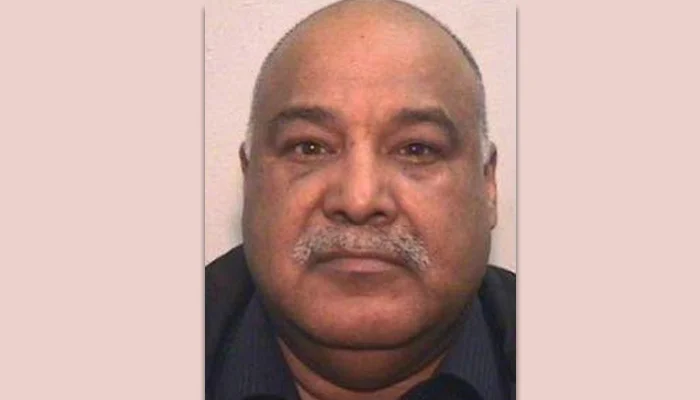
    London: UK Prime Minister Keir Starmer has requested the home secretary review the case of Shabir Ahmed, a key figure in the Rochdale grooming gang, amid growing calls to change laws to facilitate his deportation.

    Ahmed, 73, known among his victims as “Daddy,” was released from prison Thursday after serving 14 years for numerous charges of rape and sexual offenses against young girls. He moved to the UK from Gujarat, India, in the late 1970s when he was 14. He has no valid Pakistani documentation, having renounced his Pakistani nationality decades ago to secure British citizenship.

    He is believed to have been released on parole, with conditions requiring him to reside at a 24-hour staffed bail hostel, wear an electronic GPS tracker, and stay away from his former address on Windsor Avenue in Oldham. Furthermore, he’s subject to an “exclusion zone,” preventing him from entering certain areas of Rochdale.

    Ahmed’s British citizenship has been revoked, leaving him with no legal status. However, deportation is barred due to a 1971 law that prohibits removing certain Commonwealth citizens who have been in the UK for over 50 years.

    Downing Street stated that Prime Minister Starmer asked Shabana Mahmood to explore options for deporting Ahmed, describing his case as “particularly heinous.” The government reaffirmed its commitment: “We are unequivocal that when foreign nationals commit crimes here, we will do everything possible to remove them.”

    His impending release has prompted political leaders, including the upcoming likely Prime Minister Andy Burnham, to call for urgent review and action, urging ministers to consider all possible avenues for deportation. Rochdale MP Paul Waugh from the Labour Party also emphasized that the Foreign Office should do everything within their power to facilitate Ahmed’s deportation.

    Conservative leader Kemi Badenoch declared that her party would seek to amend the government’s Immigration and Asylum Bill to close legal loopholes preventing Ahmed’s deportation.

    Ahmed was convicted at Liverpool Crown Court in 2012 for offenses involving five girls and sentenced to 19 years in prison, one of nine men found guilty in the case.

    A senior Pakistani government official told Geo News exclusively that Ahmed is a stateless individual and not a Pakistani citizen. The official explained that Ahmed does not possess UK nationality and had long ago renounced his Pakistani citizenship, thus considering him “an alien” under their view.
  • Iran Tensions Possibly Linked to Trump Dinner Shooting Suspect

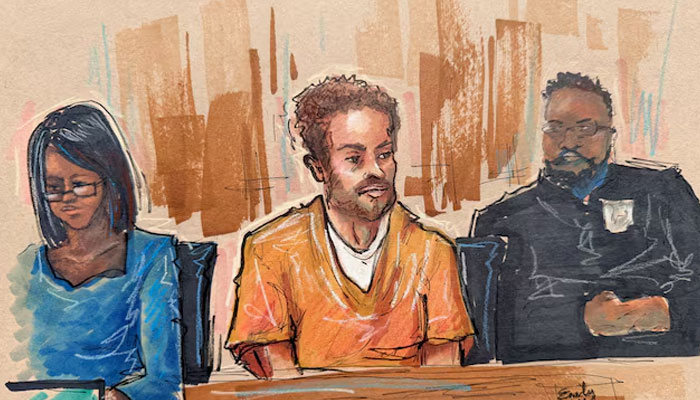
    Suspect Cole Tomas Allen, involved in White House Correspondents' Association dinner shooting, appears in court during a hearing after being charged with attempting to assassinate President Donald Trump, in Washington DC, April 30, 2026, courtroom sketch. — Reuters
    Suspect Cole Tomas Allen, involved in White House Correspondents’ Association dinner shooting, appears in court during a hearing after being charged with attempting to assassinate President Donald Trump, in Washington DC, April 30, 2026, courtroom sketch. — Reuters

    The Department of Homeland Security has identified the ongoing US-Israeli conflict with Iran as a possible reason behind the man accused of trying to assassinate President Donald Trump and high-ranking officials at a White House reporters’ event last month. This assessment was shared with law enforcement agencies across the country and other federal entities via an intelligence report.

    An early analysis from DHS’s Office of Intelligence and Analysis, dated April 27, suggests that Cole Allen harbored numerous social and political frustrations. The report indicates that the Iran conflict “may have influenced his decision to carry out the attack,” supported by Allen’s social media posts criticizing US involvement in the war.

    This new insight adds context to the investigation into the attempted attack on the White House Correspondents’ Dinner on April 25. While still in preliminary stages, the findings provide the strongest evidence yet linking the Iran conflict— which has caused thousands of deaths in the Middle East and impacted the global economy—as a potential trigger.

    The document, labeled as a “Critical Incident Note,” was retrieved through public records requests by the nonprofit organization Property of the People and has been shared with Reuters.

    A DHS spokesperson declined to comment on the report’s specifics.

    “These reports keep our partners informed with the latest intelligence after significant incidents that could impact homeland security,” the spokesperson stated.

    The FBI has also chosen not to comment, and the Justice Department did not respond to requests for further information.

    On Tuesday, the Justice Department announced an additional charge against Allen for assaulting a federal officer. This charge stems from him allegedly firing at a U.S. Secret Service agent at a security checkpoint, on top of charges of attempted murder, discharging a firearm during a violent crime, and illegally transporting firearms and ammunition across state lines. Allen has not yet entered a plea.

    Investigation of Social Media Activity

    U.S. officials have yet to reveal much about Allen’s motivations, apart from an email he sent to relatives on the night of the assault. The message, reportedly a manifesto, expressed anger towards the administration and mentioned his intention to target the “traitor” giving a speech—without explicitly naming Trump.

    Prosecutors allege that Allen disagreed politically with Trump and wanted to oppose government actions he deemed morally wrong. The FBI is thoroughly examining Allen’s social media presence and digital footprint to uncover additional motives, according to an anonymous law enforcement official.

    This review includes posts on a Bluesky account connected to Allen, where he shared several anti-Trump messages leading up to the incident. These posts also criticized U.S. actions in Iran, the Trump administration’s immigration policies, Elon Musk, and Russia’s conflict in Ukraine.

    For example, the account called for Trump’s impeachment after his threat to “destroy Iranian civilization” on April 7—just hours before Trump announced a ceasefire. It also criticized reporters attending the dinner.

    Additionally, a 2024 post quoting a Bible verse included a comment labeling Trump as “the devil” in response to a message from Trump’s daughter, Tiffany.

    The focus on Allen’s online activity aims to dispel conspiracy theories suggesting his motives. Such theories proliferated around the online activity of a man who fired at Trump during a campaign rally in Pennsylvania last year.

  • Dubai Unveils New Safety Laws with Fines Up to AED 2 Million

    Dubai Unveils New Safety Laws with Fines Up to AED 2 Million

    Dubai has announced the rollout of a new public safety law, introducing tighter regulations for public spaces and gatherings. Authorities stated fines will range from AED500 ($136) up to AED1 million ($272,000). Repeat violations within a year could lead to penalties up to AED2 million.

    Effective everywhere in Dubai starting June 1, the law sets stricter safety standards for venues and events. The regulations, issued by Dubai’s ruler, Sheikh Mohammed bin Rashid Al Maktoum, mandate safe entry and exit routes, proper lighting, and capacity limits to avoid overcrowding. Organizers must also supply firefighting equipment, emergency evacuation plans, first aid stations, and security staff trained in safety protocols.

    Adherence to safety instructions at public venues is now mandatory. Beaches are required to follow designated swimming hours, and access to restricted areas is banned. The possession of explosives or fireworks without proper permits is prohibited, along with the transport and use of hazardous or flammable substances.

  • Using the Probe Safely to Avoid Roadside Research Interference

    Using the Probe Safely to Avoid Roadside Research Interference

    Roadside Research is an indie cooperative game that offers fun both for solo players and teams. At first glance, it seems like you’re running a simple gas station, but underneath, it’s a quirky alien simulation where your goal is to gather information on humans without getting caught. As you play, you’ll unlock various items that help with your research.

    One of these items is the Prober. True to alien style, probing customers with it provides you with important data to improve your gas station and help with your invasion plans.

    How to Unlock the Prober

    By running your gas station, you’ll earn Alien Points. These points are used to unlock alien technologies that help your investigation and earn you even more points. The first piece of alien tech you’ll unlock is the camera, leading up to the Prober.

    The Prober costs 10,000 points. Once you have enough, you can purchase it to enhance your research capabilities.

    How to Use the Prober

    The Prober resembles a gun and needs to be used on a human standing still for a long period. If they move or get offended, it can alert security agents, putting you in danger. Once you unlock the Prober, you can buy more automatic versions that are less noticeable but tend to be more expensive.

    When approaching a customer, crouch behind them and aim the Prober at their lower body. A mini-game will appear where you need to pay attention to vibrations. Use your mouse or controller to move around the circle to find the strongest vibrations, then hold down the corresponding button until the expanding circle matches the stationary one.

    Probing Customers at Gas Pumps: It’s best to target customers standing still at gas pumps since they don’t move around much.

    Using the Prober on Agents

    After probing three customers, you’ll be tasked with using the Prober on an agent and surviving. You’ll need teamwork and good timing. When agents show up to investigate you, have a teammate shoot them with the Laser Gun to knock them out.

    Keep shooting them whenever they try to stand up as you use the Prober. Even if they flail from the Laser Gun, the mini-game still works. Successfully completing this lets you use the Brain Washer to erase their memories so they leave without suspicion.

  • Trump optimistic on Iran deal despite Tehran’s regional war fears

    Trump optimistic on Iran deal despite Tehran’s regional war fears

    President Donald Trump indicated on Sunday that reaching a deal with Iran remains a possibility, even as Iran’s Supreme Leader warned that any U.S. attack could ignite a regional war.

    In the aftermath of Iran’s severe crackdown on protests last month, Trump had threatened military responses and sent an aircraft carrier group to the Middle East.

    Ayatollah Ali Khamenei described recent protests as a “coup” and cautioned that a U.S. attack could expand into a larger conflict, stating, “The Americans should know that if they initiate a war, it will be a regional war.” He also encouraged Iranians not to fear Trump’s rhetoric.

    Khamenei criticized protests, claiming they involved attacks on police, government buildings, Islamic Revolutionary Guard Corps (IRGC) facilities, banks, mosques, and the burning of the Quran, asserting, “It was like a coup,” which was eventually suppressed.

    Regarding these warnings, Trump responded: “Of course he’s going to say that. Hopefully, we can reach an agreement. If not, we’ll see whether he was right.”

    Iran released protester Erfan Soltani on bail amid rising tensions. The 26-year-old was detained in January on charges including propaganda against the Islamic regime and acting against national security. The U.S. had warned he was on death row, and threatened actions if he or others were executed. Tehran denied sentencing him to death, insisting the charges did not warrant the death penalty.

    As tensions escalate, Iran’s Foreign Minister Abbas Araghchi expressed concern about “miscalculations,” but also believed Trump was “wise enough to make the right decision.” He noted Iran’s distrust of the U.S. as a negotiating partner and highlighted regional mediators working to rebuild trust.

    “I see the potential for renewed talks if the U.S. follows through with President Trump’s call for a fair, equitable deal to prevent Iran from developing nuclear weapons,” he told CNN.

    Iran acknowledged the deaths of nearly 3,117 protesters during the unrest, releasing a list of 2,986 names—excluding 131 individuals who are to be identified soon. Iranian officials maintain most victims were security personnel and innocent bystanders, attributing casualties to “terrorist acts.” Human Rights Activists News Agency (HRANA), based in the U.S., reports that the death toll exceeds 6,713, mostly protesters.

    In response, the European Union designated Iran’s IRGC as a terrorist organization, prompting Iranian lawmakers to reciprocate by designating European armies as terrorists. Lawmakers dressed in IRGC uniforms and chanted “Death to America,” “Death to Israel,” and “Shame on you, Europe,” according to state TV footage. The immediate effects of these retaliations remain unclear. Similar designations had already been made by the U.S., Canada, and Australia.

    Amid these tensions, Iranian citizens like 43-year-old homemaker Firouzeh expressed fear and worry, saying, “I constantly watch the news and wake up at night to check for updates.”

    Official Iranian sources, including IRGC official Ahmad Vahidi, accused foreign enemies of stirring a “war atmosphere.” Meanwhile, Iran’s top security official, Ali Larijani, stated that despite media hype, negotiations are advancing.

    President Trump confirmed ongoing diplomatic communications but kept his earlier threats in place, saying, “We’ll see what happens.” He has previously expressed belief that Iran might opt for diplomacy over military action regarding its nuclear and missile programs, and Iran has indicated preparedness for negotiations if missile and defense issues are excluded from talks.

  • Mamdani pledges to arrest Netanyahu if elected NYC mayor

    Mamdani pledges to arrest Netanyahu if elected NYC mayor

    Zohran Mamdani, the Democratic candidate for New York City mayor, announced during a recent interview that if he wins, he would instruct NYPD officers to arrest Israel’s prime minister should he set foot in the city. Mamdani described Prime Minister Benjamin Netanyahu as a war criminal responsible for genocide in Gaza. He stated that if Netanyahu visits New York, he would carry out the arrest order issued by the International Criminal Court (ICC) by directing police to detain him at the airport.

    Legal experts have cautioned that such actions would be highly unlikely and possibly violate federal law. Despite this, Mamdani remains firm, asserting, “This is something I intend to follow through on. I want this city to stand for international law.”

    It’s important to note that the United States does not recognize the ICC’s jurisdiction, and President Donald Trump imposed measures against the court in February after it issued the arrest warrant for Netanyahu, claiming the court lacked authority over the U.S. and Israel.

    Netanyahu has dismissed the threats, calling Mamdani’s proposal “silly in many ways” during a meeting with Trump at the White House, and adding, “I’ll come with President Trump, and we’ll see.” Trump echoed the sentiments, warning Mamdani to “behave,” implying that any misstep could lead to serious consequences.

    The ICC warrant accuses Netanyahu of war crimes and crimes against humanity in Gaza, alleging that he and other Israeli officials intentionally deprived civilians of essential resources including food, water, and medicine. Mamdani has argued that Netanyahu made military decisions while in New York that resulted in civilian casualties in the Middle East.

    A recent survey conducted by The New York Times and Siena College showed that New Yorkers broadly support Mamdani’s stance on Israel and the conflict. Among likely Jewish voters, Mamdani led narrowly at around 30%, closely followed by incumbent Mayor Eric Adams and former Governor Andrew Cuomo.

    Cuomo, Mamdani’s main opponent, has been a vocal supporter of Israel and even volunteered to join Netanyahu’s legal team last November, shortly after the ICC issued its warrant.

    Trump commented Friday that Mayor Adams’ ongoing reelection campaign makes it unlikely for anyone to defeat Mamdani but also stated that Adams is “free to do what he wants.” He added, “If he (Adams) remains in the race, especially against Mamdani, victory seems unlikely.” Trump also suggested Cuomo might have a better chance if it’s a one-on-one race, but with multiple candidates, the competition would be tougher.

  • Trumparges tariffs dispute to Supreme Court

    Trumparges tariffs dispute to Supreme Court

    The Biden administration has formally requested the U.S. Supreme Court to review a legal challenge to former President Trump’s use of tariffs under the 1977 International Emergency Economic Powers Act (IEEPA). This follows a lower court’s decision knocking down the core tariffs tied to Trump’s trade policies.

    The Supreme Court is being asked to determine whether the president’s authority to impose tariffs stems from IEEPA, which traditionally addresses sanctions and asset freezes, or if invoking the law to impose tariffs oversteps constitutional boundaries, as the appeals court ruled.

    While the case awaits a decision, the tariffs remain in effect because the court paused its ruling to allow the government to seek review. The Justice Department is pushing for a ruling by September 10, with oral arguments scheduled for early November, aiming to resolve the matter quickly at the start of the court’s upcoming term.

    Small businesses and state governments, many of which oppose the tariffs, have not objected to the court hearing the case. In fact, some legal representatives express confidence that the tariffs will ultimately be upheld.

    The tariffs initiated during Trump’s second term have ignited a trade war, leading to strained relationships with trading partners, increased market volatility, and global economic instability. Trump employed tariffs as tools for economic leverage, aiming to enforce trade policies and gain concessions from nations exporting goods to the U.S.

    The legal challenge primarily revolves around Trump’s use of IEEPA to justify the tariffs—actions he labeled “reciprocal” in response to U.S. trade deficits and separately, measures aimed at China, Canada, and Mexico to combat drug trafficking.

    Historically, IEEPA was used mainly for sanctions against foreign adversaries and freezing assets, not for tariffs. The Justice Department argues that the law permits tariffs under emergency powers to regulate or block imports.

    The ruling by the federal appeals court, which involved challenges from small businesses and multiple states—including several led by Democrats—found that the president’s tariff powers under IEEPA are unconstitutional because they lack explicit Congressional authorization. The court pointed out that imposing tariffs is a significant economic and political action, requiring clear approval from Congress, which was absent in Trump’s case.

    The case amplifies the ongoing legal debates over executive authority and constitutional limits, with other related lawsuits still pending. Concurrently, legal disputes concerning the independence of the Federal Reserve signal that significant economic policy issues are heading to the Supreme Court soon.

  • US Capital Sues Trump Over Police Control, Deal Reached

    US Capital Sues Trump Over Police Control, Deal Reached

    The Justice Department reached an agreement Friday with Washington authorities regarding control over the city’s police department following President Donald Trump’s intervention to place it under federal oversight to address violent crime. The pact was finalized during a federal court hearing after the District’s attorney general sued the Trump administration, accusing it of conducting a “hostile takeover” of the city’s police force.

    Trump had put Washington’s Metropolitan Police Department (MPD) under federal control earlier in the week and ordered 800 National Guard troops onto the streets. Shortly after, his attorney general, Pam Bondi, issued a directive to appoint Terry Cole, head of the Drug Enforcement Administration (DEA), as an “emergency” police commissioner.

    In response, Brian Schwalb, Washington’s attorney general, filed a lawsuit asserting federal law does not authorize such a bold usurpation of the district’s authority. During Friday’s court session, Judge Ana Reyes urged both sides to come to a resolution. They agreed that Cole would not assume direct command but rather issue directives through the mayor’s office. Reyes emphasized that Cole wouldn’t be directing officers directly but would act through the mayor.

    Following the hearing, Schwalb expressed satisfaction, stating, “I believe the control and command of our MPD has been clarified today and it’s legally established that the department is under the authority of the mayor’s appointee, the police chief.” He added, “We don’t need a federal takeover to handle our daily operations.”

    Washington’s relationship with the federal government is unique among U.S. states. Since the Home Rule Act of the mid-1970s, residents have elected their mayor and city council, although Congress retains significant control over the budget. Critics, mainly Republicans, accuse the city of being overwhelmed by crime, homelessness, and mismanagement.

    Despite these claims, recent police data indicate a notable decline in violent crime between 2023 and 2024, following a pandemic-driven spike. Mayor Bowser highlighted that violent crime was at its lowest in three decades earlier this week. Trump has also targeted homelessness, proposing to clear encampments and move those living in public spaces far from the capital.

    Washington ranks 15th among major U.S. cities in homeless population, according to data from last year. Trump’s recent social media posts describe the city as “under siege from thugs and killers,” claiming it suffers from higher crime levels than many violent countries in the world. However, local residents dispute those assertions.

    Larry Janezich, age 81, told AFP: “That’s totally false and just a media spin to justify an unwarranted federal intervention.”

  • South Korea Elects New Leader Amidst Martial Law Unrest

    South Korea Elects New Leader Amidst Martial Law Unrest

    Supporters of Lee Jae-myung, the Democratic Party’s presidential candidate in South Korea, rally in Seoul on June 2, 2025. — Reuters

    South Koreans headed to the polls on Tuesday to select a new president, marking the end of six months of political turmoil that followed former President Yoon Suk Yeol’s controversial martial law declaration.

    Early birds began arriving at a polling place in Seoul’s Munrae-dong neighborhood at 6:00 AM to submit their votes.

    “We were the first here, hoping our candidate wins, as the presidential election is crucial,” 80-year-old Yu Bun-dol told AFP, noting she supports the conservative People Power Party (PPP) candidate.

    Millions have already voted in this snap election, with over one-third of registered voters participating in early voting days last week, according to the National Election Commission.

    Polling results consistently show liberal candidate Lee Jae-myung in the lead, with a recent Gallup poll indicating that 49% of voters consider him the top option.

    Kim Moon-soo, representing the conservative PPP—Yoon’s former party—follows with 35% support.

    The aftermath of the martial law declaration, which left South Korea without effective leadership during the early months of U.S. President Donald Trump’s second term, is a significant concern for voters, experts assert.

    “Polls indicate that the election is perceived largely as a referendum on the previous government,” stated Kang Joo-hyun, a political science professor at Sookmyung Women’s University.

    “What’s notably alarming is that the martial law and impeachment crisis not only shifted the opinions of moderates but also weakened the conservative stronghold.”

    Analysts point out that South Korea’s conservative party is currently in a precarious position.

    Yoon’s impeachment over his controversial martial law decree—where armed soldiers were sent to parliament—marks him as the second consecutive conservative president ousted from power after Park Geun-hye in 2017.

    Conservative candidate Kim was unable to persuade a third-party contender, Lee Jun-seok of the Reform Party, to merge efforts and prevent a split in the right-leaning vote.

    A Pivotal Moment

    “Conservative politics used to be associated with effective governance, but it’s increasingly difficult to argue that they are still capable,” remarked Kang Won-taek, a political science professor at Seoul National University.

    Lee’s Democratic Party already commands a majority in parliament, and analysts suggest that the divided conservative base will struggle to mount an effective opposition unless they can resolve their internal conflicts.

    In South Korea, presidents are limited to a single five-year term.

    In regular elections, there is a month-long transition period, with the new president taking office at midnight following the final day of the outgoing leader.

    However, in snap elections, the victorious candidate assumes the presidency as soon as the National Election Commission confirms the official vote count.

    Following months of instability and a series of interim leaders, many South Koreans are eager for the nation to turn a new page.

    In Gwangju, the spiritual center of South Korea’s left, 65-year-old retiree Jung Se-yoon described the election as a “turning point.”

    “If we miss this opportunity, it will take an immense amount of time for the country to recover,” Jung warned.

    Experts predict a high voter turnout.

    “The attention will not only be on whether Lee wins, but whether he secures over 50% of the votes,” noted Bae Kang-hoon, co-founder of the political think tank Valid.

    “Achieving this would provide him with significant momentum for his presidency.”

  • U.S. Lawmakers Propose AI Foundation Model Transparency Act to Regulate Data Transparency in AI Models

    U.S. Lawmakers Propose AI Foundation Model Transparency Act to Regulate Data Transparency in AI Models

    In a landmark move that could potentially change the landscape of artificial intelligence (AI), U.S. Representatives Anna Eshoo (D-CA) and Don Beyer (D-VA) have proposed the AI Foundation Model Transparency Act.

    The legislation aims to increase the transparency of AI foundation models by requiring companies to disclose sources of training data, describe the limitations or risks of the model, and outline alignment with the National Institute of Standards and Technology’s (NIST) planned AI Risk Management Framework.

    Under this bill, companies would also be mandated to report any attempts to “red team” the AI model, which involves scrutinizing its security robustness. The legislation is seen as an enhancement of the Biden administration’s AI executive order, which establishes reporting standards for AI models but isn’t a law. The AI Foundation Model Transparency Act would serve to bring these transparency requirements into federal law.

    The bill also incorporates provisions addressing copyright concerns, given the increasing public use of foundation models and the ensuing legal issues.

    Furthermore, the proposed law would direct entities such as the Federal Trade Commission, NIST, the Copyright Office, and the Office of Science and Technology Policy to develop transparency standards for AI deployers. This incorporates unveiling the training data used, explicating the training process, and clarifying if user data is harnessed during inference.

    Many view this bill as a critical step towards empowering consumers, enabling them to make well-informed decisions when leveraging AI. This is especially significant when biases in models can lead to detrimental impacts, like rejections for housing or loan applications or misguided medical decisions.

    Moreover, the AI Foundation Model Transparency Act would necessitate reporting of the computational power used to train and run the AI model. AI developers would also need to publicize specific information to consumers.

    The proposed bill has not yet been assigned to a committee for discussion. Its progress may be delayed with the upcoming election campaign season.

    As the world keenly watches the unprecedented move, it remains to be seen how this legislation will shape the AI landscape by enforcing unprecedented transparency and accountability measures.

  • What Is The EU AI Act? World’s First AI Law 2023

    What Is The EU AI Act? World’s First AI Law 2023

    The European Union’s groundbreaking move to introduce the world’s first comprehensive legislation on Artificial Intelligence (AI) has set the stage for a new era in technology regulation.

    Proposed by the European Commission in April 2021, the European Union Artificial Intelligence Act (EU AI Act) aims to govern the development, deployment, and utilization of AI systems within the EU based on their potential risk to human health, safety, and fundamental rights.

    Summary

    EU AI Act Overview:

    • Objective: Regulate AI systems based on risk to human health, safety, and fundamental rights.
    • Classification: AI systems are categorized by risk levels, each facing different regulatory measures.

    Regulatory Framework:

    • Prohibitions: Systems posing “unacceptable risk” are banned.
    • Obligations: Varied measures for “high” and “limited” risk systems; lighter transparency for limited risk.
    • Governance: Establishes a European AI Board (EAIB) for guidance and advice.

    Key Safeguards:

    • Citizen Protection: Limits on law enforcement biometric systems, bans on social scoring, manipulative AI, and consumer complaint rights.

    Enforcement and Transition:

    • Expected Adoption: Early 2024 with an 18-month transition before full enforcement.

    Significance:

    • Global Impact: Marks a new era in AI regulation and innovation.
    • EU Leadership: Aims to lead in ethical AI while fostering AI sector innovation and competitiveness.

    This milestone legislation categorizes AI systems into risk levels, each corresponding to different regulatory measures. AI systems posing “unacceptable risk” are outright prohibited within the EU. For those under “high risk” or “limited risk” categories, distinct regulatory obligations are assigned. For instance, AI systems presenting limited risk would be subject to less stringent transparency requirements, such as informing users when content is AI-generated.

    The Act specifically addresses the governance of powerful AI models, safeguarding against systemic risks to the Union. It provides robust protections for citizens and democracies, guarding against technology abuses by public authorities. Provisions include limitations on law enforcement’s use of biometric identification systems, bans on social scoring and manipulative AI usage, and provisions allowing consumers to file complaints and receive meaningful explanations.

    Crucially, the Act outlines establishing a governance structure for its enforcement, including forming a European AI Board (EAIB). The EAIB will offer guidance and advice on various aspects of the AI Act, such as standardization, codes of conduct, and risk assessments.

    Anticipated to be adopted in early 2024, with a transition period of at least 18 months before full enforcement, the Act signifies a monumental step in AI regulation and innovation. It reflects the EU’s aspiration to lead in ethical and trustworthy AI globally while nurturing innovation and competitiveness within the AI sector.

    This landmark legislation holds implications for global tech regulation and ethical AI development, heralding a new era in responsible AI usage and regulation.