الوسم: Iran Politics

  • Khamenei Urges Gulf Leaders to Face the True Threat

    Khamenei Urges Gulf Leaders to Face the True Threat

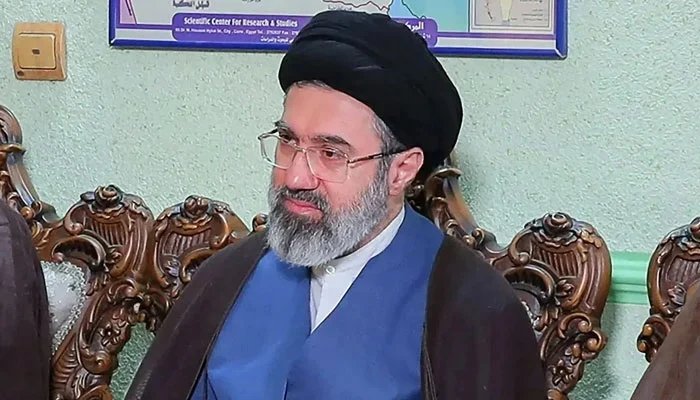
    Iran’s Supreme Leader Mojtaba Khamenei gestures during a meeting. — AFP/File

    • Divisions among Muslims benefit the interests of enemies: Khamenei.
    • Khamenei’s official statement released on Telegram.
    • Iran’s top leader calls on Gulf nations to recognize their true foe.

    Iran’s Supreme Leader Mojtaba Khamenei called on Muslim countries, especially those in the Gulf region, to unite against what he described as their “real enemy.” He emphasized that internal divisions among Muslims only serve the interests of their adversaries.

    The statement was shared on Khamenei’s Telegram channel in observance of Islamic Unity Week, which celebrates the birthday of Prophet Muhammad (PBUH).

    He stressed the importance of Muslim solidarity, collaboration across different fields, and mutual defense, warning that anyone fueling discord, whether intentionally or unintentionally, assists Islam’s foes.

    The message also posed a question: Would Palestinians find themselves so powerless if all Muslims stood united?

    Khamenei has been absent from public view since sustaining injuries in US-Israeli airstrikes six months ago, the same strikes that resulted in the assassination of his father and former supreme leader, Ayatollah Ali Khamenei.

    This call for unity mirrors his recent remarks to Iranians, where he reiterated a ban on actions that threaten social harmony and urged officials to avoid negative statements that could undermine national morale.

    He specifically questioned Gulf Arab leaders, asking whether “rogues without identity” would have dared to threaten their territories if their populations and governments had been “united under the banner of Islam.”

    In the ongoing conflict, Tehran has targeted US military sites and critical infrastructure in Gulf countries, highlighting ongoing tensions between Iran and its Gulf neighbors.

    “My repeated strong advice to leaders of Islamic nations, especially in West Asia and the Gulf, is to understand who your true enemy is, recognize their plans, and take action to counter them,” Khamenei stated.

  • Iran vows ‘ferocious’ response to any US attack, even minor strikes

    Iran vows ‘ferocious’ response to any US attack, even minor strikes

    Iran warned that any form of strike, even a limited one, would be seen as an act of aggression, prompting a fierce response. The European Union called for diplomacy before upcoming talks, with Iran and Oman confirming the schedule, though the U.S. has not yet done so.

    After President Donald Trump announced he was contemplating limited strikes against Iran, the country’s foreign ministry reiterated that any attack would be considered an act of aggression and would be responded to with vigorous self-defense. Tehran maintains that the recent indirect negotiations in Switzerland, mediated by Oman, are solely focused on Iran’s nuclear program, which the U.S. and allies suspect aims to develop a nuclear weapon, a claim Iran denies.

    Negotiations, led by Iranian Foreign Minister Abbas Araghchi, took place on Tuesday, with further talks scheduled for Thursday—confirmed by Iran and Oman, but not yet by the U.S. The EU, which has been less involved in mediation, urged a diplomatic resolution, emphasizing the region’s need to avoid another conflict.

    Fears of escalation have heightened, especially as Iran insists discussions are only about nuclear issues. The U.S. Special Envoy Steve Witkoff and Jared Kushner, President Trump’s son-in-law, are representing American interests, while tensions persist over why Iran hasn’t yielded despite increased military deployment. Iran’s response emphasizes its resilience, asserting it has never capitulated in its history.

    Despite threats of military action, protests continue within Iran, including student demonstrations marking anniversaries of those killed in recent protests. International concern has prompted several countries—India among them—to advise their nationals, estimated to number around 10,000, to leave Iran amid rising tensions.