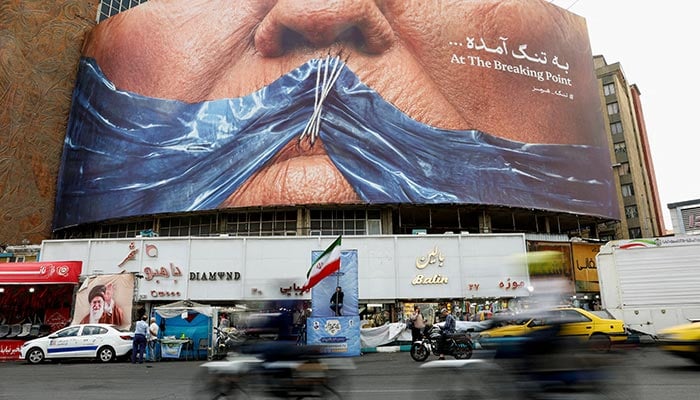
Shortly after the U.S. and Israel launched airstrikes against Iran on February 28, President Donald Trump outlined multiple objectives, including dismantling Iran’s ballistic missile stockpile and preventing Tehran from developing nuclear weapons.
More than three months later, with a tentative peace agreement in place, questions arise about what Trump has accomplished.
Missiles and Drones
Prior to the conflict, Iran possessed the largest missile arsenal in the Middle East, estimated between 2,500 and 6,000 missiles of varied types. Some had ranges up to 2,000 km and could reach Israel, with a few armed with cluster munitions that are especially difficult to defend against.
Iran also produces long-range drones, notably the Shahed model used by Russia in attacks against Ukraine and employed by Tehran itself.
About a month into the conflict, U.S. sources told Reuters that approximately one-third of Iran’s missile and drone arsenal had been destroyed, while another third was likely damaged, buried, or rendered inoperable.
On May 14, U.S. Admiral Brad Cooper testified before Congress that Iran’s capacity to produce and stockpile missiles and long-range drones had been set back by years. During the conflict, more than 1,500 missiles and 6,000 drones had been intercepted by U.S. forces and allies.
Iran’s remaining missile capabilities still pose a threat, as evidenced by recent launches—on June 6 targeting Kuwait and Bahrain, and on June 7 targeting Israel.
Conventional Military Capabilities
The U.S. military reports a significant degradation of Iran’s conventional military capacity to project power regionally or threaten U.S. operations.
Cooper told Congress that the U.S. had destroyed 161 Iranian naval ships and disabled 82% of its air defense systems. The Iranian Air Force, which previously conducted up to 100 sorties daily, has ceased all operations.
Despite these setbacks, Iran effectively maintained control over the Strait of Hormuz during the conflict, disrupting maritime traffic that transports about 20% of the world’s oil and natural gas through the use of speedboats, mines, drones, and missile boats.
Nuclear Program
Trump’s stated primary goal was to prevent Iran from acquiring a nuclear weapon. Tehran insists its nuclear activities are for peaceful purposes and has repeatedly denied seeking the bomb.
However, the conflict has not significantly delayed Iran’s nuclear advancements. U.S. intelligence estimates last month indicated Iran could produce a nuclear weapon within a year—a timeline unchanged since strikes in June 2025 targeted Iranian nuclear facilities.
Negotiators will likely focus on Iran’s nuclear program once a formal framework deal is signed. Trump insists that Iran’s enriched uranium must be removed from the country, whereas Iran’s Supreme Leader, Ayatollah Mojtaba Khamenei, insists it should remain within Iran’s borders.
Iranian Proxy Groups
On March 2, Trump stated at the White House that Iran must stop arming and funding proxy groups across Iraq, Lebanon, Gaza, and Yemen, which Tehran has relied on for decades to project influence and undermine opponents.
Since the conflict began, Iran has shown little willingness to cease support for these groups. Nonetheless, U.S. and independent reports suggest their effectiveness has diminished.
Much of this reduced influence started before the war, with Israel taking out many Hamas leaders after the October 7, 2023, attack, and killing key Hezbollah figures in Lebanon.
Hezbollah entered the war on March 2, launching missiles and drones into Israel, prompting Israel to respond with airstrikes and ground operations that have so far resulted in nearly 3,700 deaths and displaced 1.2 million in Lebanon. The conflict has resulted in the death of approximately 28 Israeli soldiers and four civilians.
In May, Cooper told Congress that Iran has lost its ability to reliably supply advanced weapons to its proxy networks, though he did not elaborate further.
Regime Change Efforts
Before the war, Trump encouraged protests within Iran, suggesting that revolution was imminent and condemning Ayatollah Khamenei’s leadership. He claimed that Khamenei’s death on February 28 offered a critical opportunity for regime change.
On March 6, Trump declared that the war could only end with Iran’s unconditional surrender and the installation of a new, “acceptable” leader.
While the war has not toppled Iran’s government, Trump claimed success in replacing Khamenei with his son, Ayatollah Mojtaba Khamenei, describing the new leadership as “more reasonable” on March 29.
Lately, Trump has toned down his rhetoric, avoiding repeated calls for regime change in Iran.