الوسم: International Migrants Day

  • 2024: Irregular Border Crossings Drop 40%, New Routes Surge

    2024: Irregular Border Crossings Drop 40%, New Routes Surge

    Major Shifts in Irregular Border Crossings in 2024

    The Migration Landscape: An Overview

    Migration is an enduring human experience shaped by myriad factors, including conflicts, economic hardship, and climate change. As people flee adverse conditions in search of security and better opportunities, the pathways they choose can often become perilous. A significant number of migrants resort to irregular border crossings, exposing themselves to life-threatening situations in the process.

    Key Findings from Frontex Data

    Recent statistics from Frontex, the European Agency dedicated to managing border safety and cooperation, reveal profound changes in migration patterns between 2023 and 2024. The data covers irregular border detections over the first eleven months of 2024, showcasing a marked decrease in some routes while others are witnessing significant increases.

    Overall Decline in Irregular Crossings

    The total number of irregular border crossings detected in the European Union has dropped by an impressive 40% in 2024 compared to the previous year. This overall reduction signals a shift in migration dynamics, with some key routes experiencing dramatic decreases:

    • Western Balkans: A staggering reduction of 79% in detected crossings.
    • Central Mediterranean: A decline of 59%, although it still remains one of the most active routes with 62,034 detections.

    Routes Experiencing Increases

    Despite the overall decline, certain migration routes have seen an uptick in activity, largely attributed to deteriorating conditions in origin countries and the activities of human traffickers.

    West African Route

    • With 41,756 detections, there has been a notable 19% increase from 2022, marking the highest figures since Frontex began tracking such data in 2009.
    • This surge is associated with worsening security and humanitarian crises in the region, where criminal networks are increasingly sending individuals by boat to the Canary Islands.

    Eastern Mediterranean Route

    • This route has also seen an increase of 18% in irregular crossings during the same period. The fatalities recorded in these perilous crossings are alarming, with a total of 2,233 people reported dead or missing in the Mediterranean Sea in 2024.

    The Tragedy of Loss at Sea

    The Mediterranean remains a treacherous frontier for migrants, with the Central Mediterranean route being the deadliest. The tragic statistics encapsulate the dire circumstances faced by many:

    • Central Mediterranean: 1,658 lives lost
    • Western Mediterranean: 409 lives lost
    • Eastern Mediterranean: 164 lives lost
    • Western Africa/Atlantic: 2 lives lost

    Eastern Land Borders: A Dramatic Increase

    Perhaps the most startling statistic comes from the Eastern land border:

    • An astonishing 200% increase in irregular crossings, totaling 16,530 detections.
    • The majority of these crossings involved Ukrainian men of military age, numbering 13,847, reflecting ongoing geopolitical tensions.

    Demographic Breakdown of Detections

    Analysis of demographic data reveals significant patterns among those attempting to cross into the EU:

    • Top Nationalities: Syrians, Malians, Bangladeshis, Ukrainians, and Afghans constituted the largest groups among irregular crossings.
    • Syrian Migrants: Accounting for 27.8% of total irregular detections in 2023, with 107,080 crossings reported throughout the entire year.
    • Other Nationalities: Guineans and Senegalese also formed substantial groups, indicating a complex tapestry of migration origins.

    Observing Trends in Irregular Migration

    Rapid shifts in migration routes and the demographics of those involved shed light on the changing humanitarian landscape. Notably, the emphasis on irregular crossings illuminates the underlying crises pushing individuals to undertake such perilous journeys.

    The need for comprehensive data collection and tracking systems is critical as the EU grapples with these ongoing migration challenges. As migration continues to evolve, so too must the responses aimed at safeguarding the rights and lives of those on the move.
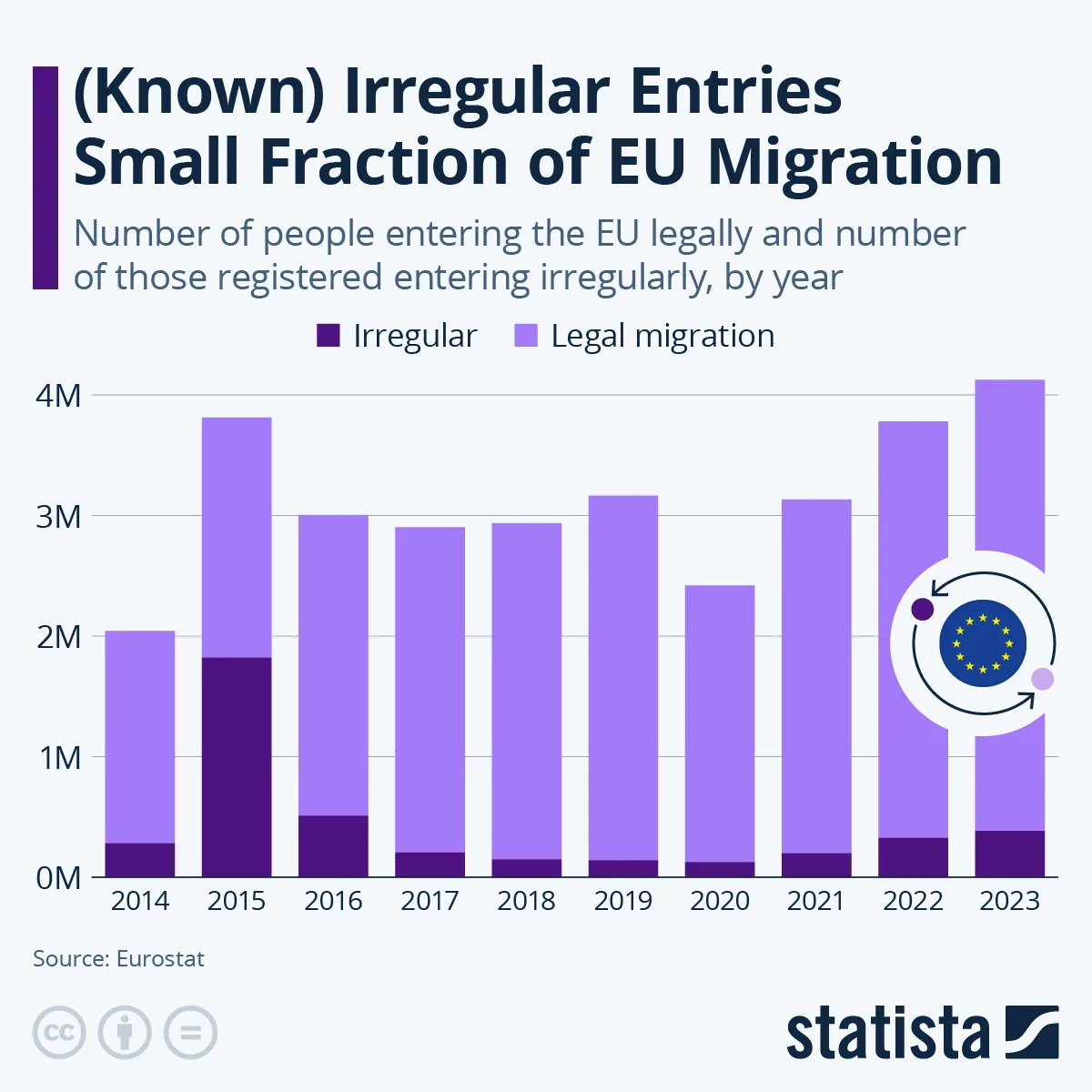
  • 2023 EU Migration: Only 9% Are Irregular Entries

    2023 EU Migration: Only 9% Are Irregular Entries

    Understanding EU Migration: The Role of Irregular Entries

    Migration within the European Union has been a topic of extensive discussion, particularly in light of recent political narratives. It’s important to examine the factual landscape of migration, especially concerning the notions of irregular migration versus legal migration. The statistics speak for themselves, revealing a more complex picture than often portrayed.

    The Current Landscape of Migration in the EU

    According to Eurostat data, the migration landscape in the EU saw significant movement in 2023, with approximately 4.1 million individuals migrating to the region. This figure underscores the dynamic nature of migration and the various factors driving people to seek opportunities within the EU.

    Legal vs. Irregular Migration

    A key aspect of this migration is the distinction between legal and irregular migrants. In 2023, less than nine percent of those who migrated were classified as irregular migrants. This statistic serves to highlight that the overwhelming majority of individuals moving to the EU are doing so through legal channels.

    • Legal Migration: This category encompasses those who enter the EU with visas, work permits, and other formal pathways that align with immigration regulations.
    • Irregular Migration: This involves individuals who enter the EU without proper documentation or who overstay their visas. While a matter of public concern, irregular migration constitutes only a small fraction of total migration flows.

    Historical Context of Irregular Migration

    To understand the significance of the current data, it is helpful to look back at trends in migration. The year 2015 marked a turning point in Europe’s migration policy, characterized by a notable surge in irregular migration, which led to widespread political and social debates.

    The Peak of Irregular Migration

    During the height of the migration crisis in 2015, irregular migrant arrivals reached unprecedented levels:

    • Volume: The influx of individuals seeking asylum and a better life overwhelmed many EU nations, leading to a scramble for effective policy responses.
    • Policy Implications: The crisis prompted the EU to rethink its approach to immigration, culminating in stricter border controls and collaborative efforts among member states to manage migration flows.

    Current Trends in Migrant Arrivals

    Fast forward to 2023, and the dynamics of migration have changed significantly. Last year’s surge in migrant numbers, driven primarily by legal avenues, illustrates a shift in patterns.

    Analyzing the Numbers

    • Legal Migrant Dominance: The latest data reveals that the spike in arrivals is almost entirely due to individuals migrating through established legal routes rather than an increase in irregular entries.
    • Comparative Analysis: Current irregular migration figures are substantially lower than the peak levels recorded in 2015, indicating that the EU has made strides in managing and regulating migration flows more effectively.

    Political Perspectives on Migration

    Despite the data indicating a relatively low percentage of irregular migrants, political discourse around migration remains fraught with differing opinions. Politicians express varying beliefs about the implications of migration, often fueling public sentiment and policy decisions.

    The Role of Rhetoric

    The narratives surrounding migration can significantly influence public perception. For some politicians, emphasizing irregular migration serves to evoke concerns about security, social services, and the strain on national resources.

    • Debates and Policies: As these narratives unfold, they shape legislative actions aimed at tightening immigration controls or, conversely, supporting humanitarian efforts to assist migrants.

    Conclusion (not included as per instruction)

    To explore further, continue examining how migration dynamics evolve with policy changes, economic conditions, and global events impacting migration flows into the EU. This complex web reflects not only statistical data but also the human stories and experiences that lie behind the numbers.