الوسم: international aid

  • Venezuelan Trapped Rescue Ongoing One Week After Quakes

    Venezuelan Trapped Rescue Ongoing One Week After Quakes

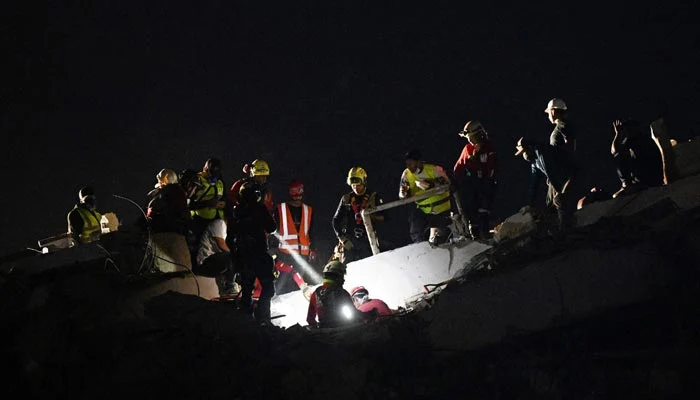
    Rescue crews worked tirelessly into the night on Wednesday to free a 43-year-old Venezuelan man who had been trapped under the rubble of a seven-story building for a week, an AFP journalist observed. Hernan Gil, a security guard, was stuck inside his booth beneath the collapsed structure in Catia La Mar, an area nearly destroyed in the twin earthquakes on June 24, measuring 7.2 and 7.5 magnitudes.

    Teams from seven nations—Venezuela, Chile, the U.S., Portugal, Costa Rica, El Salvador, and Mexico—have been operating nonstop over the past three days to reach him. By late Wednesday, they had come within about a meter of his location, according to rescuers. Chile’s fire department shared a video on Instagram showing Gil inside his shelter, turning his head to look at the camera. He was wearing a face mask, and his right eye appeared bloodshot.

    Gil’s wife, Gusbimar Gonzalez, described the rescue as a miracle. “I’m completely stunned because I’ve never seen so many countries come together to save just one person,” she said. The news of the ongoing rescue effort came after a day in which hopes of finding more survivors had diminished, now seven days after the devastating earthquakes, which resulted in nearly 2,300 deaths and left thousands more missing.

    While rescuers approached Gil, others kept watch over an adjacent building that was at risk of collapsing further. Since Monday, teams had been reinforcing the building’s foundation with wood and iron to prevent a total structural collapse. As part of the operation, they provided Gil with water to stay hydrated and installed a tube to supply him with air. The rescue teams advanced along two separate paths to reach him.

    Cristian Vera, head of the Chilean rescue squad, explained that accessing the site was complex. “This is a very difficult structure to get into,” he said, noting that the presence of large pillars hindered efforts to pinpoint his exact location. An initial plan to create a 24-inch tunnel was abandoned on Tuesday after the building shifted slightly. “We had to develop a new approach to enter through a different route than the one we used last night,” Vera added.

  • Twin earthquakes devastate Venezuela, death toll nears 1,000

    Twin earthquakes devastate Venezuela, death toll nears 1,000

    Rescue teams from Mexico, El Salvador, and Spain have arrived on the scene. Over 50,000 individuals remain unaccounted for on a publicly accessible missing persons website. The United Nations warns that millions could be impacted by this catastrophe.

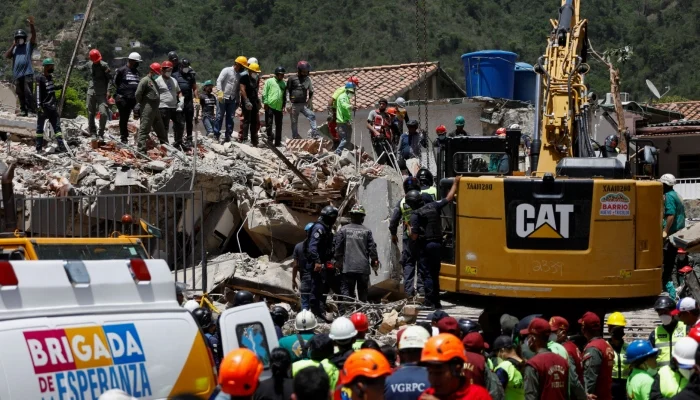
    LA GUAIRA/CARACAS: Frantic Venezuelans alongside international rescuers hurried Friday to locate survivors buried beneath debris after twin earthquakes devastated sections of Caracas and nearby areas. Anxiety grew due to the scarcity of heavy machinery, and the death toll inched closer to 1,000.

    Aid and rescue personnel from abroad began arriving nearly 48 hours after a pair of earthquakes, registering magnitudes 7.2 and 7.5, struck approximately 100 miles west of Caracas. Officials estimate hundreds are still trapped or missing, adding to the confirmed death count of 920 and 3,360 injuries. A reporting website for missing persons listed over 50,000 names by Friday afternoon, a figure echoed by UN aid officials.

    The US Geological Survey forecasts a grave potential for over 10,000 fatalities, ranking these tremors among Latin America’s deadliest in the past century. La Guaira, a coastal city just outside the capital, Caracas, bore the brunt of the destruction, with at least 100 buildings—including high-rise apartments—leveled.

    Jennifer Palacios, 25, recounted that she was outside her home in Caracas’s Hugo Chavez housing complex, named after the late Venezuelan leader, when the quakes occurred. Her six-year-old son and five other relatives were buried in the rubble.

    “The community is the only reason some people are still alive,” she said, seated before the wreckage. “We need cranes to lift these slabs. There are still folks trapped inside.”

    Witnesses reported driving along roads fractured by the quakes and passing through neighborhoods where buildings had been reduced to rubble, some tagged with their names to help rescuers identify them.

    The interim president, Delcy Rodriguez, whose government assumed power after the U.S. detained her predecessor in January, promised extensive aid deployment. She visited La Guaira on Thursday and expressed gratitude to volunteers and rescue teams, noting that around 2,600 tons of food had been distributed so far.

    Despite these efforts, aid distribution remains inconsistent. Local authorities, including firefighters, police, civil protection, and military units, are present in some areas but absent or minimal elsewhere.

    Ricardo Trias, a lawyer, is trying to retrieve the remains of his godson, whose body was recovered from the rubble in Caraballeda but remains at the site, covered with a green cloth. “We want the body,” he said. “They need to give it to us; otherwise, it will rot here. No forensic team has come.” His goddaughter was rescued and taken to a hospital.

    Locals, using their bare hands and makeshift tools, protested the lack of government assistance and heavy equipment, while volunteers brought supplies from Caracas and Valencia on motorcycles. Rodriguez announced that La Guaira state would be militarized to aid rescue efforts and thanked volunteers for their support, emphasizing the distribution of food supplies.

    Police and national guard patrols on motorcycles were seen traveling through the heavily affected Los Corales neighborhood, highlighting ongoing efforts on the ground.

    The disaster’s political implications for Rodriguez remain uncertain. She has tried to portray herself as a reformer, even though her background includes serving as vice president under former leader Nicolas Maduro.

    International aid arrived Thursday evening, with some countries that have historically opposed Venezuela participating in rescue operations—such as the Dominican Republic, which was the first to reach La Guaira. Countries like India and Switzerland also sent rescue teams and supplies, while Mexico dispatched 250 military personnel, along with rescue dogs and equipment, leveraging their earthquake response experience.

    Friday saw over 60 Colombians, more than 180 rescuers from El Salvador’s planned team of 300, and nearly 100 volunteers from Spain arrive. The United States announced a $150 million aid package and plans to relax sanctions to support relief efforts. The U.S. military deployed two ships and promised helicopters and aircraft to assist search and rescue operations.

    In Los Corales, Salvadoran rescue teams evaluated the debris of three 10-story buildings, employing drones, thermal imaging, and search dogs to locate survivors—though no one has been found alive yet.

    Venezuela, already strained by years of economic hardship and political unrest that have impoverished its population, driven millions abroad, and deteriorated infrastructure, faces additional challenges.

    Suhayl Sarquiz, 50, who lost her job months earlier, said her building is now uninhabitable, leaving her and her son with nothing. The UN estimates that nearly 7 million people could be affected, providing temporary shelter and relief supplies.

    While the oil sector remains largely unaffected—energy companies report minimal disruption—the Caracas Stock Exchange remains closed, repurposed as a command center for aid collection.

    Venezuela’s most devastating modern earthquake was in 1967, costing 240 lives. This recent disaster has wrought comparable destruction, with the death toll rapidly climbing.

  • Sri Lanka declares emergency amid cyclone death toll reaches 132

    Sri Lanka declares emergency amid cyclone death toll reaches 132

    A man assists a woman stranded inside a partially flooded house amid severe flooding in Wellampitiya, on the outskirts of Colombo, on November 29, 2025.— AFP

    – Over 15,000 homes have been destroyed, displacing 78,000 people who are now in temporary shelters.
    – The military rescued 69 bus passengers, including a German tourist, from floodwaters.
    – The government has called for international aid to help support affected communities.

    Sri Lanka declared a state of emergency Saturday and requested international assistance as fatalities from heavy rains and flooding caused by Cyclone Ditwah rose to 132, with 176 people still missing.

    The cyclone has wrecked over 15,000 homes and forced 78,000 residents into government-run shelters, according to the Disaster Management Centre (DMC). President Anura Kumara Dissanayake enacted emergency laws, granting broad powers to manage the crisis after a week of relentless rainfall across the island.

    “It’s confirmed that 132 people have died, and 176 are missing,” said Sampath Kotuwegoda, the DMC Director-General. Relief efforts have been intensified with the deployment of the army, navy, and air force.

    On Saturday, the military rescued 69 bus passengers, including a German tourist, stranded in the Anuradhapura district, after a 24-hour operation involving helicopters and naval vessels. One passenger recounted that navy personnel helped them climb onto a nearby rooftop after using ropes to navigate floodwaters.

    “We were very fortunate,” Shantha said from a local hospital. “While on the roof, part of it collapsed… three women fell into the water, but they were helped back onto the roof.” An initial helicopter rescue was aborted when rotor downdrafts threatened to blow the roof away; they were later rescued by naval boats.

    Roads in Badulla’s central district remain blocked, isolating many villages and preventing relief supplies from reaching residents. Saman Kumara from Maspanna village, one of the worst-hit areas, reported losing two people in his community. Others are sheltering at a temple and a still-standing house.

    “We can’t leave the village, and no one can enter because all roads are blocked by landslides. There’s no food, and clean water is scarce,” he told News Center by phone.

    Officials say about one-third of the country is without electricity and clean water, due to collapsed power lines and overwhelmed water purification stations. Internet access has also been disrupted in many regions.

    Cyclone Ditwah moved away from Sri Lanka Saturday, heading toward northern India. Chennai Airport has canceled 54 flights in anticipation of the cyclone’s approach, which the weather department warns will bring intense rainfall and strong winds over the next 48 hours.

    Landslides have struck Kandy, 115 kilometers east of Colombo, with several main roads submerged. The government is appealing for international support and has urged Sri Lankans abroad to donate cash to aid recovery efforts.

    Prime Minister Harini Amarasuriya has met with diplomats based in Colombo to update them on the situation and seek assistance. India responded promptly, dispatching two flights of relief supplies and donating rations from an Indian navy ship already stationed in Colombo on a goodwill visit.

    Prime Minister Narendra Modi expressed his condolences for the lives lost and affirmed India’s readiness to provide more aid. Flooding worsened in low-lying areas on Saturday, prompting evacuation orders along the Kelani River, which flows into the Indian Ocean from Colombo.

    While most of the country has seen eased rainfall, the northern regions continue to experience showers due to residual effects of Cyclone Ditwah. This storm marks Sri Lanka’s deadliest natural disaster since 2017, when flooding and landslides claimed over 200 lives and displaced hundreds of thousands. The most catastrophic flooding in recent memories occurred in June 2003, resulting in 254 deaths.

  • Myanmar Quake Toll Reaches 1,700 Amid Growing Aid Efforts

    Myanmar Quake Toll Reaches 1,700 Amid Growing Aid Efforts

    Earthquake in Myanmar Causes Widespread Damage and Casualties


    Image caption: A general view of a collapsed building in the aftermath of a powerful earthquake in Mandalay, Myanmar, March 30, 2025. — Reuters

    • 3,400 Injured, 300 Missing Following Earthquake
    • Rescue Teams From India, China, Singapore, and Thailand Mobilized
    • UN Agency Reports Hospitals Struggling in Hard-Hit Regions

    BANGKOK: The death toll from Myanmar’s recent earthquake has been steadily increasing, prompting foreign rescue teams and aid to flood into the impoverished nation. The disaster has overwhelmed hospitals, and affected communities are hastily trying to orchestrate rescue operations with limited resources.

    The 7.7-magnitude earthquake struck the war-torn Southeast Asian country on Friday, marking one of the most powerful quakes in Myanmar in a century. By Sunday, official reports indicated approximately 1,700 casualties, 3,400 injuries, and over 300 people unaccounted for.

    The military government’s leader, Senior General Min Aung Hlaing, acknowledged the devastating impact and indicated that the death toll might rise. This admission came three days after he publicly requested international assistance, according to state media.

    Neighboring countries, including India, China, and Thailand, have sent relief supplies and teams, with additional support coming from Malaysia, Singapore, and even Russia.

    Car Trapped Under Rubble
    Image caption: A vehicle trapped beneath the debris of a collapsed building in Mandalay, Myanmar, March 30, 2025. — Reuters

    "The devastation is severe, and humanitarian needs are escalating rapidly," said a statement from the International Federation of Red Cross and Red Crescent Societies. They emphasized the urgent requirement to stabilize affected communities, especially as temperatures rise and the monsoon season approaches.

    The United States has committed $2 million in aid through local humanitarian organizations and has dispatched an emergency response team from USAID, which has been experiencing budget cuts under the Trump administration.

    This catastrophe further compounds the suffering in Myanmar, already grappling with a civil conflict following a military coup in 2021 that ousted the democratically elected government led by Nobel laureate Aung San Suu Kyi.

    Search and Rescue Operations
    Image caption: Search and rescue operations ongoing in Mandalay, Myanmar, March 29, 2025. — Reuters

    Critical infrastructure—including bridges, highways, airports, and railways—has been damaged across the country, hampering humanitarian operations amid ongoing conflict that has displaced over 3.5 million individuals and severely weakened the health system.

    In some areas near the epicenter, residents reported a lack of government assistance, forcing them to fend for themselves. “Restoring transportation routes swiftly is essential,” Min Aung Hlaing instructed officials, as state media reported on efforts to repair railway lines and reopen airports to make rescue efforts more effective.

    According to predictive models from the U.S. Geological Survey, the death toll in Myanmar could eventually exceed 10,000, with economic losses surpassing the nation’s annual GDP.

    ‘No Assistance, No Rescuers’

    Rescue Workers at Collapse Site
    Image caption: Rescuers working at a collapsed building site in Mandalay, Myanmar, March 30, 2025. — Reuters

    Hospitals in central and northwestern Myanmar, including the city of Mandalay and the capital Naypyidaw, are struggling to accommodate the influx of injured individuals, as reported by the UN Office for the Coordination of Humanitarian Affairs.

    The earthquake’s tremors also impacted parts of Thailand, where an under-construction skyscraper collapsed, resulting in 18 fatalities, according to reports from Thai authorities. Recovery efforts continued for the third day, with 76 individuals trapped under the debris.

    The opposition National Unity Government of Myanmar, which comprises remnants of the previous administration, declared a two-week halt to offensive military actions starting Sunday.

    In regions like Sagaing, near the earthquake’s epicenter, the extent of destruction is significant. “We are witnessing widespread devastation—counts of buildings reduced to rubble,” resident Han Zin reported. He noted that much of the town has been without power and is running short on drinking water. “We have not received any aid, and there are no rescue personnel present.”

    Sections of a major bridge connecting Sagaing with Mandalay have collapsed, with satellite images revealing parts of the historical structure submerged in the Irrawaddy River. “With the bridge out, even aid from Mandalay is hardly making its way here,” stated the Sagaing Federal Unit Hluttaw, associated with the NUG, on social media.

    Rescuers Carrying Bodies
    Image caption: Rescuers transporting a deceased victim in Mandalay, Myanmar, March 30, 2025. — Reuters

    “Food and medical supplies are scarce, and the number of casualties is overwhelming our local hospital, which is not equipped to handle the influx of patients.”

    ‘Can You Hear Me?’

    Mandalay’s extensive damage has left many people trapped beneath collapsed buildings, with heavy machinery required for rescue operations that are currently out of reach, according to humanitarian workers stationed in the area.

    "Our teams are utilizing gloves, ropes, and basic tools to dig for survivors," one worker said, on the condition of anonymity due to security concerns. “Countless people are still trapped and we cannot ascertain the death toll at this time because we don’t know who is alive or who is lost.”

    A video taken by a local Mandalay resident revealed patients lying outside a 500-bed orthopedic hospital where no space was available.

    Public and private healthcare facilities in Mandalay, including the Mandalay General Hospital and sections of Mandalay Medical University, suffered damage from the quake, the World Health Organization reported.

    Rescue personnel from Russia and India are en route to Mandalay, with multiple teams from China, Thailand, and Singapore already on-site.

    In Bangkok, rescuers have been tirelessly working at the site of the demolished 33-story building, surrounded by piles of concrete and twisted metal, in hopes of rescuing workers sealed beneath the wreckage.

    Teerasak Thongmo, a Thai police commander, mentioned that his team is racing against time to locate any survivors. “Our immediate goal is to find those who might still be alive. We have a crucial 72-hour window to act,” he noted.

    Nearby, relatives of the missing and trapped construction workers gathered, anxiously awaiting news. Some were visibly distressed. “Ploy, Ploy, I’m here for you!” cried one woman, overwhelmed with emotion. “Ploy, can you hear me?”
  • Myanmar Quake Claims Nearly 700 Lives; Aid Efforts Underway

    Myanmar Quake Claims Nearly 700 Lives; Aid Efforts Underway

    Rescue efforts at the site of a collapsed building following a powerful earthquake in Bangkok, Thailand, March 29, 2025. — Reuters

    • 2,376 individuals reported injured, with 30 unaccounted for.
    • USGS predicts potential toll could reach the thousands.
    • International relief operations underway, with a Chinese aid team now in the region.

    The toll from a 7.7 magnitude earthquake that struck Myanmar has risen to 1,002, according to the state-run MRTV, as international aid has begun to arrive for relief efforts.

    Rescue teams continue to search for survivors in the Southeast Asian nation, where the death count is likely to rise. Reports indicate that 2,376 people have been injured and 30 individuals are still missing.

    “Infrastructure including roads, bridges, and buildings has been severely impacted, resulting in numerous civilian casualties. Efforts to locate and rescue individuals are ongoing in the affected regions,” stated the ruling junta in a media release.

    The junta leader, General Min Aung Hlaing, cautioned on Friday of an increase in deaths and injuries, extending an invitation to “any country” to assist with donations and support.

    A Chinese rescue team arrived on Saturday, while both Russia and the US have offered aid following the disaster that occurred during lunchtime on Friday, inflicting damage on hundreds of buildings in neighboring Thailand.

    The United States Geological Survey (USGS) has modeled projections suggesting the death toll could exceed 10,000 in Myanmar and that financial losses may eclipse the country’s gross domestic product. Susan Hough, a scientist with the USGS’s Earthquake Hazards Program, explained to Reuters that various factors make it difficult to predict earthquake fatalities, such as the time of day. When earthquakes strike during daylight hours, survivors are more alert and better able to react, she noted.

    Searching for Construction Workers in the Tower Rubble

    Much of the devastation has been concentrated in Mandalay, Myanmar’s second-largest city, near the quake’s epicenter.

    In Bangkok, located approximately 1,000 kilometers (620 miles) from the epicenter, rescue operations intensified on Saturday to locate construction workers trapped under the debris of a collapsed 33-story tower.

    A 37-member Chinese team arrived in Yangon, Myanmar’s former capital, early Saturday, bringing with them medical supplies and equipment for detecting signs of life, according to a post by the Chinese embassy on Facebook.

    Russia reported it would send 120 skilled rescuers along with medical personnel and search dogs, according to the state news agency TASS.

    US President Donald Trump stated on Friday that he had held discussions with Myanmar officials, indicating his administration’s intention to provide some form of assistance.

    Hough, who has worked on Myanmar’s local seismology network, commented that the mix of modern structures with traditional buildings would also influence the outcome. Traditional constructions “are generally less hazardous than concrete,” she added.

    In Thailand, authorities confirmed that nine people have died and 101 remain missing in Bangkok, predominantly laborers trapped in the rubble of the collapsed tower.

    “We will exhaust all resources and will not halt our efforts to save lives,” stated Bangkok Governor Chadchart Sittipunt at the site on Saturday, as excavators cleared debris and drones scanned for survivors.

    Bangkok’s activity ground to a halt on Friday, and Chadchart noted that numerous individuals spent the night in city parks, though he indicated that conditions were improving.

    This revised version has been rewritten in American English with unique phrasing to ensure it is human-written and free from plagiarism.

  • USAID: $44B Aid Distribution, 60% to Ukraine in 2023

    USAID: $44B Aid Distribution, 60% to Ukraine in 2023

    Understanding USAID: An Overview of Its Role in U.S. Foreign Aid

    The United States Agency for International Development, commonly known as USAID, plays a critical role in shaping U.S. foreign aid policies and execution. It is the largest distributor of U.S. foreign aid, making substantial contributions to various global initiatives aimed at alleviating poverty, enhancing education, and promoting economic development.

    A Glimpse into USAID’s Funding

    In the fiscal year 2023, USAID disbursed an impressive amount of nearly $44 billion. Notably, more than $16 billion—about 36% of this total—was directed to Ukraine, underscoring the agency’s responsive actions to global crises. This proportion highlights the significant role that USAID plays in supporting countries facing urgent challenges.

    Breakdown of USAID Allocations

    USAID’s contributions are not limited to one region; instead, they span numerous countries across different continents. After supporting Ukraine, the agency’s financial assistance was primarily allocated to the Middle East and Africa. Noteworthy recipients included Ethiopia, Jordan, Afghanistan, and Somalia, each receiving over $1 billion in aid. This widespread assistance reflects the agency’s commitment to addressing diverse global needs.

    Focus Areas of USAID

    USAID primarily focuses on delivering economic aid, which contrasts with military assistance handled by other entities such as the Department of State and the Department of Defense. The agency’s work encompasses several key areas:

    Health Initiatives

    USAID invests heavily in health programs that address critical health issues including infectious diseases, maternal and child health, and nutrition. These initiatives are aimed at improving overall health outcomes in recipient countries.

    Infrastructure Development

    Infrastructure is vital for economic growth and stability. USAID supports various projects aimed at building roads, schools, and sanitation facilities that contribute to community development.

    Disaster Relief

    Disaster relief is another crucial component of USAID’s initiatives. The agency mobilizes resources to respond to natural disasters and humanitarian crises, ensuring affected populations receive immediate support.

    Geographic Distribution of Aid

    USAID’s funding is not confined to a particular region; it encompasses various geographical areas. The agency provides assistance across Latin America, Africa, Asia, and Eastern Europe. This widespread distribution of aid demonstrates the United States’ commitment to fostering global partnerships and enhancing international stability.

    The Future of USAID

    Recent developments have led to discussions about the potential absorption of USAID into the State Department. Such changes could lead to significant alterations in how foreign aid is prioritized and distributed. If USAID’s budget were to be slashed, it could drastically affect ongoing projects influencing millions worldwide.

    USAID’s Budget within the Federal Framework

    Despite its significant role in international aid, it is important to note that USAID’s spending represents less than 1% of the federal budget. This fact raises questions about the sustainability and prioritization of foreign aid within the U.S. governmental framework, especially amid potential budget cuts and administrative restructuring.

    Conclusion (To Be Written Later)

    USAID’s actions and funding priorities significantly impact global development and humanitarian efforts. The ongoing discussions surrounding its restructuring suggest a critical juncture for U.S. foreign aid, with potential ramifications for the future of international assistance. Understanding this context is essential for grasping the broader implications of U.S. foreign relations and aid policy.