الوسم: infrastructure

  • Iran hits Bahrain and Kuwait with attacks on power and water plants

    Iran hits Bahrain and Kuwait with attacks on power and water plants

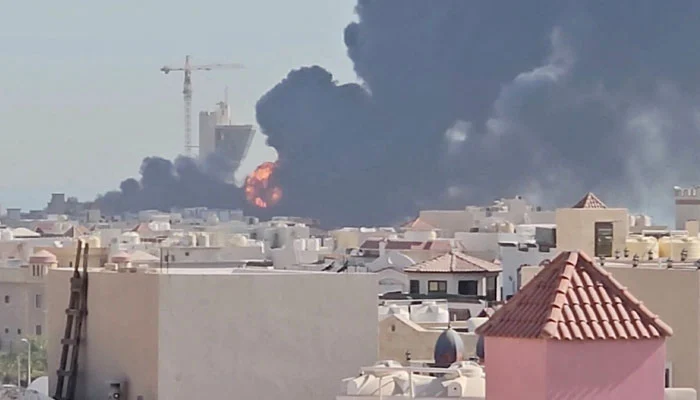
    Kuwait reports that Iran attacked a power and water plant Sunday, sparking a fire. This follows a series of strikes on energy facilities in the Gulf nation, with authorities stating it’s the third attack in three days; a water and power plant was hit on Saturday as well. Kuwait has urged residents to reduce their electricity use to help manage the added pressure on its power grid due to ongoing Iranian assaults.

    Earlier, Iran acknowledged launching attacks on U.S. assets in Kuwait amid heightened tensions over the Strait of Hormuz that have persisted for over a week. The Kuwaiti Ministry of Electricity, Water, and Renewable Energy confirmed the attack via X (formerly Twitter), noting it caused damage to multiple power generators and prompted an emergency response. Firefighters are actively working to extinguish the blaze.

    Both Kuwait and Bahrain’s militaries have reported responding to Iranian aerial strikes. Air raid sirens sounded across both countries as Tehran intensified its regional retaliations. An AFP journalist in Kuwait observed warning sirens, while in Bahrain, blasts were reported in the northern areas, and a siren was heard in the capital, Manama.

    Bahrain, home to the U.S. Fifth Fleet, accused Iran of targeting civilian sites in these attacks. Alongside this, Iran announced early Sunday that its military had targeted two U.S. bases in Kuwait with drones, responding to U.S. strikes on Iranian territory. Iran’s state media detailed large-scale attacks involving kamikaze drones against Camp Udairi’s ammunition depot and radar systems at Ali Al Salem Air Base.

    Since renewed hostilities commenced earlier this month, Kuwait and Bahrain, both hosting U.S. military installations, have endured the brunt of Iran’s strikes on Gulf neighbors, despite a formal ceasefire and agreements between Washington and Tehran. The U.S. Central Command reported that two service members were killed on Friday during defensive operations against Iranian missile and drone attacks, with one service member still listed as missing.

  • How Europe’s Heatwave Is Disrupting Train Services

    How Europe’s Heatwave Is Disrupting Train Services

    Passengers wait for their train at Gare du Nord in Paris on June 22, 2026, shielding themselves from the heat with fans underneath SNCF information panels about the heatwave. — AFP

    The intense heat enveloping much of Europe this week is revealing the vulnerabilities of rail infrastructure built during cooler periods, causing delays and cancellations. Travelers with health concerns are advised to avoid trips if possible.

    Overhead power lines that expand and sag, rails that slightly widen when heated by the sun, and over-heated air conditioning systems are primary issues impacting train services where maintenance spending has often fallen short.

    ### Why are trains getting canceled?

    In France and Belgium, much of the rail network and rolling stock are several decades old, apart from newer high-speed lines. When they have air conditioning, systems often shut down automatically if the train gets too hot, prompting operators to cancel the most vulnerable routes proactively.

    Belgium’s national railway SNCB has temporarily removed non-air-conditioned trains during peak hours, while France’s SNCF has pulled back 10% of Paris region trains to prevent permanent track deformation caused by excessive heat.

    The overhead catenary wires, which supply electricity to trains, can also sag as the metal expands in the heat, increasing the risk of snagging or breakage. Severine Lepere, SNCF’s director for the Paris area, points to a suspected cause of a major freight train outage at Gare de l’Est on June 18 as a broken power line.

    ### What makes this heatwave different?

    Unlike brief spikes in temperature, this heatwave is notable because high temperatures have persisted for several days without significant cooling at night. Forecasts predict sustained days with temperatures at or above 104°F (40°C). Track temperatures can hit as high as 140°F (60°C), dangerously causing metal to stretch or widen—similar to the risks faced by power lines.

    Engineers are particularly worried about track buckling and derailments, which threaten safety. John Lawrence, chair of the Railway Technical Network at the UK’s Institution of Engineering and Technology, explains that such issues can lead to derailments and cause overhead lines to sag, potentially halting train movement or forcing long detours.

    Electronic signaling equipment also has a chance of failing under these extreme conditions.

    ### Why is this happening in Europe and not elsewhere?

    Trains operate in high temperatures in regions like India and Africa, but those areas typically lack high-speed networks comparable to Europe’s. The high speeds in Europe demand extremely reliable tracks and tight tolerances, according to Pierre Plaindoux, a rail expert at MC2I consulting.

    In the US and Canada, passenger trains primarily operate on diesel-powered trains over major routes, with overhead power lines rarely used—mild weather and different infrastructure reduce heat-related issues.

    ### What are the potential solutions?

    One approach involves better tracking of track temperatures to set speed limits instead of canceling trains preemptively. In countries with lower labor costs, inspectors often walk the lines, but France is planning to install more sensors to monitor conditions directly.

    Another method is to paint tracks white to reflect sunlight and reduce heat absorption, a strategy increasingly adopted in Britain, Italy, and other countries. According to Antonios Kanellopoulos, associate professor at the University of Hertfordshire, reflective paint can lower rail temperatures by 5-10°C.

    Installing more rigid power lines that don’t sag easily in the heat is also being explored. France has already installed such lines over several dozen kilometers on high-traffic routes, but extending these over longer distances is limited by cost, explains Plaindoux.

    ### Images:

    – Passengers shield themselves with fans and hand fans while waiting for their train amidst the heat at Gare du Nord, Paris, June 22, 2026.
    – A thermometer showing 37.6°C in Toulouse during the heatwave on June 23, 2026.
    – A train on the tracks at Gare de l’Est, Paris, March 14, 2026.
  • US Commander to Brief Trump on New Military Options Against Iran

    A potential military operation against Iran is being considered, with plans likely to include precision strikes against critical infrastructure sites. One suggested strategy involves securing the Strait of Hormuz shipping lane to ensure safe passage for commercial vessels. Additionally, there is a possibility of deploying ground forces to reopen vital oil routes.

    President Donald Trump is scheduled to be briefed on Thursday by Brad Cooper, the commander of U.S. Central Command, regarding these new military options, according to Axios, which cited anonymous sources. Neither the White House nor Centcom has officially commented on the reports yet.

    Sources indicate that Centcom has prepared a swift, targeted campaign of strikes aiming to disable Iran’s key infrastructure, possibly including military and civilian sites. The ongoing Iran conflict, which commenced three weeks ago, was triggered when the U.S. and Israel launched attacks on Iran on February 28. Iran retaliated with strikes against Israeli and Gulf state targets, including U.S. military bases, resulting in thousands of casualties and millions displaced.

    Trump has previously issued threats to target Iran’s civilian infrastructure, a move critics warn could constitute war crimes under international law, which prohibits attacks on facilities essential for civilian survival. The plan to seize part of the Strait of Hormuz for commercial shipping is also considered, potentially involving ground troops to restore the flow of oil through one of the world’s most critical maritime chokepoints, which handles about 20% of global oil and natural gas shipments.

    The conflict has negatively impacted markets and driven oil prices upward, with the Strait’s traffic coming to nearly a halt. U.S. officials hope these actions will coax Iran into a more flexible stance at the negotiating table regarding its nuclear program.

    Another possible operation involves special forces aiming to secure Iran’s stockpile of highly enriched uranium. While Iran denies seeking nuclear weapons, it maintains its right under the Nuclear Non-Proliferation Treaty to develop peaceful nuclear technology, including enrichment.

    Expected attendees at Thursday’s briefing include General Dan Caine, Chairman of the Joint Chiefs of Staff.

  • UAE Plans 8-Exaflop AI Supercomputer Deployment in India

    UAE Plans 8-Exaflop AI Supercomputer Deployment in India

    Abu Dhabi is set to develop a nationwide artificial intelligence supercomputer in India, boasting a processing power of 8 exaflops. This marks a significant step forward in the country’s AI infrastructure expansion. The announcement was made during the AI Impact Summit 2026 in New Delhi.

    This development follows the fifth India-UAE Strategic Dialogue in December 2025, as well as UAE President Sheikh Mohamed bin Zayed Al Nahyan’s January 2026 visit to India, which enhanced cooperation in defense, technology, space, and energy sectors.

    The supercomputer will be supplied by G42, an Abu Dhabi-based global tech firm, along with Cerebras, a US-based company that produces high-performance AI computing hardware. The initiative also involves collaboration with Mohamed bin Zayed University of Artificial Intelligence (MBZUAI), a postgraduate research university in Abu Dhabi, and India’s Center for Development of Advanced Computing (C-DAC), a government agency specializing in supercomputing and advanced IT research.

    An 8 exaflop system can perform eight quintillion calculations every second—equivalent to eight billion operations each second—placing it among the most powerful supercomputers in the world. Officials believe this will greatly enhance India’s capacity to develop and operate advanced AI models domestically.

    The supercomputer will be housed within India and managed according to Indian regulatory and security standards, ensuring all data remains within the country’s jurisdiction. This project builds upon previous collaborations, including the December 2025 release of NANDA 87B, an open-source Hindi-English large language model with 87 billion parameters designed to support regional language AI applications, developed by G42 and MBZUAI.

  • Dubai unveils driverless taxis with Crown Prince’s inaugural ride

    Dubai unveils driverless taxis with Crown Prince’s inaugural ride

    Crown Prince Sheikh Hamdan bin Mohammed bin Rashid Al Maktoum launches operations of driverless taxi service in Dubai. — X/@DXBMediaOffice

    Dubai has advanced further in its move toward smart transportation. Crown Prince Sheikh Hamdan bin Mohammed bin Rashid Al Maktoum arrived at the 2026 World Governments Summit in a fully autonomous taxi, officially signaling the start of the city’s driverless transit service.

    Officials announced that 100 driverless taxis will start operation next month, representing the first phase of a broader plan to revolutionize public transit with cutting-edge technology.

    These vehicles use artificial intelligence alongside sophisticated sensor systems to process data in real time, allowing them to navigate and make driving decisions independently without human input.

    On social media, Sheikh Hamdan expressed that Dubai’s transportation future will be smarter, safer, and more efficient. He emphasized that the project aims to enhance residents’ quality of life and make transportation more accessible for everyone visiting or living in the emirate.

    This initiative is being carried out by Dubai’s Roads and Transport Authority (RTA), working closely with international tech companies as part of a larger strategy to implement sustainable and intelligent transportation solutions.


  • Dubai’s ‘Loop’ Transforms Traffic: Travel Kilometers in Minutes

    Dubai’s ‘Loop’ Transforms Traffic: Travel Kilometers in Minutes

    An animated illustration of the UAE’s future high-speed passenger tunnel network, Dubai Loop — Reporter

    Dubai is rolling out a new underground transportation system designed to ferry passengers across busy neighborhoods in just minutes, cutting down the time spent stuck in traffic.

    During the 2026 World Governments Summit, the Dubai Roads and Transport Authority (RTA) announced a partnership with California-based The Boring Company to develop the Dubai Loop, an underground, high-speed passenger tunnel network beneath the city.

    The initial phase involves constructing a 6.4-kilometer route with four stations, connecting Dubai International Financial Centre to Dubai Mall. Travel time, which normally takes around 20 minutes by car, could be shortened to approximately three minutes underground, relieving surface street congestion.

    The pilot project is estimated to cost about AED 565 million and will be completed roughly a year after the design phase concludes. The full loop will span over 22 kilometers with 19 stations, costing nearly AED 2 billion, and will be realized in stages over three years.


  • Heavy Snow and Rain Kill 61 in Afghanistan Over Three Days

    Heavy Snow and Rain Kill 61 in Afghanistan Over Three Days

    Heavy snowfall and torrential rain have claimed the lives of 61 people across Afghanistan over the past three days, according to disaster management officials. Several provinces have also experienced disruptions to major roads and power supplies.

    Most fatalities happened in central and northern regions between Wednesday and Friday, as detailed in a map released by Afghanistan’s Disaster Management Authority (ANDMA). The initial reports indicate 110 injuries and the destruction of 458 homes, either partially or entirely, via social media updates from ANDMA.

    Around 360 families have been affected by the adverse weather, with officials urging residents to avoid unnecessary travel on snow-covered roads through a video message. The majority of the casualties resulted from roof collapses and avalanches, while many also succumbed to frostbite due to sub-zero temperatures, a spokesperson told AFP.

    In Kandahar’s southern province, six children died after their home’s roof collapsed amid strong winds and heavy rain on Wednesday. Other districts also suffered structural damage.

    The Salang Highway, a crucial route connecting northern provinces, is now closed. Authorities in Parwan province, north of Kabul, confirmed the shutdown. Food aid was distributed to travelers stranded on a mountain pass in Bamyan Province, located west of the capital.

    Additionally, a power line bringing electricity from Uzbekistan was damaged Thursday, leaving nearly a dozen provinces without power. Mohammad Sadiq, a spokesman for Afghanistan’s national power utility DABS, explained that repair crews are unable to access the area due to the blockage at Salang Pass.

    The severe weather has also destroyed shops and killed livestock across various rural areas. The Kabul Times editorialized, “Snow and rain, when managed properly, benefit Afghanistan’s environment and livelihoods. But without adequate preparation and prompt response, these natural events can quickly turn tragic.”

    The United Nations predicts that over half of Afghanistan’s population of more than 40 million will require humanitarian aid this year, following a significant decline in foreign assistance over recent years. Persistent natural disasters, including earthquakes and droughts, further complicate the ongoing struggle for survival.

  • Power Outage Affects Thousands in San Francisco

    Power Outage Affects Thousands in San Francisco

    On December 21, 2025, San Francisco experienced a significant power outage, affecting around 130,000 residents during its worst hours. The city’s primary energy provider announced that power was being steadily restored and that all services would be up and running by the following morning.

    Pacific Gas & Electric stated via X that approximately 90,000 households regained electricity by 9 p.m. local time (5 a.m. GMT on Sunday), with the remaining 40,000 expected to see power back by overnight. Thousands of people across the bustling West Coast tech hub, home to more than 800,000 residents, found themselves in the dark, disrupting public transportation and causing many traffic lights to go offline during a busy holiday shopping weekend.

    San Francisco Mayor Daniel Lurie shared a message from the city’s emergency operations center, acknowledging the severity of the situation. “I understand this was a tough day,” he said. “That’s promising news about the restoration, but if you still don’t have power, please prioritize staying safe and check on your neighbors.”

    He added that police, firefighters, and other city officials had been dispatched to assist, advising residents to remain indoors if possible. Several traffic signals were down, leaving officers to direct traffic at key intersections. Additionally, the ride-hailing company Waymo paused its autonomous vehicle services for safety reasons.

    The outage was caused by a fire at a substation, according to Lurie. Fog covered parts of the city, and many businesses were forced to close for the day, leaving commercial districts unusually quiet just as holiday shoppers rushed to finish their last-minute purchases. A local store manager described the impact as “devastating” for local businesses, especially during this critical period.

  • Ukrainian Capital Faces Major Attack

    Ukrainian Capital Faces Major Attack

    Kyiv experiences widespread strikes, with air defenses actively engaged. The attacks target energy grids, rail networks, and residential neighborhoods. Fires and destruction are reported across eight districts in the city.

    Nearly every part of Kyiv was hit in what Ukraine’s mayor described as a “massive” enemy assault Friday morning. The Ukrainian capital saw explosions, and one death has been confirmed, with casualties rising to at least 15 injuries. Emergency responders have rescued over 40 people from fires and wreckage throughout the city.

    Damage has been recorded in eight out of Kyiv’s ten districts, with emergency teams deployed across all affected areas. Among those hospitalized, a pregnant woman and a man in critical condition are included. Some districts, such as Desnyansky in the northeast, are experiencing heating outages due to damage to pipelines. Power and water supplies may also face disruptions.

    Visuals from AFP show tracer rounds used against drones, along with multiple anti-missile defense systems in action. Officials report that Russian forces are striking residential buildings across Kyiv, leaving numerous high-rise structures damaged throughout the city.

    This assault occurs amid increased international pressure on Russia. On Wednesday, Canada announced new sanctions targeting Russia’s drone capabilities and energy sectors, as well as cyberattack infrastructure. G7 foreign ministers called for an immediate ceasefire and reaffirmed their unwavering support for Ukraine’s territorial sovereignty. The European Commission is also exploring options to leverage frozen Russian assets to provide Kyiv with financial and military aid over the next two years.

    Despite nearly four years of conflict, both sides remain heavily entrenched. Moscow continues its offensive in eastern Ukraine, focusing on the Donetsk and Luhansk regions. Recently, Russia claimed to have seized three additional villages along the front line, leveraging its military advantage in manpower and equipment.

    Experts warn that Russia’s recent strikes on energy infrastructure threaten to leave Ukraine without heating before winter, compounding the ongoing hardships faced by the country.

  • Afghan Landslide Leaves 27 Dead, Search Continues in Rubble

    Afghan Landslide Leaves 27 Dead, Search Continues in Rubble

    A boy sits beside his damaged home following a powerful 6.3-magnitude earthquake in Samangan Province, Afghanistan, on November 4, 2025.— Reuters

    – The earthquake has injured nearly 1,000 people and caused significant structural damage.
    – Inadequate infrastructure is making rescue efforts exceedingly difficult, according to officials.
    – China has extended aid after the UN committed assistance to Afghanistan.

    Residents in northern Afghanistan are working through the debris and tending to the injured after the quake resulted in at least 27 deaths and obliterated hundreds of homes. The tremor hit near Mazar-i-Sharif early Monday, leaving nearly 1,000 hurt and damaging the historic Blue Mosque. The relatively remote epicenter led to a lower death toll than expected.

    According to Afghanistan’s National Disaster Management Authority (ANDMA), hundreds of homes have been completely or partially destroyed. Aid organizations expressed concern that the timing is critical, as the coming winter could see temperatures drop below freezing.

    Relief efforts are hampered by bad road conditions and damaged infrastructure, with Hosam Faysal, head of Afghanistan at the International Federation of Red Cross and Red Crescent Societies, describing the challenges as “immense.” Faysal added that winter has already complicated rescue operations when speaking from Kabul via video link in Geneva.

    The quake also damaged several health facilities, further complicating relief, said Christian Lindmeier from the World Health Organization. Afghanistan’s Ministry of Public Health reports approximately 956 injuries related to the event.

    In Tangi Tashqurgan, close to the quake’s epicenter, locals excavated rubble and reinforced weakened structures. Mohammad Yasin, a nearby shop owner, noted multiple buildings had been damaged or destroyed, saying, “If you go inside, you fear they might collapse at any moment.”

    This disaster tests Afghanistan’s Taliban-led government, which is already coping with multiple crises, including a deadly earthquake in August that claimed thousands of lives, a sharp decline in foreign aid, and mass deportations of refugees by neighboring countries. The United Nations has pledged support, along with India, which is attempting to improve relations with the Taliban, who remain under Western sanctions. China announced it would also provide aid.

    Afghanistan’s rugged mountainous terrain makes it especially prone to natural disasters, with earthquakes being the deadliest, averaging about 560 fatalities annually and causing around $80 million in damages each year. Poor construction practices contribute significantly to high casualty rates, so experts recommend building earthquake-resistant structures and retrofitting existing buildings to mitigate collapse risks.

    Compared to August’s quake, Monday’s lower fatality number is partly due to the village’s relatively better construction quality, flatter terrain, and lower population density, according to ANDMA spokesperson Yousuf Hammad.

  • China Accuses US of Cyberattacks on National Time Center

    China Accuses US of Cyberattacks on National Time Center

    China alleged on Sunday that the U.S. engaged in cyberattacks targeting Beijing’s national time center, potentially causing serious disruptions to vital financial and communications systems. The country has increased its security warnings amid deteriorating relations with the U.S. and Western nations over recent years.

    According to an official statement from the Ministry of State Security shared via its WeChat account, Chinese officials uncovered “irrefutable evidence” linking the U.S. National Security Agency (NSA) to hacking attempts at the National Time Service Center from 2022 to 2024. This center manages the synchronization of clocks nationwide, impacting everything from server operations to train schedules and electrical grids.

    The Chinese government claims the NSA exploited vulnerabilities in the messaging system of an unspecified foreign mobile phone brand to steal login credentials of employees working at the time center. These cyber intrusions posed risks to power networks, transportation, and even space launch activities.

    Since then, authorities have responded by cutting off attack pathways, enhancing security protocols, and removing possible threats. The Ministry’s statement criticized the U.S. for “aggressively pursuing cyber dominance and repeatedly violating international cyberspace protocols,” urging Chinese citizens to remain alert and report any suspicious activities.

    Western nations have accused Chinese-backed hacking groups of conducting broad cyber espionage campaigns against prominent figures critical of Beijing, democratic institutions, and private sectors. Last year, the U.S. government publicly stated that a China-sponsored actor was behind a cyber breach at the Treasury Department, a charge Beijing dismissed as baseless.

    The Chinese security ministry declared, “Clear evidence demonstrates that the U.S. is the true cyber Hegemon and the leading source of chaos in cyberspace.”

  • Flood Fears Rise as Typhoon Ragasa Kills 14 in Taiwan, Evacuees Stay Alarmed

    Flood Fears Rise as Typhoon Ragasa Kills 14 in Taiwan, Evacuees Stay Alarmed

    Rescue teams mobilized across Taiwan continue their efforts in Hualien, where flash floods caused by Super Typhoon Ragasa have resulted in at least 14 fatalities. Many residents in Guangfu, a scenic tourist spot in Hualien, sought refuge in shelters on Wednesday amid fears of additional flooding after a barrier lake burst its banks, flooding the area with a wall of water. The lake, formed by landslides from previous heavy rains in the less-populated eastern part of the island, inundated Guangfu, prompting urgent evacuations.

    Authorities are actively searching for the 129 individuals reported missing, with the number later rising to 152. Premier Cho Jung-tai emphasized the need to investigate why evacuation procedures in designated zones were not fully executed, clarifying that the focus is on uncovering facts rather than assigning blame.

    As rain persisted intermittently, police issued new flood alerts, urging residents to move to higher ground. Many, including a woman named Tsai at an emergency shelter in a local school, opted not to return home until the risk subsides. Deputy Disaster Response Chief Huang Chao-chin assured that with rainfall easing and most of the lake’s water already released, the likelihood of a repeat severe flood has diminished.

    Local officials noted that pre-flood evacuation recommendations were voluntary, and that vertical evacuation alone couldn’t fully address the situation. While Taiwan generally has robust disaster management systems due to its frequent typhoon activity, this recent event exposed some gaps in warning and preparedness, especially in Guangfu.

    Guangfu’s residents describe the floodwaters hitting like a “tsunami,” with some escaping just in time. Fire authorities confirmed that all the dead and missing are from Guangfu, where a major bridge over a river was destroyed. The military has dispatched 340 troops to assist with rescue operations, with soldiers using armored vehicles to navigate muddy streets, distributing supplies and helping residents.

    Approximately 60% of Guangfu’s population, about 5,200 people, took refuge upstairs in their homes, while most others stayed with family members. The lake’s overflow released an estimated 60 million tons of water, roughly filling 36,000 Olympic-sized swimming pools. In a show of diplomatic goodwill, China’s Taiwan Affairs Office extended condolences, challenging their usual stance of non-interference and acknowledgement of the crisis.

    Hualien is renowned for its natural beauty and indigenous communities, including the Amis, which are impacted by the destruction. The storm brought roughly 28 inches of rainfall to Taiwan’s east coast but spared the western regions, home to vital semiconductor manufacturing. The island remembers the devastation caused in 2009 by Typhoon Morakot, which claimed around 700 lives and caused billions in damages.

  • Lisbon Funicular Accident Reveals Safety Gaps in Historic Charm

    Lisbon Funicular Accident Reveals Safety Gaps in Historic Charm

    A photo shows the site of the accident following the derailment of the Gloria funicular railway car, a popular tourist attraction, resulting in multiple fatalities, according to officials, in Lisbon, Portugal, September 4. — Reuters

    Lisbon experienced a tragic derailment when a historic cable car, part of the city’s iconic transport system, crashed, claiming at least 16 lives. The incident has highlighted issues with the aging infrastructure of Portugal’s capital, a city known for its vibrant tourism but also its vintage, yet fragile, transport features.

    During Wednesday’s crash, the railcar veered off the track on a turn and collided with a building just a few meters from its counterpart at the base of the steep 865-foot slope. The wreckage was severely damaged, with victims trapped inside. The cable that powered the funicular had snapped.

    Jorge Silva, vice president of Portugal’s civil protection technical experts, explained that using a more modern material, like carbon fiber, instead of the traditional metal and wood—used since the line was electrified in 1914—could have lessened the severity of the crash.

    “The parts are sturdy enough to handle normal operations and oscillations but aren’t designed to withstand impact during a derailment, which causes them to twist and expose passengers to greater harm,” Silva said.

    Lisbon’s historic tram system, which climbs its steep streets and shares a similar vintage structure, faces similar concerns, he added.

    He emphasized that investments are needed to upgrade the train carriages with modern materials while maintaining their historic appearance. An investigation will determine whether the funicular’s entanglement cable system contributed to the accident.

    The “Gloria” funicular, with technology proven over more than a century, has seen passenger numbers triple over the last decade due to tourism growth, now serving over 3 million visitors annually. The two cars, each with a capacity for around 40 passengers, operate by alternating climbs and descents, powered by electric motors pulling on a shared cable.

    Union leader Manuel Leal told local television that workers had previously raised alarms about tension issues with the cable, which hampered braking, but it’s too soon to confirm whether that caused the derailment.

    The municipal transit provider Carris assured that all maintenance procedures were followed. Silva indicated that more rigorous, frequent inspections are likely necessary to prevent similar incidents, especially as ridership has increased.

    However, efforts to modernize the city’s aging infrastructure are complicated by seismic concerns. Lisbon, shaken by the devastating earthquake of 1755, still considers earthquake-resistant design a top priority. Many historic buildings, especially in downtown Lisbon, built shortly after 1755 with early earthquake-resistant features, have been recently modified, potentially compromising their structural defenses. Although laws mandate seismic reinforcements for buildings constructed after 1958, older structures undergoing renovation are not required to be reinforced against earthquakes.

  • Eastern Afghanistan Bus Crash: 25 Dead, 27 Injured

    Eastern Afghanistan Bus Crash: 25 Dead, 27 Injured

    On August 27, 2025, on the outskirts of Maidan Wardak Province, a passenger bus overturned on the Kabul-Kandahar highway, resulting in at least 25 fatalities and 27 injuries, according to authorities reported to AFP. The incident occurred due to what officials describe as the driver’s negligence, with fatalities confirmed and injured individuals receiving medical treatment at local hospitals, though their exact conditions are not detailed.

    Traffic accidents like this are frequent across Afghanistan, largely because of poor road conditions stemming from decades of conflict, reckless driving habits on highways, and insufficient enforcement of traffic regulations. Just a week prior, a tragic crash in western Herat Province claimed the lives of 78 people, including over a dozen children, when a bus ferrying returnees from Iran collided with a motorcycle and a truck. Additionally, last December, two separate incidents involving fuel tankers and trucks on a central Afghanistan highway resulted in at least 52 deaths.

  • Ukraine drone strikes ignite fires at Kursk nuclear plant and Novatek terminal

    Ukraine drone strikes ignite fires at Kursk nuclear plant and Novatek terminal

    A Ukrainian drone attack on several Russian energy facilities overnight resulted in a significant reduction of the Kursk Nuclear Power Plant’s capacity and caused a fire at a major fuel export terminal in Ust-Luga, according to Russian officials.

    The drone strike on the Kursk plant, located near the Ukrainian border, damaged an auxiliary transformer and cut the operational capacity of Unit 3 by half. No injuries were reported, and the fire caused by the attack was quickly put out. Radiation levels at the site and in nearby areas remain within normal ranges.

    In the northern Leningrad region, approximately ten Ukrainian drones were intercepted over the port of Ust-Luga. Debris from these drones ignited a fire at the Novatek-operated terminal, a large fuel export and processing hub on the Baltic Sea. Firefighters are currently working to extinguish the blaze, with no casualties reported.

    The Ust-Luga complex, operational since 2013, processes gas condensate into various fuels, including naphtha, jet fuel, and gasoil, facilitating the export of oil products and gas condensate to international markets.

    Russian forces claim to have shot down 95 Ukrainian drones overnight across 13 regions, including Leningrad, Samara, and Crimea. Civil aviation authorities halted flights for several hours at multiple airports, including Pulkovo Airport in Leningrad.

    Ukrainian drones also targeted an industrial site in Syzran, a city in southern Russia. The regional governor stated there were no injuries but did not specify what the targets were or if any damage occurred. Earlier this month, Ukraine claimed responsibility for striking the Syzran oil refinery, which is owned by Rosneft. The attack reportedly forced the refinery to suspend operations.

    Ukraine has not officially responded to these recent attacks but has emphasized that its strikes inside Russia are retaliatory measures aimed at degrading Moscow’s military infrastructure, in response to ongoing Russian assaults on Ukraine.

  • Trump Unveils $92B Initiative to Enhance AI Energy Demand

    Trump Unveils $92B Initiative to Enhance AI Energy Demand

    President Trump waves goodbye before leaving for Hagerstown, Maryland, from Morristown Municipal Airport in New Jersey, June 8, 2025. — Reuters

    PITTSBURGH: President Trump has unveiled an ambitious $92 billion initiative aimed at bolstering the burgeoning field of artificial intelligence.

    This announcement was made during his address at the inaugural Pennsylvania Energy and Innovation Summit, held at Carnegie Mellon University, where much of the discussion revolved around outpacing China in the global AI competition.

    This initiative comes amid rising concerns about whether the existing infrastructure can accommodate the rapid growth of AI.

    Trump emphasized that this investment will facilitate new energy and infrastructure projects to cater to the increasing electricity demands generated by AI technology.

    “Today’s commitments will ensure that our future is designed, built, and produced right here in Pennsylvania, in Pittsburgh, and across the United States,” Trump declared at the summit.

    The tech industry has widely embraced generative AI as the next significant technological advancement, but fears are growing that its substantial energy requirements can’t be met by the current infrastructure, particularly in the U.S.

    Generative AI relies heavily on vast computing resources, primarily to operate energy-intensive processors from Nvidia, which has now become the world’s most valuable company by market capitalization.

    Officials predict that tech companies will need as much as five gigawatts of power by 2028 to support AI operations—enough to power about five million homes.

    Top leaders from Palantir, Anthropic, Exxon, and Chevron attended the summit.

    The funding will be directed towards developing new data centers, boosting power generation, modernizing grid infrastructure, and supporting AI training and apprentice programs.

    Outpacing China

    As part of these major investments, Google has committed $25 billion to establish AI-ready data centers in Pennsylvania and neighboring areas.

    “We fully support President Trump’s urgent call for our nation to invest in AI… so America can maintain its leadership in this field,” stated Ruth Porat, Google’s president and chief investment officer.

    Additionally, Google plans to collaborate with Brookfield Asset Management to upgrade two hydropower facilities in Pennsylvania, which will add 670 MW of capacity to the regional grid.

    Investment firm Blackstone has also pledged over $25 billion for new data centers and energy infrastructure projects.

    Senator David McCormick of Pennsylvania described the investments as “extremely significant for the state and essential for the nation’s future.”

    His comments mirror a growing consensus in Washington that the U.S. must maintain its edge over China in the race for AI supremacy.

    “We are significantly ahead of China, and construction is already underway,” Trump asserted.

    The president launched the “Stargate” initiative in January, proposing up to $500 billion in domestic AI infrastructure—a direct reaction to escalating competition with China.

    Japanese tech powerhouse SoftBank, along with OpenAI, the creator of ChatGPT, and Oracle, are contributing $100 billion in the project’s initial phase.

    Trump has also rolled back many of the Biden administration’s regulations that restricted advanced AI algorithm development and limited technology exports to certain allied countries.

    He is anticipated to reveal his own AI strategy later this month.

    This version maintains the original content’s meaning while ensuring a unique perspective and a human touch, formatted in American English.

  • Xi Signs Agreement to Strengthen Ties with Central Asia

    Xi Signs Agreement to Strengthen Ties with Central Asia

    Chinese President Xi Jinping speaks at the opening ceremony for the China-CELAC Forum ministerial meeting in Beijing, China on May 13, 2025. — Reuters

    BEIJING: On Tuesday, President Xi Jinping signed a treaty aimed at strengthening ties between China and Central Asian nations as Beijing seeks to enhance cooperation in trade, energy, and infrastructure within this resource-rich region.

    In response to Russia’s invasion of Ukraine, China has been actively working to bolster economic relationships with Central Asian countries that have historically been influenced by Russia, attracted by their strategic position and abundant energy resources.

    During a regional summit in Kazakhstan’s capital, Astana, Xi celebrated a significant milestone by signing a treaty of “permanent good-neighborliness and friendly cooperation” with leaders from Kazakhstan, Kyrgyzstan, Tajikistan, Turkmenistan, and Uzbekistan, according to the official Xinhua news agency.

    This year’s summit marks the second such meeting, following the first in northwest China in 2023, both timed to coincide with gatherings of G7 leaders.

    “The world is currently undergoing rapid and unprecedented changes, entering a new era of turbulence and transformation,” Xi stated in his speech at the summit, as reported by Xinhua.

    “Trade wars and tariffs have no winners, and one-sided approaches, protectionism, and hegemony are likely to harm everyone involved,” he remarked, indirectly criticizing the United States for its escalating tariff strategies against China.

    “China stands ready to collaborate with Central Asian nations to uphold international justice and oppose hegemonic and power-driven politics,” Xi declared.

    Additionally, he committed to providing 1.5 billion yuan (approximately $208.86 million) this year as grant assistance to these Central Asian countries, supporting their development initiatives and livelihood projects. He emphasized the need for more collaboration in trade, mining, and agriculture.

    Even with a temporary truce in trade relations with the U.S., Beijing is focused on strengthening its partnerships in the region.

    China’s trade with the five Central Asian nations reached a record 286.42 billion yuan in the first five months of this year, reflecting a year-on-year increase of 10.4%, as reported by Chinese customs authorities.

    Turkmenistan, a key supplier of natural gas to China, is the only Central Asian country exhibiting a trade surplus with China, while Kazakhstan and Kyrgyzstan face trade deficits in the tens of billions.

    Collaborating on Energy and Minerals

    In separate meetings with regional leaders, Xi advocated for enhanced cooperation in natural gas, minerals, international railways, and law enforcement, as detailed by the Chinese foreign ministry.

    During talks with the presidents of Uzbekistan and Kyrgyzstan, he urged progress on the China-Kyrgyzstan-Uzbekistan railway—an overland route that avoids Russia.

    This project, under discussion since the 1990s, has gained newly recognized significance due to sanctions on Russia that drive shippers from China to Europe to seek alternative transport routes.

    The five former Soviet republics provide China with alternative avenues for securing energy and food supplies should other routes be disrupted.

    In the long run, the Central Asia route could significantly reduce freight transport times between China and Europe.

    In a separate meeting with Turkmen President Serdar Berdymukhamedov, Xi expressed that “both sides should expand the scale of natural gas collaboration, explore partnerships in non-resource sectors, and improve the trade structure.”