الوسم: Infographic

  • نحو 65% من المسافرين الأمريكيين يقارنون عروض السفر على منصات متعددة

    كيفية تصفُّح الحجوزات عبر منصات السفر الإلكترونية بشكل فعال

    مقدمة عن سلوكيات المسافرين عند حجز الرحلات

    تُظهر الدراسات الحديثة أن معظم المسافرين في الولايات المتحدة يفضلون مقارنة العروض من خلال العديد من المنصات الإلكترونية قبل اتخاذ قرار الحجز. فوفقًا لاستطلاع عام 2026 الذي أجرته شركة iSeatz، يتبين أن حوالي ثلثي المسافرين يقضون وقتهم في فحص وتقييم عروض متعددة عبر الإنترنت لضمان الحصول على أفضل الأسعار والخدمات.

    الاستفادة من مقارنة العروض عبر عدة منصات

    الجزء الأكبر من المسافرين، حوالي 34%، يعتادون على مقارنة العروض بشكل منتظم عبر منصات مختلفة. هذا النهج يساعدهم على التأكد من اختيار الخيار الأكثر ملاءمة لميزانيتهم ومتطلباتهم، ويعطيهم القدرة على تمييز العروض الخاصة أو الترويجية التي قد لا تظهر على منصة واحدة فقط.

    استخدام منصة واحدة مع مراجعة منصات أخرى

    بالنسبة لـ31% من المسافرين، فإنهم يستخدمون منصة واحدة كأساس، ولكنهم يراجعون منصة أو اثنين إضافيين. هذا التوجه يتيح لهم الاستفادة من مزايا وثقة المنصة الرئيسية، مع ضمان مقارنة العروض والتفاصيل قبل اتخاذ قرار الشراء النهائي.

    حجز الرحلة عبر منصة واحدة فقط

    في المقابل، يختار حوالي 20% فقط من المسافرين حجز كافة تفاصيل رحلتهم عبر منصة واحدة بشكل كامل. هذا الخيار يُعد أكثر راحة وسهولة، لكنه قد يقلل من فرص المقارنة للحصول على أفضل الصفقات.

    نصائح مهمة للمسافرين عند حجز الرحلات عبر الإنترنت

    ضرورة التحقق من العروض بشكل دوري

    من المهم جدًا مقارنة الأسعار بين عدة منصات، خاصةً أن العروض والتخفيضات تتغير باستمرار. استخدام أدوات المقارنة والتصفية يساعدك على الحصول على أفضل سعر وأفضل خدمة ممكنة.

    الانتظار للعروض الترويجية

    مراقبة العروض الموسمية والتخفيضات الخاصة يمكن أن يوفر لك الكثير من المال. لا تتعجل في حجز الرحلة، بل انتظر العروض التي تقدم قسائم وخصومات كبيرة.

    الاطلاع على تقييمات وآراء المستخدمين

    عند مقارنة العروض، احرص على قراءة تقييمات المستخدمين السابقين عن المنصة أو الخدمة المقدمة. هذا يعينك على تفادي المشاكل المحتملة وضمان تجربة سفر مريحة وخالية من العوائق.

    استخدام أدوات المقارنة الموثوقة

    اختر منصات معروفة وموثوقة لشراء تذاكرك، واحرص على استخدام أدوات المقارنة التي توفرها هذه المواقع أو تطبيقات مخصص للمساعدة في اختيار الأنسب لك.

    الخلاصة

    يعكس سلوك المسافرين في الولايات المتحدة اتجاهًا نحو التحقق الدقيق والمقارنة عبر منصات متعددة قبل إتمام الحجوزات السفرية. سواء أكنت من المستخدمين الذين يفضلون مقارنة العروض بشكل دائم، أو من يختارون الاعتماد على منصة واحدة مع مراجعة بعض الخيارات الأخرى، فإن وعيك بخطوات المقارنة وحسن الاختيار أمران حاسمان لضمان رحلة سعيدة مع أفضل عروض ممكنة.

  • انخفاض الإيجارات الحقيقية بنسبة 8% رغم ارتفاع أسعار المنازل بنسبة 39%

    تفاوت ملحوظ بين أسعار العقارات والإيجارات في أوروبا

    ارتفاع أسعار العقارات لا يوازي انخفاض الإيجارات

    من المدهش أن يُعتقد غالبًا أن ارتفاع أسعار المنازل يجب أن يصاحبه ارتفاع في الإيجارات. إلا أن البيانات الصادرة عن قاعدة بيانات الإسكان الميسور التكلفة التابعة لمنظمة التعاون والتنمية الاقتصادية (OECD) تكشف عن تباين لافت. ففي منطقة اليورو، شهدت أسعار المنازل الحقيقية ارتفاعًا بمقدار يقارب 39 نقطة فهرس بين عامي 1996 و2025، في حين أن الإيجارات الحقيقية انخفضت بمعدل يقارب 8 نقاط.

    العلاقة السلبية بين سعر العقار والإيجار على مدى السنوات

    خلال الفترة الممتدة من عام 1996 وحتى 2024، كانت السلسلتان مرتبطتين بشكل سلبي، مع معامل ارتباط يساوي −0.58. هذا يشير إلى أن ارتفاع أسعار العقارات لم يقابل، في الواقع، ارتفاع في الإيجارات، بل العكس هو الصحيح، حيث تراجعت الإيجارات الحقيقية رغم زيادة أسعار المنازل.

    البيانات الأوروبية تؤكد ذات الاتجاه

    التحليل من مصادر يورواستات

    بيانات يورواستات تدعم أيضًا قصة التباين بين أسعار المنازل والإيجارات. من المهم أن نفهم أن الإيجارات “الحقيقية” مقاسة بعد تعديلها لمعدل التضخم، مما يعكس القيمة الحقيقية المدفوعة من قبل المستأجرين.

    تغيرات الإيجارات من ناحية القيمة الاسمية مقابل التضخم

    على مدار الفترة من 2010 إلى 2024، ارتفعت الإيجارات الاسمية عبر الاتحاد الأوروبي بنسبة 25%، بينما زادت أسعار المستهلكين بشكل عام بنسبة 39%. بمعنى آخر، رغم أن الإيجارات كانت في ارتفاع نصي، إلا أن معدل الزيادة أبطأ من معدل التضخم، مما أدى إلى انخفاض قيمتها الحقيقية.

    تأثير التضخم على الإيجارات وأسعار العقارات

    هذه البيانات تؤكد أن الزيادة في أسعار العقارات لا تتبع بشكل تلقائي أو مباشر الارتفاع في الإيجارات، خاصة بعد تعديله لمعدل التضخم. فارتفاع أسعار المنازل غالبًا ما يكون مرتبطًا بعوامل أخرى مثل السياسات الاقتصادية، والطلب، والأوضاع السوقية، وليس فقط بالاتجاه الذي تتجه إليه الإيجارات.

    ماذا يعني ذلك للمستأجرين والمستثمرين؟

    بالنسبة للمستأجرين، قد يعني ذلك أن تكاليف السكن الفعلية (ما تُدفع بعد تعديل التضخم) قد لا تكون في ارتفاع دائم، بل تتراجع أو تظل مستقرة مع مرور الزمن. أما للمستثمرين، فهذا يفتح نقاشًا حول نمو العوائد ومدى جدوى الاستثمار في سوق الإسكان، إذ أن ارتفاع أسعار العقارات لا يضمن بالضرورة زيادة الدخل من الإيجارات.

    الخلاصة

    تشير البيانات إلى أن العلاقة بين أسعار العقارات والإيجارات لا تتسم بالتوافق أو التزامن، بل تظهر تباينًا واضحًا بعد تعديل الإيجارات لمعدل التضخم. فارتفاع أسعار المنازل لا يعني دائمًا ارتفاعاً موازياً في الإيجارات، وهو ما يجب على المهتمين بالسوق العقاري والمستأجرين والمستثمرين أخذه بعين الاعتبار عند تحليل اتجاهات السوق في أوروبا.

  • حجوزات الفنادق الأوروبية لعام 2025: أكثر من نصفها عبر الإنترنت

    توزيع الحجوزات الفندقية في أوروبا لعام 2025: نظرة شاملة

    مقدمة عن التغيرات في سوق الحجز الفندقي
    شهدت صناعة الضيافة في أوروبا خلال عام 2025 تحولات ملحوظة في طرق الحجز والتوزيع. مع تزايد الاعتماد على القنوات الرقمية، أصبحت الحجز المباشر عبر الإنترنت من أكثر الطرق استخدامًا بين المسافرين والضيوف، إلا أن الطرق التقليدية لا تزال تلعب دورًا مهمًا في المشهد الفندقي الأوروبي.

    الحجوزات المباشرة عبر الإنترنت تتصدر المشهد
    نسبة كبيرة من الحجوزات في أوروبا كانت من نصيب القنوات الرقمية، حيث شكلت أكثر من نصف حصتها الإجمالية في عام 2025. وتظهر البيانات أن 36.4% من الحجوزات تمت من خلال قنوات الحجز الإلكترونية الخاصة بالفنادق، أي عبر المواقع الرسمية أو التطبيقات الخاصة بالفندق. إضافةً إلى ذلك، شهدت الحجوزات عبر القنوات غير الرقمية، والتي تشمل الحجوزات التي تتم بشكل شخصي أو عبر الهاتف، نسبة تصل إلى 20% من الإجمالي.

    نمو وتطور سوق الحجز عبر منصات السفر الإلكترونية
    إلى جانب الحجوزات المباشرة من خلال قنوات الفنادق، تلعب منصات السفر الإلكترونية دورًا كبيرًا في توزيع الحجوزات. حيث استحوذت هذه المنصات على 27.8% من الإجمالي، مع وجود حوالي 2% من الحجوزات عبر وسائل التواصل الاجتماعي. هذا التطور أدى إلى ارتفاع الحصة الإجمالية للحجوزات عبر الإنترنت إلى 66.2%، مقارنة بـ 64.6% في عام 2022، مما يعكس تحولًا مستمرًا نحو الاعتماد على التقنية والرقمنة في عملية الحجز.

    الثبات النسبي للطريقة التقليدية في ظل التطور الرقمي
    رغم الارتفاع الملحوظ في الحجز عبر الإنترنت، لا تزال الطرق التقليدية تلعب دورًا مهمًا. إذ يمثل حوالي خمس الحجوزات (20%) طرق الحجز المباشر غير الرقمية، مثل الحجز عبر الهاتف أو الشخصي في الفندق. بالإضافة إلى ذلك، تتوزع الحجوزات غير الرقمية بين وكلاء السفر، وسلاسل الفنادق، والفعاليات والمنتديات. حيث تشكل نسبة الحجوزات من خلال وكلاء السفر وشركات السياحة حوالي 11.4% من الإجمالي، مما يعكس أهمية التنويع في استراتيجيات التوزيع للفنادق لضمان الوصول إلى أكبر عدد ممكن من العملاء.

    الخلاصة
    يشهد سوق الحجوزات الفندقية في أوروبا خلال عام 2025 تحولًا ملحوظًا نحو الاعتماد على القنوات الرقمية، مع تصدر الحجوزات المباشرة عبر الإنترنت للمشهد. ومع ذلك، فإن الطرق التقليدية ووسائل التوزيع القديمة لا تزال تلعب دورًا مهمًا، وتساهم في تحقيق التوازن والحفاظ على العلاقة مع العملاء من مختلف الشرائح. هذا التطور المستمر يبرز أهمية تكامل استراتيجيات التسويق الرقمي والتقليدي لضمان الاستفادة القصوى من سوق متغير وسريع النمو.

  • حجوزات الفنادق المباشرة بلغت 50% في أوروبا عام 2025

    الطوفان الرقمي في حجوزات الفنادق الأوروبية لعام 2025: تحليل تفصيلي

    مقدمة عامة حول توجهات الحجز الفندقي في أوروبا
    شهدت صناعة الضيافة في أوروبا تحولًا ملحوظًا نحو الاعتماد على القنوات الرقمية، حيث أصبحت الحجزات المباشرة عبر الإنترنت تحتل مكانة رئيسية تميزها عن الطرق التقليدية. في عام 2025، أظهرت البيانات أن أكثر من نصف الحجوزات تم عبر قنوات مباشرة، مما يعكس تغيّر نمط سلوك المستهلكين وتفضيلاتهم في التعامل مع خدمات الضيافة.

    نسبة الحجوزات عبر القنوات الرقمية والمباشرة
    تشكل الحجوزات التي تمت من خلال الموقع الإلكتروني الخاص بالفنادق نفسها حوالي 36.4% من مجمل الحجوزات، وهو رقم يعكس الثقة المتزايدة في منصات الحجز المباشرة وتقليل الاعتماد على طرف ثالث. بالإضافة إلى ذلك، تمثل الحجوزات التي أُجريت بشكل غير رسمي وبدون اتصال مباشر بالفندق حوالي 20%، وهي دليل على استمرار أهمية الطرق غير التقليدية بالنسبة لبعض المستهلكين.

    الحصة السوقية لمنصات الحجز الإلكترونية ووسائل التواصل الاجتماعي
    وفقًا لدراسة توزيع الفنادق الأوروبية لعام 2026 الذي أجرته شركة Hotrec، فإن منصات السفر الإلكترونية استحوذت على ما يقارب 27.8% من الحجوزات، مع إضافة نسبة 2% تمثل الحجوزات عبر وسائل التواصل الاجتماعي. هذا لرفع الحصة الإجمالية للحجوزات عبر الإنترنت إلى 66.2%، مرتفعة من 64.6% في عام 2022، مما يدل على تصاعد الاعتماد على الحلول الرقمية في صناعة الضيافة.

    استخدام القنوات التقليدية وأهميتها المستمرة
    على الرغم من التوجهات الرقمية المتزايدة، إلا أن الطرق التقليدية لا تزال تحافظ على مكانتها. إذ يُظهر البيانات أن واحدًا من كل خمس حجوزات يتم عبر الوسائل غير الرقمية، والتي تشمل الحجوزات الهاتفية أو المباشرة في الفندق. أما ما تبقى من الحجوزات غير الرقمية فهي موزعة بين وكلاء السفر، سلاسل الفنادق، وحجوزات الفعاليات، بنسب تصل إلى 11.4%.

    تحليل موجز لاتجاهات السوق المستقبلية
    تشير المعلومات المتاحة إلى تزايد الاعتماد على القنوات الرقمية بشكل مستمر، مع تعزيز الحجوزات عبر الإنترنت ومن خلال وسائل التواصل الاجتماعي. ومع ذلك، تظل الطرق التقليدية مهمة، خاصة للأجيال التي لا تزال تتعامل بشكل أكثر راحة مع الأساليب الشخصية والحجوزات الهاتفية. التوازن بين هذين النهجين يظل مفتاح النجاح للفنادق التي تسعى لتعزيز حصتها السوقية في سوق تنافسي ومتغير باستمرار.

    الختام
    باختصار، يبقى مجال الحجوزات الفندقية في أوروبا لعام 2025 نموذجًا لمزيج متطور من القنوات الرقمية والتقليدية، حيث يتجه السوق أكثر نحو الاعتماد على التكنولوجيا مع الاحتفاظ بأهمية الوسائل التقليدية. يدعو ذلك الفنادق إلى تنويع استراتيجياتها لتلبية تطلعات مختلف شرائح العملاء وضمان الاستمرارية في عالم الضيافة المتغير.

  • السودان تتصدر بنسبة 23% من إنفاق السياح الدوليين على المتنزهات

    الريادة العالمية في الإنفاق السياحي على الحدائق الوطنية في جنوب أفريقيا

    جنوب أفريقيا تتصدر العالم بنسبة الإنفاق السياحي على المنتزهات الوطنية

    تُبين البيانات الراهنة أن جنوب أفريقيا تحتل المركز الأول عالميًا من حيث نسبة الإنفاق السياحي الدولي المرتبط بالحدائق الوطنية، حيث يُخصص ما يقارب 23% من جميع نفقات الزوار الدوليين في البلاد لهذه المنتزهات والمحميات الطبيعية. يعكس هذا الرقم مدى أهمية القطاع البيئي والطبيعي في الاقتصاد السياحي للبلاد، ويؤكد أن السياحة البيئية تعد إحدى الركائز الأساسية للمورد السياحي في جنوب أفريقيا.

    أهمية السياحة البيئية ودورها الاقتصادي في جنوب أفريقيا

    تُعد الحدائق الوطنية في جنوب أفريقيا من أهم معالم الجذب السياحي، إذ توفر تجارب فريدة من نوعها من مراقبة الحياة البرية، والرحلات الطبيعية، والتعرف على التنوع البيولوجي الغني. هذه العوامل تساهم بشكل مباشر في تعزيز السياحة المستدامة، وتوفير فرص عمل، وتحقيق إيرادات كبيرة للدولة من خلال نفقات الزوار.

    أداء باقي الدول في استهلاك السياح للنفقات المرتبطة بالحدائق الوطنية

    زيمبابوي وساحل العاج تتبعان في المركز الثاني والثالث

    بعد جنوب أفريقيا، تأتي زامبيا بنسبة 15% من الإنفاق السياحي الدولي المرتبط بمنتزهاتها الوطنية، مما يوضح أن منطقة شرق وجنوب أفريقيا تُعد من أهم المناطق عالمياً لمشاريع السياحة الطبيعة والرحلات البرية. أما فنلندا، فهي في المركز الثالث بنسبة 7%، والتي تعتمد بشكل كبير على السياحات الطبيعية، خاصة في استكشاف الأقاليم القطبية والبيئات الشتوية.

    دول أخرى تتصدر المعادلة بنسبة منخفضة من الإنفاق السياحي

    تتصدر الأرجنتين بقيمة 6%، بينما تتقاسم كندا، كوستاريكا، سويسرا، واليابان نسبة 5% من الإنفاق السياحي المرتبط بالمنتزهات الوطنية. على الرغم من شهرة هذه الدول في سياحة الطبيعة، فإن نسبتها أقل مقارنةً بمراكز القوة الأفريقية والأوروبية، مما يعكس تفضيل السياح للوجهات ذات البيئة الطبيعية الفريدة.

    الأقاليم التي لا تزال تتخطى التوقعات

    على الرغم من شهرة بعض الدول كوجهات عالمية في سياحة الطبيعة، إلا أن البرازيل ونيوزيلندا تقدمان فقط نسبة 4% من نفقات السياح الدوليين المرتبطة بمنتزهاتها الوطنية. ويبرز ذلك أن هناك إمكانيات غير مستغلة لزيادة الاستثمار في قطاع السياحة الطبيعي، خاصةً أن كلا البلدين يعتبران من أبرز وجهات السياحة الطبيعية في العالم.

    ملخص عام ودلالات للمستثمرين والسياح

    توضح البيانات أن أفريقيا، وبشكل خاص جنوب أفريقيا، تلعب دورًا محوريًا في صناعة السياحة المرتبطة بالحدائق الوطنية، وهو ما يدعو إلى تعزيز البنية التحتية، وتطوير الحملات التسويقية، والعمل على حماية البيئة لضمان استدامة النمو. كما أن جهود الدول الأخرى لتحفيز السياحة الطبيعية يمكن أن تُحدث تغييرات إيجابية على مستوى الإيرادات السياحية والتنمية الاقتصادية الشاملة.

  • Global Accommodation Preferences: 60% Favor Hotels, Regional Variations

    Global Accommodation Preferences: 60% Favor Hotels, Regional Variations

    Global Accommodation Preferences: A Look at Cultural Influences

    Understanding the varied accommodation preferences around the world reveals not only a lot about travel habits but also the cultural nuances that inform these choices. Booking.com’s Travel Trends 2025 provides invaluable insights into how different regions prioritize their lodging options.

    The Dominance of Hotels

    Hotels continue to reign supreme as the preferred choice of accommodation for travelers globally. This trend is consistent across many demographics and is indicative of the trust and comfort that established hotel brands provide. However, the necessity for variety in lodging options has led to diverse second preferences that vary significantly by region.

    Regional Preferences in Accommodation

    Asia: The Rise of Resorts

    In Asia, particularly in China and India, resort stays have gained immense popularity. These destinations often combine luxury with leisure, appealing to travelers seeking a more immersive experience. Resorts offer amenities that ensure relaxation and entertainment, making them a preferred option for families and couples alike. This trend highlights a cultural appreciation for destinations that facilitate both vacation and recreation.

    The Americas: Family Connections

    Travelers from Brazil and the United States tend to favor staying with family or acquaintances. This preference underscores the importance of personal connections and relationships in travel. The experience of staying with loved ones can provide a sense of comfort and belonging that commercial establishments are less likely to replicate. It also allows for richer interactions and a more authentic experience of local culture, further enhancing the travel experience.

    Europe: Short-Term Rentals Flourishing

    In Europe, short-term rentals have emerged as a formidable competitor to traditional hotels. This shift illustrates a growing desire for a "home away from home" experience. Travelers enjoy the flexibility and personalized touch that short-term rentals offer, enabling them to live like locals during their stay. This trend also reflects a broader cultural shift towards seeking more unique and memorable experiences.

    The Universal Pursuit of Comfort

    While accommodation preferences may differ across the globe, the underlying thread that ties them all together is the pursuit of comfort. Each region’s unique understanding of what constitutes a "home away from home" speaks volumes about local cultures and travel motivations. Travelers prioritize comfort, but the interpretation of this concept varies, leading to different accommodation choices based on cultural values and social norms.

    Conclusion

    As travel continues to evolve, so do the preferences of travelers worldwide. By examining these trends, we can gain deeper insights into the motivations behind accommodation choices and how they reflect cultural values. Understanding these patterns allows hospitality providers to better cater to the diverse needs of their guests, ultimately enhancing the overall travel experience.

  • Travel Experience Economy Reaches $1.3 Trillion: Key Insights

    Travel Experience Economy Reaches $1.3 Trillion: Key Insights

    The Rise of Experience Travel: Insights from Recent Data

    Travel has evolved significantly beyond just visiting new places; it now encompasses a deep engagement with experiences that resonate personally. The "experience travel" sector has captured attention, revealing substantial economic impact and changing consumer preferences.

    Understanding the Experience Economy

    The core of experience travel lies in its emphasis on personal engagement rather than mere sightseeing. According to a recent analysis by McKinsey, the travel experience economy is valued between USD 1.1 trillion and USD 1.3 trillion. This staggering figure illustrates how travelers are now prioritizing experiences that resonate on an emotional level.

    Breakdown of Experience Spending

    Travelers are willing to invest significantly in experiences that enrich their journeys. Here’s a closer look at the different categories of spending within this sector:

    Live Events and Cultural Engagement

    This category emerges as a major player, with spending estimates ranging from USD 430 billion to USD 530 billion. Live concerts, theater performances, and cultural festivals provide travelers with unique moments that forge lasting memories. The emotional adrenaline of a live event fosters connections not only with the locality but also with fellow attendees.

    Active and Nature-Based Travel

    Spending in this area is projected to fall between USD 250 billion and USD 410 billion. Activities like hiking, biking, and eco-tourism foster a direct connection to nature and promote well-being. This trend reflects a broader societal shift towards health consciousness and sustainable living, allowing travelers to explore the environment while engaging in physically enriching activities.

    The Emotional Connection in Travel Choices

    Consumers are increasingly seeking experiences that resonate with their inner values, desires, and emotions. The travel experience economy represents a shift from traditional viewing itineraries to immersive interactions that provoke deeper emotional responses.

    Personalized Experiences

    Travelers today are gravitating toward customized adventures tailored to their personal tastes and interests. Whether it’s a cooking class in Tuscany or a guided meditation retreat in Bali, personalized experiences offer travelers a sense of individuality and satisfaction.

    Social and Cultural Understanding

    Cultural immersion is a key aspect of experience travel. Participants not only visit new locations but also engage with local cultures, traditions, and communities. This creates a richer understanding of the world, fostering respect and appreciation for diverse perspectives.

    The Future of Experience Travel

    As the desire for authentic and meaningful travel grows, the industry must adapt to meet changing consumer demands.

    Technology’s Role

    Innovations in technology, such as virtual reality and apps promoting local experiences, are enhancing how travelers seek and engage with experiences. These tools allow users to preview activities and discover hidden gems, merging convenience with meaningful engagement.

    Sustainability Considerations

    Increasing awareness around sustainable travel practices is likely to steer consumer behavior in the future. Eco-friendly experiences that prioritize environmental conservation will likely gain traction, encouraging travelers to make responsible choices during their adventures.

    Conclusion

    The ascent of experience travel signals a significant transformation in how we perceive and engage with the world. As travelers continue to prioritize emotional connections and immersive experiences, the travel economy will shift to accommodate these evolving preferences. This trend not only highlights the changing landscape of travel but also underscores the importance of emotional fulfillment in consumer choices.

  • 63% of Travelers Prioritize Experiences Over Costs

    63% of Travelers Prioritize Experiences Over Costs

    The Shift in Travel Considerations

    In an ever-evolving travel landscape, it’s essential to understand what makes destinations appealing to today’s travelers. According to McKinsey’s 2024 State of Travel Survey, new priorities are emerging that radically shift how individuals choose where to go.

    Experience-Centric Travel

    The data indicates a marked shift toward experience-led criteria when selecting travel destinations. Travelers are increasingly placing importance on the unique activities that a location offers, emphasizing experiences over traditional metrics like cost and accessibility.

    Quality of Local Activities

    A significant 63% of travelers prioritize the quality of local activities. This encompasses everything from adventurous excursions to community-led tours that provide authentic interactions. Travelers are seeking out opportunities that allow for deeper engagement with the local culture and environment.

    Dining Options

    Closely trailing behind are the dining options available in a destination, with 62% of respondents highlighting this as a crucial factor. Culinary experiences today are not just about nourishment but also about immersion in local traditions and flavors. Travelers are drawn to unique food offerings that reflect the region’s heritage, making gastronomy a powerful motivator in destination selection.

    Cultural Authenticity

    Cultural authenticity is another predominant criterion, with 58% of travelers valuing it highly. Individuals are searching for genuine experiences that allow them to connect with the local community, understand their customs, and appreciate their history. This desire for authenticity often guides travelers to lesser-known sites and local gatherings rather than mainstream tourist traps.

    Traditional Metrics Still Matter

    While experience-led factors reign supreme, traditional considerations such as cost and accessibility remain significant. However, they are increasingly viewed through the lens of enhancing the overall travel experience.

    Cost Considerations

    Though less prioritized, cost still plays a role in decision-making. Travelers are motivated to consider budget-friendly options that don’t compromise the quality of their experiences. In an era where travelers seek memorable adventures, the balance of expense and experience becomes critical.

    Accessibility

    Accessibility continues to be a foundational element in travel planning. Travelers want ease of access to their chosen destinations, which affects their willingness to explore particular locales. However, the trend indicates that if a destination promises unparalleled experiences, many travelers may be more willing to invest in overcoming these barriers.

    The Modern Travel Paradigm

    This shift towards valuing experiences indicates a broader change in consumer behavior. Modern travelers do not merely seek a vacation; they are on quests for meaningful stories and personal growth. This transition underscores the importance of the travel industry in adapting to changing consumer preferences to remain relevant.

    Implications for the Travel Industry

    Understanding this evolution in traveler priorities holds significant implications for businesses within the travel sector, from hospitality to tour operators.

    Enhancing Local Offerings

    Businesses need to enhance their local offerings to cater to this increasingly experience-oriented traveler base. Fostering partnerships with local artisans, chefs, and guides can create more immersive experiences that resonate with today’s travelers.

    Marketing Strategies

    Marketing strategies must evolve to highlight these experiential offerings rather than focusing solely on price and convenience. Showcasing stories, testimonials, and unique offerings can create a more engaging narrative that attracts those looking for rich experiences.

    Community Engagement

    Finally, travel companies must also consider community engagement as a key element. By actively involving local communities in tourism efforts, businesses can create authentic experiences that benefit both travelers and residents alike.

    This transformation in travel preferences sheds light on the modern traveler’s mindset, signaling an exciting new era for the industry focused on enriching lives through meaningful experiences.

  • 59% of Tourism Workforce is Women: Key Employment Stats

    59% of Tourism Workforce is Women: Key Employment Stats

    Understanding the Tourism Workforce

    The tourism sector is a vital part of the global economy, and its workforce reflects unique characteristics and trends. Analyzing the demographics, employment types, and educational backgrounds within this industry reveals substantial insights.

    The Composition of the Tourism Workforce

    The tourism workforce encompasses a diverse range of roles within various sectors, particularly focusing on tourism and accommodations. Statistically, women make up a significant portion of this workforce, with a notable 59% presence in accommodations. This figure is interesting, especially when compared to the broader services industry, where men and women represent an equal 50% each.

    Gender Dynamics

    The higher representation of women in tourism roles can be attributed to several factors:

    • Nature of Roles: Many positions within the tourism and hospitality industry, such as hotel management, customer service, and event planning, align with traditional roles that women have historically occupied.

    • Flexibility: The flexibility of work hours in the tourism sector can attract women who seek roles that accommodate familial responsibilities.

    Employment Patterns in Tourism

    While analyzing the employment patterns within the tourism sector, several trends emerge:

    1. Foreign Workforce: There is a slightly elevated ratio of foreign workers in this industry compared to others. This trend highlights the global nature of tourism, where diverse cultural insights enhance customer experiences.

    2. Education Levels: The tourism workforce also includes a significant number of individuals with lower levels of educational attainment. This phenomenon reflects the availability of entry-level jobs in the industry, which often require minimal qualifications.

    Impact on Local Economies

    The reliance on a diverse and sometimes less formally educated workforce has implications for local economies. Many communities benefit from the job opportunities created by tourism, and this workforce often contributes significantly to local development.

    Comparing Tourism to Other Sectors

    When juxtaposed with the broader services industry, several distinctions become evident:

    • Employment Ratios: The tourism and accommodations sector exhibits unique employment ratios concerning gender and nationality, emphasizing its distinct operational dynamics.

    • Skill Development: Many roles in tourism offer on-the-job training, which can lead to upward mobility for workers who may not have extensive formal education.

    Challenges Faced by the Tourism Workforce

    Despite the advantages, the tourism workforce faces several challenges:

    • Job Security: Many roles in this sector are tied to seasons and economic conditions, leading to fluctuations in job security for employees.

    • Work Conditions: Workers in tourism often face demanding hours and varied working conditions, which can affect job satisfaction and retention rates.

    Addressing the Issues

    To enhance the working conditions and career prospects within the tourism industry, stakeholders must focus on strategies such as:

    • Training Programs: Developing comprehensive training programs can equip workers with the necessary skills to advance in their careers.

    • Advocacy for Rights: Ensuring that workers’ rights are respected and that fair wages are paid is crucial for fostering a sustainable workforce.

    Through these methods, the tourism sector can continue to thrive while supporting its diverse workforce, which plays an essential role in driving economic growth and cultural exchange.

  • Top 2025: 10 Most Welcoming Cities by Review Awards

    Top 2025: 10 Most Welcoming Cities by Review Awards

    Exploring the Most Welcoming Cities on Earth for 2025

    As global travel continues to evolve, Booking.com has unveiled its annual ranking of the most welcoming cities for 2025. This prestigious list is based on the share of accommodation partners receiving a Traveller Review Award, reflecting the hospitality and quality of service in each city. Let’s dive into some of the standout destinations that made this year’s list.

    Unique Criteria for Assessment

    The Traveller Review Award

    Booking.com assesses the welcoming nature of cities through the Traveller Review Award. This award is given to accommodations that have consistently received positive reviews from travelers, highlighting their commitment to quality service and guest satisfaction.

    Factors Influencing Rankings

    Several factors contribute to a city being recognized as welcoming:

    • Customer Service Excellence: The friendliness and helpfulness of staff.
    • Cultural Richness: The diversity and historical significance that enhance the visitor experience.
    • Overall Visitor Experience: This includes cleanliness, amenities, and local attractions.

    Featured Destinations

    Sigiriya, Sri Lanka

    Ancient Heritage

    Sigiriya is renowned for its ancient rock fortress, a UNESCO World Heritage Site that tells tales of Sri Lanka’s rich history. Visitors can explore impressive frescoes, archaeological sites, and stunning panoramic views.

    Warm Hospitality

    Known for its village hospitality, travelers often rave about the welcoming nature of the locals, who engage visitors with warmth and friendliness, making it a must-visit destination.

    Ko Lanta, Thailand

    Pristine Beaches

    Ko Lanta offers breathtaking beaches and clear waters, perfect for sunbathing or engaging in water sports. The island’s natural beauty captivates tourists looking for relaxation and adventure alike.

    Community Spirit

    The island’s local community is known for its inviting atmosphere, with many accommodations and eateries emphasizing local culture and personal interactions with guests.

    Quedlinburg, Germany

    Medieval Charm

    Quedlinburg stands out with its medieval architecture and cobblestone streets, providing a unique glimpse into Germany’s past. This World Heritage Site is filled with half-timbered houses and historical landmarks.

    Local Engagement

    Visitors often comment on the friendly demeanor of the residents, who take pride in sharing their city’s history and traditions with guests. Numerous local events provide further opportunities for engagement.

    Conclusion (to be omitted)

    [Note: The conclusion is omitted as per your request.]

    Through thoughtful curation and quality service, Booking.com’s list of the most welcoming cities for 2025 offers a glimpse into the diverse cultures and experiences that enrich global travel. These destinations not only highlight unique historical and natural beauty but also showcase the warmth of their respective communities.

  • 2024: 45 States Back to Growth After Population Declines

    2024: 45 States Back to Growth After Population Declines

    Population Growth Trends in U.S. States for 2024

    The latest data from the U.S. Census Bureau reveals a significant shift in population dynamics across the United States in 2024. After a challenging period marked by population declines in several states, most regions have managed to rebound and return to growth. This article delves into the latest trends, highlighting the states that have experienced growth and examining the factors at play.

    Shifting Demographics: A Return to Growth

    In a notable turnaround, only three states experienced population declines in 2024, a marked decrease from the eight states that saw shrinkage the previous year. This resurgence in population growth is encouraging, particularly after the profound impacts of the COVID-19 pandemic and the related disruption of typical migration patterns. Among the states that regained growth are some of the largest and economically robust states:

    • California: Once facing stagnation and subsequent losses, California has shown resilience and returned to growth.
    • Illinois: This state had been enduring a population decline since 2016 but is now experiencing a reversal in this trend.
    • New York: Similar to Illinois, New York had been seeing its population dwindle since 2014, but recent trends suggest a potential rebound.
    • Other states such as Hawaii, Oregon, Pennsylvania, and Louisiana also reported increased populations in the last year.

    Factors Influencing Population Dynamics

    Economic Resilience

    The growth observed in states like California, Illinois, and New York can be attributed to their robust economies. These states host many opportunities which attract both domestic migrants and international newcomers. As economic stability rises, people are more inclined to move to areas offering job prospects and resources.

    Changes in Immigration Policies

    According to analyses from New York, recent changes in immigration enforcement under the Biden administration have played a significant role. The shifts have reopened avenues for many immigrants to settle in metropolitan hubs like New York City, which has a long-standing reputation as a welcoming destination for individuals from around the globe.

    Domestic Migration Trends

    Interestingly, domestic migration patterns have also contributed to the overall growth in populations. During the pandemic, many Americans opted to relocate from high-cost urban areas to more affordable regions. Though the initial wave of outbound migration has softened, the effects continue as people seek better living conditions.

    The Role of International Immigration

    International immigration remains a crucial factor driving population growth in states that had been experiencing declines. The Census Bureau noted a rich tapestry of immigration that now includes humanitarian migrants from countries such as Venezuela and Ukraine, with states like Illinois becoming sanctuaries for these newcomers.

    Spotlight on Population Decline

    Despite the overall growth, a few states have not mirrored this positive trend. West Virginia was the sole state that experienced a decline in both 2023 and 2024. Additionally, both Mississippi and Vermont have begun to lose population, highlighting that while most states are recovering, challenges persist in certain regions.

    Economic Factors in Population Decline

    For states facing ongoing population losses, economic factors significantly influence these trends. High living costs push residents to seek more affordable living options, while immigration patterns evolve, leading to a diversification of where people choose to settle within the U.S. Many international migrants are now gravitating towards the Sun Belt states and smaller cities that offer lower costs of living and new opportunities.

    Conclusion

    In summary, the population landscape in the United States has shifted notably in 2024, with most states returning to growth after a challenging period. Understanding the interplay between domestic migration, international immigration, and economic factors is crucial when analyzing these trends. As the country continues developing its demographic portrait, the implications of these changes are expected to unfold in the coming years.

  • 33% of Travelers Book Based on AI-Generated Tips

    33% of Travelers Book Based on AI-Generated Tips

    The Growing Influence of AI in the Travel Booking Process

    As technology continues to evolve, artificial intelligence (AI) is becoming an integral part of many industries, including travel. A recent study by Deloitte highlights a compelling trend: a significant number of travelers are acting on AI-generated tips when it comes to booking their trips. This blog explores the implications of this trend, breaking down how AI impacts travel planning and booking behaviors.

    Understanding the Role of AI in Travel

    AI technologies are being utilized in various ways within the travel industry. From personalized recommendations to streamlined booking processes, AI is helping travelers make informed decisions quickly and efficiently. As a result, a newer form of decision-making is observed—many travelers are now willing to book accommodations and activities directly based on the suggestions provided by AI systems.

    AI Systems: How They Operate

    These AI systems analyze vast amounts of data to generate insights that cater to individual preferences. They take into account a user’s past travel behavior, preferences, and even real-time conditions to provide tailored recommendations that can enhance the travel experience. This not only saves time but also helps users discover options they might not have considered otherwise.

    Booking Trends Based on AI Recommendations

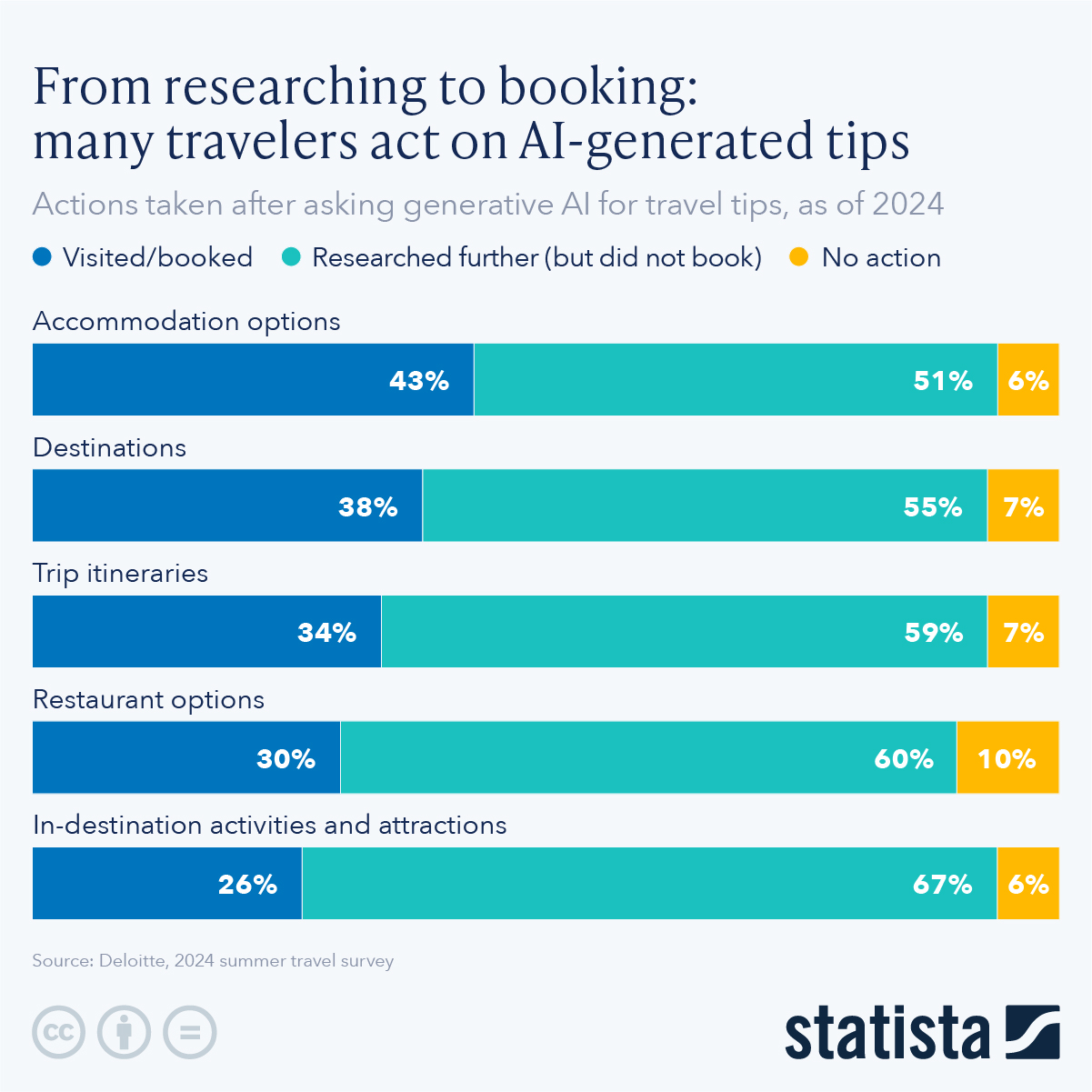
    According to the Deloitte study, at least one-third of respondents reported proceeding with AI recommendations for travel bookings. This statistic underlines an essential shift in how travelers approach planning their trips.

    Accommodation Recommendations

    The study revealed that accommodation bookings are often made with minimal additional research after receiving AI-generated suggestions. This indicates a growing trust in AI systems to provide reliable and relevant options for travelers, streamlining the booking process significantly. Travelers might appreciate the convenience of selecting a place to stay based on personalized recommendations, allowing them to spend less time searching through countless listings.

    Dining and Activity Choices

    In contrast to accommodation bookings, dining and activity suggestions appear to prompt more thorough research among travelers. This difference can be attributed to the nature of these experiences—travelers may want to explore menus, read reviews, or consider location factors before making dining or entertainment decisions. As such, while AI influences initial suggestions, many users still prefer to validate those options through additional resources before committing.

    Trust in Technology: A Double-Edged Sword

    While travelers are increasingly relying on AI-generated recommendations, it raises questions about the implications of such trust in technology. The convenience offered by AI systems can enhance the travel experience, but it also necessitates a level of caution.

    Balancing AI Usage with Human Input

    Travelers must balance AI suggestions with their own intuition and preferences. The best outcomes often come from blending AI insights with personal research. This behavior not only empowers travelers but also encourages them to engage more deeply with their travel plans.

    Future Implications for the Travel Industry

    The impact of AI on travel booking is still unfolding. As AI technologies continue to advance, the potential for even more sophisticated recommendations and interactions with travelers grows. For travel companies, adapting to these changes will be key to staying relevant and competitive in a rapidly evolving market.

    Opportunities for Travel Companies

    With the rise of AI in the travel sector, companies have a unique opportunity to enhance their services. By integrating AI tools effectively, travel companies can provide hyper-personalized experiences that cater to the needs of their customers. In addition, leveraging data analytics can help companies anticipate trends and consumer behavior, leading to better service delivery and customer satisfaction.

    By understanding and adapting to the growing role of AI in travel booking, both travelers and industry professionals can navigate this changing landscape more effectively, ultimately leading to better travel experiences across the board.

    Key Findings from the Deloitte Study

    • One-third of travelers are booking based on AI recommendations.
    • Accommodation bookings are frequently made with minimal additional research.
    • Dining and activity choices prompt more thorough investigations before confirmation.

    The integration of AI in travel planning is reshaping the industry, prompting a need for continued adaptation and consideration of the best practices in leveraging technology for optimal travel experiences.

  • 65% Prefer Travel Experiences Over Dining & Shopping: Trends

    65% Prefer Travel Experiences Over Dining & Shopping: Trends

    The Travel Mindset: A Shift Towards Experiences

    Introduction to Travel Enthusiasm

    Traveling has always held a special place in the hearts of many. But a recent shift is illustrating that consumers are prioritizing travel over traditional retail and dining experiences. The findings from Skift Research’s Global Travel Outlook 2025 shed light on this emerging trend, highlighting a growing preference for travel as the top discretionary purchase across six surveyed nations. This sense of adventure and curiosity is revealing a significant transformation in consumer behavior.

    The Experience Economy

    Definition and Significance

    The experience economy is a concept that emphasizes the value of memorable experiences over material possessions. This shift in consumer preferences signals that people are increasingly prioritizing experiences—whether it’s travel, concerts, or workshops—rather than buying physical items. This trend has widespread implications for businesses and industries that rely on consumer spending.

    Travel in the Experience Economy

    Travel is at the forefront of this movement as individuals seek to create lasting memories, deepen cultural understanding, and escape their routine lives. The idea of visiting new places, meeting diverse people, and immersing oneself in different environments resonates more deeply than acquiring tangible goods. This new mindset is crucial for understanding why travel has dethroned shopping and dining from the top spot in discretionary purchases.

    Data Insights From Skift Research

    Survey Details

    The Skift Research study surveyed consumers across six different countries to gauge their spending preferences. The results consistently showed that travel emerged as the most sought-after discretionary purchase. This finding is telling, reflecting deeper societal changes and potentially influencing future market trends.

    Global Perspective

    Travel’s popularity is not limited to particular regions or demographics; it transcends borders and age groups. From millennials eager to explore new cultures to retirees looking to see the world, travel is appealing to a broader audience than ever before. This universal appeal is indicative of changing values in an increasingly interconnected world.

    Implications for Industries

    Travel and Hospitality Sectors

    The travel and hospitality industries stand to benefit immensely from this shift. With consumers willing to prioritize experiences, businesses in these sectors can tailor their offerings to meet the emerging demands of travelers. This could mean providing unique, immersive experiences or creating personalized travel packages that align with travelers’ desires.

    Retail and Dining Challenges

    Conversely, the retail and dining sectors may face new challenges as consumers divert their discretionary income towards travel. Businesses in these industries might need to rethink their strategies, perhaps incorporating experiential elements into their offerings to capture consumer interest and engagement.

    The Role of Technology

    Booking and Planning

    Advancements in technology have made travel planning significantly more accessible. Online platforms and applications allow consumers to seamlessly compare prices, read reviews, and book their trips. This ease of planning may contribute to the rising interest in travel by reducing barriers that once hindered spontaneous travel decisions.

    Virtual Experiences

    As we move into a more tech-savvy world, virtual experiences also play a role in reigniting the desire to travel. With options like virtual reality tours and live-streamed events from far-off lands, consumers can experience destinations from the comfort of their homes, often inspiring them to explore these places in person.

    The Future of Travel Spending

    Sustainable Practices

    As consumer behavior emphasizes experiences, there is also a growing consciousness regarding sustainability. Travelers are becoming more mindful of their environmental impact, leading to a rise in eco-friendly travel options and sustainable tourism practices. Future travel trends will likely reflect this awareness, with consumers favoring services that align with their values.

    Long-term Change

    The prioritization of travel over shopping and dining is not just a fleeting trend; it’s representative of a long-term change in consumer mindset. As people continue to value transformative experiences, the implications for businesses will be profound, requiring adaptability and innovation to keep pace with evolving preferences.

    Summary of Key Points

    The findings from Skift Research highlight that as travel takes precedence over dining and shopping, businesses across various sectors must adapt to this new landscape. This shift underscores the broader concept of the experience economy, where moments and memories become paramount. Understanding these dynamics will be essential for stakeholders in the travel, retail, and dining industries as they navigate this exciting phase of consumer behavior.

  • 54% of Travel Firms Use AI, But Adoption Faces Key Hurdles

    54% of Travel Firms Use AI, But Adoption Faces Key Hurdles

    The Growing Role of AI in the Travel Industry

    The Integration of AI into Travel

    Artificial intelligence (AI) is rapidly transforming the travel industry in ways that were once considered futuristic. From the early stages of trip planning to post-travel reviews, AI plays an integral role in enhancing the overall customer experience. According to a global survey conducted by Amadeus, a substantial majority of travel companies—over 50%—have embraced Generative AI technologies to streamline the booking process.

    How AI Enhances the Booking Experience

    Personalized Recommendations

    AI systems analyze travelers’ preferences and behaviors to provide tailored recommendations. By examining past trips, search queries, and other relevant data, AI can suggest destinations, accommodations, and activities that align with an individual’s preferences. This level of personalization not only improves user satisfaction but also increases the likelihood of bookings.

    Chatbots and Virtual Assistants

    In the customer service realm, chatbots powered by AI are becoming commonplace. These virtual assistants can provide instant support, answer common questions, and guide travelers through the booking process. This reduces the burden on human agents and allows for 24/7 assistance, ensuring that help is available at any time.

    Major Challenges Hindering AI Adoption in Travel

    Despite the many advantages that AI brings to the table, the path to widespread adoption is not without significant hurdles.

    Data Protection Concerns

    One of the most pressing issues highlighted in the Amadeus report is data protection. A considerable number of travel professionals express apprehension over the security of sensitive personal information handled by AI systems. Given that these systems are trained on vast datasets, there’s legitimate concern about how data is collected, stored, and utilized. Ensuring compliance with regulations like GDPR (General Data Protection Regulation) and other data protection laws is essential for maintaining consumer trust.

    Lack of Expertise and Training

    Another significant obstacle in the implementation of AI technologies is the shortage of expertise and training within the industry. According to the findings from the Amadeus survey, 34% of respondents identified this challenge as a barrier to successful AI adoption. The rapidly evolving nature of AI means that travel professionals must continuously upskill to remain proficient in utilizing these technologies effectively. Without adequate training programs, the potential of AI tools can go largely untapped.

    The Future of AI in Travel

    Despite these challenges, the synergy between AI and the travel industry holds promise for future developments. As technology continues to advance, new solutions may emerge to address the concerns surrounding data protection and training. The travel industry must not only embrace AI but also invest in its responsible and knowledgeable integration into everyday operations.

    As travelers increasingly turn to digital solutions for their travel needs, the role of AI will only become more pronounced. While the journey toward full-scale adoption may encounter some turbulence, the potential benefits could transform the travel experience for generations to come.

  • 69% of Travel Industry Uses AI for Customer Support

    69% of Travel Industry Uses AI for Customer Support

    The Rise of AI in the Travel Industry

    In recent years, the travel industry has witnessed a profound transformation, largely fueled by advancements in artificial intelligence (AI). As travel companies strive to enhance customer experiences and streamline operations, AI has emerged as a valuable ally. According to a recent study by Amadeus, customer service chatbots represent the most prevalent application of generative AI in the travel sector. This post delves into the overarching role of AI in travel, focusing on its applications in customer support, marketing, product development, operations, and human resources.

    The Dominance of AI in Customer Support

    Chatbots at the Forefront

    The findings from the Amadeus study highlight that a significant 69% of travel industry respondents utilize AI for customer support. The rise of customer service chatbots has revolutionized how businesses interact with their clients. These AI-driven bots provide instant responses to common queries, ensuring that travelers receive timely assistance regardless of the hour.

    Enhancing Customer Experience

    By employing AI in customer support, travel companies can offer personalized experiences, addressing individual traveler preferences and concerns. Chatbots analyze customer interactions to provide tailored recommendations, thus making the booking and travel experience more enjoyable and efficient. The ability to handle multiple inquiries simultaneously ensures that no customer is left waiting unduly for assistance.

    Beyond Customer Support: AI in Marketing

    Targeted Campaigns

    AI’s potential in marketing within the travel industry is substantial. More than half of the surveyed travel companies reported the use of AI in their marketing strategies. AI enables businesses to analyze large sets of data to identify customer behavior patterns, allowing for more effective targeting of advertising campaigns.

    Predictive Analytics

    The integration of predictive analytics further strengthens marketing efforts. By forecasting travel trends and customer preferences, travel companies can proactively modify their offerings and communication strategies, which enhances consumer engagement and improves conversion rates.

    Operational Efficiency through AI

    Streamlining Processes

    The application of AI in operations is also gaining momentum, with over half of the respondents acknowledging its presence in their operational framework. From optimizing flight schedules to managing inventory systems, AI helps streamline complex processes, minimizing delays and reducing operational costs.

    Data-Driven Decision Making

    AI’s data processing capabilities empower travel companies to make informed decisions. By analyzing historical data and real-time information, businesses can adjust operations to meet fluctuating demands, ultimately leading to improved operational efficiency.

    AI’s Role in Product Development

    Innovative Offerings

    Product development is another area where AI is making inroads. By leveraging data analytics, travel companies can identify gaps in their offerings and develop new products that cater to emerging trends and customer needs. For instance, AI can help delineate which travel packages or experiences are gaining popularity, thus guiding the creation of new, attractive travel options.

    Enhancing Product Features

    Additionally, AI can enhance existing products by integrating features that meet modern travelers’ expectations. This might include features such as user-friendly mobile apps or personalized travel suggestions based on accumulated customer data.

    Human Resources and AI Integration

    Recruitment and Onboarding

    Interestingly, AI’s influence extends beyond customer-facing services into human resources. Just over a quarter of respondents reported utilizing AI in HR functions. AI-driven recruitment tools can streamline the hiring process by automating candidate screening and shortlisting based on predefined criteria, thus saving valuable time for HR professionals.

    Employee Engagement and Retention

    Moreover, AI can assist in improving employee engagement and retention strategies. By analyzing employee feedback and performance data, HR departments can better understand staff needs and develop programs that foster a positive workplace culture.

    Conclusion

    As demonstrated by the Amadeus study, the integration of AI into the travel industry is multifaceted, enhancing customer support and driving efficiencies across marketing, operations, product development, and human resources. The potential of AI to reshape the travel landscape is vast, and as technologies continue to evolve, travel companies are well-positioned to harness these advancements to create superior customer experiences and achieve operational excellence.

  • 80% of Travelers Open to Using AI for Trip Planning

    80% of Travelers Open to Using AI for Trip Planning

    The Role of Generative AI in Modern Travel Planning

    As we move deeper into the digital age, the travel industry is witnessing a significant transformation, largely driven by advancements in technology. Among these innovations, generative AI has emerged as a game-changer, influencing how we plan, book, and experience our journeys. A recent survey conducted in 2024 highlights that an impressive 80% of international travelers are open to integrating AI into their holiday planning process. This trend is not just a passing phase; it’s a fundamental shift in travel dynamics that promises to reshape our experiences.

    AI-Driven Inspiration for Travel Destinations

    One of the primary ways travelers are utilizing generative AI is for inspiration when selecting travel destinations. According to the Phocuswright Travelers and Tech 2024 report, a significant percentage of U.S. travelers are turning to AI tools to help them decide where to go. The allure of AI lies in its ability to analyze vast amounts of data, providing personalized recommendations based on user preferences, past travel experiences, and even trending locations.

    This systematized approach to discovering new places not only enhances the excitement of planning a trip but also ensures that travelers can explore options they might not have considered otherwise. Whether it’s a hidden gem in a foreign country or an up-and-coming city, AI has the capacity to broaden the horizons for many travelers.

    Comparing Travel Destinations

    Beyond inspiration, generative AI is also being leveraged to facilitate more complex tasks such as comparing destinations. In the 2024 survey findings, around 45% of travelers reported using AI to assess and contrast different locations before making a decision. This feature allows travelers to evaluate key factors such as safety, cost of living, local attractions, and climate. By providing a comprehensive overview of potential locations, AI empowers users to make more informed choices that align with their specific preferences and needs.

    Imagine planning a trip where AI analyzes factors like travel budget, desired experiences, and even traveler reviews, presenting a tailored comparison that highlights the pros and cons of each choice. This capability greatly enhances the travel planning process, making it efficient and data-driven.

    Crafting Personalized Itineraries

    Further advancing the travel planning process, generative AI is being harnessed to create personalized itineraries—a task previously dominated by travel agents and manual planning efforts. Approximately 38% of respondents in the Phocuswright report indicated that they were using AI for this meticulous aspect of travel planning. By integrating various elements such as accommodation options, activities, and travel times, AI tools can craft detailed itineraries that fit the traveler’s needs perfectly.

    The beauty of using AI for itinerary planning is its adaptability. If plans change or if travelers wish to explore different activities, AI can quickly reconfigure suggestions to fit the new parameters. This flexibility removes much of the stress associated with planning a trip, allowing travelers to focus on enjoying their experiences instead.

    The Future of Travel with Generative AI

    The implications of generative AI in travel planning extend beyond mere convenience; they signify a broader evolution in how we approach travel itself. The technology is not only enhancing the way we discover and plan journeys but is also invaluable in creating seamless and personalized travel experiences. As we continue to integrate AI into our daily lives, including travel planning, we are likely to see even more innovative applications that cater to the ever-evolving needs of modern travelers.

    By leveraging the power of generative AI in travel, we are stepping into a realm where personalized experiences take precedence, and the process of planning becomes not only easier but also more enjoyable. The ongoing evolution of this technology promises to enrich our future travels, making it more accessible, efficient, and tailored to individual preferences. As we look forward, the synergy between AI and travel will likely lead to unprecedented opportunities for exploration and adventure.

  • Hotels Gain 1.12% Occupancy for Every Dollar in Commissions

    Hotels Gain 1.12% Occupancy for Every Dollar in Commissions

    Understanding the Financial Benefits of Online Travel Platforms for Hotels

    The hospitality industry has undergone significant transformation with the advent of online travel platforms (OTAs). These platforms have become crucial for hotels, providing increased visibility and bookings. Recent research conducted in February 2025 illustrates that hotels experience significant financial returns from the commissions paid to these online platforms.

    An Overview of the Study

    The research analyzed a representative sample of 644 hotels across the United States, encompassing various market segments. The study focused on quantifying how hotels benefit financially from their listings on online travel platforms, assessing key performance indicators like occupancy rates, revenue per available room (RevPAR), and earnings before interest, taxes, depreciation, and amortization (EBITDA).

    Key Findings

    1. Increased Occupancy Rates

    One of the standout findings of the study is the direct correlation between commissions paid to OTAs and increased occupancy rates. On average, for every dollar spent on commissions per available room:

    • Occupancy increases by 1.12%.

    This uptick suggests that the visibility hotels gain from being featured on these platforms effectively translates into more bookings.

    2. Revenue Growth: RevPAR

    The study highlighted another critical metric: Revenue per Available Room (RevPAR). The data indicates that:

    • RevPAR rises by $20.20 for every dollar spent on commissions.

    This growth reflects an essential measure of a hotel’s financial performance, indicating that the returns from increased bookings often outweigh the costs associated with commission payments.

    3. EBITDA Improvements

    Earnings before interest, taxes, depreciation, and amortization (EBITDA) serves as a vital indicator of overall profitability. The study found that:

    • EBITDA grows by $7.08 for each dollar spent on commission.

    This significant financial return underscores the effectiveness of online travel platforms in augmenting a hotel’s profitability, particularly for those in competitive markets where visibility is crucial.

    Impact on Different Hotel Segments

    While the overall results show robust financial benefits for most hotels, the study categorizes hotel performance based on market segments, revealing interesting insights:

    1. Mainstream and Luxury Segments

    The findings indicate that mainstream and luxury hotels typically see substantial returns from their investments in online travel platform commissions. These types of establishments benefit greatly from the increased exposure and higher occupancy rates driven by OTAs, resulting in positive financial outcomes.

    2. Economy Hotels

    Interestingly, the research points out that economy hotels, which accounted for 20% of the sample, experience a different dynamic:

    • Their participation in OTAs may have a slight negative impact on profitability.

    Although these hotels may see gains in occupancy and RevPAR, the associated commission costs can often negate these benefits, leading to a net loss in profitability.

    Strategic Implications for Hotels

    The conclusions drawn from the research emphasize the need for hotels to adopt a hotel-specific, data-driven approach when formulating distribution strategies. By leveraging such strategies, hotels can effectively harness the advantages offered by online travel platforms while mitigating potential drawbacks.

    1. Tailoring Distribution Strategies

    Hotels should consider their unique market positioning and guest demographic when developing their distribution strategies. For instance:

    • Luxury hotels might emphasize brand storytelling on OTAs to attract high-spending travelers.
    • Economy hotels may need to negotiate lower commissions or seek alternative marketing strategies to balance costs.

    2. Continuous Performance Evaluation

    To maximize returns from OTAs, it’s essential for hotel operators to continuously monitor and evaluate their performance metrics. By analyzing occupancy rates, RevPAR growth, and EBITDA changes over time, hoteliers can adjust their approach to optimize profitability.

    Future Considerations for the Hospitality Industry

    As the industry continues to evolve with technology and consumer behavior, hotels must stay ahead of trends impacting travel and booking preferences. Recognizing the role of OTAs in shaping guest expectations and the competitive landscape will be paramount for sustained success.

    Overall, the findings from the February 2025 research present compelling evidence that online travel platforms can yield substantial financial returns for hotels. However, the nuances among different segments highlight the importance of tailored strategies to navigate the complexities of this evolving marketplace.