Tag: Imports

  • White House: China to buy $17B+ in US agricultural goods yearly

    White House: China to buy $17B+ in US agricultural goods yearly

    China has pledged to buy a minimum of $17 billion worth of U.S. agricultural products in 2026, 2027, and 2028, according to a fact sheet released by the White House on Sunday.

    This pledge was made during meetings last week between President Donald Trump and President Xi Jinping. The $17 billion amount excludes the soybean purchase commitments that China announced in October 2025.

    U.S. agricultural exports to China saw a significant decline last year due to a series of retaliatory tariffs, falling 65.7% compared to the previous year to $8.4 billion in 2025, based on data from the U.S. Department of Agriculture. Since Trump’s first term, China has considerably decreased its dependence on U.S. farm products, sourcing about 20% of its soybeans from the U.S. in 2024, down from 41% in 2016.

    The White House also announced that China plans to collaborate with U.S. regulators to lift bans on U.S. beef processing plants and resume poultry imports from states deemed free of avian influenza. Furthermore, both nations will set up a U.S.-China Board of Trade and a U.S.-China Investment Board to address market access issues for agricultural goods and foster trade growth through a framework of reciprocal tariff reductions, according to Chinese Foreign Minister Wang Yi last week.

  • Bangladesh Ensures Diesel Supply Amid Widespread Energy Disruptions

    Bangladesh Ensures Diesel Supply Amid Widespread Energy Disruptions

    Vehicles form a long line at a fuel station as worries about fuel availability grow amid tensions stemming from the US-Israel conflict with Iran, in Dhaka, Bangladesh, March 6, 2026.— Reuters

    – Power outages and diesel shortages are disrupting garment factories.
    – Bangladesh is importing diesel to address the fuel shortage.
    – The country depends on imports for about 95% of its energy needs.

    Bangladesh has started receiving diesel supplies from countries including China and India, with officials stating the current stock can meet roughly one month of demand. Preparations are underway to secure another month’s supply, as the US-Israeli conflict with Iran has interrupted shipments, impacting major industries like the clothing sector.

    Home to 175 million people, Bangladesh relies heavily on imported energy, with a dependency rate of around 95%. To cope with the crisis, authorities have implemented vehicle rationing, restricted diesel sales, and shut down universities amid the ongoing turmoil affecting Middle Eastern oil exports.

    Many garment manufacturers—second only to China globally—are already reporting inadequate diesel supplies for their backup generators during power outages. Mahmud Hasan Khan, president of the Bangladesh Garment Manufacturers and Exporters Association, noted that power cuts have doubled to as much as five hours daily since the conflict erupted on February 28.

    “Our power goes out, so we rely on diesel for our generators, but we just can’t buy enough anymore, which is causing us serious problems,” Khan said.

    The Bangladesh Petroleum Corporation (BPC), managed by the government, is currently importing approximately 60,000 metric tons of diesel from three traders. An additional 90,000 metric tons are expected later this month, according to two energy officials who requested anonymity. One shipment of 27,000 metric tons from PetroChina arrived at Chittagong port Monday, while another 28,000 metric tons from Vitol is waiting at the port’s outer anchorage.

    Furthermore, about 5,000 metric tons of diesel are being supplied via a cross-border pipeline from India’s Numaligarh Refinery. Negotiations are ongoing to procure an extra 30,000 metric tons from Indian Oil.

    “We have enough supplies for one month, and arrangements are being made for an additional month,” a BPC representative said. The agency did not immediately respond to requests for comment.

    While Bangladesh generally consumes approximately 380,000 metric tons of diesel each month, figures suggest current consumption has dropped to roughly 270,000 metric tons since rationing began. The ease of securing refined fuel cargoes has been somewhat reassuring, as most traders do not depend on the disrupted Gulf shipping routes responsible for crude oil transportation. Still, prices have risen due to market volatility stirred by the Middle East crisis.

    The country also imports about 1.4 million metric tons of crude oil annually under long-term contracts with Saudi Aramco and the Abu Dhabi National Oil Company (ADNOC). However, shipments from these companies could face delays because their cargoes must pass through the Strait of Hormuz. Already, a shipment of approximately 100,000 tons from Aramco has been delayed in the Gulf.

    Severe gas shortages have already forced Bangladesh to suspend operations at four out of its five state-run fertilizer factories, diverting gas supplies to power plants instead.

  • Indian refineries halt Russian oil imports, seek clarity—sources

    Indian refineries halt Russian oil imports, seek clarity—sources

    Indian refiners have not submitted new orders for Russian oil since sanctions were implemented, as they seek clarity from the government and suppliers. Some refiners are turning to spot markets to fulfill their crude oil needs, according to sources who requested anonymity because they aren’t authorized to speak publicly.

    Indian Oil Corporation has issued a tender for oil purchases, and Reliance Industries has increased its spot market purchases, the sources added. The European Union, the UK, and the US have imposed various sanctions on Russia over its military actions in Ukraine, including recent US sanctions targeting Russia’s leading oil producers, Lukoil and Rosneft.

    Refiners in India are expected to significantly reduce Russian oil imports to comply with the new US sanctions, which could facilitate a smoother trade relationship with the US. Last week, Reliance, India’s largest buyer of Russian oil, stated it would comply with sanctions while maintaining existing supplier relationships. Reports also indicate Reliance plans to halt imports from Rosneft.

    One source mentioned, “We haven’t ordered new cargoes yet and have canceled some booked through traders linked to sanctioned entities.” Another added, “We need to make sure our purchases aren’t connected to sanctioned parties since banks won’t process payments.” A third source said their company is waiting to see if it can source shipments from non-sanctioned traders or entities.

    In the first nine months of 2025, India imported 1.9 million barrels of Russian oil daily, accounting for about 40% of Russia’s total exports, according to the International Energy Agency. Between April and September, India’s Russian oil imports decreased by 8.4% year-over-year, driven by narrower discounts and tighter supplies, prompting refiners to source more from the Middle East and the US, based on trade data and shipping reports.

  • Chinese Oil Giants Halt Russian Oil Purchases Amid Sanctions

    Chinese Oil Giants Halt Russian Oil Purchases Amid Sanctions

    Chinese state-owned oil giants have stopped purchasing Russian crude shipped by sea following the U.S. sanctions targeting Moscow’s two largest oil firms, Rosneft and Lukoil, according to several trade sources on Thursday.

    Meanwhile, India, the biggest importer of Russian seaborne oil, is expected to significantly reduce its crude imports from Russia to align with U.S. sanctions related to Russia’s invasion of Ukraine.

    This decline in demand from Moscow’s primary customers is likely to hurt Russia’s oil revenue and compel other major importers to seek alternative sources, potentially driving up global oil prices.

    The major Chinese oil companies—PetroChina, Sinopec, CNOOC, and Zhenhua Oil—are reportedly abstaining from dealing in Russian seaborne crude for the foreseeable future due to fears of sanctions. These companies did not immediately comment.

    Although China imports about 1.4 million barrels of Russian oil daily by sea, most of this is purchased by independent refiners, including small-scale operators known as teapots. Estimates on how much state giants buy vary widely—the analytics firm Vortexa estimates their purchases at under 250,000 barrels per day in the first nine months of 2025, while Energy Aspects suggests it’s around 500,000 barrels per day.

    Unipec, Sinopec’s trading arm, halted Russian oil imports last week after the UK designated Rosneft, Lukoil, and associated shadow fleet ships and Chinese entities—such as a major Chinese refiner—as targets.

    Most Russian oil sales to China are made through intermediaries instead of direct deals, traders say. Meanwhile, independent refiners might pause their Russian purchases to evaluate the impact of sanctions but are still likely to seek ways to continue sourcing Russian crude.

    Leading up to the sanctions announcement on Wednesday, premiums for November-loaded ESPO crude dropped to about $1 per barrel over ICE Brent, down from early October levels around a $1.70 premium.

    China also imports roughly 900,000 barrels per day of Russian oil via pipeline, primarily to PetroChina, which several traders consider unlikely to be significantly impacted by the sanctions.

    India and China are expected to rely on alternative suppliers from the Middle East, Africa, and Latin America, which could lead to higher prices for non-sanctioned oil.

  • China’s U.S. Exports Projected to Plunge by 77% by 2025

    China’s U.S. Exports Projected to Plunge by 77% by 2025

    Insights into Chinese Exports to the U.S. and the Global Trade Landscape

    The trade dynamics between China and the United States are undergoing significant transformations, as highlighted by recent forecasts from the World Trade Organization (WTO). With predictions suggesting a drastic 77% reduction in Chinese exports to the U.S. by 2025, the implications for international trade are profound. This blog explores the factors driving these changes, their anticipated effects on global trading partners, and the evolving landscape of exports.

    The Projected Decline of Chinese Exports to the U.S.

    According to WTO forecasts, Chinese exports to the U.S. are set to plunge dramatically by 2025. This sharp decline can be attributed to several key factors, including:

    • Increased Tariffs: The U.S. has implemented higher tariffs on a range of Chinese goods, leading to reduced competitiveness and market access for Chinese exporters.
    • Trade Policies: Shifts in trade policies and negotiations between the two nations have created uncertainty, prompting businesses to reassess their supply chains.
    • Domestic Concerns: China’s focus on transforming its economy through domestic consumption and innovation might lead to a reduction in export-oriented activities.

    Shifts in Import Patterns for China

    Contrasting the expected decline in U.S. exports, Chinese imports from other regions are projected to experience growth. Notably, the following trends are anticipated:

    Growth in North America

    • Regional Growth: The rest of North America is anticipated to see a robust 25% increase in Chinese imports. This indicates a pivot in trade relations and a diversification of markets as China seeks to reduce its dependence on the U.S.

    Emerging Markets

    • South America: A 9% increase in Chinese imports from South America highlights the potential for deeper economic ties and collaboration in sectors ranging from agriculture to energy.
    • Other Global Markets: Regions such as Europe (excluding the U.S.) and Asia (excluding China) are expected to see modest increases in import activity, ranging between 4% and 6%.

    Other Countries Adjusting to Changing Export Dynamics

    The consequential drop in Chinese exports to the U.S. is set to create opportunities for other regions. Here’s a closer look at how different areas are expected to respond:

    Decreases in Exports from Europe and North America

    • Europe: A projected decrease of 8 percentage points in exports reflects the broader challenges faced by European economies in maintaining a foothold in the U.S. market.
    • North America: The rest of North America’s anticipated decline of 7 percentage points indicates potential disruptions in trade flows within the region.

    South America and the Middle East

    • South America: With an expected 4 percentage points decrease, this region faces challenges but also opportunities to expand its presence in alternative markets.
    • The Middle East: A lesser decline of 2 percentage points emphasizes the significance of energy exports which continue to be in demand despite shifting trade agreements.

    Opportunities for the CIS and Least Developed Countries

    Interestingly, some regions stand to benefit from the changing landscape:

    • CIS Region: The Commonwealth of Independent States is projected to increase its exports to the U.S., driven primarily by exemptions related to natural resources, showcasing a unique advantage in resource-based industries.
    • Least Developed Countries (LDCs): These economies are expected to see more export opportunities in the U.S. market as they pick up some of the slack left by China’s exit, presenting a chance for diversification in U.S. import sources.

    Asia’s Emerging Role

    Apart from China, Asia as a collective, particularly countries like India and Vietnam, is forecasted to ramp up exports to the U.S., potentially filling the gap created by the decline of Chinese goods. This shift could signal a realignment in trade relations, where countries in the region capitalize on new emerging trade flows.


    By delving into these aspects of the current trade landscape, it’s evident that the implications of China’s reduced exports to the U.S. will reverberate globally, offering both challenges and opportunities for various economies. This evolving narrative in international trade is noteworthy for businesses and policymakers aiming to adapt to the changing tides.

  • U.S. Relies on China for 70% of Rare Earth Imports

    U.S. Relies on China for 70% of Rare Earth Imports

    Understanding Rare Earth Elements and Their Significance

    What Are Rare Earth Elements (REEs)?

    Rare Earth Elements (REEs) refer to a group of 17 metallic elements that play a crucial role in modern technology and industries. These include the 15 lanthanides, plus scandium and yttrium. Their properties make them invaluable in various applications, from electronics to renewable energy solutions.

    The Role of REEs in Modern Technology

    REEs are essential components in a myriad of high-tech applications. They are utilized in the manufacturing of:

    • Electric Vehicles (EVs): REEs contribute to the creation of efficient batteries and electric motors.
    • Semiconductors: These elements are vital for producing high-performance chips used in computers and smartphones.
    • Defense Applications: Many military technologies, including missiles and drones, depend heavily on REEs for optimal performance.

    Current State of Rare Earth Imports in the U.S.

    Heavy Reliance on Chinese Imports

    Between 2020 and 2023, the United States displayed significant reliance on rare earth imports from China, with an astounding 70% of its REE supply originating from this single country. This dependency has raised alarms concerning the stability of supply chains, especially in high-stakes sectors such as technology and defense.

    Additional Suppliers

    While China dominates the market, there are a few other countries that contribute to U.S. REE imports, namely:

    • Malaysia
    • Japan
    • Estonia

    These nations serve as supplementary sources, but none come close to matching China’s share.

    Recent Developments in Export Controls

    China’s Response to Tariffs

    In a strategic move against U.S. tariffs imposed by the Trump administration, China has recently tightened its grip on the export of seven critical rare earth elements. This decision is significant as it showcases the geopolitical tensions surrounding trade in high-tech materials.

    Affected Rare Earth Elements

    The new export controls target seven rare earth elements:

    • Samarium
    • Gadolinium
    • Terbium
    • Dysprosium
    • Lutetium
    • Scandium
    • Yttrium

    These elements are pivotal for a variety of industries and their restricted availability could lead to supply constraints for companies depending on them.

    Requirements for Export

    Under the new regulations, exports of these elements will necessitate a special export license. This measure not only allows Chinese authorities to monitor the flow of these materials but also offers the potential for further restrictions on specific entities, such as U.S. defense contractors.

    Exploring the U.S. Dependence on Yttrium

    The Vital Role of Yttrium

    Among the seven elements recently subjected to export regulations, Yttrium is notable. The United States sources approximately 93% of its Yttrium compounds from China. According to the U.S. Geological Survey, the country is entirely reliant on imports for Yttrium, which is majorly used in:

    • Catalysts
    • Ceramics
    • Electronics
    • Lasers
    • Metallurgy
    • Phosphors

    This level of dependence on a single country for such a critical component raises significant concerns for U.S. industries.

    Current Statistics on U.S. Imports

    In terms of broader rare earth mineral imports, the U.S. was 80% net import reliant in 2024. This indicates that, although steps have been taken to increase domestic production, the United States still relies heavily on imports to meet its demand for rare earth materials.

    Trends in Domestic Production

    Despite the high levels of import reliance, there has been a notable decline from almost complete dependence (100%) in 2020, with an incremental rise in domestic production capabilities, which reached approximately 20% in 2024.

    Implications for Future Strategies and Policies

    Given the strategic importance of rare earth elements and the emerging restrictions imposed by China, it becomes increasingly crucial for U.S. policymakers and industry leaders to devise effective strategies that address these supply chain vulnerabilities. Increasing domestic production and diversifying supply sources may be essential pathways for ensuring resilience in critical sectors dependent on these vital materials.

  • U.S. Tariffs to Soar from 2.5% to 22% by 2025

    U.S. Tariffs to Soar from 2.5% to 22% by 2025

    Analyzing the Impact of Trump’s Tariff Policy on U.S. Trade

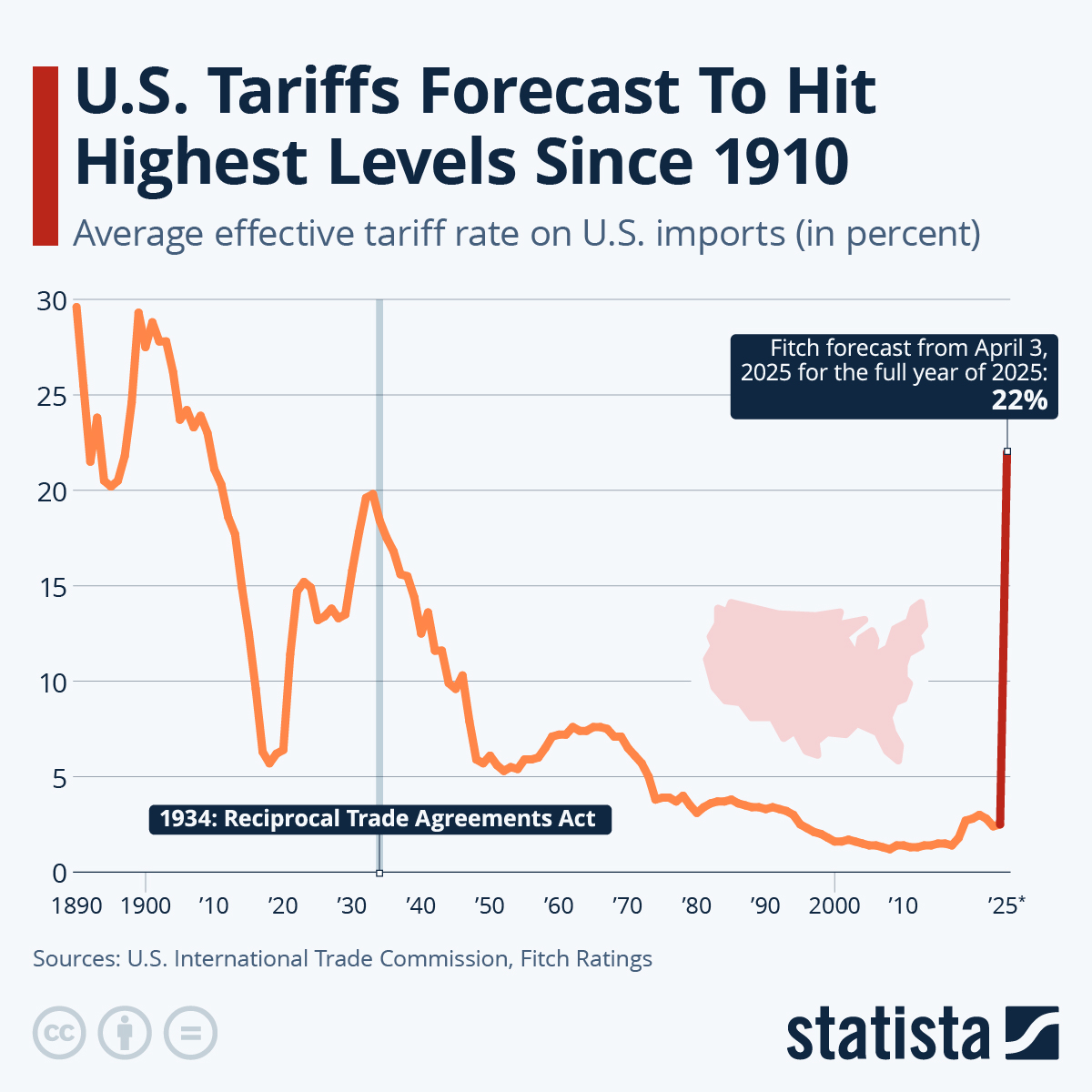
    The recent announcement of significant tariff increases by U.S. President Donald Trump has sparked intense debates and discussions regarding its potential impact on the American economy and international trade relations. With projections indicating that the average effective tariff rate on U.S. imports could leap from 2.5 percent in 2024 to a staggering 22 percent by 2025, it is essential to delve into the context, implications, and historical parallels of such drastic measures.

    Understanding Tariffs and Their Historical Context

    The Role of Tariffs in Trade Policy

    Tariffs are taxes levied on imported goods and services, primarily aimed at making foreign products less competitive in comparison to domestic products. While often promoted as a strategy to protect local industries and jobs, the broader implications of tariff increases can lead to retaliatory measures from trading partners and ultimately disrupt global supply chains.

    Historical Instances of High Tariffs

    The backdrop of current tariff measures can be traced back to significant historical events. For instance, the Smoot-Hawley Tariff of 1930 is often cited as a classic case where the United States raised tariffs on numerous imported goods, leading to international retaliation and a sharp decline in global trade. In response to the economic turmoil of that era, the Reciprocal Trade Agreements Act of 1934 allowed for tariff reductions to foster international trade, which contrasts sharply with the recent trends.

    Trump’s Tariff Policy: Current Landscape

    New Tariff Rates on Imports

    In his recent announcement, Trump proposed substantial tariffs across various countries, significantly affecting imports from the European Union and China. Specifically, imports from the EU could face surcharges of 20 percent, while goods from China may incur tariffs as high as 34 percent. Trump has also indicated a minimum tariff rate of 10 percent for other trading partners, further broadening the scope of his tariff policy.

    Reactions from International Leaders

    The international response to these proposed tariffs has been immediate and critical. EU Commission President Ursula von der Leyen described the tariffs as a "severe blow to the global economy," highlighting the potential for cascading effects on international trade relations. This sentiment underscores the apprehension that countries might resort to protective measures in retaliation, igniting a cycle of trade conflicts reminiscent of historical precedents.

    Projections and Economic Implications

    Forecasts from Rating Agencies

    According to estimates from Fitch, the proposed tariff hikes could result in the effective average tariff rate on U.S. imports rising dramatically, reaching levels not seen since 1910. Such an increase could have profound consequences on inflation, consumer prices, and the overall economic landscape if these tariffs are implemented.

    Effects on Domestic Industries

    While the goal of tariff increases may be to protect U.S. industries and jobs, there are concerns regarding the unintended consequences. Increased tariffs could lead to higher production costs for domestic manufacturers reliant on imported materials, potentially passing those costs onto consumers. Additionally, retaliatory tariffs from other countries could hurt U.S. exporters and limit market access for American goods abroad.

    Historical Parallels: Lessons from the Past

    The Smoot-Hawley Tariff and Its Fallout

    The Smoot-Hawley Tariff of 1930 serves as a cautionary tale in tariff history. Initially intended to protect American agriculture and manufacturing, the resulting trade war significantly contracted global trade volumes and intensified the economic downturn during the Great Depression. This historical instance raises questions about whether current tariff strategies might repeat such adverse outcomes.

    Shifts Towards Free Trade

    Post-World War II, the trend in U.S. trade policy shifted towards reducing tariffs to foster global trade relationships. Agreements such as the General Agreement on Tariffs and Trade (GATT) emphasized cooperation among nations to promote free trade, a stark contrast to the protectionist measures currently being pursued.

    Potential Futures for U.S. Trade Relations

    Navigating the Trade Landscape

    As the U.S. embarks on this path of heightened tariffs, the implications for both domestic and international trade are manifold. The evolving landscape will necessitate strategic responses from both policymakers and businesses as they navigate the challenges posed by increased tariffs and the potential retaliation from global partners.

    The Road Ahead

    The future of U.S. trade relations will hinge on careful consideration of the balance between protecting domestic industries and maintaining collaborative ties with international partners. As history has shown, the repercussions of tariff wars can extend far beyond the borders of a single nation, affecting global economic stability.

    In summary, the ramifications of America’s evolving trade policy under Trump showcase a fundamental shift in economic strategy, echoing lessons from the past while raising critical questions about the path forward.

  • US Executives Voice Concerns Over Trump’s Tariff Plans

    US Executives Voice Concerns Over Trump’s Tariff Plans

    Title: US Business Leaders Raise Alarm Over President Trump’s Tariff Plan

    WASHINGTON: Business leaders across the United States have voiced their concerns regarding President Donald Trump’s recent tariff plan. They warn that the extensive new tariffs on imports could lead to increased costs, supply chain disruptions, and detrimental effects on both American companies and consumers.

    During a press conference held on the White House lawn, Trump announced a baseline tariff of 10 percent on nearly all countries that trade with the US, set to take effect on April 5. Additionally, from April 9, an extra surcharge will be applied to nations that impose tariffs and other barriers against US companies.

    Trade organizations expressed alarm over these tariffs, especially the new duty that would raise tariffs on many goods imported from China to a staggering 34 percent when combined with existing fees.

    "The implementation of such significant tariffs will create challenges and disruptions that restaurant owners will have to manage to ensure their businesses remain operational," stated the National Restaurant Association in their press release.

    Jay Timmons, president of the National Association of Manufacturers, echoed this sentiment, emphasizing the severe risks manufacturers face. "Many US manufacturers already operate on narrow profit margins," he explained. "The escalating costs tied to these new tariffs pose a threat to investments, jobs, and supply chains, ultimately undermining America’s position as a leading manufacturing power."

    In addition to China, other major US trading partners, including the European Union and India, will encounter new tariffs of at least 20 percent starting April 9.

    Neil Bradley, chief policy officer of the US Chamber of Commerce, criticized the broad tariffs before they were officially announced, asserting, "These tariffs constitute a tax hike that will inflate prices for American consumers and negatively impact the economy." He urged policymakers to pivot their focus toward programs that promote economic growth, like extending current tax policies and rebalancing regulations.

    A recent analysis from Yale University’s Budget Lab revealed that a blanket 20 percent tariff could cost the average American household over $3,400—an alarming adjustment for many.

    Gary Shapiro, CEO of the Consumer Technology Association, commented, "President Trump’s extensive tariffs are essentially massive tax increases on everyday Americans that will spur inflation, endanger jobs, and potentially lead to a recession."

    While many expressed concern, some advocacy groups welcomed the tariff announcement. "Today’s trade action prioritizes domestic manufacturers and American workers," said Scott Paul, president of the Alliance for American Manufacturing. "These dedicated individuals have endured the consequences of unfair trade practices for far too long. They deserve a fair opportunity," he affirmed, calling the announcement "a crucial step toward reform."

  • 25% Tariff Shock: Global Carmakers Face Major Stock Falls

    25% Tariff Shock: Global Carmakers Face Major Stock Falls

    Understanding the Impact of U.S. Car Tariffs on the Global Automotive Industry

    Overview of the Tariff Announcement

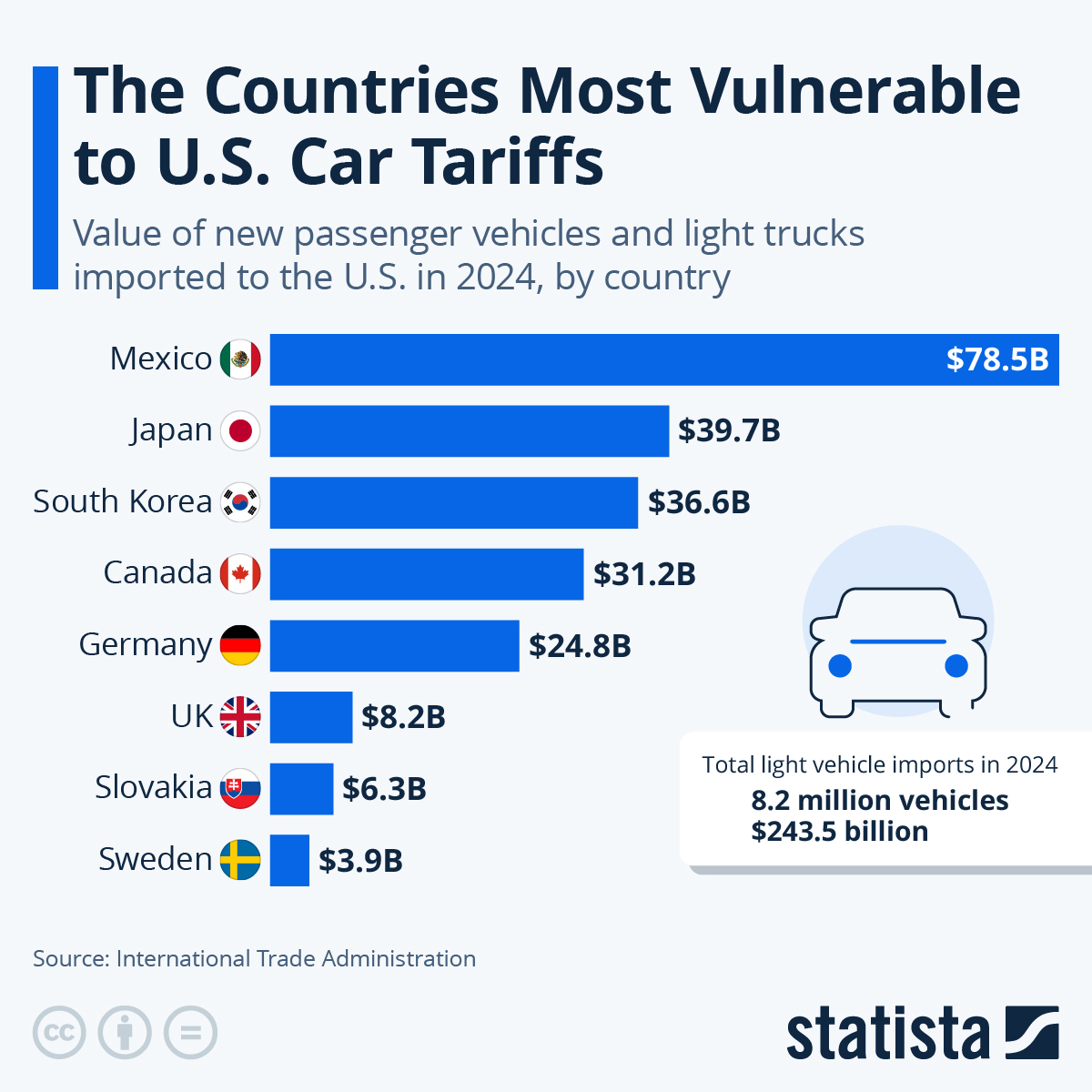
    Recently, the U.S. government announced a significant tariff of 25% on imports of passenger cars and automotive parts. This decision has sent ripples throughout the global automotive market, leading to a dramatic decline in the stock valuations of car manufacturers across various countries. The industries in Germany, Japan, and South Korea experienced the most substantial hit, reflecting their status as major exporters to the U.S. market.

    Key Countries Affected

    Germany

    Germany’s automotive sector is home to some of the world’s most recognized and respected brands, including Mercedes-Benz and BMW. These manufacturers have established a significant footprint in the U.S. market, and the new tariffs pose a substantial threat to their operations. The reliance on exports to the United States means that a sizable portion of German automakers’ revenues could be impacted.

    Japan

    Japanese car manufacturers such as Toyota and Honda have long been favored for their reputation for reliability and innovation. However, with the introduction of these tariffs, the cost of doing business in the U.S. may increase significantly for these companies, potentially driving them to reconsider their pricing strategies and market positioning within the competitive landscape.

    South Korea

    In South Korea, companies like Hyundai and Kia have been rapidly expanding their presence in the U.S. market. These automakers often rely on competitive pricing to win over American consumers, and the added burden of tariffs could compromise their ability to maintain such pricing, ultimately affecting their sales figures and market share.

    The Ripple Effect on U.S. Automakers

    The Surprise Decline in Stock Prices

    One of the most unexpected outcomes following the tariff announcement was the impact on U.S.-based manufacturers. Major companies such as General Motors and Ford saw their stock prices plummet by 7% and nearly 4%, respectively. This raises questions about the effectiveness of tariffs intended to bolster the American car industry.

    The Complex Supply Chain

    It’s crucial to understand that U.S. automakers are not insulated from the effects of the tariffs. They rely substantially on imported parts and components for their vehicles, many of which are sourced from Canada and Mexico. The interconnectedness of the automotive supply chain complicates the narrative that these tariffs will solely benefit U.S. manufacturers.

    Tariff Exemption Nuances

    Understanding the Exemption Criteria

    While vehicles assembled in Canada and Mexico can sometimes be exempt from tariffs, this only applies to parts that are wholly produced or substantially transformed in the U.S. This criterion adds a layer of complexity for many automakers. They must navigate these regulations carefully as they look to minimize their exposure to tariffs, potentially leading to increased administrative costs and strategic shifts in sourcing and production.

    Potential Strategies by Automakers

    In response to the tariff landscape, automakers may have to adapt in several ways. Some possible strategies could include:

    • Localization of Supply Chains: To mitigate the impact of tariffs, companies may look to localize their supply chains, increasing domestic production and sourcing parts from U.S. suppliers.

    • Pricing Adjustments: Automakers may need to adjust their pricing strategies for the American market. This could involve raising prices on imported vehicles or modifying their cost structures to maintain competitiveness.

    The Future of the Automotive Industry in the Context of Tariffs

    The ripple effects of the recent tariff announcement on the automotive industry underscore the vulnerabilities faced by both foreign and domestic car manufacturers. As the industry grapples with these changes, it becomes critical for stakeholders to stay informed and agile in responding to a rapidly evolving market landscape. The complexities of global trade and the intricate web of supply chains will continue to challenge manufacturers as they navigate this new era of tariffs and trade policy.

  • India’s Venezuelan Oil Imports Surge 500% Amid Tariff Threats

    India’s Venezuelan Oil Imports Surge 500% Amid Tariff Threats

    The Complex Landscape of Venezuelan Oil Imports: A Detailed Analysis

    Introduction to Venezuelan Oil and Global Trade Policies

    Venezuela, once a powerful player in the global oil market, has faced significant challenges in recent years, primarily due to political instability and international sanctions. Despite these hurdles, the country continues to export oil, attracting various international buyers—most notably countries like India and China. As of 2024, the geopolitical landscape surrounding Venezuelan oil imports is becoming even more complicated due to potential tariffs and shifting buyer dynamics.

    U.S. Trade Actions Against Countries Importing Venezuelan Oil

    Overview of Proposed Tariffs

    In a bold move, President Donald Trump has announced a plan to impose a 25% tariff on countries importing Venezuelan oil starting in early April 2024. This trade action is part of a broader strategy to exert pressure on nations that engage in oil transactions with Venezuela. The tariffs serve as a tool for the U.S. to navigate its foreign policy and economic interests, indicating a significant shift in how the U.S. approaches international trade agreements.

    The Implications for India

    India, in particular, has found itself in a precarious position. As one of the largest importers of Venezuelan oil, the country risks facing a substantial economic impact if these tariffs are enacted. The U.S. has already been a key player in the global oil market; adding tariffs would not only disrupt India’s energy procurement but also affect its overall economic health.

    Current Venezuelan Oil Buyers: An Overview

    Key Players in the Market

    While the U.S. has pursued a complicated relationship with Venezuelan oil, other countries have stepped in as significant buyers. As of 2024, the landscape is dominated by new import patterns, especially from Asian nations.

    China’s Purchasing Trends

    China has historically been a heavy buyer of Venezuelan oil. However, reports indicate that their imports decreased in 2024 compared to the previous year. This shift may relate to evolving geopolitical alliances and domestic energy policies. The reduction in Chinese imports could suggest an opportunity for other countries to increase their market share in Venezuelan oil.

    India’s Soaring Imports

    On the contrary, India has ramped up its purchases of Venezuelan oil significantly. In 2024, India imported an average of 63,000 barrels of Venezuelan oil daily—an astounding increase of 500% from 2023. This surge highlights India’s strategic focus on acquiring discounted oil regardless of its source, often defying the norms and expectations of other countries in the international community.

    Economic Benefits for India

    Cost Savings and Market Dynamics

    Indian refiners, including major players like Reliance, have been capitalizing on low-cost Venezuelan oil, which provides significant savings amid growing global prices. This price advantage, paired with an eagerness to secure energy sources—particularly discounted Russian oil—has spurred India’s increased importation from Venezuela.

    The Shift in Oil Supply Sources

    The evolving trade dynamics have also influenced India’s overall oil import sources. Since April 2022, the share of oil shipments from the CIS region has surged, climbing to 43% of all oil imports by September 2024. Brazil, Russia, and other nations in this region provide alternatives that are becoming increasingly attractive, especially as Western nations attempt to impose bans and sanctions on Russian oil.

    Europe’s Special Permits for Venezuelan Oil

    Navigating Sanctions and Exemptions

    Interestingly, some European nations have managed to maintain their oil purchases from Venezuela through special permits that exempt them from U.S. sanctions. This development suggests a divergence in policy approaches between the U.S. and its traditional allies in Europe. As the U.S. tightens its grip with tariffs and sanctions, European countries are finding ways to bypass these restrictions, thereby complicating the geopolitical oil landscape even further.

    The Future of Venezuelan Oil Exports

    Anticipated Changes in Buyer Behavior

    With the impending tariffs and ongoing sanctions impacting various buying nations, the future of Venezuelan oil exports remains uncertain. Countries like India that are capitalizing on discounted oil may find themselves caught in the crossfire of U.S. trade actions. As energy prices fluctuate and geopolitical tensions mount, these dynamics will heavily influence buying behaviors and strategies on a global scale.

    Operational Implications for Venezuelan Oil Companies

    The looming pressure from international politics is forcing Venezuelan oil companies, including those supported by Chevron under U.S. licenses, to navigate a precarious environment. The requirement to wind down U.S. operations in Venezuela underscores the urgency for oil companies to adapt quickly to changing regulations and the potential for a protracted economic shift.

    Summary of Key Takeaways

    As the U.S. implements new tariffs and geopolitical alliances shift, the landscape of Venezuelan oil imports is evolving rapidly. Countries like India are adapting their strategies, taking advantage of discounted oil to bolster their energy security, while faces scrutiny from the global community. The import-export dynamics of Venezuelan oil not only reflect supply chain trends but also elucidate the intricate connections between global politics, economics, and resource management. The implications of these shifts will be closely monitored in the coming years as they unfold on the world stage.

  • India’s Average Tariff Rate Drops to 10.6% Amid Trade Talks

    India’s Average Tariff Rate Drops to 10.6% Amid Trade Talks

    Understanding India’s Protectionary Tariffs: An In-Depth Analysis

    In the realm of international trade, tariffs play a crucial role in shaping the dynamics between nations. Recently, President Donald Trump announced reciprocal tariffs aimed at aligning trade barriers between the U.S. and its trading partners. This decision particularly impacts India, which stands as one of the most highly tariffed major economies in the world. In this article, we will delve into the implications of India’s protective tariffs, recent changes, and areas of contention in trade negotiations.

    India’s Tariff Landscape

    Overview of Tariff Rates

    India’s average tariff rate has been a topic of discussion globally, especially in light of ongoing trade negotiations with countries like the United States, the European Union, and the United Kingdom. As of early April, India has a reported average tariff rate of approximately 10.6%, a drop from the previously higher rate of around 11.5%. This decrease follows the Indian government’s decision to eliminate peak tariffs between 100-150% on specific imports such as bourbon whiskey and significantly reduce the tax on motorcycle imports from 50% to 30%.

    Specific Tariff Categories

    While these actions seem progressive, India’s tariffs remain comparatively high, particularly when juxtaposed with those in North America and Europe. The U.S. Trade Representative’s latest Foreign Trade Barriers report highlights several key areas where India imposes substantial tariffs:

    • Automobiles: Auto imports face an average tariff of 28%, with certain vehicles attracting even higher rates.
    • Agricultural Products: High tariffs on goods like vegetable oils, coffee, and rubber create a challenge for trade, incurring penalties that can reach up to 20%.
    • Beverages and Tobacco: The tariff rates on alcoholic beverages and tobacco products are notably elevated.
    • Minerals and Petroleum: Despite India’s defense of lower rates in these categories—averaging around 10%—there remains a disparity in the overall tariff structure impacting various import sectors.

    Recent Changes and Their Implications

    Trade Negotiations and Tariff Adjustments

    The timing of India’s tariff adjustments coincides with critical trade negotiations. The decision to lower tariffs was partly driven by the need to maintain favorable relations with trading partners, particularly the United States. However, these recent concessions did not shield India from being explicitly named as a target for further tariff matching by U.S. officials.

    Areas of Focus for Negotiation

    The ongoing trade discussions are critical not just for future tariff structures but also for the broader economic relations between these nations:

    • Whiskey Imports: This category has emerged as a sticking point in discussions, particularly between India and the UK, where tariff adjustments are seen as a barometer for future negotiations.
    • Automobile Tariffs: Given the significance of the auto industry both for India’s economy and U.S. exporters, this sector remains a focal point for potential bilateral agreements.

    The Defense of India’s Tariff Policies

    Justifying High Tariff Rates

    In defense of its tariff policies, the Indian government points to the relatively lower rates applied to specific subcategories, such as minerals and petroleum. Officials argue that the current tariff framework is designed to protect local industries while still offering competitive rates for essential goods.

    Categories of Concern

    Despite justifications, certain categories have raised alarms within international circles, particularly concerning:

    • High Tariffs on Essential Goods: Tariffs on medications and agricultural products can significantly impact both domestic and foreign markets.
    • Global Competition: With global trade evolving, high tariffs could undermine India’s competitiveness, leading to potential isolation in international markets.

    By examining India’s tariff structure, it becomes evident that the interplay between protective measures and international trade dynamics is complex and increasingly relevant as countries navigate their economic futures amidst changing political landscapes.

  • Russian Oil Shipments to India Surge 10% Amid Sanctions

    Russian Oil Shipments to India Surge 10% Amid Sanctions

    The Battle Over Russian Oil Revenue: Sanctions and Shadow Fleets

    The ongoing geopolitical landscape has once again placed Russian oil at the center of international contention, with the latest sanctions targeting the shadow fleet that has been responsible for transporting Russian fossil fuels. As we navigate this complex situation, key developments are unfolding, particularly regarding Russian oil imports and the strategies employed to circumvent restrictions.

    Understanding the Shadow Fleet

    The term "shadow fleet" refers to a network of tankers that operate with obscured ownership structures, making it challenging for authorities to track their activities. These vessels have been identified as integral to the transportation of Russian oil, especially as sanctions mount from the West. Amid efforts to isolate Russia economically, this fleet represents a significant challenge for policing international waters and enforcing compliance with sanctions.

    The Sanctions Landscape

    Recent sanctions intensify the pressure on the Russian oil industry. The U.S. has sanctioned over 150 tankers, which notably includes 68 vessels categorized within the shadow fleet. Such measures are designed to limit Russian oil shipments, particularly those sold above price caps established by the EU, G7, and Norway. This coalition has sought to restrict the cargo transport of Russian fossil fuels to instances that comply with the price cap, thereby aiming to reduce Russia’s revenue from oil exports.

    The Impact on Global Oil Supply

    As sanctions loom, the immediate effect has been a notable uptick in Russian oil shipments, particularly to India. Reports from CREA highlight that, in the first ten days of February, Russian exports to India surged. However, this increase stands in stark contrast to declining delivery rates to China. Once a major consumer of Russian oil, China appears to be adapting by replacing Russian supplies with imports from Angola and Brazil, reflecting broader shifts in international oil trade dynamics.

    The Strainer Effect on Shipping Networks

    The imposition of tanker-specific sanctions has highlighted the disarray within the shipping sector. Many vessels believed to be in violation of Western sanctions have now idled and anchored away from scrutiny. The visible shift away from accepting these tankers in harbors owned by major economies, such as India and China, suggests a tightening grip on the maritime routes previously exploited for Russian oil transport.

    Challenges of Compliance and Enforcement

    Compliance with sanctions remains an uphill battle, particularly as Russia has developed strategies to obscure the ownership and operation of its tankers. While buying new vessels has been one way to circumvent existing sanctions, this strategy raises questions of sustainability. The shadow fleet’s aging nature and the depletion of global shipyard stocks indicate that there are limits to this approach.

    The Role of Insurance and Market Dominance

    Another crucial aspect lies in the impact of insurance services linked to the shipping industry. Only vessels adhering to the established price caps can access these vital services. This requirement places additional strain on the shadow fleet, which often operates without substantial insurance. The economic implications of these regulatory measures serve not only to limit the operational capabilities of the Russian oil industry but also to reshape global oil trade patterns.

    Conclusion

    As we witness these developments unfold, the tense landscape of global oil trading continues to evolve, with sanctions acting as a formidable force altering traditional supply chains. The intricacies of the shadow fleet’s operations and the broader implications of maritime sanctions demand close attention as countries navigate this complex issue. The battle over Russian oil revenue is far from over, and its repercussions will likely reverberate throughout the global economy for months to come.

  • Canada: 23% of U.S. Steel & 60% of Aluminum Imports

    Canada: 23% of U.S. Steel & 60% of Aluminum Imports

    Introduction to Tariffs and Their Impact on Trade

    In recent years, the dynamics of international trade have been significantly affected by tariffs imposed by major economies. Among these tariffs, those enforced by the United States under the Trump administration on steel and aluminum imports have garnered considerable attention. This blog post delves deep into the implications of these tariffs, particularly focusing on Canada’s integral role as a supplier of these critical commodities.

    Overview of Trump’s Tariff Announcement

    Timeline of Events

    In the early days of 2023, President Trump had agreed to a temporary 30-day moratorium on tariffs against Canada and Mexico. This temporary peace was short-lived, as Trump announced a comprehensive 25-percent tariff on all steel and aluminum imports directed at bolstering American manufacturing. This decision not only fueled trade tensions with Canada but also raised concerns about the broader implications for North American trade relations.

    Understanding Tariffs

    Tariffs are taxes imposed by a government on imported goods. Their primary aim is to protect domestic industries from foreign competition, promoting local manufacturing by making imported goods more expensive. In the case of steel and aluminum, the tariffs were positioned as necessary measures to protect U.S. jobs and promote national security.

    Canada’s Role in the U.S. Steel and Aluminum Market

    Key Export Figures

    Canada stands as a pivotal player in the U.S. steel and aluminum market. According to statistics:

    • In 2024, Canada accounted for a striking 23 percent of U.S. steel imports.
    • For aluminum, that figure soared to nearly 60 percent.

    The significant dependency illustrated by these numbers highlights the intricacies of the supply chains that connect the U.S. and Canada.

    Impact on Canadian Exports

    In 2023, a staggering 90 percent of Canada’s steel and aluminum exports were directed to the United States. This overwhelming reliance on the U.S. market raises alarm bells about potential job losses and economic repercussions should American manufacturers turn to alternative suppliers.

    Statements From Canadian Officials

    Voices of Concern

    Canadian officials have not been silent about the potential fallout from these tariffs. François-Philippe Champagne, Canada’s Minister of Innovation, Science and Industry, has been vocal about the importance of Canadian metals to U.S. industries. He emphasized the role that Canadian steel and aluminum play in supporting crucial sectors, including:

    • Defense
    • Shipbuilding
    • Automotive industries

    Champagne’s statements reflect a broader sentiment that safeguards must be in place to protect the interconnectedness of the North American economy.

    Rhetorical Questions from Quebec’s Premier

    Adding to this dialogue, François Legault, the Premier of Quebec, expressed his concern regarding the U.S. reliance on Canadian aluminum. He posed a rhetorical question regarding the potential consequences of sourcing these materials from less favorable suppliers, like China. This sentiment underscores the call for renegotiating trade agreements to ensure mutual benefit and stability.

    The Bigger Picture: North America’s Competitiveness

    Interconnected Economies

    The trade relationship between Canada and the U.S. is not just a matter of commerce; it is fundamentally tied to economic security and competitiveness on the global stage. The interdependence of Canadian and American industries necessitates a collaborative approach to trade regulation.

    Strategic Industry Support

    Canadian officials are rallying for support to emphasize the strategic importance of Canadian steel and aluminum in various U.S. industries. By advocating for their role in strengthening North American manufacturing, they hope to minimize the impacts of tariffs that threaten to disrupt established supply chains.

    Trade Relations in a New Era

    Importance of Negotiated Solutions

    There is a growing consensus that open dialogue and renegotiated trade agreements are essential to navigating this fragile landscape. Tariffs may provide short-term benefits, but the long-standing health of both economies relies on sustainable and fair trade practices.

    Future Implications

    As discussions continue, the effects of Trump’s tariffs may shape not only the immediate market dynamics but also long-term trade relations between the U.S. and Canada. The ability of both nations to adapt and cooperate may ultimately determine the resilience of their economic ties in the face of changing global trade policies.

    In the world of international trade, understanding the nuances of tariffs and their implications can foster a deeper appreciation for the interconnectedness of national economies. Analyzing these relationships encourages the pursuit of solutions that benefit all parties involved.

  • 43% of U.S. Imports at Risk from Trump’s Tariff Plans

    43% of U.S. Imports at Risk from Trump’s Tariff Plans

    Trade Dynamics: U.S. Imports and Exports in 2023

    Overview of U.S. Trade

    In 2023, trade with Mexico, China, and Canada played a crucial role in the U.S. economy, accounting for approximately 43 percent of all U.S. goods imports based on monetary values. According to UN Comtrade data, the United States imported a staggering $3.2 trillion worth of goods while managing to export $2.0 trillion in the same year. This significant volume of trade highlights the importance of these nations as key economic partners for the U.S.

    Contributions to Trade: Canada, Mexico, and China

    Canada’s Role

    In 2023, goods exported to Canada constituted 18 percent of the U.S.’s total export value. The top exports from the U.S. to Canada include:

    • Mineral Oils and Fuels: Essential components of energy supply chains.
    • Vehicles: A vital sector due to the integrated automotive industry.
    • Machinery: Critical for various industries, ensuring operational efficiency.

    Mexico’s Economic Partnership

    Mexico accounted for 16 percent of U.S. exports, showcasing a strong trade relationship. The imports from Mexico can be categorized into three major types:

    • Vehicles: A significant portion aligned with the automotive sector.
    • Electronic Equipment: Vital for consumer electronics and technology.
    • Machinery: Contributing to manufacturing processes across different industries.

    China’s Import and Export Landscape

    The dynamics with China are equally complex. The United States exported mineral fuels and oils, soybeans, and machinery to China. On the flip side, U.S. imports from China primarily consisted of:

    • Electronic Equipment: A dominant factor due to technological advancements.
    • Machinery: Essential for manufacturing and industrial processes.
    • Toys: A staple of consumer goods reflecting market demands.

    The Balance of Services: A Different Perspective

    Beyond goods, trade in services also constitutes an integral part of the U.S. economy, showing a contrasting balance in the trade ledger. In 2022, the U.S. exported nearly $1 trillion worth of services while importing about $700 billion. This extensive trade in services indicates a strong service-oriented economy.

    Key Players in Services Trade

    The top service purchasers from the U.S. include:

    • Ireland: A key destination for various services, especially in technology and finance.
    • United Kingdom: A traditional partner, reflecting long-standing economic ties.
    • Canada: Close geographic proximity enhances service exchange.

    Conversely, the top suppliers of services to the U.S. encompassed:

    • United Kingdom: A major source of financial and professional services.
    • Germany: Known for its engineering and technical expertise.
    • Japan: Contributing significant service exports, particularly in technology.

    Tariff Proposals and Their Implications

    During his campaign, President Trump emphasized the implementation of tariffs as a cornerstone of his economic policy. Proposed tariffs included:

    • 25 Percent on Goods from Canada and Mexico: Aimed at reshaping trade dynamics with neighboring countries.
    • Tariffs Ranging Between 10 and 60 Percent on Chinese Goods: Targeting specific sectors to support domestic manufacturing.

    These potential tariffs could have far-reaching repercussions, affecting not only the trade balance but also the prices consumers pay for various goods.

    Conclusion

    The interwoven trade relationships between the United States, Canada, Mexico, and China emphasize the significance of these countries in the global economy. The complexities of imports, exports, and proposed tariffs highlight the evolving landscape of international trade and the impact of policy decisions on this vital economic sector.

  • U.S. Trade Deficit with BRICS: $650B Imports vs. $300B Exports

    U.S. Trade Deficit with BRICS: $650B Imports vs. $300B Exports

    Understanding the U.S. Trade Relationship with BRICS Countries

    Overview of the U.S. Trade Balance with BRICS

    The trade dynamics between the United States and BRICS countries—Brazil, Russia, India, China, and South Africa—highlight a significant imbalance. For years, the U.S. has maintained a trade deficit with these nations, meaning it imports much more than it exports. According to data from the UN Comtrade Database, in 2023 alone, the U.S. exported goods worth approximately $300 billion to BRICS countries, while imports soared to nearly $650 billion. This disparity raises important questions about both the economic implications for the U.S. and the future of international trade.

    Specifics of U.S. Imports and Exports

    Major Products Imported from BRICS

    The types of goods that the U.S. imports from BRICS nations encompass a broad range of categories. Key imports include:

    • Machinery and Electronics: This category often represents the largest share of imports from BRICS countries, indicating a robust manufacturing capability within these economies.
    • Plastics and Steel: These resources are critical for various industries in the U.S., contributing to the significant volume of imports.
    • Precious Stones and Iron: These commodities play a vital role in both manufacturing and luxury markets within the U.S.

    Major Products Exported to BRICS

    Conversely, U.S. exports to BRICS countries primarily consist of:

    • Agricultural Products: The U.S. is known for its agricultural capacity, providing substantial exports to these countries.
    • Technology and Innovation: U.S. tech products and services often find enthusiastic markets in BRICS nations, contributing to the trade equation.

    Impact of Tariffs on Trade Dynamics

    Trump Administration’s Tariff Threats

    In a controversial move, former President Donald Trump threatened to impose "100 percent tariffs" on imports from BRICS countries should they pursue de-dollarization or diminish the U.S. dollar’s role in international trade. This statement reflects broader concerns regarding economic sovereignty and the potential risks of a redefined global monetary system.

    Potential Retaliation and Trade Risks

    If such tariffs were enacted, it would likely lead to immediate and severe retaliation from BRICS nations, resulting in a significant trade breakdown. Given that the U.S. has much to lose due to its high dependency on importing goods from these countries, the economic repercussions could be profound and far-reaching.

    The Push for De-Dollarization among BRICS

    Agenda of BRICS Summits

    De-dollarization has increasingly emerged as a topic of interest during BRICS summits. Associated discussions emphasize the desire among these nations to reduce their reliance on the U.S. dollar, primarily due to perceived advantages it provides to the U.S. economy. Notably, Russian President Vladimir Putin and Chinese leaders have advocated for steps toward this goal in recent meetings, indicating a concerted effort to shift the global financial landscape.

    Challenges in Establishing a New Currency

    Complexity of Initiatives

    While discussions of establishing a unified BRICS currency have occurred, actual progress remains minimal. The complexity of coordinating monetary policy and establishing a shared currency among diverse economies presents a formidable challenge. Moreover, India’s recent statements opposing the initiative further complicate matters, underscoring differences in national interests and economic strategies.

    The Current State of Non-Dollar Reserves

    Incremental Steps Towards Diversification

    Despite the challenges of establishing a new currency for transactions, BRICS nations have made incremental progress in using their own currencies for trade. This shift, while promising, faces hurdles such as:

    • Higher Costs: The use of non-dollar currencies can be more expensive and come with increased risk, discouraging widespread adoption.
    • Stability Issues: The perceived instability of some BRICS currencies can further contribute to a reluctance to deviate from the dollar.

    The Role of the Yuan Renminbi

    China’s push to internationalize the Yuan Renminbi has been a notable development. Although the percentage of international reserves held in non-dollar currencies has increased slightly, the U.S. dollar still accounts for over 58% of global reserves, illustrating the dollar’s entrenched position in the world economy.

    Conclusion

    The trade dynamics between the U.S. and BRICS countries illustrate a complex and often tense relationship marked by significant trade imbalances and the challenges associated with potential shifts in monetary policies. As the global economic landscape continues to evolve, understanding these nuances is critical for stakeholders involved in international trade and finance.

  • U.S. Imports: 25% Tariff Impact on Trade with Mexico, Canada, China

    U.S. Imports: 25% Tariff Impact on Trade with Mexico, Canada, China

    Understanding U.S. Import Dynamics: A Focus on Mexico, Canada, and China

    As the global economy continues to evolve, the relationship between nations is increasingly defined by trade. In this context, the United States maintains significant import ties with its closest neighbors, Mexico and Canada, as well as the economic giant, China. Understanding what the U.S. imports from these countries provides valuable insight into both the economic influence of these nations and the complexities of trade agreements.

    Imports from Mexico

    Key Categories

    The U.S. imports a diverse range of products from Mexico, with notable categories including:

    • Automobiles and Auto Parts: Vehicles are the largest import by value, reflecting the deep integration of the auto industry across North American borders. Major manufacturers like General Motors and Ford source many components and assembly processes from Mexico.
    • Machinery: Mexico is also a significant supplier of machinery and computer equipment, contributing to various industries in the U.S.
    • Agricultural Products: The agriculture sector sees considerable imports, particularly fruits and vegetables, with Mexico being one of the largest suppliers.

    Impact of Increased Tariffs

    Recent discussions about potential increases in tariffs have raised concerns among businesses relying on these imports. A proposed 25% duty on goods from Mexico could lead to higher consumer prices and disrupt established supply chains. This threat is particularly pressing for companies that rely on just-in-time manufacturing practices.

    Imports from Canada

    Major Import Segments

    Canada is not only a top trade partner but also a vital source of several key imports:

    • Mineral Fuels: Canada is the largest supplier of crude oil to the U.S., highlighting the importance of this relationship to energy security.
    • Automotive Products: Like Mexico, Canada is intertwined in the automotive supply chain, providing parts and raw materials for vehicle assembly.
    • Wood Products: The lumber trade plays a crucial role, especially in the construction and housing industries.

    Tariff Implications

    The consideration of imposing tariffs on Canadian goods raises questions about the future of the United States-Mexico-Canada Agreement (USMCA). Any significant changes could unsettle commerce and lead to retaliatory measures from Canada, impacting businesses on both sides of the border.

    Imports from China

    Dominant Product Categories

    China stands as one of the largest exporters to the U.S., with imports heavily concentrated in specific sectors:

    • Electronics and Machinery: Products such as computers, telecommunication equipment, and household appliances represent a significant portion of imports.
    • Plastic Goods: China also exports a variety of plastic products, which are critical for numerous industries, from manufacturing to retail.
    • Miscellaneous Items: This category includes an array of consumer products, indicating China’s vast production capabilities.

    Trade War Consequences

    The history of tariffs imposed during previous trade disputes has shown a pattern of escalation. If new tariffs were enacted, it could instigate another round of retaliatory tariffs from China, resulting in a direct impact on U.S. exporters. The agricultural sector, in particular, could face severe consequences, as it did during the last trade conflict, where farmers suffered substantial losses.

    The Interconnected Nature of Trade

    The relationships between the U.S., Mexico, Canada, and China are emblematic of a broader theme in global trade: interconnectedness. The import patterns reflect not just the economic needs of the U.S. but also the geopolitical realities that shape these transactions.

    Fentanyl and Immigration Concerns

    In addition to economic discussions, political factors also play a crucial role. Issues surrounding the production and trafficking of fentanyl, alongside concerns about illegal immigration, have framed trade negotiations in recent years. The articulation of these concerns highlights that trade policies extend beyond mere economics—they are entwined with national security and social issues.

    The Future of U.S. Trade Policy

    As the landscape continues to shift with changing administrations and policies, the future of U.S. trade relations with Mexico, Canada, and China remains uncertain. The positions taken by leaders and the subsequent implications for tariffs will significantly influence these countries’ roles in U.S. imports.

    This analysis of U.S. imports illustrates the delicate balance of trade relationships, the potential consequences of policy changes, and the intricate ties that bind these nations in the fabric of global commerce.

  • Trump’s 25% Tariffs: Impact on 40% of U.S. Imports

    Trump’s 25% Tariffs: Impact on 40% of U.S. Imports

    Trump’s Tariff Announcement: A Bold Move Impacting Key Trade Partners

    In December 2016, then-president-elect Donald Trump took the first significant steps toward fulfilling his campaign promises by announcing plans to impose new tariffs on three of the United States’ primary import partners: Mexico, Canada, and China. This announcement came just weeks after he secured the presidency, illustrating his commitment to a protectionist trade agenda.

    The Tariff Breakdown

    Trump’s proposed tariffs were notably steep, suggesting a hefty 25% on all goods imported from Mexico and Canada, coupled with a 10% tariff on all imports from China. These tariffs were framed not solely as economic measures but as political tools aimed at addressing pressing issues such as drug trafficking and illegal immigration.

    Tariffs on Mexico and Canada

    The rationale behind the proposed tariffs on Mexico and Canada was primarily political. Trump asserted that these countries could easily curb the flow of illegal drugs and immigrants into the United States. He implied that the imposition of tariffs would provide both nations with financial incentives to take action. This tactic demonstrated a shift from traditional economic strategies to a more confrontational approach in diplomatic negotiations.

    Tariffs on China

    The tariffs on Chinese imports presented a different angle, hinging largely on China’s alleged role in the production and distribution of fentanyl. Trump linked the tariffs to China’s responsibility in combating drug-related issues, positioning the economic measure as a necessary step towards global accountability. By doing this, he aimed to create leverage over China, pressuring them to take more decisive actions against drug trafficking.

    The Economic Impact of Tariffs

    According to the U.S. Census Bureau, in the previous year, Mexico, China, and Canada collectively accounted for more than 40% of U.S. imports. The proposed tariffs would have far-reaching consequences, not only affecting consumers but also having dramatic repercussions for businesses dependent on these countries for critical goods.

    Consumer Consequences

    The increased tariffs would potentially lead to higher prices for American consumers. Importing goods with a 25% or 10% tariff would likely result in inflation for everyday products, straining household budgets and altering purchasing behaviors.

    Business Implications

    For American businesses, the impact could be even more severe. Many industries rely on imports from Mexico, Canada, and China for essential components and raw materials. A sudden increase in tariff rates would force these companies to reassess their supply chains, prompting either increased production costs or a shift towards alternative sources of materials, which might not be as efficient or cost-effective.

    Political Strategy and Economic Concerns

    Trump’s approach to tariffs represents a significant departure from conventional trade policies that typically prioritize free trade agreements aimed at mutual economic benefit. This shift towards using tariffs as political leverage raises important questions about the sustainability of international trade relationships and the potential for retaliatory measures from affected countries.

    Retaliation Risks

    The threat of retaliatory tariffs looms large in the international trade landscape. Countries facing the imposition of heavy tariffs may respond with their own tariffs, leading to a tit-for-tat escalation that could destabilize the global economy.

    Long-Term Effects

    The long-term implications of such a tariff strategy are complex. While it may seem beneficial in the short term for specific political goals, the potential economic fallout could lead to a reduction in jobs, higher consumer prices, and increased tensions between the U.S. and its trade partners.

    The Broader Trade Picture

    Trump’s tariffs on Mexico, Canada, and China fit into a larger narrative of protectionism that has emerged in recent years. As global trade dynamics evolve, the U.S. government’s strategy toward tariffs and trade agreements will significantly influence international economic relations. Understanding the full spectrum of these policies is crucial for businesses, consumers, and policymakers as they navigate the challenges and opportunities presented by a rapidly changing global marketplace.