Tag: images

  • Kylie Jenner’s Nude Vanity Fair Photos Spark Online Debate

    Kylie Jenner’s Nude Vanity Fair Photos Spark Online Debate

    Digital Phablet – Kylie Jenner’s Nude Vanity Fair Photos Spark “Over the Top” Reactions on the Internet

    Kylie Jenner has made a bold statement with her appearance on the cover of Vanity Fair’s spring issue, showcasing an array of high-fashion and avant-garde styles. Photographed by Mert Alas, the shoot features Jenner in equestrian-inspired outfits, including a satin Dolce & Gabbana bra paired with Hermès riding breeches.

    One particularly eye-catching image depicts the 28-year-old star donning nothing but an oversized Chanel bow, reaffirming her role as a boundary-pushing fashion icon. During a candid interview with Nate Freeman, Jenner discussed how her professional journey has expanded beyond her reality TV roots.

    Reflecting on her early business ventures, she shared that she invested about $250,000—what she remembered as “probably, like, half of the money I had in my bank account”—to launch Kylie Cosmetics.

    She also addressed her relationship with actor Timothée Chalamet, especially after his widely covered moment at the Critics’ Choice Awards when he openly expressed his affection for her. The conversation also delved into her foray into film with her role in the A24 mockumentary, The Moment.

    Kylie revealed she actively campaigned for her part in the film, even while flying with the director and singer Charli XCX. She admitted to feeling some initial apprehension about transitioning into acting but quickly adapted once on set.

    “After the first take, I thought, ‘Okay, I’m feeling good about this,’” she said. The Moment, which premiered on January 30, offers a satirical critique of contemporary musical stardom and explores the cultural phenomenon of “Brat Summer.”

    Directed by Aidan Zamiri, who co-wrote the screenplay with Bertie Brandes, the film stars Charli XCX as an exaggerated, fictionalized version of herself. Critics have highlighted a key scene involving Jenner as a crucial turning point in the storyline.

    The movie features an impressive ensemble cast, including Alexander Skarsgård, Rosanna Arquette, Kate Berlant, and Jamie Demetriou. Skarsgård has received particular praise for his portrayal of Johannes, a commanding director and principal antagonist.

    The soundtrack, composed by A.G. Cook, has also garnered attention for its unique selection of new tracks that perfectly capture the film’s energetic and frantic tone.

    It appears Kylie Jenner’s burgeoning interest in acting isn’t just a fleeting curiosity, as she has already received several new screenplay submissions. She expressed her fondness for comedy, noting that she “thinks she’s excellent at it,” and mentioned her openness to leading an action movie someday. As she balances motherhood, her substantial business empire, and her expanding artistic pursuits, Jenner remains a significant influence in pop culture.

    Her recent appearances at major events like the Critics’ Choice Awards alongside Chalamet suggest she’s successfully bridging the worlds of reality stars and Hollywood elites.

  • Last Photos of Actress Ece İrtem After Sudden Passing

    Last Photos of Actress Ece İrtem After Sudden Passing

    Digital Phablet – The sudden passing of Turkish actress Ece İrtem has taken fans and the entertainment world by surprise.

    Also Read:
    Turkish Actress Ece İrtem Dies at 35 Following Reported Heart Attack
    The actress, best known for playing Işıl in the popular TV series Kızılcık Şerbeti (Cranberry Sherbet), died at age 35. The heartbreaking news arrived just one day after she celebrated her birthday, intensifying the sense of loss felt by her family, friends, and fans.

    Turkish media outlets circulated what they described as the actress’s final images following her passing.

    Sources indicate that security camera footage captured Ece İrtem during her last hours. The footage reportedly shows her spending time with her mother at a restaurant before returning home. Later, cameras recorded the two entering her apartment building in Istanbul’s Kadıköy district.

    One particularly notable detail from the footage drew significant attention. Turkish media pointed out that İrtem appeared to be holding her mother’s arm while entering the building. These images quickly went viral on social media, with many fans feeling deeply emotional upon learning of her death.

    In a recent clip from an interview conducted about a month prior, İrtem expressed reflections on her life, stating:
    — As a person, we tend to overthink a lot of things.
    — Now I’m letting go. If work comes, it will show itself somehow; if not, the best will come eventually.
    — This process has taught me this…

    According to reports, İrtem died at her home. A statement from her lawyer said that the incident occurred while she was with her mother. Preliminary investigations suggest she may have suffered a heart attack. Authorities emphasized that inquiries are still ongoing, and the precise cause of death will only be determined after the autopsy results are available.

    The news of her passing sparked an outpouring of grief across Turkey. Fans and fellow actors flooded social media with messages of condolence, sharing memories of her performances and expressing shock at how suddenly someone so young was taken.

    Adding to the sadness, reports surfaced that İrtem had celebrated her birthday just a day prior. Some social media posts related to her birthday remained visible after her death was announced, eliciting emotional reactions from her followers.

    Who is Ece İrtem?
    Born in Sivas in 1991, Ece İrtem pursued her education in opera and vocal performance at Yaşar University before shifting her focus to acting. She further honed her craft at the Sadri Alışık Cultural Center.

    Her television career launched in 2014 with the show Kaçak Gelinler. Over the years, she appeared in numerous prominent series including Şeref Meselesi, Yeni Gelin, Payitaht Abdülhamid, Bay Yanlış, Mahkum, Yasak Elma, and Aile.

    Her career reached new heights with her portrayal of Işıl in Kızılcık Şerbeti. This role made her a familiar face to millions and established her as one of the rising stars in Turkish television.

    Ece İrtem will be remembered for her talent, commitment, and memorable screen presence. Her sudden departure is a tragic loss for the Turkish entertainment industry and her many fans who admired her work.

  • Completing the Process: Solving Image and Video Transfers to Your Smart Device from Nintendo Switch 2

    Completing the Process: Solving Image and Video Transfers to Your Smart Device from Nintendo Switch 2

    Have you captured a stunning sunrise or an intense boss battle in Breath of the Wild? With the Nintendo Switch 2, you can easily move your screenshots and videos to your phone, tablet, or any smart device, letting you carry your gaming moments with you.

    This feature makes it simple to share your gaming highlights, whether with friends in person or online, without needing to keep your console nearby. Just follow these straightforward steps to save all your cherished memories from any game to your mobile device.

    Before you start, make sure you have a Nintendo Account and the Nintendo Switch Online app installed on the device where you want to transfer your images and videos. You can download it for free on any iOS or Android device.

    How to Transfer Images and Videos

    Once your Nintendo Switch 2 and smart device are ready, follow these simple steps to transfer images and videos:

    1. Tap the Album icon on the Nintendo Switch 2 home screen.
    2. Select the image or video you want to transfer, or hit the Quick Actions icon on the top left.
    3. If you choose a single item, press A to access the Upload to Smart Device prompt.
    4. Pick the Nintendo Account you want to upload to, then hit Upload to start the transfer.
    5. With Quick Actions, choose the Nintendo Account you want to send the media to.
    6. You can select up to 20 items to upload at once. After making your selection, click the Upload button.
    7. The transfer should only take a few seconds, no matter which method you choose.

    Keep in mind that uploaded images and videos are stored in your Nintendo Account for only 30 days. You can download them to your device to keep them as long as you want.

    Set Up Automatic Uploads

    If you prefer not to go through the transferring steps manually, you can set your Nintendo Switch 2 to automatically upload every screenshot and video to your Nintendo Account.

    1. Select the Album icon in the Nintendo Switch 2 menu.
    2. Tap on Upload Settings at the bottom of the left-side menu.
    3. Choose the Nintendo Account where you’d like to upload all your screenshots and videos.
    4. Enable the Automatic Uploads feature by toggling it on.

    Remember, you can store a maximum of 100 items in your Nintendo Account at any one time.

    How to Transfer Images and Videos Using USB

    You can also transfer your screenshots and videos directly to your computer with these easy steps:

    1. Hit the gear icon on the Nintendo Switch 2 menu to enter System Settings.
    2. Click Data Management from the left-side menu.
    3. Scroll down and choose Manage Screenshots and Videos.
    4. Select Copy to PC over USB.
    5. Connect your Nintendo Switch 2 to your computer using a data-transfer USB cable.
    6. Select the screenshots and videos you wish to transfer.
    7. The transfer process should only take a few moments to complete.
  • First Stunning Images From World’s Largest Digital Camera

    First Stunning Images From World’s Largest Digital Camera

    In a significant milestone for astronomy, the NSF–DOE Vera C. Rubin Observatory in Chile has released its inaugural images, highlighting the extraordinary potential of its advanced 3,200-megapixel digital camera—currently the largest in existence.

    This impressive $800 million facility, a decade in the making, represents a remarkable advancement in the field of astronomical research and exploration. Located at an elevation of 8,684 feet on Cerro Pachón, adjacent to the Atacama Desert, the observatory enjoys an arid and remarkably stable atmosphere, ideal for observing the cosmos.

    The breathtaking images captured during a trial phase that commenced a couple of months ago include stunning views of the Trifid Nebula and the Lagoon Nebula, both of which are stellar nurseries situated thousands of light-years from Earth. These visuals were obtained from 678 individual exposures taken over a span of seven hours, revealing intricate details and vibrant colors that were previously unseen.

    “The NSF–DOE Rubin Observatory will gather more data about our universe than all optical telescopes have throughout history,” stated Brian Stone, acting director of the NSF. “This extraordinary scientific facility will help us delve into many cosmic mysteries, including the elusive dark matter and dark energy that fill our universe.”

    The Rubin Observatory is gearing up to initiate the Legacy Survey of Space and Time (LSST), a ten-year project expected to kick off later this year. Its ambitious goal is to map the entire southern sky every three to four nights. The result will be an ultra-wide, ultra-high-definition time-lapse record that promises to deliver countless scientific breakthroughs. “These images will unveil asteroids and comets, pulsating stars, exploding supernovae, distant galaxies, and possibly even cosmic phenomena never before observed,” announced the Rubin Observatory.

    In just its first ten hours of observation, the Rubin Observatory has already made impressive discoveries, including the identification of over 2,100 previously unnoticed asteroids, while simultaneously capturing millions of galaxies and stars from the Milky Way.

    Sandrine Thomas, the deputy director of Rubin Construction and associate director of Rubin Observatory for Summit Operations, expressed her excitement about sharing these initial images with the world. “We are thrilled,” she said. “This is a proud moment for our entire team. Although we have several crucial months of testing and commissioning ahead, every bit of knowledge we gain brings us closer to commencing full scientific operations later this year. Today marks just the beginning.”


  • 60 Years Of U.S. Spacewalks In 10 Amazing Images

    60 Years Of U.S. Spacewalks In 10 Amazing Images

    On June 3, 1965, NASA astronaut Ed White made history by becoming the first American to perform a spacewalk in orbit.

    “This is the most incredible experience; it’s just amazing,” White exclaimed while floating outside the Gemini 4 spacecraft that day.

    To celebrate the 60th anniversary of the inaugural U.S. spacewalk, we’ve gathered ten remarkable photographs from White’s pioneering walk and others that followed over the years.

    1. Ed White during his iconic spacewalk on June 3, 1965. For his safety, the record-setting astronaut was secured to the spacecraft with a 25-foot umbilical line and tether throughout his 20-minute journey.

    2. Astronaut Scott Parazynski waves to the camera while secured at the end of the Space Shuttle’s Orbiter Boom Sensor System during a spacewalk in 2007.

    3. NASA’s John B. Herrington, positioned on the far left, during a spacewalk outside the Space Shuttle Endeavour in 2002.

    4. NASA astronaut Suni Williams is secured to the space station’s Canadarm2 robotic arm, with the facility’s solar panels visible behind her during a 2025 spacewalk.

    5. With a dramatic cloud-filled backdrop, astronaut Robert L. Curbeam, Jr. is captured during a spacewalk at the station in 2006.

    6. Bruce McCandless II is shown at an impressive distance from the Space Shuttle Challenger during an unrestrained spacewalk in 1984, becoming the first astronaut to operate in space without a tether. McCandless was testing a nitrogen-propelled device known as the Manned Maneuvering Unit.

    7. Reid Wiseman participating in a 2014 spacewalk at the station, located approximately 250 miles above Earth. During this 6-hour, 13-minute task, he and ESA astronaut Alexander Gerst worked outside the Quest airlock, relocating a faulty cooling pump and installing backup power equipment for external robotics.

    8. NASA’s Christina Koch captures a “space selfie” with Earth in the backdrop. She, along with fellow astronaut Jessica Meir, conducted the first-ever all-woman spacewalk in 2019, working outside the ISS for over seven hours.

    9. In 1984, astronaut Dale A. Gardner interacts closely with the spinning WESTAR VI satellite. Using specialized equipment, Gardner managed to stabilize the satellite so it could be captured and returned to Earth aboard the Space Shuttle Discovery.

    10. Astronauts Carl Meade and Mark Lee are featured during a spacewalk in 1994. Lee can be seen securely attached to the robotic arm of the Space Shuttle.

  • Starship Flies Again With Stunning Images From 9th Test

    Starship Flies Again With Stunning Images From 9th Test

    On Tuesday, SpaceX launched Starship for its ninth flight, showing improved performance compared to its earlier attempts. However, the spacecraft encountered issues during reentry about 45 minutes after takeoff, resulting in it breaking apart over the Indian Ocean.

    The Super Heavy booster experienced a catastrophic failure during its descent. This explosion was anticipated, as SpaceX was evaluating a new system that intensified pressure on the vehicle.

    As SpaceX analyzes data gathered from this ninth mission of the most powerful rocket ever built, take a moment to appreciate the impressive visuals captured during the initial phases of the test.

    The Starship rocket, featuring both the upper-stage spacecraft and the first-stage Super Heavy booster, lifted off from SpaceX’s Starbase in Boca Chica, Texas, at 6:30 p.m. local time.

    Just sixteen seconds into the flight, and everything looked good for the rocket.

    The entire system towers over 120 meters and generates a staggering 17 million pounds of thrust at launch.

    At twenty-eight seconds into the flight, the rocket reached a speed of 393 km/h (244 mph).

    The Raptor engines on the Super Heavy burned fiercely as they propelled Starship toward orbit.

    This perspective offers a view from a camera mounted on the Starship.

    A dazzling display occurred as the Starship separated from the Super Heavy booster.

    This image shows the first-stage booster coming back to Earth at high velocity. SpaceX noted during its livestream, “Super Heavy may not have a smooth descent, as we’re adjusting to a higher angle of attack, which increases drag. We’ve tested this in wind tunnels and through simulations, but control can still be challenging.”

    Just over six minutes into the flight, the Super Heavy experienced a catastrophic explosion. This incident had been somewhat anticipated, and the SpaceX team is expected to gather a wealth of data to assist in refining the design for the next flight of Starship.

  • Gorgeous Cotton Candy Clouds Reveal Hubble’s Image Processing

    Gorgeous Cotton Candy Clouds Reveal Hubble’s Image Processing

    The latest breathtaking photograph captured by the Hubble Space Telescope might remind you of cotton candy, but it’s actually a glimpse into a nebula found in the neighboring Large Magellanic Cloud. This satellite galaxy of the Milky Way lies approximately 160,000 light-years away. The nebula features a vibrant array of dust and gas that emits various colors, reflecting the different physical processes occurring within it.

    To understand how Hubble achieves its striking and colorful imagery, it’s important to know how its cameras operate. Unlike your smartphone camera, which takes a quick snapshot, Hubble’s instruments, like the Wide Field Camera 3, perform multiple observations of the same object while utilizing different filters.

    Each of these filters allows the camera to isolate specific wavelengths of light. In this instance, five distinct filters were employed, targeting not only visible light but also portions of the ultraviolet and infrared spectrum.

    This technique enables Hubble to collect multiple black-and-white images of the same celestial object at different wavelengths. When these images are combined, they form a single, vibrant colored photograph, which you can admire in detail below.

    “When image-processing experts combine raw data from these filters into a colorful composite, they assign colors to each filter,” Hubble scientists state. “Visible-light data corresponds to the color that the filter permits, while shorter wavelengths, like ultraviolet, are usually represented as blue or purple. In contrast, longer wavelengths like infrared tend to be shown in red.” This coloring method provides a clearer understanding of phenomena happening in wavelengths outside of human visibility.

    The process of creating these images is akin to the techniques used by the James Webb Space Telescope, utilizing filters and composite methods to produce incredible representations of hidden cosmic entities. This work demands a blend of scientific acumen and a touch of artistic sensibility from the image processors.

  • Hubble Captures Two Spiral Galaxies: One Perfect, One Odd

    Hubble Captures Two Spiral Galaxies: One Perfect, One Odd

    Galaxies come in a variety of shapes, and they are categorized accordingly. Elliptical galaxies appear as smooth, featureless blobs of light, while irregular galaxies exhibit bizarre forms due to gravitational interactions with other galaxies. The spiral galaxies, such as our Milky Way, are well-known for their elongated arms that radiate from a central core, creating a remarkable structure.

    Recent images captured by the Hubble Space Telescope illustrate the diversity among spiral galaxies. The first image features NGC 3596, which showcases a clean and orderly spiral structure. In contrast, the second image presents galaxy Arp 184 (also referred to as NGC 1961), classified as a peculiar spiral galaxy.

    A striking difference between the two galaxies is their appearance from our vantage point on Earth: NGC 3596 is viewed head-on, presenting a uniform shape. Meanwhile, Arp 184 is observed at an angle, revealing its asymmetrical design. This galaxy’s skewed appearance prevents it from fitting perfectly into the spiral classification, leading to its classification as “peculiar” in the whimsical Atlas of Peculiar Galaxies, created by Halton Arp in 1966.

    The prominent spiral arm in Arp 184 is broad and noteworthy, yet the opposite side lacks a similarly large arm, highlighting its asymmetry. In contrast, NGC 3596 is characterized by evenly sized spiral arms that glow pink in this image, indicating regions rich in star formation. This raises intriguing questions: why do some galaxies develop spiral arms while others do not, and how do they vary so widely in form? Astronomers are actively exploring these questions, with findings suggesting that the density of stars in specific areas of a galaxy plays a vital role.

    According to Hubble scientists, “Spiral arms represent a pattern of varying densities rather than a solid structure. As stars, gas, and dust orbit within a galaxy, they ebb and flow in and out of the spiral arms. Similar to cars navigating a traffic jam, these elements slow down and cluster as they enter a spiral arm before continuing along their galactic journey.”

  • View All Your ChatGPT-Generated Images In One Place

    View All Your ChatGPT-Generated Images In One Place

    For a long time, OpenAI kept text and image generation as separate features, but everything changed recently with the integration of image capabilities into ChatGPT. A significant update has rolled out, allowing users to access a comprehensive image library showcasing all the creative visuals they’ve generated.

    All your image creations are now easily accessible in one place.

    Introducing the new library for ChatGPT image creations—now being rolled out to all Free, Plus, and Pro users on mobile and https://t.co/nYW5KO1aIg. pic.twitter.com/ADWuf5fPbj

    — OpenAI (@OpenAI) April 15, 2025

    This update allows users to revisit images they might have forgotten about without the hassle of sifting through old conversations. It’s an obvious enhancement, now available on both mobile and desktop for all users across Free, Plus, and Pro tiers.

    People will likely enjoy sharing their image libraries, as the wide variety of quirky and amusing images created through ChatGPT could lead to quite an entertaining visual collection. Personally, mine is quite mundane, but I hope it expands with time.

    Recently, there have been whispers about OpenAI potentially creating a social media platform aimed at ChatGPT and image generation. While it might be just another chapter in the ongoing rivalry between billionaires Sam Altman and Elon Musk, if the project comes to fruition, it could very well utilize features like the newly launched image library.

    For now, users can enjoy browsing their collection of creations. Clicking on an image in your library reveals a download option in the top right corner, as well as an “Edit image” feature at the bottom, allowing users to input prompts for desired changes. Upon sending these prompts, you’ll be redirected to the chat where the original image was created.

    However, it appears there isn’t an option to delete images from your library, which means that tidying up by removing less favorable creations isn’t possible at this time. Nonetheless, this limitation isn’t too concerning since you have the ability to download and organize your favorites in personal folders as you see fit.

  • OpenAI May Watermark ChatGPT Images For Free Users

    OpenAI May Watermark ChatGPT Images For Free Users

    The buzz surrounding ChatGPT’s latest image-generation capability continues to grow. As usual, tech enthusiasts and users have been exploring the app and recently uncovered references to a watermark feature intended for the images produced by the AI.

    Notably highlighted by X user Tibor Blaho, a snippet of code named image_gen_watermark_for_free hints that this feature may apply only to images generated by users utilizing the free service. This setup could motivate users to consider upgrading to a paid plan.

    This isn’t the first instance of OpenAI venturing into watermarking concepts. In the past year, reports indicated that the organization had explored a similar tool aimed at watermarking AI-generated text, although it never made it to public release.

    The decision to hold back on implementing watermarking for text received critique, as it seemed to prioritize profit over ethical considerations. Implementing watermarks could help prevent AI-generated content from being misused, yet restricting access might lead to a decrease in user engagement.

    On the flip side, applying watermarks to images created for free users could benefit the company financially if executed properly. Although it’s still uncertain if this feature will be rolled out, if it does, the feedback from users will likely be vocal.

    The visual impact of these watermarks is of utmost importance. The term “watermark” usually evokes images of text or logos superimposed on photographs, but there are alternative methods. For example, Google’s watermarking for AI images employs a technique that subtly alters a small number of pixels, creating a pattern that can be detected by specialized tools without being apparent to the human eye.

    This strategy holds multiple advantages; it doesn’t detract from the image’s quality for viewers and makes it more challenging to remove the watermark through standard editing methods.

    Such a watermarking approach would likely enhance the user experience for those on the free tier. Conversely, the absence of watermarks for paid users might present a peculiar situation. If the images are indistinguishable, the only advantage of the watermark-free images for subscribers would be the potential to misrepresent AI-generated images as genuine or human-created. This raises ethical concerns.

    However, this remains speculative, as concrete details about this potential update are yet to be revealed, and it’s possible OpenAI will decide against implementing it altogether. If enough individuals inquire about it with CEO Sam Altman on X, he might offer some insights.

  • Images And Videos Not Loading In Google Messages? Fix Coming Soon

    Images And Videos Not Loading In Google Messages? Fix Coming Soon

    Google Messages is a crucial app on any Android device, so it’s frustrating when it doesn’t function properly. Recently, numerous users have voiced complaints about various performance issues and delays. Google has addressed these concerns, and the news is promising: a fix is being rolled out now.

    Many users have reported a string of problems with Google Messages lately, particularly related to viewing photos and videos within the app. Frustrations with RCS features have arisen as attachments sometimes fail to load, leading to a slew of complaints. Users have noticed that the app may slow down or even crash completely; in cases where it remains operational, photos and videos often struggle to function. Some media may not load at all, others appear unclear, and many are unresponsive.

    Monika Y, a community manager at Google, shared an update regarding the situation [here](https://support.google.com/messages/thread/330404133?hl=en). While the specifics are limited, it’s clear that Google is actively addressing the issue.

    Google Messages app displayed on a Pixel 8 Pro, featuring an RCS chat message thread.
    Joe Maring / Digital Trends

    In her statement, Monika emphasized the team’s ongoing efforts: “We have been actively working on this, and we’ve rolled out updates aimed at improving media receiving performance significantly. We hope you will notice a positive change.” She also acknowledged the complexity of the issues and encouraged users to continue sharing their experiences.

    Furthermore, Monika mentioned that Google is still waiting for feedback on whether users are still encountering these problems despite the recent updates.
    As reported by [The Verge](https://www.theverge.com/news/628006/google-messages-media-issues-update-fix), it appears that the resolution is rooted on Google’s side, with no waiting Android updates linked to the fix. Therefore, if you’ve been frustrated by Google Messages’ media performance lately, it may be worth trying again, as improvements may now be in effect.

  • First Images Of Blue Ghost Lander On Moon’s Surface

    First Images Of Blue Ghost Lander On Moon’s Surface

    This past weekend marked a significant milestone with the successful landing of the Blue Ghost lander on the moon. Firefly Aerospace’s mission arrived at the Mare Crisium region on Sunday, March 2. Fresh images from the lander have already been released, showcasing its new lunar environment.

    Among the captivating visuals is a striking photograph capturing the lander’s shadow cast on the moon’s surface. Another image highlights the lander with Earth appearing in the night sky:

    This image illustrates the Moon's surface, with Earth visible on the horizon and the Blue Ghost’s solar panel and X-band antenna in the foreground.
    This image illustrates the Moon’s surface, with Earth visible on the horizon and the Blue Ghost’s solar panel and X-band antenna in the foreground. Firefly Aerospace

    The image also features two of the lander’s key instruments, the X-band antenna for transmitting data back to Earth and the Lunar Environment Heliospheric X-ray Imager (LEXI). This telescope will utilize X-rays to investigate the interaction between solar winds and Earth’s magnetic field and is one of several NASA tools aboard the lander.

    NASA’s acting Administrator, Janet Petro, remarked on the landing, stating, “This incredible achievement demonstrates how NASA and American companies are leading the way in space exploration for the benefit of all. We have already learned many lessons – and the technological and scientific demonstrations onboard Firefly’s Blue Ghost Mission 1 will enhance our ability to not only discover more science but also ensure the safety of our spacecraft instruments for future human exploration – both in the immediate and distant future.”

    Another captivating image shows a bird’s-eye view of the moon’s surface where the lander’s thrusters are prominently displayed:

    This image captures the Moon's surface from above, focusing on the lander’s RCS thrusters amid sunlight glare.
    This image captures the Moon’s surface from above, focusing on the lander’s RCS thrusters amid sunlight glare. Firefly Aerospace

    The deployment of the lander’s instruments has commenced, and Firefly has announced that the X-band antenna is fully operational. This antenna provides superior image quality and transmits scientific data and videos, significantly better than the previous S-band antennas that delivered lower-quality images.

    “The science and technology we send to the Moon now helps pave the way for future NASA exploration and supports a long-term human presence to inspire generations worldwide,” stated Nicky Fox, NASA’s associate administrator for science. “Partnering with American companies for these payloads bolsters a thriving lunar economy.”

  • Stunning James Webb Telescope Images Featured On New Stamps

    Stunning James Webb Telescope Images Featured On New Stamps

    In a testament to its significant influence on the fields of science and astronomy, NASA’s James Webb Space Telescope has inspired a new series of postage stamps from the United States Postal Service (USPS).

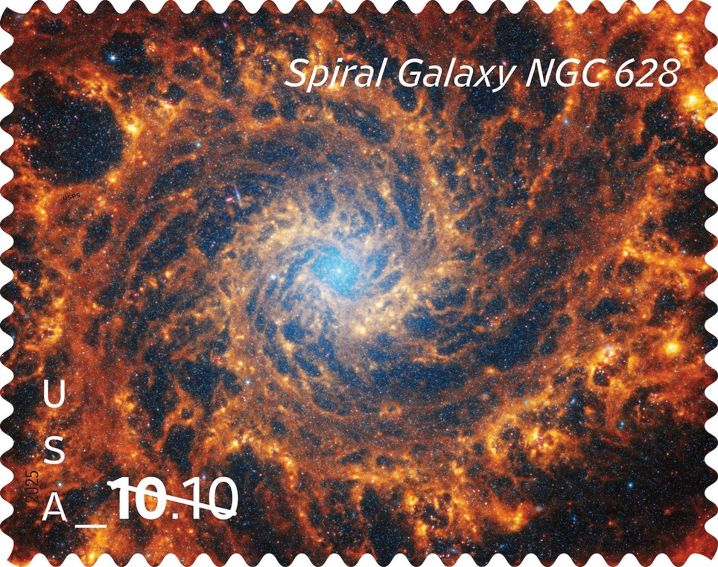
    This month, USPS unveiled two new stamps featuring stunning images taken by Webb. One of the stamps showcases the breathtaking spiral galaxy NGC 628. According to NASA, “Webb’s observations merge near- and mid-infrared light to uncover luminous gas and dust in vibrant shades of orange and red, along with intricate spiral patterns that appear jagged.” This magnificent galaxy is situated 32 million light-years away in the Pisces constellation.

    A USPS stamp featuring an image captured by the James Webb Space Telescope.
    USPS

    The second stamp (shown below) features an image of the central region of the IC 348 star cluster, captured in near-infrared light. This cluster is located about 1,000 light-years from our planet within the Perseus constellation. NASA explains that the ethereal wisps dominating the image represent interstellar material that reflects light from the stars within the cluster, creating a “reflection nebula.”

    A USPS stamp featuring an image taken by the James Webb Space Telescope.
    USPS

    Nicky Fox, associate administrator of NASA’s Science Mission Directorate, remarked, “The James Webb Space Telescope transforms scientific exploration into art, continuing to deliver remarkable images of deep space filled with vital scientific information for future study.”

    Fox further expressed, “NASA’s science is omnipresent, continually benefiting the American public by enabling them to hold a piece of the cosmos in their hands through these stunning images from beyond our solar system. I am thrilled that my favorite image, the spiral galaxy NGC 628, is included this year, along with both stamps guiding us through our cosmic past from one mailbox to another.”

    These new stamps celebrate the extraordinary achievements of the James Webb Space Telescope, recognized as the leading infrared space science observatory globally. By showcasing Webb’s captivating visuals, USPS connects people with the marvels of the universe, allowing them to engage with groundbreaking astronomical discoveries. These stamps also highlight the advanced technology and engineering that power the telescope, potentially inspiring the next generation of scientists and igniting curiosity among young minds.

    Launched in 2021, the James Webb Space Telescope aims to observe the early universe, investigate the formation and evolution of galaxies, and gain deeper insights into star and planet formation. Its images were previously featured on USPS stamps in 2024.

  • Exciting Official Images of Galaxy S25 Unveiled

    Exciting Official Images of Galaxy S25 Unveiled

    We’ve likely caught our first glimpse of the official Samsung Galaxy S25 designs, even if they haven’t been released by an official channel. Renowned leaker Evan Blass shared these images through his mailing list, and they certainly look authentic. The new devices not only boast an appealing look but also reveal significant detail for both the Galaxy S25 and S25 Plus models, including several anticipated color options: light blue, light green, dark blue, and silver.

    While these visuals don’t introduce any groundbreaking information, they align with previously noted features and provide a more detailed view of the devices. All Galaxy S25 variants are characterized by slim bezels and a front-facing punch-hole camera. The devices appear to have flat surfaces on the front, back, and sides.

    The Galaxy S25 Ultra takes the aesthetics up a notch with notably rounded corners and a slightly different palette of colors, which has been expected. We’ve been aware for some time that the S25 Ultra would feature titanium hues in blue, silver, black, and gray.

    Interestingly, the S25 Slim is absent from these images, indicating that this particular model may not be unveiled during Galaxy Unpacked. Instead, it could be revealed later in the year, potentially around the time the next Galaxy FE is typically launched. These visuals arrive at an opportune moment, coinciding with the release of promotional materials for the S25 series, showcasing some of the new AI capabilities we can expect from the Galaxy S25.

    Mark your calendars for January 22, as that’s when we anticipate the unveiling of the Galaxy S25, S25 Plus, and S25 Ultra. Although the S25 Slim may be hinted at during the event, it seems likely that its release won’t happen until May.

  • New Samsung Galaxy S25 Images Show Two Key Features

    New Samsung Galaxy S25 Images Show Two Key Features

    The next Galaxy Unpacked event from Samsung is just one week away, where we anticipate the unveiling of the Samsung Galaxy S25 series. Despite the proximity of the event, leaks continue to surface, revealing intriguing details about the upgraded camera design and a sneak peek at One UI 7.

    Renowned leaker Evan Blass has shared fresh images of the Galaxy S25 and S25 Plus in his latest newsletter. These visuals provide a detailed look at the forthcoming devices. Notably, the images highlight a striking dark blue color, which was already anticipated. What’s especially eye-catching is that the color also applies to the camera rings—something we haven’t seen in prior leaks, adding a delightful touch to the design.

    Images of the Galaxy S25 Ultra also surfaced, displaying its more rounded corners, matching camera rings, and the S Pen. The photos reveal impressively thin bezels on the display, a feature that has consistently appeared in rumors leading up to the launch.

    Leaked image of Galaxy S25 Ultra showing display features and S Pen.
    Evan Blass

    While these images focus predominantly on the hardware of the Galaxy S25 series, one of the most exciting aspects could be a new feature integrated into One UI 7.

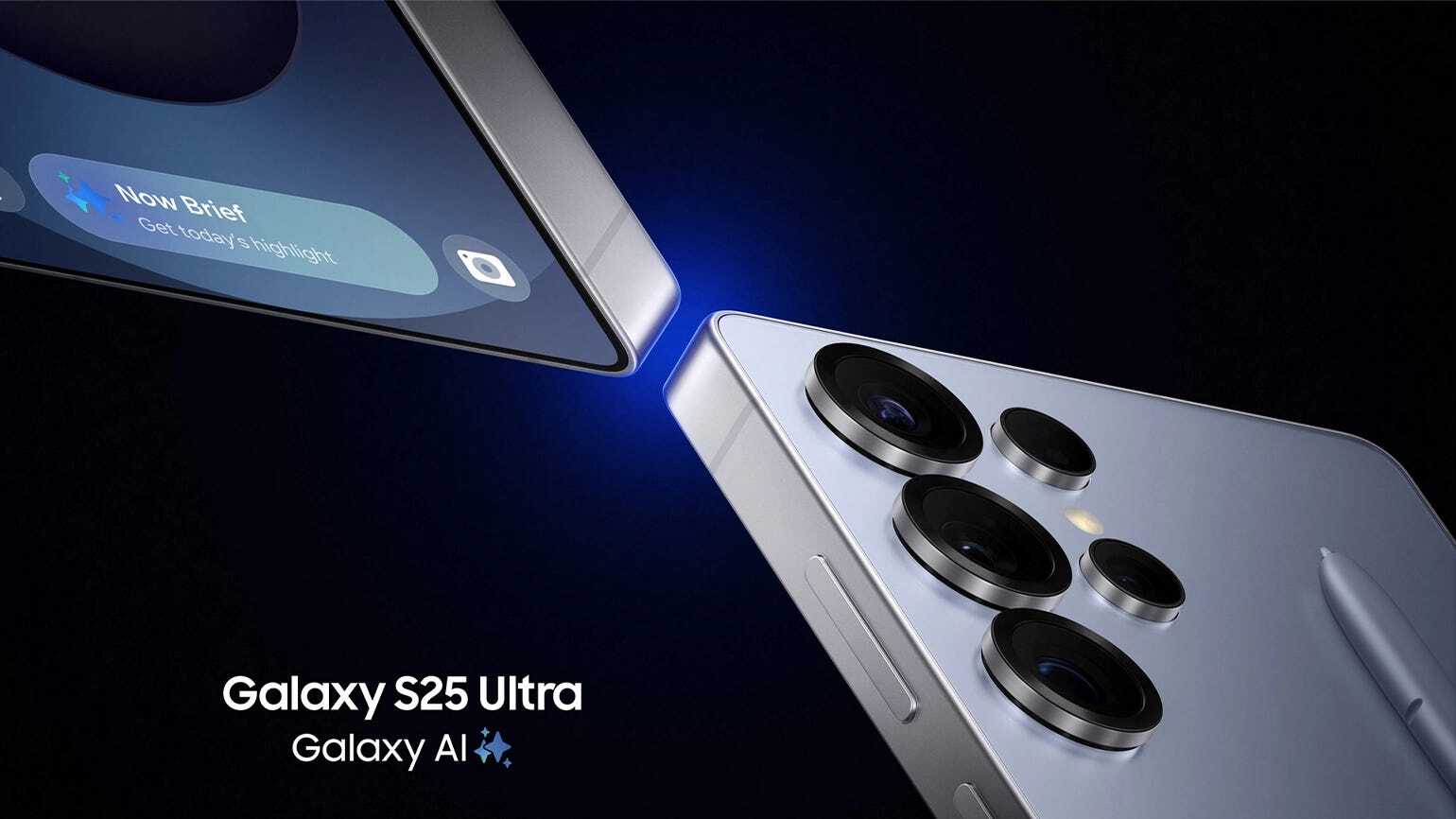
    The Galaxy S25 series is set to debut with Android 15 and One UI 7, which has already been in beta testing for Galaxy S24 users. This significant update to Samsung’s customized Android experience introduces various new features, including the “Now Bar,” which Samsung has highlighted in several promotional materials. Additionally, recent images hint at a feature called the “Now Brief,” teased by Samsung last month. This feature appears to function as an AI-driven summary, likely consolidating notifications and other critical alerts.

    The wait is nearly over, as Samsung is scheduled to unveil the Galaxy S25 and One UI 7 on January 22.

  • Amazing Images Of Mercury From The BepiColombo Mission

    Amazing Images Of Mercury From The BepiColombo Mission

    The European Space Agency’s (ESA) BepiColombo mission recently completed another flyby of Mercury, returning intriguing images of this relatively unexplored inner planet. On January 8, 2025, the spacecraft executed its sixth flyby of Mercury, using the planet’s gravitational pull to adjust its trajectory for a planned orbital insertion in 2026.

    During this flyby, the spacecraft swooped within a mere 180 miles of Mercury’s surface, providing a prime opportunity to capture detailed images. It passed over the planet’s dark side, which is oriented away from the sun, then soared above its north pole before revealing the illuminated northern hemisphere. The images were taken using three onboard monitoring cameras, labeled M-CAM 1, 2, and 3, which produce black-and-white pictures with a resolution of 1024 x 1024 pixels. Although the resolution might seem modest, the images hold significant scientific value, showcasing numerous surface characteristics of Mercury.

    Image from the BepiColombo mission during its sixth flyby of Mercury on January 8, 2025.
    This image is part of an impressive series captured by the ESA/JAXA BepiColombo mission during its sixth gravity assist maneuver at Mercury. ESA/BepiColombo/MTM

    The remaining missions will not yield any additional close-up photographs of Mercury from the monitoring cameras, as the spacecraft is set to separate into different components. Among these are the Mercury Transfer Module, which is tasked with ferrying the mission to Mercury, and two orbiters: the Mercury Planetary Orbiter and the Mercury Magnetospheric Orbiter, which will individually enter orbit around the planet. Since the monitoring cameras are part of the Mercury Transfer Module, further imaging opportunities will be lost.

    Sunlit northern hemisphere of Mercury captured by M-CAM 1 during BepiColombo's flyby on January 8, 2025.
    ESA/BepiColombo/MTM

    The images reveal a landscape dotted with craters, including some near the north pole that are so steep that their floors remain in constant shadow. These dark areas may harbor water ice, and exploring this possibility is a significant focus of the mission.

    Long-exposure photo of Mercury's dark north pole captured by M-CAM 1 during the flyby on January 8, 2025.
    This long-exposure image of Mercury’s north pole was taken by M-CAM 1 when the spacecraft was approximately 787 kilometers from the surface. ESA/BepiColombo/MTM

    Furthermore, the exact composition of Mercury remains largely a mystery, making the detailed analysis of its materials another key goal of the mission, which may provide insights into the planet’s formation and characteristics.

  • AI Images Are The New Modern Clip Art

    AI Images Are The New Modern Clip Art

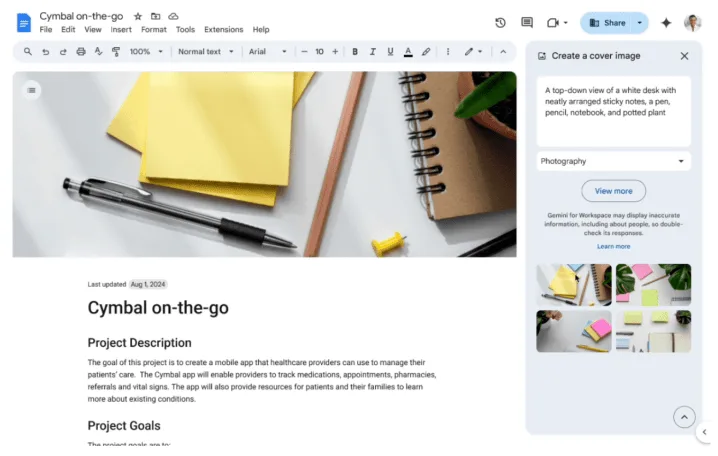
    A screenshot of Gemini in Google Docs being utilized.
    Google

    Google has made a significant announcement about the integration of Gemini-based AI image creation directly within Google Docs. This follows the release of stock cover photos in Docs back in September. Now users can create personalized, AI-generated images.

    Google’s blog elaborates on this new feature: “The capacity to produce unique images with Gemini in Docs allows everyone, regardless of their artistic background, to craft distinctive and visually appealing content. This means you can convey your ideas more effectively, without the hassle of searching endlessly for the right image.”

    This image creation tool is powered by Google’s latest Imagen 3 model, also utilized in Gemini. Users can opt to place these images as cover photos at the top of their documents, or even integrate them within the text.

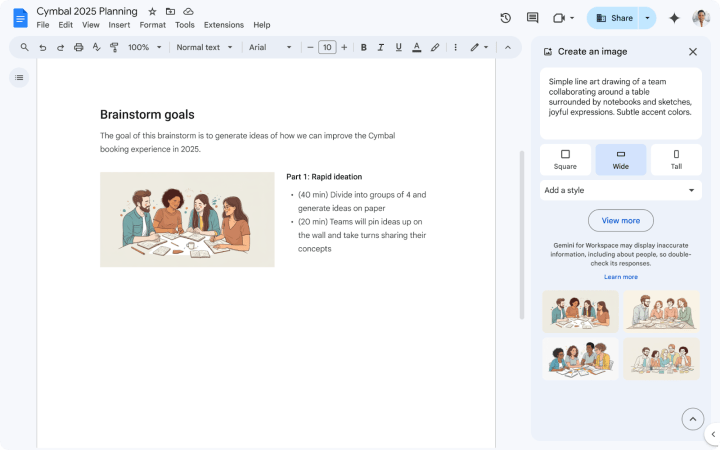
    A screenshot demonstrating the new Gemini feature in Google Docs.
    Google

    Why might you find this handy? Google suggests various potential applications for these images, including “restaurant menus, marketing briefs, or promotional flyers.” Much like other AI image generation tools, users can create an image based on a prompt and then modify it according to their preferred aspect ratio and style.

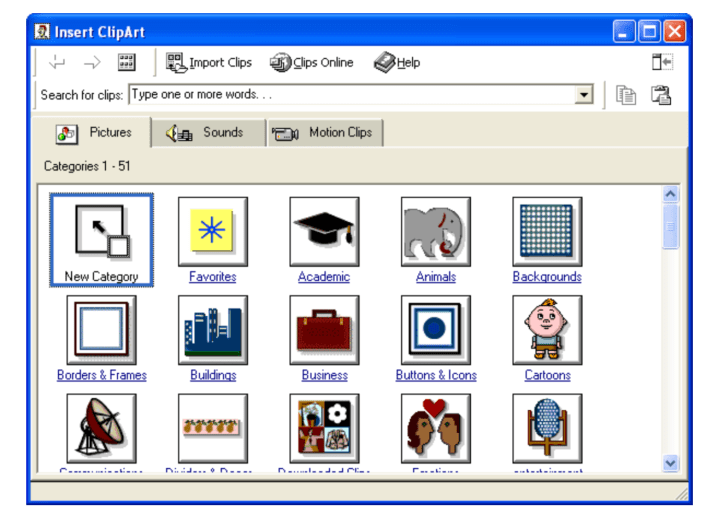
    While we’ve all played around with adding images to documents before — often reminiscing about the days of the late ’90s filled with clip art in Word — this new feature encourages users to embellish their documents and marketing material with AI-generated visuals.

    Notably, the disclaimer indicating that images are generated using Gemini AI is somewhat understated, simply labeled under “Help me create an image.”

    Despite past limitations, AI-generated visuals have become remarkably sophisticated. The evolution from unmistakably artificial (and often amusingly poor) art to incredibly lifelike images is quite remarkable. AI supporters certainly have valid points. However, anyone who has experimented with generative AI knows that achieving a specific vision requires patience and precise adjustments. Using these images effectively demands a discerning eye and a careful touch, similar to how one would handle clip art — a practice that has its own history.

    A clipart menu in Microsoft Word.
    Remember this? Microsoft

    On a positive note, it’s exciting to see the roll-out of AI features to a broader audience, even if there is a cost associated with them for now. This functionality is currently available exclusively to Google Workspace users who possess specific Gemini packages: Gemini Business, Gemini Enterprise, Gemini Education, Gemini Education Premium, or Google One AI Premium.

    The initial rollout began on November 15 for “Rapid Release” users, while a wider “Scheduled Release” for all other users is anticipated to commence on December 16.