الوسم: human remains

  • 7,000-Year-Old Village Uncovers 77 Headless Skeletons

    7,000-Year-Old Village Uncovers 77 Headless Skeletons

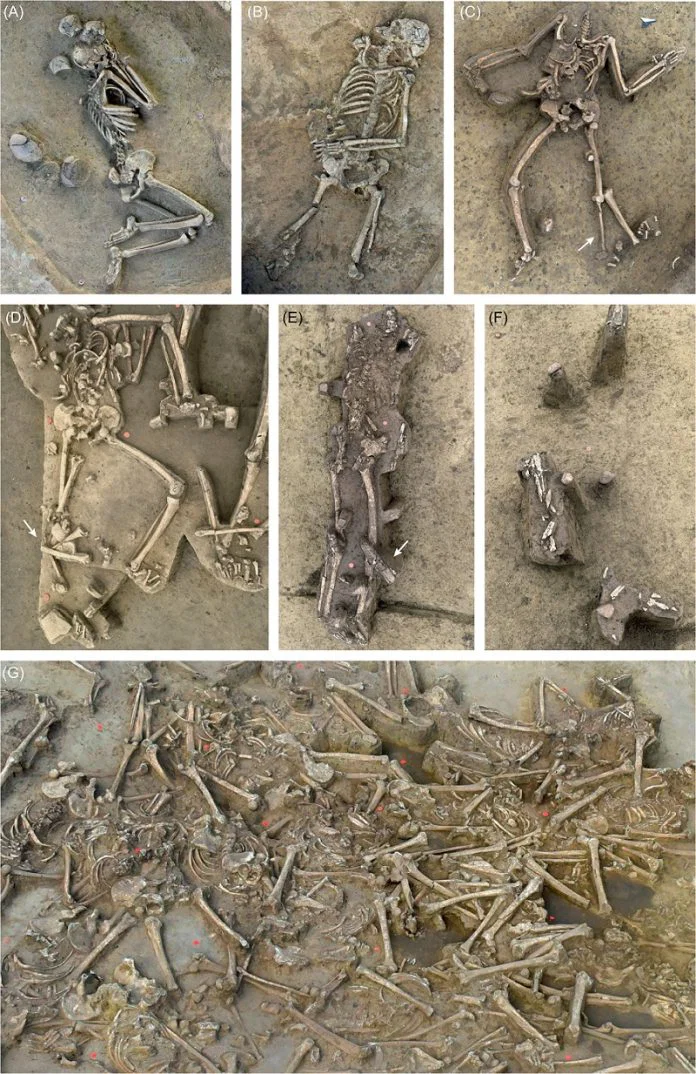
    A significant archaeological find in Slovakia is challenging previous beliefs about life and death among Europe’s earliest farming communities. Since 2022, excavations at a 7,000-year-old settlement near Vráble have uncovered a striking scene: numerous human skeletons grouped together in and around a ditch, with most of the skulls missing.

    Initially, these remains resembled evidence of a violent massacre. However, recent research points to a different interpretation. The site at Vráble is one of the key locations associated with the Linear Pottery culture, one of the continent’s earliest farming societies. The settlement, dating from approximately 5250 to 4950 BCE, once housed hundreds of dwellings. At its height, around 80 houses might have been occupied simultaneously.

    Part of the settlement was enclosed by a ditch, likely serving as a boundary marker. Near one entrance to this enclosed area, archaeologists discovered the remains of at least 78 individuals. Notably, 77 of these bodies were missing their skulls, with only one child retaining their head. The bodies were buried in varied positions, with no clear pattern, and evidence suggests the heads were removed delicately rather than violently. The neck bones lack signs of brutal decapitation, indicating the skulls were carefully taken after death, which may have held cultural or spiritual significance.

    The fate of the missing heads remains uncertain. It’s possible they were stored or buried elsewhere, although no separate skull collection has yet been identified at Vráble. Historically, such discoveries were often interpreted as signs of violence or social breakdown, especially since other sites from the same period show similar deposits of human remains.

    Yet, the current research suggests that violence wasn’t the primary cause. Instead, the treatment of these bodies might reflect complex ritual practices that reinforced social bonds or spiritual beliefs within and between groups. These practices demonstrate that ancient peoples may have had very different views on death than we do today. Behaviors that seem disturbing now could have been meaningful traditions in Neolithic society.

    Ongoing studies aim to identify the age, sex, and origins of these individuals by analyzing their bones, as well as examining marks on the neck vertebrae. DNA testing and isotope analysis could shed light on their diets, mobility, and familial relationships.

    As new insights emerge, the mysterious headless skeletons of Vráble could prove invaluable in understanding how Europe’s earliest farmers viewed death, identity, and community thousands of years ago.

  • Social Media Boosts Human Remains Sales and Grave Robbery Risks

    Social Media Boosts Human Remains Sales and Grave Robbery Risks

    Social media platforms have become hotspots for a range of troubling activities. Beyond typical threats like deepfakes, malware, phishing scams, and identity theft, these sites also facilitate more disturbing crimes, including grooming and drug trafficking. The most recent and chilling development involves the online trade of human remains and the risks associated with grave robbery.

    A report highlights how social media is fueling the illegal sale of skulls, bones, and skin products. According to the piece, this trend signals a potential shift toward a new era of “body snatching,” particularly in the UK, where legal loopholes create significant gaps in regulation. Researchers analyzed images of human skulls posted on Instagram, which experts found bore signs of decomposition, dirt, and tissue remnants—indicators they associate with recent excavations or illegal digging.

    The core issue stems from gaps in the Human Tissue Act of 2004 in the UK. While laws tightly control medical use of human remains, unregulated sourcing and sales are quietly flourishing due to these legal blind spots. As a result, collectors and vendors can freely buy, sell, and modify human remains without appropriate oversight.

    Even professionals who deal with collectibles and antiquities are sounding the alarm. Many express concern about the increasing prevalence of stolen and grave-robbed items flooding the market, which muddies the waters for legitimate sellers and collectors alike. The issue isn’t confined to the UK—it’s a problem flagged by investigations elsewhere, such as a 2022 report revealing that Facebook and Instagram serve as hubs for the trade in human remains, including bones, fetuses, and disfigured remains. Investigations identified dozens of sellers—some operating publicly, others in private groups—contributing to an underground market that encourages grave theft.

    Research published recently in Mortality confirms that the problem is recognized within the scientific community. The study documented cases of human remains being sold on social media platforms, often through pages dedicated to medical specimens, which are rare and difficult to regulate properly. According to an influential paper in the journal Crime, Law and Social Change, the scale of this illicit trade remains largely underestimated. Sellers who rely on walk-in traffic could easily be involved in more extensive black-market activities, including looting.

    A significant reason driving this illicit trade is cultural and religious significance. Some individuals seek authentic human remains—untouched or modified—for spiritual or identity-related reasons. The desire for “authenticity” often makes the purchase of such remains worth illicit efforts for certain practitioners or diaspora communities, who view these items as essential to their traditions or devotion.

    For those interested in collecting historical artifacts or antiquities, it’s crucial to verify sourcing details and request provenance documentation. Local regulations governing the import and export of such items should also be followed carefully, including securing necessary licenses.

    Overall, the online sale of human remains remains a deeply troubling issue, highlighting the need for tighter regulation and increased awareness of the ethical and legal problems involved.