الوسم: holocaust

  • 48% of Americans Can’t Name a Concentration Camp

    48% of Americans Can’t Name a Concentration Camp

    The Importance of Remembering the Holocaust: A Forgotten History

    Commemoration of Auschwitz Liberation

    January 27, 2025, marks 80 years since the Red Army liberated Auschwitz, one of the most notorious concentration and extermination camps operated by the Nazis during World War II. The events that transpired within the walls of Auschwitz encapsulate the horrors of the Holocaust, where an estimated one million Jews met their tragic fate. In addition to Auschwitz, extermination camps such as Bełzec, Sobibór, and Treblinka collectively claimed an estimated 1.6 to 1.8 million lives. Other horrific figures include 152,000 lives lost in Chełmno and up to 80,000 in the Lublin-Majdanek camp. These statistics not only highlight the scale of loss but also the necessity of keeping the memory of these atrocities alive for future generations.

    The Erosion of Memory: A Disturbing Trend

    Despite the significance of these historical events, a troubling trend has emerged regarding public awareness. A recent survey conducted by the Conference on Jewish Material Claims Against Germany revealed that nearly half (48 percent) of American adults cannot name a single concentration camp. This statistic raises serious concerns about the collective memory of the Holocaust and serves as a somber reminder of the fading awareness of such a significant part of human history.

    Comparison of Awareness: United States vs. Europe

    European Perspective

    In Europe, the awareness of concentration camps tends to be significantly higher, particularly in countries that were directly affected by Nazi occupation. For instance, in Germany, Austria, Poland, and Hungary, the percentage of individuals who could not name a concentration camp ranges from only 7 to 18 percent. This higher awareness may stem from the cultural and educational emphasis placed on the remembrance of these historical events. In Poland, where most of the extermination camps were located, the memory remains particularly vivid among the population.

    Disheartening Trends Among Young Adults

    Despite this awareness in Europe, there exists a worrisome trend among younger adults. In Germany and Hungary, about 26 percent of individuals aged 18-29 are unable to name a concentration camp. This reflects a generational gap in knowledge that may stem from educational differences or a lack of emphasis on Holocaust education. Similarly, in countries like the United Kingdom, France, and Romania, approximately a quarter of adults are unable to identify a concentration camp, with concerning statistics indicating that more than half of Romanian young adults are unaware of such pivotal historical knowledge.

    The Impact of Education on Memory

    The fading memory of the Holocaust raises significant questions about the role of education in preserving historical truths. Educational frameworks in various countries play a crucial role in how younger generations perceive and understand the Holocaust. The variability in awareness can often point to the effectiveness of Holocaust education programs and the methodologies employed to teach this subject matter.

    Importance of Holocaust Education

    Properly structured Holocaust education can counter ignorance and foster a sense of empathy and understanding among students. Incorporating survivor testimonies, historical documents, and field trips to memorial sites can dramatically enhance learning experiences. Engaging students in discussions about prejudice, discrimination, and human rights issues can create a more informed citizenry that values the lessons of history.

    The Role of Memorials and Museums

    Memorials and museums dedicated to Holocaust remembrance play a pivotal role in educating the public and ensuring that such atrocities are never forgotten. By preserving artifacts, personal stories, and comprehensive exhibits, these institutions help to maintain a tangible connection to the past. They serve as important educational resources and are crucial for fostering awareness and understanding about the Holocaust, not just for future generations but for today’s society as well.

    The Need for Continued Dialogue

    In light of the worrying statistics regarding the awareness of concentration camps, it is clear that continued dialogue about the Holocaust is essential. Public discussions, educational initiatives, and community events can help keep the memory alive. Engaging various demographics, especially young people, in conversations about these historical events invites opportunity for fascination, inquiry, and ultimately, remembrance.

    Regardless of geographical differences in awareness, recognizing the necessity of education, remembrance, and dialogue about the Holocaust is vital. As we reflect on events like the liberation of Auschwitz, we must also consider our responsibility in ensuring that the lessons of the past are learned and passed on to future generations.

  • 4% Globally Deny the Holocaust; 1/3 in MENA Exaggerate Victims

    4% Globally Deny the Holocaust; 1/3 in MENA Exaggerate Victims

    The Holocaust: A Critical Historical Event

    The Holocaust stands as one of the darkest chapters in human history, where six million Jews and millions of others were systematically murdered during World War II by the Nazi regime and its collaborators. Understanding the facts, the historical significance, and the ongoing challenges of Holocaust denialism is crucial in fostering a well-informed society.

    Commemoration and Awareness

    January 27 marks a significant date: the liberation of Auschwitz concentration camp in 1945. As we observe this milestone, we are reminded of the necessity of Holocaust remembrance. With the passing of time, the number of living survivors—who hold testimony of the atrocities—dwindles. This loss poses a challenge to future generations in keeping the memory of the Holocaust alive.

    The Role of Witnesses

    Survivors play an invaluable role in Holocaust education, sharing firsthand experiences of terror, loss, and resilience. Their narratives serve as powerful tools for combating misinformation and indifference, helping to ensure that history does not repeat itself.

    Current Trends in Holocaust Denialism

    A recent survey conducted by the Anti-Defamation League sheds light on contemporary attitudes toward the Holocaust. Around the world, 4 percent of respondents outright deny that the Holocaust occurred. This percentage demonstrates a slight decline from previous surveys, yet it is still alarmingly present.

    Demographics of Denialism

    The survey identifies particular demographics where denialist sentiments are stronger:

    • Gender Differences: The denial rate was reported as 5 percent among men, indicating a troubling trend within this group.
    • Age Factors: Similarly, 5 percent of respondents aged 18 to 49 also denied the event. This reflects a concerning reality as younger generations increasingly come of age with access to information but still hold denialist beliefs.

    Geographic Disparities in Perception

    The prevalence of Holocaust denial and opinion on victim numbers varies significantly across different regions:

    Middle East and North Africa

    • Elevated Denialism: Notably, North Africa and the Middle East reported elevated rates of Holocaust denialism. Many in these regions express beliefs that the number of Holocaust victims has been significantly exaggerated, with figures as high as one-third agreeing with this sentiment.

    Other Regions

    • Sub-Saharan Africa and Asia: The denial rates remain average in Sub-Saharan Africa and Asia, with a number of respondents also expressing skepticism about the extent of the Holocaust.
    • Western Europe: Contrastingly, Holocaust denial is relatively rare in Western Europe, with only 1 percent of participants rejecting the occurrence of the Holocaust.

    Antisemitism Today: A Worrying Trend

    Beyond denialism, antisemitic attitudes continue to take root in various societies, as revealed by the survey. Respondents were asked to agree or disagree with 11 stereotypes about Jewish people, demonstrating that negative perceptions remain alive.

    Region-Specific Antisemitism

    • Magreb States and the Middle East: These areas displayed particularly strong antisemitic beliefs, suggesting a deep-seated issue that may perpetuate denialism and prejudice.
    • Global Perspectives: Countries like Russia, Indonesia, Malaysia, and Turkey also reported significant levels of antisemitism, highlighting a pervasive challenge that transcends regional boundaries.

    Shifting Attitudes: The Age Factor

    Younger individuals in the survey exhibited stronger antisemitic attitudes compared to older populations. This is concerning as it suggests that without intervention and education, the cycle of misinformation and prejudice may continue to perpetuate itself.

    Historical Context and Future Implications

    The survey results indicate a troubling trajectory for Holocaust memory and collective consciousness. While the average score of antisemitic beliefs in countries rose dramatically from 26 to 46 points out of 100 between 2014 and 2024, this statistic underscores an urgent need for education and advocacy.

    The Path Forward: Engagement and Education

    Combating Holocaust denialism and antisemitism requires a multifaceted approach, involving education, empathetic engagement, and active remembrance.

    • Educational Initiatives: Programs tailored to schools and communities can help increase awareness of the Holocaust and counter denialist narratives.

    • Survivor Testimonies: As the number of Holocaust survivors decreases, recording their testimonies and experiences becomes increasingly important for future generations, ensuring that their stories and lessons endure.

    • Dialogue and Discussion: Fostering open conversations about uncomfortable topics can help dismantle the prejudices rooted in society today and contribute to a more informed and compassionate world.

    By addressing these complex issues with sensitivity and rigor, we can honor the memory of those who perished in the Holocaust while standing firmly against the forces of denialism and antisemitism that threaten to distort history.

  • Only 5% of Holocaust Survivors are Adults as of 2023

    Only 5% of Holocaust Survivors are Adults as of 2023

    The Dwindling Number of Adult Holocaust Survivors: A Deep Dive

    As we approach a significant historical juncture in 2023, the number of Holocaust survivors is notably dwindling. Recent data from the Claims Conference highlights the urgent need for acknowledgment and remembrance, particularly of adult survivors—those who were 18 years or older in 1945.

    Current Statistics on Holocaust Survivors

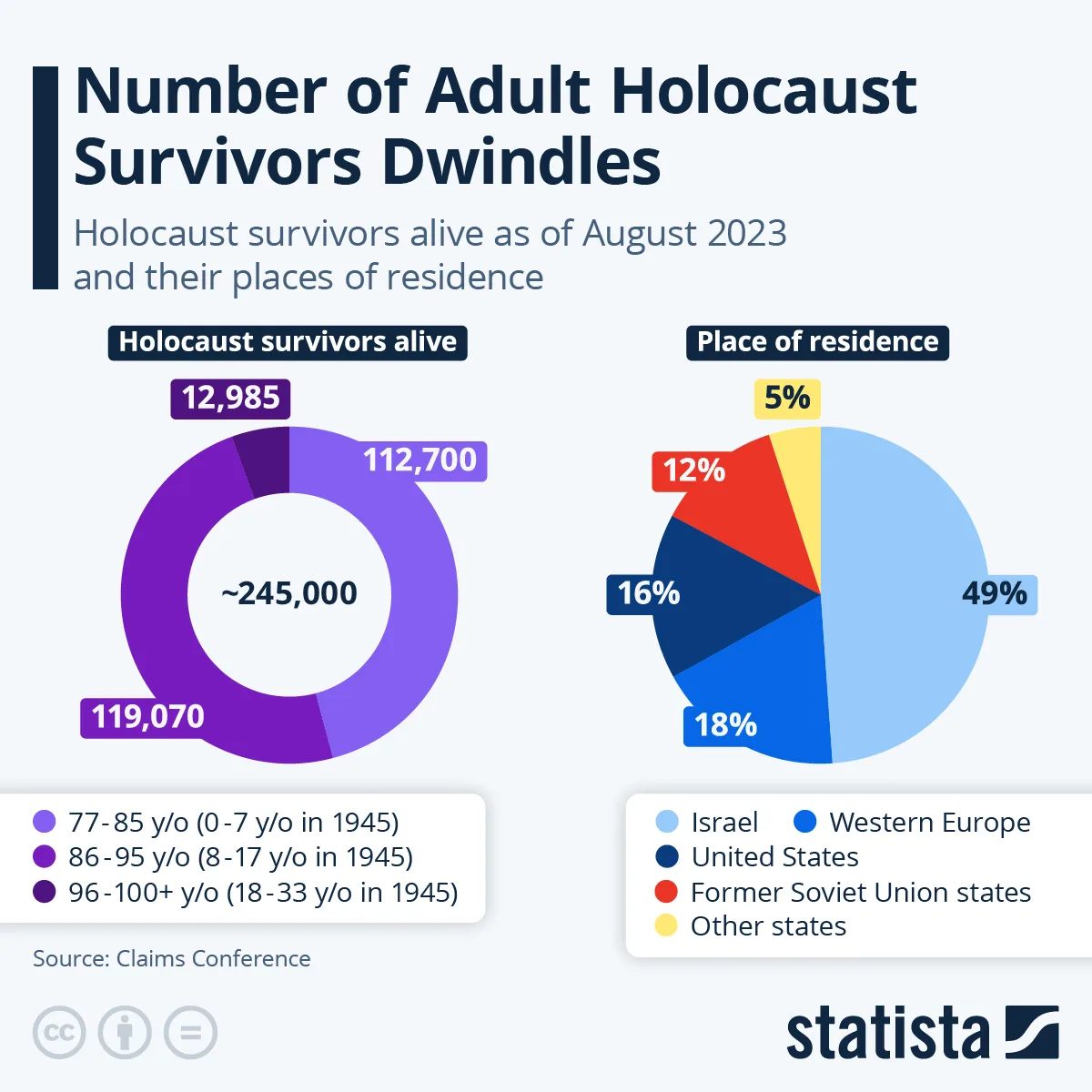
    According to the latest report by the Claims Conference, as of August 2023, approximately 250,000 Holocaust survivors are still alive worldwide. Astonishingly, only about 5 percent of these individuals—roughly 13,000—are considered adult survivors. This statistic underscores not only the passage of time but also the urgent need to document and share the stories of those who lived through one of history’s darkest periods.

    The Importance of Adult Holocaust Survivors

    The role of Holocaust survivors extends beyond mere statistics. They play a pivotal part in Holocaust remembrance, often stepping into roles that promote education and awareness about antisemitism and the atrocities of the Shoah (Holocaust). As living testimonies to the past, these survivors carry invaluable experiences that contribute to teaching future generations. In an era where conspiracy theories and denialism pose threats to historical accuracy, their voices become critical.

    Age Distribution Among Survivors

    Every surviving adult Holocaust survivor as of 2023 is at least 78 years old. The demographic breakdown shows that most survivors presently range from 77 to 95 years of age. Notably, a significant portion of this group consists of child Holocaust survivors—those who were under the age of 18 during the war. In fact, 95 percent of Holocaust survivors today fall into this category.

    • Age Breakdown:
      • 49 percent were aged between 8 and 17 in 1945.
      • 46 percent were younger than 8 years old during that time.

    This age distribution highlights the different experiences of survivors and the unique perspectives they can bring to discussions about the Holocaust.

    Geographic Distribution of Survivors

    As the number of survivors declines, it is essential to recognize where they currently reside. The distribution of Holocaust survivors shows significant trends:

    • Israel: Approximately 50 percent live in Israel, making it a focal point for remembrance and education.
    • Western Europe and North America: Both regions host around 18 percent of survivors each, with the United States representing the majority of survivors in North America.
      • France: 9 percent of Holocaust survivors reside here.
      • Germany: 6 percent are located in this country.
    • Former Soviet States: 12 percent have immigrated from this region.
    • Other Countries: Approximately 5 percent of survivors can be found in nations such as Hungary and Australia.

    Financial Support for Holocaust Survivors

    The financial landscape for Holocaust survivors is complex, often revolving around reparations and ongoing support. Here’s how it breaks down:

    • Claims Conference Support: Around 40 percent of survivors benefit from ongoing payments distributed by the Claims Conference, an organization dedicated to negotiating and redistributing reparations from Germany to Holocaust victims.
    • Additional Payments: The remaining survivors are eligible for either annual or one-time payments, addressing various needs related to financial hardship stemming from their experiences.

    These financial aspects are crucial for maintaining the well-being of survivors who have lived through immense suffering and loss.

    Survivors as Educators in the Modern Era

    In the face of dwindling numbers, the importance of Holocaust survivors as educators grows ever more paramount. As they share their stories, they contribute significantly to the discourse on morality, empathy, and the importance of recognizing the historical realities surrounding the Holocaust. Their contributions are vital in an increasingly complex world where the lessons of the past must be preserved and transmitted to future generations.

    This urgent call for remembrance and education only intensifies as the years pass and the voices of these survivors become fewer. Engaging with survivors in educational settings, creating platforms for their stories, and supporting organizations dedicated to their welfare are all crucial steps in preserving the memories of the Holocaust for posterity.