Tag: Healthcare

  • Texas Outlaws Birth Tourism: ‘US Citizenship Not for Sale’

    Texas Outlaws Birth Tourism: ‘US Citizenship Not for Sale’

    Texas has implemented some of its most stringent measures yet against what officials call “birth tourism,” with Governor Greg Abbott signing Executive Order GA-57. This order authorizes an extensive investigation into healthcare providers and organizations suspected of helping foreign nationals have babies in Texas so their children can gain U.S. citizenship.

    The move is anticipated to impact hospitals, doctors, and immigrant communities across the state, especially visitors from Pakistan, India, Bangladesh, and other South Asian countries traveling to the U.S. on visitor visas.

    During the announcement, Abbott emphasized that “American citizenship is not for sale,” declaring that Texas will no longer tolerate schemes that, in its view, exploit the country’s immigration laws. The executive order empowers six state agencies—including the Texas Department of State Health Services, the Health and Human Services Commission, the Texas Medical Board, and the Texas Board of Nursing—to investigate birth tourism practices within the healthcare sector. These agencies have been instructed to coordinate with federal authorities if potential violations of federal law are uncovered. Disciplinary actions could include license suspensions or revocations, exclusion from state contracts, and other administrative penalties.

    This order follows Abbott’s earlier directive in the month for the Health and Human Services Commission to examine hospitals promoting maternity packages to foreign nationals. Following that, two Texas hospitals were referred to the Attorney General after promotional materials targeting women in Mexico offered childbirth packages near the U.S.-Mexico border, with prices advertised at $3,950 for natural births and $5,525 for C-sections.

    This initiative sees the Supreme Court recently ruling to uphold birthright citizenship under the 14th Amendment, effectively preventing then-President Donald Trump from restricting automatic citizenship for children born in the U.S. in the recent term.

    Kate Lincoln-Goldfinch, an immigration attorney based in Austin, observed that the Texas order seems aimed at regulating activities surrounding a practice that remains protected under federal law. She explained that the state appears to be seeking alternative enforcement measures after the Supreme Court reaffirmed the constitutionality of birthright citizenship.

    The order has garnered particular attention among South Asian communities, where some families have historically viewed having children in the U.S. as a pathway to citizenship. Residents of Dallas and Houston from the Pakistani community, speaking to Jang/Geo, indicated awareness of families that had planned to travel on visitor visas for childbirth but are now reconsidering those plans following the governor’s announcement.

    According to the Migration Policy Institute, less than 30,000 out of over 3.5 million births annually in the U.S. involve women traveling on tourist visas—less than one percent of all births nationwide.

    Legal experts warn that these new enforcement efforts might lead to more scrutiny of pregnant women applying for visitor visas. U.S. consular officers already have the authority under State Department policies to deny visas if they believe the primary purpose is to give birth in the U.S.

    Dallas immigration attorneys advised pregnant applicants to seek legal guidance before applying and to avoid making false statements during visa interviews, as misrepresentations can lead to visa denials or future travel restrictions. Women who previously gave birth during visits may also face additional questions when renewing visas.

    However, Lincoln-Goldfinch noted that organized birth tourism remains relatively rare. Pregnant women in advanced stages of pregnancy are often turned away by airlines or detained at ports of entry. Visible pregnancies tend to attract heightened scrutiny from border officials well before delivery.

    Healthcare providers across Texas are also likely to face significant compliance challenges. Hospitals, obstetricians, and clinics may experience increased regulatory oversight while balancing their legal obligations with the ethical duty to deliver medical care. Houston attorney Gordon Quan pointed out that providers might feel compelled to verify patients’ immigration status before treatment, although legally, pregnant women are still entitled to necessary healthcare regardless of immigration status.

    Doctors practicing obstetrics and gynecology in Dallas, Fort Worth, and Houston expressed concerns about the practical implications of the new policy. They highlighted that denying treatment could open them up to legal liabilities, while providing care to patients suspected of participating in birth tourism might trigger investigations.

    Legal experts recommend healthcare facilities review their marketing materials, bolster compliance procedures, train staff on the new regulations, and maintain detailed patient documentation to demonstrate adherence if investigations emerge. Some hospitals that previously promoted maternity services to foreign nationals have already pulled those advertisements, emphasizing they do not support unlawful activities.


  • New AI Tool Spotlights Six Diseases Within Seconds via Eye Analysis

    New AI Tool Spotlights Six Diseases Within Seconds via Eye Analysis

    Artificial intelligence is transforming many aspects of healthcare, and a recent study indicates that an easy eye scan might soon enable doctors to detect multiple common diseases within seconds.

    Researchers have created an AI system named Reti-Pioneer, which analyzes images of the retina—the light-sensitive tissue at the back of the eye—and pinpoints signs associated with conditions like type 2 diabetes, hypertension, high cholesterol, gout, osteoporosis, and thyroid disorders. This research was published in Nature Medicine.

    The retina is home to tiny blood vessels and nerve tissue that can reveal systemic health changes. Physicians have known for years that diseases like diabetes and high blood pressure impact these blood vessels. Still, many initial changes are so subtle that they escape notice to the naked eye. Reti-Pioneer leverages advanced AI to detect these hidden indicators.

    To develop this system, scientists trained various AI models on thousands of retinal images from individuals with and without different health conditions. By analyzing large quantities of eye scans, the AI learned to recognize minute patterns linked to illness—patterns that humans might miss.

    Associate Professor Lisa Zhuoting Zhu from the Centre for Eye Research Australia led the research. She noted that this technology could significantly speed up disease screening and make it more accessible, especially in areas where lab testing is hard to obtain.

    Unlike blood tests, which require needles, specialized equipment, and time-consuming analysis, taking a retinal photo is quick, painless, and affordable. A basic fundus camera captures the eye image in seconds, and the AI processes the scan to deliver results almost immediately. This means that during a single visit, patients could be identified as needing further medical evaluation, rather than waiting days for lab results.

    The study, primarily conducted in primary healthcare clinics in China, demonstrated that the system could accurately screen patients and help physicians decide whether additional testing was necessary. While confirmatory tests like blood work would still be needed for diagnosis, the AI allows for earlier intervention.

    This technology could be especially beneficial in rural and underserved communities. Because only a simple retinal image is required, clinics, optometrists, pharmacies, mobile health units, and community health centers could incorporate this tool to expand early screening access for people living far from hospitals.

    The researchers envision similar AI tools becoming standard in healthcare, allowing for earlier detection, faster treatment initiation, fewer complications, and better long-term health outcomes.

    What’s particularly exciting about this research is that a single eye image might reveal clues about multiple health conditions simultaneously. However, it’s important to note that the system is intended as a screening tool—not a replacement for healthcare professionals or laboratory testing.

    Further studies across diverse populations and regions will be necessary before it becomes widely implemented. Nonetheless, this technology holds significant promise for improving early diagnosis and healthcare distribution.

    If you’re interested in diabetes, consider reading about potential cures for type 2 diabetes or which vegetables might protect against diabetic kidney damage. For more health insights, explore recent studies on a bone-boosting drug that could lower type 2 diabetes risk, or find out how increased egg consumption might be linked to a higher risk of developing the disease.

    Source: Centre for Eye Research Australia.

  • AI Can Diagnose and Treat Just Like Doctors

    AI Can Diagnose and Treat Just Like Doctors

    Artificial intelligence is increasingly integrating into daily life, from composing written content and answering inquiries to aiding in the creation of images and software. Recently, researchers have started investigating a crucial new application: can AI assist medical professionals in caring for patients?

    A study published in the journal Nature highlights that advanced AI systems might support doctors across many aspects of patient care. The research introduces two innovative AI tools named MIRA and AMIE, both capable of performing various medical tasks. These range from collecting patient information and diagnosing conditions to recommending treatments and planning follow-up procedures.

    The significance of these developments is heightened by global healthcare challenges such as doctor shortages, aging populations, and escalating chronic illnesses. Physicians often face long hours and limited direct time with each patient, prompting hope that AI could help alleviate some of these burdens.

    Most existing healthcare-focused AI tools target narrow functions—for example, detecting cancer in scans or summarizing patient records. However, real-world medical decision-making involves complex reasoning and multitasking—collecting symptoms, reviewing histories, ordering tests, interpreting results, and adjusting treatments as conditions evolve. Researchers questioned whether AI could handle such multifaceted reasoning.

    The first system, MIRA (Medical Intelligence for Reasoning and Action), was developed by a team led by Jakob Kather. Tested with real-world data from over 500 emergency department cases, MIRA interacted with virtual patients—responses modeled after actual clinical notes—by asking questions and gathering information much like a clinician would. It had access to a database of more than 85,000 possible actions, including ordering tests, reviewing results, recommending therapies, prescribing medications, scheduling procedures, and deciding hospital admissions. Impressively, MIRA achieved nearly 88% accuracy in diagnoses, outperforming a diverse panel of six physicians, who averaged about 78%.

    The second AI system, AMIE (Articulate Medical Intelligence Explorer), was developed by Google researchers using the Gemini AI framework. Unlike earlier platforms, AMIE could analyze multiple patient visits over time, tracking disease progression and treatment effectiveness. In a comparison with 21 primary care doctors using 100 simulated patient scenarios across five specialties—based on UK clinical guidelines—AMIE performed on par with experienced physicians in overall reasoning. In some instances, it even demonstrated superior precision, especially in testing and treatment recommendations, and adhered closely to established guidelines. Additional testing with a new benchmark called RxQA, focused on medication reasoning, showed AMIE outperformed physicians on particularly challenging cases.

    Despite these promising results, experts caution that neither AI system is ready to replace doctors. Medical practice encompasses much more than decision-making from data—communication, understanding individual patient preferences, recognizing atypical cases, and making nuanced judgments in real-world settings are beyond the current scope of AI.

    Limitations of the studies include their reliance on virtual scenarios rather than real clinical environments. Future research must establish whether these systems can perform robustly in busy hospitals and clinics with real patients and unpredictable situations.

    The emerging view suggests that conversational AI tools might serve as valuable assistants rather than replacements, helping healthcare providers gather information, generate differential diagnoses, confirm treatment guidelines, and streamline routine tasks. If further validation confirms their safety and effectiveness, AI could become a vital partner in enhancing healthcare quality and efficiency, particularly in regions facing healthcare worker shortages.

  • New Non-Addictive Drug Offers Promise for Nerve Pain Relief

    New Non-Addictive Drug Offers Promise for Nerve Pain Relief

    Credit: Unsplash+


    Chronic nerve pain remains one of the toughest health conditions to treat. It impacts millions worldwide and can persist for months or even years.

    This pain, known as neuropathic pain, occurs when nerves outside the brain and spinal cord are damaged. Patients often describe it as burning, stabbing, electric shocks, or tingling sensations. It can significantly disrupt daily activities, sleep quality, mood, and overall health.

    Available treatments for nerve pain are quite limited. Doctors frequently prescribe medications like gabapentin—originally used for seizures—or duloxetine, an antidepressant. While some patients experience relief, these drugs don’t work for everyone and may cause side effects such as dizziness, drowsiness, and nausea.

    In certain cases, opioids are used for pain management. However, these carry serious risks, including addiction, tolerance buildup, and overdose. Over time, patients often need higher doses to achieve pain relief, which increases the danger of adverse effects. Moreover, opioids generally provide limited relief for nerve pain itself.

    Because of these limitations, researchers have been searching for safer, more effective alternatives to manage chronic nerve pain. A recent study from Weill Cornell Medicine and the Burke Neurological Institute offers new hope.

    The research reports a novel drug that successfully reduced nerve pain in initial tests involving rats. Although still in early development stages, the results are promising because the drug alleviated pain without causing typical side effects seen with current therapies.

    This innovative approach hinges on how the drug interacts with nerve cells. In individuals with ongoing nerve pain, certain nerve cells become hyperactive, primarily due to proteins called HCN ion channels. These channels regulate electrical signals within nerves. When they are overly active, they send excessive pain signals to the brain.

    The challenge is that HCN channels aren’t only present in pain nerves—they’re also found in the heart and brain. A drug that blocks these channels systemically could cause serious problems, such as irregular heartbeat or excessive sleepiness.

    To address this, the scientists developed a drug called BP4L-18:1:1. Lead researcher Dr. Gareth Tibbs started with propofol, a medication commonly used to induce anesthesia during surgery. He then modified it by attaching a special “anchor” molecule.

    This anchor keeps the drug localized to nerves outside the brain and spinal cord, preventing it from affecting other parts of the body where it might cause harm. Think of it like tying a boat to a dock—it stays in the right place and doesn’t drift elsewhere. Similarly, the anchor ensures the drug concentrates where it’s needed most.

    Once in position, the drug works by calming down the overactive HCN channels. This reduces the transmission of pain signals to the brain. In animal trials, the drug provided significant pain relief without inducing drowsiness, heart issues, or other major side effects.

    Another key advantage is that the drug can be administered orally, potentially as a simple pill. This would make treatment more accessible and convenient compared to injections or complex therapies.

    The findings are encouraging, suggesting that targeting the root cause of nerve pain might be more effective and safer than broad pain blocking methods. Such an approach could offer new options for those with limited current treatments.

    Dr. Steven Fox, founder of Akelos—a company involved in developing this medication—stated that this method could revolutionize how chronic nerve pain is treated. By focusing on the source rather than just symptoms and minimizing widespread bodily effects, the drug could deliver relief without the risks associated with opioids.

    The research was funded by the Daedalus Fund for Innovation, which aims to translate laboratory discoveries into real-world solutions. The team is hopeful to move into human clinical trials if further testing continues to show positive outcomes.

    It’s important to remember that this work is still in the early stages. Animal studies are a critical step, but more research is needed to confirm safety and effectiveness in humans. Nonetheless, these results offer hope for future treatments that are both safer and more effective.

    For the millions living with chronic nerve pain, this could mark a significant breakthrough. A remedy that alleviates pain without risking addiction or dangerous side effects would be a major advancement in medicine.

    If you’re interested in pain management, consider reading studies on vegetarian women having a higher risk of hip fractures, and how vitamins A, C, and E might help reduce bone fracture risk.

    For additional wellness insights, check out recent research on krill oil’s potential to improve muscle health in older adults, or how eating Jarlsberg cheese daily might help prevent osteoporosis.

    Copyright © 2026 Knowridge Science Report. All rights reserved.

  • New Tool Assists Parkinson’s Patients in Brain Surgery Decisions

    New Tool Assists Parkinson’s Patients in Brain Surgery Decisions

    Deciding whether to undergo brain surgery can be one of the most challenging decisions faced by individuals with Parkinson’s disease. This progressive disorder affects movement, causing tremors, muscle stiffness, slow movements, and balance issues—symptoms that tend to worsen over time, making daily tasks like walking, eating, or dressing increasingly difficult.

    One treatment option that can provide relief for some patients is deep brain stimulation (DBS), a surgical procedure. During DBS, doctors implant a small device that sends electrical impulses to specific areas of the brain responsible for movement control. This device, powered by a battery, functions similarly to a cardiac pacemaker but for the brain.

    While DBS can substantially reduce symptoms such as tremors, rigidity, and bradykinesia for certain individuals, it’s a complex procedure with potential risks, and not everyone is suitable for the surgery. The outcomes vary from person to person, making the decision to proceed an emotional and complicated process for patients and their loved ones.

    Researchers at the University of Colorado Anschutz Medical Campus aimed to simplify this decision-making process. They developed the first evidence-based decision aid designed specifically to help people with Parkinson’s better understand DBS and evaluate if it’s right for them. Their work was detailed in the Journal of Parkinson’s Disease.

    This tool is intended to inform rather than instruct. Its purpose is to provide patients with comprehensive knowledge about DBS, encouraging a shared decision-making approach, where patients and healthcare providers collaborate to determine the best treatment path. Dr. Michelle Fullard, who led the research and serves as Director of Clinical Research at CU Anschutz Movement Disorders Center, highlighted that the tool helps patients feel more prepared before discussing DBS with their doctors.

    Many patients feel uncertain because they lack a clear understanding of how the surgery works or what kind of results to expect. The new decision aid offers straightforward information, empowering patients to participate more actively in their care and ask informed questions.

    The development of this tool involved a meticulous scientific process. Researchers first solicited feedback from patients about the information they found missing when considering DBS. They then reviewed numerous scientific studies on the procedure. An initial version was created and tested in clinical settings, with ongoing improvements based on patient input.

    Over 120 people with Parkinson’s participated in this development. Fifty-seven provided insights into their informational needs, 22 tested the initial version, and 46 helped evaluate the final version. When assessed, the tool showed very positive results; most users reported that it enhanced their understanding of DBS and increased their confidence in making decisions.

    A key feature of the tool is a personalized symptom report. Patients can input their individual symptoms, and the system estimates how likely they are to see improvement after DBS. This helps manage expectations by illustrating what the surgery might realistically achieve and what it may not.

    Dr. Fullard emphasized that some patients initially hope DBS will resolve all their issues, which can lead to disappointment if expectations aren’t met. The decision aid aims to set realistic perceptions from the start, providing a clear view of the potential benefits and limitations.

    The study also uncovered notable differences between men and women contemplating DBS. Women were more likely to live alone and expressed more concern about post-surgical assistance, particularly for daily activities like meal preparation and household chores. This aligns with previous research indicating women often approach medical decisions differently than men. Despite similar rates of Parkinson’s among men and women, women are less frequently referred for DBS, a gap possibly influenced by disparities in support and informational needs.

    The decision aid is currently being tested in a clinical trial to determine if it improves patient satisfaction and decision quality over the long term. It is freely available online, and many Parkinson’s organizations are distributing it within their communities. Healthcare providers are also encouraging patients to use the tool prior to consultations, so discussions are more productive.

    Future plans include expanding this research across multiple clinics nationally and adapting the tool for other neurological treatments, such as essential tremor. This effort reflects a broader shift toward patient-centered healthcare, emphasizing education, shared decision-making, and personalized care.

    While initial findings are promising, the researchers acknowledge that more studies are needed to assess whether the tool influences long-term health outcomes or quality of life after surgery. Nonetheless, this development suggests that well-designed educational resources can make complex treatment choices more understandable and less stressful—empowering patients with Parkinson’s to navigate one of their toughest medical decisions with greater confidence.

  • Indian doctor assaults patient after heated argument

    Indian doctor assaults patient after heated argument

    A troubling event at a hospital in India has ignited concerns over patient safety after a doctor assaulted a patient who had come in for an endoscopy. A video shared widely online from Indira Gandhi Medical College (IGMC) in Shimla captures the moment when the doctor forcefully hits the patient, despite attempts by bystanders to intervene.

    According to India Today, Arjun Pawar had visited the hospital for an endoscopy. Following complaints of difficulty breathing, he was moved to another ward. Pawar’s family members allege that when they contacted the doctor, he responded dismissively and behaved disrespectfully. Tensions escalated into a heated dispute, which then led to the assault and subsequent protests.

    The protestors called for swift disciplinary action, including the suspension of the doctor involved. In response to the uproar and widespread criticism online, IGMC officials have established a special investigative team to conduct a thorough, unbiased review of the incident.

  • Gates warns: Aid cuts may cause child death rates to climb in 2023

    Gates warns: Aid cuts may cause child death rates to climb in 2023

    LONDON: The Gates Foundation reports that approximately 200,000 more children are expected to die before reaching age five this year compared to 2024, due to reductions in international aid that threaten decades of progress. This increase would be the first uptick in preventable child deaths this century, rising from an estimated 4.6 million in 2024 to 4.8 million in 2025. Child mortality rates have been cut in half since 2000.

    “For years, we’ve steadily advanced in saving children’s lives. However, mounting challenges are now causing that progress to regress,” stated Bill Gates, chair of the Gates Foundation, in the foreword of its annual Goalkeepers report.

    The report, which tracks progress toward the UN’s Sustainable Development Goals on poverty alleviation and health improvements, was delayed this year due to uncertainties surrounding global health funding. While aid reductions began with the U.S. earlier this year, they have since extended to other major donors like the UK and Germany. Overall, global health development assistance decreased by nearly 27% compared to 2024.

    Gates highlighted that these funding cuts are a primary reason behind the reversal in child mortality progress, compounded by other factors like rising national debts and fragile health infrastructure. Earlier this year, Gates warned that ongoing aid reductions could result in an additional 12 to 16 million child deaths by 2045, contingent on future funding levels. Currently, the death toll for this year may match the 2023 figures, the latest data available from the World Health Organization.

    The projections are based on models developed by the Institute for Health Metrics and Evaluation at Washington University. Gates called on governments and individuals to prioritize innovative tools along with proven strategies such as vaccination campaigns and investments in primary healthcare to improve child health outcomes.

  • Doctor in ‘compromising position’ during patient anesthesia, tribunal hears

    Doctor in ‘compromising position’ during patient anesthesia, tribunal hears

    A photo illustration depicts a general practitioner with a stethoscope in a doctor’s office in Bordeaux, January 7, 2015. — Reuters

    LONDON: A married Pakistani doctor, Dr. Suhail Anjum, allegedly engaged in sexual activity with a nurse in an operating room while a patient was under anesthesia, a medical tribunal has said.

    Dr. Anjum, 44, and the nurse involved have not been publicly named, but they were found in a “compromising position” by a startled colleague who walked into the operating theater at Tameside Hospital.

    The hospital’s lead anesthetist had requested another nurse to observe the male patient during the procedure so he could take a short break. Instead of returning promptly, Dr. Anjum went to a nearby operating theater at the hospital in Ashton-under-Lyne, Greater Manchester, where he was found having sex with “nurse C.”

    Andrew Molloy, representing the General Medical Council (GMC), stated that Dr. Anjum was overseeing five cases in operating theater five on September 16, 2013, and he left during the third case.

    Shortly after, “nurse NT” entered theater eight and encountered Dr. Anjum and nurse C in a compromising situation. Molloy described her account, saying she saw nurse C with her trousers around her knees and her underwear visible while Dr. Anjum was tying his trousers.

    Nurse NT was visibly shocked and quickly exited the theater. Dr. Anjum returned to theater five but was absent for approximately eight minutes before coming back.

    Molloy clarified that no harm was caused to the patient during Dr. Anjum’s brief absence and the procedure continued without further issues. The nurse reported the incident to her supervisor.

    Prior to the GMC hearing, Dr. Anjum admitted to the allegations, acknowledging that he engaged in sexual activity with nurse C and was aware she was nearby when he left his patient. He conceded that his actions could have compromised patient safety.

    He disclosed that he left Tameside Hospital in February 2024 and returned to his homeland, Pakistan. Nevertheless, he expressed a desire to restart his medical career in the UK and assured that such an incident was a “one-off mistake” and would not happen again.

    During the tribunal, Dr. Anjum described the incident as “shameful” and admitted to letting everyone down—including his patients, colleagues, and the hospital’s trust.

    He explained that he felt he was unfairly asked to have the anesthesia nurse cover for him and acknowledged the uncomfortable position he caused for nurse NT.

    He emphasized that his foremost concern was the patient, lamenting that his departure without informing staff deeply affected him.

    With remorse, he said, “I hold myself to very high standards because I am passionate about my work. I don’t know how this happened, but I sincerely wish I could undo it. I apologize to everyone affected and hope for a chance to make amends.”

    Dr. Anjum cited personal stress stemming from the premature birth of his youngest child in January 2023 as a contributing factor.

    He detailed the trauma of his wife’s difficult delivery and their subsequent emotional disconnection, which affected his mental health, personal life, and professional performance.

    The Manchester hearing continued on Friday, with the panel considering whether Dr. Anjum’s conduct warrants finding his fitness to practice impaired due to misconduct. A decision is expected within a few weeks.

  • Trump enacts major tax cuts, hailing victory for all Americans

    Trump enacts major tax cuts, hailing victory for all Americans

    Content Rewrite:


    President Trump’s Grand Signing Ceremony for Major Tax and Spending Bill

    Washington, D.C. – July 4, 2025

    In a ceremonial event on the White House’s South Lawn, President Donald Trump officially signed a comprehensive tax and spending legislation dubbed the “One Big Beautiful Bill Act.” This moment marked a significant achievement in Trump’s second term, following a narrow passage in the Republican-majority House of Representatives.

    The newly enacted bill aims to fund Trump’s immigration policies, make the tax cuts introduced in 2017 permanent, and is projected to result in millions of Americans losing their health insurance. It was approved by a slim margin of 218-214 amidst passionate debate on the House floor.

    “I haven’t seen this much happiness in our country because we are supporting so many diverse groups: the military, civilians from all walks of life, and a variety of jobs,” Trump expressed during the ceremony, extending gratitude to House Speaker Mike Johnson and Senate Majority Leader John Thune for their leadership in navigating the bill through Congress.

    “This represents the largest tax cut, the biggest spending reduction, and the greatest investment in border security in U.S. history,” Trump stated confidently.

    To commemorate Independence Day, the ceremony featured a dramatic flyover of military stealth bombers and fighter jets, reminiscent of recent U.S. operations against nuclear sites in Iran. The event saw hundreds of attendees, including White House staff, congressional members, and military families, all gathered to support Trump.

    The bill’s approval signifies a significant victory for Trump and his Republican colleagues, who argue that it will stimulate economic growth, despite concerns from a nonpartisan review forecasting it would increase the national debt by over $3 trillion, now standing at $36.2 trillion.

    While concerns regarding the bill’s financial implications and its potential effects on healthcare programs were raised within Trump’s own party, only two of about 220 Republican representatives voted against it, aligning with all 212 Democrats.

    The intense discussions surrounding the bill included an unprecedented eight-hour and 46-minute address from House Democratic Leader Hakeem Jeffries, who criticized the legislation as a windfall for the wealthy, warning that it would deprive low-income Americans of essential health insurance and food assistance.


  • Trump Enacts Landmark Tax Cut and Spending Legislation

    Trump Enacts Landmark Tax Cut and Spending Legislation

    Trump Signs Major Tax and Spending Bill into Law on July 4, 2025

    On July 4, 2025, President Donald Trump officially signed a significant tax and spending legislation known as the “One Big Beautiful Bill Act” during a ceremony at the White House. This event followed a narrow approval from the Republican-majority House of Representatives the previous day.

    The newly passed bill supports Trump’s immigration initiatives, makes the tax cuts from 2017 permanent, and is anticipated to strip millions of Americans of their health insurance coverage. It received a contentious 218-214 vote in the House, reflecting the deep divisions over its implications.

    In his remarks at the ceremony, Trump expressed gratitude to key Republican leaders, including House Speaker Mike Johnson and Senate Majority Leader John Thune, for their efforts in advancing the bill through Congress. “I’ve never seen so many people happier in our country because of this—military and civilians alike are being taken care of,” Trump stated.

    The ceremony was highlighted by a military flyover featuring stealth bombers and fighter jets, reminiscent of recent military actions in Iran. Hundreds of attendees gathered on the South Lawn, including White House staff, lawmakers, and military families.

    This legislation marks a crucial victory for Trump and his Republican supporters, who argue that it will stimulate economic growth. Critics, however, have raised alarms that it could add over $3 trillion to the national debt, currently standing at $36.2 trillion.

    Despite some dissenting voices within the Republican Party expressing apprehensions about its financial ramifications and potential impact on healthcare programs, only two out of 220 Republicans in the House voted against it. This dissent stood in contrast to the unanimous opposition from all 212 Democrats.

    The bill’s path was also prominently challenged by House Democratic Leader Hakeem Jeffries, who delivered a marathon speech lasting over eight hours, condemning the bill as a giveaway to wealthy individuals at the expense of low-income Americans, particularly affecting their access to federally supported healthcare and food assistance.

  • Trump Set to Sign Major Tax Cuts and Debt Bill After House Victory

    Trump Set to Sign Major Tax Cuts and Debt Bill After House Victory

    Sure! Here’s the content rewritten in American English, made unique, and ensured to be plagiarism-free:


    President Trump Signs Significant Tax and Spending Bill

    Highlights:

    • Legislation projected to increase the U.S. debt by $3.4 trillion over the next decade.
    • Includes several of Trump’s key domestic initiatives.
    • Representative Jeffries delivers an unprecedented 8-hour, 46-minute speech.

    President Donald Trump is set to endorse a significant tax-cut and spending bill this upcoming Friday at 5 PM (ET) — which translates to 3 AM Saturday (PST), according to the White House’s announcement on Thursday.

    The legislation, aimed at implementing his tax-cut agenda, passed through Congress after the Republican-majority House of Representatives narrowly voted in favor of the extensive package, slated to support Trump’s domestic policy goals while jeopardizing health insurance for millions of Americans.

    With a tight vote tally of 218-214, this is a considerable win for the Republican president, enabling funding for his immigration initiatives, solidifying his 2017 tax cuts, and providing new tax relief promised during his 2024 campaign.

    However, the measure imposes cuts on health and food assistance programs and eliminates numerous incentives for green energy. According to the nonpartisan Congressional Budget Office, it would result in an increase of $3.4 trillion to the already staggering national debt of $36.2 trillion.

    Although some Republicans voiced concerns over the extensive bill, which spans 869 pages, only two of the 220 Republicans in the House voted against it following an all-night debate. The bill had previously passed the Senate, controlled by Republicans, with the narrowest of margins.

    The White House announced that Trump will officially sign the bill into law at 5 PM ET on Friday, coinciding with the July 4 Independence Day celebrations.

    Republican leaders assert that the legislation will reduce taxes for individuals of all income levels and stimulate economic growth. “This move is jet fuel for the economy, and all boats will rise,” commented House Speaker Mike Johnson.

    Every Democrat in Congress opposed the bill, criticizing it as a windfall for the wealthy that will leave millions without insurance. House Democratic Leader Hakeem Jeffries expressed concerns, stating, “The bill’s primary focus, aimed at justifying all the cuts that will adversely affect everyday Americans, is to give substantial tax breaks to billionaires,” during his record-setting lengthy speech.

    Throughout the process, Trump maintained pressure on lawmakers, encouraging and threatening them to finalize the agreement. He expressed on social media, “FOR REPUBLICANS, THIS SHOULD BE AN EASY YES VOTE. RIDICULOUS!!!”

    Despite a dozen House Republicans indicating potential opposition, ultimately only two representatives, Brian Fitzpatrick from Pennsylvania and Thomas Massie from Kentucky, voted against it, citing insufficient spending cuts as a reason.

    A Busy Weekend Ahead for Republicans

    With a July 4 deadline in sight, Republicans hustled to finalize the bill, engaging in late-night sessions over the weekend. The Senate approved the legislation with a 51-50 vote, with Vice President JD Vance casting the deciding vote.

    According to CBO estimates, the bill is expected to lower tax revenues by $4.5 trillion over a decade while cutting spending by $1.1 trillion. These cuts largely target Medicaid, the health program supporting 71 million low-income Americans, tightening enrollment criteria, enacting work requirements, and limiting a funding mechanism that states use to enhance federal payments — changes that may lead to nearly 12 million people lacking insurance.

    To address concerns about potential adverse impacts on rural health providers, Republicans allocated $50 billion for their support.

    Nonpartisan research has indicated that the richest segments of the population will benefit the most from the new law, while lower-income individuals may see diminished incomes given that the cuts to safety-net programs would overshadow their tax savings.

    Analysts have noted that the increased debt burden imposed by the bill essentially shifts wealth from younger generations to older ones. In May, Moody’s downgraded U.S. debt, citing growing debt levels, while some international investors believe the bill could make U.S. Treasury bonds less appealing.

    The measure also raises the U.S. debt ceiling by $5 trillion, effectively postponing any short-term risk of default. However, some investors remain concerned that this overhang might dampen the bill’s economic stimulus effects and pose long-term risks associated with higher borrowing expenses.

    On a positive note for many Americans, the bill prevents tax increases that were scheduled to occur at the end of the year when Trump’s 2017 tax reductions were set to expire. Now, those cuts will be permanently extended, while additional tax breaks for families and businesses are also in place.

    New tax advantages for tipped wages, overtime pay, seniors, and auto loans are also included, fulfilling various commitments made during Trump’s campaign.

    The final version of the bill seems to offer more considerable tax reductions and aggressive healthcare cuts than the earlier iteration that had been approved by the House in May.

    During Senate discussions, Republicans decided to remove provisions that would have banned state-level regulations on artificial intelligence, as well as a “retaliatory tax” on foreign investments that had raised alarms on Wall Street.

    As the 2026 midterm elections approach, this legislation is expected to play a significant role. Democrats are optimistic about reclaiming at least one chamber of Congress, while Republican leaders assert that the bill’s tax relief will invigorate the economy prior to the elections. Many of the benefit cuts won’t take effect until after this election, and public opinion polls show that numerous Americans are worried about the overall costs and impacts on low-income households.


    Feel free to ask if you need any changes!

  • USAID Cuts May Result in 14 Million Deaths in Next 5 Years: Study

    USAID Cuts May Result in 14 Million Deaths in Next 5 Years: Study

    A recently laid-off USAID employee receives farewell wishes from former colleagues outside the USAID offices in Washington, DC, on February 21, 2025. — Reuters

    According to a research study published on Tuesday, more than 14 million of the world’s most vulnerable individuals—approximately one-third of whom are young children—could face death due to the dismantling of US foreign aid by the Trump administration.

    This study, featured in the esteemed Lancet journal, coincides with a UN conference taking place in Spain this week, where world and industry leaders aim to rejuvenate the struggling aid sector.

    The US Agency for International Development (USAID) was responsible for more than 40% of global humanitarian funding until Donald Trump returned to the presidency in January.

    Shortly thereafter, Trump’s close advisor—and the wealthiest person in the world, Elon Musk—boasted about having placed the agency “through the woodchipper.”

    Davide Rasella, a researcher at the Barcelona Institute for Global Health (ISGlobal) and co-author of the study, warned that funding reductions “put at risk the sudden halt—and even reversal—of two decades of health progress for vulnerable populations.”

    He noted, “For many low- and middle-income countries, the impact of these cuts would be comparable in magnitude to a global pandemic or a significant military conflict.”

    By examining data from 133 nations, the international research team estimated that USAID funding has saved approximately 91 million lives in developing countries from 2001 to 2021.

    Using modeling, the researchers projected that an 83% reduction in funding—an amount announced by the US government earlier this year—could result in over 14 million preventable deaths by 2030. This statistic includes more than 4.5 million children under five, translating to around 700,000 child deaths annually.

    As a frame of reference, about 10 million soldiers are believed to have died during World War I.

    The research indicated that programs supported by USAID were associated with a 15% decline in overall deaths; for children under five, the reduction was even steeper at 32%.

    Additionally, USAID funding proved highly effective in preventing deaths from diseases: in countries receiving robust support, HIV/AIDS fatalities were 65% lower than in areas with minimal or no USAID assistance. Deaths from malaria and neglected tropical diseases were similarly halved.

    Time for Expansion

    Following the significant cuts to USAID, several other major donors, including Germany, the UK, and France, announced plans to decrease their foreign aid budgets.

    These aid reductions, particularly within the European Union, could result in “even more additional deaths in coming years,” cautioned study co-author Caterina Monti of ISGlobal.

    However, researchers stressed that the dire projections for deaths are based on the current level of pledged aid, which could change if the circumstances evolve.

    World leaders are convening this week in Seville, Spain, for the largest aid conference in a decade, although the US will not be present.

    “This is the moment to increase funding, not decrease it,” Rasella asserted.

    Before its budget reduction, USAID accounted for just 0.3% of total US federal spending.

    As per study co-author James Macinko from the University of California, Los Angeles, “American citizens contribute about 17 cents daily to USAID, roughly $64 annually. Many would likely support ongoing funding for USAID if they realized how impactful such a modest contribution can be in saving millions of lives.”

  • Dr. Samad Khan Resolves $3.5M Allegations of False Claims in U.S.

    Dr. Samad Khan Resolves $3.5M Allegations of False Claims in U.S.

    Sure! Here’s a unique and rewritten version of the content in American English, making it plagiarism-free:

    American-Pakistani physician Dr. Samad Khan has agreed to pay $3.5 million to the United States to settle allegations under the False Claims Act in the Eastern District of Texas, as announced by Acting U.S. Attorney Jay R. Combs on Friday.

    According to the Department of Justice, Dr. Samad, a medical doctor, has consented to this payment to settle claims that he knowingly submitted or facilitated the submission of fraudulent claims that were not fulfilled.

    From approximately May 2020 to April 2022, the Uninsured Program reimbursed eligible healthcare providers for COVID-19 tests, related items and services, treatments, and vaccines provided to uninsured individuals.

    Dr. Samad owns SK Primary Care, PLLC, a medical clinic located in Frisco, Texas. During the COVID-19 Public Health Emergency (PHE), SK Primary Care offered healthcare services that included specimen collection for COVID-19 testing.

    The recent settlement addresses accusations that between April 2020 and October 2021, Dr. Samad knowingly submitted or caused the submission of false claims to the Uninsured Program, billing for evaluation and management services (E/M Services) that were never rendered.

    The U.S. government claims that throughout the PHE, SK Primary Care operated numerous COVID-19 testing locations across Texas, most of which were walk-up or drive-through sites.

    Patients could sign up for testing at these sites through the website “GoGetTested.Com.”

    The government alleges that medical assistants staffed the COVID-19 testing sites, conducting specimen collection via nasal swabs for the tests.

    Dr. Samad was aware that the correct CPT codes for the services offered at these sites were for specimen collection. However, he instead submitted claims using CPT codes for higher-level E/M services.

    The U.S. asserts that patients who visited these testing sites were never seen by Dr. Samad or any qualified healthcare provider (QHP), and there were no E/M services provided to patients either in person or through audiovisual means.

    During the period between April 2020 and October 2021, Dr. Samad allegedly submitted around 400,000 claims for higher-level E/M services to the Uninsured Program, most of which were categorized as level 2 and level 3 services.

    Furthermore, it is claimed that Dr. Samad and the management company of SK Primary Care intentionally misclassified the specimen collection services as higher-level E/M services, allowing for significantly higher reimbursement rates.

    Additionally, in coordination with the clinic’s management company, Dr. Samad and SK Primary Care often submitted two claims for E/M services related to COVID-19 tests—one for the initial test and another for communicating results.

    However, the second claim for results was typically handled by an employee or contractor, like nurse practitioners or medical assistants. They would convey results through a scripted courtesy call, often without having any audiovisual interaction with the patients. In many cases, results were merely emailed or texted to patients.

    As a consequence of the fraudulent claims for E/M services that were not performed, Dr. Samad received payments from the Uninsured Program that he was not entitled to.

    Jay R. Combs, Acting U.S. Attorney for the Eastern District of Texas, noted, “The COVID-19 pandemic required increased trust in frontline healthcare providers. Unfortunately, some of these providers exploited that trust, profiting unethically during a crisis, and the Eastern District of Texas will hold them accountable.”

    Jason E. Meadows, Special Agent in Charge of the U.S. Department of Health and Human Services Office of Inspector General (HHS-OIG), emphasized that false claims undermine public trust and misallocate taxpayer resources.

    “This settlement underscores our commitment to protecting taxpayer funds and collaborating with law enforcement to hold accountable those who exploit the American public,” Meadows remarked.

    The resolution was achieved through a coordinated effort involving the Justice Department’s Civil Division, Fraud Section, and the U.S. Attorney’s Office for the Eastern District of Texas, along with assistance from HHS-OIG.

    A senior American-Pakistani doctor in Florida, who is affiliated with APPNA, explained that Dr. Samad is of Pakistani heritage. Another American-Pakistani physician in Texas expressed that Dr. Samad should be considered innocent, stating that there are various factors that could justify the incurred amount.

    Feel free to ask if you need further adjustments!

  • Trump to Sign Bold Order Slashing US Medicine Costs Globally

    Trump to Sign Bold Order Slashing US Medicine Costs Globally

    Sure! Here’s a rewritten version of the content in American English:

    US President Donald Trump is set to sign an executive order concerning the U.S. live entertainment ticketing industry in the Oval Office at the White House, Washington, DC, on March 31, 2025. — Reuters

    WASHINGTON: President Donald Trump has announced his intention to sign a new executive order aimed at reducing the prices of prescription drugs in the U.S., claiming that costs could drop by 30% to 80%.

    This order aims to align American drug prices with the lowest prices paid in other affluent countries, potentially resulting in significant savings for consumers.

    In a statement made on Truth Social, Trump indicated that he would enact the executive order on Monday morning, which is part of a strategy known as “most favored nation” pricing or international reference pricing.

    The U.S. currently pays the highest costs for many prescription drugs globally, often nearly triple what other developed nations pay. Trump has expressed a desire to reduce this disparity, although he has not yet clarified how he plans to achieve this. His message did not provide further specifics.

    “Prices will rise worldwide to create equality and, for the first time in many years, bring FAIRNESS TO AMERICA!” he stated.

    “I will implement a MOST FAVORED NATION POLICY, allowing the United States to pay the same price as the country that pays the lowest price anywhere in the world,” Trump continued.

    Insiders from the pharmaceutical industry have been anticipating an order focused on Medicare, according to four lobbyists who have been briefed by the White House. Previous reports indicated that such a policy was being considered.

    Pharmaceutical companies expect the order to cover a broader range of medications compared to those currently negotiated under President Joe Biden’s Inflation Reduction Act.

    This law allows Medicare to negotiate prices for 10 specified drugs, with new prices set to be implemented next year. More drugs are expected to be added to the list later this year.

    “Government price controls of any kind are detrimental to American patients,” stated Alex Schriver, spokesperson for the Pharmaceutical Research and Manufacturers of America — the leading pharmaceutical lobbying group — when discussing Trump’s forthcoming executive order.

    This isn’t the first time President Trump has sought to connect drug prices to those in foreign countries. During his previous term, a court halted a proposed international reference pricing initiative.

    This earlier proposal, set forth five years ago, was estimated by his administration to save taxpayers over $85 billion across seven years, thereby reducing the nation’s annual drug expenditures of more than $400 billion.

    Feel free to make any additional adjustments!

  • Marham.pk Review: Scam – Avoid at All Costs!

    Marham.pk Review: Scam – Avoid at All Costs!

    How a Healthcare App Turned Into a Financial Trap

    Marham.pk claims to be Pakistan’s leading online medical consultation platform, offering an easy and reliable way for patients to book appointments with doctors. At least, that’s what I thought when I booked my consultation with Dr. Shehla Ahmed. I paid my fee of PKR 1,000 for a video consultation on April 19, 2025, expecting a smooth and professional service. What followed, however, was a frustrating and costly experience that revealed Marham.pk is running what seems to be a systematic scam.

    The People Behind the Scam: Leadership Must Be Held Accountable

    The leadership behind Marham.pk, especially the following key figures, must be held accountable for the growing issues plaguing the platform:

    • Ehsan Imam – Co-Founder and Executive
    • Aatif Awan – Investor and Advisor
    • Weihan Lew – Executive and Stakeholder
    • Asma Salman Omer – Management and Operations

    These individuals oversee the platform and its operations. It’s under their leadership that Marham.pk continues to collect payments from customers without providing the services they paid for. Their complete lack of accountability is concerning, and it’s clear that they have failed to address or fix the issues their users are facing.

    My Experience: Payment Taken, No Appointment, No Support

    On April 19, 2025, I booked a video consultation with Dr. Shehla Ahmed through the Marham.pk platform. After making the payment of PKR 1,000, I received no confirmation and could not access the appointment on the app. My payment was deducted immediately, but my appointment was nowhere to be found. This was the beginning of my frustrating journey with Marham.pk.

    I immediately contacted Marham.pk’s support team, hoping for a quick resolution. But instead, I was met with the most ineffective customer service I’ve ever encountered.

    Four Support Calls, Zero Solutions

    I called Marham.pk’s customer support four times, and each call left me more frustrated than the last:

    1. Call 1: I was advised to log out and log back in. This didn’t solve anything.
    2. Call 2: The agent simply asked me to wait, with no indication of how long it would take.
    3. Call 3: The agent acknowledged that they had received my payment but said it was a glitch. I was told to wait for another 10 minutes, but after 15 minutes, still no resolution.
    4. Call 4: A female representative flat-out refused to issue a refund and told me she could not help. I was left with no answers, no solutions, and no appointment.

    Not Just Me: A Growing Number of Victims

    After my own frustrating experience, I did some digging. It turns out, I am far from the only one being scammed by Marham.pk. I found numerous complaints from other users who had the same issue: payment taken, appointment confirmed, but nothing delivered. It’s clear that this is not just an isolated case, but rather part of a much larger pattern of fraud.

    Evidence of a Pattern: Screenshots, Calls, and Complaints

    I have compiled strong evidence that clearly shows the ongoing scam:

    Marham pk scam 00001 Marham pk scam 00008 Marham pk scam 00007 Marham pk scam 00006 Marham pk scam 00004 Marham pk scam 00003 Marham pk scam 00002

    These evidences show that Marham.pk is consistently failing to provide services after accepting payments, and it’s clear that this is happening on a much larger scale than just my case.

    What You Can Do If You’ve Been Scammed

    If you’ve been scammed by Marham.pk, here are the steps you should take:

    1. File a complaint with FIA Cyber Crime: Gather all your evidence (payment receipts, app screenshots, support call logs) and report the scam.
    2. Leave a Review: Share your experience on Trustpilot, Google, or any platform where others can see the issue.
    3. Speak Out: Don’t stay silent. The more people who come forward, the more pressure we put on Marham.pk to take responsibility for their actions.

    Final Thoughts: Public Trust Has Been Broken

    Marham.pk started with the promise of providing an easy, reliable healthcare service for Pakistanis. However, the platform has turned into a scam, exploiting users by taking payments and failing to deliver services. The leadership, including Ehsan Imam, Aatif Awan, Weihan Lew, and Asma Salman Omer, must be held accountable for this large-scale fraud.

    As someone who believed in the convenience of online healthcare, I’m deeply disappointed in Marham.pk’s failure to deliver on its promises. If you’ve been scammed, join the movement to demand accountability and ensure this company is held responsible.

  • Global Nurse and Midwife Shortages: 31 Nations Below 10/10K

    Global Nurse and Midwife Shortages: 31 Nations Below 10/10K

    Understanding the Global Health Crisis: The Role of Nurses and Midwives

    The Stark Reality of Maternal and Newborn Mortality

    Every year, close to 300,000 women die during pregnancy or childbirth—a staggering statistic that underscores the dire state of maternal health worldwide. Additionally, over two million babies lose their lives within their first 28 days of life, and another two million are stillborn. This persistent tragedy highlights a significant public health challenge that requires urgent attention.

    World Health Day: A Call to Action

    April 10 has been designated as World Health Day, a platform through which the World Health Organization (WHO) aims to focus global attention on critical health issues. This year’s campaign emphasizes the need for governments and health communities around the world to elevate their efforts to eliminate preventable maternal and newborn deaths. The theme centers around the recognition of the pivotal role that skilled healthcare professionals, particularly nurses and midwives, play in this fight.

    The Role of Nurses and Midwives in Maternal and Newborn Health

    The International Council of Nurses (ICN) and the Council of International Neonatal Nurses, Inc. (COINN) have been vocal about the essential contributions of skilled nurses working in supportive healthcare environments. Despite progress in reducing maternal and newborn mortality rates, the lack of adequate staffing continues to pose a significant risk to mothers and their newborns.

    The Importance of Skilled Care

    Skilled care provided by trained nurses and midwives is proven to reduce the risk of complications during pregnancy and childbirth. Their expertise not only aids in safe deliveries but also supports maternal and infant health through continuous care and education.

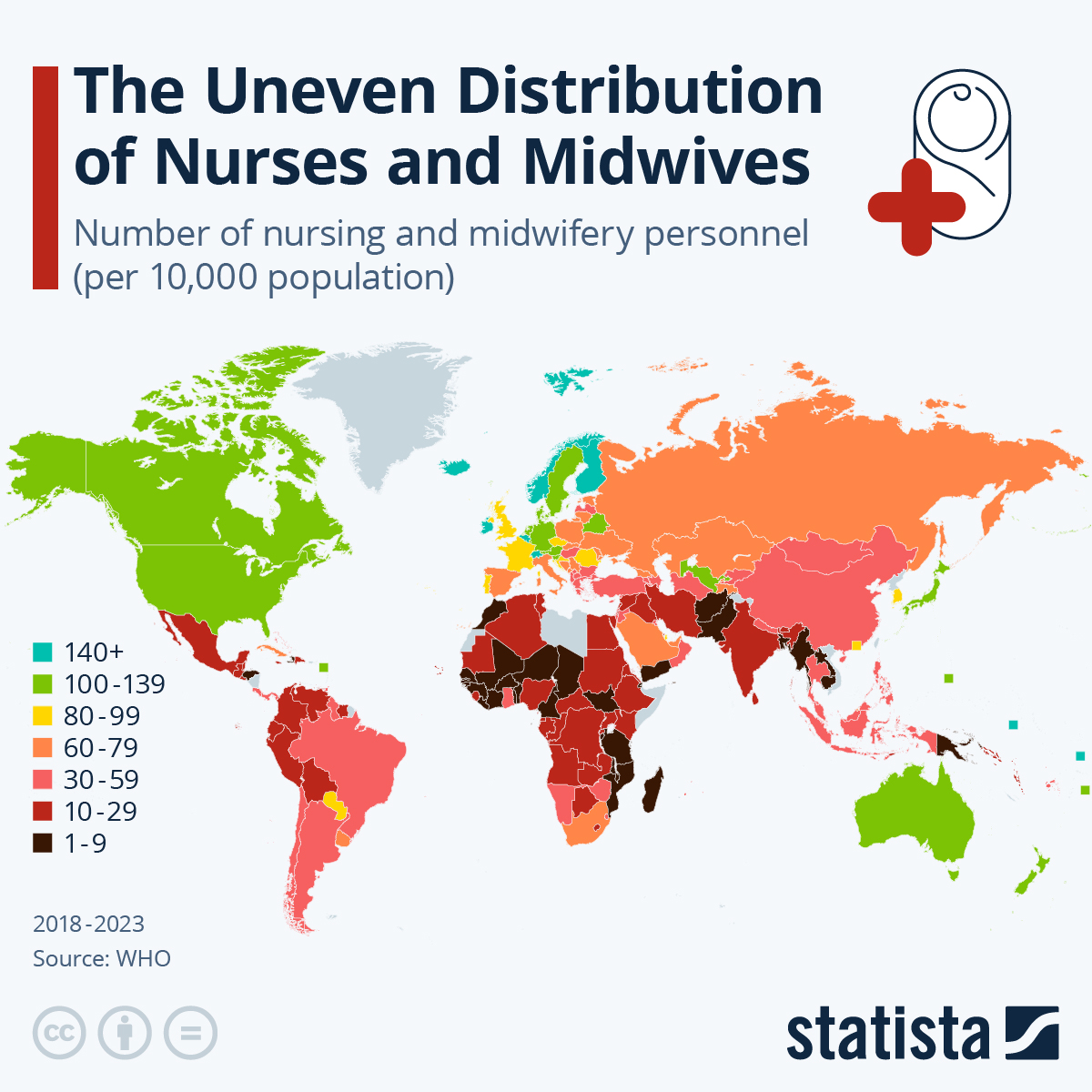
    The Global Distribution of Nursing and Midwifery Personnel

    The WHO’s data from 2018 to 2023 reveals an alarming disparity in the distribution of nurses and midwives globally.

    The Map of Inequality

    Based on the latest available data, a striking 31 countries and territories have fewer than ten nurses and midwifery personnel for every 10,000 people. This inequality is most pronounced in sub-Saharan Africa, where healthcare infrastructure is often under-resourced and overburdened.

    Regional Variations

    The disparities extend beyond mere numbers; they reveal profound regional variations:

    • China: As of 2022, the ratio stands at 37 midwives and nurses per 10,000 population.
    • Indonesia: In 2023, this figure is 32 per 10,000.
    • India: In 2020, there were only 17 midwives or nurses for every 10,000 people.
    • Cambodia: The situation is dire, with just 10 per 10,000 as of 2019.

    These statistics illustrate that while some regions have made progress in healthcare staffing, others like Cambodia and India remain critically underserved.

    The Implications of Staffing Gaps

    The uneven distribution of healthcare personnel has catastrophic implications for maternal and newborn health. Countries with fewer skilled healthcare providers face higher rates of preventable deaths. The gaps not only hinder immediate care but also affect the broader healthcare system, leading to long-term consequences for communities.

    The Way Forward: Addressing the Imbalance

    To make substantial progress in reducing maternal and newborn mortality, countries must prioritize the training, hiring, and retention of nurses and midwives. This involves increasing investment in healthcare infrastructure, ensuring that healthcare workers have the resources they need, and creating policies that support safe staffing levels.

    Recognizing the critical role that nurses and midwives play in the healthcare system is essential for creating a more equitable, effective, and responsive global health landscape.