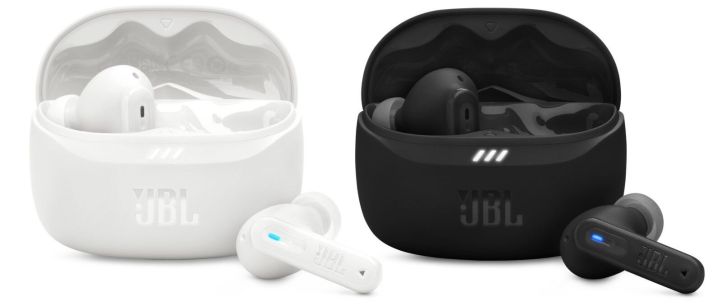
Tag: Headphones

  • How to Connect Bluetooth Headphones to a PS5: A Step-by-Step Guide

    How to Connect Bluetooth Headphones to a PS5: A Step-by-Step Guide

    Sure! Here’s a rewritten, unique, human-like version of the content in American English, with any mention of videos or editors removed:


    The simplest way to enhance your experience with top PS5 games is by pairing them with a quality headset. While many gamers can’t afford a full surround sound system, a good headset provides a richer audio experience without the need for a room filled with speakers.

    Most high-quality PS5 accessories are wireless, so naturally, you’ll want your headset to be wireless as well. However, there’s one caveat: the PS5 doesn’t support standard Bluetooth headphones natively. If your headphones don’t come with an official PlayStation USB dongle or another supported wireless adapter, you’ll need a USB-A or USB-C Bluetooth audio transmitter to connect them directly to your console.


    When it comes to connecting Bluetooth headphones to your PS5, it’s important to note that most headsets use Bluetooth, but pairing can sometimes be tricky. If you’re experiencing difficulty, here’s how to do it quickly and easily.

    Once you’ve inserted your Bluetooth transmitter into the PS5, generally no additional setup on the console is required. The PS5 should recognize the transmitter as a USB audio device. If you don’t hear sound after pairing, check the settings under Sound > Audio Output to ensure the transmitter is selected.

    To pair your Bluetooth headphones with your PS5, follow these steps:

    Step 1: Turn on your headphones and put them into pairing mode, following the manufacturer’s instructions.

    Step 2: On your Bluetooth transmitter, press and hold the pairing button until the LED indicator starts flashing, then wait a moment.

    Step 3: The transmitter should automatically detect your headphones and establish a connection. Once connected, you’re good to go and can start gaming with your headphones.

    If the connection doesn’t happen on the first try, turn your headphones off and repeat the process. Ensure both devices are charged, and that you’re pairing within the ideal window to avoid timing issues.


    If you’d prefer to connect Bluetooth headphones without a transmitter, there’s an alternative workaround involving your TV. Many modern televisions support Bluetooth, allowing you to pair your wireless headphones directly to the TV instead. Then, your PS5 audio can be routed to the headphones via the TV.

    Here’s how to do it:

    Step 1: Access the TV’s settings menu and locate the Bluetooth options. Ensure Bluetooth pairing is enabled.

    Step 2: Put your Bluetooth headphones into pairing mode.

    Step 3: Find your headphones in the list of available Bluetooth devices on the TV and pair them.

    Please keep in mind that using your TV’s Bluetooth can introduce audio delay, and microphone support may be limited compared to direct headset connections.


    FAQs

    Can you connect a Bluetooth headset directly to the PS5?
    Sadly, the PS5 doesn’t natively support Bluetooth headphones. The best way to connect a standard Bluetooth headset is through a compatible USB-A or USB-C Bluetooth adapter plugged into your console.

    Why doesn’t the PS5 support Bluetooth audio natively?
    Sony has stated that Bluetooth audio on the PS5 isn’t supported due to latency issues and bandwidth limitations. This can lead to noticeable delays and connection challenges during gameplay.

    Can I connect AirPods to my PS5?
    Direct connection isn’t possible because the PS5 doesn’t support standard Bluetooth audio. However, with a compatible Bluetooth adapter, you can connect AirPods and other Bluetooth headphones. Keep in mind that some adapters support only audio, while others might provide limited microphone functionality.


    By following these steps and tips, you can enhance your gaming audio and enjoy your PS5 experience to the fullest.

  • Sony’s InZone H9 II Cheaper XM6 Wireless Headphones With Gaming Features

    Sony’s InZone H9 II Cheaper XM6 Wireless Headphones With Gaming Features

    The holiday season arrives early for those who love accessories, especially among PS5 and PC gamers. Sony has expanded its InZone gaming lineup with several new products, including the H9 II wireless noise-canceling headset, E9 in-ear monitors, the KBD-H75 keyboard, Mouse-A mouse, and the Mat-D and Mat-F mousepads.

    Among the new items, the standout appears to be the over-ear ANC headphones. The InZone H9 II shares much of its design DNA with Sony’s flagship WH-1000XM6, widely regarded as some of the best wireless headphones available today, but at a $100 lower price point.

    The H9 II utilizes the same 30mm drivers found in the XM6, which bodes well for its audio performance across gaming soundtracks, movies, and music. Coupled with Sony’s renowned audio processing technology, the headphones can create a virtual 7.1 surround sound experience when fed multi-channel audio.

    In addition to exceptional sound, these headphones feature active noise cancellation in both wireless and wired modes. They come with a long, adjustable boom mic designed to clearly pick up voices while filtering out background noise, thanks to AI-optimized precision. Connectivity is versatile, offering a USB-C dongle with ultra-low-latency 2.4GHz wireless, plus support for Bluetooth with LE Audio, allowing simultaneous connection to your phone for calls and notifications during gameplay.

    Battery life matches Sony’s flagship standards, providing up to 30 hours of use in non-ANC mode—though this is slightly less than the XM6, where ANC is active. A quick five-minute charge offers around three hours of gaming.

    The headphones weigh just a few grams more than the XM6, making them about 17% lighter than the original InZone H9. They are available in black and white finishes, currently for pre-order at $350.

    Moving to the E9 model, Sony introduces a series newcomer rather than a sequel. These wired in-ear monitors, developed in partnership with British esports company Fnatic, feature audio tuning designed for gamers. They come with both noise-isolating foam and silicone tips in various sizes, ensuring comfort for extended wear and effective passive noise isolation.

    The InZone Hub for PC connects via USB-C, allowing users to customize sound profiles, adjust EQ settings, and manage 7.1-channel and spatial audio preferences. The E9 monitors are offered in black and white and can be pre-ordered now for $150.

  • How to Enable Auracast on Sony WH-1000XM6 Headphones

    How to Enable Auracast on Sony WH-1000XM6 Headphones

    Sony’s latest flagship wireless headphones, the WH-1000XM6, excel in various areas, delivering exceptional sound quality, superior noise cancellation, and enhanced comfort. A unique feature of this model is its ability to access Bluetooth Auracast broadcasts, a first for the 1000X series. However, unlike other features such as spatial audio, EQ customization, and control adjustments that can easily be accessed through the Sony Sound Connect app, setting up Auracast requires a bit more effort.

    Let’s explore the importance of Auracast and how you can make it work with the Sony WH-1000XM6.

    Why is Auracast Important?

    Bluetooth Auracast, part of the official Bluetooth 5.2 specification alongside LE Audio, transforms any compatible source device—be it a smartphone, laptop, or tablet—into a Bluetooth broadcasting station. It can stream the same audio to an unlimited number of Auracast-compatible devices, such as headphones, earbuds, and speakers, making it an ideal solution for sharing audio at social gatherings.

    Unlike traditional Bluetooth devices that require a pairing process, Auracast broadcasts can be found and listened to without establishing a connection to the source device. You’ll simply need an interface, referred to as an Auracast assistant, to scan for and tune into available broadcasts nearby. If you’ve ever searched for a Wi-Fi network, the process is quite similar. Auracast broadcasts can either be open, allowing anyone to listen, or private, requiring a password or PIN.

    When Might You Use Auracast?

    Initially, most users will find Auracast useful for two main scenarios: sharing audio from a phone or laptop, or augmenting a Bluetooth speaker’s sound to other compatible speakers—some brands even label this as “Party Mode.” For instance, Marshall’s new Heston 120 soundbar utilizes Auracast to extend its surround sound capabilities to its compatible Bluetooth speakers.

    Looking ahead, additional applications for Auracast may include:

    • Dual language soundtracks in movie theaters
    • Wireless connections for headphones and hearing aids to home TVs
    • Wireless headphone support for TVs in public places, like gyms or relaxation areas
    • Public address systems in busy environments, such as airports or stadiums
    • Audio tours at museums or historical sites
    • Virtual public addresses for seminars and conventions

    How to Use Auracast with the Sony WH-1000XM6

    Before we go into the steps, it’s important to note: the WH-1000XM6 does not support Bluetooth Auracast when linked to iPhones or iPads. This limitation arises from Sony’s strategy regarding Auracast; rather than incorporating the assistant functionality within its Sound Connect app, Sony depends on the smartphone’s software for this. Currently, only specific Android devices with version 13 or higher contain the necessary built-in Auracast assistant. If you want to utilize Auracast with an iPhone, consider options like JBL’s Tour One M3 or Tour Pro 3, which feature their own Auracast assistant within JBL’s Headphones app for iOS.

    In this guide, we’ll use the Samsung Galaxy S23 Ultra operating One UI 7.0 on Android 15. Please verify that your smartphone and Android version support Bluetooth Auracast before continuing.

    Switching to LE Audio via the Sound Connect App

    To enable Bluetooth Auracast, your WH-1000XM6 must operate in LE Audio mode—a different mode from the standard Bluetooth connection. Out of the box, Sony ships the WH-1000XM6 in standard Bluetooth mode, so you’ll need to change it manually to LE Audio.

    1. Connect the WH-1000XM6 to an Android device running version 13 or higher.
    2. Launch the Sony Sound Connect app.
    3. Scroll down and tap on Device Settings.
    4. Choose the System tab.
    5. Scroll down and click the arrow next to Classic Audio only under LE Audio connection setting for headphones.
    6. Select the LE Audio Priority option.
    7. Confirm the dialog box that appears, selecting OK.
    8. You’ll receive a notification stating that the headphones must be reconnected; choose Check Operating Procedures for further instructions or Cancel.
    9. Return to your phone’s Bluetooth settings.
    10. Locate the WH-1000XM6 in the paired devices list.
    11. Unpair or forget the WH-1000XM6 as needed.
    12. Hold the power button on the WH-1000XM6 until the LED flashes blue and you hear the “Pairing” voice prompt.
    13. Your Android device should automatically recognize the headphones and prompt you to Connect.
    14. Once connected, select Done.
    15. Open the settings for the WH-1000XM6 from your Bluetooth device menu.
    16. Select the LE Audio option.
    17. The headphones will disconnect and reconnect.

    Your WH-1000XM6 should now be connected to your phone through LE Audio. To verify:

    • Return to the Sony Sound Connect app.
    • Below the image and battery life indicator, LE Audio should be shown.
    • If it isn’t visible, repeat steps 1-17.

    Finding and Connecting to an Auracast Broadcast Using Android’s Bluetooth Settings

    1. Open your phone’s Bluetooth settings again.
    2. Locate the WH-1000XM6 in the list of paired devices and enter its settings (the method may differ by device).
    3. Scroll down and select Listen to Auracast broadcast.
    4. Any available Auracast broadcasts will be displayed on the screen.
    5. Select an available Auracast broadcast.
    6. You should now hear the audio through the WH-1000XM6.
  • AI Headphones Powered by Apple M2 Translate Multiple Speakers

    AI Headphones Powered by Apple M2 Translate Multiple Speakers


    Google’s Pixel Buds have long provided impressive real-time translation capabilities. Recently, companies like Timkettle have launched similar earbuds aimed at business users. However, all these devices could only translate one audio source at a time.

    Researchers at the University of Washington have created a groundbreaking set of AI-powered headphones that can translate multiple voices simultaneously. Imagine an expert linguist in a busy bar, effortlessly processing conversations in several languages all at once.

    This innovation is known as Spatial Speech Translation and utilizes binaural headphones. These headphones replicate auditory experiences as humans naturally perceive sounds. To capture this effect, microphones are positioned on a dummy head, mimicking the distance between human ears.

    The significance of this approach lies in its ability to help us not only hear sounds but also discern their direction. The ultimate aim is to craft a natural sound environment, delivering a stereo experience akin to attending a live concert, which is referred to as spatial listening in today’s terminology.

    Led by Professor Shyam Gollakota, the team has worked on various impressive projects, including apps that provide underwater GPS for smartwatches and brain implants that interact with electronic devices.

    How does multi-speaker translation work?

    “We’re capturing the uniqueness of each person’s voice along with their directional speech for the first time,” notes Gollakota, associated with the Paul G. Allen School of Computer Science & Engineering.

    The system functions like radar, detecting the number of speakers in its vicinity and dynamically updating that count as individuals move in and out of range. Impressively, this process operates entirely on-device, ensuring privacy by not sending audio data to cloud servers.

    Along with translating speech, the technology preserves the tonal qualities and loudness of each speaker’s voice. It also includes dynamic adjustments based on how a speaker moves throughout the space. Interestingly, Apple is reportedly developing a similar feature for AirPods that would allow for real-time audio translation.

    How does it all come to life?

    In its testing phases, the UW team assessed the translation features of the AI headphones in various indoor and outdoor settings. The system can process and output translated spoken audio in 2 to 4 seconds. Participants seemed to prefer a delay of around 3 to 4 seconds, but the team is actively enhancing the translation speed.

    While initial tests have focused on translations involving Spanish, German, and French, the researchers aim to expand their capabilities to include additional languages. Their approach blends blind source separation, localization, real-time expressive translation, and binaural sound rendering into a seamless process.

    The team utilized a speech translation model capable of real-time operation on Apple’s M2 silicon, performing audio processing with Sony’s noise-cancelling WH-1000XM4 headphones paired with a Sonic Presence SP15C binaural USB microphone.

    Moreover, the code for this proof-of-concept device is available for others to explore, enabling the scientific community and hobbyists to build on the groundwork laid by the UW team.

  • Sony WH-1000XM6 Headphones Launch Confirmed With Hinge Leak

    Sony WH-1000XM6 Headphones Launch Confirmed With Hinge Leak

    Sony’s WH-1000XM6 Headphones Set to Debut Next Week

    Sony is gearing up to unveil its latest flagship noise-canceling headphones, the WH-1000XM6, in just a week. As the launch date approaches, there hasn’t been a flood of leaks as seen with smartphones; however, one significant leak has showcased the new headphones in detail.

    Following an accidental listing on Amazon Spain, a new source has revealed images of the WH-1000XM6, highlighting a subtle redesign aimed at enhancing user comfort. Notably featured are three color options for these headphones: white, black, and a striking “midnight” blue.

    The leaked images show a key departure from the previous model, the XM5s—primarily the hinge design. This iteration features a refined hinge that permits a folding mechanism, which is expected to resolve issues reported by users regarding the fragility of the XM5 hinge. The new design employs a three-part configuration with a metal center element to enhance durability. Testing will reveal if wear comfort has also improved.

    The updated headphones showcase a more rounded power button, while the controls for volume adjustments appear to be relocated alongside this new button. Interestingly, dedicated volume buttons are not visible, suggesting that they may be capacitive.

    Additionally, the mesh covering the microphone openings suggests potential improvements in water resistance, although a formal water-resistance rating is unlikely for the WH-1000XM6. The traditional 3.5mm headphone jack remains, hinting that the transition to USB-C for audio may not occur this generation. Removable cushions, as noted in previous FCC listings, are expected, but the latest images do not provide clarity on this feature.

    As confirmed by Sony Australia, the launch is set for May 16th at 2 a.m. Melbourne time, which translates to noon on May 15th in New York. The expected price for the headphones is approximately $449, an increase from the $399 price tag of the previous generation.

    Internally, the WH-1000XM6 is expected to feature substantial upgrades, including the new QN3 HD chip for active noise cancellation, a Mediatek MT2833 processor, and a total of twelve microphones (six in each ear cup) dedicated to enhancing noise-canceling capabilities.

  • Sony’s Upcoming Headphones May Address Major User Issue

    Sony’s Upcoming Headphones May Address Major User Issue

    Exciting news for headphone enthusiasts: the beloved Sony WH-1000XM5 may soon be succeeded by the WH-1000XM6. With a potential launch date set for May 15, new specifications have surfaced that reveal mixed highlights.

    An earlier listing on Amazon Spain indicated that the upcoming WH-1000XM6 is likely to include a cutting-edge QN3 chip, 30mm drivers, 12 noise-canceling microphones, and AI-enhanced voice mics. Notably, the headphones are expected to feature a foldable design, a reimagined headband, and soft ear cushions for extra comfort. A new carrying case is also anticipated to accompany the headphones.

    Sony’s choice to reintroduce a foldable design is significant, enhancing portability compared to recent iterations.

    Additional features rumored for the WH-1000XM6 include an impressive battery life of up to 30 hours, rapid charging capabilities, 360 Upmix technology for immersive sound, an improved gaming EQ, enhanced call quality, and multipoint connectivity.

    Battery performance is predicted to stay at 30 hours, with a rapid charging option that can deliver three hours of listening time after just a three-minute charge.

    There are speculations of a price increase to around $479, with the headphones reportedly available next month.

    The WH-1000XM5, which has been on the market for nearly three years, is celebrated for its superior sound quality, comfort, call clarity, noise cancellation, and battery longevity. With a sleek, lightweight design and intuitive controls, it continues to impress.

    As highlighted in our review, the WH-1000XM5 delivers clear, balanced audio with excellent bass management. Its noise cancellation is stellar, though slightly outperformed by Bose’s QuietComfort Ultra Headphones. Call quality remains exceptional, and the battery is adequate for extended journeys.

    Nevertheless, the WH-1000XM5 lacks some modern amenities, such as spatial audio, USB audio output, and support for Auracast. Also, we have found the hinge connecting the headband to the earcups somewhat uncomfortable during prolonged use.

    Stay tuned for the official announcement of the WH-1000XM6, and in the meantime, explore our wishlist for features we hope to see in the new model.

  • Bowers & Wilkins Launches Px7 S3 Headphones, Teases Px8 S2

    Bowers & Wilkins Launches Px7 S3 Headphones, Teases Px8 S2

    Bowers & Wilkins (B&W) has unveiled their newest wireless headphones, the Px7 S3, which promise advancements in sound quality, noise cancellation, and overall comfort. These headphones will be available in three colors: Anthracite Black, Indigo Blue, and Canvas White, and are being promoted as the most sophisticated model the brand has released to date. However, this title may soon be challenged, as B&W has announced that their upcoming flagship model, the Px8 S2, is currently in development and expected to debut later in 2025.

    The launch of the Px7 S3 has been somewhat impacted by the ongoing tariff situation in the U.S. While the headphones are fully available in the United Kingdom, where they retail for £399 (approximately $531), there is no confirmed release date for North and Latin America. Potential buyers in these regions are encouraged to sign up for notifications on the Px7 S3 product page for updates. Interestingly, the product pages for the U.S. and Canada list prices of $429 and $599 CAD, respectively, although these prices may adjust by the time of availability.

    ### Significant Enhancements

    The Px7 S3 represents a major upgrade over the previous B&W Px7 S2 model, which was already well-regarded for its noise-canceling capabilities. The design features adjustments to the chassis, including streamlined earcups, a reimagined headband, and a new arm mechanism that provides a snugger fit.

    It would have been beneficial to see the inclusion of magnetic ear cushions for easier replacements, but B&W assures that trained service technicians can replace both the ear cushions and headband.

    Internally, the Px7 S3 boasts improved 40mm bio-cellulose drivers with refinements to the chassis, voice coil, suspension, and magnet. B&W claims that these updates will minimize coloration and distortion while enhancing resolution and dynamic range. For the first time, the company has incorporated a dedicated headphone amplifier, promising a more expansive and energetic sound profile.

    Hi-res audio support has been enhanced through the introduction of Qualcomm’s Snapdragon Sound codec family, replacing the older aptX HD codec. This includes aptX Adaptive and aptX Lossless for compatible smartphones. The Px7 S3 continues to support USB audio with lossless decoding capabilities of up to 24-bit/96kHz via the onboard DAC.

    Active noise cancellation (ANC) is now powered by an eight-microphone system, an improvement over the six-mic setup in the Px7 S2. B&W asserts that this will better eliminate unwanted sounds, particularly during phone calls, thanks to its utilization of ADI Pure Voice technology.

    Battery life remains at a claimed 30 hours, but refinements within the B&W Music app allow for personalization of sound through a five-band EQ with saveable presets.

    In an intriguing update, B&W has promised future firmware enhancements for the Px7 S3, which may include support for spatial audio and Bluetooth LE Audio with Auracast. While a release date has not been specified, a representative indicated that the planned spatial audio feature would not include head tracking, unlike what is available in some rival high-end headphones such as the Bose QuietComfort Ultra and Apple AirPods Max.

  • Samsung’s Upcoming Headphones May Rival Shokz

    Samsung’s Upcoming Headphones May Rival Shokz

    The upcoming Unpacked event from Samsung is anticipated for July, where the spotlight will be on the Galaxy Z Fold 7 and Z Flip 7. However, there’s talk of an additional surprise: a new pair of earbuds designed to deliver music at high fidelity while still allowing users to remain aware of their surroundings. Trusted insiders, Digital Chat Station and Ice Universe, shared this information on Weibo, describing the forthcoming earbuds as “bone conduction” models.

    Interestingly, both sources refer to these as open wireless stereo (OWS) earbuds. This type typically delivers sound into the ear canal via air rather than relying on vibrations. While the exact details about Samsung’s latest offering are still under wraps, it appears the tech giant is working on an innovative new proposal.

    OWS earbuds are favored by runners, cyclists, and anyone who needs to maintain awareness of their environment while exercising. They enable users to enjoy music without blocking their ears, thus ensuring they can still hear oncoming traffic.

    The Samsung Galaxy S24 Ultra with the Galaxy Buds3 Pro.
    Andy Boxall / Digital Trends

    The Galaxy Buds have long been a popular choice for Android users seeking an alternative to AirPods. They provide sound quality comparable to premium earbuds, a comfortable fit, and a range of features that make them a top choice. If Samsung’s new earbuds can match or surpass the quality of the Galaxy Buds, they are likely to attract a significant following.

    These new earbuds are anticipated to launch at the next Unpacked event alongside the latest smartphones. While information is currently limited, history suggests that more leaks and details will surface as the date approaches.

    This announcement could potentially make bone-conduction technology — usually associated with a higher price tag — more accessible as various brands start to explore this segment of the market.

  • Meze Launches Stunning Open-Back Planar Headphones

    Meze Launches Stunning Open-Back Planar Headphones

    The latest offering from Meze Audio, the premium open-back wired headphones, showcases brand new, custom-designed planar magnetic drivers. This technology has long been favored by audiophiles for its exceptional clarity and minimal distortion. However, it’s the striking design of the $2,000 Meze Poet that may truly captivate potential buyers.

    Typically, planar headphones are known for their bulky designs that prioritize function over aesthetics. The Meze Poet breaks this mold with its exquisite copper-toned, intricately patterned steel grilles, magnesium earcup frames, a titanium alloy structure, and a luxuriously soft suede leather headband.

    Meze Audio Poet headphones.
    Meze Audio

    The copper design elements are elegantly carried through to the height adjustment rods and the detachable, hand-braided copper cable.

    The ear cushions are designed for easy replacement, using a magnetic attachment that allows for hassle-free swapping once they wear out over time.

    In the development of the Poet, Meze partnered again with Rinaro Isodynamics, an expert in electro-acoustics from Ukraine. Each earcup is equipped with an MZ6 Isodynamic Hybrid Array driver, a sophisticated hybrid magnet arrangement paired with an ultra-light planar diaphragm weighing merely 0.06 grams. This driver is akin to the one found in Meze’s flagship $4,000 Elite Tungsten headphones.

    Meze Audio Poet headphones.
    Meze Audio

    The specifications of these drivers are certainly impressive:

    • Frequency range: 4 Hz – 96 kHz
    • Sensitivity: 101 dB SPL/mW at 1 kHz
    • Maximum SPL: >130 dB SPL
    • Total harmonic distortion (THD): <0.05%

    With an impedance of just 55 ohms, the Poet is user-friendly and can easily be driven from a standard 3.5mm jack on a typical laptop.

    Man wearing Meze Audio Poet headphones.
    Meze Audio

    In poetic terms, Meze describes the sound profile of the Poet as “a sonic journey characterized by lush, airy vocals and crisp bass precision, achieving a harmony between rich low-end depth and delicate high-frequency clarity.” The headphones are said to naturally enhance tonality with subtle sparkles for a vibrant yet effortless listening experience.

    The price tag of $2,000 is a considerable investment for most consumers. However, Meze Audio softens the financial impact with the inclusion of a robust PC-ABS hard case for storage. Additionally, a separate synthetic leather pouch is provided for housing the cables.

    The included cable features 3.5mm mono jacks at the earcup connections, along with a standard unbalanced 6.3mm (1/4-inch) source connector. Meze also offers various optional accessory cables that allow for 2.5 or 4.4mm balanced connections if desired.

    For those seeking a budget-friendly entry into the open-back audiophile market, the Meze Audio 105 AER is worth considering. While they may not feature high-end planar drivers, they nonetheless deliver impressive sound quality and aesthetic appeal.

  • JBL Introduces Smart Transmitter For Tour One Headphones

    JBL Introduces Smart Transmitter For Tour One Headphones

    CES 2025
    Explore our comprehensive coverage of CES 2025 here
    Updated just now

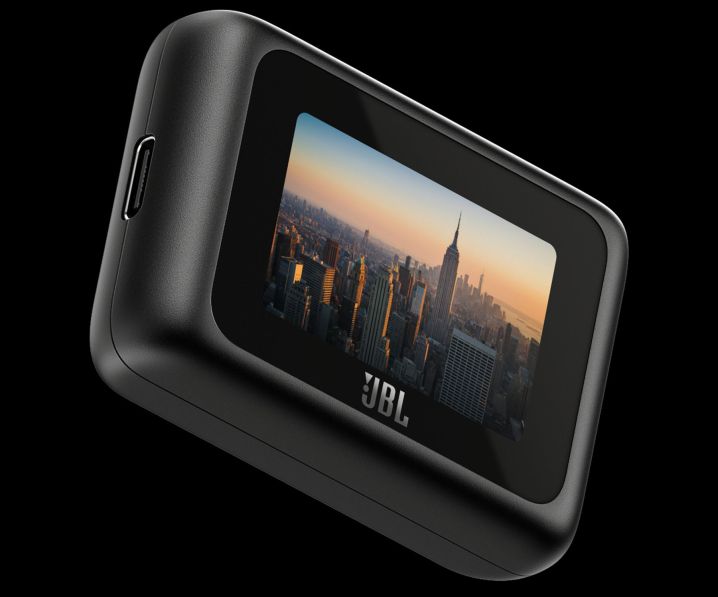
    At CES 2025, JBL unveiled its third-generation JBL Tour One M3 noise-canceling wireless headphones, set to launch on April 13, 2025, priced at $400. A unique addition is a smart transmitter that features a color touchscreen and both digital and analog audio inputs. This device allows users to wirelessly stream audio to the Tour One M3, providing the ability to connect to wired sources like computers or in-flight entertainment without a physical connection to the headphones.

    JBL Smart Tx transmitter for the Tour One M3.
    The JBL Smart Tx transmitter designed for the Tour One M3.
    JBL

    This setup is reminiscent of JBL's design for the Tour Pro 3 wireless earbuds; in that case, the smart transmitter functionalities are built directly into the charging case. For wireless earbuds, this transmitter is a game-changer since they typically can't connect to wired sources independently. The necessity of such a system for headphones, however, may be less compelling since many wireless models include analog and digital cables as standard.

    The Tour One M3's smart transmitter also supports Auracast broadcasts, enabling users to share their audio with anyone nearby who has an Auracast-compatible set of headphones or earbuds. Additionally, the transmitter can scan for and connect the Tour One M3 to any Auracast broadcasts available within range.

    While the transmitter is a key highlight of the M3, JBL has also made significant enhancements throughout the product:

    • Extended battery life, increasing to 70 hours from the previous model's 50 hours, with just a 5-minute quick charge providing an additional 5 hours of listening time.
    • Equipped with new 40mm Mica dome drivers.
    • Features JBL Personi-Fi 3.0, the latest iteration of JBL's personalized audio technology.
    • Incorporates True Adaptive Noise Cancelling 2.0.
    • Spatial audio functionality includes head tracking capabilities.
    • Enhanced passive noise isolation.
    • Available in black, mocha, and blue.

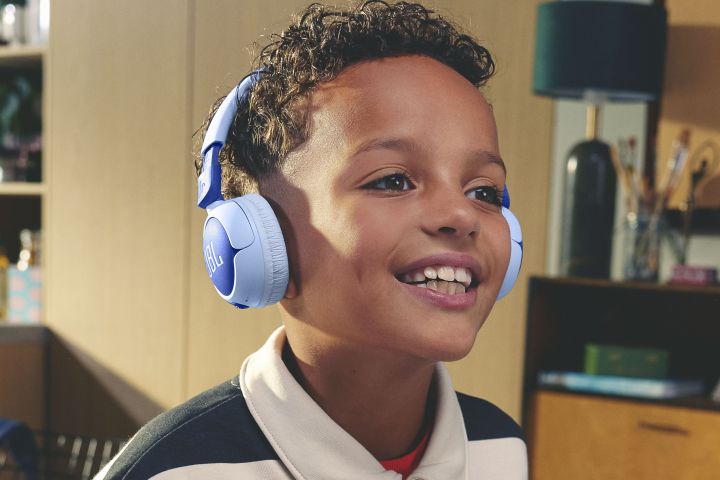
    In addition to the Tour One M3, JBL is set to launch two new models of wireless headphones for kids in March 2025:

    JBL Junior 470NC, $80

    • Active noise cancellation
    • Up to 50 hours of battery life
    • Options to limit max volume and listening time in the JBL app
    • Live indicators for volume and activity, plus daily or weekly usage reports

    JBL Junior 320BT, $50

    JBL Junior 320 BT.
    JBL
    • Up to 50 hours of battery life
    • Maximum volume and listening duration can be controlled via the JBL app
    • Real-time tracking for volume and activity with reports on listening habits

    The event also showcased updates across JBL’s entire lineup of wireless and wired headphones, set to release in March 2025. The most remarkable updates include the introduction of active noise cancellation for the Vibe 2 series — the first instance of ANC in JBL's semi-open earbuds — and the addition of spatial audio to the Tune 2 series.

    JBL Endurance Race 2, $80

    JBL Endurance Race 2.
    JBL
    • Color options: black, white, blue, and purple
    • Active noise cancellation support
    • IP68 rating (earbuds) and IPX2 (charging case)
    • Playtime of 12 hours for earbuds plus 36 hours with the charging case when ANC is disabled
    • VoiceAware feature

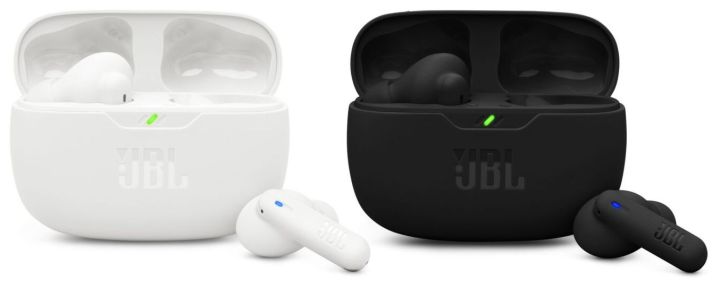
    JBL Vibe Buds 2, $60

    JBL Vibe 2 Buds.
    JBL
    • Available in black, white, pink, and blue
    • Bud-style design
    • Incorporates active noise cancellation
    • IP54 rating (earbuds) and IPX2 (charging case)
    • Playtime of 10 hours for earbuds and an additional 30 hours with the case when ANC is off
    • Voice Aware feature

    JBL Vibe Beam 2, $60

    JBL Vibe 2 Beam.
    JBL
    • Color options include black, white, pink, and blue
    • Closed, stem-style design
    • Features active noise cancellation
    • IP54 rating (earbuds) and IPX2 (charging case)
    • 10 hours of listening time on earbuds, plus 30 hours with the charging case without ANC
    • Voice Aware functionality

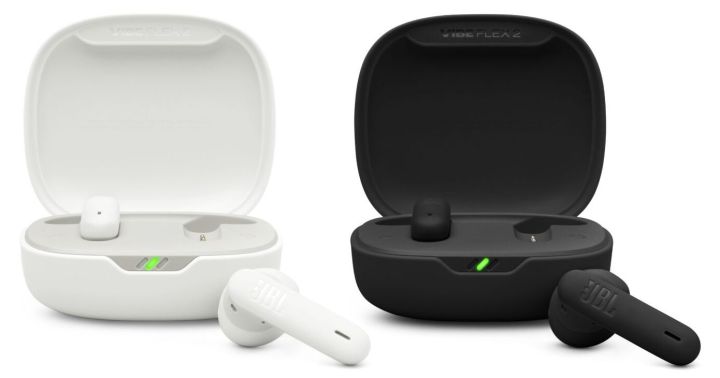
    JBL Vibe Flex 2, $70

    JBL Vibe 2 Flex.
    JBL
    • Color options: black, white, pink, and blue
    • Semi-open, stem-style design
    • Active noise cancellation included
    • IP54 rating (earbuds) and IPX2 (charging case)
    • 10 hours for earbuds and 30 hours with the case when ANC is off
    • Voice Aware capability

    JBL Tune Buds 2, $100

    JBL Tune 2 Buds.
    JBL
    • Available in black, white, and turquoise
    • Bud-style design
    • Adaptive noise canceling technology
    • Supports LE Audio
    • Includes spatial audio features
    • IP54 rating (earbuds only)
    • 12 hours of playback for earbuds plus 36 hours with the case while ANC is off
    • VoiceAware functionality

    JBL Tune Beam 2, $100

    JBL Tune 2 Beam.
    JBL
    • Color options: black, white, and turquoise
    • Closed, stem-style design
    • Features adaptive noise cancelation
    • Supports LE Audio and spatial audio
    • IP54 rating (earbuds only)
    • 12 hours of playtime for earbuds plus 36 hours with the case while ANC is off
    • VoiceAware technology

    JBL Tune Flex 2, $100

    • Available in black, white, and turquoise
    • Semi-open, stem-style design
    • Adaptive noise cancellation included
    • Supports LE Audio
    • Includes spatial audio technology
    • IP54 rating (earbuds only)
    • 12 hours of playback for earbuds with an additional 36 hours using the charging case, ANC off
    • VoiceAware feature included

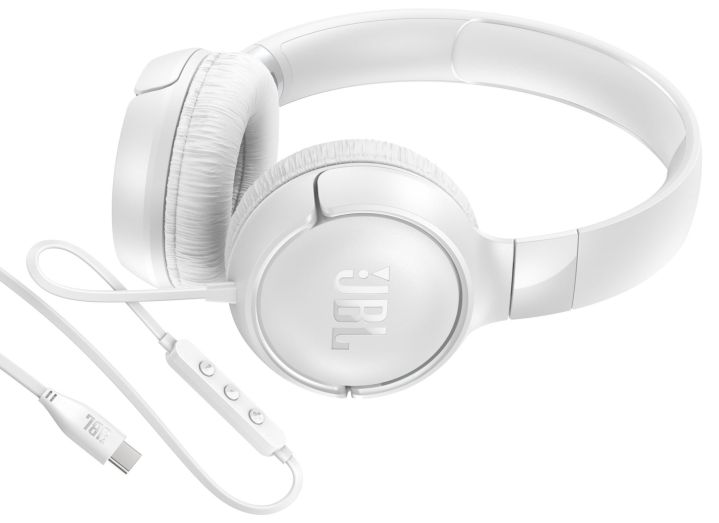
    JBL Tune 520 C, $40

    JBL 520 C.
    JBL
    • Color choices: black, white, blue, and purple
    • On-ear design
    • Wired with USB-C connection
    • Hi-res audio support
    • Customizable EQ settings
  • Belkin’s Budget-Friendly Noise-Canceling Headphones

    Belkin’s Budget-Friendly Noise-Canceling Headphones

    CES 2025
    CES 2025
    Explore our comprehensive CES coverage.
    Updated just moments ago

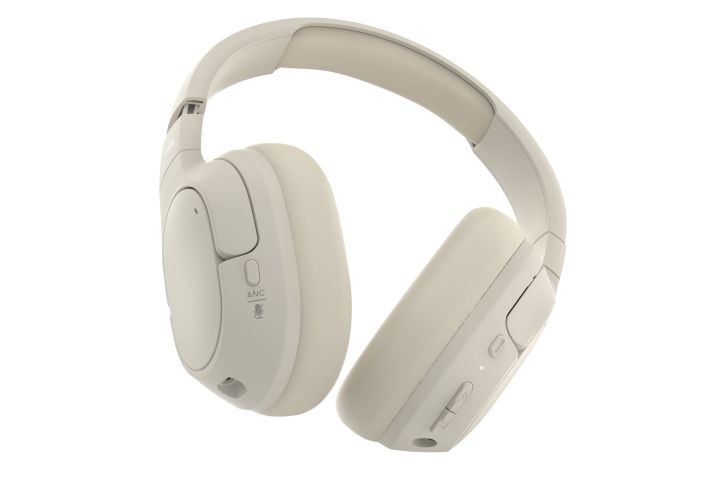
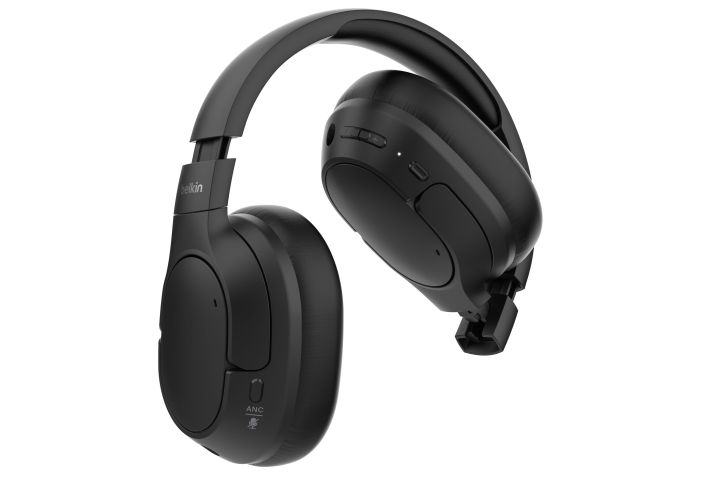
    Belkin has long been associated with personal audio, primarily known for its accessories like chargers and laptop peripherals. At CES 2025, the brand unveiled its first pair of over-ear noise-canceling wireless headphones, introducing the Soundform Isolate at an affordable price of $60. Consumers can now preorder these in either sand or black.

    The Soundform Isolate may not top any audiophile’s wishlist, but Belkin is clearly targeting those seeking a budget-friendly model that provides a comfortable experience with effective active noise cancellation (ANC).

    Belkin Soundform Isolate.
    Belkin

    The headphones feature a foldable design for easy transport, and Belkin claims that their CloudCushion earcups provide “plush comfort.” The battery can last for about 40 hours with ANC activated, extending to 60 hours when it’s turned off. Additionally, there’s a transparency mode for awareness of the external environment.

    Belkin Soundform Isolate.
    Belkin

    The Soundform Isolate headphones utilize Bluetooth 5.4 technology and support Multipoint connectivity to connect with two devices simultaneously. Touch controls are available according to a press announcement, but it appears that many functions are accessible via physical buttons as suggested by the images shared.

    For wired audio options, these headphones come with a USB-C to USB-C cable for digital audio and charging, alongside a 3.5mm analog cable for non-digital audio sources. Additionally, when the need for sound relaxation arises, a built-in “Relaxation” track featuring ocean wave sounds is available to provide a calming ambiance.

    Belkin Soundform Anywhere.
    Belkin

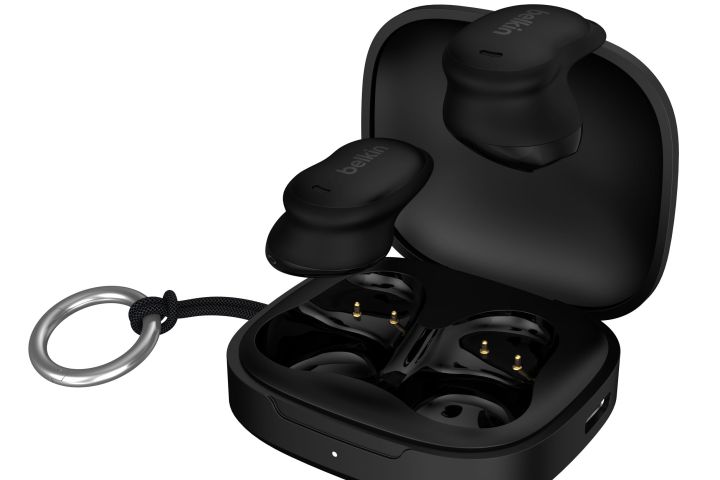
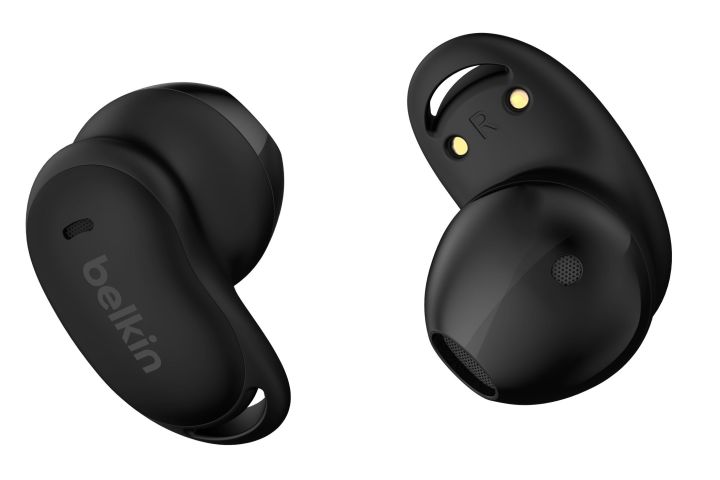
    Belkin also unveiled a new pair of budget wireless earbuds named Soundform Anywhere. These earbuds resemble the Apple AirPods with their semi-open design, foregoing silicone tips.

    While the pricing details for these compact earbuds have not been disclosed yet, they are expected to be available in the latter half of 2025.

    Belkin Soundform Anywhere.
    Belkin

    Current information indicates that these earbuds may boast a total battery life of 27 hours—up to 7 hours on a single charge, supplemented by an additional 20 hours from the case. A rapid 10-minute charge promises an extra 90 minutes of playback. Equipped with ENC microphones, each earbud is designed for clear call quality, and the IPX4 rating offers some protection against sweat and splashes.

    The charging case for the Soundform Anywhere earbuds includes a convenient mini-lanyard that allows users to attach it to key rings or zippers for easy accessibility.

  • Which Bluetooth headphones is best?

    Which Bluetooth headphones is best?

    Bluetooth headphones have become essential accessories for music lovers, gamers, and anyone who enjoys a wireless experience. With numerous options on the market, it’s crucial to find the right pair that suits your lifestyle and preferences. Below, we explore some of the best Bluetooth headphones available today, along with their key features and benefits.

    Factors to Consider When Choosing Bluetooth Headphones

    Before diving into specific models, it’s important to consider what features matter most to you.

    Sound Quality

    • Drivers: Larger drivers typically produce better sound.
    • Frequency response: Look for headphones with a wide frequency range for richer audio.

    Battery Life

    • Playback time: Consider how long the headphones last on a single charge.
    • Charging options: Some models offer quick charging features.

    Comfort and Fit

    • Ear cup design: Over-ear headphones usually provide better noise isolation.
    • Weight: Lightweight models are more comfortable for extended use.

    Additional Features

    • Noise Cancellation: Active noise cancellation (ANC) helps to block external sounds.
    • Water Resistance: Important for exercise or outdoor use.
    • Integrated Controls: Look for headphones that allow you to control playback and calls easily.

    Top Bluetooth Headphones in 2023

    1. Sony WH-1000XM5

    Key Features:

    • Exceptional Sound Quality: Clear audio with deep bass.
    • Industry-Leading Noise Cancellation: Quiet environment for immersive listening.
    • Battery Life: Up to 30 hours on a single charge.
    • Touch Controls: Easy playback control right on the ear cups.

    2. Apple AirPods Max

    Key Features:

    • Premium Build Quality: Comfort and aesthetic design.
    • Spatial Audio: Offers an immersive listening experience.
    • Adaptive EQ: Automatically tunes music based on in-ear fit.
    • Long Battery Life: 20 hours of listening with ANC active.

    3. Bose QuietComfort 45

    Key Features:

    • World-Class Noise Cancellation: Great for travel and noisy environments.
    • Comfortable Design: Lightweight and plush ear cushions.
    • Balanced Sound: Good for various music genres.
    • 20-Hour Battery Life: Supports quick charging.

    4. Jabra Elite 85h

    Key Features:

    • Smart Sound Technology: Adjusts audio to your surroundings.
    • Good Battery Life: Up to 36 hours with ANC enabled.
    • Durable Design: Water-resistant with robust construction.
    • Voice Assistant Integration: Compatible with Google Assistant and Alexa.

    5. Sennheiser Momentum 3 Wireless

    Key Features:

    • High-Quality Audio Output: Excellent bass response.
    • Active Noise Cancellation: Allows for peaceful listening.
    • Customizable Controls: Fully adjustable sound profiles via the app.
    • Stylish Design: A combination of luxury and functionality.

    Best Budget Options

    If you’re looking for quality without breaking the bank, here are some excellent budget-friendly choices.

    1. Anker Soundcore Life Q30

    Key Features:

    • Active Noise Cancellation: Decent performance for its price.
    • Impressive Battery Life: Up to 40 hours on a single charge.
    • Comfortable Ear Cups: Good for long listening sessions.

    2. Taotronics SoundLiberty 92

    Key Features:

    • True Wireless: No wires at all for maximum freedom.
    • Decent Sound Quality: Solid performance for everyday use.
    • IPX7 Waterproof: Ideal for workouts or outdoor activities.

    Conclusion

    Finding the best Bluetooth headphones involves understanding your needs and budget. Whether you prioritize sound quality, comfort, or special features like noise cancellation, there are options to cater to every preference. Always consider trying them on or testing them out when possible, as comfort and sound perception can vary significantly from person to person.

  • What Are Top 5 Best Headphones?

    What Are the Top 5 Best Headphones?

    With a plethora of headphones available on the market, finding the right pair can feel overwhelming. Whether you’re a casual listener or an audiophile, the right headphones can elevate your audio experience. Here’s a look at five of the best headphones currently available, taking into account sound quality, comfort, and features.

    1. Sony WH-1000XM5

    Key Features:

    • Noise Cancellation: Industry-leading noise cancellation technology blocks ambient sounds effectively.
    • Battery Life: Offers up to 30 hours of playback on a single charge, with quick charging capabilities.
    • Comfort: Lightweight design with plush ear cups allows for extended listening without discomfort.

    2. Bose QuietComfort 45

    Key Features:

    • Acoustic Performance: Superior sound quality with deep bass, crisp highs, and clear midrange frequencies.
    • Active Noise Cancellation: Adjusts to your surroundings for a tailor-made listening experience.
    • User-Friendly: Intuitive touch controls and voice assistant integration enhance functionality.

    3. Sennheiser HD 800 S

    Key Features:

    • Audiophile Sound Quality: Unmatched clarity and detail, perfect for those who demand the best in sound.
    • Open-Back Design: Provides a spacious and natural soundstage that immerses listeners in their music.
    • Durable Build: High-quality materials ensure longevity and comfort for extended listening sessions.

    4. Apple AirPods Max

    Key Features:

    • Spatial Audio: Brings a movie-theater feel with surround sound capabilities, ideal for both music and movies.
    • Custom Acoustic Design: Delivers high-fidelity audio with deep bass and crisp highs.
    • Comfortable Fit: Memory foam ear cushions and breathable knit mesh canopy distribute weight evenly across the head.

    5. Audio-Technica ATH-M50x

    Key Features:

    • Studio-Quality Sound: Highly praised for its balanced sound profile, suitable for professional use.
    • Build Quality: Sturdy construction with swiveling earcups for versatile usage scenarios.
    • Portable Design: Foldable and lightweight, making them perfect for travel and on-the-go listening.

    Final Thoughts on Choosing the Right Headphones

    When selecting headphones, consider your listening habits and preferences. Each model excels in different areas, making them suitable for various users. Here are some aspects to contemplate when making your choice:

    Consider Your Main Use:

    • Casual Listening: Wireless options with great battery life like the Sony WH-1000XM5 or Bose QuietComfort 45 are ideal.
    • Professional Audio: For studio monitoring, the Audio-Technica ATH-M50x provides accurate sound reproduction.
    • Travel: Noise-canceling headphones such as the Bose QuietComfort 45 excel in reducing ambient noise on the go.

    Comfort Matters:

    • Find headphones that fit well for extended periods. Look for features like padded ear cushions and lightweight designs.

    Additional Features:

    • Assess any tech enhancements such as voice assistant compatibility, custom sound profiles, or adaptive noise-cancellation features for a more productive listening experience.

    Selecting the right headphones requires careful consideration of features, comfort, and intended use. The five models highlighted here stand out in the crowded market and cater to a variety of listening preferences!

  • What Is the Difference Between Earbuds and Earphones?

    What Is the Difference Between Earbuds and Earphones?

    The world of audio gear can be a bit confusing, especially when it comes to terms like "earbuds" and "earphones." Although they may seem similar at first glance, these two types of audio devices have distinct features that can significantly affect your listening experience. Below, we’ll break down the differences between earbuds and earphones, covering aspects such as design, sound quality, and comfort.

    Understanding Earbuds

    Definition and Design

    Earbuds are small, lightweight speakers that fit directly in the outer ear. They typically rest on the ear rather than forming a seal inside the ear canal. Common features of earbuds include:

    • Open Design: Often lacking silicone tips, they allow for ambient sound to enter, which can provide a more natural listening experience.
    • Compact Size: Easy to carry and store, ideal for on-the-go lifestyles.

    Sound Quality

    The sound quality of earbuds can vary widely based on brand and design. However, some general characteristics include:

    • Bass Response: While they can deliver good sound, the bass response may not be as pronounced as that of earphones due to the open design.
    • Sound Leakage: Because they don’t create a seal, sound might escape, possibly disturbing those nearby.

    Comfort and Usability

    Earbuds are often favored for their convenience but can be less comfortable for extended use. Key points include:

    • Fit: They may not fit securely for everyone, especially during physical activities.
    • Weight: Their lightweight nature makes them comfortable for short durations.

    Exploring Earphones

    Definition and Design

    Earphones, often referred to as in-ear monitors (IEMs), are designed to fit snugly inside the ear canal. This design differs significantly from that of earbuds:

    • Closed Design: They come with silicone or foam tips that create a seal in the ear canal, isolating sound from the environment.
    • Variety of Styles: Available in wired and wireless variations, offering flexibility based on user preference.

    Sound Quality

    Earphones typically deliver superior sound quality compared to earbuds. Consider the following:

    • Audio Isolation: The snug fit helps block out external noise, allowing for a more immersive audio experience.
    • Enhanced Bass: Many earphones are designed to produce deeper bass, making them ideal for bass-heavy music genres.

    Comfort and Usability

    While earphones can provide a better audio experience, they also have specific comfort considerations:

    • Secure Fit: Being fitted inside the ear canal often provides a more secure and stable fit, especially during physical activities.
    • Potential Discomfort: The tight fit may cause discomfort for some users over extended periods, especially if the wrong size tips are used.

    Key Comparisons

    Feature Earbuds Earphones
    Design Open, sits on the ear Closed, fits in the ear canal
    Sound Quality More ambient, less bass Isolates sound, better bass
    Comfort Lightweight, less secure Secure fit, potential discomfort
    Portability Highly portable Portable, but can be bulkier

    Summary of Preferences

    Choosing between earbuds and earphones ultimately depends on personal preferences and intended use:

    • Choose Earbuds If:

      • You prefer a more open sound experience.
      • You want something lightweight for casual listening.
      • You often find yourself in environments where awareness of surroundings is necessary.

    • Choose Earphones If:

      • You desire superior sound quality and noise isolation.
      • You want a secure fit for active use, such as workouts or commuting.
      • You enjoy genres of music that benefit from enhanced bass and clarity.
  • Why Is AirPod Max So Expensive?

    Why Is AirPod Max So Expensive?

    Why Is AirPods Max So Expensive?

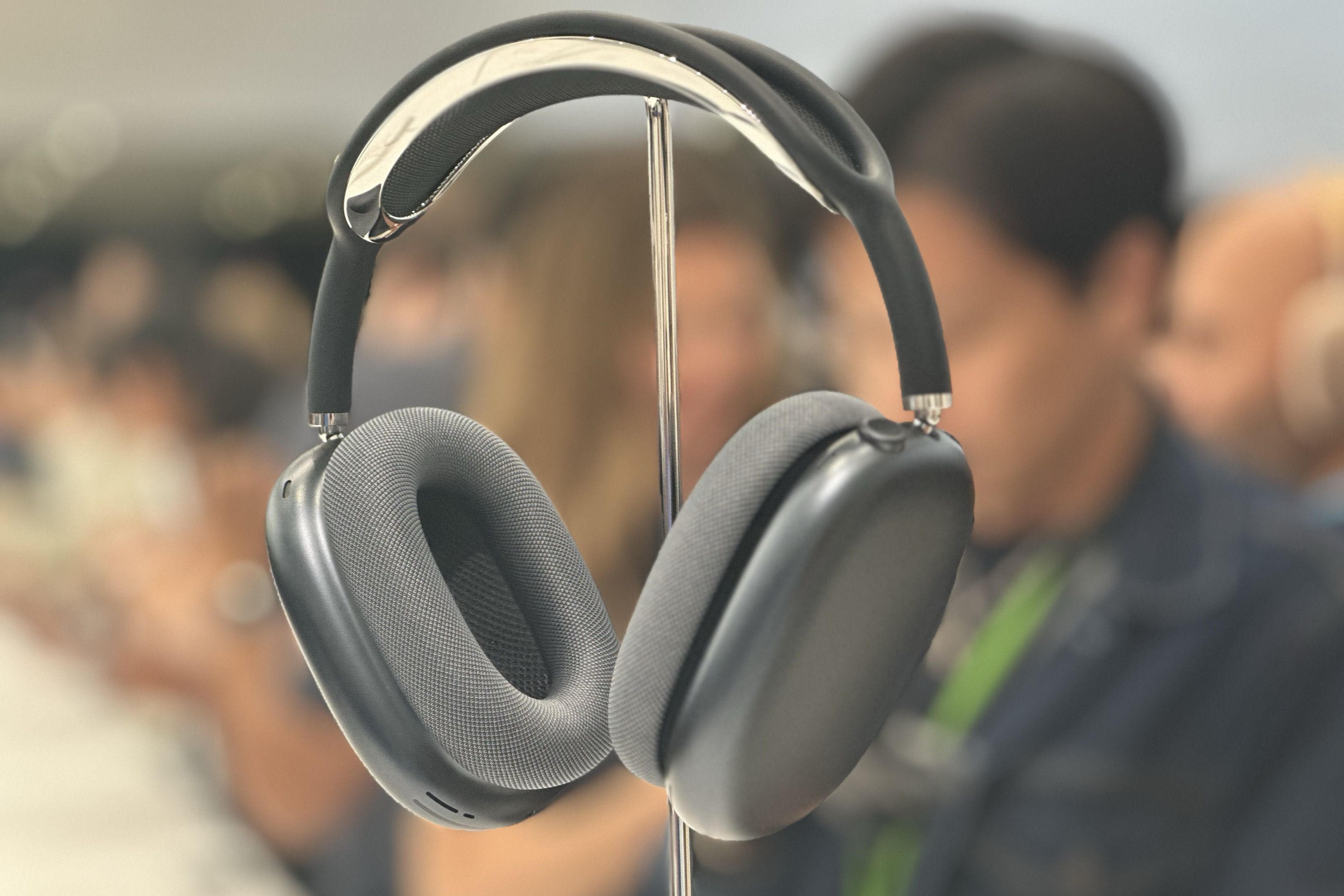
    Apple’s AirPods Max, the tech giant’s first foray into high-end headphones, has generated significant buzz since its release. With a price tag that puts it at the upper tier of consumer audio products, many potential buyers are left wondering: what makes these headphones worth the investment? Let’s delve into several factors contributing to the high price of AirPods Max.

    Premium Build Quality

    One of the most noticeable aspects of the AirPods Max is its superior construction.

    • Materials: The headphones boast a stainless steel frame, aluminum ear cups, and a memory foam ear cushion, which not only enhance comfort but also durability.
    • Design: The sleek, minimalist aesthetic is synonymous with Apple’s design ethos, offering a sophisticated look that appeals to many users.
    • Weight: While they are heavier than competitors, the weight contributes to their premium feel and sound isolation.

    Advanced Technology

    Apple has packed a multitude of cutting-edge features into the AirPods Max, making them stand out in a crowded market.

    High-Fidelity Audio

    • Custom Drivers: The AirPods Max uses custom audio drivers that deliver deep bass, accurate mid-range, and crisp highs, creating a premium listening experience.
    • Spatial Audio: This technology allows users to experience surround sound, making it ideal for immersive movie-watching or gaming.

    Active Noise Cancellation

    • Dynamic Noise Control: With active noise cancellation, the AirPods Max uses microphones to monitor and minimize ambient sounds, providing a focused audio experience.
    • Transparency Mode: This feature allows users to toggle between complete immersion in their music and remaining aware of their surroundings, adding versatility to the headphone’s utility.

    Exclusive Features

    Apple includes several features that enhance the user experience, justifying the higher cost.

    • iCloud Integration: Seamless switching between devices allows users to transition effortlessly from listening on an iPhone to watching on an iPad or Mac without the hassle of manual pairing.
    • Digital Crown: The inclusion of a digital knob for volume control and playback adds a touch of sophistication and ease of use.
    • Fast Charging: Offering a quick charging feature ensures prolonged usage with minimal downtime, a must-have for on-the-go users.

    Brand Value and Ecosystem

    Apple’s reputation as a premium brand also significantly influences the pricing of the AirPods Max.

    • Reputation: The Apple brand is synonymous with quality and innovation, enabling the company to command higher prices in the market.
    • Ecosystem Advantage: For users deeply embedded in the Apple ecosystem, the AirPods Max provides an integrated experience that enhances the overall value of their devices.

    Research and Development Costs

    Extensive investment in research and innovation adds yet another layer to the pricing structure.

    • Engineering Precision: The development of sophisticated audio technologies and the engineering required to produce a product of this caliber involve substantial R&D expenses.
    • Quality Assurance: Stringent testing procedures ensure that every unit meets a high standard before reaching consumers, adding to the production costs.

    Market Positioning

    The strategic marketing decisions made by Apple contribute to the product’s perceived value.

    • Premium Market Segment: By positioning the AirPods Max as a luxury product, Apple taps into the consumer demand for exclusive, high-end audio experiences.
    • Limited Availability: Creating a sense of scarcity can elevate demand and justify a higher price point.

    Consumer Expectations

    Lastly, consumer attitudes towards premium products play a crucial role in pricing.

    • Willingness to Pay: Many consumers equate price with quality, leading them to believe that higher-cost headphones will deliver a superior experience.
    • Lifestyle Investment: For some users, spending on high-end headphones is not just about the audio quality but also a lifestyle choice, further justifying the purchase.

    The AirPods Max, with its blend of design, technology, and brand prestige, exemplifies why it’s priced higher than many market alternatives. For audiophiles or those seeking an exceptional headphone experience, the AirPods Max could very well be seen as a worthy investment.

  • Next-Gen AirPods Max Headphones May Take Time To Release

    Next-Gen AirPods Max Headphones May Take Time To Release

    Apple’s 2024 product announcements have been extensive. This year features flagship iPads equipped with a groundbreaking desktop processor, a more varied AirPods lineup, and a revamped Mac Mini—all elements that promise to excite users.

    However, one area of disappointment has been the high-end Max headphones. Rather than a significant refresh expected for this eagerly awaited model, users received merely a new color scheme and the addition of a USB-C port. It seems that a substantial update is still quite a ways off.

    According to Bloomberg’s Mark Gurman in his latest PowerOn newsletter, Apple currently does not plan to roll out a third-generation AirPods Max. This hesitance appears to stem from their lukewarm market performance compared to other popular items in Apple’s catalog.

    As reported, “The headphones aren’t selling well enough to warrant significant investment in their development, but they’re not failing so badly that they can be completely discarded.”

    A man wearing Apple AirPods Max headphones in a city environment.
    Riley Young/Digital Trends / Digital Trends

    Apple tends not to disclose precise sales figures for its products, making it difficult to evaluate how the headphones compare to other devices and competitors. Yet, it’s clear that the over-ear headphones haven’t enjoyed the same massive success as the AirPods true wireless earbuds.

    Despite receiving accolades for their impressive sound quality and noise-cancellation features, a price tag of $549 has proven to be a significant barrier to widespread appeal.

    The situation is further complicated by rivals like Sony and Bose, which deliver exceptional audio experiences at a more approachable price point than Apple’s offering.

    Moreover, when it comes to features and ecosystem compatibility, Sony’s WH-1000XM5 outshines the AirPods Max even though it is cheaper.

    Apple AirPods Max featuring USB-C.
    Caleb Denison/Digital Trends

    Analysts indicate that the market performance of Apple headphones has been disappointing. TFI Securities analyst Ming-Chi Kuo suggested that the AirPods Max would likely sell fewer than a million units in their initial launch year.

    Additionally, a report from DigiTimes, citing sources within the supply chain, described the AirPods Max as “too niche” to drive significant sales growth for Apple. With the 2024 update seemingly lacking any game-changing features, it’s unlikely to boost sales dramatically unless it comes with a more attractive price point for potential buyers.

    Bloomberg’s report emphasizes that Apple plans to maintain the AirPods Max in their current form for at least the “foreseeable future.” While there’s no confirmation on when an upgraded model might be released, given Apple’s typical product update timeline, it may be another year or two before a new version is introduced.

    Furthermore, due to the pricing strategy Apple has established, the company will likely aim to deliver aligned enhancements, a process that will take time and considerable development effort.

  • Is It Worth Upgrading to Pixel Buds Pro?

    Is It Worth Upgrading to Pixel Buds Pro?

    Upgrading to a new pair of earbuds can be a significant decision, especially when weighing performance, features, and price. Google’s Pixel Buds Pro have generated considerable buzz since their release, but are they really worth the upgrade? Let’s dive into the details.

    Key Features of Pixel Buds Pro

    Before determining if an upgrade is justified, let’s explore what the Pixel Buds Pro offer compared to previous models.

    Active Noise Cancellation (ANC)

    One of the standout features of the Pixel Buds Pro is their advanced Active Noise Cancellation (ANC). This technology allows users to immerse themselves in their music by reducing unwanted background noise.

    • Transparency Mode: This feature lets users hear ambient sounds when necessary, making it ideal for outdoor use or in busy environments.
    • Adaptive Noise Cancellation: The earbuds can automatically adjust based on your surroundings.

    Enhanced Sound Quality

    The audio experience is noticeably improved in the Pixel Buds Pro:

    • Custom 11mm Speaker Drivers: These drivers deliver rich bass and crisp highs.
    • Spatial Audio Support: Creates a more immersive listening experience, especially for movies and games.

    Comfortable Fit and Design

    Ergonomics play a crucial role in any earbud experience:

    • Multiple Ear Tip Sizes: A range of sizes ensures a snug and comfortable fit for various ear shapes.
    • IPX4 Rating: Resistant to water splashes, making them suitable for workouts and outdoor activities.

    Comparison to Previous Models

    To better gauge whether to upgrade, let’s compare Pixel Buds Pro with previous versions like the Pixel Buds A-Series.

    Sound Performance

    • Pixel Buds A-Series: Good sound quality but lacks ANC and spatial audio features.
    • Pixel Buds Pro: Offers superior sound with adjustable ANC, making them not only louder but clearer.

    Battery Life

    • Pixel Buds A-Series: Up to 5 hours of playback with 19 hours total using the charging case.
    • Pixel Buds Pro: Up to 7 hours with ANC on, boasting a total of 20 hours with the case.

    Touch Controls

    • Pixel Buds A-Series: Basic touch controls for play/pause and skipping tracks.
    • Pixel Buds Pro: More customizable controls, allowing for voice assistant prompts, volume adjustments, and more.

    User Experience

    Reviews and user feedback play a crucial role in considering an upgrade. Here are some of the advantages and disadvantages noted by users of Pixel Buds Pro.

    Advantages

    • Seamless Google Integration: Users appreciate the ease of pairing and compatibility with Google Assistant.
    • Enhanced Battety and Features: Positive feedback about prolonged usage without frequent recharging.
    • Comfort: Many users find them more comfortable than previous models.

    Disadvantages

    • Price Point: At a higher price than earlier models, some users question whether the additional features justify the expense.
    • Initial Learning Curve: Some users report that adapting to the new touch controls took time.

    Are They Worth the Upgrade?

    Deciding whether the Pixel Buds Pro are worth it largely depends on individual needs and preferences. Here’s a breakdown of considerations:

    Who Should Upgrade?

    • Frequent Travelers: If you travel a lot and appreciate high-quality ANC, the Pro model might be beneficial.
    • Audio Enthusiasts: If sound quality is paramount for you, the improvements are worth the investment.
    • Fitness Buffs: With water resistance and a secure fit, these earbuds are great for workouts.

    Who Might Not Need to Upgrade?

    • Casual Listeners: If you primarily use earbuds for podcasts or casual music, previous models may suffice.
    • Budget-Conscious Users: If you’re looking for a more economical option, the Pixel Buds A-Series offers great value.

    In summary, upgrading to Pixel Buds Pro depends on how much you value enhanced features and sound quality. If you’re an audiophile or someone who frequently utilizes noise-canceling capabilities, this upgrade could be a wise investment.